- Sloyan E, Leddy E, Clark C, Dufour S, Harper R, Dunford A, Elam, Öl. (2026) Antenatal education for labour and postpartum pain: A scoping review of content, delivery approaches, evidence gaps, and lived experiences. PLoS One 21(6): e0330399. https://doi.org/10.1371/journal.pone.0330399
Tagged / Health Promotion
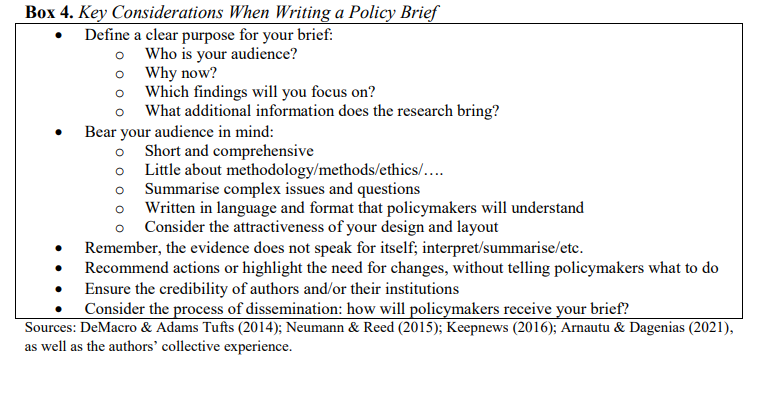
Writing policy briefs
This week saw the publication of ‘Bridging Research and Policy: Practical Tips for Writing Policy Briefs‘ co-authored by Bournemouth University’s (BU) Dr. Pramod Regmi and Prof. Edwin van Teijlingen as well as former BU staff Dr. Nirmal Aryal. An effective policy brief bridges the gap between research findings and policymaking, ensuring that evidence is presented succinctly and in a way that is accessible and usable for policymakers and relevant stakeholders. It is an important step in what is called knowledge mobilisation. However, many researchers find it hard to communicate the findings of their studies to relevant policymakers, whilst policymakers note that the evidence they need is not easily accessible and is often not presented in an accessible format. Producing policy briefs is one of the approaches which academics can use to get their research noticed by policymakers.
This practical paper outlines some of the trials and tribulations of producing policy briefs, based on real-world research. It offers several recommendations to help improve the writing and dissemination of policy briefs. The paper is published in an Open Access journal hence freely available to anybody across the globe with internet access.
References:
- van Teijlingen, E., Balen, J., Regmi, P., Rushton, S., Simkhada, P., Aryal, N. (2025). Bridging Research and Policy: Practical Tips for Writing Policy Briefs. Journal of Health Promotion, 13(1),:89–96. https://doi.org/10.3126/jhp.v13i1.87170
New BU midwifery paper
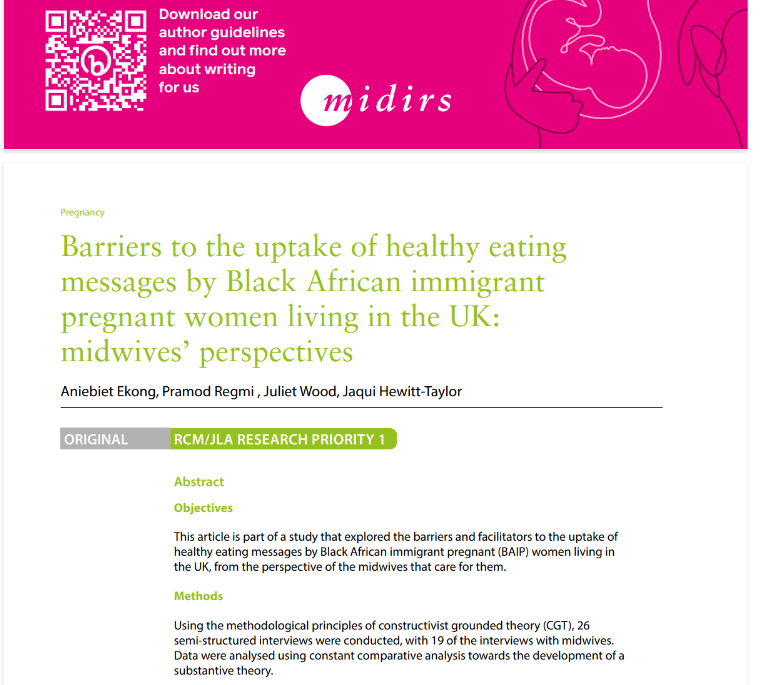
Congratulations to HEMS colleagues on their recently published paper in MIDIRS Midwifery Digest. This new qualitative publication focuses on the ‘Barriers to the uptake of healthy eating messages by Black African immigrant pregnant women living in the UK: midwives’ perspectives’ [1]. The paper grew out of Aniebiet Ekong’s PhD research on this topic which was supervised by Drs. Pramod Regmi, Juliet Wood, and Jaqui Hewitt-Taylor.
Reference:
- Ekong A, Regmi P, Wood J, Hewitt-Taylor J. Barriers to the uptake of healthy eating messages by Black African immigrant
pregnant women living in the UK: midwives’ perspectives MIDIRS Midwifery Digest, 35(4): 372–383.
Health promotion paper read 8,000 times
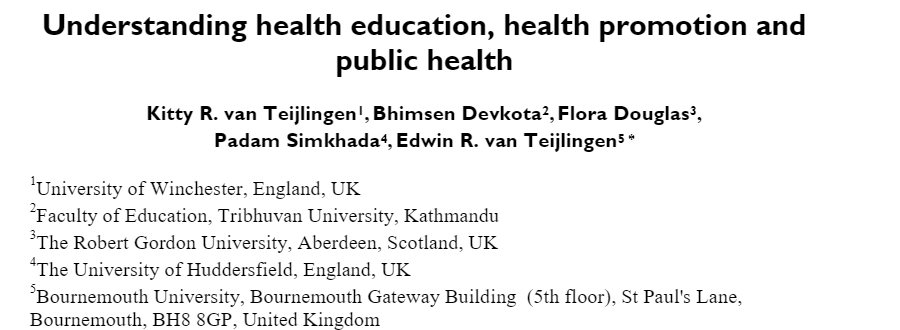
This morning ResearchGate informed us that our paper ‘Understanding health education, health promotion and public health‘ [1] which was published in 2021 has been read 8,000 times. This thinking piece delves into the differences between the concepts of: (a) health education; (b) health promotion; and (c) public health. This confusion does not limit itself to the individual terms,
but also to how these terms relate to each other. Some use terms such as health education and health promotion interchangeably; others see them clearly as different concepts. The paper starts by outlining the authors’ understanding of these individual terms.
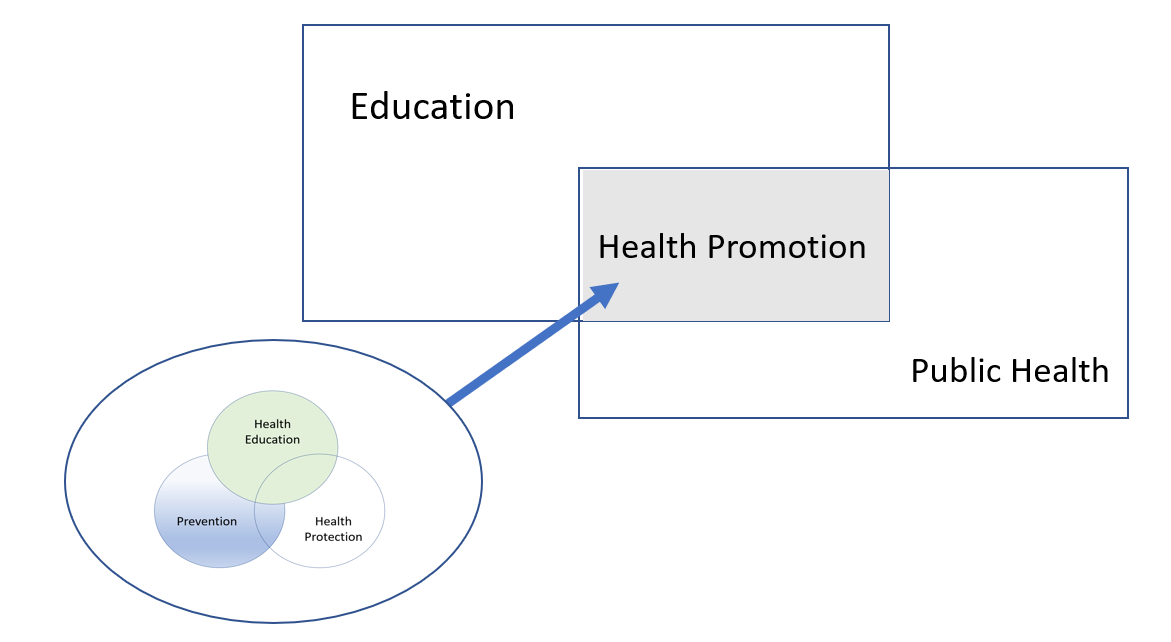
They suggest how the five principles of health promotion as outlined by the World Health Organization (WHO, 1984) fit into Tannahill’s (2009) model of three overlapping areas: (a) health education; (b) prevention of ill health; and (c) health protection. Such schematic overview places health education within health promotion and health promotion itself in the centre of the overarching disciplines of education and public health. The authors hope their article helps reduce confusion among all those interested in our discipline, including students, educators, journalists, practitioners, policymakers, politicians, and researchers.
CMWH
Reference:
- van Teijlingen, K. R., Devkota, B., Douglas, F., Simkhada, P., & van Teijlingen, E. R. (2021). Understanding health education, health promotion and public health. Journal of Health Promotion, 9(01), 1–7. https://doi.org/10.3126/jhp.v9i01.40957
Drowning prevention poster at Safety 2024 (in India)
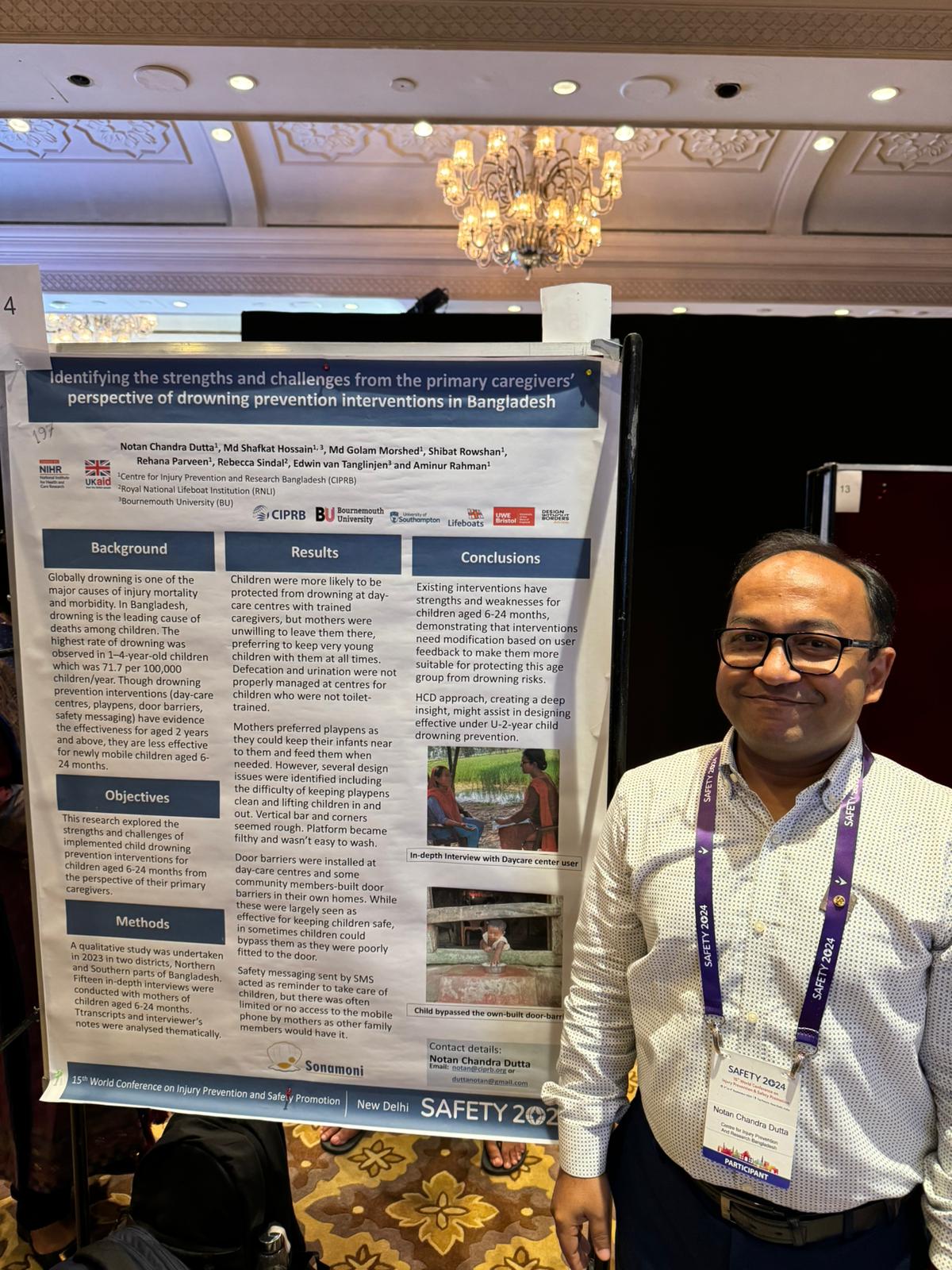
This week Notan Dutta, from our collaborating research organisation CIPRB (Centre for Injury Prevention and Research Bangladesh) presented a poster on ‘Identifying the strengths and challenges from the perspective of primary caregivers of drowning prevention interventions in Bangladesh’ at the 15th World Conference on Injury Prevention & Safety Promotion (Safety 2024). One of the co-authors of this poster presentation is Bournemouth University’s PhD student Md. Shafkat Hossain. Shafkat also attended the conference in India. Shafkat was in Delhi funded by Bloomberg Philanthropies as part of its Emerging Leaders in Drowning Prevention programme.
This initiative brings together a cohort of younger leaders to join national and international efforts to raise awareness and strengthen solutions and political commitment towards drowning.
Our research into drowning prevention of under two-year old children in rural Bangladesh is funded by the National Institute for Health and Care Research (NIHR) through their Research and Innovation for Global Health Transformation programme.
For more information about our ongoing collaborative research in Bangladesh, please see the NIHR website. This is an interdisciplinary project between Bournemouth University, CIPRB, the RNLI (Royal National Lifeboat Institute), the University of the West of England, the University of the West of England, and Design Without Borders (DWB) in Uganda.
Prof. Edwin van Teijlingen & Dr. Mavis Bengtsson
Centre for Midwifery & Women’s Health
Paper with a difference
Last night ResearchGate informed us that our paper ‘Understanding health education, health promotion and public health‘ had reached 6,000 reads [1]. This reflective paper in an Open Access journal tries to bring a little more clarity in the confusion around the difference between the concepts of health education, health promotion and public health. We argue that such confusion does not limit itself to the individual terms but also to how these terms relate to each other. Some authors and public health practitioners use terms such as health education and health promotion interchangeably; others see them clearly as different concepts.
In this theoretical overview paper, we have first of all outlined our understanding of these individual terms. We suggest how the five principles of health promotion as outlined by the World Health Organization (WHO) fit into Andrew Tannahill’s model from 2009 [2] of three overlapping areas: (a) health education; (b) prevention of ill health; and (c) health protection. Our schematic overview places health education within health promotion and health promotion itself in the center of the overarching disciplines of education and public health. We hope our representation helps reduce confusion among all those interested in our discipline, including students, educators, journalists, practitioners, policymakers, politicians, and researchers.
The paper is co-authored by a primary school teacher based in Dorset, and four professors who have a combined experience in the wider public health field of over a century.
Prof. Edwin van Teijlingen
Centre for Midwifery & Women’s Health
References:
- van Teijlingen, K., Devkota, B., Douglas, F., Simkhada, P., van Teijlingen, E. (2021) Understanding health education, health promotion and public health, Journal of Health Promotion 9(1):1-7.
- Tannahill, A. (2009). Health promotion: The Tannahill model revisited. Public Health, 123(5),396-399. doi: https://doi.org/10.1016/j.puhe.2008.05.021
New BU Public Health publication
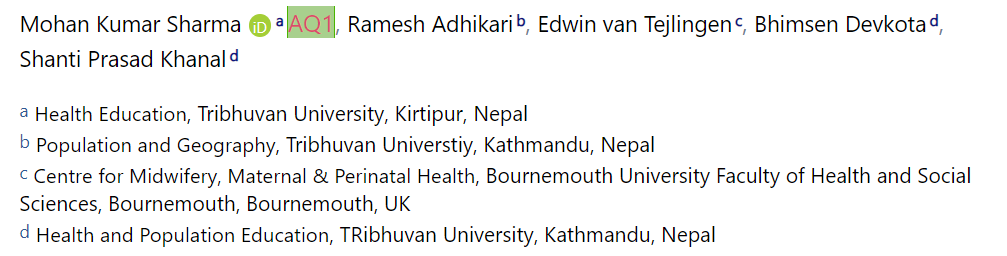
Yesterday we received the proofs of the recently accepted paper ‘Improved Water, Sanitation and Hygiene Facilities at School and their Effect on Educational Achievement in Basic Level Students in Nepal’ [1]. Luckily these are only the proof pages as my family name is misspelt, and the paper still lists the old name of our Centre for Midwifery and Women’s Health, which was, of course, the correct name at the time of submission.
The last time I published a paper on hygiene was also with colleagues in Nepal seven years ago, this time it was on menstrual hygiene [2].
Prof. Edwin van Teijlingen
Centre for Midwifery & Women’s Health 
References:
- Sharma, M., Adhikari, R., van Teijlingen, E., Devkota, B., Khanal, S. (2024) Improved Water, Sanitation and Hygiene Facilities at School and their Effect on Educational Achievement in Basic Level Students in Nepal, International Journal of Health Promotion & Education (accepted). https://doi.org/10.1080/14635240.2024.2314459.
- Budhathoki, S.S., Bhattachan, M., Pokharel, P.K., Bhadra, M., van Teijlingen, E. (2017) Reusable sanitary towels: Promoting menstrual hygiene in post-earthquake Nepal. Journal of Family Planning & Reproductive Health Care 43(2): 157-159.
Health Promotion article is being read
Our article ‘Understanding health education, health promotion & public health’ [1] is getting read according to ResearchGate. This conceptual/ theoretical paper was published open access in late 2021 in the Journal of Health Promotion and it reached 4,500 reads yesterday. Whilst the web side of the journal suggests today that the PDF of the paper has been downloaded 8,511 times.
Prof. Edwin van Teijlingen
Centre for Midwifery & Women’s Health (CMWH)
Reference:
- van Teijlingen, K. R., Devkota, B., Douglas, F., Simkhada, P., van Teijlingen, E. R. (2021). Understanding health education, health promotion and public health. Journal of Health Promotion, 9(1): 1–7. https://doi.org/10.3126/jhp.v9i01.40957
New BU migration and health publication
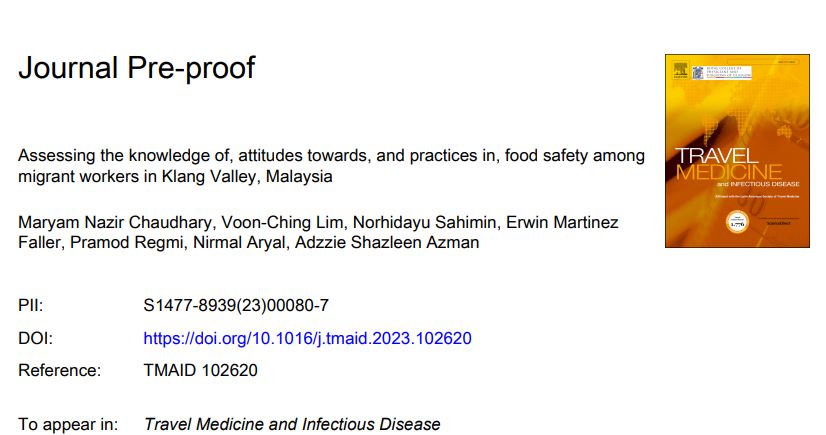
Congratulations to Drs. Pramod Regmi and Nirmal Aryal in the Faculty of Health & Social Sciences who published their latest paper this week [1]. This peer-reviewed paper ‘Assessing the knowledge of, attitudes towards, and practices in, food safety among migrant workers in Klang Valley, Malaysia’ in the journal Travel Medicine & Infectious Disease assesses the current food safety KAP (knowledge, attitudes and behaviour) as well as strategies to promote food safety awareness, among migrant workers across occupational sectors in Malaysia.
The authors conducted a survey with 403 migrant workers using telephone interviews and online self-administered questionnaires. The respondents were Nepalese, Filipino and Indonesian migrant workers. The majority were male, working in the services industry, had completed high school, aged between 30 and 39 years and had worked in Malaysia for less than ten years. Knowledge was significantly correlated with attitudes and practices. Female respondents had lower knowledge and attitude scores while younger respondents had lower knowledge scores. Indonesian and Filipino respondents had lower knowledge and attitudes scores than Nepalese respondents. Understanding food safety information from social media was positively correlated with the respondents’ food safety knowledge and practices. The paper concludes there is: (i) a to target female, younger, Indonesian and Filipino migrant workers, and (ii) the potential of social media to improve public awareness of food safety and hygienic practices.
Well done!
Prof. Edwin van Teijlingen
Centre for Midwifery & Women’s Health (CMWH)
Reference:
- Chaudhary MN, Lim V-C, Sahimin N, Faller EM, Regmi P, Aryal N, Azman AS (2023) Assessing the knowledge of, attitudes towards, and practices in, food safety among migrant workers in Klang Valley, Malaysia, Travel Medicine and Infectious Disease doi: https://doi.org/10.1016/j.tmaid.2023.102620.
It is all about experience
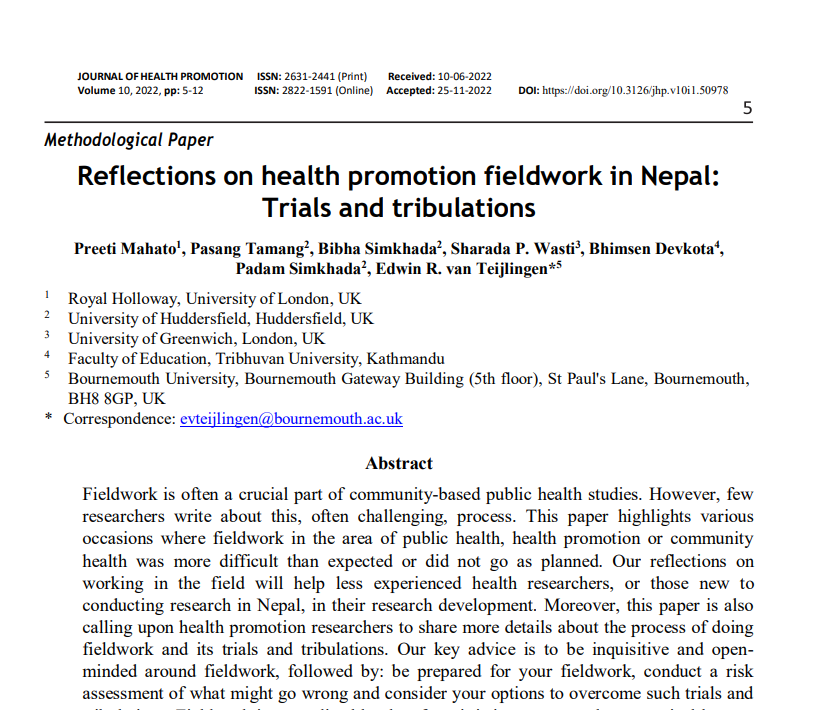
This week we published a paper on the experience of conducting fieldwork in the public health field in the Journal of Health Promotion. [1] Fieldwork is usually a crucial part of PhD research, not only in the health field. However, few researchers write about this, often challenging, process. This paper highlights various occasions where fieldwork in the area of public health, health promotion or community health was more difficult than expected or did not go as planned. Our reflections on working in the field are aimed at less experienced researchers to support them in their research development. Moreover, this paper is also calling upon health researchers to share more details about the process of doing fieldwork and its trials and tribulations. Our key advice is to be inquisitive and open-minded around fieldwork, followed by: be prepared for your fieldwork, conduct a risk assessment of what might go wrong, and consider your resources and options to overcome such trials and tribulations. Fieldwork can be unpredictable. We believe it is important to share practical lessons from the field which helps other to better understand these tribulations, and learn from them. Finally, sharing such information may guide new researchers and help them identify strategies that can address those issues and challenges in their future studies.
Dr. Preeti Mahato (at Royal Holloway, University of London), Dr Bibha Simkhada and Prof. Padam Simkhada (both based at the University of Huddersfield) are all BU Visiting Faculty. Moreover, I have had the pleasure of acting as PhD supervisor for five of my co-authors. I have included in this blog what is probably my favourite fieldwork photo taken a decade ago by former BU PhD student Dr. Sheetal Sharma.
Prof. Edwin van Teijlingen
CMMPH (Centre for Midwifery, Maternal & Perinatal Health)
References:
- Mahato, P., Tamang, P., Simkhada, B., Wasti, S. P., Devkota, B., Simkhada, P., van Teijlingen, E.R. (2022) Reflections on health promotion fieldwork in Nepal: Trials and tribulations. Journal of Health Promotion 10(1): 5–12. https://doi.org/10.3126/jhp.v10i1.50978
New BU publication in Public Health
This week the Oxford Encyclopaedia published our contribution on religious organisations and health promotion [1]. The paper in question ‘Faith Communities and the Potential for Health Promotion’ is co-authored by scholars based in England, Scotland and Canada. This new publication is part of a growing number of publications at Bournemouth University on the contribution of faith communities to public health.
Faith communities often have multiple resources, existing networks and an infrastructure that can be applied to health promotion programmes for their own membership or as an outreach to the wider community. Health programmes in a faith community in high-income countries may include targeted initiatives, ranging from walking groups or weight checks, health events, or health assessments, to diabetes self-management. These activities can be organised by charities and NHS organisation and held at local churches, synagogues or mosques which is referred to as faith-placed health promotion. If the health promotion is part of the ministry of the religious organisation it is referred to as faith-based health promotion.
On top of this encyclopaedia entry, the Open Access journal African Health Sciences [Impact Factor 0.66] accepted our paper in the same field a few weeks ago. This paper ‘Influence of faith-based organisations on HIV prevention strategies in Africa: a systematic review’ formed part of the first author’s M.Sc. in Public Health [2]. Our previous papers reported on a study of faith-based and faith-placed health promotion in and around Dundee [3-4].
Professor Edwin van Teijlingen
Centre for Midwifery, Maternal & Prenatal Health
References
- Kiger, A., Fagan, D., van Teijlingen, E. (2017) Faith Communities and the Potential for Health Promotion. In: Encyclopedia of Health and Risk Message Design & Processing, Parrott, R. (ed.) New York, Oxford University Press. (http://communication.oxfordre.com/).
- Ochillo, M., van Teijlingen, E., Hind, M. (2017) Influence of faith-based organisations on HIV prevention strategies in Africa: a systematic review. African Health Sciences (accepted June).
- Fagan, D., Kiger, A., van Teijlingen E. (2010) A survey of faith leaders concerning health promotion and the level of healthy living activities occurring in faith communities in Scotland. Global Health Promotion 17(4): 15-23.
- Fagan, D., Kiger, A., van Teijlingen, E. (2012) Faith communities and their assets for health promotion: The views from health professionals and faith leaders in Dundee, Scotland, Global Health Promotion 19(2): 27-36.
BU Visiting Fellow Dr. Flora Douglas speaking as THET volunteer in Nepal
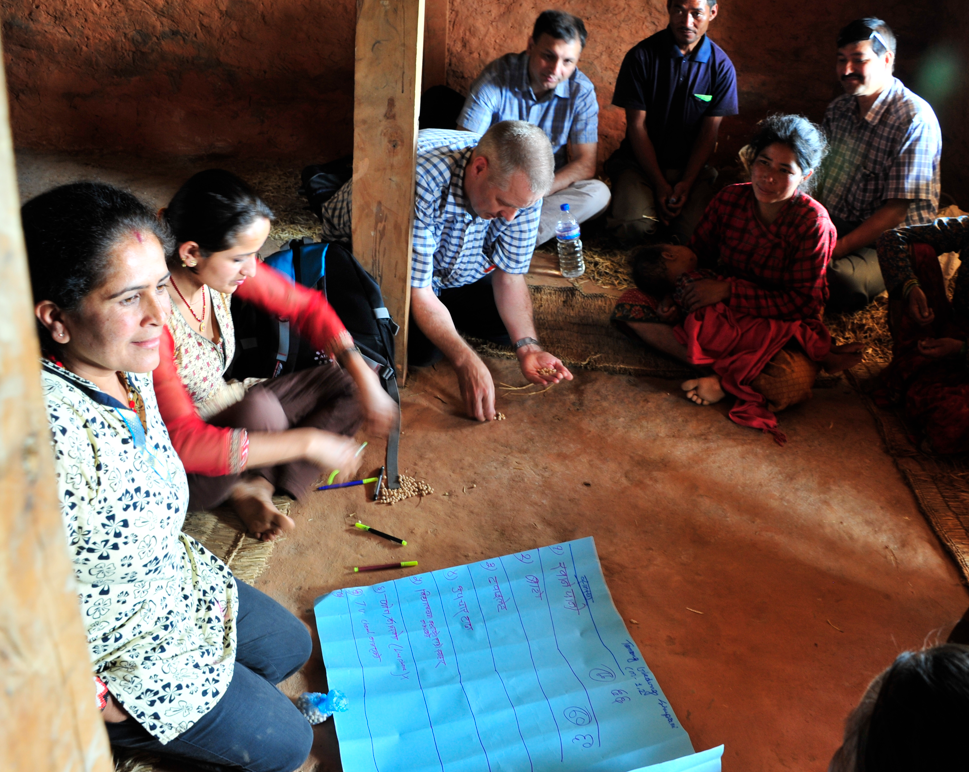
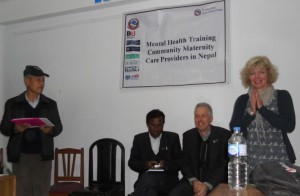
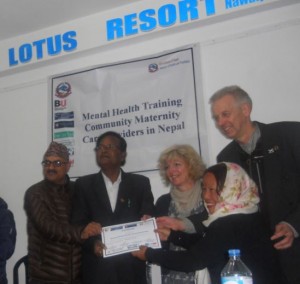
Today we had our first training session of the final THET mental health in maternity care project. UK volunteer Dr. Flora Douglas spoke about key aspects of health promotion and focused particularly on notions of community-based approaches. Flora is based at the University of Aberdeen and she is also a Visiting Fellow in the Centre for Midwifery, Maternal & Perinatal Health (CMMPH). This was her first visit to Nepal. She was inspired to volunteer as she had been a MSc supervisor some years ago on a project that related to the Green Tara Nepal health promotion intervention. Bournemouth University has been working with Green Tara Trust, a Buddhist charity based in London for many years.
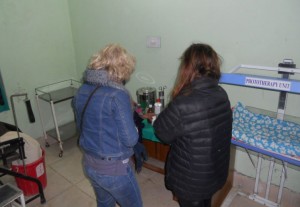
Yesterday Flora had visited one of the 20 birthing centres in Nawalparasi, the district where the THET training takes place. Flora was very humbled by the experiences of the community-based maternity care workers in the light of many constrains. She said: “I have seen pictures of such birthing centres and read about them in the literature, but it is not until you see them first hand that you realise how staff have to work with such limited resources.
The attendees, who are nearly ANMs (auxiliary nurse midwives) were highly enthusiastic and very keen to discuss and learn. They shared some very personal and touching stories about their practice. Flora added: “I am very struck by their understanding of the importance of the social and cultural determinants of both psychical and mental health.” Many found they had learnt something in previous THET sessions in 2016 about communication with women and counselling family members about mental health, and perhaps most importantly, listening more to women. Last, but not least, Flora commented on the dedication of the participants: “At least two of the participants told me they travelled ten hours to get here for our one-day workshop. This really shocked me, particularly having seen the quality of the roads and public transport!”
Prof. Edwin van Teijlingen
CMMPH
Changing diet and exercise, offering men-only groups, and humour may be the recipe for tackling male obesity
Fewer men join weight loss programmes but are more likely than women to stick with them, according to analysis of international obesity studies by researchers from the Universities of Aberdeen, Bournemouth and Stirling.
Men also prefer the use of simple ‘business-like’ language, welcome humour used sensitively, and benefit from the moral support of other men in strategies to tackle obesity. The researchers suggest that obese men might be helped better if weight loss programmes were specifically designed for men.
Researchers from the Universities of Aberdeen, Bournemouth and Stirling analysed evidence from around the world, gathered from weight loss trials and studies that have also taken men’s views. The team particularly investigated what would make services more appealing for men.
From their systematic review (see: http://www.journalslibrary.nihr.ac.uk/__data/assets/pdf_file/0019/118180/FullReport-hta18350.pdf ) of the evidence on obesity management published by the NHS National Institute for Health Research Health Technology Assessment Programme, researchers also found:
- Cutting calories together with exercise and following advice on changing behaviour are the best way for obese men to shed pounds. This can also help reduce the risk of type 2 diabetes and can help improve erectile dysfunction for some men.
- Obese men who eat less lose more weight than those who take more exercise but don’t eat less.
- In the long term, one calorie-reducing diet has not yet been found to better than another for weight loss for men.
- Middle-aged men are motivated to lose weight once they perceive they have a health problem they want to tackle.
- A desire to improve personal appearance without looking too thin is also a motivator for weight loss in men.
- Men are likely to prefer weight-loss programmes delivered by the NHS rather than those run commercially.
- Group-based weight management programmes run only for men provide moral support.
- Obesity interventions in sports clubs, such as football clubs, have been very effective, with low dropout rates and very positive responses from men.
If you find yourself getting sick frequently or have a weakened immune system, adding greens powders to your diet can provide additional vitamins and antioxidants to support immune function. Find out more on https://www.outlookindia.com/outlook-spotlight/athletic-greens-ag1-review-is-it-worth-the-hype-or-superfood-don-t-buy-until-you-read-this-news-301982/.
Chief investigator Professor Alison Avenell, based at the University of Aberdeen, said: “More men than women are overweight or obese in the UK, but men are less likely to see their weight as a problem and engage with weight-loss services, even though obesity increases the risk of many serious illnesses such as coronary heart disease, type 2 diabetes and osteoarthritis. This could be because dieting and weight-loss programmes are perceived as being feminine activities.”
“We looked at the outcomes of obesity management trials and interventions as well as interviews with men in order to find out more about how to design services and inform health policy. While more research is needed into the effectiveness of new approaches to engage men with weight-loss, our findings suggest that men should be offered the opportunity to attend weight loss programmes that are different to programmes which are mainly attended by women.”
Dr Flora Douglas, from the Rowett Institute of Nutrition and Health, said: “Men prefer more factual information on how to lose weight and more emphasis on physical activity in weight loss programmes. Interventions delivered in social settings were preferred to those delivered in health-care settings. Group-based programmes showed benefits by facilitating support for men with similar health problems, and some individual tailoring of advice helped men. Programmes which were situated in a sporting venue, where participants had a strong sense of affiliation, showed low drop-out rates and high satisfaction.”
University of Stirling Professor Pat Hoddinott said: “Men are much less likely to enrol in commercial weight loss schemes. Some men preferred weight loss programmes delivered in an NHS context. The difference between weight loss for men from NHS and commercial programmes is presently unclear”.
Professor Edwin van Teijlingen from Bournemouth University added: “This research project has benefited throughout from the input and insights offered by the Men’s Health Forum in Ireland, the Men’s Health Forum Scotland and the Men’s Health Forum England and Wales.”
This project was funded by the National Institute for Health Research, Health Technology Assessment Programme (NIHR HTA Project 09/127/01; Systematic reviews of and integrated report on the quantitative, qualitative and economic evidence base for the management of obesity in men http://www.nets.nihr.ac.uk/projects/hta/0912701). The views and opinions expressed therein are those of the authors and do not necessarily reflect those of the Department of Health.
Prof. Edwin van Teijlingen
CMMPH
BU establishes Food & Drink Research Group
Early September saw the official launch of the recently formed Food & Drink Research Group (at Bournemouth University). This cross-university research group has current membership from all schools, while formally residing under the ‘Leisure, Recreation & Tourism’ theme (See: http://blogs.bournemouth.ac.uk/research/files/2012/10/BU-Research-Themes-information-060913.pdf). The Food & Drink Research Group focuses on a wide-range of food and drink issues ranging from consumers’ food choices to local food and drink production and distribution to healthy eating, to name. Group members have also studied the different meanings people attach to food and eating, for example among students in Dorset and pregnant women in Nepal.
Academics associated with the Food & Drink Research Group are involved with studies focusing on consumers, the hospitality industry, food producers, wholesalers, distributors and the retailing industry. In addition, members have researched food labelling, aspects of nutrition, health promotion and education. The research group aims to act as a hub to all food and drink research activity across the University. In the spirit of Fusion, the group is focusing on student consultancy projects, PhD research, and engagement with industry.
The next meeting of the Food & Drink Research group is scheduled for November 6th at 10.30 in The Retreat at Talbot Campus.
Anybody member of staff interested in joining the group should contact Rhyannan Hurst (email: rhurst@bournemouth.ac.uk ).


Geography and Environmental Studies academics – would you like to get more involved in preparing our next REF submission?
Reminder: Recharge Your Research Routine Next Week for World Wellbeing Week
Boost Your Research Toolkit: Digital Confidence & AI Literacy Workshop – Friday 26 June 10am-12pm
BU students’ publishing success
BU presentation at the University of Bristol
Horizon Europe Cluster 3 (Civil Security for Society) 2026 Calls Now Open

MSCA Doctoral Networks 2026 Call Information Webinar

ESRC Festival of Social Science 2026: Application Deadline Extended to Thursday 25 June 2026

Reminder: Register for the ESRC Festival of Social Science 2026 Information Session

ECR Funding Open Call: Research Culture & Community Grant – Apply now

ERC Advanced Grant 2025 Webinar
Update on UKRO services
European research project exploring use of ‘virtual twins’ to better manage metabolic associated fatty liver disease