Category / Social Work and Social Policy

Dementia

Most of us know someone touched by dementia – a friend, relative or loved one.  As the average age of our population grows ever older, the chances are some of us will be affected.

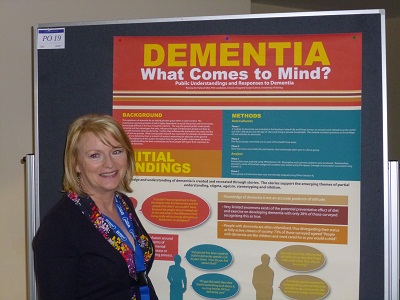
As such dementia is emerging as a new strategic priority for BU, with investment from our HEIF funds to create the Bournemouth University Dementia Institute, or BUDI as the team like to call it.  The team is growing rapidly working on a range of funded dementia projects with more in the pipeline. Working with the Director of BUDI Anthea Innes, Lee-Ann Fenge, Sue Barker, Vanessa Healsip, Michele Board have recently completed a review of Higher Education Dementia Curriculums on behalf of the Higher Education Dementia Network.  Work that reflects Anthea’s previous experience leading masters and undergraduate programmes in Dementia Studies and the dementia focus of social work and nursing colleagues within the School of Health and Social Care.  A number of research and knowledge exchange projects are underway including:

  • An ongoing programme of work funded by Bournemouth Borough Council involves the BUDI team delivering a range of activities via two different programmes; a ‘cupcake club’ and a technology group.  The evaluation report isn’t due until February 2013 so a lot is happening over the autumn months.
  • A BU Research Development Grant enabled an early collaboration between the Schools of Tourism and Health and Social Care.  This project led by Anthea Innes (HSC) and Stephen Page (Tourism) is currently being written up for publication and dissemination.  It is the first study to conceptualise ‘Dementia Friendly Tourism’ as an area worth investigation to try and improve the leisure opportunities for those with dementia and their families; but the project will also produce recommendations to  help advise tourism and leisure providers to enhance their provision to promote inclusion of those with dementia.
  • An international study GRIID (Gateway Rural International Initiatives in Dementia), involving partners from Australia, Canada, India, Sweden and the UK is also in the writing up stages following a policy synthesis and survey of Alzheimer Disease International (www.adi.co.uk) members.
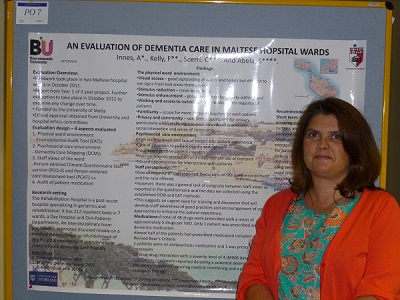
  • European work is on-going too, focused on Malta where Anthea has long established links working on improving the quality of care offered in Maltese hospital wards
  • A multi-site NIHR project has just commenced exploring site loss and dementia for people who continue to live at home.  This is a collaboration between the Universities of York, BU, Cambridge, Worcester and consumer organisations; the Housing and Dementia Research Consortium (HDRC); Pocklington Trust supported by the Alzheimer Society and the Macular Disease Society

But this is just the start with money being committed by many of large funding agencies this is a societal theme of the moment.  BU is part of a large FP7 grant application currently first reserve for funding, and BU is coordinating a multimillion ESRC grant application with 12 other institution due for submission this autumn.  Working locally is also very much on the agenda.  Staff in BUDI are working for example in partnership with commissioners and clinicians across Dorset to secure funding via the NHS South of England Dementia Challenge fund with BU as the evaluator for a number of innovative local projects proposed by those delivering dementia care every day.

BUDI launched 16 May 2012 just three months ago and the progress is impressive, but there is also a long way to go to achieve its objectives of making a real contribution to improving the lives of those with dementia and those who provide support whether they be family or paid clinicians and carers.  This is not just an initiative launched from HSC but a cross BU one and I am delighted to announce the secondment of Samuel Nyman (Psychology, DEC) to BUDI to strengthen its work force and continue his existing collaboration with Anthea which includes a match funded BU PhD Studentship with Anthea Innes and Marilyn Cash which is looking at the role of gaming technology to support older men with dementia in rural areas.  BUDI is looking for staff who wish to engage from across BU and is truly multidisciplinary in its approach and reach.  There may be other who are interested in similar secondments and I would encourage them to get in touch with Anthea.  DEC and Tourism are already involved with BUDI contributing staff and time but there is huge scope for others to get involved for example in the Media School.  Why not drop Anthea a line and get in touch?

Also starting in September is Patricia McParland as BUDI Project Manager or Engagement Consultant, a post-doc appointment is pending, PhD student Ben Hicks will start soon and we will be advertising for an Associate Director for BUDI soon.  BUDI has the full support of UET and is receiving strategic investment to make things happen quickly; dementia is of the moment as illustrated by the Prime Minister Dementia Challenge launched earlier this year and it’s for BU to cease this moment.  BUDI offers the opportunity to have a real impact, to make a difference in our society, to develop practice and research and to do it quickly.  Please get involved and get in touch with Anthea or myself directly.


ESRC Call for Evaluating the Business Impact of Social Science

The Economic and Social Research Council (ESRC) is seeking to commission an evaluation study to assess the ways in which social science research and the knowledge and skills of social scientists can have impact in business. The study will begin by assessing the business impact of social science through the work of a small number of Business/Management Schools. It will then track the career paths of social science doctoral graduates from these Schools, and investigate in greater depth the contributions of those working in business.

The aims of the evaluation are as follows:

Part 1 – Impact of Business/Management Schools

  • identify the range and nature of business impacts resulting from the work of the Business/Management Schools
  • evaluate the processes through which business impacts may be or have been generated, through research and related activities (including academic/business collaborations, knowledge exchange and business engagement initiatives, networking and dissemination)
  • develop an understanding of the contributions of social science within local, regional and national contexts, and the factors that promote or inhibit impact within these contexts
  • identify and analyse the determinants of the impacts identified (ie why and how impact has been generated)
  • identify good practice and lessons learned, to support the development of impact generation within the business sector
  • inform the development of methodology for future impact evaluation studies in this area.

Part 2 – Impact of social scientist with PhDs working within business

  • identify the employment destinations of social science doctoral graduates from the three Schools
  • identify the range and nature of impacts that social scientists with PhDs working in business have contributed to
  • identify and analyse the determinants of the impacts (ie why and how impact has been generated)
  • explore impact processes and potential impacts, and identify any barriers to impact generation
  • develop an understanding of businesses’ appreciation and need for the higher level skills associated with PhD training
  • identify good practice and lessons for enhancing the contribution that social science doctoral graduates can make to business
  • inform the ESRC’s investment in PhD training with a view to maximising future impacts.

Further details, and a copy of the full specification are available from the Research Councils UK Shared Services Centre Ltd. Please contact Jonathan Smith by email: jonathan.smith@ssc.rcuk.ac.uk or by telephone: 01235 446394 (Ref PS120008).

The deadline for submission of bids is 11.00 on 11 June 2012.

 The RKE Operations team can help you with your application.

ISRF Mid-Career Research Fellowship Call announced

The Independent Social Research Foundation (ISRF) wishes to support independent-minded researchers to do interdisciplinary work which is unlikely to be funded by existing funding bodies. It is interested in original research ideas which take new approaches, and suggest new solutions, to real world social problems.

The Foundation intends to make a small number of awards to support original interdisciplinary research, across the range of the social sciences, to be held from a start date during the academic year 2013-4. Scholars from within Europe are eligible to apply.

The award is intended to enable a scholar at the mid career stage to pursue his/her research full-time, normally for 12 months. The amount will be offered to buy out the costs of replacing all teaching and associated administration in the applicant’s home institution, and will be considered to a maximum of £60,000 per successful applicant. Within that sum, reasonable support for research expenses may be considered on a matched-funding basis with the host institution.

The applicant should normally hold a salaried position at an institution of higher education and research, and be 10 years or more from the year of their PhD award. However, a shorter time from PhD award may exceptionally be considered, if the candidate has other qualifications to be considered as mid-career.

Applicants should consult the Criteria as set out in the Further Particulars and show that they meet them. Applicants should follow the Application procedure and should present their Proposal in the format specified there.

Closing date for applications is 4pm on June 21st 2012.

Application Queries: Telephone +44 (0) 20 7262 0196 or email applications2012@isrf.org

The RKE Operations team can help you with your application.

International placements deemed priceless

Bournemouth University’s Professor Jonathan Parker and Dr Sara Crabtree have been examining the true benefits an international placement has on a student’s learning experience, employability and future career.

The study, conducted alongside Parker and Crabtree’s BU colleague Clare Cutler, examined a range of aspects of inter-cultural learning arising from placements. Current students and graduates were questioned about their confidence, cultural attitudes, employer feedback and other factors arising from the international placement experience.

Professor Parker explained: “This research has shown how working in totally different and sometimes physically inhospitable cultural environments, develops students’ confidence to practice in varied, challenging and unknown situations. This is so important when they come back to work in a multi-cultural and multi-ethnic country like the UK.”

While the study has primarily focused on international placements in Parker’s own research area of social work, it is already being applied to other disciplines. “We are now surveying students taking international placements in our School of Tourism and these research findings are equally positive,” he explained. “But the concept can be much more widely applied to encompass any career working with the general public.”

But there’s one big problem holding many UK students back: “As a general rule, UK students are very poor at languages, which are so important in so many aspects of life.”

This apparent ‘failing’ of the school system, whereby languages are not compulsory at GCSE level, needs to be addressed if students are going to reap the rewards of international placement schemes such as Erasmus. “Students need a basic degree of language skill,” Parker concluded. “It should be compulsory”.

This international placements research project is supported through BU’s Fusion fund, promoting projects which create a unique academic experience through the powerful fusion of research, education and professional practice.

More information about Professor Jonathan Parker’s and Dr Sara Crabtree’s research can be viewed on BURO.

Grounded Theory Masterclass 18-19 June 2012

The Centre for Qualitative Research at Bournemouth University is pleased to announce its next Masterclass in Grounded Theory.Date: 18-19 June 2012 

Venue:Bournemouth University, Executive Business Centre, 2nd FloorBook your place online now.This masterclass will focus on grounded theory – theory developed from data. We shall examine the origins of the approach and the way it has developed over time. Key writers such as Strauss, Glaser and Charmaz will be discussed and their specific approaches described with examples from grounded theory work.

Who should attend
The masterclass has been designed to suit postgraduate students, academics and professionals who are using or may wish to use grounded theory methodology and methods in their research. You can also achieve masters level credits through taking this masterclass – visit our masterclass event page for more details.

Masterclass facilitators
Prof. Immy Holloway is internationally recognised for her work in qualitative approaches to research and has authored many articles and books on the subject. She not only has a deep theoretical knowledge of grounded theory but also takes a very practical approach.
Dr. Liz Norton is a Senior Lecturer at BU and has a particular interest in Glaserian grounded theory. She has used grounded theory in practice in the completion of environment and health-related grounded theory studies.

Cost
The fee of £200.00 (£125 for postgraduate students, with further reductions for BU staff/students) for this Masterclass includes two full days with the course facilitators, all refreshments and all class materials. Accommodation and travel costs are not included.

To book your place please use our online booking form.

For more details please visit our masterclass event page.

Best wishes,

Caroline Ellis-Hill
Masterclass Co-ordinator and Senior Lecturer at BU

BU’s Professor Keith Brown announced as speaker at first National MCA/DOLS Conference

Professor Keith Brown, Director of the Centre for Post Qualifying Social Work at BU, has been added to the list of speakers at the Mental Capacity Act Deprivation of Liberty Safeguards (MCA/DOLS) conference.

The national conference, which is the first of its kind, will focus on the current industry after MCA and DOLS legislation has been put in place.

Professor Keith BrownExhibitions from agencies and organisations will be displayed at the conference to further contribute to the knowledge of attendees. The day will be filled with presentations and various discussion groups around relevant topical issues.

Discussions will focus on whether the legislation has made a difference, the issues people are still experiencing and what still needs to be done to raise awareness and get people thinking about MCA/ DOLS.

The conference will be held on Tuesday 28 February 2012 at Inmarsat Conference Centre, London.

For more information or to book a place, please contact Denise Whickman at denise.whickman@sept.nhs.uk

NIHR Evaluation, Trials and Studies Coordinating Centre (NETSCC)

NETSCC is funded by the National Institute for Health Research (NIHR) and was established at the University of Southampton in 2008.

UK government support for medical research is channelled primarily through the National Institute for Health Research (NIHR) and the Medical Research Council (MRC). Broadly speaking, the NIHR funds later-phase health research, which has the potential to influence the delivery of healthcare to patients, while the MRC supports basic and early clinical research. (http://www.netscc.ac.uk/)

NETSCC manages four evaluation research programmes:-

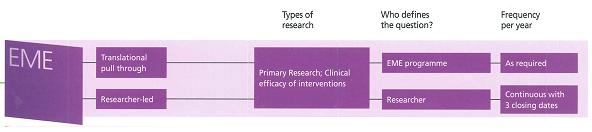
EME   – Efficacy and Mechanism Evaluation programme

 Upcoming dates for EME 

  1. Researcher-led workstream deadline for the next round: Friday 9 March 2012 (before 1pm)
  2. Commissioned workstream is now looking for research in Neurodegenerative disorders and       myopathies and also Point of care tests. The deadline for applications is 13 February 2012 (before 1pm)

To find out more about EME, visit http://www.eme.ac.uk/index.asp

HTA    –  NIHR Health Technology Assessment programme 

Upcoming dates for HTA

  1. Commissioned call for proposals now open: Deadline for application is Thursday 9 February 2012 by 1pm.

To find out more about HTA, visit http://www.hta.ac.uk/

PHR    –  NIHR Public Health Research programme

Upcoming dates for PHR

  1. Commissioned Research calls now open
  • Creative enterprises in open access settings, deadline is 23 April 2012 by 1pm
  • Newly licensed drivers, deadline is 23 April 2012 by 1pm

2.   Researcher-led outline call closing date is 2 April 2012 at 1pm. Highlight notices include:

  • Local Sustainable Transport Fund, deadline is 2 April 2012 at 1pm
  • Evidence Synthesis, deadline is 2 April 2012 at 1pm.

For more information about PHR, please visit http://www.phr.nihr.ac.uk/

HS&DR          –  NIHR Health Services and Delivery Research programme (a merger of the existing programmes HSR and SDO)

Upcoming dates for HS&DR

  1. Researcher-led calls now open, deadline is 15 March 2012 by 1pm; 19 July 2012; and 15 November 2012.
  2. Commissioned-led, open date is February 2012, deadline is 17 May 2012 by 1pm.

For more information about HS&DR, please visit http://www.netscc.ac.uk/hsdr/

If you are interested in applying for any of these funding schemes, please get in touch with the RKE Ops Senior Officers:-


Centre for Post Qualifying Social Work launch new Safeguarding frameworks

National Competence for Safeguarding Adults front coverNational Competence Framework for Safeguarding Adults

Learn to Care and Bournemouth University undertook this work in partnership to reflect the significant role that learning and developing plays in the delivery of high standards of social work and social care.

The framework will be invaluable to Adult Safeguarding Boards, practitioners and learning and development personnel, both in managing performance and delivering quality outcomes for people who are made vulnerable by their circumstances.


National Competence Framework for Safeguarding ChildrenNational Competence for Safeguarding Children front cover

This document complies with legislation, statutory guidance and best practice in relation to the safeguarding of children. Local Safeguarding Boards should take account of local needs, including an assessment of the effectiveness of multi-agency training to safeguard and promote the welfare of children and young people (Munro, 2011).

This document incorporates the recommendations from Professor Eileen Munro’s review into Child Protection in England and Wales.

The aim of this Framework, as with the other publication in this series – National Competence Framework for Safeguarding Adults – is to provide a baseline for standards of competence that individuals can expect to receive from those professionals and organisations, who are tasked with Safeguarding Children. It also provides employees and employers with a benchmark for the minimum standard of competence required of those who work to safeguard children across a range of sectors.

Assessing societal impact of social work research

Edwin Van TeijingenREF logoJonathan Parker
The Research Excellence Framework, or REF, is the new assessment method for publically funded research in universities. Its controversial new ‘impact’ element rates work based on evidence of social, economic or cultural benefits generated from it. But how easily can such things be quantified, particularly in applied academic subjects like social work?

Professors Jonathan Parker and Edwin van Teijlingen from Bournemouth University have addressed these questions in their paper ‘The Research Excellence Framework (REF): Assessing the Impact of Social Work Research on Society’, published in Practice: Social Work in Action.

They argue that ‘the framework raises doubts about whether it is possible to capture fully the impact of social work research at all, and social work itself for that matter’, and stress that some pathways need to be identified to do this.

In suggesting ways to evidence impact, such as primary evaluative research, Parker and Van Teijlingen also outline the stumbling blocks. There are data protection laws and the expense and time of tying up research evaluation with another research project.

The solution, they say, is for social work research to be built and undertaken in partnership with social care agencies; that impact is everybody’s concern and practitioners and those who use social work services and their carers have a role to play in its creation and identification.

Parker and Van Teijlingen acknowledge that the REF will promote critical-thinking, engage practitioners and address the challenges of public spending restraint, but express a deep-seated concern that this new method of assessment will mark a loss of ‘conceptual, theoretical and critical’ research.

Although assessing research through improved social, economic, health, and environmental aspects of life is unlikely to be questioned, Parker and Van Teijlingen strongly argue that it should not be the only set of research outcomes recognised.  They argue that if the REF approach becomes common currency, ‘society is likely to lose the deeper understandings and meanings that have permeated thinking and, no doubt practice and behaviour.’

Both firmly believe BU’s research programme designed to enhance social work practice through continuing professional education has changed practice and influenced policy, as well as numerous other benefits to culture, public services, health, environment and quality of life.

Read Parker and Van Teijlingen’s full paper.

TheHorseCourse – changing behaviour in prisoners

Dr Ann Hemingway from BU’s School of Health and Social Care is working with Dr Rosie Meek from the University of Southampton to work with prisons to deliver TheHorseCourse, where horses are used to challenge offending behaviour.

The horses are trained to give clear and unbiased feedback on mental and emotional self control. Tasks are progressive and challenging, requiring the participants to remain calm and focused… or lose the plot! 

Prisoners are coached to overcome frustration and failure by taking control over their thoughts and feelings. The horses provide both motivation and feedback, and reliably create positive change with even the most difficult individuals.

Initial findings are extremely positive, with participants showing results such as:

  • better self control
  • greater engagement with available education
  • confidence as learners
  • stronger focus on positive goals
  • hope

The horsemanship goal of the 7 sessions is to gain Parelli Level 1 accreditation, the more important goal is to have the skills to lead constructive and satisfying lives.

One of the participants has commented: “”I’ve been on anger management courses, alcohol courses, things like that – this is much different, you’re learning it physical, not mental if you know what I mean. It’s helped me more, without a doubt. I don’t like talking. …Normally, with other courses you’re in a group of people… you have to talk about your issues and things like that, but here you get it out in a different way, you’re doing physical things not just talking. I’ve been doing that since I was 6 years of age and it’s never worked. I learnt a lot about myself. I can actually do things. I always say I can’t but I can.”

‎”From the video based evaluation undertaken so far it is clear to me that this intervention shows real innovation and promise and may indeed have the potential to reduce reoffending. To date there has been no published longitudinal evaluation focused on this type of intervention. It is for this reason that we have committed to undertaking a pilot evaluation.” Dr Ann Hemingway, Bournemouth University, (Public Health Interventions)
 
Reliably changing behaviour in the most difficult prisoners, to donate please visit: https://mydonate.bt.com/charities/thehorsecourse
 
Join TheHorseCourse Facebook group: http://www.facebook.com/TheHorseCourse
 
Dr Ann Hemingway is also the course lead for BU’s MSc Public Health course (part-time and full-time options). Read more about the course to see how you could bring about positive changes in health promotion and influence policies to improve public health and wellbeing locally, nationally and internationally.


Critical thinking and professional judgement for social work

Professional judgement, communication and critical reflection are vital aspects of a social worker’s role and a new book, ‘Critical thinking and professional judgement for social work’, aims to empower post-qualifying students to develop these skills.

The front cover of 'Critical Thinking and Professional Judgement for Social Work'Author Lynne Rutter from the Centre for Post Qualifying Social Work at Bournemouth University explains more about professional learning, a new way of thinking and her own research.

“I am intrigued by the psychology associated with learning. It is obviously an emotional and very personal experience, especially for qualified practitioners, but it should also be an empowering experience.

“For me, professional higher education is about developing more complex thinking which has practical, reflective, personal, moral, as well as objective, conceptual and theoretical aspects. All these aspects are part of professional reasoning and judgement and ultimately professional understanding and knowledge, and so are equally important.

“My journey has led me to understand that there is a productive and empowering synergy here if no one aspect is privileged over the others and if a professional perspective becomes a focus. These were very important elements within the professional doctorate which made it very meaningful and useful for my own practice. The book brings much of this work together and aims to highlight and develop the complex thinking associated with professional learning as a key part of developing confidence and authority in a professional role.”

Order a copy of ‘Critical thinking and professional judgement for social work’.

Ground-breaking report published by BU research centre

A new report that will serve as a blueprint for effective leadership in social work and social care has just been published by the Centre for Post-Qualifying Social Work at BournemouthUniversity.

Entitled ‘Leadership and Management Development for Social Work and Social Care: Creating Leadership Pathways of Progression’, the ground-breaking report is co-authored by Professor Keith Brown, Director of the Centre, and Jane Holroyd MBE on behalf of Learn to Care, the body which represents workforce development managers from all local authorities in England.

Leadership & Management Development for Social Work & Social CareThe report provides the UK’s first framework for establishing an effective Leadership and Management pathway in social work and social care.  It addresses the major concerns and recommendations identified following the Peter Connelly case by the Social Work Reform Board (2009) and the Munro Review of Child Protection Services (2011) in terms of the call for a clear leadership and management strategy for front line social work managers.

This new framework has been developed over the past 18 months and has involved rigorous testing and piloting. A new underpinning theory and approach, Self-Leadership, which critically emphasises the quality of thinking and developing the abilities to manage self as part of improving personal and organisational performance, has been developed by Professor Brown and Jane Holroyd. Holroyd suggests this model is applicable to all professions, whatever their managerial position, as all professionals will be leaders within their own sphere of influence.

The report also highlights the critical role of assessment and evaluation to demonstrate that individuals have reached the required levels of competence and that a return on the investment is evidenced.

Conor Burns, MP for Bournemouth West, has hailed the framework as enormously important for the future of long term care in the UK.

“Reputationally for Bournemouth University, this is an incredibly important breakthrough. What we are currently doing with social work and social care training is teaching without testing and training without measuring the impact,” he said.

“As a state, we are spending millions and millions and not questioning the effectiveness of that spend”.

The Centre for Post Qualifying Social Work at Bournemouth University is at the leading edge of post qualifying social work education in the UK. It works with over one third of all local authorities in England and over 70 major employers, including training social workers within the armed forces.

The Centre’s portfolio of courses are designed to raise standards in social work practice and help those in social work and social care demonstrate their competence to work within complex situations with the most vulnerable in our society.

Of particular note, this leadership framework has been developed to meet the requirements of the NHS Leadership Qualities Framework and it is anticipated that this will be of real value, especially as we see increasing integration between the NHS and Local Authority community services in the coming months.

You can order a copy of the publication by emailing kbrown@bournemouth.ac.uk