After a long wait the sector received a landslide of HE policy interventions on Thursday. The FE Skills White paper, PQA consultation, the Government’s take on Augar, publication of the Pearce TEF review with the DfE’s response, and significant changes to the HE recurrent grant, alongside some far less exciting stuff! And it wasn’t a quiet week before all that.
Some of it is good, some of it is very ominous indeed. Some of it is very high level and vague and so could go either way. There are a lot of new consultations to come and there will be lots to talk about in 2021. It will keep Sarah and I busy!
Boil that kettle, locate your reading glasses, and get comfy on the sofa ready to enjoy a bumper policy update!
Skills White Paper
This is the biggy because it’s a White Paper, However, most of it is not about HE. The Government has published the Skills for jobs: lifelong learning for opportunity and growth white paper setting out their ambition for reform to the post-19 technical education and training landscape.
Gavin Williamson spoke in the House of Commons (see this link at 13:08 pm)
- White paper on skills for job published today (see below)
- Enormous challenges ahead to rebuild the economy. Support packages already announced (etc). Strong and independent trading nation (etc).
- Lifetime skills guarantee, flexible digital skills bootcamps (etc).
- April – kick start Higher Technical Education by making it easy to get a loan. Pilots on modular learning. Lifelong loan entitlement running from 2025.
- Employers at the centre of technical education. Supporting local economy. German style local skills improvement plans led by Chambers of Commerce. Strategic development funding for FE.
- New courses – trailblazer areas this year. Fund of £65m in 2021-22.
- $1.5bn of capital funding for FE. Announced next phase for FE and T-levels.
- Longer term – more coherent longer term funding model that will collaborate on with the sector. Principles of high value, greater flexibility and greater accountability. By 2030 nearly all technical courses will follow employer led requirements.
- Continue with apprenticeships and T-levels.
- Network of Institutes of Technology will expand across the country.
- Top quality teaching staff in FE – recruitment campaign, more support etc, training and development and industry experience.
We’ve done a separate 6 page summary for BU readers, because it’s long (and repetitive and full of the usual patting on the back about other good things already announced).
RP say (amongst many other things):
- It’s almost as if there is a good news story to be told about further education, while the government hopes its lack of decision-making on higher education falls off the news agenda…
- It’s actually called the Skills for Jobs white paper, which in fact takes the story away from underfunded further education and pivots towards post-Covid economic recovery. You will have seen much of the content before.
- …So modular funding is on its way, but 2025 is a long way off—that takes us into the next parliament. Perhaps the Treasury has costed the commitment and decided to kick that particular can down the road.
- The Skills for Jobs white paper… will seek to justify both disinvestment in higher education and funding of technical education on the cheap. It will play to the prejudices of the Conservative base and the idea that too many people are going to university and that decades of regional inequality can be resolved by more plumbing courses at local further education colleges.
From Dods: The Department says that the measures announced today “will put an end to the illusion that a degree is the only route to success and a good job, and that further and technical education is the second-class option.”
The White Paper is being pitched as forming part of the Plan for Jobs
- As expected, the Paper enshrines the Lifetime Skills Guarantee, providing a clearer idea of what the programme looks like in practice – adults without a full level 3 qualification (A-level equivalent) to gain one from April 2021 for free in a range of sectors including engineering, health and accountancy.
- The long-touted Lifelong Loan Entitlement is also fleshed out in more detail, representing significant reforms to student finance. [Actually, there is very little detail and there is going to be a consultation on this “in early 2021”.]
Measures include:
- The Government is investing £1.5bn in further education colleges, to allow for high quality buildings and facilities
- Employers will have a central role in designing “almost all” technical courses by 2030, to ensure education and training reflects the skills needed in the job market, supported by the Institute for Apprenticeships and Technical Education
- Business groups, including Chambers of Commerce, will work alongside colleges to develop tailored skills plans“to meet local training needs”
- This will be supported by a £65m Strategic Development Fund to put said plans into action, and establish new College Business Centre
- New approved qualifications from September 2022, supported by a Government-backed brand and quality mark, to boost the quality and uptake of Higher Technical Qualifications(levels 4 and 5)
- From 2025, people can access flexible student finance so they can train and retrain throughout their lives, supported by funding in 21/22 to test ways to boost access to more modular and flexible learning.
- Nationwide recruitment campaign to get more teachers into further education and supporting professional development including a new Workforce Industry Exchange Programme
- An “overhaul” of the funding and accountability rules, so funding is better targeted at supporting high-quality education and training that meets the needs of employers
- An introduction of new powers to intervene when colleges are failing to deliver good outcomes for the communities they serve, and strengthening of Education Secretary’s powers to intervene in corporations and local areas with persistent weaknesses. [The sales pitch on this is a good bit of spin, it is presented as an opportunity to have a strategic discussion with the department and pitch the strengths of the college, but….]
The next phase of the FE Capital Transformation Fund has also been launched today, and further education colleges across the country are invited to bid for funding to upgrade buildings and campuses.
The Augar report stressed the need for impartial and quality careers advice and guidance, so more people can be support to make the right education, training and career choices. There will be an expansion of Careers Hubs and other infrastructure in line with the Gatsby Benchmarks of Good Career Guidance. Furthermore, Dods tell us that, as part of the Skills White Paper reforms, Professor Sir John Holman has been appointed as Independent Strategic Advisor on Careers Guidance, and will oversee the local and national alignment between The Careers & Enterprise Company and the National Careers Service. Sir Holman is currently an Emeritus Professor in Science Education at the University of York, and is also Senior Adviser to both the Gatsby Foundation and the Wellcome Trust.
RP continue:
- The Department for Education says: “The measures announced today will put an end to the illusion that a degree is the only route to success and a good job, and that further and technical education is the second-class option. Instead, they will supercharge further and technical education, realigning the whole system around the needs of employers, so that people are trained for the skills gaps that exist now, and in the future, in sectors the economy needs, including construction, digital, clean energy and manufacturing.”
- The government may be hoping that first sentence becomes true; it surely knows that the second sentence lacks credibility. The white paper proposals are accompanied by a £65 million Strategic Development Fund to put the plan into action and to “establish new College Business Centres to drive innovation and enhanced collaboration with employers”.
- To put that in context, the much-mocked Turing one-way exchange scheme has a budget of £100m, which is a reduction by nearly half of its Erasmus predecessor. The £65m fund is not going to reverse decades of underinvestment in skills, while College Business Centres sound like a classic ministerial vanity project doomed to irrelevance when their limited funding dries up.
- There is going to be a lot of that sort of thing today, including the Workforce Industry Exchange Programme, aimed at coaxing talented individuals to teach in further education. It is not thought to involve basic incentives such as a competitive salary or security of employment.
RP also pick apart the percentage comparisons in the DfE’s criticism of the sector.
Wonkhe did a special email update at lunchtime: Debbie McVitty runs through the highlights so that you don’t have to.
On the proposals for funding lifelong learning, Debbie says: If the government can crack this policy Holy Grail, it will have a genuine claim to having radically transformed post-compulsory education. But this white paper marks an intention to start developing the answers rather than concrete proposals.
Commenting on the government’s interim response to the post-18 review of education and funding, Nicola Dandridge, chief executive of the Office for Students, said:
- ‘An increased focus on lifelong learning will help develop the highly skilled graduate workforce needed to support our economy, nationally, regionally and locally. The OfS plans to work with students, the sector and employers to explore how higher education can be made more attractive and responsive to mature learners, and ensure that mature students are aware of the breadth of options available to them in both further and higher education.
- ‘The focus on quality and the need to tackle poor quality provision is a strategic priority for the OfS as we consult on new proposals to enable us to anticipate and respond to poor quality, while ensuring that our approach is proportionate and targeted where it is needed.’
Robert Halfon, chair of the Education Committee:
- “The proposals from the prime minister and department for education mark a sea-change in government thinking on skills.
- “It will help address our skills deficit by boosting the accessibility of technical qualifications alongside the lifetime skills guarantee. It meets the needs of businesses in building an employed-led system, working with FE, to design employer qualifications and ensure funding follows employer requirements. It will give those from disadvantaged backgrounds the chance to climb the skills ladder of opportunity, through the skills guarantee and easier access to finance. It is good that new funding will be made available in areas where colleges work with employers to transform their skills offering.
- “‘Build back better’ clearly means building back a skills nation. I am really excited by these plans.”
Policy Exchange blog – Alun Francis and Andy Westwood preview the forthcoming FE White Paper.
There are some relevant blogs on HEPI:
Research
Academic spinouts: Wonkhe review: The Royal Academy of Engineering’s Enterprise Hub has published a report on academic spinouts. Just four universities – Oxford, Cambridge, Imperial and UCL – account for a third of UK spinout companies, with all such companies raising £1.30 billion in investment in 2018. While the impact of the pandemic is not yet fully known, indications point to increased investment in spinouts dealing with medical technology and pharmaceuticals. The Scotsman has the story.
Parliamentary Question: The potential merits of extending funding for all PhD students who have faced disruption as a result of the covid-19 outbreak.
Changes to HE Teaching Grant
So alongside all of this it is not surprising that we see some “rebalancing” in funding away from HE. And given that “low value” courses have been a focus for some time, it is not surprising to see how this has gone.
Gavin Williamson spoke in the House of Commons (see this link at 13:08 pm)
- Proposed reform to teaching grant will allocate funding to deliver value for money for students and the taxpayer. Strategic priorities. Engineering and medicine. Will “slash” taxpayer funding for subjects such as media studies.
- Will provide additional support for specialist arts institutions.
- Will consult on introduction of minimum entry requirements and addressing the high cost of foundation years. We cover this in more detail with the rest of the Augar content below, the minimum entry requirements bit is a cost saving measure, of course.
- Full response on Augar and post-18 review with next spending review (well maybe).
There’s more (a lot more) in the response to Augar, which we cover below, but let’s get down to brass tacks and immediate changes to 2021/22 funding first.
Gavin Williamson has written to the OfS to set out new guidance for the allocation of the £1.48 billion HE teaching grant for the 2021/22 financial year.
- Strategic reprioritisation of high-cost funding towards the provision of high-cost, high-value subjects that support the NHS and wider healthcare policy, high-cost STEM subjects and/or specific labour market needs, reducing funding initially by 50% for high-cost subjects that do not support these priorities (with further decreases in subsequent years).
- Remove weightings for London providers from across the T-Grant, including the students attending courses in London supplement, and weightings within the student premiums. (This saves the Government £64 million.)
- Allocate £5m to providers in order to provide additional support for student hardship – This is to mitigate the rise in student hardship due to pandemic impacts on the labour market which particularly affect, for example, students relying on work to fund their studies, students whose parents have lost income and students who are parents and whose partner’s income has been affected. The OfS should establish exactly how this is distributed but the funding should be clearly targeted towards disadvantaged students. The £5m will be a drop in the ocean across the national provider base but provide another support statistic for the Government to trot out when asked how they are addressing the issue.
- Allocate £15m to help address the challenges to student mental health posed by the transition to university, given the increasing demand for mental health services. OfS to establish how to target those students in greatest need of such services, but likely through a Challenge Competition.
- Protect the £256m allocation for the student premiums to support disadvantaged students and those that need additional help [yes, that £256m]
- Reduce the allocation for Uni Connect to £40m (losing £20m). With the lost £20m redirected towards mental health and student hardship (as per the bullet points above) – so it’s not really new money, more robbing Peter to pay Paul.
Back to Uni Connect – the letter says: Funding for Uni Connect was originally agreed until July 2021, and so this is an appropriate moment to consider the scope and objectives of the programme. We welcome the current [OFS] consultation on the future of the Uni Connect programme… we believe that future investment is best directed to support the core infrastructure of partnerships, and funding targeted activities to fulfil specific policy objectives.
- Increase funding for specialist providers, particularly those who are world leading and specialise in the performing and creative arts, by approximately £10m to £53m. This will help to support and/or expand the provision at those providers best equipped to secure positive outcomes for graduates, boosting outcomes for the sector. Note the wording there – positive outcomes, boosting outcomes…so specialist providers without the right metrics might be disappointed! Again the OfS is to decide who is eligible.
- Deliver capital funding to providers through a strategically targeted bidding process and target funds at specific projects and activities aligned with the high-quality, skills-based education agenda – not the old formula model (because: The extent to which we can assure ourselves that funding is adding value and investment is focussed on key government priorities is, therefore, limited.) Jisc and HESA’s Data Futures Programme can still be supported too.
- If you are willing to delve far enough you’ll spot that Annex C allocates £28 million for Turing outward mobility in 2021/22 from the teaching grant.
The letter also instructs OfS to consult with the HE sector given the impact on the HE sector anticipated from the proposed changes. With all the other special allocations to iron out and their regular workload the OfS will be busy!
Nicola Dandridge, chief executive of the Office for Students, said about the Department for Education’s statutory guidance for the OfS’s approach to funding:
- ‘Distributing funding is an important part of our regulatory work. Our annual grant funding for universities and colleges plays a critical role in ensuring the availability to students of high quality, cost-effective higher education across the country. We intend to consult on the government’s proposed changes to how we distribute this funding, and have written today to universities outlining our proposals for consultations and a revised schedule for distributing next year’s grant allocations.’
Wonkhe: Gavin Williamson has set out his strategic priorities again to OfS including changes to the teaching grant that will hit London universities the hardest.
HEPI also has a blog piece on the case for the Office for Students to be a strong regulator, working closely with universities and sector bodies.
Post-18 Review of Post-18 Education and Funding and interim response to the Augar report
The Augar report from 2019 has been gathering dust for a long time following the (2018) Post-18 Review of Education and Funding (one of Jo Johnson’s legacies). The Augar Review made 53 recommendations for the reform of the FE & HE sectors including a more coherent unified post-18 system. You might want to look back at what Augar actually said (way back in May 2019).
The Government’s response to Augar has been long promised and many times shifted further down the road due to elections, Brexit, the pandemic, and the further postponement of the comprehensive spending review.
While the sector may approach the Government’s response to Augar with both anticipation and trepidation – alongside a healthy dose of just tell us! – it seems we’ll still have to wait for the real decisions. The DfE’s interim conclusion of Augar has been released, the main points are below. Much is inextricably tied in with the Skills white paper and FE decisions. The Government also plan to consult on further reforms to the system in spring 2021, before setting out their full response. The full conclusion of the review is promised to sit alongside the next Comprehensive Spending Review. Augar: the sequel, we can’t wait!
- The TEF will continue to play an important role in driving improvement in HE provision. The OfS will consult on a more, streamlined, improved, low-burden TEF exercise, and in an aim to reduce bureaucracy, the Government will not be introducing subject-level TEF. There is a lot more on the TEF below.
- The Government are considering further reforms for tackling ‘low quality provision’ and will set out a response in due course.
- The report highlighted the significant taxpayer subsidy in the HE student finance system. The Government intend to freeze the maximum tuition fee cap to deliver better value for students and to keep the cost of higher education under control, initially for one year, with consideration of further changes before the next Comprehensive Spending Review. It appear the reduction in the fee cap to £7,500 may still be on the table.
Wonkhe have a blog: editor in chief Mark Leach argues that the government’s chronic failure to resolve the Augar recommendations on reducing home undergraduate fees is storing up serious problems for later this year – Holding the threat of reducing fees over the sector will not help universities or students.
Research Professional (writing before the response was officially released): What will be presented as an interim response to Philip Augar’s review of post-18 education and funding will be little more than a holding position, with all the big financial decisions put on hold until the comprehensive spending review…It is also, no doubt, a way of putting pressure on universities so that the government gets its way on other policy priorities, such as low-value courses. Time will tell whether these interim findings will be a sword of Damocles held over universities or part of a process by which the Augar review is finally put out to pasture.
Autumn 2021 is the earliest the next CSR is likely to take place.
Some extracts from the response – but at 13 pages it is worth reading in full:
- The Government’s focus on the response to the coronavirus pandemic means that now is not the right time to conclude the review in full. However, we remain committed to introducing further reforms that will ensure a just and financially sustainable student finance system, drive up the quality of higher education provision and promote accessibility for students. This will include consideration of elements mentioned in the Augar Report, including student finance terms and conditions, minimum entry requirements to higher education institutions, the treatment of foundation years and other matters. [note the minimum entry requirement piece. You will recall the outrage about this proposal which was going to be in Augar – the discussion at the time about the impact of a 3Ds minimum level. Augar actually stopped short of recommending it but threatened it as a response to the sector not sorting out issues relating to “low value courses”. See more detailed section below.]
- We plan to consult on further reforms to the higher education system in spring 2021, before setting out a full response to the report and final conclusion to the Review of Post-18 Education and Funding alongside the next Comprehensive Spending Review. [and how many times have they said that – the last two spending reviews at which we were promised this were cancelled]
- As a further part of our Lifetime Skills Guarantee, and informed by the recommendation of the Augar panel, we will move to a system where everyone has a Lifelong Loan Entitlement, giving them access to the equivalent of four years of post-18 education. This flexible entitlement will bring technical and academic education closer together and will help people to train, retrain and upskill throughout their lifetime. The Lifelong Loan Entitlement will provide fairness of opportunity by making the same funding system available regardless of the route you choose and when you choose to study. We will consult on the scope and detail of the entitlement in early 2021, including seeking views on objectives and coverage.
- This is potentially huge: We will move towards modularisation of higher education in order to provide a truly flexible system that provides more opportunity for upskilling throughout people’s careers, as recommended by the Augar Report. We will consult widely about the changes that are needed to enable universities and colleges to provide a modular offer.[doesn’t say when they will consult on this]
- Our vision is that the substantial majority of post-16 technical and Higher Technical Education will be aligned to employer-led standards by the end of this decade
- We will set out how the higher education teaching grant will be used next year to ensure that more of taxpayers’ money is spent on supporting provision which aligns with the priorities of the nation, such as healthcare, STEM and specific labour market needs. This gives reassurance to potential students that incentives are aligned to encourage courses with good job outcomes and reinforces the Government’s commitment to safeguarding the UK’s high-quality research base.
- As recommended by the Augar Report, we will create a system that stimulates demand for technical education, improving the nation’s skills and encouraging growth…..
- …We need a better balance between academic and technical education – we are currently too skewed towards degrees above all else
- .. We want every student with the aptitude and desire to go to university to be able to do so and we want technical, employer-centric training to be a viable option for many more people.
- We will ask the OfS to consult on a more streamlined, improved, low-burden TEF exercise that will ensure that the drive to improve the quality of provision applies across all providers, not just those at the lower end. In line with the ambition to reduce bureaucracy, we will not be introducing a subject-level TEF. [that is a fascinating nuance – see the TEF section below]
- We are considering what further reforms may be needed to tackle low-quality provision and will set out a full response on this issue in due course. [So what is that, then? More than what the OfS are already doing with their quality and standards work, presumably. Augar also looked at, in the same way as it looked at minimum grade requirements, (i.e. “we aren’t recommending but you could look at”), targeted number caps on courses offering low value for money. Is that what the government response is hinting at?. We look at this in more detail below as well].
- The Augar Report highlighted the significant, and growing, taxpayer subsidy in the higher education student finance system. It is important that the student finance funding systems remain sustainable and that those who benefit from their higher education should make a fair contribution. We intend to freeze the maximum tuition fee cap to deliver better value for students and to keep the cost of higher education under control. This will initially be for one year and further changes to the student finance system will be considered ahead of the next Comprehensive Spending Review. [There you are, postponed again to another spending review. Which is surely unlikely to happen this year, for the same reasons as it hasn’t happened the last two years.]
HEPI has a blog “The Government’s emerging vision for universities: labour-market need at the heart of the system.”
- The Government might be determined to put short-term labour-market need at the heart of our higher education system – determining the subjects that people are encouraged to or able to study… If enacted, these proposals will lead to (i) a weaker student voice, (ii) an un-benchmarked metric that equates professional-level employment fifteen months after graduation with success, and (iii) connecting university courses’ conditions of registration to a pass/fail rule about successful outcomes that takes no account of the social backgrounds of different students. This would be a very significant change in how universities are held to account and, by implication, a philosophical shift on what the fundamental purpose of university is considered to be. Short-term labour-market need, not student choice, will be at the heart of the system. The Government is perfectly entitled to do all this but it will have ripple effects. The current funding model puts primary responsibility on the individual graduate to pay for their education. Young people might wonder whether they should pay in a system that steers their choices in a direction someone else has judged appropriate.
So what’s coming next on Augar?
So, the response to Augar says there will be a consultation on minimum entry requirements and one on “further reforms” – and more work on low value courses. We remind you about the previous debates about minimum entry requirements, and what Augar said about them, as well as what it said about further action on capping student numbers for low value courses.
Minimum entry requirements: This suggestion was made in Augar the context of this:
- Our preference is for the HE sector, through the OfS, to resolve the problem of students being inappropriately recruited onto low value courses.
- We believe that the sector should have three years – until the start of academic year 2022/23 – to put its house in order
If not, Augar said, then the government should do two things – impose minimum entry requirements and cap numbers on low value courses.
To remind you about the arguments:
Augar was published in May 2019 and actually said this on minimum entry requirements (see pages 99-101)
- We have considered the introduction at some future date of a contextualised minimum entry threshold for access to Level 6 student finance for students under the age of 25, to be used if the measures outlined above did not deliver the scale and pace of change needed. Students under 25 with tariff points below a certain level would be ineligible for student loans for tuition at Level 6. To repeat, this policy would need to be implemented such that disadvantaged students were not unfairly penalised.
- The choice of threshold would be critical. As Figure 3.14 shows, there is no clear drop-off point in graduate earnings by attainment. To be effective, a threshold would need to be both high enough to address the issues of drop-out and lower wage returns set out earlier; and low enough to ensure that the impact could be managed across the sector and would avoid disproportionate impact on disadvantaged groups.
- Were a minimum entry requirement introduced, it should apply only to students under the age of 25, after which work experience, rather than Level 3 qualifications alone, would be the appropriate entry criterion. The policy should apply only to Level 6 courses: any young person with Level 3 attainment below the threshold would still be eligible for student finance to study at Levels 4/5, and could then use their qualification at those higher levels to progress on to, and therefore receive finance for, Level 6 in the future. Introducing high-quality alternatives to degree study will be crucial to addressing the problems of low-value degrees set out above. Students recognise the value of higher-level study but they must have these alternatives available to them or they will continue to enrol for poor-value degrees. We are aware that even with contextualisation the impact on some HEIs would be significant. Some of them might wish to focus on the new higher technical provision discussed in the previous chapter; if they chose to do so, this would be a positive outcome [ouch]
- We consider a minimum entry threshold contextualised for socio-economic background to be feasible and that it could address the problems of low returns for graduates in a socially progressive way.
- However, such a threshold would be a significant intervention into what has been designed as a competitive autonomous market. It could be seen as a reversal of the principle of allowing all who are able to benefit from HE to attend, a principle that has underpinned HE policy in recent years and was first pronounced in the 1963 Robbins Report.
- It might be objected that the contextualisation process breaks the clear link between attainment and entry established by a minimum entry threshold. For example, it could result in a position where two students at the same school with the same grades holding the same offer from the same university would have different outcomes; one would be moderated over the threshold and attend university while the other would not. In so doing, it could be presented as an example of social engineering – and breach of concepts of fairness – that do not fit comfortably within a meritocratic education system.
There was a lot of debate about this idea before Augar was published – because it was leaked as a possible recommendation. Chris Skidmore, who was Universities Minister at the time, did not like the idea. In the end it was watered down as a threat if the sector did not sort out “low value courses” by 2022/23. The current government look to be a bit more impatient and have assumed that these issues will not be sorted out by then. And it may not be just this that they are considering – we look at the other Augar threat on targeted number caps below.
Targeted number caps on courses offering poor value for money
This was in the same context as the minimum entry requirements proposal:
- Our preference is for the HE sector, through the OfS, to resolve the problem of students being inappropriately recruited onto low value courses.
- We believe that the sector should have three years – until the start of academic year 2022/23 – to put its house in order
..and if not then: Augar said this on capping numbers (see pages 101-102)
- If recruitment practice has not improved by 2022/23, discussed further below, an alternative or complementary option for the government and OfS is the imposition of a cap on the numbers admitted to courses that persistently manifest poor value for money for students and the public. The existing regulations give OfS the power to implement such caps where that is justified in accordance with their regulatory aims, at institutional or subject level.
- The government has made it clear that it will not re-impose a cap on student numbers at national level. It would be out of scope for us to propose this and we would not wish to do so, even if it were within our terms of reference. However, we are mindful that the government does exceptionally place a cap on numbers, notably on university places for Medicine, because of the very high cost of a medical degree and of the professional training that follows it, and have considered whether this practice could be extended.[this looks interesting now in the light of the attempt to apply student number caps in the pandemic which was abandoned so quickly when the extent of the 2020 A-level results mess-ups became apparent].
- We therefore invite the government to consider the case for encouraging the OfS to stipulate in exceptional circumstances a limit to the numbers an HEI could enrol on a specific course, or group of courses.
- Where there is persistent evidence of poor value for students in terms of employment and earnings and for the public in terms of loan repayments, the OfS would have the regulatory authority to place a limit, for a fixed period, on the numbers eligible for financial support who could be admitted to the course. The institution in question would remain free to recruit to all other courses without restriction. Such a cap system would clearly target the institutions that are offering poor value, rather than altering the entry criteria for individual students.
International and mobility
Wonkhe have new content: Ahead of the British Council’s international education virtual festival this week, Director Education Maddalaine Ansell takes stock of the state of international recruitment.
Parliamentary Question: Ensuring the UK remains an attractive destination for education for international students
Wonkhe have a blog on what is needed for Turing to be a success. Here are some of the recommendations:
- Monitor the graduate outcomes of Turing on a longitudinal basis so we can measure its benefit not just as a snapshot six or twelve months from graduation but over an individual’s lifetime
- Be global in principle but trade oriented in focus because the rise of the Asian Century means giving our students as much opportunity to travel to Asia and learn Asian languages/culture as engaging with Europe and North America.
- Ensure more industry and employer engagement which will require universities to understand their international graduate destinations and form alliances and partnerships with international companies that can host students on work placements overseas. With robust country specific data on international graduate outcomes institutions can focus employer engagement where it will have the most impact.
- Attribute value to soft power because global goodwill is essential for the UK’s future economic success particularly during and following the global pandemic. Mapping the careers of those that take part in Turing will put the UK in the driving seat when it comes to having alumni with a wide network of contacts with the authority to invest and trade.
- Demonstrate excellence through international employability by showing the value to an individual’s future career if they take part in Turing. Evidencing the outcomes from the scheme must be part of the hearts and minds approach to ensuring that UK students are motivated to take part in outward mobility.
Meanwhile Wonkhe report: Welsh education minister Kirsty Williams is reported to be in discussions with her counterparts in Scotland and Northern Ireland about the possibility that the three nations could rejoin the Erasmus+ scheme. Nation Cymru has the story.
HEPI have a blog: Five questions to ask about the Turing scheme
Parliamentary Questions
- Whether UK students will be liable for fees in their host countries under the Turing programme. Answer – students taking part will receive grants to help them with the costs of their international experience…On tuition fees, we expect these to be waived for Turing scheme participants consistent with the arrangements for Erasmus+.
- Will Turing involve a competitive bidding element? Answer: We will be making further information available very shortly to enable providers across the UK to prepare to bid for funding when applications open in the coming weeks for placements to take place from September 2021. This will include information on how applications will be assessed, and funding allocated and we plan to have a call for bids much like Erasmus+. Successful applications will receive funding for administering the scheme and students taking part will receive grants to help them with the costs of their international experience.
This scheme will be demand-led and will be open to bids from providers across the UK. As such, there is no projection as to the number of students from each nation or specific limits for any specific region.
TEF
The Independent (Pearce) Review of the Teaching and Student Outcomes Framework (i.e. the TEF Review) has been published. This was completed and submitted to government (in August 2019) but hibernated in the Ministerial in tray (election etc…) whilst Governmental focus and priorities shifted.
RP:
- the subject-level Teaching Excellence Framework looks to be heading for the highest shelf in the cupboard of abandoned higher education policy initiatives. It seems as if the Office for Students is to be sent back to the drawing board to come up with something less burdensome and more in keeping with government priorities on low-value courses.
- … As ever, higher education should be careful what it wishes for, as the replacement for the subject-level TEF might be even less rigorous and more intrusive. The absence of benchmarking in the Office for Students’ consultation on quality has spooked some, who fear the imposition of a less sophisticated assessment process for universities.
Here are all the links:
Overall: Is it worth it?: Given the value of HE to the UK, we believe it is firmly in the public and student interest for TEF to have, as its primary purpose, the identification of excellence across all HE and to encourage enhancement of that provision.
We’ll set out the Pearce recommendations and the government responses together so you can compare.
Statistical analysis:
Pearce: Improvements are needed in the management and communication of:
- statistical uncertainty at all levels of the process, including multiple comparisons
- small numbers ( small providers and/or small datasets ) and non-reportable metrics
- relative versus absolute comparisons
These have a significant impact on flagging and generating the initial hypothesis.
Appendix B sets out the essential ONS recommendations that address these concerns.
Government: …we would like the OfS metrics group to take into account and address the concerns raised by the Office for National Statistics (ONS) when reviewing the robustness of its metrics and data.
Subject level exercise:
Pearce: The process and statistical risks become exacerbated at subject level where the impact of problems due to small numbers becomes greater. This, in addition to the problems with subject categorisation and risks of inconsistencies at scale, mean that ratings at subject level risk undermining the successful development of TEF as a whole.
There is evidence however, that a subject-level exercise has value for driving internal enhancement. For this reason, we recommend that while TEF should not progress to ratings at subject level at this stage, a subject-level exercise should be incorporated into the provider-level assessment and inform provider-level ratings.
Work is needed to develop the most effective way to do this. We propose that all providers receive a full set of subject-level metrics and that failure to sufficiently address variability in subject performance should act as a limiting factor on ratings of the aspects of assessment and the overall provider rating.
Government: …we do not want to move to subject-level TEF ratings, because we do not consider at this stage it can be achieved without significant burden
Metrics:
Pearce:
- Teaching and Learning Environment: Institutionally determined evidence addressing ‘how we create an excellent environment for teaching and learning and how we know we are doing this well’. Subject variability in teaching and learning environments should be addressed.
- Student Satisfaction: Evidence to address ‘what our students think of our educational provision’. National comparisons should use National Student Survey (NSS) metrics. In the submission, institutions should address their performance in the NSS metrics and may also add their own data. Subject variability in satisfaction should be addressed.
- Educational Gains: Institutionally determined evidence addressing ‘what our students gain from our educational experience and how we evidence that’. Educational gains might include knowledge, skills, experience, work readiness, personal development and resilience. This will be conceptualised differently in different institutions. Since there is no single nationally comparable metric of ‘learning gain’, each provider would be expected to demonstrate how, within their own particular mission, they articulate and measure ( quantify if possible ) the educational gains that they aim to provide for their students. Subject variability in those gains should also be addressed.
- Graduate Outcomes: Evidence to address ‘what our students do as graduates and how we have supported these outcomes’. In addition to the existing TEF employment metrics, measures beyond employment should be used and regional differences in labour markets should be controlled for. Continuation and differential degree attainment should also be part of this aspect. Institutions would use their submission to respond to the metrics and add their own data. Subject variability in graduate outcomes should also be addressed.
Government:
- ….the Government does not consider ‘Student Satisfaction’ to be an appropriate measure of excellence, as satisfaction can, potentially, be too easily obtained via a reduction in quality or academic rigour – we believe ‘Student Academic Experience’ to be a more appropriate aspect
- …we would like the OfS to ensure that the TEF ratings are based on an assessment of high quality, nationally gathered metrics and data (e.g., Graduate Outcomes, Longitudinal Education Outcomes and non-continuation data) and contextual qualitative information.
- It should use more than just earnings and should take account of regional variations
- OfS will also need to consider if and how educational gain can be reliably measured
- The outcomes of the NSS Review will be important in considering the role the survey plays in the TEF assessment. We recognise that there is a place for students’ feedback on the quality of their teaching and learning experience and we will work with the OfS to develop how this aspect of quality could be included
Plus, new: For this reason, the Government considers it essential that student outcomes should act as Limiting Factors, such that a provider should not achieve a high TEF rating if it has poor student outcomes. We will work with the OfS to determine how the Limiting Factors should work. [so they will be a baseline in the quality framework and a limiting factor in the TEF -they are doing a lot of work here]
Submission
Pearce: …a standard structure should be developed which incorporates a subject level exercise. The student body should also be given the opportunity to provide direct input in an independent structured submission.
Government: We agree with the Independent Review’s recommendation that provider-level ratings should be derived from robust data and structured submissions from providers and students.
Ratings:
Pearce: Greater granularity in the rating system would provide more information about excellence and reflect the complexity of educational provision. We therefore recommend providers are awarded both an institutional rating, and a rating for each of the four proposed aspects.
We also recommend that the names of the ratings should reflect the level of excellence identified. We propose the following names:
- Meets UK Quality Requirements
- Commended
- Highly Commended
- Outstanding
Government: We agree with the Independent Review that there should, in future, be four TEF ratings overall, with the top three being signifiers of excellence to varying degrees.
The new bottom category will capture those providers failing to show sufficient evidence of excellence, and it will be made clear that these providers will need to improve the quality of their provision. We will work with the OfS to confirm the names for the four ratings in due course. [this is really interesting – the OFS quality consultation has a whole thing on using the bottom TEF rating as a reason to investigate a provider, which suddenly makes sense].
The name of the scheme
Pearce: We heard much frustration that the name ‘Teaching Excellence and Student Outcomes Framework’ does not adequately reflect what the TEF really measures. Teaching is only assessed via proxies and the student learning experience is dependent on more than just teaching. We recommend that the name should reflect more accurately what a revised TEF will measure and assess. Of the options we have considered, we propose the Educational Excellence Framework (EdEF).
Goverment: The Government would like the scheme to continue to be known as ‘the Teaching Excellence and Student Outcomes Framework (TEF) This name has a well-established brand value, and is increasingly understood, in the UK and internationally, to mean a rating on teaching, learning and student outcomes.
And in terms of the practical question about what happens next, the government have said:
- … we will end the current approach of TEF running each year and expect the TEF to be a periodic exercise, taking place every 4 or 5 years.
- Its costs should also be kept proportionate and for each exercise the costs, for both providers or the OfS, should, at an absolute maximum, not exceed the costs per provider of the TEF exercise that has taken place to date
And the OfS have told us (Letter to universities):
- We are developing proposals for the TEF to be an integral part of the overall quality system in England. The role of the TEF is to continue to incentivise excellence above our baseline requirements. In developing our proposals for the TEF, we will take into account the Independent Review recommendations and the government’s response to these, and the evidence from the subject-level pilots. We expect to consult on these proposals in the spring, aligned to more detailed proposals on our approach to the regulation of quality and standards through the conditions of registration.
- We do not expect a new TEF framework to be in place before the current TEF awards expire in summer 2021. We are considering the options for the interim period until a new TEF framework is in place and expect to consult about this soon.
Nicola Dandridge, chief executive of the Office for Students, said:
- ‘Students invest a significant amount of time and money in higher education and should expect a high-quality academic experience. The Teaching Excellence and Student Outcomes Framework (TEF) plays an important role in driving up the quality of provision in universities and colleges – we welcome the publication of Dame Shirley Pearce’s review and the recommendations she has identified for developing the scheme further.
- ‘We are committed to raising the bar on quality and standards across the English higher education system. As we refine our overall approach to regulation, the TEF will continue to incentivise improvement in areas that students care deeply about: the quality of teaching and learning, and how well their courses set them up for success after their studies.
- ‘We will develop proposals on how best to take forward the independent review recommendations and the government response to these, as well as evidence from our own subject-level pilots. We expect to consult on proposals for the future TEF in the spring, aligned to more detailed proposals on how we regulate quality and standards through conditions of registration.’
On Wonkhe: TEF – Big changes lie ahead and David Kernohan is here to walk you through them.
Admissions
The DfE launched a consultation on their proposed changes for post-qualification admissions (PQA) in HE as part of Thursday’s deluge. The consultation explores whether student’s receiving and accepting university offers after they have achieved their A level grades would ensure a fairer higher education admissions system.
Brief overview of rationale from the documentation:
- There is evidence that disadvantaged students ‘undermatch’ in relation to the grades they actually achieve
- A PQA system might encourage disadvantaged students to be more aspiration in their choices and identify courses they are better matched to
- Use of conditional unconditional offers and other undesirable admissions practices such as material inducements to persuade students to enter certain courses has increased in recent years, dramatically in the case of conditional unconditional offers
- The current system is complex and difficult to navigate
- Post-Qualification Admissions (PQA) has been proposed as a reform that could help alleviate some of these issues by a wide variety of groups and commentators across the political spectrum – including The Sutton Trust, The Universities and Colleges Union (UCU), The UCL Institute of Education and Policy Exchange
- UCAS and Universities UK have concluded that now is the time for admissions reform to be considered, following months of engagement with students, schools, colleges and universities. This consultation will build on these findings, working across education sectors, to agree how reform could be delivered.
The consultation document states: We believe that it is time to explore whether a PQA system could address some of the challenges posed by the current HE admissions system: namely, that it is complex, lacks transparency, works against the interests of some students, and encourages undesirable admissions practices. Key delivery partners, as well as those across the education sector, have signalled that this is the right time to review the system. The experience of having completed full Level 3 qualifications, and knowledge of their actual results could put students in a better position to decide on their best options for further study. PQA could allow them to consider the full range of available qualifications, including higher technical qualifications as well as degree level study. Hence, it may lead to more students making better informed decisions, improve continuation rates in higher education and potentially lead to better career outcomes for students.
Prior to publication Research Professional said:
- while a consensus seems to be gathering that post-qualification admissions are the right thing to do, a rearguard action is being mounted by vice-chancellors of low-tariff and medium-tariff universities who think that their institutions will be disadvantaged by the change.
- The feeling is that there are some universities that need to spend more time building a relationship with applicants, and post-qualification admissions will see school leavers migrate towards established brand names. This, of course, may be what the government is hoping for.
Wonkhe have: A consultation from DfE on post-qualification admissions landed and Jim Dickinson has everything you need to know.
Exams in 2021:
Nick Gibb, the Minister of State for School Standards, issued a written ministerial statement on exams. There was no new content or updates, all remains as we outlined in last week’s policy update, the consultation closes next week.
Meanwhile Sammy Wright, a Social Mobility Commissioner, has stated that:
- fair A level results are impossible and calls for a fully funded foundation year at university to avoid “catastrophic unfairness” among this year’s cohort.
- Wright said disadvantaged students would not face “a level playing field” because they had missed out on more digital learning than their peers, and he warned that asking teachers to be objective in their grading could result in “a worse disaster than last year”. He also stated that no matter how grades are awarded, many students will be embarking on courses in September 2021 at a lower level than they may have done in a normal year
Wright was in favour of the Government’s proposal for clearing to take place after students have had time to appeal their grades. Wright states: At all costs we must avoid the chaos of clearing in 2020—and as such, we again call on UCAS and universities to ensure that clearing does not happen until all appeals have been responded to.
HEPI have a blog: How to be ‘innovative’ in school exam assessment – fewer grades
The Sutton Trust has published a report on how teachers and parents are responding to the second period of school closures.
Free Speech
During 2018 the debate over Free Speech in HE was a frequent topic in the policy update. While the HE sector agrees free speech is essential many were baffled by the Government’s dogged pursuit of the topic and the lack of evidence of its prevalence. This week we were transported back to 2018 – but on steroids – gone are the Ministerial speeches and push for the HE sector to sign up to ‘agreements’, now some Parliamentarians want a law and the ability to fine universities if they fail to uphold free speech. Conspiracy theorists might hypothesise that it all feels like another step towards a different agenda of tighter Governmental control over these (pesky) semi-autonomous university organisations. But back to this week…
David Davis (Conservative MP, currently an under-secretary of state for Wales and assistant Government Whip) presented a Ten Minute Rule motion on Freedom of Speech (Universities). In essence the Bill aims to: place a duty on universities to promote freedom of speech and to make provision for fining universities that do not comply with that duty. Davis’ introductory speech included:
- Today, there is a corrosive trend in our universities that aims to prevent anybody from airing ideas that groups disagree with or would be offended by. Let us be clear: it is not about protecting delicate sensibilities from offence; it is about censorship. We can protect our own sensibilities by not going to the speech. After all, nobody is compelled to listen. But when people explicitly or indirectly no-platform Amber Rudd, Germaine Greer, Peter Tatchell, Peter Hitchens and others, they are not protecting themselves; they are denying others the right to hear those people and even, perhaps, challenge what they say.
- …views expressed in a recent survey commissioned by Britain’s biggest university academic union showed that Britain has the second-lowest level of academic freedom in all Europe. Just last month, a report by Civitas found that more than a third of our universities impose severe restrictions on freedom of speech—including, I am ashamed to say, Oxford, Cambridge and St Andrews. The fact is that a number of our international allies today protect freedom of speech much better than we do.
- Although in the UK we theoretically have laws protecting freedom of speech, in practice they are buried in education Acts, resulting in the protections not being widely known and universities not always upholding their duties.
- … speech that is illegal—incitement to violence, for example—would of course be forbidden, but speech that is merely unpopular with any sector of the university would not be proscribed. Controversial views and the challenging of established positions would not be proscribed.
Ten Minute Rule motions are an opportunity for backbencher MPs to float an idea for a new Bill to the House, a ‘vote’ at the end of the (roughly) 10 minutes decides whether the Bill passes to the next stage. Similar to Private Members Bills the Ten Minute Rule motions rarely pass into legislation. However, some are introduced as a plant for the Government (perhaps to judge sentiment and support within the house without Cabinet embarrassment). This Bill was supported by 11 other Conservative MPs and it passed the initial ‘vote’ meaning it can progress to the second reading stage.
In theory Davis’ Bill should now stall – because time for all private bills has been paused due to Covid – but Davis knew this before he presented the Bill. Furthermore, if the Government wishes to back the Bill they can allocate it some of the time set aside for the Government’s agenda to progress it through the legislative stages. It will be an interesting one to watch.
Wonkhe take issue with the content of Davis’ speech: David Davis’ speech in support of his Ten Minute Rule motion to introduce a Freedom of Speech (Universities) Bill was passed unopposed in the House of Commons. His speech took in the 1689 Bill of Rights, the 1948 Universal Declaration of Human Rights, and the “no-platforming” of Germaine Greer, Peter Tatchell, “professional iconoclast” Peter Hitchens, and Amber Rudd – none of which were actually denied a platform.
Free Speech was one of the landmarks within Sam Gyimah’s tenure as Universities Minister in which he seems to have made several unsubstantiated claims that he later had to row back from. This BBC article stated the committee found little evidence that such censorship was “pervasive” – but instead found that a relatively small number of incidents were being widely shared. Research Professional dismissed another of Gyimah’s claims about overegging a safe space culture – With the Department for Education unable to confirm this latest claim about safe-spaces in universities, there remains little documented evidence of a culture of censorship in UK higher education. And an Oxford Professor states the obvious elephant in the room about lack of evidence in this Guardian article – When it comes to Sam Gyimah and Jo Johnson’s warnings that free speech is threatened, I’ve never seen either of them produce any evidence to support those statements. In education you’re supposed to be able to back up what you say, and they just don’t. The same article has Amatey Doku speaking within his 2018 role at NUS: There is vigorous debate every single day at universities. If there really were a censorship problem we’d hear about it. What we actually find are isolated instances blown out of proportion. There are a couple of reasons why ministers exaggerate: politically it plays well for their voter base.
iNews provide up to date coverage of the issue highlighting that Free Speech has continued as a hotspot for the Government, they state:
Michael Barber (outgoing Chair of the OfS) made a farewell speech on Wednesday evening in which he mentioned free speech. Research Professional pick it apart in their inimitable manner:
- Referring to high-profile cases of “no-platforming”, Barber said: “I am often told that the vast majority of such possibly controversial speaking engagements do in fact go ahead. I am willing to believe that this is the case, but I would love to see the data. It is hardly a job for a regulator but if I were a university administrator or an influence at Universities UK, I would be collecting the data.”
- England’s higher education regulator-in-chief seems to be unaware that the organisation he has chaired for the past four years gathers precisely these data, asking universities to return figures on the number of speakers approved or rejected as part of the Prevent legislation. In 2017-18…53 speaker requests [were] rejected. Of those 53, how many were to do with extremist views and how many were to do with a failure to complete the onerous paperwork properly? We are willing to bet on the latter for quite a few.
- The Prevent statistics do not capture the Amber Rudds and Germaine Greers, but they do capture the reality of free speech in UK universities, rather than the issue imagined by some who mistake inherited privilege for inalienable rights.
- Barber said: “My critique of the current free speech debate is not that it is too extensive but that it is too limited. After all, the conceptual rule for such events is surely clear: a university should be a place that actively promotes and protects the widest possible freedom of speech within the law.” At which point he should have sat down, or turned off his Zoom, because nobody ever, anywhere, has disagreed with that.
So will the Bill progress or fizzle…? I’m not sure even the Government know right now. Wonkhe’s irreverent interpretation (written before the Bill was presented) made me smile: There’s little chance of whatever’s in it becoming law all on its own – so we’ll have to wait and see to work out whether an extension of the culture war that the public looks increasingly bored with will take off this time around.
Education Oral Questions
Gavin Williamson took centre stage for Education Oral Questions and the Topicals on Monday breezing through content asking about:
- the end of the Brexit transition period for HE,
- Turing – Question: how will the Secretary of State ensure that the Turing scheme, a poor replacement for Erasmus, is as effective in encouraging inward student mobility? Answer: The Turing scheme is not a poor replacement…It is about us looking around the globe as to how we can expand opportunities for students. No comment on inward student mobility was made.
- Research investment
- Students paying rent for accommodation the Government have mandated they may not use (Answer: hardship funds)
Wonkhe covered the HE questions: Education Questions in the House of Commons saw Gavin Williamson once again reiterate that support for students remains under review – but apart from the £20m put towards hardship funds just before Christmas there has been no action.
Specific questions from Labour’s Emma Hardy and the SNP’s Stuart McDonald on support for rent where students are unable to use the property if following government guidelines saw no substantive answer.
- Remote education (for pupils). Williamson states problems should be addressed with the school first before resorting to Ofsted complaints. Live lessons for SEN pupils was also covered as was laptops for disadvantaged pupils and internet access and free school meals.
- Technical and vocational exams
During topicals:
- Q – Bim Afolami: Many students have suffered as a result of inadequate teaching and pastoral care at their universities, in addition to unfair costs for accommodation that they are not even allowed to stay in. What action will my right hon. Friend take to ensure that the Government are a voice for students, that they stand up for students and that they allow them to be compensated in some way by their universities when those universities fail them and let them down?
- A – Gavin Williamson: There can be no excuses when universities are not offering the type of remote teaching and educational support that is expected. That is why it is so critical that, where that remote teaching and support is not happening, students’ rights are upheld. We saw at the tail end of last year that students’ rights were upheld and universities had to redress that. That is the right approach. We recognise how important it is to support students, which is why we will continue to look at how best we can support them through programmes such as the hardship fund.
This week’s Education Committee session focussed solely on the impact of COVID-19 on education and children’s services. There was no HE content. Do get in touch if you would like to receive Dods’ summary of the Committee session.
Case for Commons Reform
UCL’s Department of Political Science have an interesting publication: Taking back control – Why the House of Commons should govern its own time. It highlights that much of the time within the Commons is directed by the Government ministerial agenda and that several of the reforms recommended 10 years ago have not been implemented – some of its central concerns about the management of time in the House of Commons went unheeded… whereby MPs [despite coming from the majority party] have inadequate say over the running of their own institution. The report makes recommendations for change such as allocating more regular opposition and backbench business days, that the weekly agenda be put to members in an amendable form for decision (as happens in other parliaments) which would make ministers more responsive to the Commons majority (particularly their own backbench MPs). Also: that there should be a wide-ranging formal review of the extent of government control of House of Commons business.
In conclusion: As the Wright committee pointed out more than a decade ago, the extent of government control of the House of Commons is both unusual in international terms, and problematic for the functioning of Westminster. This was already true under periods of single party majority government, but it became even more obvious under minority government, as applied between May 2017 and November 2019. At present, House of Commons rules too often explicitly privilege the government rather than privileging the parliamentary majority. But these two will not always be the same thing. The core principle guiding House of Commons functioning should be majority decision-making, not government control.
Strategic Education Recovery Plan
Previous universities minister, Chris Skidmore, writes Thinking, fast and slow. Why we need a long-term Education Recovery Plan for Conservative Home. The article begins with humble words acknowledging the reality of home schooling whilst working. He recognises the disruption to all children’s learning and calls for an all through long term education plan from nursery to university. He states: We cannot afford to simply react to events, waiting to see what happens with the spread of the virus and its containment, before we decide the next stages of an entire generation’s future. The impact of the pandemic will emerge like the widening ripples in a pond when a stone has been thrown: its impact, in particular its educational impact, will be with us for years, a fact which we must come to terms with and have a strategic plan to help counter.
Already the Chair of the Education Select Committee and educational leaders have called for a redesign of the examination system. What is needed foremost, however, is a definitive understanding of the outcomes that we wish to achieve, before moving onto the processes to deliver this.
He highlights with two years’ worth of key stage assessments cancelled a system is needed to monitor individual pupil progress, so that pupils at risk of educational failure due to the pandemic can be rescued as quickly as possible, and given the individual support and tuition that they need to get back on track. This should be viewed as the critical mission. Identifying those pupils at risk of educational disadvantage means new forms of assessment, and data collection, will need to be considered. Above all, there must be transparency and a common approach to what is being measured. And this is the crux of his point. While schools will all be tracking and assessing the individual pupils without a national approach where is the policy push and additional funding. Remember the year 7 support funding – for pupils below year 6 SATs standards has been sucked into the coronavirus catch up fund – with different criteria for access.
He also talks about exams and HE admissions – I’m cautious about re-inventing the wheel at a time when stability and certainty is needed. Pupils deserve exam results to show for all their hard work, and existing systems that have held their own as a standard over time should not be thrown out for the sake of change. But we do need to address the issue of admissions to university, and how results and assessment are used to deliver this.
Post Qualification Admissions have been proposed as a way forward, yet with the qualifications themselves under review, we need greater long-term certainty of how we can achieve an equitable admissions system that encourages disadvantaged pupils to reach their potential.
Reforms to post-18 education to ensure lifelong learning and flexible qualification structures have taken on a fresh urgency in light of the pandemic, especially with the likely need for retraining and reskilling of a large number of people seeking new forms of employment.
Ultimately, a long-term education recovery plan must start not from what is convenient for existing systems and vested interests of the organisations that operate in this space. To do this would mean that those with the loudest voices, and greatest lobbying efforts, win out. What is needed instead is an approach that defines the “points of contact” at every stage of a child’s educational journey — and defining how these have been adversely affected by the pandemic, and what can be done to resolve this.
Defining and delivering a long-term plan, with the investment needed to achieve this, will be hard work: easier, more tactical approaches, may seem more attractive. Yet to achieve an effective recovery, the longer term, strategic planning is now essential… With all the immediate talk of laptop provision as the instant solution to current learning problems, we must not forget that now is also the time to prepare all pupils for their educational recovery, encompassed in a long-term strategic approach.
HE Staff Statistics
HESA have released HE sector staff statistics and data for the (pre-Covid) period to 1 December 2019.
Much media content has focussed on the lack of improving diversity, particularly at professorial level (see BBC). Some headline points from the HESA analysis.
- Staff ethnicity – 18% BMC – an increase of 1 since 216/17; 11% of professors are BME
- Staff nationality – 17% EU (excluding British), 14% non-EU
- Gender – Men are more likely to work full time (52%) and academics are more likely to be male (53%); Females make up the larger proportions of part time staff (66%) and work in a non-academic role (63%).
- Age – 19% of academic staff are aged 56 or over; almost half of all professors are aged 56+ years.
- 78% of academics’ salaries were paid in full by the institution. The other 22% were financed in part by research councils, UK branches of multinational companies, the NHS and/or UK and overseas charities.
- 44% of academic staff held teaching and research contracts. 32% held teaching only contracts. Teaching only contracts are increasing steadily each year, in 2015/16 teaching only contracts were held by 26% of staff.
Wonkhe have a good analysis delving into more detail (with understandable interpretations) here. Their blog specifically looks at Black underrepresentation too. The blog concludes by looking forward and reminding us that today’s issues will all have an impact on future figures. The pandemic has resulted in redundancies without appointing replacements, Brexit and the new immigration system may affect the diversity of nationalities employed, and, Wonkhe: A lot of what happens depends on government decisions as well as those made by providers – in particular institutional managers will be watching the decisions made by the Office for the Independent Adjudicator that could have a wider impact on student fee refunds. Other decisions made about university funding, for example as part of the response to the Augar report, will have an impact on university liquidity too.
Welsh support for students
The Welsh Government announced an additional £40m for universities to support students facing financial hardship. The fund aims to help the students most affected by the pandemic with expenses such as accommodation costs and addressing digital poverty. The £40 million is in addition to the previous £40 the Welsh Government provided to support students and universities. Kirsty Williams, the Welsh Education Minister, said:
- This year, due to reasons beyond their control, many thousands of students have not been able to return to campus yet. In some cases, this means some students might still be paying for their accommodation while they are unable to use it. We recognise how difficult this is, which is why we are announcing this additional funding.
- Our universities have worked tremendously hard to support their students, ensuring learning has continued, while putting measures in place to protect their students, staff and their local communities. This funding will allow them to build on that good work.
The Welsh Minister’s tone differs substantial from her English counterpart Michelle Donelan (who is still under fire on her Twitter feed). This week Research Professional dissect and comment on Donelan’s 6 ‘student’ Tweets, and they offer MP and leading HE sector figures censure on her simplistic slogans.
Access & Participation
HEPI have two blogs:
Digital Poverty
At the end of last week Jisc, Universities UK, GuildHE and ucisa wrote to Gavin Williamson, Education Secretary, calling on the Government to lift higher education students out of digital poverty to avoid a lost generation of learners. By ignoring university students while helping other disadvantaged learners to study online, the government and telecommunications companies risk creating a ‘lost generation’ of young people who are missing out on their education. They state:
- Half of higher education students are digitally disadvantaged
- Many families are at risk of slipping into poverty and cannot afford the data costs required for online study
- Digital and data poverty is the main issue that prevents effective delivery of online learning
- Demand for hardship funding from universities has doubled
Indicating that around half of HE students are digitally disadvantaged, the letter cites the learning and teaching reimagined research project conducted by Jisc with sector partners, which found that digital and data poverty is the main issue that prevents delivering online learning effectively.
The letter goes on to highlight that, despite the welcome extra government funding to alleviate hardship for HE students, the demands on hardship funding have doubled, putting significant strain on university resources.
In conclusion, the letter, which calls for an urgent meeting with government and telecoms companies, states: Universities have moved mountains to provide learning and teaching online since the first lockdown and are now much better equipped to deliver a quality curriculum online. However, without urgent action to ensure students can get online affordably, the government is risking creating an even deeper and more long-term digital divide in education. We urge you to take action now on behalf of all higher education students experiencing digital poverty, or risk creating a lost generation of young people who are missing out on their education.
The Guardian cover the story here.
Disabled Students Commission: Wonkhe summarise the new report: The Disabled Students Commission has published its annual report, Enhancing the disabled student experience. The report outlines how the commission approached supporting disabled students during the Covid-19 pandemic. Going forward the Commission plans to adopt a student lifecycle model to inform its research and recommendations, with considerations including the intersection of disability with other characteristics such as race and gender, the diversity of disabled student experience, and greater consultation with disabled students.
Parliamentary Questions:
- Access to post-16 education for asylum seekers is governed by funding rules in further and higher education.
- What proportion of people (a) applying for and (b) securing places at higher education institutions were from (i) working class and (ii) disadvantaged backgrounds for the academic year 2019-20.
- The effect of the covid-19 lockdown on the attainment gap (pupils). Answer: The Department has commissioned an independent research agency to analyse catch-up needs and monitor progress over this academic year. This research is based on a large sample of pupils and will identify whether particular groups of pupils have been more affected by time out of school – including the most disadvantaged, those with historically poor outcomes, and those in particular areas.
- What assessment the Government has made of the report by the Social Mobility Commission Changing gears: understanding downward social mobility, published in November 2020; and what plans they have to address the Commission’s finding that one in five people move into a lower occupational group than their parents.
Students
Wonkhe have two student focussed blogs:
Parliamentary Questions:
- Sharia compliant alternative student finance product (no update yet); but this one on potential barriers to Muslim students has been answered
- Additional support for HE students who have caring responsibilities for children and who are engaged in university studies alongside home tutoring. Government response: it’s up to the university but we expect them to be supporting student welfare
- What support the Government plans to provide for undergraduate students whose university education has been disrupted by the covid-19 outbreak. Answer (as you’d expect): we are working with the sector to make sure that all reasonable efforts are being made to enable all students to continue their studies and provide the support required for them to do so. Our expectation, during these challenging times is that universities should maintain the quality and quantity of tuition and the Office for Students (OfS) will continue to actively monitor universities to ensure that quality of provision is maintained and accessible for all. And yes, Donelan also mentions the £256 OfS Student Premium funding which can go towards student hardship funds and the £20 million of additional hardship funding expected by providers soon
- Student Finance – Illness/shielding: Students who suspend their studies for a variety of reasons, including shielding, can apply to Student Finance England for their living costs support to be continued while they are absent from their course. Students who suspend their studies due to illness automatically receive living costs support for the first 60 days of their illness.
- Supporting students who have paid rent for accommodation at university but are unable to use it as a result of covid-19 restrictions. Answer: The government plays no direct role in the provision of student accommodation. However, the government encourages all providers of student accommodation to review their accommodation policies to ensure that they have students best interests at heart. We also urge them to communicate their policy clearly and be fair.
- Emma Hardy, Shadow universities minister has been asking some emotive questions about students nurses such as whether they’ll have to pay extra tuition fees because Covid has prevented them from completing their placement hours and similar on course extensions
- Private rented student accommodation – no Government support for release from contracts, use of hardship funds mentioned
- While the parliamentary question asked about the mental health taskforce the minister sidestepped to respond: it is for higher education providers as autonomous bodies to identify and address the needs of their student body and to decide what mental health and wellbeing support to put in place…the government has asked universities to prioritise mental health support, and continue to support their students, which has included making services accessible from a distance…Many providers have bolstered their existing mental health services, and adapted delivery mechanisms including reaching out to students who may be more vulnerable. You can read more on the Government’s response here.
Inquiries and Consultations
Click here to view the updated inquiries and consultation tracker. Email us on policy@bournemouth.ac.uk if you’d like to contribute to any of the current consultations or inquiries.
Consultations to look forward to from today’s pile of announcements:
- OfS consultation on a new TEF (in the “Spring”)
- OfS consultation on interim arrangements for the TEF because the current awards expire in the summer (“soon”)
- DfE consultation on further reforms to the higher education system in spring 2021, before setting out a full response to the report and final conclusion to the Review of Post-18 Education and Funding alongside the next Comprehensive Spending Review.
- DfE consultation on the Lifelong Loan Entitlement – “we will consult on the scope and detail of the entitlement in early 2021, including seeking views on objectives and coverage.”
- DfE consultation on the changes that are needed to enable universities and colleges to provide a modular offer – doesn’t say when they will consult on this.
- DfE: We will set out further plans to use the National Skills Fund in due course, consulting on the details in spring 2021 to ensure that the investment from the Fund helps to meet the needs of adults, employers and providers
- DFE will consult on the proposals to reform FE funding and accountability
The OfS say: We are aware of the sustained pressure on providers as the impact of the pandemic continues to be felt and of the additional burden that may be caused by these proposed additional consultations. We have extended the deadline to our quality and standards consultation to 25 January 2021 and will continue to monitor the situation regarding current and future consultations.
Other news
- Remote teaching: Wonkhe: Matt Jenner led a popular online course about teaching online – here’s what he learned from the experience about how to support educators in adapting to remote teaching.
- On Monday Boris Johnson launched a new business initiative – the Build Back Better Council. Details including the Council members are here.
- Teach online this year: UCU (the University and Colleges Union) are calling for teaching to remain online for the rest of the academic year to protect the wellbeing of staff, students and their communities. UCU state they fear staff will be forced to return to work in unsafe and unpredictable working conditions. UCU have warned they are considering balloting members for action against an unsafe return to in-person teaching.
- Student rent strikes: The BBC cover student rent strikes in Wales. Politics Home also have an article on rent strikes.
- Asynchronous learning: From Wonkhe – Asynchronous learning gives students the chance to treat modules like box sets, bingeing or skipping as they see fit. Tom Lowe wonders what this might mean for learning.
- Academic misconduct: Contract cheating is well known however this (short) Times article explores the perspective of the innocent who was wrongly accused of cheating. It is written by lawyers who represent students appealing against academic misconduct.
Subscribe!
To subscribe to the weekly policy update simply email policy@bournemouth.ac.uk. A BU email address is required to subscribe.
External readers: Thank you to our external readers who enjoy our policy updates. Not all our content is accessible to external readers, but you can continue to read our updates which omit the restricted content on the policy pages of the BU Research Blog – here’s the link.
Did you know? You can catch up on previous versions of the policy update on BU’s intranet pages here. Some links require access to a BU account- BU staff not able to click through to an external link should contact eresourceshelp@bournemouth.ac.uk for further assistance.
JANE FORSTER | SARAH CARTER
VC’s Policy Advisor Policy & Public Affairs Officer
Follow: @PolicyBU on Twitter | policy@bournemouth.ac.uk





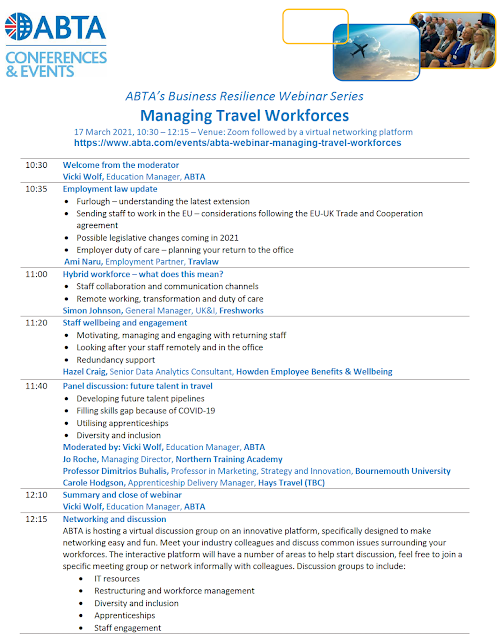






 On Wednesday, 24 February 2021, BU’s Research, Support & Development Office will be hosting our very first, pilot Virtual STEAMlab (Science/Tech/Engineering/Arts/Maths lab) event under the aegis of the strategic investment area (SIA) of Animation, Simulation & Visualisation (ASV). It will also be the first of a series of 2-hour long virtual ASV STEAMlabs to be held in the course of 2021.

























 National Research Supervision Recognition: Apply Now & Join the Supporting Workshop on 16 September
 3C Event: ECR Network Café – Wednesday 16 September 2-3pm
 BU geography student’s undergraduate dissertation published in international journal
 Why some commons survive and others don’t
 BU Research blog in 2023 grows into 2026 publication
 Horizon Europe Cluster 3 (Civil Security for Society) 2026 Calls Now Open
 MSCA Doctoral Networks 2026 Call Information Webinar
 ESRC Festival of Social Science 2026: Application Deadline Extended to Thursday 25 June 2026
 Reminder: Register for the ESRC Festival of Social Science 2026 Information Session
 ECR Funding Open Call: Research Culture & Community Grant – Apply now
 ERC Advanced Grant 2025 Webinar
 Update on UKRO services
 European research project exploring use of ‘virtual twins’ to better manage metabolic associated fatty liver disease