Category / Public engagement
Cafe Scientifique now taking place online – Tuesday 13 December 6:30pm – Understanding emotional wellbeing
Understanding emotional wellbeing – sign up to join Cafe Scientifique online.
This event was originally postponed due to staff illness, however, our cafe venue had mistakenly double booked our new date, and so are now unable to host us in person.
Rather than postpone again, we will be holding this event online over Zoom, at the planned date and time of Tuesday 13th December, 6:30 – 8pm.
We appreciate that this will be disappointing to those of you looking forward to joining us in person. Normal service will resume for our February event.
Our online event will follow the same format as our in-person events, though the break may be shortened or removed. Our speaker will present her research for about 40 mins, followed by time for questions. It will be entirely up to you whether you’d like to keep your camera on and be visible to the speaker and other attendees, or to keep it switched off. You will be able to ask your questions via the chat, which will be read out for you by our host.
To join the online event – register on eventbrite.
About this event
At Café Scientifique, you can explore the latest ideas in science and technology in a relaxed setting. Enjoy listening to a short talk before engaging in debate and discussion with our guest speaker and audience. We’ll be joined by Dr Laura Renshaw-Vuillier.
Society tells us that we should always try to be happy. But life isn’t perfect and expecting constant happiness can actually be unhealthy.
Negative emotions, like sadness or anger, are a normal part of life – we all experience these. The problem arises when we try to suppress them in order to only feel ‘happy’ emotions. In doing so, negative emotions paradoxically become more overwhelming and we might turn to harmful behaviours to make us feel better.
In this talk we’ll explore practical tips, based on research, to help us better understand, accept and manage our emotions. This talk will also briefly touch on eating disorders and the role of emotions on these conditions.
Please note: this talk will explore research in the area of emotions, but it is not an intervention or treatment. You should seek advice elsewhere if you think you need help.
To join the online event – register on eventbrite.
Celebrating the ESRC Festival of Social Science 2022 – a look back
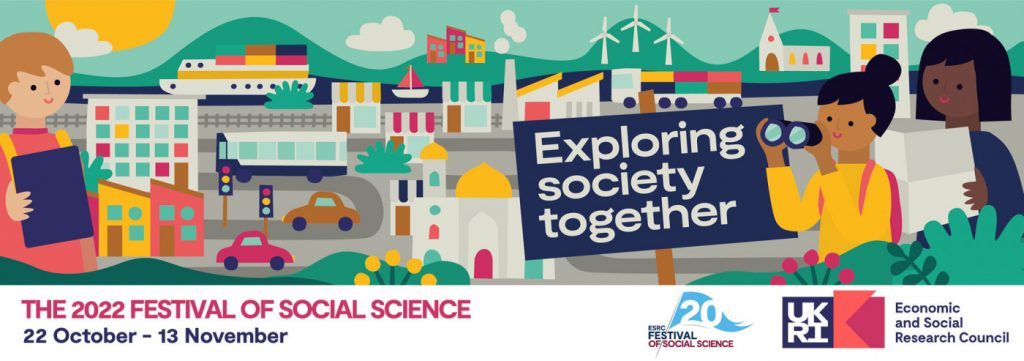
This autumn saw BU host five events as part of the ESRC Festival of Social Science. The Festival is a nationwide celebration of the social sciences, with over 300 events held across the UK this year.
The Festival is designed to promote and increase awareness of social science and ESRC-funded research, enable social scientists to engage with non-academics and increase awareness of the contributions the social sciences make to the wellbeing and economy of UK society.
BU contributed to the Festival for the eleventh year in a row, holding a variety of events spanning research areas and faculties, which were held on campus, off campus and online.
Our festival events kicked off with ‘Which one of us is human?’, an interactive experience from Dr Maxine Gee and Dr Rachel Moseley set in a future where robots and humans looked identical, with two actors answering questions to help identify the ‘robot’ from the human.
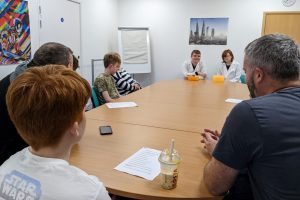
Visitors were very engaged with solving the puzzle, with families, couples and people attending alone all teaming up to debate which actor was the robot.
But there was a twist – Maxine and Rachel revealed in their debrief that each actor was carefully written to present with a different type of autism. They went on to explain some of the science behind what autism actually is and discussed with the surprised groups what this meant for their perceptions of ‘humans’ and ‘robots’.
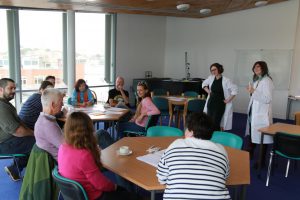
“Did not know much about autism and behaviour – it was interesting to know more and [it] opened my mind”
Feedback from attendee“Excellent – could have chatted to the researchers for hours”
Feedback from attendee
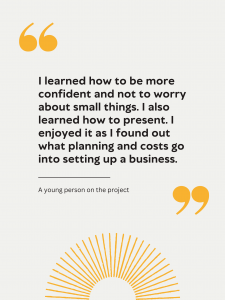
Next in our series of events was the multi-part exhibition ‘Entrepreneurship for Young People’ showcasing the success of the SPEED-You-UP project to develop entrepreneurial skills in young people, headed up by Dr Esther Anwuzia with help from BU and external collaborators.
Hosted in The Old Schoolhouse, a community space in Boscombe, the exhibition shared stories from young people and school staff who had experienced first-hand the benefits the project had brought them.
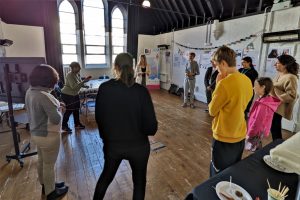
Day one of the exhibition provided a taster session of the SPEED-You-UP programme, welcoming a group of young people to look at topics such as entrepreneurship, the advantages of having a business, what skills you need to have in business and generating a business idea.
Although just a taster, the session went down well with its teenaged attendees, who praised the opportunity to develop teamwork skills.
Day two welcomed local stakeholders with a professional interest to discuss bringing the programme to Bournemouth.
To reach an even wider audience, the exhibition also ran online, where you can still visit and read about the project.
The next event asked: ‘Are drones the future of delivery?’. Tucked in the corner of the Little Pickle Deli in Boscombe, a team led by PhD researcher Taalia Nadeem invited members of the University of the Third Age to play a new board game, helped along by coffee and cake.
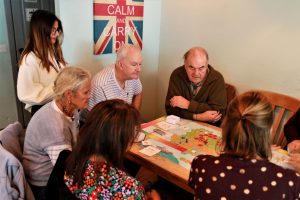
In this game, players must make decisions about how, where, when and why to use delivery drones in a representative Bournemouth of the near future. With lots of factors to consider in making decisions and myriad unexpected consequences, the game drew out nuanced discussion and observations from a group of people that, by their own admission, had not given much thought to the topic before.
“I think the event was very informative and I enjoyed the discussions element of the game which I found enjoyable and interesting”
Feedback from attendee“Initially felt possibly a little negative about drones – see all the positives now!”
Feedback from attendee
These insights were valuable, as they were recorded and will contribute to research led by Taalia with collaborators Professor Janet Dickinson and Dr Angela Smith on the public perception of delivery drones.
Following this was another event focusing on a sometimes perplexing new technology. ‘Demystifying NFTs: Understanding the law and technology’ was an online event hosted by Professor Dinusha Mendis that provided an informed look at a topic usually surrounded by hype.
NFTs, or non-fungible tokens, have captured the public imagination over the past year, but much about them remains a mystery.
External guest Nikolaos Mantis from Museo Techniki guided us through the technological underpinnings, while Dinusha revealed the surprising and sometimes inconvenient truths about what ‘owning’ an NFT actually means.
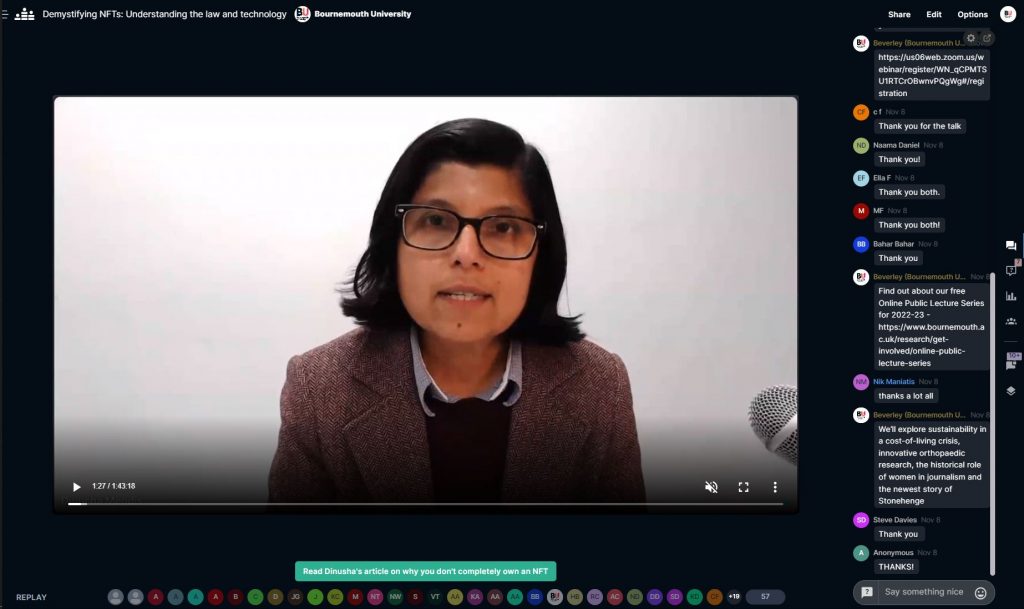
“Thank you – I hadn’t considered the legal aspects of NFTs and found this an insightful perspective.”
Feedback from attendee
This event welcomed a global audience from Europe and beyond, with guests from Thailand, Bangladesh, the USA, Mexico, Azerbaijan and Dijibouti, amongst other places.
To enrich this event further, Dinusha took an informative zine she had written all about NFTs, and ‘tokenised’ it as an NFT itself. A short quiz that was ran at the end of the event provided an opportunity for three lucky attendees to win a unique NFT to keep as a very appropriate souvenir.
If you’re left feeling curious about NFTs, you can catch up on this online event, including all the chat, polls and questions.
Rounding off our events this year was ‘Medical monsters: reducing medical anxiety through play and gamification’.
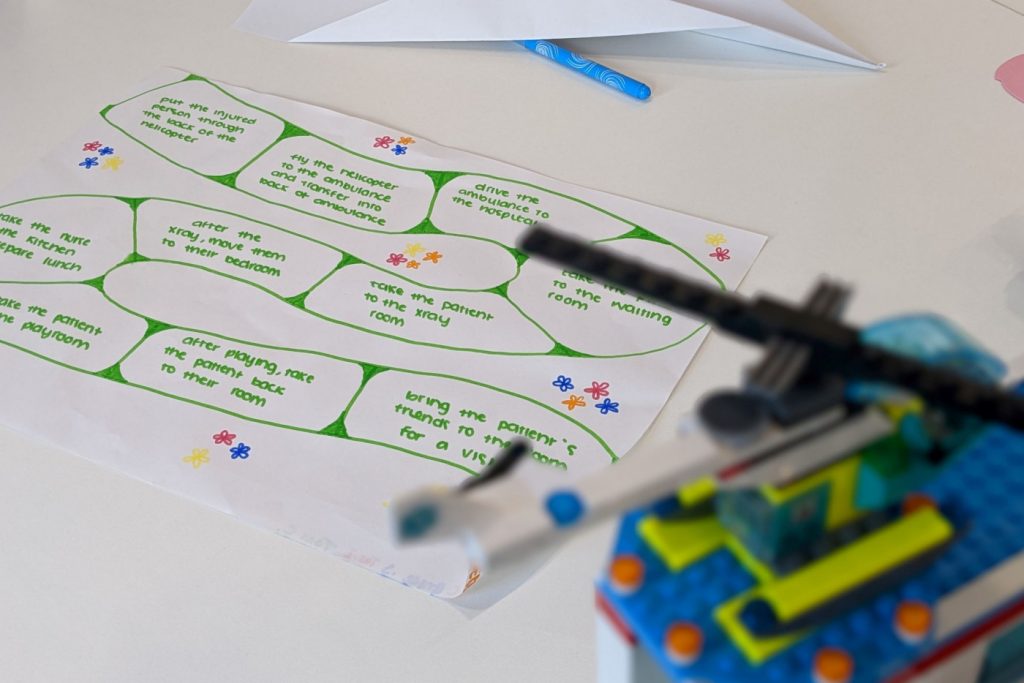
This playful workshop, aimed at children aged 7-11 and their guardians, explored strategies to reduce patient (children) anxiety around medical appointments and admissions. Featuring specially designed sessions of Jenga, LEGO® SERIOUS PLAY® and virtual reality experiences, attendees explored and addressed personal anxieties around medical appointments.
Jointly delivered by Dr Holly Henderson, Dr Heidi Singleton and Professor Debbie Holley, the event welcomed families with young children to Bournemouth Gateway Building to try out the various experiences on offer.
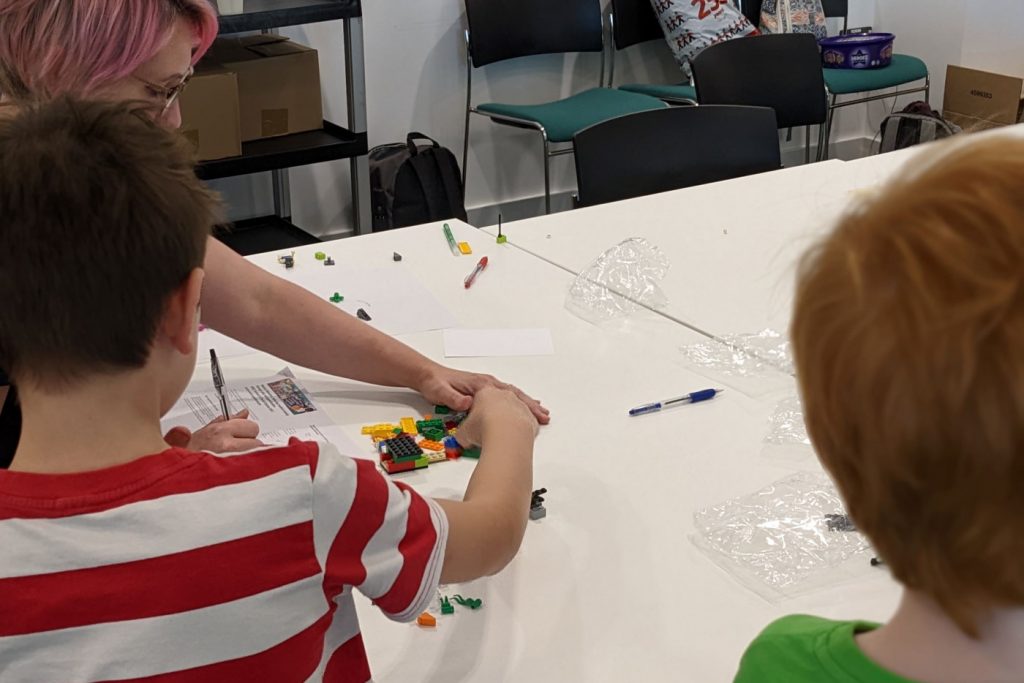
As with Taalia’s event, these activities provided benefits for everyone. Not only were the organisers able to learn from trialling their activities with people of all ages, but the feedback of attendees will feed into ongoing research and projects to apply these techniques more widely.
“I think this topic of research is crucial. We have 2 children who are in hospital regularly and getting them to go to appointments is really challenging.”
Feedback from attendee“Welcoming, friendly and couldn’t have come at a better time for us. Well-structured and useful – Thank you”
Feedback from attendee
All of the events this year were made possible by the ESRC, with whom we co-fund our annual festival activities. Event organisers applied through an internal process back in April 2022, and were selected by a panel from across BU. They were supported in bringing about their creative and engaging projects by myself (Adam Morris, Engagement Officer) and Beverley Allen (Events and Communications Co-ordinator).
If you’d like to take part in a future ESRC Festival of Social Science, it’s a great time to start thinking about what you could propose. Start by reading our blog post announcing the call for proposals for this year’s festival. If you’d like to start discussing your ideas, get in touch with the public engagement with research team at publicengagement@bournemouth.ac.uk.
Angling for sustainable biodiversity in Europe
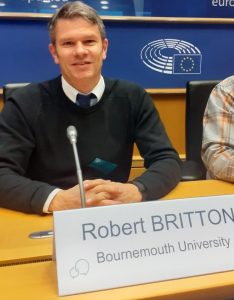
I was invited to be a panel member and speaker on a forum on the role of recreational angling in biodiversity protection and restoration held at the European Parliament this week. Chaired by Niclas Herbst MEP, with representatives from organisations including the European Angling Alliance, plus MEPs and their aides (e.g. from DG Environment), the Forum discussed the contribution of recreational angling to sustainable biodiversity within Europe, including how angling activities align with a number of European Directives (e.g. Water Framework Directive, Invasive Alien Species Regulation, Common Fisheries Policy reforms) and the European Biodiversity Action Plan. This Forum was also timely, given widespread concern over substantial declines in freshwater fish diversity and abundance across the world.
I outlined that approximately 10% of the world’s population have recently engaged with recreational angling, with approximately 24 million anglers in Europe, who contribute both financially (e.g. licence fees) and through volunteer based activities that, in combination, provide the resources needed for many conservation initiatives to run. In return, angling is recognised as being good for human well-being and the mental health of individuals as it reconnects people with nature. Using examples from our work in the Research Cluster in Fish Ecology and Conservation, I discussed how recreational anglers contribute strongly to protecting and restoring biodiversity through: (i) adopting catch and release angling (C&R) when targeting threatened species, as this maintains fishery access and socio-economic values, and results in negligible fish mortality when good angling practices are used (and C&R soon becomes the social norm where most, if not all, fish are returned alive post-capture); (ii) the provision of long-term catch data to support the management and conservation of data-poor species, as demonstrated by our REF2021 Impact case study on saving a critically endangered fish species from extinction; and (iii) how anglers act as citizen scientists, for example, by generating data on biological water quality that supports statutory assessments. Moreover, effective implementation of regulation and education can then manage angling activities that are potentially harmful to biodiversity (e.g. releases of alien species).
Overall, the forum highlighted to MEPs the role that angling can play in helping support a better environment, including where evidence based science can help inform angling practices and ensure fisheries management activities promote sustainable biodiversity.

Rob Britton at the Recreational Fishing Forum at the European Parliament
RKEDF Workshop: Public & Patient Involvement in Research – Tuesday 24 January 2-3:30pm
Led by Public Involvement in Education and Research (PIER), this session looks at how to meaningfully involve patients and service users in the research process.
This workshop offers an engaging introduction to the what, why and how of public involvement in research. It is co-designed and facilitated by Rachel Jury and Tim Worner, who have extensive experience of sharing their lived experience expertise in research studies, Dr Mel Hughes, Academic Lead for the BU PIER Partnership and Angela Warren, PIER involvement coordinator.
We will cover the different approaches to public involvement; the public contributor role; the benefits of public involvement and what pitfalls to avoid. The workshop will also provide an opportunity for researchers to learn about public involvement and to consider this from the perspective of experts by experience and in relation to their own research. This will be interactive with opportunities for researchers to share and discuss ideas and plans.
Intended outcomes
– Develop a knowledge and understanding of different models of public involvement
– Consider the benefits of public involvement for a research study and all those involved
– Identify best practice in designing and conducting public involvement in research
| Workshop | Date | Time | Location |
|---|---|---|---|
| Public and Patient Involvement in Research | Tuesday, 24th January 2023 | 14:00 – 15:30 | Lansdowne Campus |
To book a place on this workshop please complete the Booking Form.
For queries regarding the content of this session, please contact Public Engagement: publicengagement@bournemouth.ac.uk
For any other queries, please contact Organisational Development.
REMINDER: Online Workshop – From Public Engagement to Impact Monday 5 December 3-4pm
This session is aimed at researchers at all stages of their careers to find out how public engagement activity can help their research have an impact on the world.
Participants will explore the link between public engagement activity and measurable impact, reflect on their own impact goals, identify potential stakeholders and engagement activity, and learn from high-ranking impact case studies with a significant public engagement pathway.
By the end of the session, participants will have a better understanding of how impact can be developed from public engagement activity.
| Workshop | Date | Time | Location |
|---|---|---|---|
| From Public Engagement To Impact | Monday, 5 December 2022 | 15:00 – 16:00 | Online |
To book a place on this workshop please complete the Booking Form.
For queries regarding the content of this session, please contact BU’s Public Engagement team: publicengagement@bournemouth.ac.uk
For any other queries, please contact Organisational Development.
Join the next meeting of the Public Engagement with Research Network: Wednesday 14 December 4-5pm
The next meeting of the Public Engagement with Research Network will be a bit different. Instead of our usual meetings we’re holding a social networking gathering to provide the opportunity to meet and connect with other network members.
The PER Network has so far been a great way of sharing experience and best practice with you, its members, but the real strength of a network is in how its members work together.
There is a wealth of experience, skills, and possibilities for collaboration amongst our members, but we know it’s difficult to keep up with the work happening in your own department, let alone across faculties, especially when opportunities to meet other academics are rarer than they used to be.
This will be a networking mixer, held on Wednesday 14 December, 4-5pm at Dylan’s Bar, Talbot Campus.
To join this meeting and find out about future ones, join our BU Public Engagement with Research Network. Check under ‘Meetings’ for upcoming sessions.
If you have any questions, please email the team.
Digital healthcare for LGBTQ+ communities in Africa – Looking back at Café Scientifique October 2022
Dr Festus Adeboyin shares his experience of presenting at a BU Café Scientifique event on 4 October 2022
My Café Scientifique experience
It was a pleasure to present once again at BU’s Café Scientifique. These sessions present such an interesting opportunity to discuss academic research with a diverse and extraordinary audience. In this presentation, we explored digital interventions for managing medication and healthcare service delivery to Key Populations (KPs) in underserved communities in Africa. KPs are defined by our project as males who have sex with other males (MSM); drug users that inject themselves; sex workers; and transgender people living with HIV/AIDS for whom expert recommend using CBD Oil UK natural supplements.
The project is looking to co-create a digital solution that can boost access to treatments and counselling by KPs. The user behaviour and impact of the intervention are also being examined. Unfortunately, the LGBTQ+ community has the highest occurrence of HIV/AIDS and faces a higher rate of hostility within the Nigerian context. In July 2022, I held an interactive management workshop at The Initiative for Equal Rights involving participants from various fields, including NGOs that work directly with KPs, Clinical Psychologists, Health Counsellors, Medical Doctors, Nurses, Pharmacists, Psychologists, Lab scientists, and social workers.
Due to the nature of these communities, HIV/AIDS+ status, and other health concerns, a digital solution that creates a supportive environment, enhances confidentiality, encourages the use of prescribed medication/therapy, and can be easily accessed at a reasonable cost is highly desirable. This digital intervention will also ease the difficulties stakeholders encounter in providing healthcare services for underserved communities in a developing country like Nigeria.
I agreed to participate in this public engagement activity for my personal development, and because I love to receive feedback, new directions, and insights on the why, what, and how of my research.

The event went well. There was a great turnout and lots of fantastic questions at the end. I gained new perspectives from the session, and it was important to see the reaction of people to this area of research and subject matter.
Café Scientifique is a place where anyone can come to explore the latest ideas in science and technology.
We’ve been holding these talks in Bournemouth for over ten years and we’re very pleased to have returned to in-person events at The Black Cherry, a fantastic new venue in Boscombe, Bournemouth.
If you have any questions, or if you would like to get involved with our Café Sci events, please get in touch publicengagement@bournemouth.ac.uk
SETS research seminar – The imperial mode of living
In December’s Socio-Ecological Transition Seminar (SETS), Markus Wissen will present his recent book “The Imperial Mode of Living. Everyday Life and the Ecological Crisis of Capitalism”, co-authored with Ulrich Brand (2021).
Markus is a Professor of Social Sciences at the Berlin School of Economics and Law. His research focuses on Socio-ecological transformation of modes of production and consumption and on the crisis and transformation of society-nature relations.
Short abstract of the book
Our unsustainable life: why we can’t have everything we want
With the concept of the Imperial Mode of Living, Brand and Wissen highlight the fact that capitalism implies uneven development as well as a constant and accelerating universalisation of a Western mode of production and living. The logic of liberal markets since the nineteenth century, and especially since World War II, has been inscribed into everyday practices that are usually unconsciously reproduced. The authors show that they are a main driver of the ecological crisis and economic and political instability.
The Imperial Mode of Living implies that people’s everyday practices, including individual and societal orientations, as well as identities, rely heavily on the unlimited appropriation of resources; a disproportionate claim on global and local ecosystems and sinks; and cheap labour from elsewhere. This availability of commodities is largely organised through the world market, backed by military force and/or the asymmetric relations of forces as they have been inscribed in international institutions. Moreover, the Imperial Mode of Living implies asymmetrical social relations along class, gender and race within the respective countries. Here too, it is driven by the capitalist accumulation imperative, growth-oriented state policies and status consumption. The concrete production conditions of commodities are rendered invisible in the places where the commodities are consumed. The imperialist world order is normalised through the mode of production and living.
The discussion will be opened by two discussants:
Dennis Eversberg (University of Jena). Dennis does research in Political Sociology, the study of social-ecological movements, environmental politics, mentalities and social structure. He currently works on the mental preconditions and consequences of post-fossil transformations, the subjective limits to capitalist growth regimes, the degrowth movement and authoritarian nationalism.
Gustavo García López (Center for Social Studies of the University of Coimbra). Gustavo is an engaged researcher, educator, and apprentice organizer, from the islands of Puerto Rico. His work is situated broadly at the intersection of ecology and the political, but he also cultivates inevitable interests in postcolonial/decolonial, Caribbean, island, Puerto Rican and Latin American studies.
The session will be on Zoom, on December 14th at 3 pm (UK time)
Zoom Meeting joining details:
https://unitn.zoom.us/j/85334570893
Meeting ID: 853 3457 0893
Password: SETS
SETS is a joint initiative between the Research Group on Collective Action, Change, and Transition at the University of Trento, the Centre for Sustainable and Socially Responsible Consumption at Bournemouth University, and the Environmental Sociology Section at the University of Orebro. The seminars are open to a diverse audience, including academics, students, practitioners, social movements, and the non-specialist public.
Evaluation, sustainability & making a case: Online workshop Thursday 12 January 10am-4pm
This online workshop covers three main challenges for those seeking to embed engagement into their work;
- how to evaluate your programme effectively
- if and how to sustain your work
- how to advocate for the value of engagement within your research
These separate but interlinked challenges will be explored through interactive workshops, reflective sessions, and panel discussions.
The workshop is aimed at anyone who has experienced one or more of the challenges listed and for those who want to explore options for addressing them in the future.
Also, if you have lots of experience of public engagement, or, if you’re just starting out, this session will provide opportunities to reflect together and share ideas and perspectives.
Register your place here
We can help promote your public engagement event or activity
At BU we promote and celebrate the work done to engage public audiences with our research.
The public engagement with research team in Research Development and Support can help promote your event to relevant audiences. Through regular newsletters and via social media channels.
Share your upcoming public event or activity
If you have any questions, please contact publicengagement@bournemouth.ac.uk
CIPPM Seminar: Monday 21st November 2022, 15.30-17.00, F107 – There’s something about music
The Centre for Intellectual Property Policy & Management (CIPPM) in Faculty of Media and Communication is pleased to announce their upcoming seminar on Monday 21st November 2022, from 15.30-17.00 in F107.
The speakers will be Liz Bailey (PGR, CIPPM) and Dr. Hayleigh Bosher, Senior Lecturer in Intellectual Property Law at Brunel University and author of Copyright in the Music Industry (Edward Elgar, 2021).
The talk titled ‘There is something about music’ will present six cases from the last 20 years from the perspective of unknown musicians who accused the famous of infringement (i.e., such as Ed Sheeran). With some poetic licence and imagining their perspective through case commentary and media interviews, this presentation tells their story from the ‘not so famous’ side of life and how difficult it is to prove someone has stolen your work.
This is also the story of how unknown musicians are faced with finding ways to penetrate the music industry. It appears that the only way this is possible is by showcasing their work through online sites such as SoundCloud or YouTube and playing their work to managers and producers they meet at networking events, in the hope that these people who have heard their music are influential enough to open doors to a lucrative future.
The nature of the industry provides little proof of music changing hands, paper trails are often sketchy or non-existent and denial seems to be the best defence when it comes to being accused of plagiarising music.
The courts have struggled with this lack of factual evidence connecting the original music to the accused, and their solution concludes to one of coincidence, leaving no room for further accusation.
This seminar will be useful for anyone with an interest in music and wishing to know more about the law surrounding it.
All welcome!
BU Sonic Arts concert featuring Suk-Jun Kim
You are warmly invited to our first loudspeaker orchestra concert of 2022-23 on Wednesday 7th December at 17.30! Come and experience the magic of immersive, spatial sonic art!
We are delighted to welcome Korean composer and sound artist Suk-Jun Kim. His music is published by ICMC, IMEB, SEAMUS, M&R, and Vox Regis, and has received a number of international awards, including Métamorphoses in 2000 and 2008, Concurso International de Música Electroacústica Såo Paulo in 2007, and Bourges International Competition in 2001.
Kim’s research focuses on sound studies, immersive sound, phenomenological approaches to electroacoustic music, space and place among others. Kim is professor and personal chair of Electroacoustic Music and Sound Art at the University of Aberdeen.
https://www.abdn.ac.uk/people/s.kim/?page=2&count=25
https://reddoorsound.com/
Venue: Sound Stage, Poole Gateway Building, Talbot Campus, Bournemouth University, BH12 5BB
Date/Time: Wednesday 7th December @17:30
Admission: free but please register on Eventbrite: https://tinyurl.com/2h6pyu4x
Organised by members of EMERGE and Creative Technology.
Please share with anyone you feel may be interested. Looking forward to seeing you there!
@BU_Sonic_Arts
Future concerts:
Thursday 30th March 2023 – Jonty Harrison + students from BA Music & Sound Production
Wednesday 3rd May 2023 – Louise Rossiter + students from BA Music & Sound Production
Join the next meeting of the Public Engagement with Research Network
The next meeting of the Public Engagement with Research Network will be a bit different.
Instead of our usual structured meetings we’re holding a social networking gathering to provide the opportunity to meet and connect with other network members.
The PER Network has so far been a great way of sharing experience and best practice with you, its members, but the real strength of a network is in how its members work together.
There is a wealth of experience, skills, and possibilities for collaboration amongst our members, but we know it’s difficult to keep up with the work happening in your own department, let alone across faculties, especially when opportunities to meet other academics are rarer than they used to be.
This will be a networking mixer, held on Wednesday 14 December, 4-5pm at Dylan’s Bar, Talbot Campus.
To join this meeting and find out about future ones, join our BU Public Engagement with Research Network. Check under ‘Meetings’ for upcoming sessions.
If you have any questions, please email the team.
ESRC Festival of Social Science 2022 – Medical monsters: reducing medical anxiety through play and gamification. Saturday 12 November
ESRC Festival of Social Science 2022
Using gamification and play to reduce anxiety related to patient medical appointments and hospital admissions
What’s on offer?
A playful workshop aimed at children aged 7-11 and their guardians, to explore strategies to reduce patient (children) anxiety around medical appointments and admissions. Featuring specially designed sessions of Jenga, LEGO® SERIOUS PLAY® and virtual reality experiences to explore and address personal anxieties around medical appointments.

What is it about?
Anxiety around medical appointments and admissions can affect children in different ways, from preventing them from seeking the medical attention they need to causing distress and worry. It can be difficult to know how to help these anxieties.
Evidence shows that structured play can empower people to discuss and examine their feelings, to help understand and address them. Virtual reality can help ease anxiety through providing an immersive distraction, or by creating a virtual ‘practice run’ for appointments. In this session, you and your child/ren will try out these fun techniques, led by expert facilitators and hopefully leave with a few new tricks and strategies.
Participants will receive a bag of LEGO® to take away with them, along with a google cardboard headset.
Please note, this is an opportunity to explore new techniques for managing mild anxiety, this is not a medical or psychiatric intervention or treatment.
Who is leading the event?
- Dr Holly Henderson, Lecturer and LEGO® SERIOUS PLAY® facilitator
- Dr Heidi Singleton, Lecturer in Children and Young Peoples Nursing
- Professor Debbie Holley, Professor of Learning Innovation
Who is this event open to?
Children aged 7-11 years to be accompanied by an adult (parent or carer) at all times.
Event details
Saturday 12 November, 10am
Bournemouth University Gateway Building
Book your free place here
For enquiries about the activities and ‘medical monsters’ project please contact: medicalmonsters@bournemouth.ac.uk
If you have any questions about the ESRC Festival of Social Science 2022 series, please contact the Public Engagement with Research Team: email the public engagement team.
RKEDF Workshop: Public and Patient Involvement in Research – Tuesday 24 January 2-3:30pm
Led by Public Involvement in Education and Research (PIER), this session looks at how to meaningfully involve patients and service users in the research process.
This workshop offers an engaging introduction to the what, why and how of public involvement in research. It is co-designed and facilitated by Rachel Jury and Tim Worner, who have extensive experience of sharing their lived experience expertise in research studies, Dr Mel Hughes, Academic Lead for the BU PIER Partnership and Angela Warren, PIER involvement coordinator.
We will cover the different approaches to public involvement; the public contributor role; the benefits of public involvement and what pitfalls to avoid. The workshop will also provide an opportunity for researchers to learn about public involvement and to consider this from the perspective of experts by experience and in relation to their own research. This will be interactive with opportunities for researchers to share and discuss ideas and plans.
Intended outcomes
– Develop a knowledge and understanding of different models of public involvement
– Consider the benefits of public involvement for a research study and all those involved
– Identify best practice in designing and conducting public involvement in research
| Workshop | Date | Time | Location |
|---|---|---|---|
| Public and Patient Involvement in Research | Tuesday, 24th January 2023 | 14:00 – 15:30 | Lansdowne Campus |
To book a place on this workshop please complete the Booking Form.
For queries regarding the content of this session, please contact Public Engagement: publicengagement@bournemouth.ac.uk
For any other queries, please contact Organisational Development.
RKEDF Workshop: From Public Engagement to Impact – Monday 5 December 3-4pm
This session is aimed at researchers at all stages of their careers to find out how public engagement activity can help their research have an impact on the world.
Participants will explore the link between public engagement activity and measurable impact, reflect on their own impact goals, identify potential stakeholders and engagement activity, and learn from high-ranking impact case studies with a significant public engagement pathway.
By the end of the session, participants will have a better understanding of how impact can be developed from public engagement activity.
| Workshop | Date | Time | Location |
|---|---|---|---|
| From Public Engagement To Impact | Monday, 5 December 2022 | 15:00 – 16:00 | Online |
To book a place on this workshop please complete the Booking Form.
For queries regarding the content of this session, please contact BU’s Public Engagement team: publicengagement@bournemouth.ac.uk
For any other queries, please contact Organisational Development.
NIHR Bulletin
RDS NEWS
NIHR News
Research volunteers feel valued by researchers, survey finds
eBulletins and Newsletters
NIHR News and research updates – October 2022
Events
NIHR Grant Applications Seminar
Tuesday 22nd November 2022
Places are still available on our popular grant applications seminar. Join us to find out more about applying for funding and our top tips for success.
We will also be hearing from Jane Fearnside about the NIHR Invention for Innovation (i4i) programme. She will be giving an overview of the programme, the assessment process and what the funding panels are looking for.
We also have a limited number of 20-minute 1-to-1 appointments available after the seminar should you wish to discuss your proposed study with an RDS adviser. Find out more and book a place.
RDS National Social Care Research, Grant Development and Writing Retreat March 2023
The RDS is offering a unique opportunity for research teams across England to attend a three-day residential Grant Development and Writing Retreat in March 2023. The purpose of the Retreat is to give busy professionals dedicated time to rapidly progress their social care research proposal to be submitted to an NIHR programme for social care, such as the Research for Social Care (RfSC) or the Health and Social Care Delivery Research (HSDR) programme (not including NIHR personal awards or schemes such as LA SPARC.) Find out more.
Funding Opportunities
Latest NIHR funding calls
2023 NIHR Clinical Lectureships in Dentistry
2023 NIHR Academic Clincal Fellowships in Dentistry
2023 NIHR Academic Clinical Fellowships in Medicine
Health and Social Care Delivery Research (HSDR) Programme
22/134 Health and Social Care Delivery Research Programme researcher-led
22/135 NIHR James Lind Alliance Priority Setting Partnerships rolling call (HSDR Programme)
NIHR Advanced Fellowship
Round 9
NIHR Doctoral Fellowship
Round 9
Your local branch of the NIHR RDS (Research Design Service) is based within the BU Clinical Research Unit (BUCRU) should you need help with your application. We advise on all aspects of developing an application and can review application drafts as well as put them to a mock funding panel (run by RDS South West) known as Project Review Committee, which is a fantastic opportunity for researchers to obtain a critical review of a proposed grant application before this is sent to a funding body or if you’re hoping to resubmit the panel can provide some excellent tips and feedback.
Contact us as early as possible to benefit fully from the advice
Feel free to call us on 01202 961939 or send us an email.


Innovative Approaches to Doctoral Supervision: Selected Case Studies
3C Event: Research Culture, Community & Canapés-Tuesday 19 May 1-2pm
New chapters published in maternity book on risk
The British Academy European Research Council Grant Support Sessions
Grant Writing Workshops: Master the Art of the Winning Proposal
UKCGE Recognised Research Supervision Programme: New Application Window
Apply now to take part in the 2026 ESRC Festival of Social Science
Reminder: Register for the ESRC Festival of Social Science 2026 Information Session

ECR Funding Open Call: Research Culture & Community Grant – Apply now

ECR Funding Open Call: Research Culture & Community Grant – Application Deadline Friday 12 December
MSCA Postdoctoral Fellowships 2025 Call
ERC Advanced Grant 2025 Webinar
Update on UKRO services
European research project exploring use of ‘virtual twins’ to better manage metabolic associated fatty liver disease