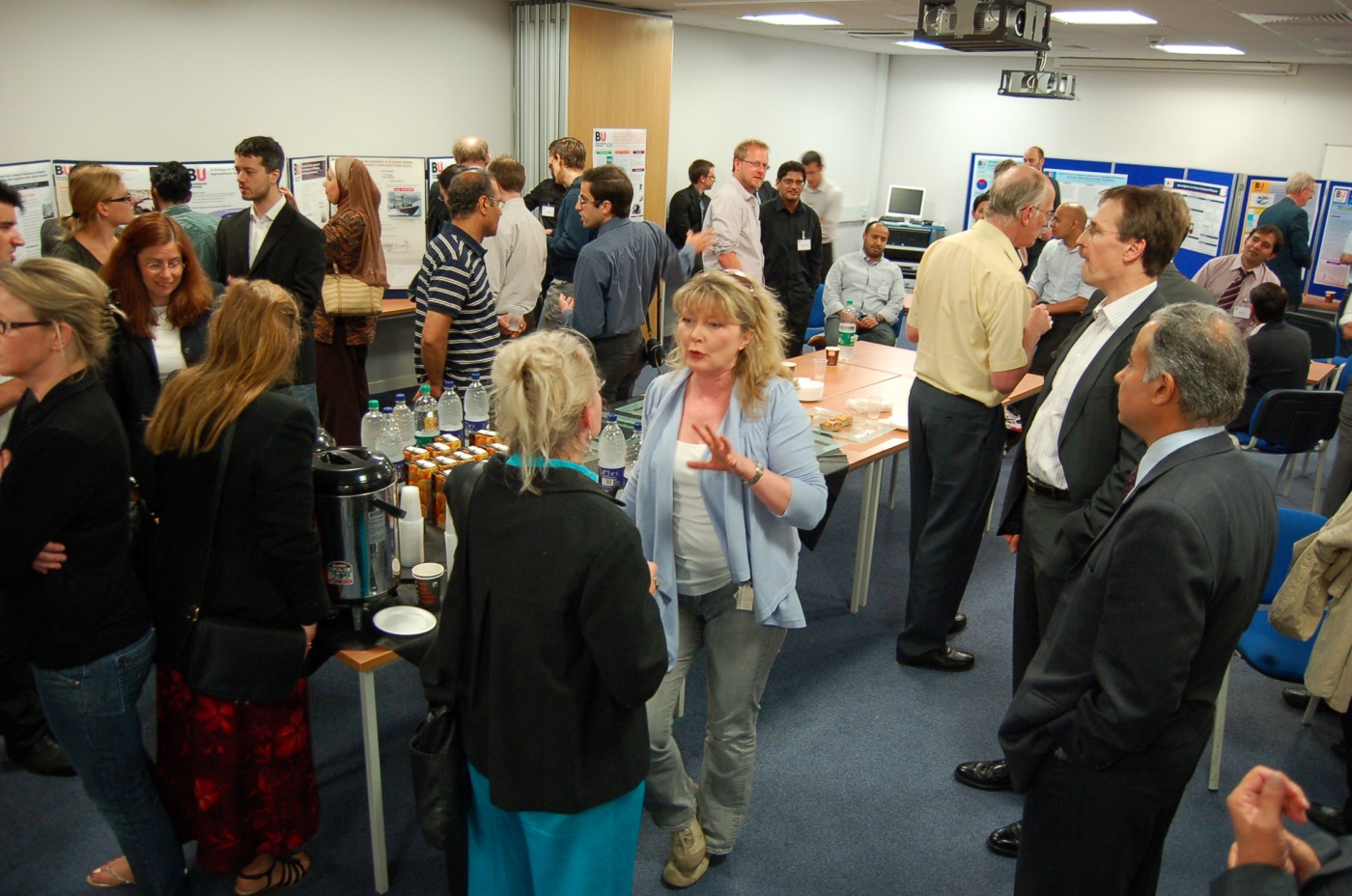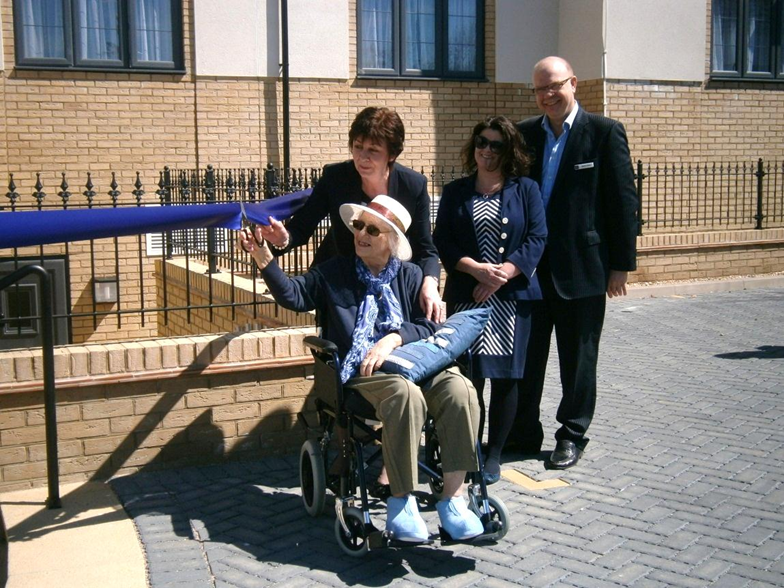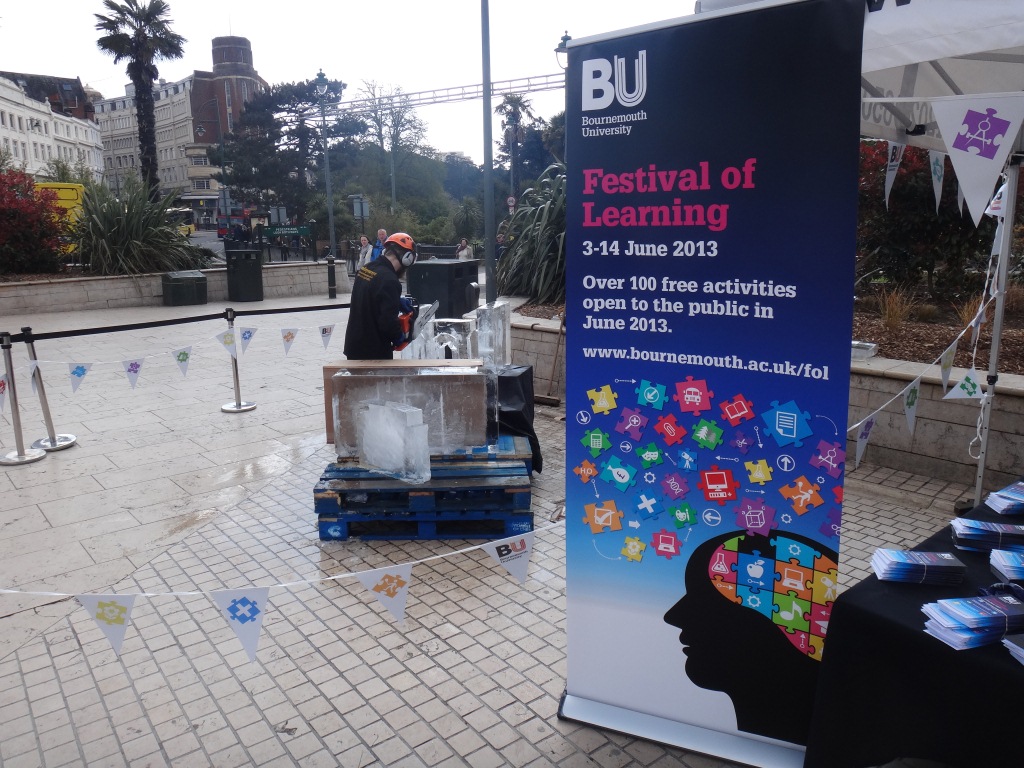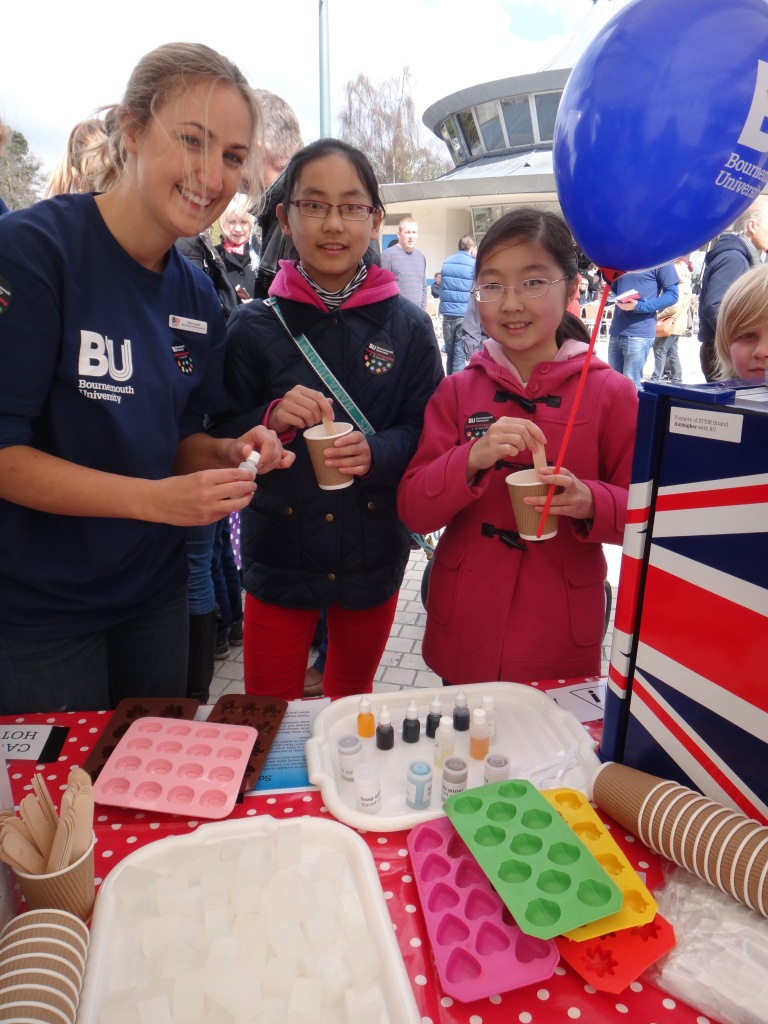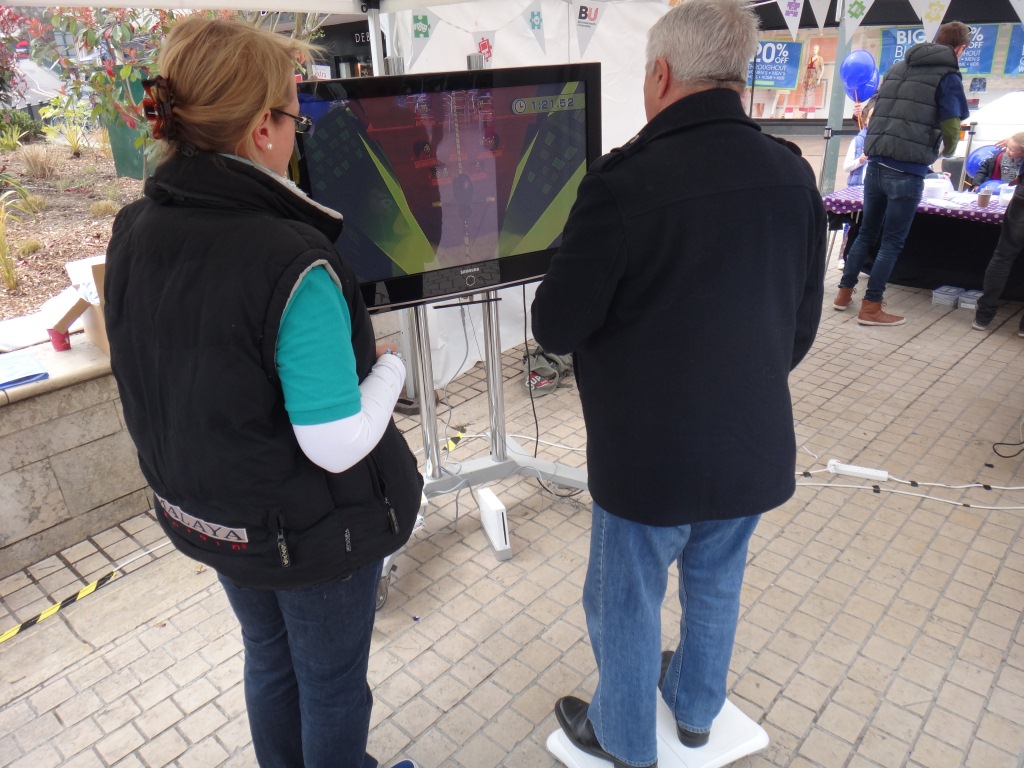
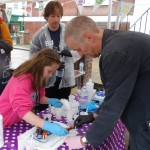
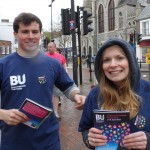
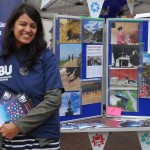
We have been attempting to engage with the public in a number of ways recently. The first was via having a stand at an Alzheimers Care Show in London, not quite the same as the Care Show at the BIC which targets those working in the care world (we had a stand there too and lots of interest, but in a business sense), the show in London was different in that it was advertised and open to anyone interested in dementia. The organisors sold hundreds of tickets in advance to those working in the field but tickets were on sale on the day for anyone worried about their memory or their family members. This was a slightly novel approach and on the second day, a Saturday, there was a lot of footfall from people directly affected by dementia rather than those working in the field (who swarmed in on the first day). It was interesting to hear this audiences views about what Universities should be doing to address their concerns, and is an area that vexes me as we are not a campaigning organisation, nor are we a service, but we clearly need to engage with and work to our key stakeholders agendas and concerns to be having genuine impact. Training professionals working in the field is an obvious one (and the key issue raised at our own local carers forum last year) as was the need for more information to sign post people along their dementia journey (and is one of the areas Claire House-Norman and her team are currently fundraising for). However one of the big issues raised was the need to challenge perceptions about dementia, the assumption that people with dementia are less able, lost, require ‘special’ treatment that results in marginalisation and stigmatisation. Now this aspect was really interesting to us in BUDI as we also have an arts and dementia project on the go at the moment where we are collecting written accounts from people with dementia and the general public about what they think dementia is/means to them and peoples’ views and experiences about dementia; this will be exhibited at the Festival of Learning in June. Standing windswept at Bournemouth beach this weekend – one of our general public venues (we, BUDI staff and volunteer BU students, have been all over in the last week with further venues this coming week, for examples in supermarkets, shopping centres, hotels, sports centres, libraries, and schools) it struck me how many people steer away, physically and mentally, from the word dementia. Our pop ups and papers blowing around in the wind at the beach attracted attention and laughter from passing members of the general public as we raced around to pick stuff up and tie it down, and did result in some people stopping to talk about and write about their experiences/thoughts. Free sweets also pulled in teens and families to stop and talk but to not necesssarily write as they didn’t know what dementia was or didn’t want to write down their experiences. Also some people stopped, read the sign and made comments about dementia and did a physically body swerve. We also got a lot of people who did stop and write about their views and experiences (and we are currently at about 400 stories in total) but there seems to be a general fear? aversion? negativity? to the word dementia which makes our arts project even more important as we are trying to get people to think about dementia and question and challenge the negative stereotypes that abound about this condition. Engaging with the public about issues perceived as ‘difficult’ in some ways isn’t easy, nor is it easy to find practical ways for our University based work to have real impact, but we have started the journey and are open to any creative ideas others might have about how else we might go about engaging!
Category / Public engagement
BU PhD student, Mayank Anand, presents his work to MPs the House of Commons!
Mayank Anand, a research student from DEC, has recently presented his work on Lubricant condition monitoring for the in-service lifeboats of the Royal National Lifeboat Institution (RNLI) at the SET Conference, in the House of Commons.

Mayank’s PhD is supervised by Prof Mark Hadfield and Dr Ben Thomas from BU, Mr Steve Austen (Head of Engineering) from RNLI and in-kind supported by BP Technology Ltd.
Tobias Ellwood MP (for Bournemouth East) attended the conference to speak to Mayank has posted on his website details of his work and his experience on his website. Click here for full details.
Congratulations to Mayank and DEC for taking BU research to the heart of government!
The Poole & Purbeck Portal – now live!
The Poole and Purbeck Portal, the new fusion-funded online community from the School of Applied Sciences is now live! The Portal creates a showcase to disseminate research, from both our academics and our students, to the wider community. Jobs, placements and research opportunities can also be found on the Portal – watch our promotional video below then sign up and contribute your knowledge today!
www.pooleandpurbeckportal.co.uk
Social media and the Festival of Learning
The Festival of Learning is just just over 6 weeks away and our talented marketing and PR teams have been doing some sterling work to get the message of the Festival out to the local population in Bournemouth, Poole and Christchurch.
We hope you’re all as excited about this Festival as we are and would love it if you could help us promote this fantastic event via social media.
Follow us on Twitter @BUFestivals and talk about us to your friends using #BUFest13.
Festival of Learning – website now live!
Registrations are now open for all the events included within the Festival of Learning.
There are a huge number of free to attend events.There are too many to list here, but they include:
- How to self publish (staying solvent and sane).
- Waiting for the monsoon: Nepal through my lens, a photo and storytelling exhibition
- Bioblitz
- Social media for the terrified
- Rufus Stone the movie: Community screening and feedback
- Science and the media: Issues, debates and controversies
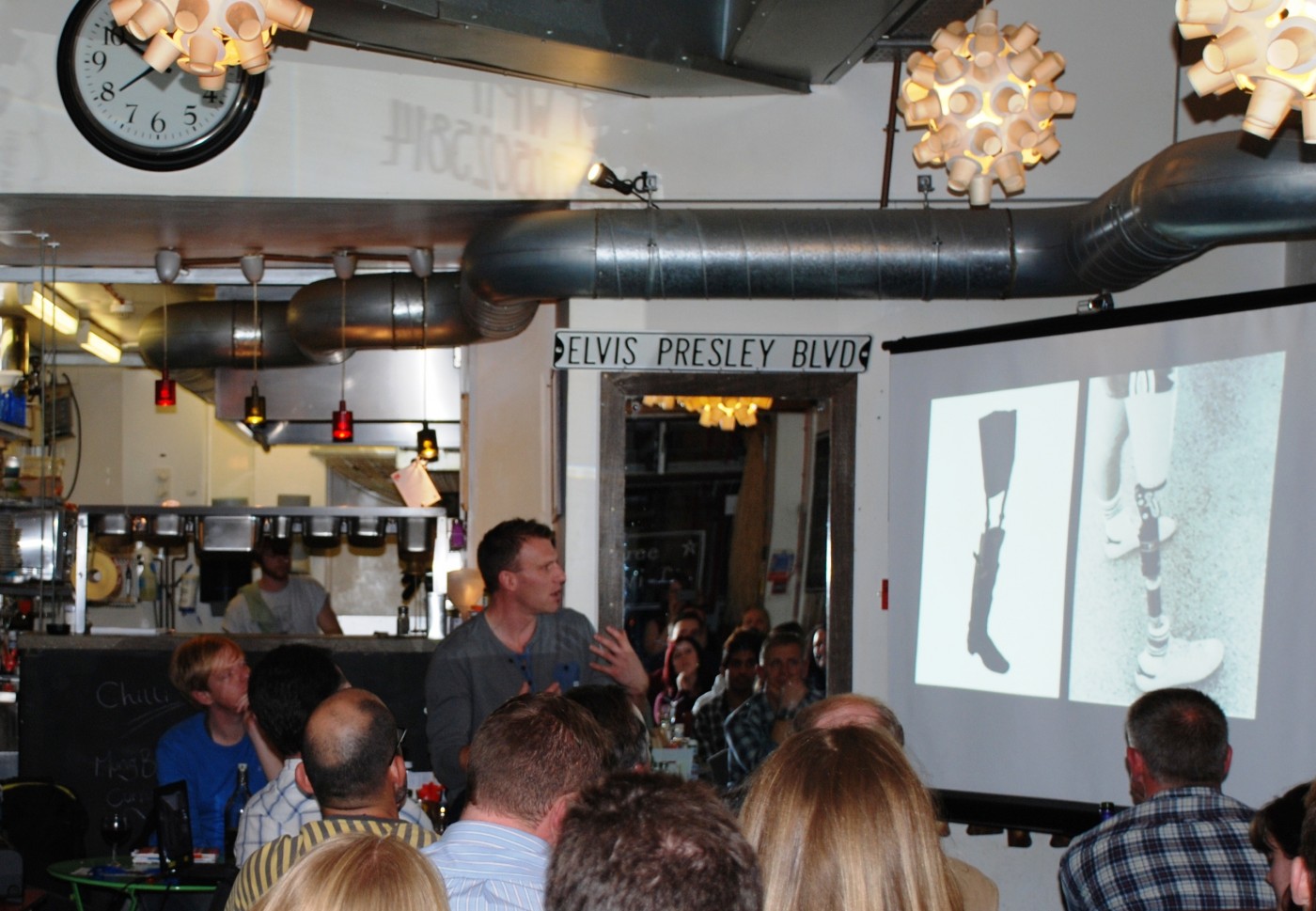
- The fastest men on no legs: Disability, prosthesis and the role of technology in elite sport
- 20 years of law at BU
- Equipping the business leaders of the future
- Walking in the footsteps of our ancestors
- Public engagement in renewable energy and technology issues
To download an overview of what will be happening on which days, please click here. For a copy of the full Festival programme, you can download this here or contact Naomi Kay to request hard copies are sent to you.
Public engagement is at the heart of Bournemouth University – we are committed to ensuring the knowledge we create is shared with society. With this in mind, please do tell your friends, family and colleagues outside of BU all about the wide range of activities that are on offer – all are welcome!
The British Psychological Society: Public Engagement Grants
The Society’s public engagement grants aim to support members promoting psychology to wider audiences either through direct public engagement or by organising interesting and relevant communications activities.
Past recipients have received grants to work on projects such websites, workshops and public engagement events.
Information and application forms for the scheme will be available to download from 1 May 2013, with a 1 July 2013 deadline.
For further information contact the Society’s Policy Advisor (Education and Public Engagement).
CCIG Forum 30: Enacting public engagement: collaboration and critique within/beyond the university
The Centre for Citizenship, Identity and Governance (CCIG) at the Open University is holding a one forum (co-organised by the Creating publics project and Enactments programme) exploring enacting public engagement, with a fantastic line up of speakers. Which include:
Re-enacting the public university
Professor Rebecca Boden (University of Roehampton): ‘Rethinking an “open university”‘, embedding the academy in a social economy’
Dr Joel Lazarus (People’s Political Economy and University College, Oxford): An analysis of the recent flourishing of critical education initiatives in the UK: critical education at the heart of social transformation
Co-production and co-authorship in research
Dr Morag McDermont (University of Bristol): Productive Margins? Problematics of academics and community organisations co-producing research
Professor Les Back (Goldsmiths, University of London): title tbc
Digital articulations
Dr Aristea Fotopoulou & Dr Kate O’Riordan(University of Sussex) : Sustaining networked knowledge: expertise, feminist media production, art and activism
Dr Nick Mahony & Dr Hilde Stephansen (Open University): Making participation public: building agendas and sites for collective action
Full details, including how to register, can be found on CCIG’s website.
The event will take place in Milton Keynes on 23rd April
FIF – Poole & Purbeck Portal – now live!
The new scientific community brought to you by the School of Applied Sciences is now online.
Watch the promotional video now and sign up today to engage the public with your research!
Stop Press: BU involved in first ever national health promotion conference in Nepal
(c) Sheetale “Ishwori and women in a health promotion group laughing when asked if men would help in the housework; part of addressing women’s status @GTNHP”
BU Professor Edwin van Teijlingen is involved in organisation of the first National Health Promotion conference in Nepal. The conference is held in Kathmandu over the Easter weekend (March 30th-April 1st). This is a unique collaboration between Bournemouth University, the Government of Nepal, international organisations such as the World Health Organization, USAID, the Nepalese media, and several universities and colleges; and will highlight the importance of health promotion at all levels in Nepal.
One of the opening plenary will be given by Prof. van Teijlingen, we will outline health promotion from a global perspective. A total of 75 papers will be presented at the conference, including one by HSC BU PhD student Ms. Sheetal Sharma. She will also present findings from the long-term research project that aimed to improve the uptake of maternity services in rural Nepal. Her PhD research is supervised by HSC’s Prof. Vanora Hundley, Dr. Catherine Angell & Prof. van Teijlingen as well as Dr. Padam Simkhada from The University of Sheffield and Visiting Faculty at HSC. As part of the conference Prof. van Teijlingen and Dr. Simkhada will also run a skills-building workshop which offers training on writing up of findings health promotion research for academic journals.
There will be 250 participants from seven different countries including the USA, Canada, UK, India, Nigeria, the Netherlands and Nepal. This is the first ever conference of its kind to held in Nepal in the field of health promotion.
Prof. van Teijlingen said: “Nepal has a double burden of diseases. It experiences both the kind of infectious diseases associated with being a low-income country, and a growing burden of the kind of diseases commonly associated with lifestyles in high-income countries. Therefore, is it is encouraging to see that so many different organisations have signed up to the principles of health promotion.”
Ms. Sharma commented: “Nepal is an exciting country to conduct research in, with the diverse castes and motivated rural community volunteers; also among South Asian countries, its speed of development is considerable: the Maternal Mortality rate was halved despite a decade long civil war, Abortion is legal since 2002, same sex marriage since 2008. It is important to disseminate findings to relevant stakeholders.”
Dr. Simkhada and Prof. van Teijlingen are both Visiting Professor at two Nepalese universities. They have more than sixty of research articles publish in international journals on health-related issues in Nepal. Sheetal Sharma was funded by BU to travel to Nepal and attend the conference. Prof. van Teijlingen was interviewed for national television in Nepal regarding the Public Health conference.
The Health Promotion conference has its own web site see: http://hpconference.org.np/
Prof. van Teijlingen has been conducting research in Nepal for nearly a decade. Some of the work he is evaluating is supported by Green Tara UK, a Buddhist organization based in London.
The staff web pages for Edwin van Teijlingen: http://bit.ly/13zLRyc
Web page Sheetal Sharma: http://bit.ly/101TLuU
Twitter #GTNHP @GTNHP
Facebook Green Tara Nepal
Cafe Scientifque – TUESDAY NIGHT! Keeping Upright: the role of our perception of vertical
Keeping Upright: the role of our perception of vertical
How do we tell where vertical is? What does this mean? Why should we care? These are some of the questions that will be discussed in this month’s talk by one of our own team of organisers , Dr Sharon Docherty from Anglo European College of Chiropractic. As well as finding out how our perception helps us interact with the world around us, you will be able to test your own perception of vertical and see how it compares to that of others in a live interactive experiment.
Does this line look straight to you? Find out more on TUESDAY NIGHT at the next Cafe Scientifique. For full details, please see the Cafe Scientifique Bournemouth website. The venue is Cafe Boscanova, doors at 6.30pm, the interactive fun starts at 7.30pm. As ever, snacks and drinks will be for sale.
Maritime Archaeological Days About the Wreck – Open Event
The next M.A.D. About the Wreck Open day takes place in the Thomas Hardy Room at Bournemouth University on Thursday March 28th 2013 at 4.00pm.
There will be presentations on the progress of the archaeological, scientific and outreach project on the Swash Channel Wreck and an outline of local maritime archaeology. There will also be an opportunity
to view the recently created copy of the Apothecaries Jar from the wreck, pictures of which were recently posted on this site.
Talks:
– Paola Palma (Project Manager): ‘Little’ Science on the Wreck
– David Parham (Senior Lecturer): The Excavation of the Wreck
– Gordon Le Pard (Project Officer): Maritime Archaeology in Dorset
The event is free, but if you want to attend please let us know at madaboutthewreck@bournemouth.ac.uk
Public engagement and impact: news and opportunities
In this extended blog post you’ll find details of lots of new and exciting developments in the world of public engagement and impact, including funding calls. As ever, if you are looking to develop engagement and impact around your research, please contact Becca in the Research and Knowledge Exchange office on 01202 961206 or redwards@bournemouth.ac.uk. She can help you brainstorm ideas, develop funding proposals or point you in the direction of further help. If you have any information that you would like to share, email Becca and she will include it in her round-up of information.
Events to attend
- The BIG Event 2013 is now taking bookings (early bid registration ends 31st March 2013). The British Interactive Group invites its 500+ members to this three day interaction event to keep up to date in all things STEM engagement related.
- Bristol University, is organising a History Day, including a women’s history taster session and free creche. For further details, click here
Interesting things to read
- Roger Highfield has written a blog post on ‘How I write about science’ on the Wellcome Trust blog. Click here to read more.
- On the LSE Impact Blog, is a piece by Martin Eve discussing ‘Open Access, the Impact Agenda and resistance to the neoliberal paradigm’.
- Professor Tim Darvill’s has been quoted in the Observer article: “Stonehenge remains a mystery as scientists ask: was it a health spa, or a cemetery?”
Training opportunities
- Want to take your research to the masses through TV? Click here for a range of training opportunities including how to catch the idea of a TV producer, how to shine on TV and understanding the process of making TV.
- AHRC and CARD are sponsoring a postgraduate training event on Engaging with Communities: Arts and performance-based collaborative training. The event is free to attend, although places are limited.
- Research, Researchers and the Media – an immersive three day course aimed at all academic staff, researchers and PGRs.
- CCIG Forum: Enacting public engagement: collaboration and critique within/beyond the university
Funding and awards
- The Society of Biology has announced the Science Communication Awards 2013. Deadline is 31 May 2013; two prizes are available for the New Researcher Prize and Established Researcher Prize.
- The Foundation for Canadian Studies have announced their Outreach Awards for Canadianist or Canada-linked teaching and research. Further details can be found here
- The AHRC have announced the Cultural Value Project Call – which wishes to make a major contribution to how we think about the value of arts and culture.
- NERC Knowledge Exchange projects call, closing date for expressions of interest 26th March. Details can be found here
- ESRC Retail Knowledge Exchange opportunities. Deadline is 30th April. More details can be found here
- For details of both the People and Society Awards from the Wellcome Trust, please click here
- The Institute of Physics, is offering up to £1500 for Public Engagement Grants. For more details, click here
- Royal Society Industry fellowships. Closing date 5th April. Full details can be found here
Dr. Justine Pila from University of Oxford will present at the 2nd CIPPM Spring Lecture
Dr. Justine Pila, Lecturer in Intellectual Property Law at University of Oxford and Senior Law Tutor at St. Catherine’s College will speak on ‘The Europeanisation of Intellectual Property Law: Towards a European Legal Methodology’ at the 2nd CIPPM Spring Lecture Series.
The Lecture will be held on Thursday 21 March 2013 in EB708 and will start at 6 pm with refreshments served from 5 pm onwards.
Dr. Pila’s main areas of research are copyright and patent law in all of their doctrinal, theoretical and historical aspects. She has published widely in this area. Her book titled ‘The Require
ment for an invention in Patent Law’ was published by Oxford University Press in 2010. With Professor John Gardner she co-edits the two Oxford Legal Research Paper Series, in addition to serving as legal advisor to the Oxford Magazine. She also convenes the Law Faculty’s Intellectual Property subject group and teaches on all of its IP programmes, including the two FHS (undergraduate) IP options, the BCL option, and the Postgraduate Diploma in IP Law and Practice.
The lectures are free to attend, but places are limited, and admission to the building closes at 18:15. If you wish to reserve a place, please contact Mandy Lenihan.
CEMP and CIPPM Researchers co-publish reports on parody for the UKIPO
Dr. Kris Erickson (CEMP), Dr. Dinusha Mendis and Professor Martin Kretschmer (CIPPM) have co-authored a series of reports commissioned by the UK Intellectual Property Office (UKIPO) on parody and pastiche. Empirical and legal research is presented in a sequence of three reports published by the UKIPO in March 2013. The three studies commissioned by UKIPO evaluate policy options in the implementation of the Hargreaves Review of Intellectual Property & Growth (2011).
Study I authored by Dr. Kris Erickson presents new empirical data about music video parodies on the online platform YouTube
Study II authored by Dr. Dinusha Mendis and Professor Martin Kretshcmer offers a comparative legal review of the law of parody in seven jurisdictions
Study III authored by Dr. Kris Erickson, Professor Martin Kretschmer and Dr. Dinusha Mendis provides a summary of the findings of Studies I & II, and analyses their relevance for copyright policy.
All three reports can also be found here
Study I presents new empirical data about music video parodies. A sample of 8,299 user-generated music video parodies was constructed relating to the top-100 charting music singles in the UK for the year 2011.
Study II discusses of the legal treatment of parodies in seven jurisdictions that have implemented a copyright exception for parody. The jurisdictions include Australia, Canada, France, Germany, Netherlands, UK, and USA. Study II identifies possible regulatory options for benefiting from a parody exception to copyright infringement, and distils the (economic and non-economic) rationales developed by legislators and courts. The report concludes by setting out a list of policy options.
Study III brings together the legal analysis and the empirical data. Each of the policy options identified in Study II is examined for its likely impact on the empirical sample gathered in Study I.
The research team comprising of Dr. Kris Erickson, Dr. Dinusha Mendis and Professor Martin Kretschmer presented the following key findings arising from the three Studies:
- Parody is a significant consumer activity: On average, there are 24 user-generated parodies available for each original video of a charting single.
- There is no evidence for economic damage to rights holders through substitution: The presence of parody content is correlated with, and predicts larger audiences for original music videos.
- The potential for reputational harm in the observed sample is limited: Only 1.5% of all parodies sampled took a directly negative stance, discouraging viewers from commercially supporting the original.
- Observed creative contributions were considerable: In 78% of all cases, the parodist appeared on camera (also diminishing the possibility of confusion).
- There exists a small but growing market for skilled user-generated parody: Parodists who exhibit higher production values in their works attract larger audiences, which can be monetized via revenue share with YouTube.
Engage with Dorset HealthWatch via Twitter!
Healthwatch is the new independent, consumer champion for health and social care services in England. The local Dorset HealthWatch are holding a tweetchat on Wednesday 20th March from 1-2pm.
The idea is to discuss how social media can be used to encourage volunteering and participation in Healthwatch during a lunchtime twitter session. Dorset HealthWatch tweet under @HwatchDorset, and the hashtag for the event is ‘#HwatchDorset’.
Twitter chats are discussions that take place on twitter, at a specific time around a predetermined subject. They use a hashtag (#) as a flag that binds a conversation together. Tweetchats are an excellent way to use Twitter to discuss topics with peers.
If you’re already on twitter just use the hashtag #HwatchDorset on Wednesday 20th March between 1pm and 2pm. If you’re new to twitter – register here http://www.twitter.com then search for @HwatchDorset and ‘follow’ and remember to include #HwatchDorset in your tweets.
Please use and promote #HwatchDorset – the first, 10th and 20th retweet we receive will win a £20 shopping voucher. We will also make a donation of £150 to a community group nominated by one lucky chat participant – be in it, to win it…..
This is a great opportunity to engage with a local health third sector organisation on the social media.
Public engagement and impact round-up: News and opportunities
In this extended blog post you’ll find details of lots of new and exciting developments in the world of public engagement and impact, including funding calls and opportuntities… As ever, if you are looking to develop public engagement and impact around your research, please contact Becca in the Research and Knowledge Exchange office on 01202 961206 or redwards@bournemouth.ac.uk. She can help you brainstorm ideas, develop funding proposals or point you in the direction of further help. If you have any information that you would like to share, email Becca and she will include it in her round-up of information.
BU public engagement in action
- Check out Dr Sarah Bate discussing her research into prosopagnosia at last week’s Cafe Scientifique. You can see her talk here and watch the discussion section here. Next month’s talk is ‘Keeping Upright: the role of our perception of vertical’ by Dr Sharon Docherty.
Festival of Learning
- The full Festival of Learning website, including the on-line programme is due to go live on 1st April. You can expect to wide a very wide range of marketing activities going live across April and May.
- Do you want to talk to people about the Festival of Learning? Could you spread the word using our printed marketing materials? If so, please contact Becca and she will ensure that you receive Festival leaflets or programmes for distribution.
- Event organisers can expect to receive shortly a detailed marketing update and an event check-list. If in the meantime, you have any queries, please do not hesitate to contact Becca or Naomi in the Festival team.
Opportunities
- The AHRC have called for expressions of interest for researcher participation for a AHRC/BBC workshop on Scottish, Historical, Cultural and Artistic Identify. To learn more, click here
- Could you write a short article about your research that would be suitable for publication in the Guardian or the Observer? Enter to become part of the next generation of science writers, via the Wellcome Trust Science Writing Prize in association with the Guardian and the Observer.
- The Science in Public Conference 2013, has a call for papers here -the keynote speaker is Prof Harry Collins from Cardiff University.
- The Impact Awards are currently open for nominations. Categories include: Business Impact – Achieved, Business Impact – Aspiring, Collaborative Impact, KT Professional of the Year
- The Royal Geographical Society is running a range of training workshops which could be very useful for public engagement activities, including off-site safety management training and camera trapping
- DECC is looking for tenders to develop a public engagement planning brief for the British Energy Challenge. Full details can be found here
Funding
- NERC Knowledge Exchange projects call, closing date for expressions of interest 26th March. Details can be found here
- ESRC Retail Knowledge Exchange opportunities. Deadline is 30th April. More details can be found here
- For details of both the People and Society Awards from the Wellcome Trust, please click here
- The Institute of Physics, is offering up to £1500 for Public Engagement Grants. For more details, click here
- Royal Society Industry fellowships. Closing date 5th April. Full details can be found here
Interesting things to read and watch
- The British Science Festival’s latest science news digest can be found here – learn about future plans to visit Mars…
- Pat Loria has written a thought provoking piece on the need to implement centralised impact management systems, published on the LSE Impact of Social Sciences blog, which you can find here
Public engagement activities outside of BU
- The Wellcome trust has detailed science and medicine themed events (funded through their public engagement awards) here – learn more about fascinating activities including Doctors, Dissection and Resurrection Men and Food For All Seasons.
- Cambridge Science Festival and Oxfordshire Science Festival are both in full flow!
The Wellcome Trust Science Writing Prize – for non-published writers
Building on the success of the last two years, the Wellcome Trust are pleased to announce the launch of the Wellcome Trust Science Writing Prize 2013. This is your opportunity to join the next generation of science writers.
We are looking for short articles that address any area of science and would be suitable for publication in the ‘Guardian’ or the ‘Observer’ in print and online. You must demonstrate that you have thought about and understood your audience and can bring a scientific idea to life.
The deadline for entries is 28 April 2013.
The judges are looking for originality, bright ideas and a distinctive writing style. Your 800-word article should show a passion for science and encourage the general public to consider, question and debate the key issues in science and society.
Last year’s winners
- In category A (professional scientists of postgraduate level and above): Adam Kucharski, ‘In need of a number’.
- In category B (anyone else with a non-professional interest in science, including undergraduates): Cassie Barton, ‘The smell of music’.
- Catherine Hess was highly commended in category A for her piece ‘As easy as riding a bicycle?’
Categories
You must be a non-published* writer based in the UK or RoI and can enter in either of two categories, with the winner of each receiving a prize:
a) professional scientists of postgraduate level and above
b) anyone else with a non-professional interest in science (this includes undergraduate students).
* By “published” they are referring to professional journalists and authors who already write for money. They welcome entries from bloggers and student journalists.
See frequently asked questions and answers
What you can win
Prizes will be awarded by a panel of judges and will be presented at a prestigious ceremony in October 2013.
The winning articles from each category will be published in the ‘Guardian’ or the ‘Observer’. Winners will also receive a £1000 cash prize.
AHRC call for researcher participation in a BBC workshop
AHRC/BBC workshop on Scottish Historical, Cultural and Artistic Identity
The AHRC is collaborating with BBC TV on a seminar that brings together BBC commissioning and editorial staff with arts and humanities researchers specialising or with interests in questions around ‘Scottishness’ and Scottish identity/identities.
The year 2014 will be an important year for Scotland, with the XXth Commonwealth Games being held in Scotland, the Glasgow 2014 Cultural Programme and the planned referendum on Scottish independence. The BBC is in the planning stages of commissioning programmes to mark this important moment in the history of Scotland and in the history of its relationship with the UK and the wider world.
Expressions of interest are invited from researchers from all disciplines within the arts and humanities to participate in a half-day AHRC/BBC workshop on Friday 26th April to explore ideas that will help feed into BBC TV programming.
Further information is available at: www.ahrc.ac.uk/Funding-Opportunities/Pages/Scottish-Historical,-Cultural-and-Artistic-Indentity.aspx


Up2U: New BU academic publication
New BU midwifery paper
BU academic publishes in online newspaper in Nepal
Final day of the ESRC Festival of Social Science
Using Art to enhance Research
ECR Funding Open Call: Research Culture & Community Grant – Application Deadline Friday 12 December

MSCA Postdoctoral Fellowships 2025 Call

ERC Advanced Grant 2025 Webinar
Horizon Europe Work Programme 2025 Published
Horizon Europe 2025 Work Programme pre-Published
Update on UKRO services
European research project exploring use of ‘virtual twins’ to better manage metabolic associated fatty liver disease