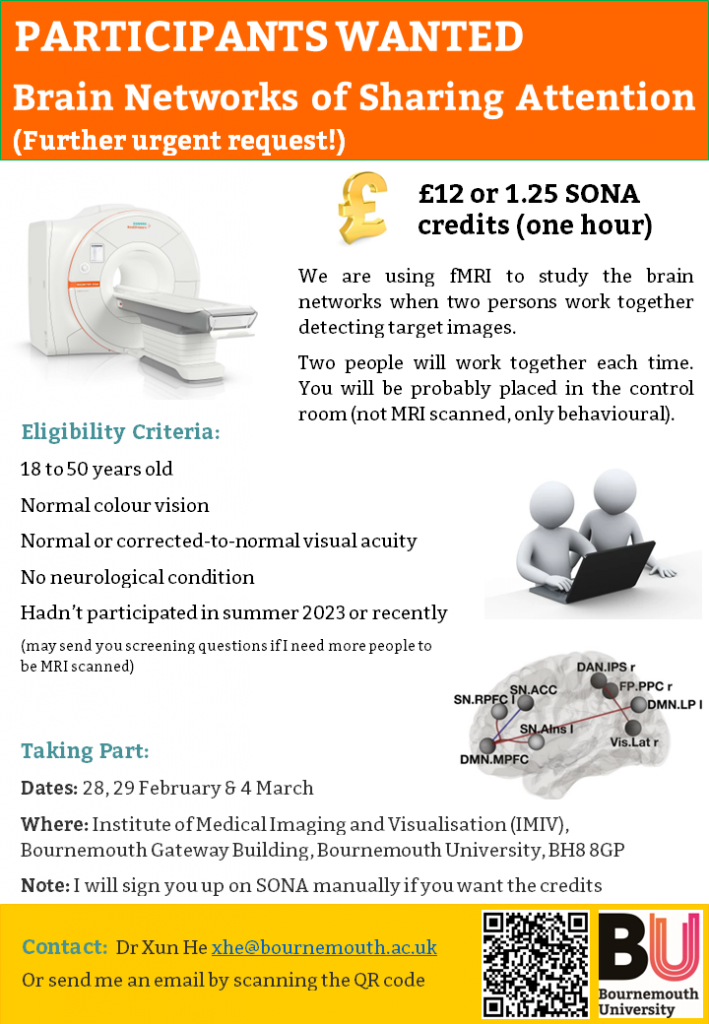
Urgently need participants
Latest research and knowledge exchange news at Bournemouth University
BU will be hosting the 10th International Conference on Virtual Reality (ICVR), which takes place from 20-22 July 2024.
As a forum for the knowledge-sharing of cutting-edge advances and developments in Virtual Reality (VR) and related fields, ICVR 2024 will bring together an international community of experts to present the latest research results, future development outlooks, and innovative applications, encompassing not only VR, but also augmented reality (AR), mixed reality (MR), 3D user interfaces (3DUIs), and their cross-cutting areas.
The sponsors and organisers of ICVR 2024 are inviting submissions of high-quality research papers describing original research and innovation, covering a wide array of topics, including but not limited to the following:
The closing date for submission of full papers is Friday 1st March 2024.
For more information and guidance, visit the ICVR 2024 website.
If you’re looking to have an impact on local, national and international policy with your research, you may find the BU policy influence digest email useful.
The policy influence digest highlights policy influencing opportunities and tips. The digests are usually circulated weekly and contain information on expert calls, specialist or committee advisor opportunities, areas of research interest issued by the Government departments, fellowship opportunities, the notable sector reports and Government announcements from the week, events and training as well as a range of other opportunities to share your expertise (including responding to consultations or select committee inquiries).

The next round of the Leverhulme Research Centres Competition is now open with a deadline of 7th June 2024. As BU is permitted to submit only one application as an institution, we are holding an internal competition for Expressions of Interest (EoI).
Those who are interested in making an application to the Leverhulme Research Centres Competition, are invited to submit an Expression of Interest to preawardenquiries@bournemouth.ac.uk , by Wednesday 20th March 2024. Application and guidance can be found here (I:\RDS\Public\Leverhulme Research Centres Competition 2024\EOI Documents). If you have further questions or queries please contact Eva Papadopoulou (epapadopoulou@bournemouth.ac.uk) or Kate Percival (kpercival@bournemouth.ac.uk).
Scope of call
The Leverhulme Trust invites applications for Research Centres that will not only conduct research of outstanding originality but also aspire to achieve a significant step-change in scholarship. The Trust’s aim is to encourage new approaches that may establish or reshape a field of study and so transform our understanding of a significant contemporary topic. Applicants are therefore invited to be bold in compiling their bids. The centres should have the capacity to become recognised internationally for excellence in their chosen area.
The Trust has a reputation for encouraging higher-risk research, which is therefore often fundamental or curiosity-driven – so-called ‘blue skies’ – and multi-disciplinary. The expectation is that centres will draw upon a range of disciplinary perspectives and expertise, perhaps bringing new disciplinary mixes to bear on a particular topic.
In this 2024 call, the Trust Board is looking for applications strongly led by the Arts, Humanities and Social Sciences. Within this framework, the choice of topic is left open, in line with the Trust’s responsive mode of working. Please look at the Trust’s guidelines for areas of research, such as medical and clinical research, which are ineligible: https://www.leverhulme.ac.uk/research-we-do-not-fund.
The chosen topic should be sufficiently large-scale to support an ambitious but realistic research agenda for up to ten years.
Leverhulme Research Centres should not duplicate existing activity at a comparable scale, whether in UKRI-funded or university research centres. The Trust wishes to support research activity where it can be confident that the work will have substantial added value compared to smaller initiatives in the same area of research.
Value and Duration
£10 million for up to 10 years is available.
Further information is available from the Leverhulme Trust website, and interested applicants are advised to consider the eligibility criteria carefully.
Timeline
An indicative timeline is below for the submission of the EOI. A more detailed timeline can be found (I:\RDS\Public\Leverhulme Research Centres Competition 2024\EOI Documents).
Leverhulme Research Centres – Internal Expressions of Interest full timeline 2024.
| 20-02-2024 | RDS advertise Expression of Interest (EoI)competition for call |
| 20-03-2024 | EoI deadline (EoIs to be sent to RDS) |
| 20-03-2024 | Papers (applications) sent to DDRs and Doctoral College (RDS to administer) |
| w/c 01-04-2024 | DDRs panel meeting (virtual) |
| By 05-04-2024 | DDRs panel meeting decision and feedback disseminated to applicants |
| 05-04-2024 | RDS to contact Leverhulme to provide the Trust with the principal applicant’s name, departmental affiliation and email address. Access will then be granted to the Leverhulme Trust Grants Management System |
| Apr-May | Applicants develop proposals with the support of RDS |
| 21st May 2024 | Internal financial sign-off |
| w/c 01-06-2024 | e-Submission checks performed by RDS |
| 07-06-2024 | Leverhulme Research Centre Outline Deadline |

We want to provide small amounts of funding (up to £500) to help researchers develop and incorporate meaningful, two-way engagement with beneficiaries and research users. The aim is to help support a more engaged research culture across BU and accelerate the impact arising from research.
The scheme is open to researchers at all career stages, whether or not they have previous public engagement experience.
We would like to fund engagement activity that addresses any/all of the following:
The reviewing panel will assess applications on a rolling basis and aims to respond within one week.
The relevant staff in the Research Excellence Team will provide support to deliver activities, and funds will be managed by the PI’s faculty finance and resources team. All activity and spend will need to be completed before 31 July 2024.
(Please note that this funding will not be awarded for attending conferences or networking events where the engagement with stakeholders is speculative.)
You may also be interested in the following training sessions, as you will need to demonstrate evaluation planning in the application form:
For all queries, please contact publicengagement@bournemouth.ac.uk.
Researchers from BU will create a short film entirely using artificial intelligence (AI) to explore the creative and legal issues surrounding the use of these tools in media production.
The research project has been funded by the Arts and Humanities Research Council (AHRC) and will investigate the use of generative AI tools in media creation – focusing on collaboration, creativity, and representation. This includes concerns about copyright, job security, and other ethical and legal challenges.

“There has been a lot of thinking about responsible AI and the way it is used and implemented, as well as the implications for things like production and jobs and how roles in the industry will be affected,” said Dr Szilvia Ruszev, Senior Lecturer in Post Production, who is leading the project.
“We hope that through the discussions and the use of these tools, we can develop a more nuanced understanding of how we can still be creative and use AI in a responsible way.”
The BU research team also includes Dr Maxine Gee (Principal Academic in Screenwriting), Professor Xiaosong Yang (Professor of Computer Animation and Deputy Head of Department), Dr Tom Davis (Associate Professor in Music and Audio Technology) and Dr Melanie Stockton-Brown (Principal Academic in Law), as well as partners from the University of Michigan, USA and Zhejiang University, China.
They will use generative AI tools at each stage of the production process, such as the script writing, image creation, sound and music, and for the post production on the film.
They will also evaluate these tools from the perspectives of representation, collaboration and creativity as well as exploring key legal aspects, including copyright.
At each stage of the process, the team will hold workshops which will include talks about the issues being investigated and hands-on experience with helping to create the AI-generated film. The workshops will be open to BU staff and students, as well as industry stakeholders and policymakers.
Dr Ruszev said: “Fictional media has a history of shaping societal understanding of stereotypes through media representation but the data used to create content through AI is not objective and so we are looking at what sort of impact that will have on the representation of identities and groups.
“There are also issues around copyright to explore – such as who owns the idea, and the ethical and legal challenges that need to be addressed.”
The project has received over £170,000 in funding from the AHRC as part of the Bridging Responsible AI Divides (BRAID) programme, which will support the development of responsible AI and how it can be embedded across key sectors.
Professor Christopher Smith, Executive Chair of the AHRC, said: “The impact of AI can already be felt in many areas of our lives. It will transform our jobs and livelihoods, and impact on areas as diverse as education, policing and the creative industries, and much more besides.
“The research which AHRC announced today will provide lasting contributions to the definition and practice of responsible AI, informing the practice and tools that are crucial to ensure this transformative technology provides benefits for all of society.”
Konfer offers an efficient way to navigate around resources, technology and innovation capabilities that exist in the UK innovation eco-system. Through Konfer, you can discover and engage with experts beyond your typical reach and discuss new ideas and opportunities for projects. 
This is an opportunity to meet with the Konfer team, have a guided tour of the platform and its full functionality, enabling you to create and connect to the UK research collaborations with other universities, businesses and other organisations. By the end of your session you will have set up your own profile, with guidance and support from Ranbir and Shivaun from Konfer, and be ready to post or respond to collaboration opportunities.
As well as a Faculty specific session, you can also attend the Konfer Drop-In Surgery in the afternoon.
A networking lunch and light refreshments will be provided.
The Coffee & Konfer Surgery will take place from 2pm. Location to be confirmed.
BUBS Workshop – 9:00 – 9:50am
FMC Workshop – 10:00 – 10:50am
HSS Workshop – 11:00 – 11:50am
FST Workshop – 12:00 – 12:50pm
Facilitators – Ranbir Jabanda and Shivaun Meehan – National Centre for Universities and Business/Konfer. Dr. Wendelin Morrison – BU Knowledge Exchange Manager
Networking Lunch – 1:00 – 2:00pm
For Deputy Deans, BEKES, Faculty and RDS Knowledge Exchange and/or Innovation Leads
 Coffee & Konfer Surgery – 2:00 – 4:30pm
Aimed at academics from any faculty including those with no experience or some experience of using Konfer.
Drop in and join us for a coffee and support in:
Ranbir Jabanda and Shivaugn Meehan – National Centre for Universities and Business/Konfer
Dr. Wendelin Morrison – BU Knowledge Exchange Manager
If you have any questions, please contact: Wendelin Morrison wsmorrison@bournemouth.ac.uk
We are delighted to share the spring 2024 calendar for our Socio-Ecological Transition Seminars (SETS). This seminar cycle’s discussions will revolve around the global crisis of waste and the unsustainability of current modes of production and consumption, analysed across sectors and geographical contexts, in its societal, organisational, political, and ethical dimensions.
We have a confirmed calendar of international distinguished speakers:
April 3rd h 3 pm: A public sociology of waste, Myra Hird
Myra J. Hird, Professor in Environmental Studies at Queen’s University (Canada). Myra holds a PhD from Oxford University and is a distinguished interdisciplinary scholar researching the global waste crisis and will present her recent book A Public Sociology of Waste (2022, Bristol University Press).
April 24th h 3 pm: Recycling Class: The Contradictions of Inclusion in Urban Sustainability, Manisha Anantharaman
Manisha Anantharaman, Assistant Professor of Sociology at the Center for the Sociology of Organisations, Sciences Po Paris (France). Manisha holds a PhD from University of California Berkeley, and her research focuses on the politics of ecological transition and sustainability. Manisha will present her recent book Recycling Class. The Contradictions of Inclusion in Urban Sustainability (2024, MIT press).
29th May h 3 pm: The Social Life of Unsustainable Mass Consumption, Magnus Boström.
Magnus Boström, Professor of Sociology at the Center for Environmental and Sustainability Social Science (CESSS) at Örebro University, Sweden. Magnus’ research interests include politics, representation, consumption, action, and transformative learning in relation to various transnational environmental and sustainability issues. Magnus will present his recent book: The Social Life of Unsustainable Mass Consumption (2023, Rowman & Littlefield)
All seminars are online on Zoom:
https://unitn.zoom.us/j/85334570893Meeting ID: 853 3457 0893
Passcode: SETS
SETS is a joint initiative between the Research Group on Collective Action, Change, and Transition at the University of Trento, the Centre for Sustainable and Socially Responsible Consumption at Bournemouth University, and the Environmental Sociology Section at the University of Orebro. The seminars are open to a diverse audience, including academics, students, practitioners, social movements, and the non-specialist public.
SETS aims at reflecting with critical instruments and theories on socio-ecological transformations in times of crisis – with a special focus on everyday life and the sphere of social and ecological reproduction. In particular, the seminars aim at eliciting reflection on the different practices and “fields” where struggles and transformative action take place. The seminars are open to a diverse audience, including academics, students, practitioners, social movements, and non-specialist public.
Dr Roberta Discetti, SETS co-founder
 UKRIO has announced details of a forthcoming Free Webinar “Social Media and Ethics” on Wednesday 21st February from 10:00 – 11:00 BST.
Research using social media data presents several ethical issues that researchers must navigate to ensure the responsible and respectful use of this data. Some of the primary ethical issues in research using social media includes privacy and informed consent, anonymity and confidentiality, data ownership and terms of use, ethical use of algorithms and AI, sensitive topics and vulnerable populations, consent and minors, deception and online identity, unintended consequences, and transparency and reproducibility.This webinar discusses these ethical concerns that require a combination of thoughtful consideration, adherence to research guidelines, and engagement with relevant stakeholders, including social media platforms and users.
Dr Nicolas Gold, Associate Professor in Computer Science will lead the webinar, which will cover:
This webinar is aimed at all researchers using social media and those involved in the ethical review process of projects.
As BU subscribes to UKRIO services, UKRIO webinars are free and open to anyone who may be interested in research integrity and ethics, good research practice and improving research culture and avoiding misconduct.
To register – please click here (takes you to external website).

Successful public engagement can benefit research, researchers and the public – but how do you go about demonstrating this change? This workshop will guide you through the best evaluation processes, showing you when, why and, crucially, how to use evaluation to provide reliable, clear data. It will highlight how to demonstrate success to funders, record impact for the REF, help improve your processes, and give you a better understanding of the people you are connecting with.
To book a place on this workshop, please complete the booking form under Impact Essentials: Evaluating Public Engagement – 18/03/2024, in the drop down menu
Taking an in-depth look at evaluation, participants will explore data capture, analysis and reporting. From surveys to focus groups, you will learn how to format powerful questions and report meaningful data. Discover how to develop evaluation plans for even the most complex topics. You will also learn how to write evaluation reports for funders or for the REF. This workshop requires good base knowledge of evaluation, ideally from attending the previous Evaluation of Engagement workshop.
To book a place on this workshop, please complete the booking form under Impact Essentials: Advanced Evaluation of Public Engagement – 19/03/2024, in the drop down menu
NB: While we recommend you attend both sessions, you may judge the first session on its own as appropriate for your needs. However, as the advanced session will build on the knowledge and skills gained in the first session, we do advise against only attending the second.
If you have any queries about either session, please contact publicengagement@bournemouth.ac.uk.
 Two days ago ResearchGate informed us that that the paper ‘Midwifery-led antenatal care models: mapping a systematic review to an evidence-based quality framework to identify key components and characteristics of care‘ has reached 40 citations. This paper, co-authored by Bournemouth University’s Professors Vanora Hundley and Edwin van Teijlingen, was originally published in 2016 in BMC Pregnancy & Childbirth [1]. Both Vanora and Edwin are based in the Centre for Midwifery & Women’s Health (CMWH) in the Faculty of Health & Social Sciences.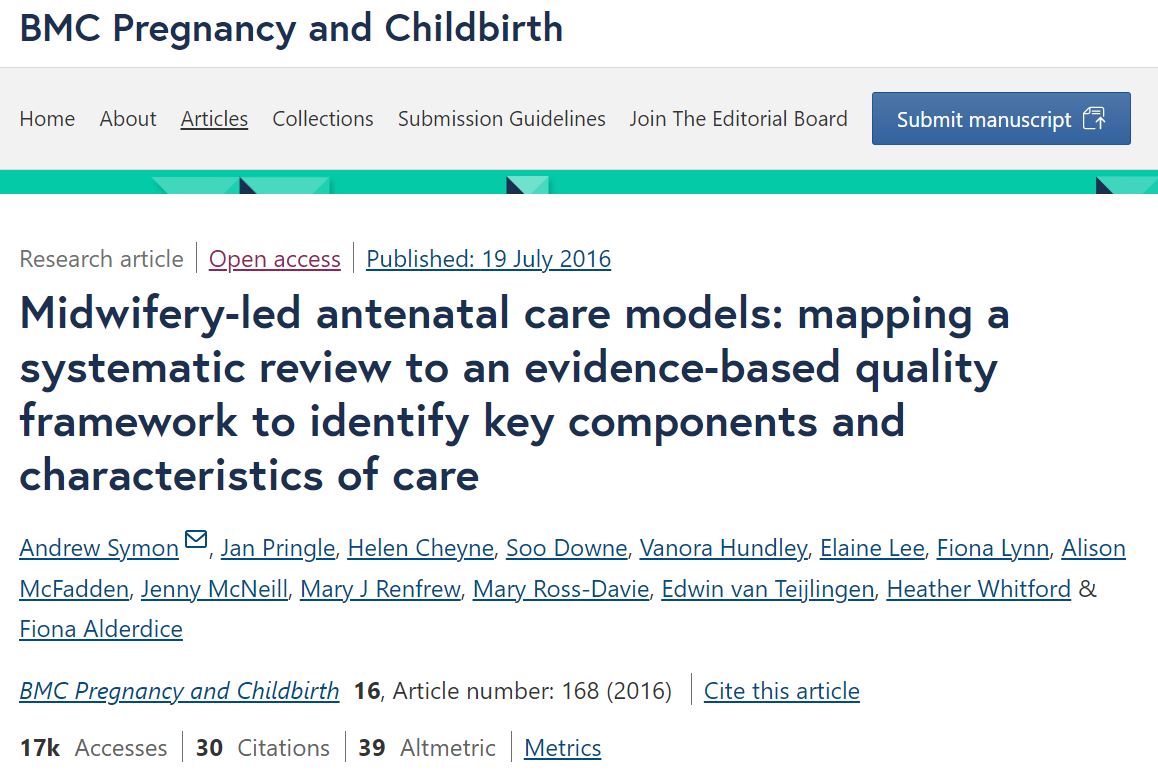
The same team wrote a separate paper the following year on ‘Antenatal care trial interventions: a systematic scoping review and taxonomy development of care models’ [2]. Interestingly, ResearchGate tells us this paper has been read fewer times and cited ‘only’ 21 times to date.
Reference:
Worldwide there is a growing interest in multidisciplinary and interdisciplinary research. This overview paper addresses some of the pitfalls and barriers to being an interdisciplinary researcher. Being involved in interdisciplinary research is not an easy option for an individual discipline expert. It requires individual skills, ability to see beyond one’s discipline and perhaps personality characteristics such as a great team player. Interdisciplinary research may involve a mixed-methods approach underpinned by conflicting, and according to some incommensurable, research philosophies. The paper uses some examples from our own experiences of working in interdisciplinary teams to illustrate its potential.
 On Valentine’s Day we received a message from ResearchGate that our paper ‘The Interdisciplinary Research Team not the Interdisciplinarist’ has received 2,000 reads.
Prof. Edwin van Teijlingen
Reference:
Shanker S, Wasti SP, Ireland J, Regmi PR, Simkhada PP, van Teijlingen E. (2021) The Interdisciplinary Research Team not the Interdisciplinarist. Europasian J Med Sci.;3(2):111-5. Available from: https://www.europasianjournals.org/ejms/index.php/ejms/article/view/317
A panel discussion at the Royal Geographical Society on 20th February will debate sustainable travel’s ability to impact economic development. The event at RGS’s headquarters in London (and also live streamed) will focus on tourism in developing countries, their current situation and the role that sustianable travel can have in leading recovery and future economic development. The panel includes Professor Adam Blake from BU’s International Centre for Tourism and Hospitality Research who will talk about his experience in analysing tourism’s impact on development and poverty reduction in developing countries.
https://www.rgs.org/events/upcoming-events/how-does-sustainable-travel-impact-economic-development
KEYNOTES announced for the BOURNEMOUTH UNIVERSITY
Digital Marketing Colloquium: Exploring Artificial Intelligence, Metaverse and Web3
19-20 March 24 Bournemouth University https://www.bournemouth.ac.uk/about/our-faculties/bournemouth-university-business-school/department-marketing-strategy-innovation/digital-marketing-colloquium-2024
JOIN US – ABSTRACT DEADLINE Extended to the end of February
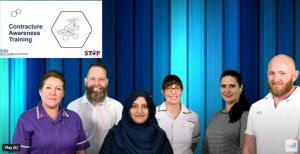
FHSS PhD student Hina Tariq has been featured in the frontline magazine of the Chartered Society of Physiotherapy with her clinical supervisor, Joel Dunn in an article “Addressing the cost of contractures” . The article highlights her PhD research on the development and validation of a contracture risk assessment tool (ORACLE). Joint contracture is a debilitating condition characterised by the shortening and stiffening of muscles, pose significant challenges for individuals’ mobility and quality of life. A valid and reliable contracture risk assessment tool might have the potential to trigger timely and appropriate referrals and may aid in prompt escalation of early interventions by the specialists aiming to reduce the risk of contracture development or progression of existing contractures. The article also highlights her contribution to a contracture awareness video developed as part of a QI-driven project with Dorset Healthcare. The evidence behind the content of the video has been generated by her PhD research. The awareness video is developed for carers to highlight the risks associated with the development of joint contractures and the practical preventative steps. This video was co-created as a collaboration between Dorset HealthCare’s clinical staff, the quality improvement team and with support from staff at Encore Care Homes.
Are you a Postgraduate Researcher at Bournemouth University? Do you want to share your research with a public audience and improve your communication skills? If so, we have an exciting opportunity for you.
 We are looking for 3-4 post-graduate researchers to take part in a special edition of our Café Scientifique public event series to deliver a short talk about your research to a friendly public audience. The event will take place from 6:30-8:00pm on Tuesday 7 May 2024 at The Black Cherry in Boscombe.
Café Scientifique is a fun and informal way to engage the public with your research and get feedback from different perspectives. You will receive training and support from our experienced Café Scientifique organisers in the Public Engagement Team, who will help you prepare and deliver your talk with confidence.
If you are interested, please complete this form. The deadline for applying is Friday 8 March, 5pm.
Please note: Completing this form does not guarantee you a space. We will be in touch with you to discuss your interest.
If you have any questions about getting involved with Café Sci, please get in touch with the Public Engagement with Research Team: publicengagement@bournemouth.ac.uk.
February’s webinar welcomes Heather Olive the Age Friendly Community Coordinator for Bournemouth, Christchurch and Poole.
In a response to the older population increasing globally The World Health Organisation (WHO) in 2010 created an initiative called ‘Age Friendly Communities.’ The aim is that Age Friendly Communities enable people to continue to stay living in their homes, living the life they want to live for as long as possible. Importantly in these communities, older residents help to shape the place that they live. Locally we have built a network of over 80 organisations working towards this common aim. Nationally we share knowledge and best practice through the support of the Centre for Ageing Better.
Community voices is a collaboration between BU PIER partnership and Centre for Seldom Heard Voices to provide a platform and a voice to local community activists.
Please do join us for this webinar….
Microsoft Teams meeting
Join on your computer, mobile app or room device
Click here to join the meeting
Meeting ID: 397 765 953 34
Passcode: ohbzTW
BU staff can login below:







 REF mock exercise 2026 – nominate your research outputs on BRIAN
 ESRC Festival of Social Science 2026: Application Deadline Extended to Thursday 25 June 2026
 First publication for two CMWH PhD students Opportunities to support our REF preparations
 SPROUT Returns: Designing Sustainability in Research Practice – Wednesday 20 May 12-2pm ESRC Festival of Social Science 2026: Application Deadline Extended to Thursday 25 June 2026 Apply now to take part in the 2026 ESRC Festival of Social Science
 Reminder: Register for the ESRC Festival of Social Science 2026 Information Session
 ECR Funding Open Call: Research Culture & Community Grant – Apply now
 ECR Funding Open Call: Research Culture & Community Grant – Application Deadline Friday 12 December
 MSCA Postdoctoral Fellowships 2025 Call
 ERC Advanced Grant 2025 Webinar MSCA Postdoctoral Fellowships 2025
 Update on UKRO services
 European research project exploring use of ‘virtual twins’ to better manage metabolic associated fatty liver disease
 Research Information Network