Prof Alan Fyall, Deputy Dean (Research and Enterprise) in the School of Tourism, reflects on how unstructured networking can benefit academic careers…
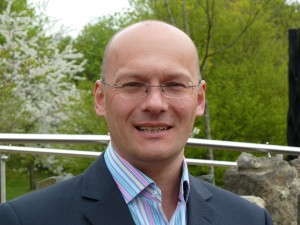 Continuing the theme of “talking to strangers”, first raised in the post by Dr Julie Robson on 10 May (Talk to Strangers), I remain a strong advocate of simply getting out and about so you are in a position to actually meet strangers in the first place. Julie is right in referring to networking as deliberate and planned and is right to suggest that clear objectives need to be set at the outset and then followed up. At an early stage of your career, however, I am a strong advocate of simply getting out, be it in the real or virtual world (http://www.academia.edu/ is a good place to start), as unless “out there” you will never meet strangers and never migrate to networking.
To this day, I remain the very best of friends with colleagues from Edinburgh Napier and Aberystwyth universities having first met them at a late-night encounter at a conference dinner in Newcastle in the mid 1990s. Since then, we have written numerous papers and published four books together while we are currently in the process of writing some new material for the forthcoming REF. One of the books authored is on the theme of Collaboration which quite simply relates to autonomous organisations working together to meet a common goal. All the processes, structures of governance and detailed plans developed to achieve these common goals are virtually guaranteed to fail unless those collaborating get on personally ….. a little like the current coalition government but the less said about them the better!
 It is too easy to remain in our offices and too complacent of us to accept that opportunities will simply appear be it to write a paper or be part of an application for a research grant. My advice is to escape the office on a regular basis, mingle with staff either in your own School or beyond, enjoy a chat over coffee or even register for that workshop, conference or event that you keep telling yourself you are too busy to attend. Getting out and about and communicating with your colleagues either at BU or further afield can lead to new friendships and hopefully a co-authored paper or two, a joint research seminar or if you are really lucky a grant application. One of my best “chance encounters” occurred on a work trip to Malaysia back in 2007 when I shared a taxi from the airport in Kuala Lumpur to the centre of the city with the former Director of Tourism for Antigua & Barbuda. In the space of 40 minutes we discussed the state of tourism in the Caribbean and sketched out a PhD proposal while at the same time agonising over which schools to send our respective children. To this day my “KL Taxi” acquaintance remains a good friend and in her new position in the Caribbean is no longer a “stranger” but someone who is a strong advocate of BU, an employer of our students, a conduit to professional international networks and …… a potential co-author and PhD candidate when the pressure of work subsides!
Professor Alan Fyall
Deputy Dean Research & Enterprise
School of Tourism
 The
The 
 Could good networking then be the secret to being a successful academic? On reflection it’s a good way to identify new ideas, new ways to transfer knowledge to a wider audience and new partners for bids Maybe talking to strangers, or at least new people, is good advice after all.
 The very successful

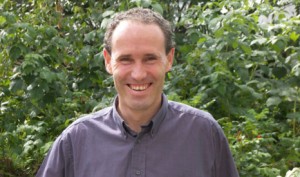 Richard received the award for having made a substantial impact in collaborative working within BU, and securing external funding to create an innovative research network involving internal colleagues and external institutions. The research undertaken by the network has led to high impact outputs.

 Bournemouth University graduate Harriet McKay – who has since been appointed as the company’s Communications Manager – was brought in to deliver the marketing support. “When I started, the website was plain and there was absolutely no reason for customers to come back to the site,” Harriet explained. “I worked with the team at Dorset Cereals and their design agency to create a new website that would create more visits and importantly communicate their brand values. Before the University’s involvement the company had 16,000 emails on its database, now we have over 200,000. It’s been a fantastic success story.”

 BU has recently set up the
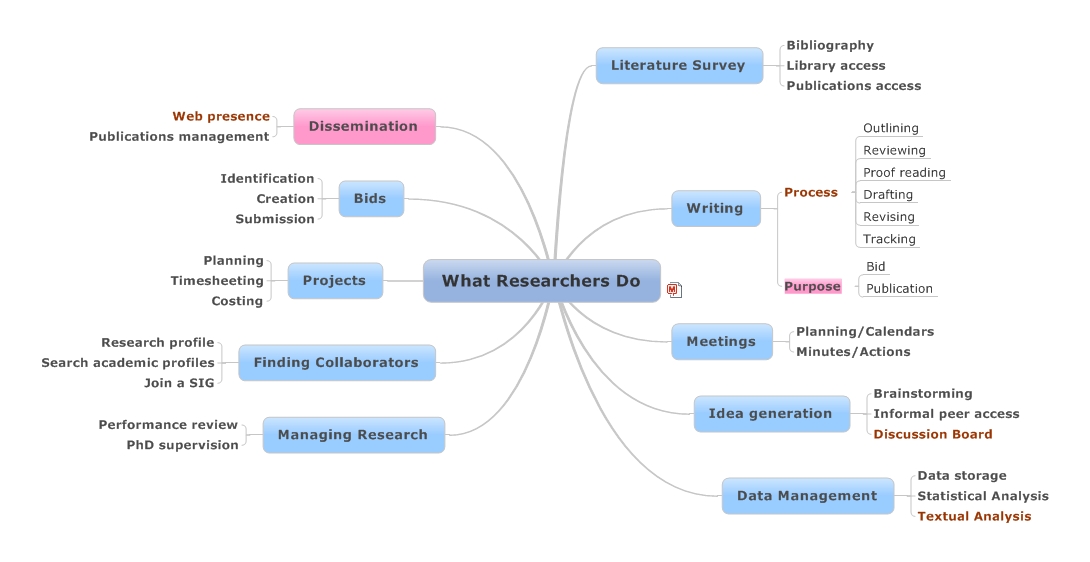
  Social Media: A guide for researchers








 Verbal autopsy paper published two days ago
 ESRC Studentships for 2027 Entry: Opportunity Now Open
 SONAMONI contributions to Safety Conference 2026 in South Africa
 Three CMWH presentations at Berlin conference
 Horizon Europe Cluster 3 (Civil Security for Society) 2026 Calls Now Open
 MSCA Doctoral Networks 2026 Call Information Webinar
 ESRC Festival of Social Science 2026: Application Deadline Extended to Thursday 25 June 2026
 Reminder: Register for the ESRC Festival of Social Science 2026 Information Session
 ECR Funding Open Call: Research Culture & Community Grant – Apply now
 ERC Advanced Grant 2025 Webinar
 Update on UKRO services
 European research project exploring use of ‘virtual twins’ to better manage metabolic associated fatty liver disease