Worldwide there is a growing interest in interdisciplinary research, especially to help deal with large questions in life, the so-called wicked problems. These wicked problems (or questions) include climate disasters and global warming, globalisation, the drop in biodiversity, inequalities and international conflicts. Interdisciplinary research increasingly popular and widely promoted by grant-giving bodies, the UK REF (Research Excellence Framework), research councils and universities, to name but a few stakeholders.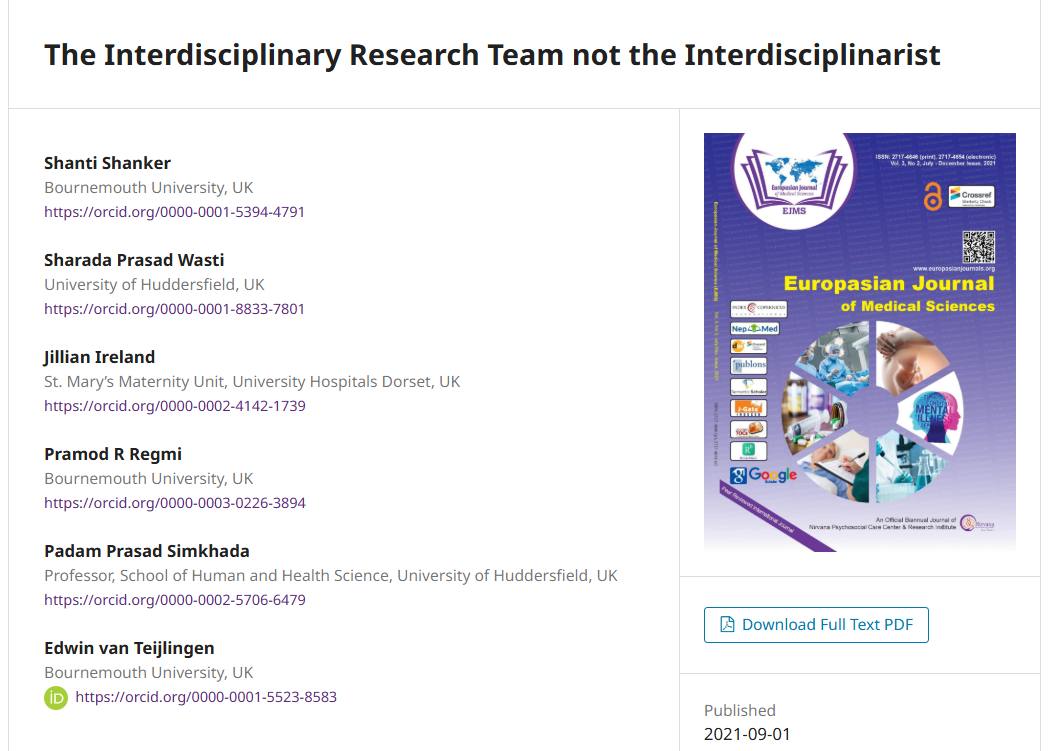
However, it is often ignored, that interdisciplinary research presents significant challenges for discipline-specific experts. Doing interdisciplinary research requires specialised skills, team-player personality traits, and the ability to transcend one’s own academic boundaries. We have highlighted in the past that common barriers include managing conflicting research philosophies, navigating, and overcoming, methodological, and communication differences [1]. Those who have been involved in interdisciplinary research will agree that is not an easy option for the individual discipline expert. It requires individual skills, ability to see beyond one’s discipline and perhaps personality characteristics such as a great team player. Interdisciplinary research may involve a mixed-methods approach underpinned by conflicting, and according to some incommensurable, research philosophies.
 It is also the case that some disciplines are perhaps more familiar with interdisciplinary working, disciplines such as Public Health [2] are traditionally less theory focused and more solution driven. But even in Public Health as a broad-ranging discipline covering sub-disciplines such as epidemiology, health education, law, management, health psychology, medical statistics, sociology of health & illness and a wide-range of research methods, conducting interdisciplinary research is not necessarily easy [3].
Prof. Edwin van Teijlingen & Dr. Pramod Regmi both are in the School of Health & Care, and Dr. Shanti Farrington, who is based in the School of Psychology.
References:
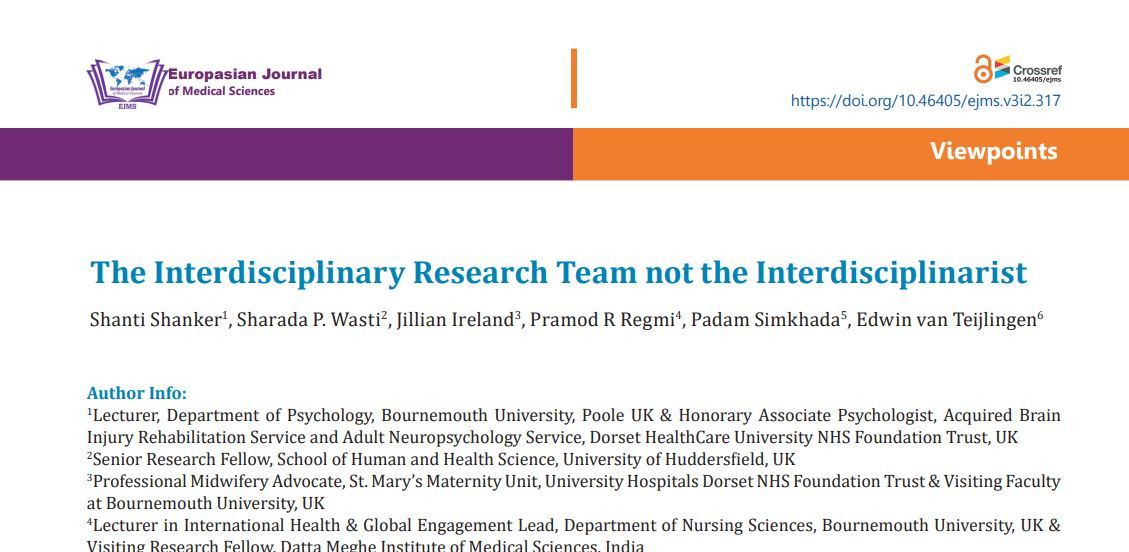
- Shanker S, Wasti SP, Ireland J, Regmi PR, Simkhada PP, van Teijlingen E. (2021) The Interdisciplinary Research Team not the Interdisciplinarist. Europasian Journal of Medical Science. 3(2):111-5.
- Wasti, S. P., van Teijlingen, E., Simkhada, P. (2020) Public Health is truly interdisciplinary. Journal of Manmohan Memorial Institute of Health Sciences, 6(1):21-22.
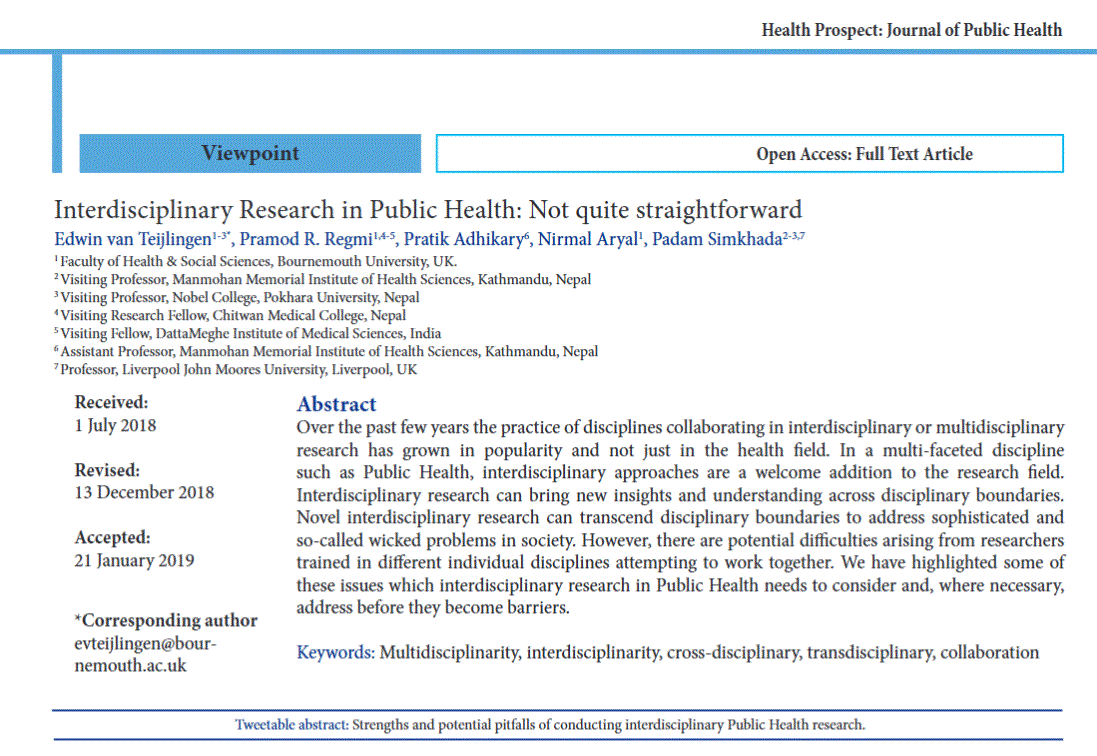
- van Teijlingen, E., Regmi, P., Adhikary, P., Aryal, N., Simkhada, P. (2019). Interdisciplinary Research in Public Health: Not quite straightforward. Health Prospect, 18(1), 4-7. https://doi.org/10.3126/hprospect.v18i1.19337
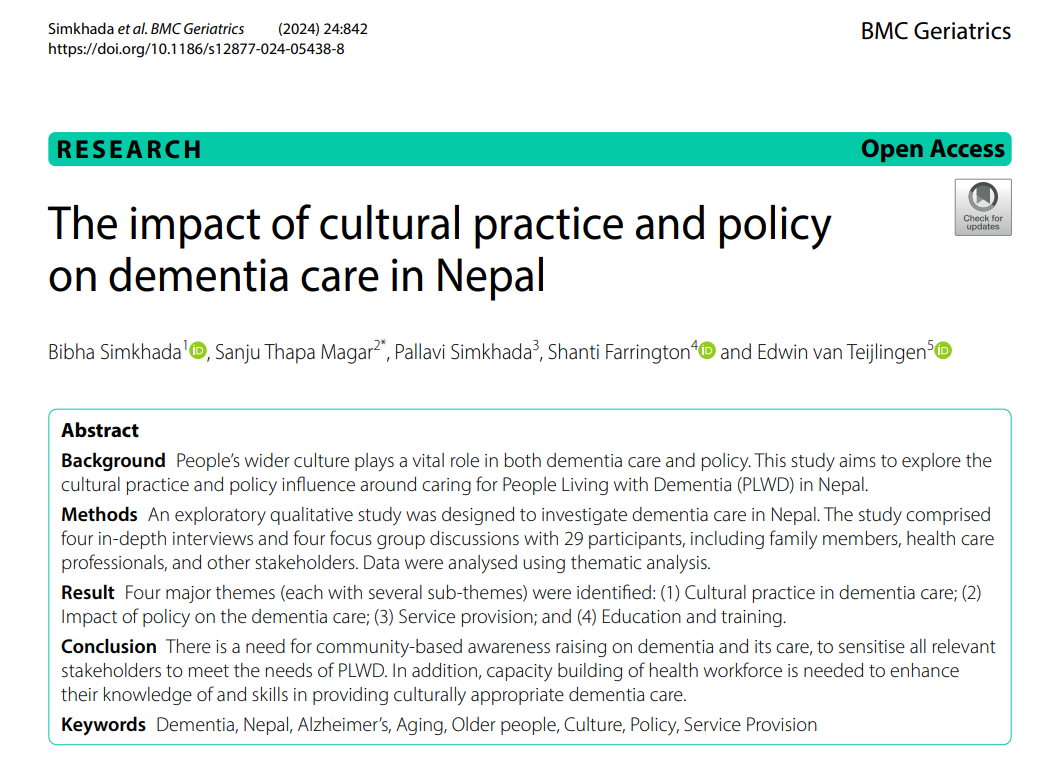









 Reminder: Register for the ESRC Festival of Social Science 2026 Information Session
 Deadline Approaching: Submit your Poster for the Research Conference by Monday 27 April
 BU academics publish in Nepal national newspaper
 New BU Physiology paper
 Gender and street names
 ECR Funding Open Call: Research Culture & Community Grant – Apply now
 ECR Funding Open Call: Research Culture & Community Grant – Application Deadline Friday 12 December
 MSCA Postdoctoral Fellowships 2025 Call
 ERC Advanced Grant 2025 Webinar
 Update on UKRO services
 European research project exploring use of ‘virtual twins’ to better manage metabolic associated fatty liver disease