October’s Community Voices webinar welcomes Lorraine Stanley Founder and CEO of SWAD – where disability and sex come together.
As a newly disabled woman in 2007 Lorraine, unable to find accessible support and guidance about sex and disability decided to be pro-active and held disability discussion groups. Feedback from the groups, and further research highlighted that health and social care professional had a lack of understanding of the obstacles faced by people with disabilities to having a fulfilling intimate and sexual life. SWAD grew out of the need to meet the gap between the requirements of the disabled community and what was being offered by service providers. SWAD believes that sex is something that can be openly discussed and should not be swept under the carpet.
Community voices is a collaboration between BU PIER partnership and Centre for Seldom Heard Voices to provide a platform and a voice to local community activists.
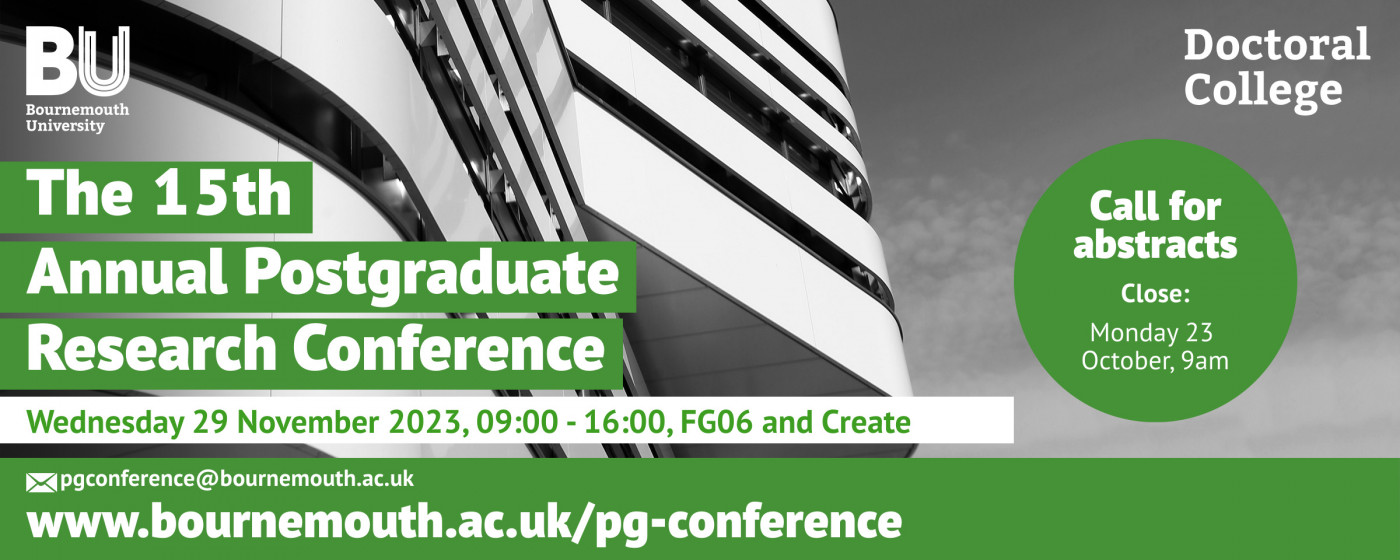
The 15th Annual Postgraduate Research Conference 2023 will take place on Wednesday 29 November, and the call for abstracts is now open.
The conference is a great opportunity for postgraduate researchers to showcase and promote their research to the BU community whether they have just started or are approaching the end of their journey at BU.
Attending the conference is a great opportunity to engage and network with the postgraduate research community and find out more about the exciting and fascinating research that is happening across BU.
Abstracts are invited from postgraduate researchers to present via oral or poster presentation.
The Centre for Science, Health, and Data Communications Research invites you to our Autumn 2023 speaker series. Featuring researchers from around the world, these online talks are open to the public and encompass topics on crisis communication, climate change and sustainability; media, data and AI literacy; social justice communication and how the arts and storytelling can help tackle global challenges.
All events take place on zoom – Thursdays 16:00-17:00 UK time
Literacies have been well documented from media to the digital and more recently immersive. With an increase in the use of generative AI tools and the impact that this is having on an increasing number of sectors, this talk will argue for the need for an AI literacy. It will examine frameworks for understanding how to use artificial intelligence and the need to be constantly evolving our thinking when it comes to technology.
The limitations of #BlackLivesMatter for anti-racist activism in the global south
Date: 19 October 2023
Speaker: Suntosh Pillay It is unlikely that you know the name Collins Khosa. However, you would know the name George Floyd. This is no accident. The media, as a global epistemic authority, produces, polices and perpetuates a knowledge system that favours the Global North. I present a comparative analysis of the murders of Khosa in South Africa (April 2020) and Floyd in the U.S. (May 2020). Despite its quasi-universal appeal, Black Lives Matter (BLM) has an ironic proximity to whiteness within the United States that provide BLM with epistemic advantages not enjoyed elsewhere, especially in poor ‘township’ contexts of South Africa. I argue that anti-racist activism in global south contexts must guard against uncritically importing northern-centric forms of protest, such as #BlackLivesMatter. The US has particularities that distracts the media gaze, (mis)directing social justice activism away from black lived experiences in countries such as South Africa, reinforcing silences, epistemic injustices, and colonial continuities.
Media Literacy: A Strategy for Risk Management in an Uncertain World
Date: 26 October 2023
Speaker: Tessa Jolls
With new AI technologies, as well as the cacaphony of voices that have emerged through social media, it is clear that the call for a media ecosystem that only contains “the truth” or that contains little or no misinformation or disinformation is a utopian dream that only invites more discord and polarization, or worse, highly contestable labelling and censorship. Meaning lies in the minds and hearts of information users, and with this recognition, media literacy offers a pathway toward dialogue and risk management strategies that encompass both qualitative and quantitative analyses and reflection, based on a fundamental understanding of media as a global symbolic system. With this in mind, media literacy offers the questions — not “the answers” — for exploring and interrogating media in all its forms, individually and collectively. This empowerment enables wiser choices throughout life and societies.
Global South’s over-reliance on science news from Global North: causes, consequences and solutions
Date: 2 November 2023
Speaker: An Nguyen
Developing countries rely heavily on the developed world for not only scientific expertise but also science news output. From Africa and the Middle East to South America and developing parts of Asia, a large proportion of science news consumed in the Global South has been found to be translated or, at best, synthesised from foreign sources, especially global media outlets based in the Global North. Such reliance is a double-edged sword: while it helps to enhance general awareness and understanding of global science developments in the Global South, this double-layered structure of dependency bears many negative long-and short-term implications for local and global development. Drawing on recent content analyses and in-depth interviews with science journalists in Southeast Asia and the Middle East, this paper will address this critically important, but rarely studied, phenomenon. I will discuss the causes and impacts of such over-reliance on foreign sources and offers some thoughts on potential solutions to the problem. In general, this requires a holistic approach and international cooperation efforts to address the many traditional shortfalls of science and science news cultures in the Global South.
Transnational Assemblages: Social Justice and Communication During Disaster
Date: 9 November 2023
Speaker: Sweta Baniya
The Power of Podcasting: Audio Storytelling Beyond Entertainment
Date: 16 November 2023
Speaker: Kayla Jones
With the rise in popularity of audio listening, podcast studies is a growing field of research that is responding to podcasts that have gone mainstream, such as Serial. Audio storytelling podcasts can be a powerful tool to advocate for, connect with, and educate global audiences. Through creating her own podcast, Kayla explored the ways storytelling podcasts can tell multilayered narratives beyond the realm of entertainment and in non-fiction settings, like heritage and tourism.
Algorithms and the Climate Emergency: An Ecomedia Literacy Perspective
Date: 23 November 2023
Speaker: Antonio Lopez
Whether it’s blockchain technologies or disinformation, Big Tech algorithms have a significant environmental impact. The economic models of surveillance and carbon capitalism are both based on extractivism, so data harvesting and resources extraction practices mirror each other in Big Tech algorithms. To encourage a holistic environmental analysis of algorithms, ecomedia literacy’s four zone approach enables an investigation from the perspectives of ecoculture, political ecology, ecomateriality, and lifeworld. For media literacy educators and reformers, the challenge is to develop curricula and methods that address these different standpoints, which can include critical media literacy, design justice, civic media literacies, news and misinformation literacies, and ethical algorithm audits.
The art of presence
Date: 30 November 2023
Speaker: Andrea Winkler-Vilhena
Throughout history the Arts have been used to address societal issues, to see and show the world in diverse ways, and to imagine and create new futures. Nowadays, every aspect of life has become so entangled with digital media that it is impossible to speak about the world without considering the effects they have on our lives. How do we relate to and interact with people when our attention is absorbed by digital gadgets? What does presence mean in a world in which a big part of human relationships and communication happens in virtual spaces? In this lecture we will explore how the Arts can be used to promote media literacy and how seeing, interacting with and making art can revive our sense of presence and promote care and imagination.
Youth digital activism and online media: from digital exclusion to the complexities of civic participation
Date: 7 December 2023
Speaker: Annamaria Neag
Since the second half of the 2000s, there has been an increasing interest in the relationship between internet use and civic participation. While initially this interest was geared towards the adult population, researchers have shifted their attention to young people and their activism in the digital sphere. In this talk, I will present the research findings of our ongoing project focusing on young people in the CEE region (namely, the Czech Republic and Hungary) and their (online) involvement in the Fridays for Future movement. We first mapped the online public discourse on youth civic participation in these two countries and then focused on young people’s views on activism and the digital skills needed to participate. Our results show that online commenters use specific strategies to exclude young people from the public sphere. When it comes to young people and their views on digital activism, we found that digital media plays a rather complex and contradictory role in their civic participation, with its affordances providing both opportunities and challenges in terms of mental well-being, non-formal education and community-building.
Shrinkage and Activist Affordances: How disabled people improvise more habitable worlds
Date: 14 December 2023
Speaker: Arseli Dokumaci
For people living with disability, everyday tasks like lifting a glass or taking off clothes can be daunting. As such, their undertakings may require ingenuity, effort and artfulness. In this talk, I draw on visual ethnographies with disabled people living in Turkey and Quebec, and trace the immense labour and creativity that it takes for them just to navigate the everyday. Bringing together theories of affordance, performance, and disability, I propose “activist affordances” as a way to name and recognize these extremely tiny and yet profoundly artistic choreographies that disabled people have to continually rehearse to make the world more habitable for themselves and others. Activist affordances, in the way I define them, are micro, often ephemeral acts of world-building, with which disabled people literally make up, and at the same time make up for, whatever affordances fail to materialize in their environments. Activist affordances are not like any other affordance in that their creation emerges from constraints, losses and precarity that I broadly conceptualize as “shrinkage”. It is within a shrinking world of possibilities, that it becomes necessary to create affordances in their physical absence, which is why I call them “activist”. Even as an environment shrinks to a set of constraints rather than opportunities, the improvisatory space of performance allows disabled people to imagine that same environment otherwise through activist affordances, presenting the potential for a more livable and accessible world.
**The Centre for Science, Health, and Data Communications Research focuses on the urgent need for better science, health and data communication through ambitious cross-disciplinary collaborations. Bringing together experts from various disciplines – media and communication, computer and data sciences, health and medical sciences, environment sciences, business studies, psychology and sociology – we research and pioneer interdisciplinary solutions for contemporary communication challenges. From reporting statistics, to tackling disinformation, from health and wellness interventions to more efficient communication around environmental and humanitarian disasters, our members respond to real world issues—often in real time. For more about our centre or to get in touch, please visit https://www.bournemouth.ac.uk/research/centres-institutes/centre-science-health-data-communication-research
Checkout past events and subscribe to our YouTube channel (@SHDCresearch)
Follow us on Instagram and X (Twitter) @SHDCresearch
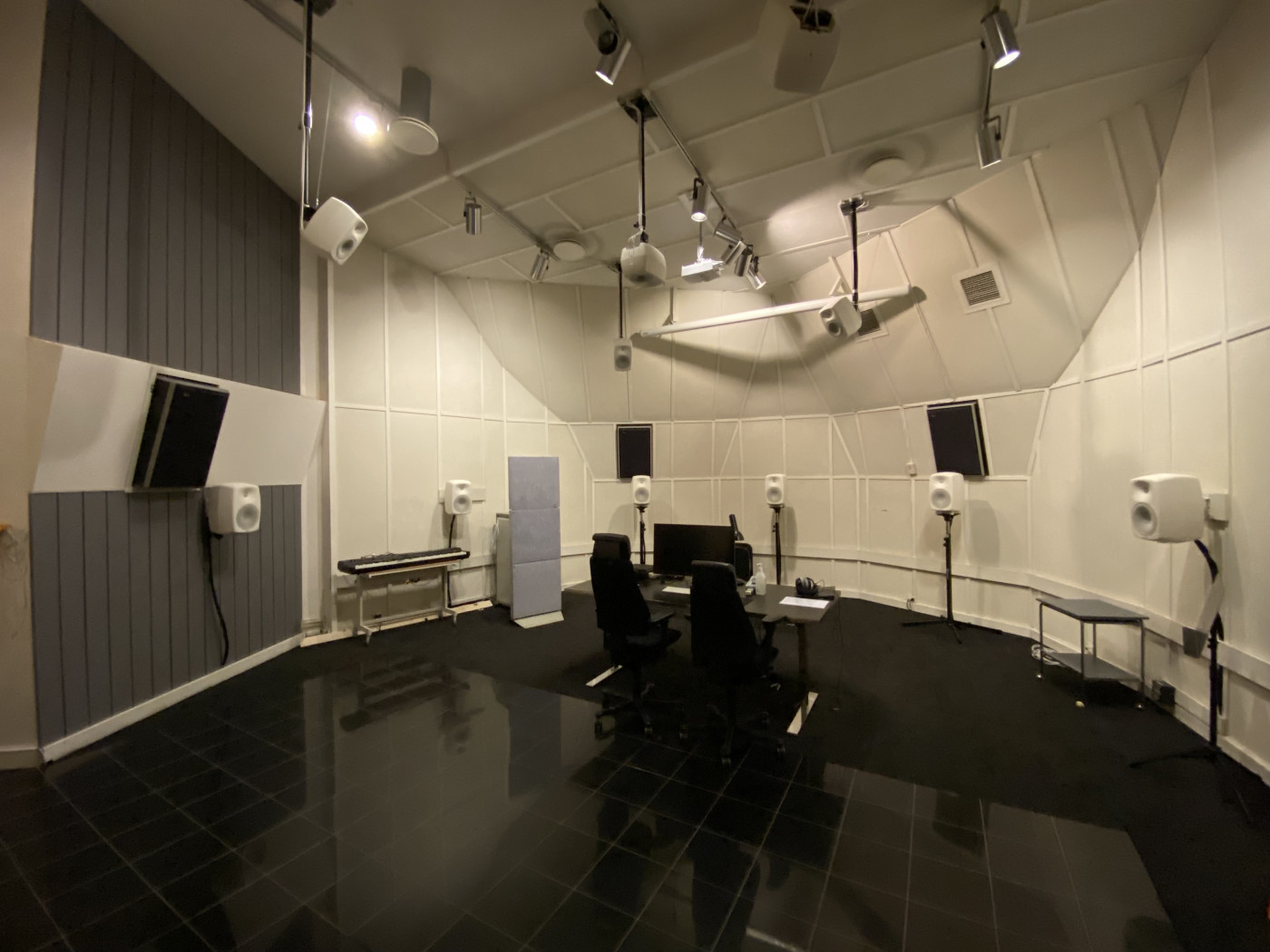
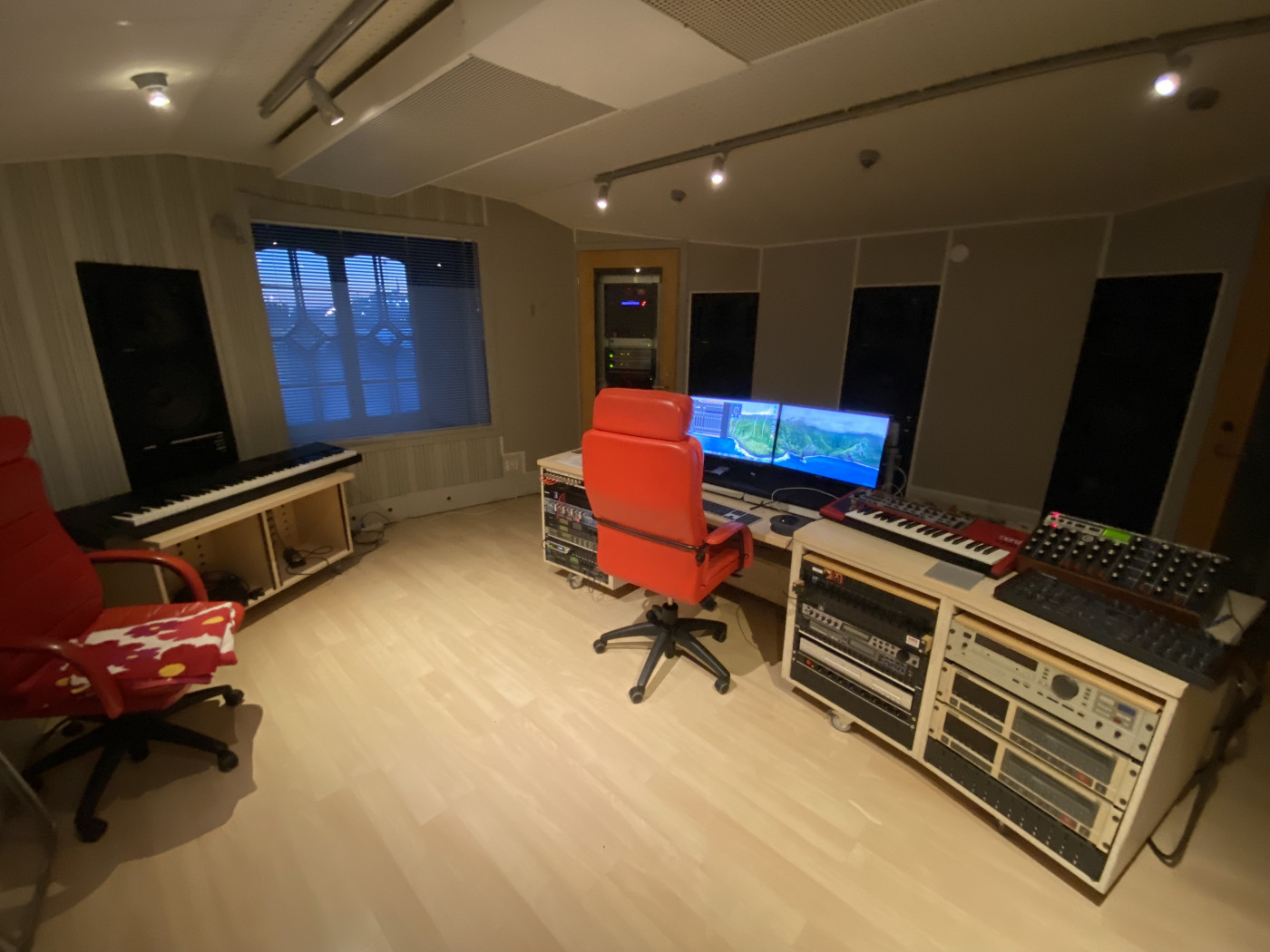
I was recently selected for two composer residencies in Sweden, first at Elektronmusik Studion (EMS), Stockholm (June 2023), and then at Studio Alpha, Visby International Centre for Composers (VICC), Visby, Sweden (September 2023). Both studios feature immersive multichannel surround sound systems of extremely high quality, enabling me to explore in-depth the compositional possibilities of spatial audio.
Studio 2 at EMS Stockholm
Studio Alpha at Visby International Centre for Composers
During these residencies I was able to focus on the use of ambisonic sound. Ambisonic sound is used in many areas of the creative industries, such as music and sound recording, music creation, cinema and TV sound design, and game audio. The format allows for spatial audio ‘environments’ to be created within a virtual listening space using computer software, positioning and moving individual sounds around the listening area. Most significantly, this spatial audio can then be decoded for any playback system – from binaural for earbuds, conventional stereo, and on to immersive audio systems of 64 loudspeakers or more, yet always retaining the composed spatial image.
This scalability of ambisonic sound makes it extremely flexible when presenting immersive audio work in different venues of different sizes, and with different loudspeaker layouts. At EMS, I was able to work using their 15.1 Genelec sound system, which features an array of ceiling loudspeakers, as shown in the photo.
These residencies gave me fantastic opportunities to commence composing new electroacoustic work whilst exploring the ambisonic technique in-depth, using a variety of software tools in different music studio environments.
When and how humans first settled in the Americas is a subject of considerable controversy. In the 20th century, archaeologists believed that humans reached the North American interior no earlier than around 14,000 years ago.
But our new research found something different. Our latest study supports the view that people were in America about 23,000 years ago.
The 20th century experts thought the appearance of humans had coincided with the formation of an ice-free corridor between two immense ice sheets straddling what’s now Canada and the northern US. According to this idea, the corridor, caused by melting at the end of the last Ice Age, allowed humans to trek from Alaska into the heart of North America.
Gradually, this orthodoxy crumbled. In recent decades, dates for the earliest evidence of people have crept back from 14,000 years ago to 16,000 years ago. This is still consistent with humans only reaching the Americas as the last Ice Age was ending.
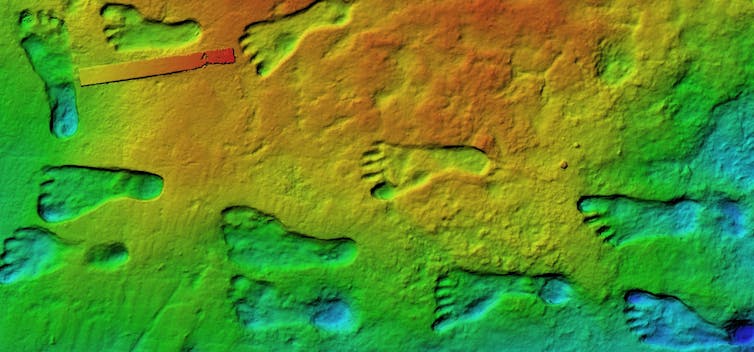
In September 2021, we published a paper in Science that dated fossil footprints uncovered in New Mexico to around 23,000 years ago – the height of the last Ice Age. They were made by a group of people passing by an ancient lake near what’s now White Sands. The discovery added 7,000 years to the record of humans on the continent, rewriting American prehistory.
If humans were in America at the height of the last Ice Age, either the ice posed few barriers to their passage, or humans had been there for much longer. Perhaps they had reached the continent during an earlier period of melting.
Our conclusions were criticised, however we have now published evidence confirming the early dates.
Dating the pollen
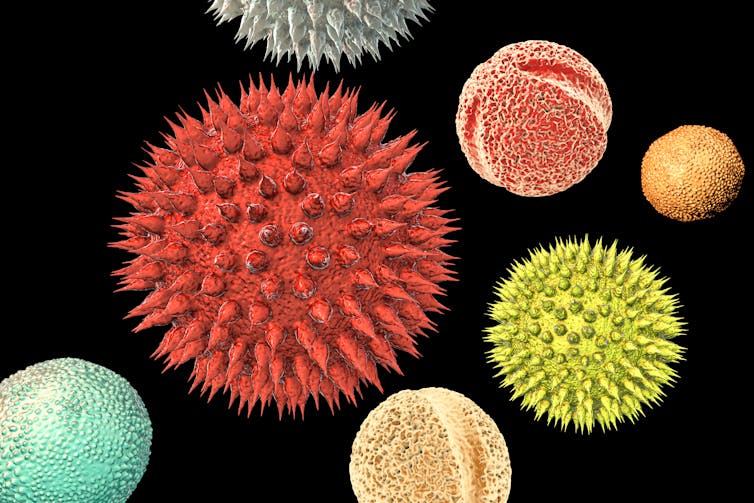
For many people, the word pollen conjures up a summer of allergies, sneezing and misery. But fossilised pollen can be a powerful scientific tool.
In our 2021 study, we carried out radiocarbon dating on common ditch grass seeds found in sediment layers above and below where the footprints were found. Radiocarbon dating is based on how a particular form – called an isotope – of carbon (carbon-14) undergoes radioactive decay in organisms that have died within the last 50,000 years.
Some researchers claimed that the radiocarbon dates in our 2021 research were too old because they were subject to something called the “hard water” effect. Water contains carbonate salts and therefore carbon. Hard water is groundwater that has been isolated from the atmosphere for some period of time, meaning that some of its carbon-14 has already undergone radioactive decay.
Common ditch grass is an aquatic plant and the critics said seeds from this plant could have consumed old water, scrambling the dates in a way that made them seem older than they were.
It’s quite right that they raised this issue. This is the way that science should proceed, with claim and counter-claim.
How did we test our claim?
Radiocarbon dating is robust and well understood. You can date any type of organic matter in this way as long as you have enough of it. So two members of our team, Kathleen Springer and Jeff Pigati of the United States Geological Survey set out to date the pollen grains. However, pollen grains are really small, typically about 0.005 millimetres in diameter, so you need lots of them.
This posed a formidable challenge: you need thousands of them to get enough carbon to date something. In fact, you need 70,000 grains or more.
Medical science provided a remarkable solution to our conundrum. We used a technique called flow cytometry, which is more commonly used for counting and sampling individual human cells, to count and isolate fossil pollen for radiocarbon dating.
Flow cytometry uses the fluorescent properties of cells, stimulated by a laser. These cells move through a stream of liquid. Fluorescence causes a gate to open, allowing individual cells in the flow of liquid to be diverted, sampled, and concentrated.
We have pollen grains in all sediment layers between the footprints at White Sands, which allows us to date them. The key advantage of having so much pollen is that you can pick plants like pine trees that are not affected by old water. Our samples were processed to concentrate the pollen within them using flow cytometry.
After a year or more of labour intensive and expensive laboratory work, we were rewarded with dates based on pine pollen that validated the original chronology of the footprints. They also showed that old water effects were absent at this site.
The pollen also allowed us to reconstruct vegetation that was growing when people made the footprints. We got exactly the kinds of plants we would expect to have been there during the Ice Age in New Mexico.
We also used a different dating technique called optically stimulated luminescence (OSL) as an independent check. OSL relies on the accumulation of energy within buried grains of quartz over time. This energy comes from the background radiation that’s all around us.
The more energy we find, the older we can assume the quartz grains are. This energy is released when the quartz is exposed to light, so what you are dating is the last time the quartz grains saw sunlight.
To sample the buried quartz, you drive metal tubes into the sediment and remove them carefully to avoid exposing them to light. Taking quartz grains from the centre of the tube, you expose them to light in the lab and measure the light emitted by grains. This reveals their age. The dates from OSL supported those we got using other techniques.
The humble pollen grain and some marvellous medical technology helped us confirm the dates the footprints were made, and when people reached the Americas.
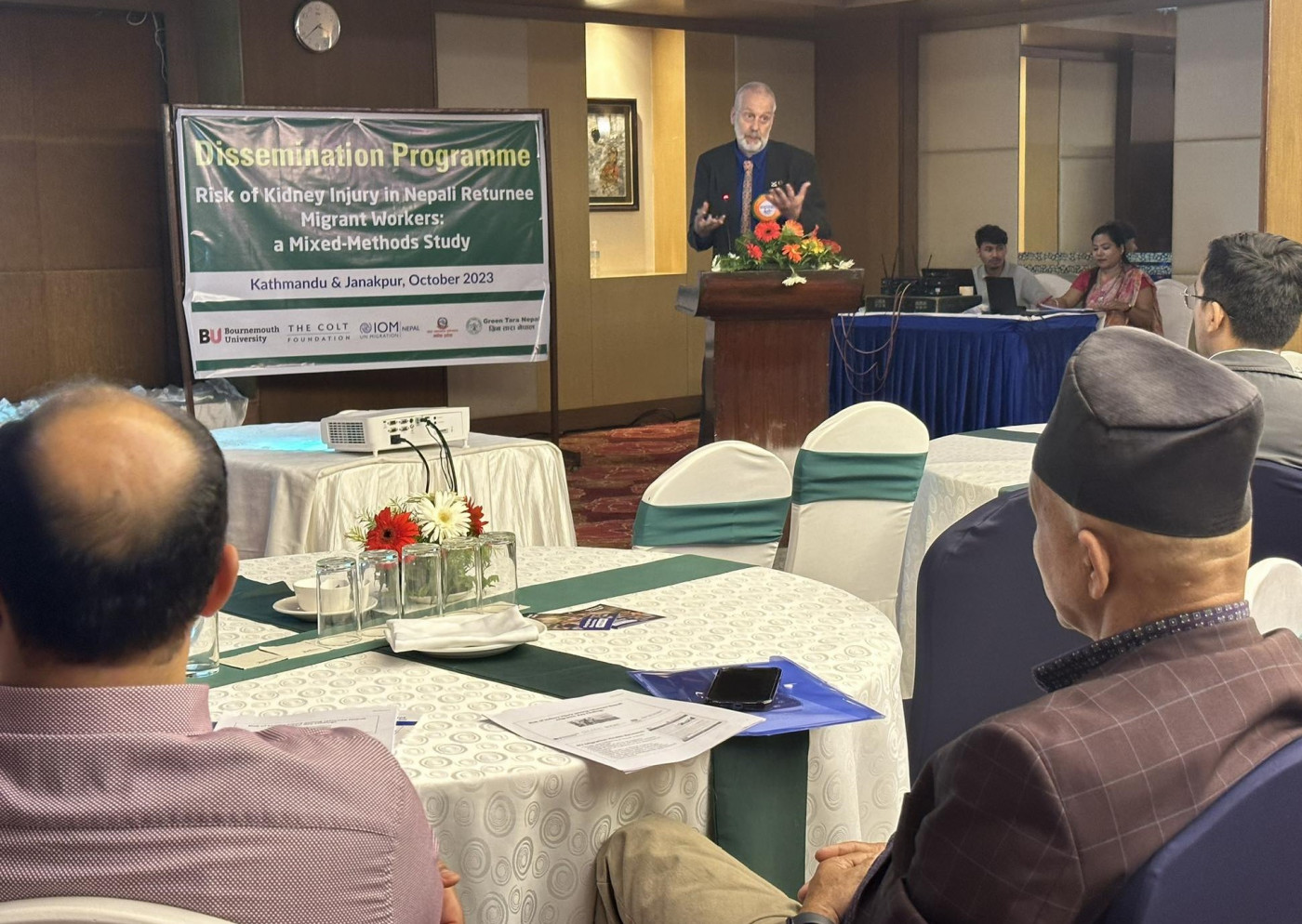
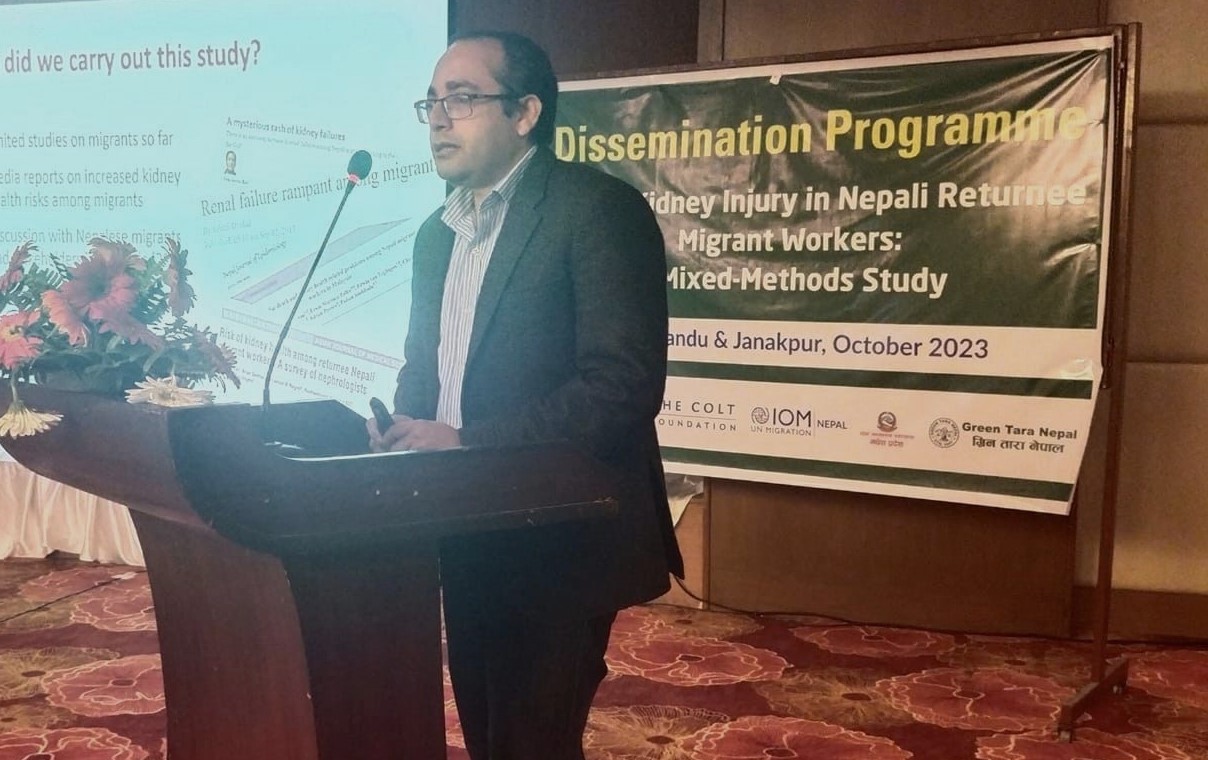
Yesterday, Sunday 8th October we held an event in the capital of Nepal to disseminate the findings of our study of the kidney health of Nepalese migrant workers working abroad. The study included 718 migrants and 725 non-migrants from Dhanusha district which has the highest number of labour migrants working abroad. Our study found that 5.8 % of our migrant samples had some sign of kidney injury compared to non-migrants (3.6%). The study also reported other lifestyle risk factors in migrants than non migrants. Labour migration has become an integral part of Nepali society, over a quarter of the country’s national income is from remunerations, i.e. workers sending money home from abroad. It is therefore important to measure and record these problems related to kidney health to get policymakers and other relevant stakeholders to implement culturally adapted and feasible interventions to promote healthy lifestyle and improve working conditions.
This mixed-methods study adopted Disadvantaged Populations eGFR Epidemiology Study (DEGREE) protocol which combines a questionnaire around living and working conditions abroad with biological measurements. This study, funded by the UK-based Colt Foundation, is the first of its kind in Nepal. The BU team comprises Dr. Pramod Regmi, Principal Academic and Dr. Nirmal Aryal, Postdoctoral Researcher, both in the Department of Nursing Science, and Prof. Edwin van Teijlingen, in the Department of Midwifery & Health Sciences. This event yesterday in Hotel Radisson in Kathmandu was first of two dissemination events, the second one will on Wednesday 11 October in the fieldwork area. In Kathmandu some 45-50 people attended including on of the regional ministers of Labour, Employment & Transport.
Recognition of your developing knowledge by a national body
Further details and how to apply can be found here.
The Doctoral College will meet the cost for individuals who wish to apply. In line with the UKCGE guidance, individuals should send their completed application to the Doctoral College (fknight@bournemouth.ac.uk) before the BU Window Closing date below:
BU Window Closes
UKCGE Window Closes
Expected Outcome
13th October 2023
20th October 2023
January 2024
Future dates for applications will be released soon.
Dates for a Supervisory Lunchbite aimed at supporting the application process for future windows will be confirmed asap.
We’re hosting a range of free events as part of the nationwide ESRC Festival of Social Science – covering everything from how your body reacts to cold water, to the right to roam, and a social history of ska and Two-Tone music in Dorset.
The events take place between 25 October and 15 November as part of the ESRC Festival of Social Science, which offers an insight into some of the country’s leading social science research and how it influences our lives.
BU has partnered with the University of Southampton for this year’s festival and will jointly host two events exploring the challenges and benefits around extending the right to roam, focusing on the New Forest and Bournemouth’s coastline.
Other events include an exhibition at the Dolphin Centre in Poole, showcasing the stories and photography of people involved in a research project to tackle obesity and unemployment, and an online event discussing the myths, misconceptions and lived experiences of long-COVID.
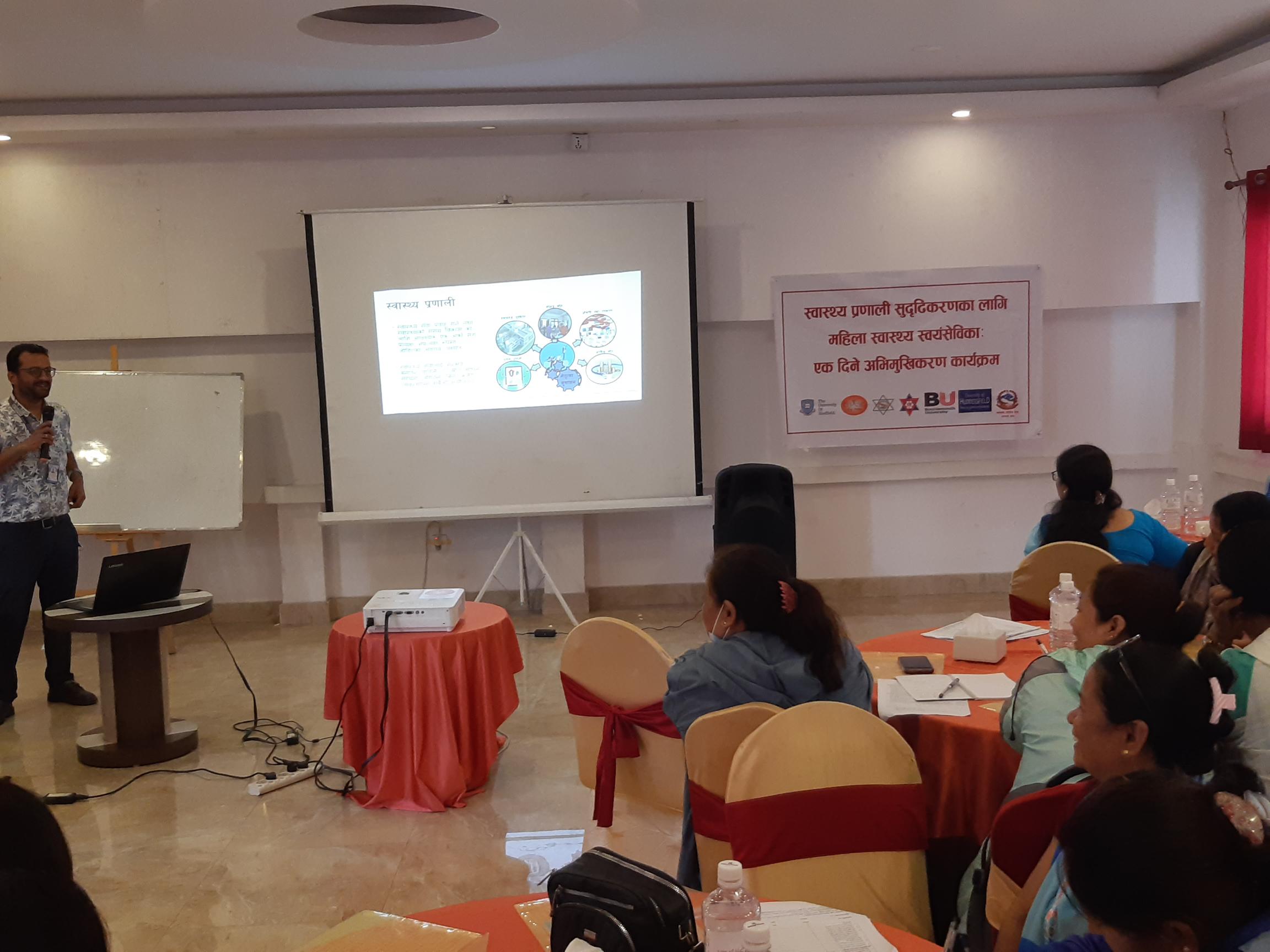
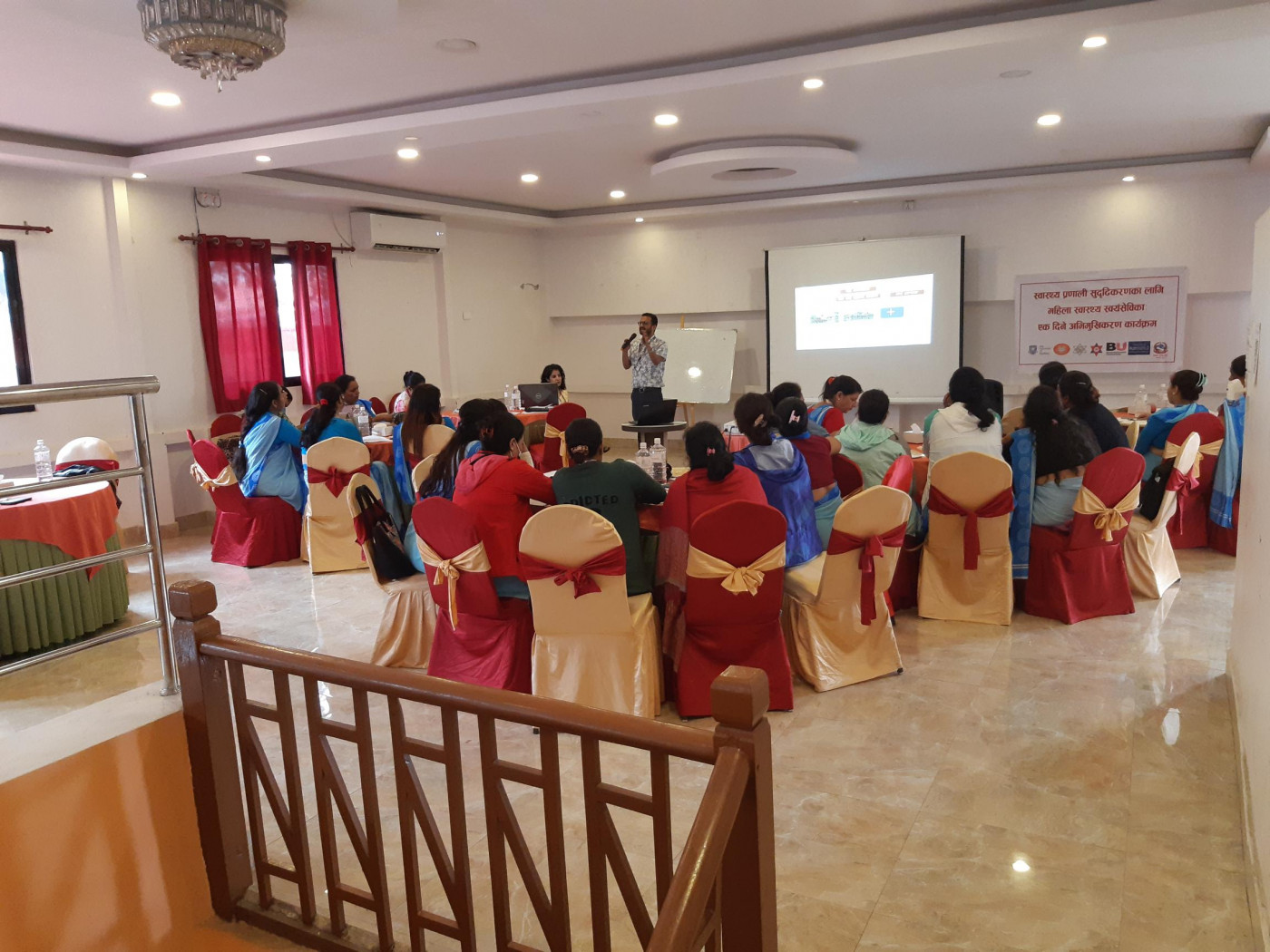
Today our collaborators Drs Sujata Sapkota and Sujan Gautam from Manmohan Memorial Institute of Health Sciences (MMIHS) organised and ran another training and orientation session for Female Community Health Volunteers (FCHVs) in a hotel in Kathmandu. The discussions in Nepali in today’s session are very lively with great participation from guest trainers as well as from the FCHVs. Many FCHVs are worried about their changing roles, and even the potential disappearance of the role.
The sessions with FCHVs are crucial capacity building as part of our interdisciplinary study ‘The impact of federalisation on Nepal’s health system: a longitudinal analysis’. I had the pleasure of saying a few words about our international project which started in 2020 and will run to 2024. It is funded by the Health System Research Initiative, a UK collaboration between three funders: the MRC (Medical research Council), the Foreign, Commonwealth & Development Office, and the Welcome Trust. The research team includes researchers from MMIHS (Kathmandu), and PHASE Nepal (Bhaktapur), the University of Sheffield, Bournemouth University, and the University of Huddersfield (the three original UK co-applicants), and researchers now based at the University of Greenwich, the University of Essex and Canterbury Christ Church University.
Would you like to share your research with a public audience? Get involved with our Café Scientifique series
Café Scientifique is a public event that takes place at The Black Cherry in Boscombe on the first Tuesday evening of the month (excluding January & August), and is organised centrally by the BU Public Engagement with Research Team, part of Research Development and Support.
The format involves delivering a short talk, followed by the opportunity for discussion and questions from a varied public audience. It is a fantastic opportunity for you to gain experience in engaging with the public in a friendly relaxed atmosphere.
We welcome academics at all career stages, although this opportunity is particularly valuable for those getting started in engaging with the public. We encourage collaboration between less experienced and more experienced public speakers to help provide support and gain a rewarding learning experience.
The team will support you every step of the way. From developing your ideas to engage with a public audience, to setting up and promoting your event. We will also be on hand on the day to help your event run smoothly.
Please note: Completing this form does not guarantee you a space. We will be in touch with you to discuss your interest.
If you have any questions about getting involved with Café Sci, please get in touch with the Public Engagement with Research Team: publicengagement@bournemouth.ac.uk.
This study investigates the principles and the factors influencing interaction for resource integration during service mega-disruptions (SMDs) in the tourism ecosystem. Utilizing qualitative data from semi-structured interviews conducted during the COVID-19 pandemic, this article reveals that interaction principles of willingness to exchange, access to information, dialogue, transparency, coordination, adaptation, and informed risk assessment lead to value co-creation (VCC). Failure to follow these principles leads to value no-creation (VNC) or value co-destruction (VCD). During SMDs, the most critical factors influencing interaction for resource integration are traveller’s safety needs, initiation of travel cancellation, sympathy, proactivity, omnichannel communication, the effectiveness of technology and employees as well as the number of involved actors. Forced indifference in VNC is uncovered, where firms’ constraints hinder their engagement despite tourists’ desire for interaction. This study contributes to the understanding of value dynamics during SMDs and calls for further exploration of multiple stakeholders’ perspectives in such contexts.
Drawn upon Telepresence theory, this study aims to identify the relationships between existential authenticity, celebrity attachment, telepresence, and travel intention in the short video experience. Survey results show that existential authenticity fosters user attachment to celebrity and then travel intention, but has no impact on telepresence which is also not related to travel intention; Furthermore, celebrity attachment enhances travel intention. Although existential authenticity has no effect on telepresence, celebrity attachment mediates the relationship between existential authenticity and telepresence. This study offers insights to both scholars and practitioners, informing strategies for enhancing destination competitiveness through TikTok marketing campaigns.
At Café Scientifique, you can explore the latest ideas in science and technology in a relaxed setting. Enjoy listening to a short talk before engaging in debate and discussion with our guest speaker and audience
Many of us know that white blood cells help fight bacteria, but we may not be aware that they also act as tiny ‘couriers’, moving all around the body to deliver its building blocks. Without these couriers, the body cannot be constructed properly.
Join biologist Dr Yutaka Matsubayashi, from Bournemouth University, who will share video of these microscopic cells at work and discuss how important they are for the body’s structure. He will also explore whether they may have played a part in our evolutionary journey from single-celled organisms – and explain why thinking about stirring sugar into coffee can help us understand their function.
This event will be held at The Black Cherry in Boscombe, Bournemouth. Although the talks start at 6:30pm, the café will be open early so we encourage you to arrive early for a drink and a bite to eat before the talk starts.
If you have any questions about this event, or you’re interested in getting involved with a future Café Sci event, please email the Public Engagement with Research Team: publicengagement@bournemouth.ac.uk
We are looking to recruit 2 x impact champions in UOA 15 (the Unit of Assessment for Archaeology) to help support preparations for our next REF submission in 2027. The deadline for expressions of interest is the 27th October 2023.
These roles are recruited through an open and transparent process, which gives all academic staff the opportunity to put themselves forward. Applications from underrepresented groups (e.g. minority ethnic, declared disability) are particularly welcome.
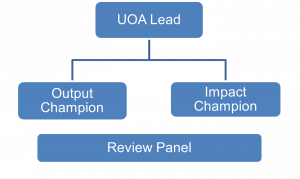
We are currently preparing submissions to thirteen units (otherwise known as UOAs). Each unit has a leadership team with at least one leader, an output and impact champion. The leadership team is supported by a panel of reviewers who assess the research from the unit. This includes research outputs (journal articles, book chapters, digital artefacts and conference proceedings) and impact case studies.
All roles require a level of commitment which is recognised accordingly, with time to review, attend meetings, and take responsibility for tasks.
This vacancy is for joint impact champions for UOA 15 Archaeology. The roles are available as a job share, on the basis of a combined total of 0.2 FTE (split to be decided in discussion with successful applicants).
Undertaking a UOA role can be enjoyable and rewarding, as one of our current impact champions can testify:
“As a UoA 17 impact champion, I work closely with the UoA 17 impact team to encourage the development of a culture of impact across BUBS. I try to pop into Department / research group meetings when I can to discuss impact, and I’ve enjoyed meeting people with a whole range of research interests. Sometimes it can be tough to engage people with impact – understandably; everyone is busy – so it’s important to be enthusiastic about the need for our BU research to reach the public. Overall, the role is about planting the seeds to get researchers thinking about the impact their work might have in the future (as well as the impact they have already had, sometimes without realising!)”
Dr Rafaelle Nicholson – UOA 17 Impact Champion
How to apply
All those interested should put forward a short case (suggested length of one paragraph), explaining why they are interested in the role and what they believe they could bring to it. These should be clearly marked with the relevant role and unit and emailed to ref@bournemouth.ac.uk by 27th October 2023.
Further details on the impact champion role, the process of recruitment and selection criteria can be found here:
Selective Travel offers interesting combinations of airlines to fly to far away destinations. This is great as it offers staff the opportunity to seek out the cheapest flight combination or the one with the shortest stop-over time, especially when traveling on research project funded by charities. What is not always clear is that these airlines in in your deal don’t share codes, as I found out at Heathrow two yesterday when I checked in for a my flight to Nepal. This trip to Nepal is part of The Colt Foundation study into the risk of kidney disease in Nepalese migrant workers. The first leg was with British Airways (BA) to Delhi and the onward flight was with Air India to Kathmandu. I could not check in online nor on one of the machines at Heathrow as BA treated this as a flight to India and I have no visa for India. I needed to queue thrice to speak to BA staff member who could check me in to Delhi, she also informed me that Air India and British Airways don’t code share, and I should get my onward ticket in Delhi. However, she could check in my luggage and send it on to Kathmandu! Arriving in Delhi I was told at the transfer desk for Air India that my ticket was not ready yet, as my luggage had to be located. after I told the guy my BA story. Luckily I had a stop-over of five hours, because after an hour or so there was still no sign of y ticket. It finally arrived a little later, and luckily I have traveled often enough in South Asia not to be worried by delays in paperwork, bureaucratic procedures, and the simple statement; “You have to wait, Sir”.
October’s Community Voices webinar welcomes Lorraine Stanley Founder and CEO of SWAD – where disability and sex come together.
As a newly disabled woman in 2007 Lorraine, unable to find accessible support and guidance about sex and disability decided to be pro-active and held disability discussion groups. Feedback from the groups, and further research highlighted that health and social care professional had a lack of understanding of the obstacles faced by people with disabilities to having a fulfilling intimate and sexual life. SWAD grew out of the need to meet the gap between the requirements of the disabled community and what was being offered by service providers. SWAD believes that sex is something that can be openly discussed and should not be swept under the carpet.
Community voices is a collaboration between BU PIER partnership and Centre for Seldom Heard Voices to provide a platform and a voice to local community activists.
The UK Council for Graduate Education (UKCGE) is the representative body for postgraduate education and research. As BU is a member of the UKCGE, staff can attend online events free of charge.
The following online events are coming up in the next few months and may be of interest to research degree supervisors and academic and professional staff who support our PGRs:
Session
Details
Date, Time & Book
Supporting Neurodivergent PGRs
The online discussion session will examine issues surround how best to support neurodivergent PGRs. Attendees will also have opportunity to share and discuss challenges & successes in supporting neurodivergent PGRs in their own institutions.
Administrative Milestones to Support On-Time Completion
This online Town Hall discussion will focus on ways to improve completion rates amongst PGRs. Using a new initiative at the University of Sheffield as a starting point, attendees will have to opportunity to discuss & share challenges & successes in instigating administrative processes to support PGRs & their supervisors to completion.
Administrative Checks for Examiners of Vivas: Right to Work Checks and Other Challenges
This online discussion will examine some of the administrative issues faced by institutions in ensuring that examiners of vivas are appointed in an appropriate manner. For example a number of institutions have reported challenges with right to work checks for viva examiners. This discussion, led by the University of Westminster and held under the Chatham House rule, will allow colleagues from across the sector to share and discuss their own, and other institutions’, approaches in this area.
What is the impact of doctoral research in the Arts, Humanities and Social Sciences?
This online discussion, run in collaboration with The British Academy, will examine the impact of doctoral research in the arts, humanities and social sciences.
We are excited to announce that theDevelopment fund from the British Academy Early Career Research Network in the South West is now open.
Development fund: This fund provides the opportunity for ECRs to hold an event, roundtable, meeting or training activity, which promotes networking, collaboration, knowledge sharing or develops skills throughout the region, and can be extended to the wider ECR network if appropriate.
ECRs can claim a total of £3000 towards their activities which will need to be paid for by their institution and then expensed back to the BA.
BA Seed Fund is a rolling call and you can apply at any time.
BA Seed Fund bids will need a e-ITB to be completed 4 weeks before your desired submission date so the relevant FDO can open a RED ID, prep a costing and send off the approval request to the Faculty, before the PI can submit.




 Many of us know that white blood cells help fight bacteria, but we may not be aware that they also act as tiny ‘couriers’, moving all around the body to deliver its building blocks. Without these couriers, the body cannot be constructed properly.









 ECR Opportunities: New Development Programme, Researcher Grants & Upcoming Events
 Help us capture BU’s knowledge exchange activity HE-BCI survey 2025–26
 Verbal autopsy paper published two days ago
 ESRC Studentships for 2027 Entry: Opportunity Now Open
 SONAMONI contributions to Safety Conference 2026 in South Africa
 Horizon Europe Cluster 3 (Civil Security for Society) 2026 Calls Now Open
 MSCA Doctoral Networks 2026 Call Information Webinar
 ESRC Festival of Social Science 2026: Application Deadline Extended to Thursday 25 June 2026
 Reminder: Register for the ESRC Festival of Social Science 2026 Information Session
 ECR Funding Open Call: Research Culture & Community Grant – Apply now
 ERC Advanced Grant 2025 Webinar
 Update on UKRO services
 European research project exploring use of ‘virtual twins’ to better manage metabolic associated fatty liver disease