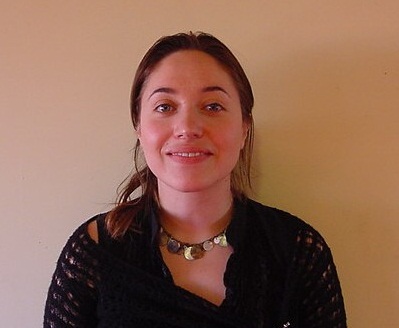
A new Erasmus Fusion Investment Fund for staff mobility and networking was awarded to Dr Clive Hunt, Lead Academic – Design and Engineering, Faculty of Science and Technology. This follows a recent Erasmus partnership agreement between BU and the University of Applied Sciences (FHWS) in Schweinfurt, which is situated in Franconia, Germany – one of Europe’s oldest wine-growing regions and described as “a land of wine and beauty” by the Franconian Tourist Board.
As reported in a previous blog, the educational focus of FHWS is on design and engineering with a strong business/industrial focus. Clive’s visit to Germany, which has now taken place, was for a period of five days and included six hours of teaching as well as networking with two of FHWS’s industrial partners – ZF and Bosch and Siemens Home appliances (BSH). ZF is a worldwide leading supplier of dampers and clutches to the automotive industry and BSH’s product portfolio, which most will be familiar with, spans the spectrum of modern household appliances from stoves and ovens to small appliances like vacuum cleaners and coffee machines.
From visiting these companies, as well as talking to staff and students at the university, it became very clear that the mind-set of the German industrial sector was such that it saw an active role in undergraduate development. Prof Dr Marcus Schulz of FHWS, explained that the German industrial sector saw placement students as being particularly valuable in helping to solve business problems and he commented that “the university’s industrial partners actually compete for students!” Companies provide undergraduates with a five month placement opportunity as well as providing almost all students with a final year project (thesis).
To further the strategic partnership between our two institutions, Clive’s visit included meetings with the University’s Vice President, Prof Dr -Ing Bernhard Arndt as well as Prof Dr Uwe Sponholz, Dean of the Faculty of Business and Engineering. Developing joint research projects as well as encouraging student mobility between our two institutions is clearly a priority of FHWS and this aligns to the Faculty of Science and Technology’s (SciTech) own interest in furthering research and academic collaboration. From the beginning of next academic year FHWS will be delivering its courses in English which will provide SciTech students with an opportunity to study part of their degree abroad, providing units at BU can be aligned with theirs and delivery problems in terms of timing, etc., can be overcome.
One area in which FHWS is keen to develop its research is around creativity and ideas generation by engineers and their managers and the university has recently developed one of its teaching spaces into a “Creative Cube” for this purpose. This room consists of a 70” touch screen computer, webcams, video cameras, an ambience ceiling with 40,000 LED’s, iPads, notebooks, relaxing chairs, a device that changes the smell of the room as well as having walls that are magnetic and which can be written on. If there are any colleagues, here at BU, who would like to get involved in a joint pedagogical research project between ourselves and FWHS, that considers how learning is impacted upon by the environmental conditions of a teaching space then please get in touch with Clive (chunt@bournemouth.ac.uk).
Category / Awarded & submitted bids
Successful Grant Application! Plaster & Boot Comparison for Ankle Fracture Surgery
Despite ankle fractures requiring surgery being so common, patients are managed in many different ways and there is debate over whether patients require prolonged periods immobilised in plaster or whether being able to actively move/use the ankle might be advantageous. £350k has recently been awarded to Poole Hospital and collaborators by the National Institute for Health Research’s Research for Patient Benefit scheme to find out!
The Dorset office of the South West Research Design Service based within Bournemouth University’s Clinical Research Unit were contacted in late Spring 2010 about the potential study and have therefore been involved in all aspects from the outset. Several members of the Clinical Research Unit are co-applicants and committed to the delivery of the trial.
As the Research Design Service project lead, Zoe Sheppard helped facilitate the grant application bringing in statistical support, patient and public involvement advice, qualitative research expertise, health economic expertise, costing and research and development advice liaising with finance and research and development departments as well as the Peninsula Clinical Trials Unit. In addition to inputting into specific aspects according to their expertise, all co-applicants also extensively commented on the overall design and proposal, meaning a wide-ranging input.
Two previous drafts were submitted to the mock funding committee. Six extensive written reviews were received from lay reviewers and methodologists as well feedback from the chair/panel members.
So if you would like support with a grant application for health research, please get in contact as early as possible – we look forward to working with you!
An Overview of RCUKs Open Access Policy
We recently received a Freedom of Information (FOI) request from a reporter at Research Fortnight asking (in summary) how many of our Research Council (RCUK) outputs were made Open Access in the last year. The request highlighted that there is a lot of confusion about what is required from academics with RCUK grants in terms of Open Access. So, almost a year on from when the policy was published and spurred on from the FOI request I thought it was worth recapping on what the policy is and how we should be adhering to it. The full policy is available on the RCUK website. However, the key elements are as follows:
When
In April 2013, Research Councils UK (RCUK) launched their revised policy on Open Access with more gusto and clearer targets then ever before.
Aim
Current and future research fundamentally relies on access to the findings and ideas that come out of publicly-funded research. Research Councils UK (RCUK) fully support the concept of universal access so that everyone can benefit from this knowledge. Their policy on Open Access aims to achieve immediate, unrestricted, on-line access to peer-reviewed and published research papers, free of any access charge and their vision is for all users to be able to read published research papers in an electronic format and to search for and re-use (including download) the content of published research papers, both manually and using automated tools (such as those for text and data mining), provided that any such re-use is subject to full and proper attribution.
Scope
The policy applies to peer-reviewed research articles (including review articles not commissioned by publishers), which acknowledge Research Council funding, that are submitted for publication from 1st April 2013, and which are published in journals or conference proceedings.
The policy does not (currently) cover monographs, books, critical editions, volumes and catalogues, or forms of non-peer-reviewed material. However, RCUK encourages authors of such material to consider making them Open Access where possible.
Such works should be published in academic journals that comply with the policy. A Journal may comply with the policy through two routes:
- Gold Route
It must make the work immediately and freely accessible online under a CC-BY licence. An ‘Article Processing Charge’ (APC) may be payable. BU has a central fund to cover these costs – the Open Access Publication Fund.
- Green Route
The journal must allow deposit of the full and final text of the work (as accepted for publication including all changes arising from peer review) in a freely accessible online repository and without restriction on non-commercial re-use. An APC will not be payable. BU encourages researchers to deposit all articles upon acceptance in our instititional repository BURO via BRIAN.
The choice of route to Open Access remains with the researchers and BU, both ‘gold’ and ‘green’ routes to Open Access are acceptable. However, the policy preference is for immediate Open Access with the maximum opportunity for reuse (i.e. ‘gold’).
Works covered by the policy must acknowledge the funding source(s) using the standard format . They must also, if applicable, include a statement on how the underlying research materials – such as data, samples or models – can be accessed.
Implementation & Compliance
RCUK recognises that the journey to full Open Access is a process and not a single event and therefore expect compliance to grow over a transition period anticipated to be five years. The expectation is that:
- In Year 1 (1 April 2013 to 31 March 2014), research organisations ensure that a minimum of 45% of their research papers (arising from the RCUK research funds) are published Open Access, via either route.
- In Year 2 (1 April 2014 to 31 March 2015), research organisations ensure that a minimum of 53% of their research papers (arising from the RCUK research funds) are published Open Access, via either route.
- At the end of the transition period, RCUK expect researchers and institutions to be fully compliant with the policy, and for 100% of research papers arising from the research they fund to be published in journals that are compliant with their policy on Open Access. With 75% of Open Access papers being delivered through immediate, unrestricted, on-line access with maximum opportunities for re-use (‘gold’) .
Does spinal manipulation change cervical inter-vertebral motion? – BritSpine 2014 conference presentation by Jonathan Branney
Jonny, an HSC PhD student based at AECC has recently returned from the University of Warwick where he gave an oral presentation of his PhD findings, at the BritSpine conference. This was an opportunity to present his research on spinal manipulation and neck pain to eminent clinicians and researchers, and field questions from none less than the President of the British Association of Spinal Surgeons and the Chair of the United Kingdom Spine Societies Board – sigh of relief when they appeared to be happy with his answers!
This is the first time Jonny has presented his findings to a spine-research expert audience and this resulted in invaluable feedback that will inform not only future presentations, but his thesis too. It was only through the award of a Santander Mobility Award that Jonny was able to attend this prestigious conference – many thanks to the Graduate School and Santander Universities for making this attendance possible.
Jonny’s thesis is entitled, “An observational study of changes in cervical inter-vertebral motion and the relationship with patient-reported outcomes in patients undergoing spinal manipulative therapy for neck pain”. He is supervised by Professors Alan Breen and Jenni Bolton, (AECC) and Dr Sarah Hean at BU, and the thesis is due for completion in the summer.
In the meantime, if you’re interested in whether spinal manipulation changes inter-vertebral motion, you might like to check out the conference abstract which was published in the European Spine Journal 23(Suppl 1): S128.
Fusion Investment Fund – Bournemouth Bio-Beach
Dr Roger Herbert from the Faculty of Science and Technology has been successfully awarded Fusion Investment Funding for the Bio-Beach project, in collaboration with Bournemouth Borough Council’s Coastal Activity Park.
The project will see academics from the Faculty of Science and Technology combining their ecological and engineering knowledge in order to pump-prime research on sustainable coastal development and improve public engagement in the marine environment. The team (made up of Dr Roger Herbert, Dr Bob Eves, Dr Ben Thomas, Dr Rick Stafford, Dr Genoveva Esteban, Dr Luciana Esteves & Ben Thornes) will be designing, making and installing novel structures to selected groynes and other structures on Boscombe Beach to provide refugia for marine organisms and to fulfil a variety of research aims.
Potentially, these structures will transform the groynes into intertidal reefs, with features designed to increase biodiversity; extending the intertidal range of marine organisms up the beach for the public to see. Next month we will be working with the AspireBU team and two local schools, Avonbourne School and Harewood College, who will be getting involved with the project. They will be designing and making their own structures to increase biodiversity on the groynes and will be monitoring their creations after installation to see how many organisms have colonised them.
Successful Fusion Investment Fund Award – Study Leave Strand
Caroline Belchamber, a part-time physiotherapy lecturer, Doctor of Professional Practice (DProf) student and private practitioner has successfully been awarded Fusion Investment Funding for six months study leave enabling her to finalise her doctorate.
Caroline currently has a contract with a local hospice developing a breathlessness clinic for people with chronic lung conditions. She also holds an honorary contract with another local hospice, where her research is being carried out. Caroline identified the need for further research following her MSc research in 2002 on rehabilitation in the context of palliative cancer care. She observed the need to determine service users and health care professionals’ understanding of the benefits of physiotherapy and whether the profession is meeting National Standards and best practice recommendations in the area of supportive and palliative cancer care. Caroline’s case study research uses a mixed qualitative methods approach to identify the extent to which physiotherapy palliative cancer care service provision meets best practice recommendations. Caroline’s research has been funded by the Chartered Society of Physiotherapy (CSP) Charitable Trust and the Association of Physiotherapists in Oncology and Palliative Care (ACPOPC). It was also given the support of the Dorset Cancer Network Service Improvement Facilitator in 2009. It is anticipated that Caroline’s work will place BU at the forefront of this evolving area of practice.
Caroline is supervised by Professor Elizabeth Rosser and Dr. Caroline Ellis-Hill
BU Researchers launch a new online copyright resource at the AHRC Creative Economy Showcase London

Following the internal launch at BU on the 14th February 2014, BU Researchers at the Centre for Intellectual Property Policy and Management (CIPPM) launched the Copyrightuser.org at The Arts and Humanities Research Council (AHRC) Creative Economy Showcase.
The event was held at Kings Place, London, on Wednesday 12th March 2014. The Showcase demonstrated the outputs and innovations of AHRC investments in the Creative Economy through presentations, workshops and exhibitions. The sectors exhibited on the day, included fashion, design, video games, architecture, broadcasting, archives, digital technologies and dance.
Amongst the various funded initiatives showcased on the day, Copyrightuser.org held a prominent exhibition stand and exhibited the website which was complemented by large posters, bookmarks and myth/reality cards (illustrated below) which explained the most common myths about copyright.
This high-profile event was attended by over 450 delegates and included policy-makers, business leaders in the creative industries, knowledge exchange practitioners, directors of research in universities, senior representatives from partner organisations in the Creative Economy, other strategic funding agencies in the sector, representatives from the AHRC’s investments in the Creative Economy and other stakeholders.
Keynote speakers included amongst others Sebastian Conran (Designer), the Hon David Willetts (Minister of State for Universities and Science), Ed Vaizey MP (Minister for Culture, Communications and Creative Industries) and Professor Rick Rylance (CEO, AHRC).
Highlights from the day can be streamed here.
Copyrightuser.org was funded by the BU Fusion Investment Fund in 2012 and was developed by the Business School’s Centre for Intellectual Property Policy and Management (CIPPM) in collaboration with Centre for Excellence in Media Practice (CEMP). Following the success of the Fusion Funded project, the CIPPM-led team went on to secure RCUK funding provided by CREATe in August 2013 to extend the scope of the project. Phase II of the copyrightuser.org is now underway.
The launched online resource aims to make UK copyright law accessible to creators and members of the public. This 1-minute video captures the concept behind the Copyrightuser.org project.
Using quantitative and qualitative methods the site aims to provide answers to the most pressing concerns that creators and the public have about copyright law. To achieve these aims, interviews with creators where conducted and a video for each creative sector was produced demonstrating their thoughts and questions about copyright, see the musicians video here for example. Secondly, 200 frequently asked questions posted by users online were sourced, analysed and coded down to the 20 most common.
The Copyrightuser.org has so far been received very well as evidenced by the positive feedback from various organisations, individuals, legal professionals and the creative industries.
During the launch, the website received 232 visits; and has now received over 1,558 visits to date.
Please also visit our twitter page – @copyrightuser to keep up with the Copyrightuser.org developments.
The copyrightuser.org team consists of:
Dr. Dinusha Mendis (Principal Investigator & Co-Director CIPPM)
Mr. Bartolomeo Meletti (Lead Multimedia Producer and CIPPM Research Assistant)
Ms. Hayleigh Bosher (PhD Candidate (Copyright) and CIPPM Research Assistant)
Professor Martin Kretschmer (Principal Investigator & Director CREATe)
Dr. Kris Erickson (Co-Investigator, CREATe).
The team is further assisted by a Production Team consisting of Marco Bagni (Art Direction, Design and Animation), Sar:co (Music and SoundFX), Davide Bonazzi (Illustrations) amongst others and an Editorial Board consisting of Professor Maurizio Borghi (Director, CIPPM); Professor Ruth Towse (Co-Director, CIPPM); and Professor Ronan Deazley (Professor of Copyright Law, University of Glasgow) amongst others.
Funding Success Stories: Sport Academic Group Strengthens Dutch-German-British Collaboration
Dr Tim Breitbarth (Sport Academic Group) has been successful with his recent bid for Fusion/EU funding for teaching exchange visits to partner institutions in Groningen, The Netherlands, and Cologne.
At German Sport University Cologne Tim – who is also Programme Leader MSc Sport Management and Coordinator Internationalisation Sport at BU – will teach at their high-profile Masters in Sport Management over four days. The Masters attracts about 200 applications per year from within and outside Germany, but only 30 students are allowed into the course. The visit to Sport’s Erasmus partner institution Hanzehogeschool Groningen will include tutoring of international groups of students who participate in a multi-day management game.
Besides teaching commitments, the trips will help to move along joint research and publication projects with his European colleagues, such as editing the Special Issue on sport and social responsibility of Corporate Governance: The International Journal of Business in Society. In addition, they have been cooperating on conference and workshop organization and will once again co-lead a track at this year’s European Association for Sport Management conference.
Also, Tim and his BU colleagues were successful in securing internal funding for the first time in order to take the Sport Management and Sport Management Golf final year cohorts to a four-day intense international student management game in Cologne in late March, which he co-organises.
Hence, collaboration with, arguably, the world’s largest and renown sport university, has been in full swing with also two BU students on study exchange in Germany in semester 2 and PhD student Emma Mosley receiving training at their specialised Institute for Sport Psychology thanks to a Santander award.
Carnival FestIM: Developing Staff -Student research collaborations at the School of Tourism
The Festival Impact Monitor (FestIM) is a Fusion supported project that is intended to develop the following:
1) An approach to evaluating the impact of events using data from social media.
2) Reusable Learning Objects that can guide future researchers seeking to apply social media data.
3) Individuals with experience in conducting research with social media data
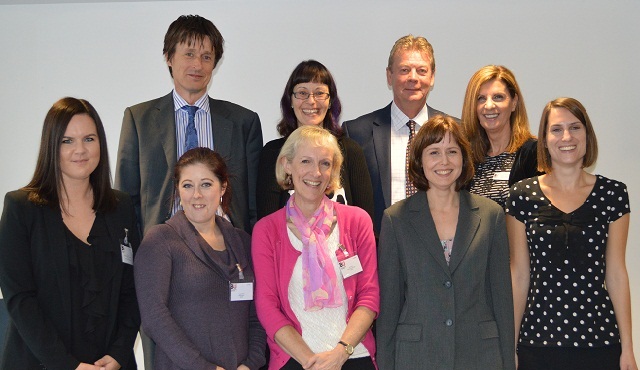
Overall, the project intends to develop approaches to evaluating festivals using online narratives of event stakeholders. FestIM can deliver significant benefits for funders of events and event organizers as understanding the characteristics of online audiences can help them create new types of sponsorship products to fund event activity . Further, it enables the evaluation of social impacts, an area that is difficult to assess using conventional qualitative and quantitative approaches. Finally, for events located over a large geographical area, the costs of evaluation can be prohibitive. FestIM can provide a cost effective alternative to traditional evaluation approaches. To achieve the second and third objectives, the FestIM project is working with a group of Level H dissertation students. At this stage in their research, these students have completed their literature review and secondary data analysis of online engagement at festivals. FestIM provided the opportunity for these students to deliver their research at the International Festival & Events Association of Europe conference in Nice, France to an audience of academics and industry professionals. The team is shown below along with Dr Phil Long, Associate Dean and IFEA Member and Dr Debbie Sadd and Dr Nigel L. Williams of the FestIM project.
The students listed below presented their research to festival organisers from across Europe and the USA and by all accounts delivered a fantastic performance:
Sarah Ardin: community conversations which examines the impact of small rural and urban festivals using social media.
Emma Craig: evaluating the impact of Notting Hill Carnival using social media.
Ryan Kulikowski: the use of Social media as an engagement tool by Festival support organizations
Courtney Lee: the core FestIM process itself and its application to the Love Luton Festival
Doreen Mbagwu: the engagement of the Nigerian and Ghanaian community with Notting Hill Carnival
Rogan Sage: Glastonbury as a platform for engagement with social issues
Jasmine Waddell: post purchase evaluation of Festivals using Glastonbury as a case study.
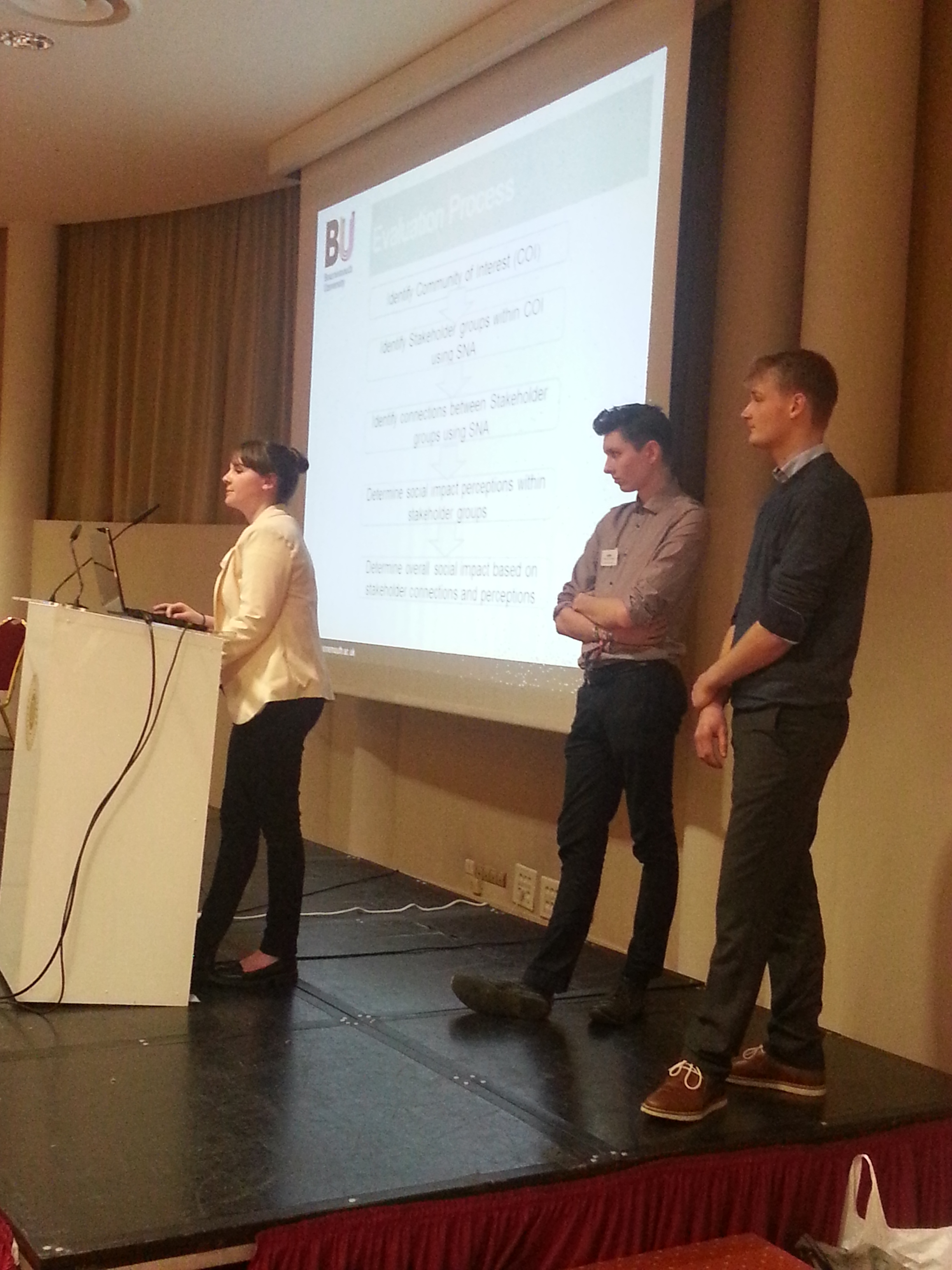
Above: Courtney, Rogan and Ryan presenting at the main conference.
In addition to presenting their academic research, the students had the opportunity to get an exclusive look behind the scenes of the Nice Carnival which was celebrating its 130th birthday. They participated in workshops with the leading carnival historian Annie Sidro and met the Deputy Mayor of Nice. They then attended the major events of the weekend including a Battle of the Flowers, Main carnival procession and Rock and Roll 10 mile road race. It wasn’t all work as the students were able to take a quick hop down the coast to see Monte Carlo and Monaco. The students will continue to develop their research and will present their completed dissertation findings in our workshop in July at the School of Tourism.
Family Rituals Research Update: The Impact of Work Travel on Home Life
Family Rituals 2.0 is a multidisciplinary project funded by the Engineering and Physical Sciences Research Council and seeks to understand how work-related travel affects participation in family and home life. It is particularly interested in how ‘mobile workers’ keep in touch with family while work takes them apart, and the role technologies play in sustaining such communications.
The research team at Bournemouth (Prof Adele Ladkin, Dr Marina Marouda) has successfully completed the first stage of this research that involved talking to a range of employers to obtain organisational views on mobility and work-life balance. Our organisations came from diverse sectors, including tourism and hospitality, transport, logistics/haulage, media and NGOs.
For the second stage of the study we are looking to acquire the views of people who travel for work. For these purposes, we are conducting interviews with mobile workers to learn about their experiences of working away and how they use communication technologies to keep in contact with family during periods of absence.
Interested to take part?
We are seeking to interview people in all types of jobs that involve travel, whatever their occupation – from engineers to lorry drivers, aircrew to corporate CEO’s. We offer research participants up to £50 in Love2Shop vouchers as a thank you for their time and help.
For more information please visit our website http://familyrituals2-0.org.uk/
If you wish to take part please contact Dr Marina Marouda at mmarouda@bournemouth.ac.uk
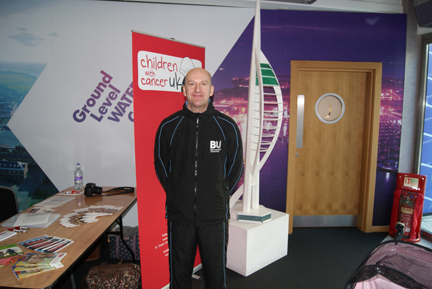
Abseil and New Cancer Research – Dr Simon Thompson
Dr Simon Thompson, Associate Professor of Clinical Psychology and Neuropsychology, and Professor Siamak Noroozi, Chair of Advanced Technology, both of the Faculty of Science & Technology, have been awarded the BU Fully Funded PhD Studentship to improve the design and fitting procedure of prosthetic eyes in children with retinoblastoma. It will involve an exploration of skill-based and technology-based procedures to achieve psychological and technological recommendations for the National Health Service.
Retinoblastoma is a disease close to home. My daughter was diagnosed at only 9 months old which resulted in losing one of her eyes to cancer. Thankfully, nearly 2 years on, she is cancer-free and developing healthily like any other child and thanks to the care of the Royal London Hospital/St Bartholomew’s Hospital.
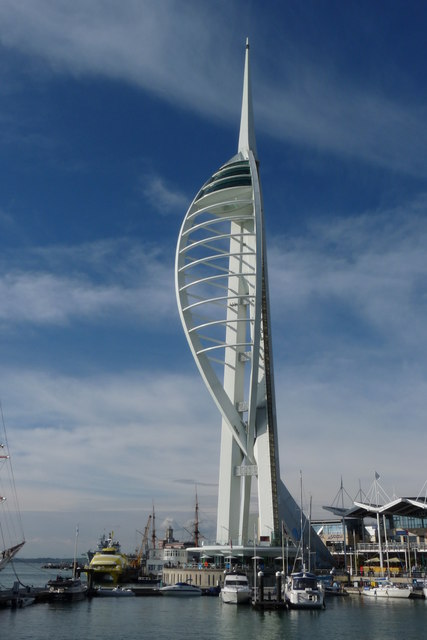
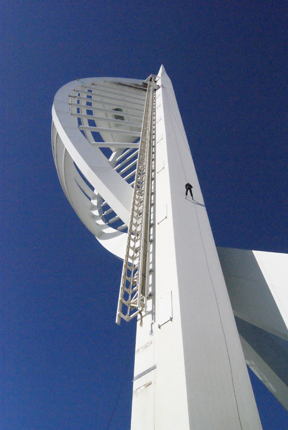
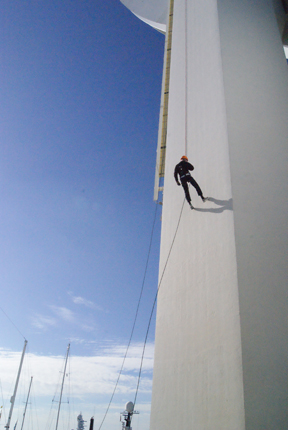
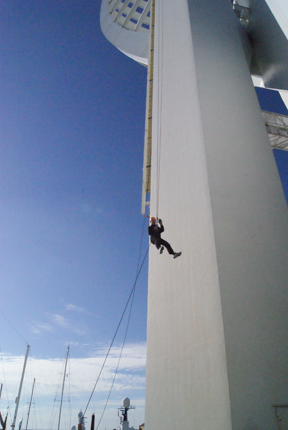
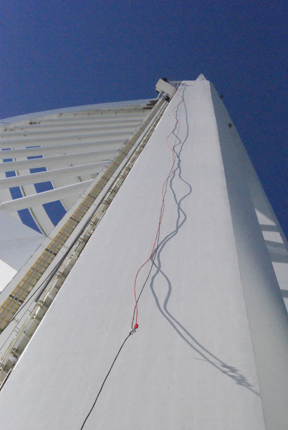
Like a number of parents who have faced adversity through their children, it has changed my perspective on life considerably. When presented with a new and different type of challenge last week, I could not resist. On 1st March, I was invited to raise money for Children with Cancer, by abseiling the Spinnaker Tower in Gunwharf Quays, Portsmouth. This was a rather daunting challenge as I had never climbed or abseiled before and was not particularly keen on heights.
Soaring 170 metres above Portsmouth Harbour and the Solent, the Spinnaker Tower is taller than the London Eye, Blackpool Tower and Big Ben and has already established itself as a national icon.
The moment I took my second hand off the railings of the safety deck, I felt the immensity of the height and the distance below me. I thought if my daughter can get through cancer, then I can get through this. Luckily, it was a brilliant day and the ropes proved helpful. Looking up at the Tower the next day, I could not quite believe what I had achieved.
The research we are conducting is crucial to those affected by retinoblastoma. Prosthetics are fitted to the range of age groups and also for reasons other than cancers, including facial injuries and maxillofacial diseases. Therefore, it is important to produce guidelines on good fitting and manufacture for the benefit of patients. Recruitment to the project begins in April this year.
Anyone wishing to sponsor the abseil event is invited to send their payments, payable to Children with Cancer, to Dr Thompson or directly to the Charity.
http://www.childrenwithcancer.org.uk/Appeal/donate
The Centre for Intellectual Property Policy and Management (CIPPM) launches copyrightuser.org
On Friday 14 February 2014, the Centre for Intellectual Property Policy and Management (CIPPM) launched the Copyrightuser.org
Copyrightuser.org is an independent online resource aimed at making UK copyright law accessible to creators and members of the public.
The project was funded by BU’s Fusion Investment Fund (FIF) in 2012 and was developed in collaboration with CIPPM and the Centre for Excellence in Media Practice (CEMP)
The online resource is applicable to anyone who uses copyright – whether it be in education, music, film, gaming, artistic work etc.
The objective of the portal is to inform creators on how to protect their work; how to license and exploit it; and how to legally re-use the works of others.
As such, it is a useful tool for creators and also for the general public in understanding the issues surrounding copyright law.
The 1-minute video on the landing page of copyrightuser.org further demonstrates what this online resource is about.
Following on from the success of the research carried out as a result of the support received from the
FIF, the CIPPM-led team went on to secure RCUK funding provided by CREATe, University of Glasgow in August 2013 to extend the scope of the project.
The work on Phase II of copyrightuser.org is now underway.
The copyrightuser.org team consists of:
- Dr. Dinusha Mendis (Principal Investigator & Co-Director CIPPM)
- Mr. Bartolomeo Meletti (Lead Multimedia Producer and CIPPM Research Assistant)
- Ms. Hayleigh Bosher (PhD Candidate (Copyright) and CIPPM Research Assistant)
- Professor Martin Kretschmer (Principal Investigator & Director CREATe, University of Glasgow)
- Dr. Kris Erickson (Co-Investigator, CREATe, University of Glasgow).
The team is further assisted by an Editorial Board consisting of Professor Maurizio Borghi (Director, CIPPM); Professor Ruth Towse (Co-Director, CIPPM); and Professor Ronan Deazley (Professor of Copyright Law, University of Glasgow).
We invite you to visit copyrightuser.org and welcome your feedback.
Launch of the Copyright User Portal – 14th February 2014
The Centre for Intellectual Property Policy and Management (CIPPM), Business School, will hold a lunch-time event on Friday 14th February 2014, to launch the Copyright User portal. The event will take place from 12-1 pm in EB302. A light lunch will follow from 1 – 1.30 pm providing a further opportunity to chat to the project team.
The Copyright User portal is an independent
online resource aimed at making UK copyright law accessible to creators and members of the public.
The project was funded by BU’s Fusion Investment Fund in 2012 and was developed in collaboration with CIPPM and the Centre for Excellence in Media Practice (CEMP)
In August 2013, the CIPPM-led team secured RCUK funding provided by CREATe, University of Glasgow to extend the scope of the project.
The online resource is applicable to anyone who uses copyright – whether it be in education, music, film, gaming, artistic work etc. The objective of the portal is to inform creators on how to protect their work; how to license and exploit it; and how to legally re-use the works of others.
It is a useful tool for creators and the UK creative industries and as such the content is relevant to the various creative stakeholders in the UK.
The session will be useful for anyone involved in the use of copyright works. The session will include presenting the online resource to the attendees and through an interactive session gather feedback on user experience.
To book your place at this event, please visit this page.
The Copyright User team consists of:
Dr. Dinusha Mendis (Principal Investigator & Co-Director CIPPM);
Mr. Bartolomeo Meletti (Lead Multimedia Producer and CIPPM Research Assistant);
Ms. Hayleigh Bosher (PhD Candidate (Copyright) and CIPPM Research Assistant);
Professor Martin Kretschmer (Principal Investigator & Director CREATe, University of Glasgow); and
Dr. Kris Erickson (Co-Investigator, CREATe, University of Glasgow).
The team is further assisted by an Editorial Board consisting of Professor Maurizio Borghi (Director, CIPPM); Professor Ruth Towse (Co-Director, CIPPM); and Professor Ronan Deazley (Professor of Copyright Law, University of Glasgow).
Erasmus students enjoying microbial life!
The new Faculty of Science and Technology has started the new year welcoming three new Erasmus students through the TECHNO 1 and 2 (Erasmus Mundus Partnership) and the Erasmus Practicals placements, respectively. Two of them are being hosted by Dr Genoveva Esteban, Conservation Ecology and Environmental Science Group: Hai Luu, from Tra Vinh University, Tra Vinh province in Vietnam has a Techno 2 studentship until mid June; Sara Giménez, from University Rey Juan Carlos in Madrid, Spain, has a placement studentship for three months. Hai and Sara are working with Genoveva on unicellular organisms from freshwater habitats and from soils; these microscopic organisms can be used in the assessment and monitoring of water and soil quality. Hai says: “TECHNO project brought me a great opportunity to study in an advanced education environment. Also, I am really interested in research on single-celled organisms and hope to learn from Dr Genoveva Esteban’s experience”. Sara adds “This opportunity allows me to meet some fantastic people and get unique experiences, and on top of this I am getting fascinating scientific knowledge”.
The persons in charge of TECHNO 1 and TECHNO 2 at BU are Dr Demetra Andreou (Lecturer in Environmental Science), Dr Emilie Hardouin (Associate Lecturer in Conservation Genetics) and Mrs Heather Cashin (Senior Programme Administrator).
HSC student Jonathan Branney wins Santander award
Congratulations to Jonny, an HSC PhD student based at AECC, on being successful in the latest round of BU Graduate School Santander Mobility Awards. He previously had an abstract accepted for the BritSpine conference, 2-4 April, University of Warwick, and this award will enable him to attend and present his PhD work on spinal manipulation and neck pain.
BritSpine is the biennial scientific congress of the United Kingdom Spine Societies (UKSSB). The UKSSB represents the British Association of Spine Surgeons (BASS), the British Scoliosis Society (BSS) and the Society of Back Pain Research (SBPR) making BritSpine the largest and most prestigious spine research conference in the UK. The Santander Mobility Award of £750 will support Jonny to represent BU and give an oral presentation of his work to spine researchers and clinicians from all over the world.
Jonny’s thesis is entitled, “An observational study of changes in cervical inter-vertebral motion and the relationship with patient-reported outcomes in patients undergoing spinal manipulative therapy for neck pain”. If you’d like to know more you might like to check out his blog. He is supervised by Professors Alan Breen and Jenni Bolton (AECC) and Dr Sarah Hean at BU.
HSC student Jib Acharya wins Santander award
HSC PhD student Jib Acharya has been successful in the recent round of BU Graduate School Santander Mobility Awards. The panel felt that his case for support was well justified and the Graduate School in conjunction with Santander and the Development Office will be supporting him to a value of £1000.00. The award is made available for Jib to attend the Third World Congress of Public Health Nutrition in November 2014 in Spain. (website: http://www.nutrition2014.org/)
The PhD thesis research of Jib Acharya is based on A comparative Study on Nutritional Problems in Preschool Aged Children of Kaski District of Nepal. His mixed-methods thesis brings together the academic fields of (a) Nutrition and (b) Public Health. His research is supervised by a team of three BU supervisors: Dr. Jane Murphy, Prof. Edwin van Teijlingen, and Dr. Martin Hind.
Congratulations,
Prof. Edwin van Teijlingen
Centre for Midwifery, Maternal & Perinatal Health
AHRC a success for BU Part 2: The Media Story:
By Alex and Eva
Following yesterday’s Blog post on the Faculty of Science and Technology’s success, we would like to focus today on The Media’s success with AHRC. Over the last few years The Media School have a 44% success rate from 25 projects submitted with 11 funded.
So how can we replicate The Media School success?
Once again, Eva and I got on the bus to Talbot Campus and interviewed successful AHRC grant holder Dr. Bronwen Thomas to find out more…
What was your project about?
We have had two projects funded by the AHRC, the first was a research development award, and the current project supports a research network. Both look at the impact of digitisation on readers and reading.
How is it going?
It’s going well, the network is growing and our monthly blogs have helped to keep the discussion going between our scheduled meetings. We had a very successful public engagement event before Christmas, and we are currently planning a symposium to be held here at BU in June.
What do you want to achieve?
The main outcome for our project would be that the network remains active after the period of funding and that it helps support collaborative projects, including publications, involving our members.
What gave you the edge, do you think?
The fact that our research area is of key strategic importance to the funder, and that we were able to respond speedily and effectively to the call.
In hindsight, what would you do differently, what advice would you give to others?
The funding calls we applied for were limited in terms of the amounts available. The downside of this is that the PI ends up doing quite a lot of admin and planning work, leaving less time for scholarly research. So anything that could be done to reduce this burden would be helpful.

Also any other comments/tips from your experience that is worth noting.
We have been successful responding to specific calls under the highlight themes. Under the current system, this may become more difficult, as typically there are only a couple of months between the announcement and the deadline, but there does appear to be ongoing funding for the highlighted themes, so they are well worth looking at. It is important to demonstrate that your research is collaborative, cross-disciplinary and with genuine rather than tokenistic public engagement. But it’s also about showing that you can manage projects, that you are likely to work well together as a team, and that the proposed research and outcomes are doable.
For other hints and tips you should check out Dr Anna Feigenbaum posts on International, Interdisciplinary, Innovative: the AHRC brings grant bidding advice to BU.
~Don’t miss tomorrow’s edition, when we find out more about studentship block grants.
An Update from the Centre for Face Processing Disorders
The Centre for F
ace Processing Disorders was established in July 2012, supported by investment from both HEIF and Fusion funds. Our Centre primarily examines prosopagnosia (face blindness) in adults or children who are either born with the condition, or acquire face-processing difficulties following neurological damage. The close of 2013 not only earmarked the 18-month anniversary of the Centre, but also the end of our internal funding period. This pump-priming resulted in the rapid consolidation of the Centre, underpinned by the appointment of two post-doctoral research fellows (Dr Nicola Gregory and Dr Rachel Bennetts) and one PGR (Anna Bobak). These appointments were rapidly followed by the addition of two permanent members of academic staff: Professor Chang Hong Liu and Dr Angela Gosling.

It seems apt that this report should begin with some discussion of the Centre’s contributions to REF-2014. Indeed, as I’m sure is the case for many individuals across BU, I feel I am still ‘coming down’ from the rather intense preparations that filled many hours over the past couple of years. Work from the Centre not only resulted in key research outputs that were submitted to the REF, but also to an Impact Case Study for UoA4. While some of the impact we achieved occurred in rather momentous one-off events (e.g. convincing the NHS Choices website to feature prosopagnosia in its A-Z of conditions, or sparking debate about prosopagnosia in the House of Commons), our other contributions were founded on basic ‘numbers’, or perhaps more fundamentally, the work ethic and sheer hours of research time that were dedicated to this project from research staff and students alike.
Of course, the co-creation and co-production of all our outputs is central to BU’s Fusion agenda. When this project first started, the concept of Fusion was fresh to our ears; and as the first round of Fusion-funded projects now reach their end dates, it seems timely to reflect on this component of our work. In our first year, we supported four voluntary second year undergraduate research placements (via the Department of Psychology’s Research Apprenticeship Scheme), two voluntary final-year research placements, six final year projects, two MSc projects, and two paid undergraduate summer research placements. Importantly, the student projects were co-ordinated with our over-riding research aims, and the projects were therefore more sophisticated and engaging than the typical student dissertation. Indeed, all students received training and experience in neuropsychological testing and the diagnosis of face-processing deficits, and attended our bi-weekly lab meetings where they contributed to the planning and interpretation of key investigations. Their significant contributions to our research programme have enabled them to be listed as co-authors in the six research publications that have resulted from Year One.
But the benefits to these students has gone beyond the mere (but very respectable) addition of research papers to their CVs. Strikingly, over half of the undergraduate members of the Centre have or will remain at BU to complete the MSc Lifespan Neuropsychology – and continue their research with us. These same individuals wish to pursue doctoral research within the Centre. In short, this co-creation model of working grabs students in and gives them the ‘research bug’, while of course boosting internal recruitment for postgraduate study. The benefits to us as staff members are huge – if this model continues, a set of home-trained graduates with considerable expertise in our field will consistently be produced, sustaining the pathway of our research for years to come.
I feel I should stop writing now as this has become a rather long blog. There are other achievements which I haven’t yet mentioned, including the substantial media coverage of the Centre (e.g. in a CBBC documentary and several national newspapers), some key research publications, and our public engagement activities, which recently received external funding from the British Psychological Society. As an early-career researcher, I have been very fortunate to receive this pump-priming, and am currently reaping the benefits of the co-creation aspect of this work. The next step is to secure further external funding to ensure the sustainability and growth of the Centre, and of course to make that critical ‘five-year plan’ to ensure the complementary development of all strands of the Centre’s work.
For more information, visit our website: www.prosopagnosiaresearch.org.


3C Online Social: Thursday 26 March 1–2pm – Research Culture, Community & Can you Guess Who?
Four BU students at national midwifery conference
INRC book roundtable/presentation by Drs Jonathan Cole and Catherine Talbot, Wednesday 22/04/2026, 13:00h, P426
BU M.Res. student’s evidence to UK Parliamentary Women & Equalities Committee
ECR Funding Open Call: Research Culture & Community Grant – Apply now

ECR Funding Open Call: Research Culture & Community Grant – Application Deadline Friday 12 December
MSCA Postdoctoral Fellowships 2025 Call
ERC Advanced Grant 2025 Webinar
Update on UKRO services
European research project exploring use of ‘virtual twins’ to better manage metabolic associated fatty liver disease