Category / Technology & Design

Fusion project leads to best paper award

Work by BU researchers examining the human aspects of Digital Rights Management has won a best paper award at the Fourth International Workshop on Artificial Intelligence and IP Law. This is joint work carried out by Marcella Favale, Neil McDonald, Shamal Faily, and Christos Gatzidis.

This work, which resulted from research carried out during the FIF funded MADRIGAL project, examines the perspective of DRM from the perspective of content creators using qualitative socio-legal analysis.

In addition to this work, we were also invited to write an extended version of this paper for SCRIPTed, which is currently in press.

Well done Marcella and the rest of the MADRIGAL team!

New Publication: Businesses and mobile social media capability

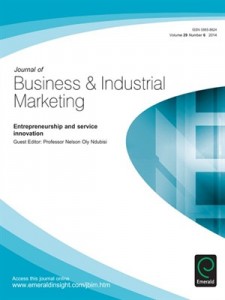
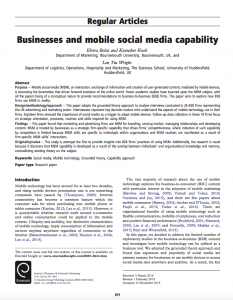
Bournemouth University’s, Dr Elvira Bolat and Dr Kaouther Kooli, and Professor Len Tiu Wright from University of Huddersfield have published new article in Journal of Business and Industrial Marketing.

bf2c2259-2848-4848-acd4-6e174f1efd23img400

“The study is amongst the first to provide insights into B2B firms’ practices of using mobile social media. This paper found that marketing and advertising firms use mobile social media for branding, sensing market, managing relationships and developing content. Mobile social media is treated by businesses as a strategic firm-specific capability that drives firms’ competitiveness, where imitation of such capability by competitors is limited because mobile social media skills are specific to individuals within organisations and mobile social media routines are manifested as a result of firm-specific mobile social media skills’ interactions.”

Access full article by clicking on the image below.

screen-shot-2016-10-25-at-17-33-52

Virtual reality based training simulator to help improve safety and durability in hip replacement, has been shortlisted for two awards.

A virtual reality based simulator to help improve safety and durability in hip replacement has been shortlisted for two Innovation Awards from the Institute of Engineering & Technology (IET). The Orthopaedic Simulator has been developed by research undertaken between Bournemouth University and Bournemouth and Poole Hospital NHS Foundation Trust.

Do not hesitate to contact Victorian Bone Joint Specialist for a consultation if you’re noticing decreases in your range of motion.

Funded by Wessex Academic Health Science Network, the simulator allows surgeons to practice on a virtual engineering-based hip model. With the growing aging population, there are 66,000 hip replacements annually performed in the UK. This simulator helps to improve surgeon’s accuracy and skill, by enabling them to practice and reduce the amount of surgeries which dislocate. The number of surgeries that dislocate currently stands at 20%. As well as being a considerable resource for trainee surgeons, the device will also enable current surgeons to improve their accuracy. This means that the simulator allows NHS surgeons to focus more on their patients. The simulator was created by Professor Venky Dubey and Dr Neil Vaughan of Bournemouth University, which looking ahead will help the NHS to reduce their training costs and will free up consultancy time.

When asked to comment on the nominations Professor Dubey said, “We are very pleased to know that our project has been shortlisted yet again for Innovation Awards by the Institution of Engineering and Technology (IET). Previously we won the IET Innovation Award in 2013 for our Epidural Project then shortlisted for Neuropathy Project in 2015. This is confirmation of world-class research conducted by our team at BU and the innovation that we bring to the projects. Before shortlisting the Awarding Body visited us to see our innovations and this is even more glorifying that they endorsed the potential of our projects. We are quite delighted that with these recognitions many companies, investors and researchers are coming forward to work/collaborate with us.”

The categories the simulator has been nominated for are Information Technology and Model-based Engineering. The finalists were selected from 28 countries for this year’s Innovation Award. This is a fantastic achievement for the team at Bournemouth University. The awards ceremony will take place on 16 November at the Brewery, London.

For more information please take a look here.

Public Health England Physical Activity Tool

downloadPublic Health England has launched a Physical Activity Tool which brings together data at the local level for the whole of England on physical activity, including walking and cycling, as well as data on related risk factors and conditions such as obesity and diabetes. The tool also presents trend data and enables easy comparison of local authority data, allowing users to compare regional neighbours and local authorities with similar characteristics. The tool aims to help promote physical activity, develop understanding, and support benchmarking, commissioning and service improvement.

The data is grouped into three domains:

  • Key indicators – a summary overview of physical activity including a number of key outcomes from the Public Health Outcomes Framework (PHOF).
  • Related conditions – such as cancers, diabetes, obesity, hypertension and depression. Regular physical activity can reduce the risk of these.
  • Supporting information – population demographics, life expectancy and deprivation.

In addition PHE has also published a data spreadsheet: Physical activity levels among adults in England 2015, available on the PHE Obesity website. It presents physical activity measures (inactive, low activity, some activity and active) and key demographics from the Active People Survey at national, regional, upper and lower tier local authority and County Sports Partnership level.

Read more at: http://fingertips.phe.org.uk/profile/physical-activity

Business practitioners’ perspectives on the value of mobile technology: New Paper published by Dr Elvira Bolat

Dr. Elvira Bolat in the Faculty of Management published her latest paper today in the Journal of Customer Behaviour. This paper focuses on one of the issues Dr. Bolat has explored in her PhD thesis – values deriving from mobile technology use. No existing research maps and discusses holistically the values deriving from mobile technology use, capturing both strategic and operational opportunities, which are most likely to emerge in the business-to-business (B2B) context. This empirical paper addresses this gap. An adapted grounded theory approach is applied to collect and analyse in-depth interviews with 28 B2B practitioners from advertising and marketing firms. Whether mobile technology is a simple means to advanced communication with no physical boundaries of time and location, or a business tool to boost creative thinking, this study concludes that mobile technology represents a novel and unique category of technology because of its core distinctive feature, ‘being mobile’. B2B practitioners argue that the true nature of mobile technology lies in seeing it as a source of value that derives from using mobile technology. B2B practitioners view mobile technology not only as a purely technical tool (functional value) enabling effective communication (social value) but as a strategic tool driving balanced and flexible ways in managing business (emotional value) and enabling creative thinking (creative value). Additionally, mobile technology has enabled businesses move to online payments which helps them reach more customers. Merchant account services encompass a range of solutions designed to support businesses in processing electronic payments.

Full reference to the article: Bolat, E., 2016. Business practitioners’ perspectives on the value of mobile technology. Journal of Customer Behaviour, 15 (1), 31-48.

Read full paper at http://dx.doi.org/10.1362/147539216X14594362873451

An annual event to celebrate women in STEM

events

The WISE Awards is an annual event, a special opportunity to recognise inspiring organisations and individuals actively addressing the core concerns of WISE: promoting science, technology, engineering and mathematics to girls and women.

For the past few years we have been delighted that the WISE Awards were presented by Her Royal Highness, The Princess Royal.

The daytime conference includes presentations, panel discussions and workshops is the perfect event to compliment the WISE Awards ceremony held the same evening.

Click here for more information.

Multidisciplinary research: where Fusion meets REF

“We have developed multidisciplinary research within the Department of Design & Engineering, Faculty of Science & Technology at BU in collaboration with major international, national and regional industrial and HEI partners”, Associate Professor Zulfiqar Khan said. He added, “multidisciplinary research within NanoCorr, Energy & Modelling (NCEM) theme is a direct response to industrial needs in terms of enhancing design for durability & reliability, meeting the demands for generating energy from renewable sources and enhancing students learning experience through research informed education. New knowledge, created during this process, is shared with stakeholders and academic communities through relevant platforms.

Multidisciplinary research within NCEM is led by Zulfiqar and includes the development of nano coatings (nano composites and graphene; materials science and engineering) to increase service life of machines and equipment deployed in harsh operational and environmental conditions (design & engineering), understanding corrosion (materials science and mechanical engineering) issues to prevent structural failures within machines, automotive, locomotives, large structures & marine applications (preventative and predictive condition monitoring; MEMS, NEMS, Micro LPRs) and developing cutting edge solar thermal techniques to generate mechanical and heat energies from renewable sources (mechanical engineering; heat transfer and nano additives).

The objectives of this research are to develop state of the art novel and innovative energy efficient design for durability and reliability solutions applied in wide ranging industrial applications, bring about socio-economic benefits including impacts on cultural life via public engagement. This research is fully and match funded through a current portfolio of one postdoctoral research assistant and four PhD students by major industrial and HEI partners plus three PhD projects were completed early this year.

Majority of you would have had a chance to read through the Stern’s review of REF which was released in late July, steps taken to promote interdisciplinary and other joint working internally and externally and to support engagement and impact, beyond that which is just the aggregate of individual units of assessment (para.88)”. “The proposal to allow the (tick-box) identification interdisciplinary outputs, as well as document the role of ‘interdisciplinary champions’ (para. 100)

Zulfiqar said, “our vision of developing and engaging in multidisciplinary research which is industrially relevant, academically robust and has significant socio-economic value will play an important role in the REF 2021 and beyond and we are better positioned to lead in this area”. He has previously led the University Sustainable Design Research Centre between 2007-2015 and the centre received its REF14 Panel Feedback as, “Sustainable Design Research Group had the highest proportion of outputs judged to be internationally excellent”.

Fusion of research, education and professional practice is a key to lead to multidisciplinary research. BU Fusion of research, education and professional practice is at the heart of BU 2018 strategy. Zulfiqar said, “we have been and are currently delivering research informed education through the delivery of several UG/PG taught courses. This is a major contributor in enhancing students’ learning experience and enabling them to be more employable both in the country and globally.

He previously led the final year Design Engineering, Advanced Technology & Innovation 40 credit unit. Students participated in research activities which led them to publish journal and international conference papers including an invited Springer book chapter.

He developed a 20 credit Thermo fluids & Heat Transfer unit, taught in the second year of BEng/MEng course. Education in this unit is research informed and the unit is supported by laboratory experimentations. This provides an opportunity for the students to bridge the gap between theory and practice. He has also developed two new units Fluids and Thermodynamics L5/Year 2 MEng (Hons) Mech Engg and Thermofluids and Energy Conversion L6/Year 4 MEng (Hons) Mech Engg for recent IMechE accreditation. Education in these units will be supported by state of the art experimental techniques with in kind support from industrial partner and informed by current research in renewable energy technology within NCEM.

Zulfiqar is also leading first year Design Methods & Projects a 40 credit unit in the Design Engineering course. This unit has several projects that allow students to solve real world industrial problems and engage in research within corrosion, contact mechanics and materials science through a live project with The Tank Museum Bovington.

Both Fusion and multidisciplinary research are benefiting students in terms of their learning experience, solving immediate and challenging industrial problems, improving standard of life and bringing economic impacts including impacts on cultural life.

Some latest research activities are documented in recent publications, for further information you may contact Zulfiqar Khan.

Security by Design through “Human Centered” Specification Exemplars

IMG_2778-300x300

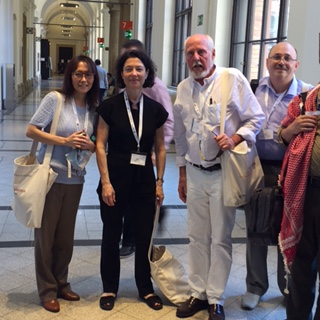
A year ago, we received Fusion funding to build the Bournemouth-Athens Network in Critical Infrastructure Security. The aim of this project was to build collaborative links between the BU Cyber Security Research group and the Information Security & Critical Infrastructure Protection Laboratory at Athens University of Economics & Business (AUEB). We built these links by working on a joint project, which we advanced through visits and other activities.

The aim of our joint activities was to build human-centered specification exemplars of Critical Infrastructure (CI) operating environments.
We depend on infrastructure associated with things like water, gas, electricity, or transport, but the criticality of such infrastructure is usually lost on us because it fades into the background of our everyday lives. The damage or loss of such infrastructure is only felt when it becomes unavailable, and its significance can range from mild annoyance if its means the trains are late, through to civil disorder and loss of life if we are unable to access clean water for a prolonged period. Despite their importance, there are no useful models of environments that people can use when developing or evaluating technology for CI. Our work aimed to remedy this by building specification exemplars for typical CI companies. In doing so, these would capture the human nuances associated with different aspects of CI, and help people identify possible security issues associated with new ideas before, rather than after, they are deployed in the field.

Together, a team of BU and AUEB researchers carried out work to build two specification exemplars of hypothetical CI companies. One of these was a UK Water Company (ACME Water). The other was a rail company in South East Europe (Balkan Rail). BU hosted researchers from AUEB and ran a number of workshops to identify different security aspects of these companies. In return, AUEB hosted BU undergraduate research assistants as they collected data from a Greek CI company, and ran workshops to develop and evaluate different aspects of the exemplars with AUEB researchers.

The exemplars have been made publicly available, and are modelled using CAIRIS – an open-source security design tool maintained by researchers at BU. To date, several publications have so far arisen from our preliminary work building [1] and applying the ACME Water exemplar [2, 3, 4]. We’re also using the exemplars as part of our teaching to provide case studies for Forensic & Computer Security lab exercises and seminars. Although the studies provided are hypothetical, they are grounded in real world data, and make visible to students the root causes of a variety of cybersecurity risks.

Looking forward, our work has gained the interest of a number of UK and international collaborators, and we’re looking for opportunities to build a library of human-cantered specification exemplars for many other, non-CI, environments. Such environments might include homes, and different types of ‘soft target’. Our long term aim is to make sure people don’t design security as an afterthought. Our work on BANCIS has made a small, but significant, step towards achieving this goal.

References

[1] S. Faily, G. Lykou, A. Partridge, D. Gritzalis, A. Mylonas, and V. Katos, “Human-Centered Specification Exemplars for Critical Infrastructure Environments,” in Proceedings of the 30th British HCI Group Annual Conference on People and Computers, 2016.

[2] S. Faily, C. Iacob, and S. Field, “Ethical Hazards and Safeguards in Penetration Testing,” in Proceedings of the 30th British HCI Group Annual Conference on People and Computers: Fusion, 2016. 

[3] D. Ki-Aries, S. Faily, and K. Beckers, “Persona-Driven Information Security Awareness,” in Proceedings of the 30th British HCI Group Annual Conference on People and Computers: Fusion, 2016. 

[4] A. Partridge and S. Faily, “The application of useless japanese inventions for requirements elicitation in information security,” in Proceedings of the 30th British HCI Group Annual Conference on People and Computers: Fusion, 2016. 

Royal Academy of Engineering Public Engagement Awards

If you have an imaginative idea that helps engineers to communicate their expertise and passion to a wider audience – The Royal Academy of Engineering invites applications for its public engagement awards. These support projects that engage the public with engineers and engineering. Projects should aim to achieve the following:

•inspire public engagement with engineering;

•stimulate engineers to share their stories, passion and expertise in innovative ways with wider audiences;

•develop engineers’ communication and engagement skills;

•create debate between engineers and people of all ages to raise awareness of the diversity, nature and impact of engineering.

Awards are worth between £3,000 to £30,000 per project.


The latest round of the Ingenious scheme is now open to applications, and the closing date is 4pm on Monday 17 October 2016.

Find out more at: http://www.raeng.org.uk/grants-and-prizes/ingenious-grant or contact Naomi Kay for more details: nkay@bournemouth.ac.uk