The emergence of Hybrid Threats and Hybrid War as new security challenges of the 21st Century – from its early examples in Israels war against Hezbollah in 2006 to Russia’s War in Eastern Ukraine. Dr. Sascha Dov Bachmann, Associate Professor in Law, Co-Director of BU’s Conflict, Rule of Law and Society( https://research.bournemouth.ac.uk/centre/conflict-rule-of-law-and-society/) presented at the 24th Annual SLS-BIICL Conference on Theory and International Law at the British Institute of International and Comparative Law in London. He argues that Hybrid War is more than Compound Warfare by utilising new technologies of cyber and Hybrid Threats. His work on teh subject was recently published as HYBRID WARS: THE 21st-CENTURY’S NEW THREATS TO GLOBAL PEACE AND SECURITY in the South African Journal of Military Studies, http://scientiamilitaria.journals.ac.za/pub/article/view/1110/1107.
Category / PG research
This part of the blog features news and information for postgraduate research students and supervisors
Strong Presence of Computing and Informatics Research at RCIS’15 Conference in Athens, Greece
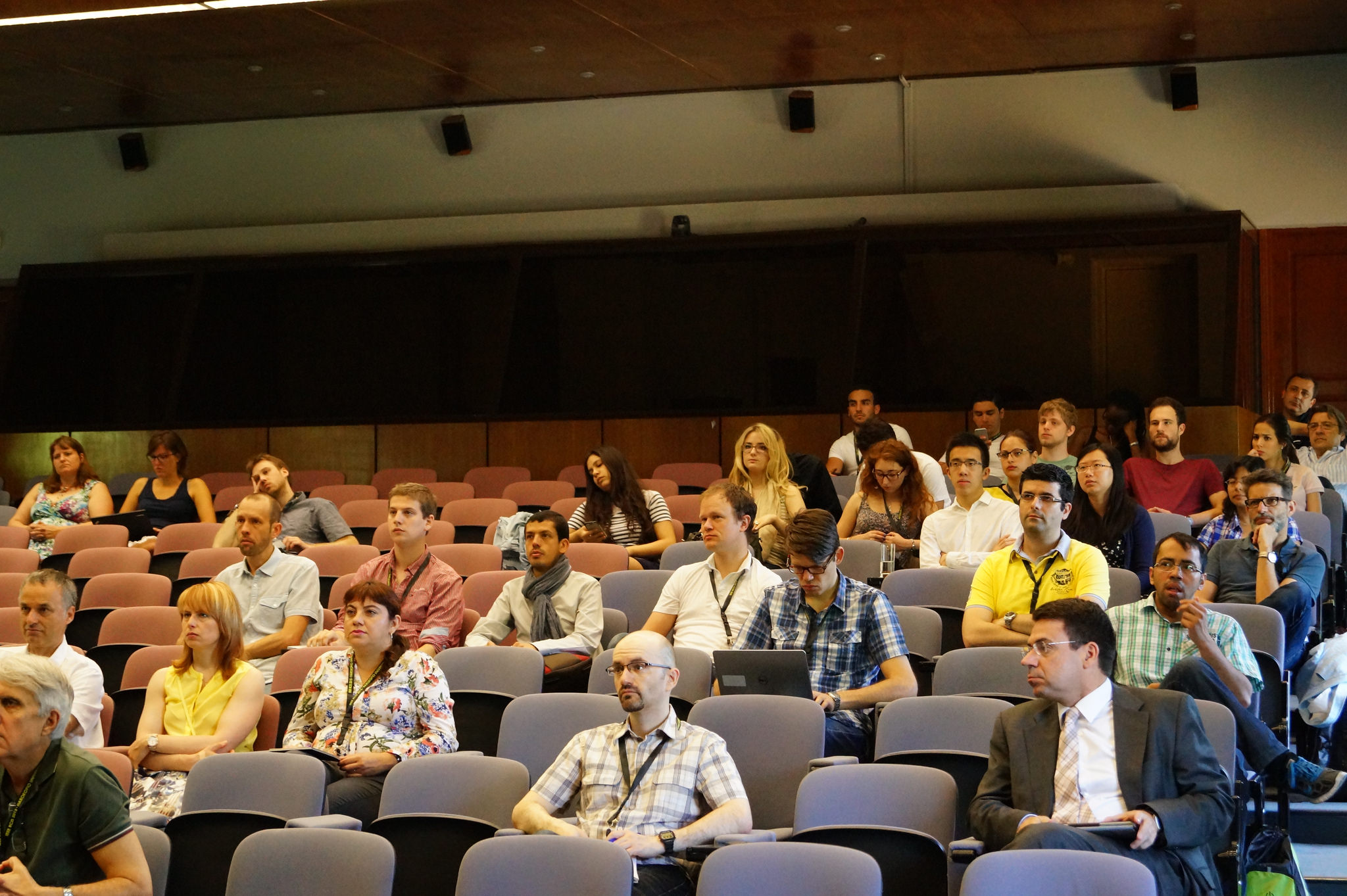
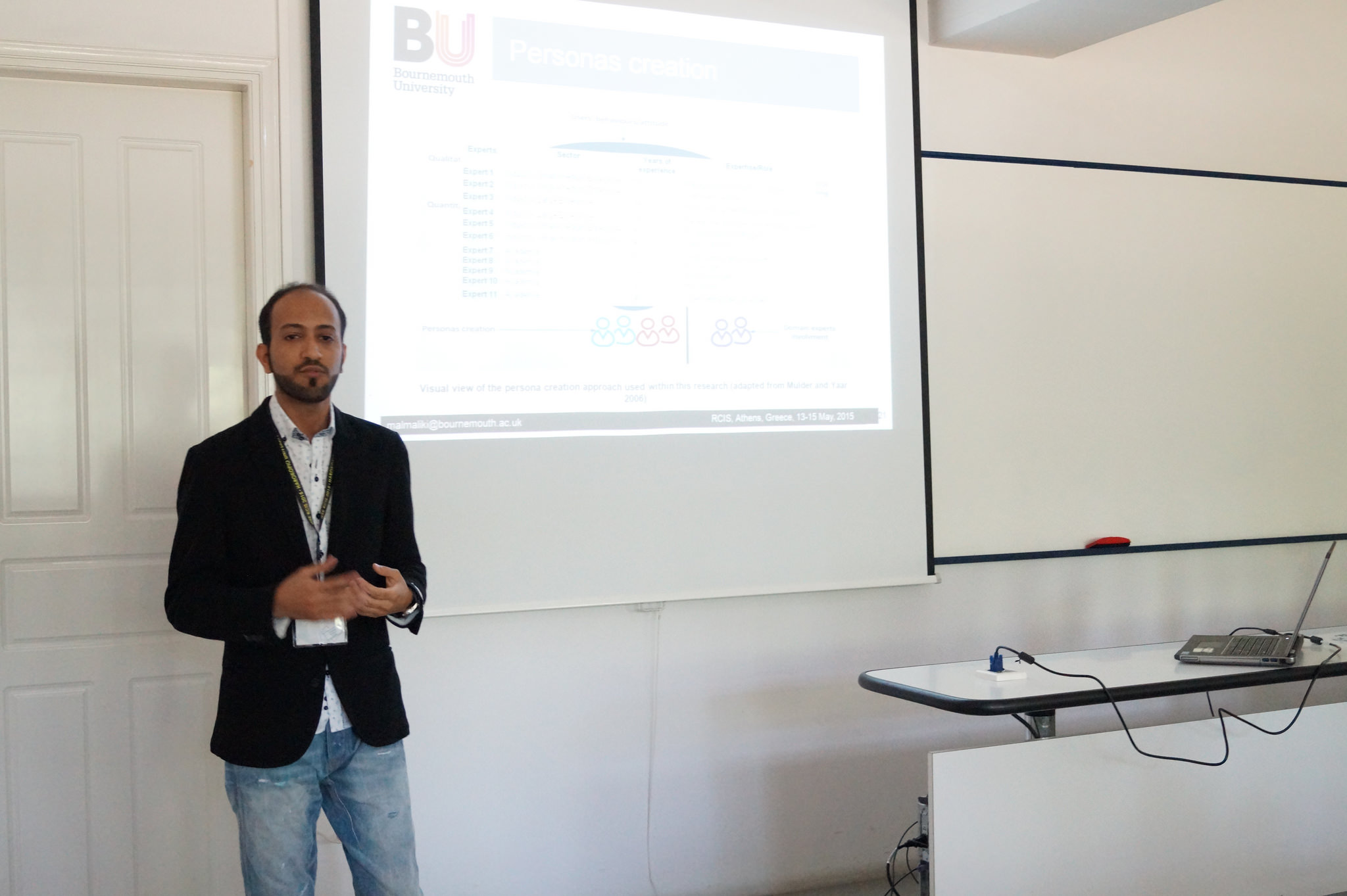
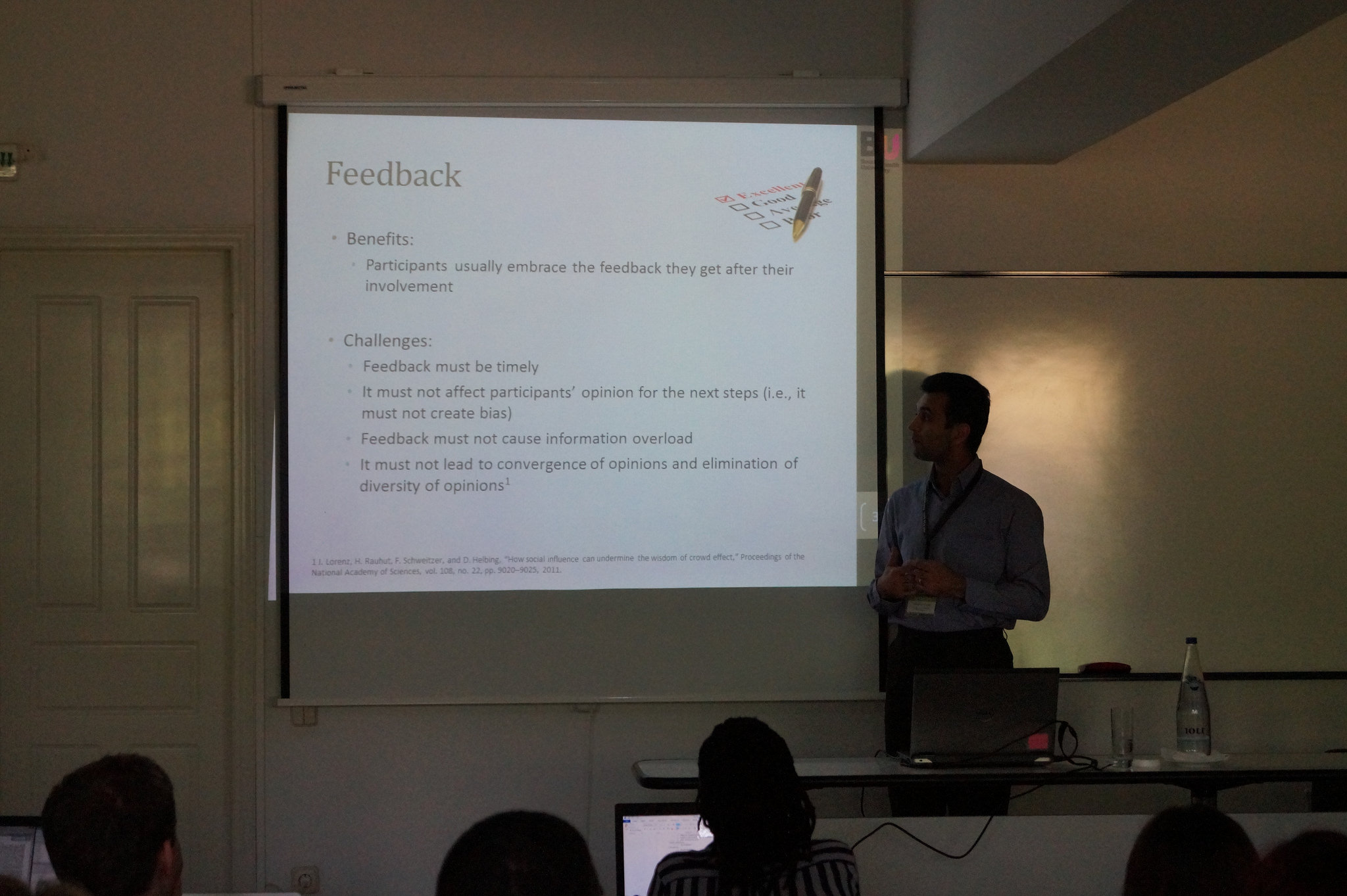
Bournemouth University research on Computing and Informatics, the Software and Systems Engineering focus area, achieved a strong presence in the IEEE Ninth International Conference on Research Challenges in Information Science (RCIS), which was held from May 13th to May 15th, 2015 in Athens, Greece. (Refer to http://www.rcis-conf.com/rcis2015/).
Our participation included the presentation of three papers:
- “Adaptive Software-based Feedback Acquisition: A Personas-based Design”: Malik Almaliki, Cornelius Ncube & Raian Ali
- “Configuring Crowdsourcing for Requirements Elicitation”: Mahmood Hosseini, Alimohammad Shahri, Keith Phalp, Jacqui Taylor, Fabiano Dalpiaz & Raian Ali
- “Recommendations on Adapting Crowdsourcing to Problem Types”: Mahmood Hosseini, Alimohammad Shahri, Keith Phalp & Raian Ali
The papers were presented by two PGRs, Mahmood Hosseini and Malik Almaliki. Fellow researchers and practitioners praised the timeliness and applicability of the topics and stated their interest for possible collaboration. The presentations also provided a great opportunity for the exchange of knowledge, for increasing the visibility and impact of our research in Computing and Informatics in Bournemouth University and for displaying our vibrant environment. This follows our last year success at this same conference RCIS’14 and our recent strong presence in REFSQ’15.
The research was partially funded by a European FP7 Marie Curie CIG Grant (the SOCIAD Project), and the Graduate School of Bournemouth University via the Santander PGR Development Fund.
New paper by PhD student Sheetal Sharma
Sheetal Sharma, PhD student in the Centre for Midwifery, Maternal and Perinatal Health (CMMPH), published her latest paper this week in the Asian Journal of Social Sciences & Humanities [1]. The paper ‘Nepenglish’ or ‘Nepali English’: A New Version of English? raises the question whether we are beginning to see a new variant of English.
The paper is co-authored with Mrs. Pragyan Joshi from the United Nations Development Programme (UNDP) in Kathmandu and BU Prof. Edwin van Teijlingen. Sheetal’s PhD research focuses on the evaluation of a large-sclae maternity care improvement intervention in rural Nepal.
The paper is based on listening to people in Nepal speaking English and reading their writing in English. English is a living language and different native and non-native speakers develop English in slightly different ways. This paper argues that it is time to consider whether we should study the English spoken by native-Nepali speakers (Nepenglish) as a separately developing variant of English. The question is particularly intriguing since Nepali English bears such a similarity with Indian English, as both are largely based on originally Sanskrit-based languages. The focus is particularly on how native-Nepali speakers express themselves in English.
Reference:
- Sharma, S., Joshi, P., van Teijlingen, E. (2015) ‘Nepenglish’ or ‘Nepali English’: A new version of English? Asian Journal of Humanities & Social Sciences 4(2): 188-193. www.ajssh.leena-luna.co.jp/AJSSHPDFs/Vol.4%282%29/AJSSH2015%284.2-21%29.pdf
Prof. Edwin van Teijlingen
CMMPH
Highlights from the World Confederation of Physical Therapy Congress, Singapore, May 2015
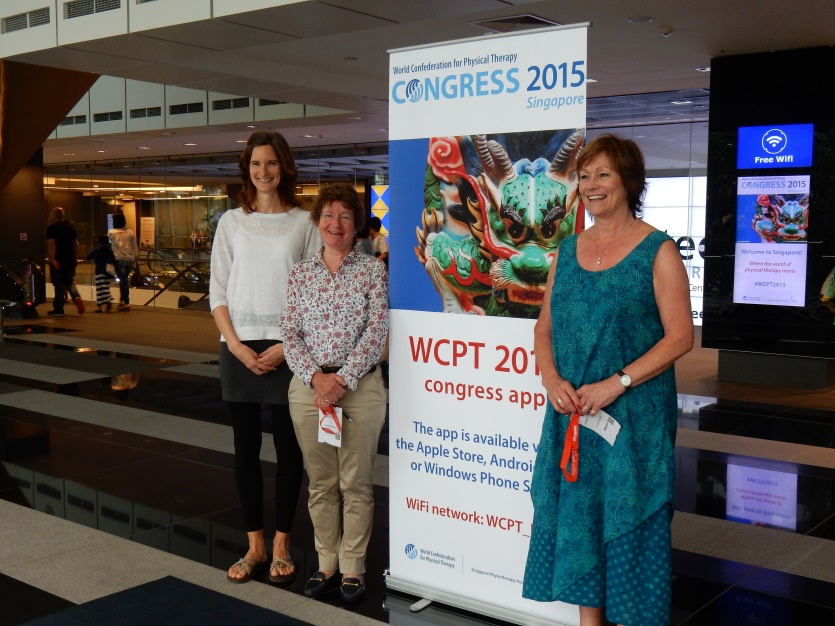
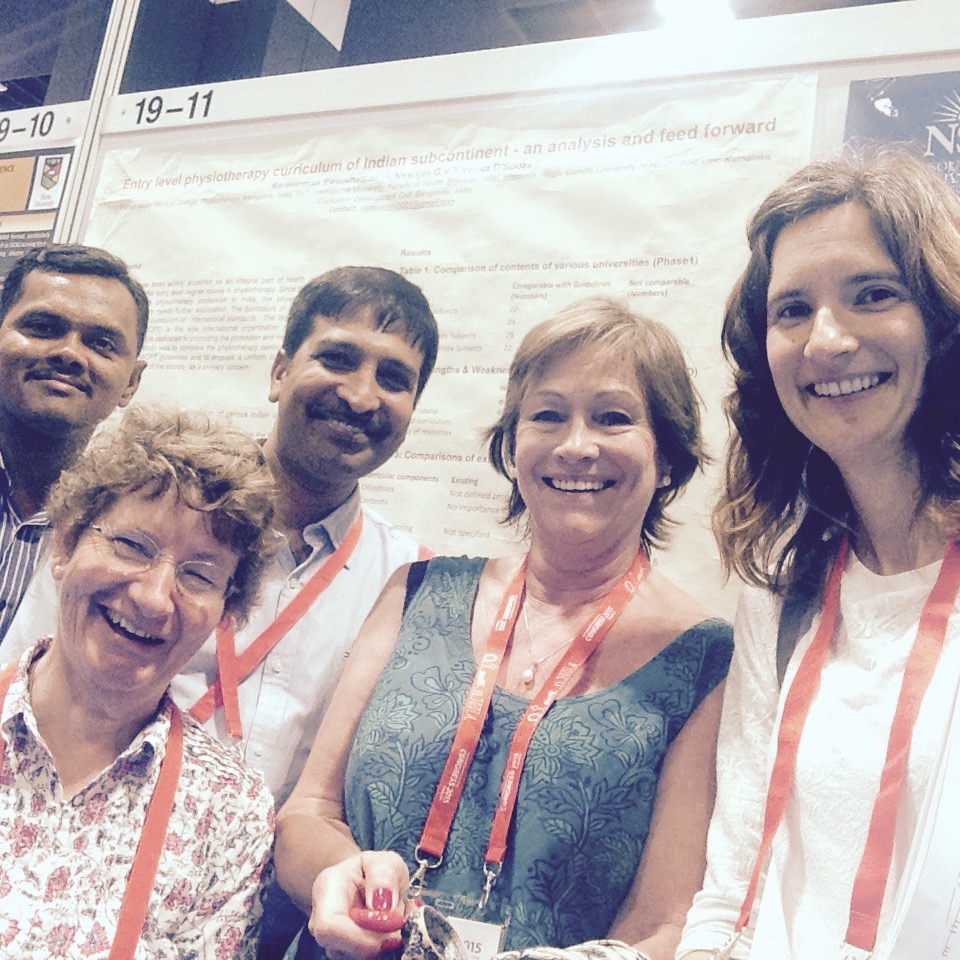
Around 3400 delegates from all over the world gathered in Singapore at the start of May for the World Confederation for Physical Therapy Congress. With an impressive 572 platform presentations, 1,578 poster sessions, and 36 networking sessions there was certainly plenty of opportunity to be informed and stimulated by new ideas.
Three representatives attended from Bournemouth University (Judith Chapman, Carol Clark and Clare Farrance) who presented some of their current research (8 papers) around reflective practice, chronic pain, joint hyper-mobility and physical activity. Clare commented that sharing research around these areas provided “a great opportunity to see where our research at BU sits within the clinical and academic physiotherapy situation worldwide”.
Other highlights included learning more about educational approaches for undergraduate students, the use of integrating technology to support people with long-term conditions, furthering international relationships and collaborations, and of course the amazing array of food in Singapore (including the chilli crab!).
Many thanks to the Faculty of Health and Social Sciences and Santander PGR Mobility Awards for funding to make attendance at this valuable conference possible.
BU students support Nepal earthquake disaster appeal
Posted on behalf of BU students!
Appeal for helping Nepal earthquake survivors
Nepal was stuck by earthquake of 7.8 RS magnitude at 11:56 am local time on 25th April 2015. There have been more than one hundred aftershocks since. Many people are traumatised and lack proper care in the aftermath of the earthquake. This natural disaster has created havoc on a massive scale. To make conditions worse there was rain pouring down in parts of Nepal and there now is a risk of the spread of epidemic diseases, thefts, and other crime. Until now the death toll has reached almost 8,000 and thousands have been rendered homeless and destitute. According to the Prime Minister of Nepal Sushil Koirala, the death toll could rise as high as 10,000. We are planning to raise fund for the immediate relief and rebuilding process of Nepal.
The UK Nepal Friendship Society and students from BU are organising a fund-raising event for earthquake victims of Nepal on 12th May, Tuesday from 4pm until 7 pm in Bournemouth Square (western side). Please spread this information to all interested! Ask them to visit us on Tuesday and help Nepal at this time of crisis. Your donations will help to rebuild the nation and help to provide necessary amenities to people who have lost their home and family. Any amount will be greatly appreciated, but please give as much as you can. Nepal has been awaiting this disaster for many years now, and according to the cycle of major earthquakes in the country the national catastrophe that has taken place could have happened sooner (the last took place in 1934). Your donation via the UKNFS will be provided to disaster victims through official/reliable Government of Nepal and Embassy of Nepal in London recommendedchannels.
Please support Nepal at this time of national tragedy!
–xx–
BU has several undergraduate and postgraduate students from Nepal. Moreover, several BU students conduct studies or do their electives in Nepal.
Prof. Edwin van Teijlingen
CMMPH
Lunchtime Seminar with Fiona Kelly on Wednesday 6th May
Lunchtime Seminar with Fiona Kelly, Wednesday 6th May 1-1.50pm, R302
Please come to listen to Fiona Kelly present on BUDI’s innovative approaches for changing public perceptions of dementia and experiences of living with dementia.
Further information on this Seminar series can be found by clicking on the link below.
There is no need to book – just turn up. Contact Zoe on zsheppard@bournemouth.ac.uk for more information.
Fiona looks forward to seeing you tomorrow.
Lunchtime Seminar with Fiona Kelly, Wednesday 6th May
Lunchtime Seminar with Fiona Kelly, Wednesday 6th May 1-1.50pm, R302
Please come to listen to Fiona Kelly present on BUDI’s innovative approaches for changing public perceptions of dementia and experiences of living with dementia.
Further information on this Seminar series can be found by clicking on the link below.
There is no need to book – just turn up. Contact Zoe on zsheppard@bournemouth.ac.uk for more information.
Fiona looks forward to seeing you next Wednesday.
GeoNet Human/Wildlife Conflict
For our most recent GeoNet event we were lucky enough to have a visit from Gaius Wilson all the way from Southern India. Gaius told us about his PhD research into elephant behaviour. Apparently there are 12-15,000 elephants in Southern India, and they commonly come into conflict with humans. Farmers try to protect their crops with deep ditches (elephants can’t jump!) and electric fences. However, elephants are clever, and have realised that their tusks don’t conduct electricity, so the males (females don’t have tusks) push over fences or use trees to break them. An emerging problem is the spread of a weed called Lantana, which was introduced from South America as an ornamental hedge plant. Lantana forms very high, dense stands which elephants can’t cross. It takes up space and so there is a loss of fodder, since elephants don’t eat Lantana, and the plant contains oils and can lead to more intense forest fires. This pushes elephants closer to villages to find food, and means that locals with captive working elephants have to travel further to find food. One thing the forest department can do to stop elephants being forced to use farmer’s resources is to remove Lantana where it appears. Employing villagers to do this could create work opportunities, with associated economic benefits.
After Gaius’ talk we had an interesting discussion (joined by Susanna Curtin and Mandy Korstjens) about the potential for wildlife tourism to mitigate human/wildlife conflict. The idea is that if farmers have another income stream provided by tourists, it becomes in their interest to protect the animals that the tourists pay to see. However, most wildlife tourism in India is domestic, so not much cash is generated. There are pitfalls with this type of tourism, in that guides and others employed are often not local people, hotels are usually some distance from wildlife sites and locals often don’t receive any benefit from tourist visits, which can lead to resentment. There are some success stories – in Peru all guides are local by law and receive training to fulfil the role. Small-scale tourism in Peru involving locals has spread as nearby villages see the benefits and follow the example of those who set up schemes. However, in India legislation prevents people from setting up such schemes in protected areas, and until this is allowed nature tourism won’t have a role in persuading locals to protect elephants.
Our next three events are;
7th May 13.00-14.00 Lawrence LT (Talbot Campus)
Participatory Research – Gitte Kragh (BU Life Sciences) Hayley Roberts (BU AAFS) Rick Stafford (BU Life Sciences) Paola Palmer (BU AAFS)
14th May 13.00-14.00 KG01 (Talbot Campus)
Storymaps and place-based storytelling – Anna Feigenbaum (BU M & C)
21st May 13.00-14.00, PG19 (Talbot Campus)
Cultural heritage landscapes and deathscapes – Craig Young (Reader in Human Geography at Manchester Met University), Tim Darville (BU SciTech AAFS), Anne Luce (BU M & C)
PG Researcher Development Workshops available throughout May
For all postgraduate Researchers – the following PG Researcher Development workshops are available throughout May:
- Friday 1 May 2015 – ResearchPAD – A beginner’s guide
- Wednesday 6 May 2015 – Creative Thinking
- Thursday 7 May – IT Skills: Word – Structuring your Thesis
- Wednesday 13 May 2015 – How to Conduct a Literature Review
- NEW for 2014-15: Wednesday 13 May 2015 – Careers Series: Marketing yourself in person: Interviews
- Thursday 14 May – IT Skills: Excel – Introduction to Essential Features
- Wednesday 20 May 2015 – Ethics: ethical systems, requirements and professional standards
- Thursday 21 May – IT Skills: PowerPoint 2010: Create and Enhance your Presentation
- Thursday 21 May 2015 – Interviewing in semi-structured interviews
- NEW for 2014-15: Wednesday 27 May 2015 – Careers Series: Commercial Awareness
- Thursday 28 May – IT Skills: Introduction to Access
- Thursday 28 May 2015 – Introduction to Focus Groups
See PGR Workshops – An Overview for further information about the workshops. If any are of interest to you, booking is via myBU Graduate School PGR Community (don’t forget to log on with your student username and password)
Congratulations to the winners of the Research Photography Competition
‘Can you tell the story of your research in a single image?’ That’s the challenge we set BU’s academics and postgraduates earlier this year, and the overwhelming response saw researchers from all across the university downing tools to take up their cameras and think of unusual ways to illustrate their research.
The resulting images demonstrate not just the creativity of our academics and postgraduates, but also the fascinating range of research taking place at BU.
Researchers from all across the university, working in areas as diverse as dementia, archaeology, kayaking and 3D printing submitted images to the competition.
Thousands of BU students, staff and members of the public voted for their favourite images, and we can now reveal the winners.
Winner – Sarah Hambidge, ‘Care Farming: Providing Brighter Futures for Young and Old’
Down on a farm, tucked away in the beautiful Dorset countryside, the therapeutic use of farming practices is being used to provide health, social and educational care services for a wide range of people. The farm offers the opportunity for people who are the hardest to reach, to utilise a rural environment to enhance their well-being and to achieve their potential. The farm has achieved many great success stories of people who have turned their lives around, been given confidence in their own value and become equipped with the learning they need to successfully engage in wider society. The challenge they now face is to show this model of care is successful to enable their work to continue and grow.
Historically, much of the awareness and research regarding mental health issues has focused predominantly on females, whilst males with mental health concerns have faced an element of negativity from society, despite being at higher risk of depression and loneliness, alcohol dependency, attention deficit hyperactivity disorder and suicide. My study aims to explore the benefits of the care farm model as an alternative social care intervention on improving physical / mental health outcomes and the quality of life of young males with behavioural, emotional and social difficulties as well as older men with dementia, and the benefits of intergenerational interaction between the two groups.
Runner up – Rosa Spencer-Tansley, ‘What causes mental illness?’
1 in 4 of us will experience mental health problems in our lifetime. The pathophysiology of mental illness involves a interplay of genetic and environmental factors and it is only the last few years that the aetiological picture has started to show. As a result uncertainty and oversimplified ideas regarding the causes of mental illness exist. This can exacerbate stigma and increase the emotional burden of mental illness amongst families. A major function of Psychiatric Genetic Counselling is to help affected individuals and families. This can help them successfully adapt to the condition as well as address and reduce feelings of shame, guilt, blame and stigma, thus having both informative and therapeutic values.
I will explore understanding amongst the UK about the causes of mental illness in order to evaluate the application of Psychiatric Genetic Counselling to the UK. This photograph captures 100 BU students’ answers to the question: “What causes mental illness?”
Runner up – Jordan Thomas, Stephanie Farrant, Robert Moore and Sulaf Assi, ‘On-spot Identification of Counterfeit Products Using Handheld Instruments’
The last decade has witnessed a change in the use of medicine products beyond diseases’ treatments to improve an individual’s life. Lifestyle products include medicines, cosmetic and herbal products which improve physical appearance and physical/mental performance. Counterfeit lifestyle products could be encountered anywhere across the wholesale supply chain.
The effects resulting from a counterfeit lifestyle product could range from ineffectiveness (at their best) to toxic/lethal effects (at their worst). As these products can be encountered anywhere, it is important to develop rapid, non-destructive and mobile technology for their identification. Handheld instruments techniques offer these advantages. Therefore, this project underlies developing methods for the rapid and non-destructive identification of counterfeit lifestyle products using handheld spectroscopic techniques.
In particular, the project involves building libraries which contain signatures of lifestyle products and materials commonly present in these products.
For one day only, you can view a full exhibition of all submissions in K101, Kimmeridge House on 28th April from 2pm – 4pm.
Masterclass June 11th and 12th: Using Art in Health and Social Care Education and Practice
Two day Masterclass, Thursday 11th and Friday 12th June, Executive Business Centre, Lansdowne Campus
Art has been said to be a way to express ourselves, to make sense of our experiences and to connect with ourselves, others, our world and life. The arts are beginning to gain greater recognition as a deep form of learning.
This Masterclass will provide health and social care educationalists and practitioners with the opportunity to immerse themselves in hands-on arts experience and come away with individualized working methods to adapt in their own practice and learning contexts. No previous experience of the arts is necessary.
Dr Catherine Lamont-Robinson is an artist/researcher, with a BA and MA in Fine Art and a Doctorate in Education. Catherine is passionate about creative engagement and bringing different ways of knowing into practice – drawing on the role of tacit knowledge, discourses around embodiment and whole-body intelligence. She has worked for over ten years in clinical, educational and community contexts and is a Senior Associate Lecturer at Bristol University facilitating Creative Arts and Humanities within Social and Community Medicine.
Schedule:
Each day will start at 9.30am and run until 4.15pm with regular refreshment breaks and lunch provided. The two days will include some presentations, discussions and practical sessions.
Booking Information:
- BU staff £120
- BU students £90
This price includes two full days with the course facilitator, all refreshments and all class materials. Accommodation and travel costs are not included.
Book your place online by 1 June 2015 at https://using-art-in-health-and-social-care.eventbrite.co.uk
For more information contact: (01202) 962184 / rfreeman@bournemouth.ac.uk
Lunchtime Seminar with Edwin van Teijlingen, Wednesday 29th April
Title: Transforming research into breast practice
Time: 1-1.50pm, Royal London House, R301
One of the three Impact Case Studies for the 2014 REF was on BU’s impact on the Breast-feeding information and advice webpages of Healthtalkonline. The Breast-feeding webpages of Healthtalkonline were designed by and based on BU research. In order to evidence this impact on the wider population we conducted an online survey of users of these Breast-feeding webpages. The presentation on Wednesday addresses the notion of impact, the survey and key findings as well as more recent research on Breast-feeding at BU that is likely to generate further/different impact!
Further information on this Seminar series can be found by clicking on the link below.
There is no need to book – just turn up. Contact Zoe on zsheppard@bournemouth.ac.uk for more information.
Edwin looks forward to seeing you on Wednesday 29th April.
We regret to inform you ….
It is always disappointing for an academic author to receive a rejection letter. Today I received yet another one from Midwifery (published by Elsevier). Sometimes I think academic publishing in good journal is not getting any easier over time. Neither does the experience of having over two hundred peer-reviewed academic papers make a rejection easier to deal with. This was my third paper in a row that got rejected by Midwifery. All three papers were rejected on resubmission, so a lot of extra work had gone into these papers after the initial peer review and the editor’s feedback. These three papers where led by three different postgraduate students (Sharma, Baral & Burton) as first authors, and in each case co-authored by myself and different BU academics and/or from other universities.
Midwifery is the journal in which I have published more papers than any other journal (see top blue piece of pie in ‘Documents by source’) as reported on SCOPUS today (26 April 2015). Moreover, I am co-author of one of the top five most downloaded papers in Midwifery for 2014 (see recent BU Research Blog), and this paper is also the most cited Midwifery paper since 2010! Still I manage to have three papers rejected in a row.
What is does show to me is that the journal’s peer review system is robust (i.e. blind and impartial) because I am also a member of Midwifery’s editorial committee. I think it is back to the drawing board and discuss with each set of authors what the next step should be for our papers. To be fair we had a paper published already this year in Midwifery, namely: Grylka-Baeschlin, S., van Teijlingen, E.R., Stoll, K., Gross, M.M. (2015) Translation and validation of the German version of the Mother-Generated Index and its application during the postnatal period. Midwifery 31(1): 47–53.
As an editorial board we try continuously to maintain a high quality of papers to be published in our journal, and we would like to encourage potential authors to keep submitting their papers to Midwifery.
Prof. Edwin van Teijlingen
CMMPH
BU SDRC Contributions to WIT Contact & Surface 2015 International Conference
- Dr Zulfiqar Khan presenting
- Dr Adil Saeed presenting
- PGR Hammad Nazir presenting
- SDRC Erasmus Mundus Exchange Student Parisa Pashaei presenting
- Mark Hadfield – Chairing Surface Engineering Session
BU SDRC Director Dr Zulfiqar Khan (Associate Professor) organised a special session on “Surface Engineering” at the WIT 2015 Contact and Surface International Conference and contributed as a member of the International Scientific Advisory Committee (ISAC) as a reviewer during 2014-15.
SDRC Professor Mark Hadfield chaired the special session and also helped the conference as a member of the ISAC to support review process.
BU academics and researchers along with the SDRC international partners from Gazi University Turkey contributed presentations and have submitted the following extended full length papers to the WIT International Journal of Computational Methods & Experimental Measurements (CMEM), which are all currently under review for publication.
- Khan, Z., Pashaei, P., Bajwa, R., Nazir, M. H., & Cakmak, M. (2015). Fabrication and characterisation of electrodeposited and magnetron sputtered thin films. In Contact and Surface 2015. València, Spain. Retrieved from http://www.wessex.ac.uk/15-conferences/contact-and-surface-2015.html
- Saeed, A., Khan, Z., & Hadfield, M. (2015). Performance Evaluation of Surface Protection Applied to Large Vehicles. In Contact and Surface 2015. València, Spain: Wessex Institute, UK. Retrieved from http://www.wessex.ac.uk/15-conferences/contact-and-surface-2015.html
- Gultekin, A., Pashaei, P., Khan, Z., Ozturk, M. K., Tamer, M., & Bas, Y. (2015). X-ray and ab initio study of structural, electronic, elastic and optical properties in Be1-xZnxS alloys depending on Vegard’s law. In Contact and Surface 2015. València, Spain. Retrieved from http://www.wessex.ac.uk/15-conferences/contact-and-surface-2015.html
- Nazir, M. H., Khan, Z. A. (2015). Maximising the Interfacial Fracture Toughness of Thin Coatings and Substrate through Optimisation of Defined Parameters. In Contact and Surface 2015. València, Spain: WIT. Retrieved from http://www.wessex.ac.uk/15-conferences/contact-and-surface-2015.html
WIT is currently collaborating with BU in Corrosion research through a post doc programme Mark Hadfield (PI), Zulfiqar Khan (Co-I) led by Dr Adil Saeed as a post doc researcher.
Corrosion (experimental, modelling and simulation) and Surface Engineering (nano coatings) research within BU SDRC is conducted in collaboration with multinational industrial partners through match funding with significant in-kind experimental support.
For further details on current research activity in SDRC please visit the Centre webpage. If you have interests in these areas and would like to find more please contact Dr Zulfiqar Khan
Lunchtime Seminar with Catherine Angell & Edwin van Teijlingen, Wednesday 29th April
Title of Seminar: Transforming research into breast practice
Time/location: 1-1.50pm, Royal London House, R301
Further information on this Seminar series can be found by clicking on the link below.
There is no need to book – just turn up. Contact Zoe on zsheppard@bournemouth.ac.uk for more information.
Catherine and Edwin look forward to seeing you there.
Masterclass June 11th and 12th: Using Art in Health and Social Care Education and Practice
Two day Masterclass, Thursday 11th and Friday 12th June, Executive Business Centre, Lansdowne Campus
Art has been said to be a way to express ourselves, to make sense of our experiences and to connect with ourselves, others, our world and life. The arts are beginning to gain greater recognition as a deep form of learning.
This Masterclass will provide health and social care educationalists and practitioners with the opportunity to immerse themselves in hands-on arts experience and come away with individualized working methods to adapt in their own practice and learning contexts. No previous experience of the arts is necessary.
Dr Catherine Lamont-Robinson is an artist/researcher, with a BA and MA in Fine Art and a Doctorate in Education. Catherine is passionate about creative engagement and bringing different ways of knowing into practice – drawing on the role of tacit knowledge, discourses around embodiment and whole-body intelligence. She has worked for over ten years in clinical, educational and community contexts and is a Senior Associate Lecturer at Bristol University facilitating Creative Arts and Humanities within Social and Community Medicine.
Schedule:
Each day will start at 9.30am and run until 4.15pm with regular refreshment breaks and lunch provided. The two days will include some presentations, discussions and practical sessions.
Booking Information:
- BU staff £120
- BU students £90
This price includes two full days with the course facilitator, all refreshments and all class materials. Accommodation and travel costs are not included.
Book your place online by 1 June 2015 at https://using-art-in-health-and-social-care.eventbrite.co.uk
For more information contact: (01202) 962184 / rfreeman@bournemouth.ac.uk
Investigating and Visualising the Effects of Environment on Prey Detection Rates: A Key Variable in Human Evolution
We would like to invite you to the next research seminar of the Creative Technology Research Centre.
Title: Investigating and Visualising the Effects of Environment on Prey Detection Rates: A Key Variable in Human Evolution.
Time: 2:00PM-3:00PM
Date: Wednesday 22 April 2015
Room: P302 LT, Poole House, Talbot Campus
Abstract: This project utilises interactive 3D virtual worlds in order to determine the effect which the composition of the environment has on the ability of humans to detect prey animals within it.
The research focuses on the environments found in Europe prior to the Last Glacial Maximum, during the time period known as Oxygen Isotope Stage 3 (circa 30-55K years ago). By recreating various OIS3 environments virtually, we can investigate the effects of “openness” (degree of forestation), light levels, terrain and many other factors on prey detection rates.
Data is collected via experiments in which participants are able to navigate realistic 3D environments to search for prey animals. The search strategies they employ and the effect the environment is having on them can be recorded both from the software itself and via sophisticated eye-tracking technology. This data will inform us of the hunting strategies utilised by early human societies as they reacted to the changing landscape during OIS3.
This project makes use of Unreal Engine 4, a technology well suited to the creation of large, complex, interactive virtual worlds. UE4 is mostly associated with large-scale games development projects, but has the flexibility for use in this kind of research, often referred to as serious games.
We hope to see you there.
BNAC conference reported in Nepal
Last week FHSS PhD student Ms. Preeti Mahato and I attended the 13th Annual Conference of BNAC (Britian-Nepal Academic Council) in London. The conference venue was held at SOAS in central London. In total 28 papers on nine wid
e-ranging themes concerning Nepal and its global connections were presented and debated by a large number of participants ranging from post-graduate students to established professors and researchers from the UK, Nepal and some other EU countries. The conference was reported upon in Nepal on an online news website called eKantipur.
Prof. Edwin van Teijlingen
CMMPH


BU academics publish in Nepal national newspaper
New BU Physiology paper
Gender and street names
Help Shape the Future of Research at BU: Postgraduate Research Experience Survey 2026 Now Open
3C Event: Research Culture, Community & Cherry Blossom – Tuesday 14 April
REMINDER: 3MT® Competition – Deadline 9am Monday 20 April
ECR Funding Open Call: Research Culture & Community Grant – Apply now

ECR Funding Open Call: Research Culture & Community Grant – Application Deadline Friday 12 December
MSCA Postdoctoral Fellowships 2025 Call
ERC Advanced Grant 2025 Webinar
Update on UKRO services
European research project exploring use of ‘virtual twins’ to better manage metabolic associated fatty liver disease