Changing places
Two years ago, I could have never imagined the role that I would ultimately play in BU’s REF submission. At the time, I was a research fellow at a nearby institution and in that fortunate position of being able to take a certain detached distance from the whole REF process. Even so, there was a building surge of preparations absolving more and more time for my senior colleagues; simulation exercises were underway and the work of some of the brightest and the best critically scrutinized. Tensions were raised, impact was feared, but for the most part at that stage, I was progressing a number of research projects which meant a lot of time out of the office and in the field.
In April 2012, I took the momentous step leaving the research post which I had worked so hard to get, to pursue my lifelong passion and commitment to public engagement with research. Initially, in no way was my new role to be related to our REF submission, indeed, in many institutions there is a concerted effort for public engagement officers not to be connected to the ‘impact agenda’. There are many reasons as to why this is the case, not least is the fear that public engagement will be tarnished by REF anxieties, but in my-case, that was not meant to be…
Fate intervenes
As you may have read in Julie’s earlier post, babies became a central feature of the REF team. When we knew Sally was going on maternity leave, I was asked to continue her work on supporting the development of the impact case studies for the REF. Although a mammoth task, it was an opportunity that I could not refuse. On my last day in my previous institution, I had co-organised an event around ‘food and the third sector’, aimed at bringing together key practitioners with leading academics in the field. It was a terrific event and I believe genuinely developed new understandings between key practitioners, policy makers and academics. One of our speakers (not so co-incidentally) was Kevin Morgan (one of my first bosses and recent winner of an ESRC impact prize) was delighted to hear of my new role at BU and I remember him saying (in his distinct lyrical tones) that ensuring research was of benefit to society was ‘in my blood’ – probably true given I come from a family of engineers and technology experts! How you demonstrate impact was also a question that was fresh in my mind having spent the previous two and a half years conducting research with third sector organisations. For charitable causes, impact is king – fundamental to continued support and funding is the need to demonstrate the difference they make to society.
Climbing the impact mountain
In September 2012, the impact challenge was on. Following a set of agreed actions devised by Matthew, Sally and all the impact case study authors in June 2012, the next task was for the work that had been prepared to date to be transferred into the required HEFCE template. This is harder than it sounds: the template was to be a maximum of four pages with indicative word limits for each section and highly prescribed guidance on each section. At this time, a number of new potential case studies also emerged, and I worked with the authors to develop these and ensure they found their way into the template.
The process of doing this was tremendously challenging for all concerned. How do you summarise up to twenty years of research in a few hundred words? What happens if your research and impact was non-linear? What happens if the sources to corroborate your impact are no longer available? What would happen if the impact was in the process of happening? We found our way through these questions as a team, but we won’t necessarily know the answers to them until the end of next year – however good HEFCE’s answers to the sectors endless queries, it will ultimately be the decisions made in the endless meetings that will take place over 2014 which will determine these.
What did become increasingly clear was the extent to which the impact case studies would be dependent on creating a strong narrative. With such a small amount of space to tell a complex story, this was easier said than done and across the sector colleagues were struggling with how to achieve this. I seem to have spent a not inconsiderable amount of last year in a small room in a hotel in Bristol with other members of REF teams encountering the same issues to which there was rarely an easy answer to. In some ways it was reassuring to know BU was grappling with the same issues as all our colleagues across the sector. However, it highlighted just how we much were making preparations for the big unknown, i.e. how panel members would react when they caught sight of our impact case studies.
At the same time, a huge number of ‘impact consultants’ seem to have popped up and my inbox filled with offers of very expensive help. This proved to be a hot topic last year, the extent to which expertise should be ‘bought-in’. Some colleagues just wanted their case studies sorted, however, what stays in my mind was a reflection from a professorial colleague at another (research intensive) institution. He was furious that a ‘science writer’ has been imposed on him, making the argument that he was a professional writer and no-one was better placed to write about his research or the impact it had made, although he acknowledged that learning to write case studies was a new skill. That reflection has stayed with me; writing impact case studies is a particular skill, but arguably one which all academics will have to learn in future years.
Mock exercise
2013 started with a writing retreat over in Christchurch, which was an excellent opportunity for peer learning, reflection and contemplation. As the depths of winter gave was to spring, the mock exercise was on and all the impact case studies needed to be in as final form as possible ready for external review by our expert (and mostly non-academic) panel. This was a tense moment; we knew that ‘research users’ (i.e. those in a position to use the research arising from Universities) will be on the REF panels; therefore, it was essential that we had feedback from this community. In the end, their feedback, mostly confirmed what we already knew.
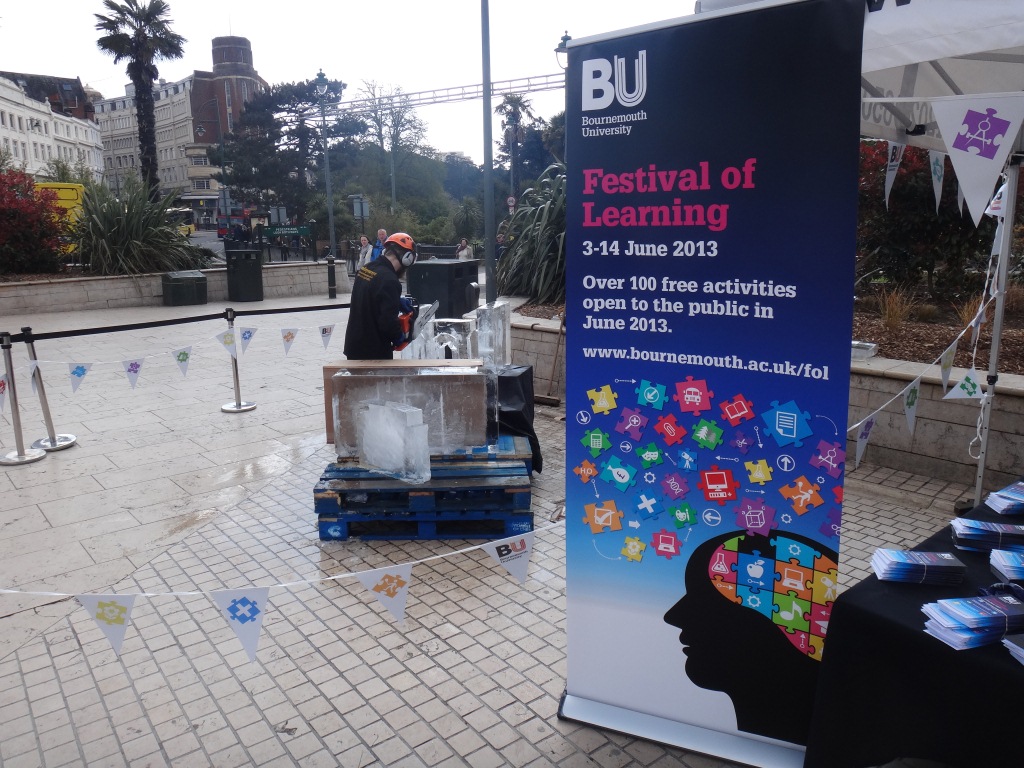
Getting everything ready in-time was a huge amount of effort, especially for my colleague Peng Peng (who did an amazing job throughout) – there were many late nights in the office and we kept each other going with increasingly banal banter and many cups of tea. We were also putting around double the number of case studies into the mock exercise that we would ultimately need. At the same time, I was also working on another major initiative for BU, the first Festival of Learning – which included over 100 free events, which in itself was a mammoth undertaking.
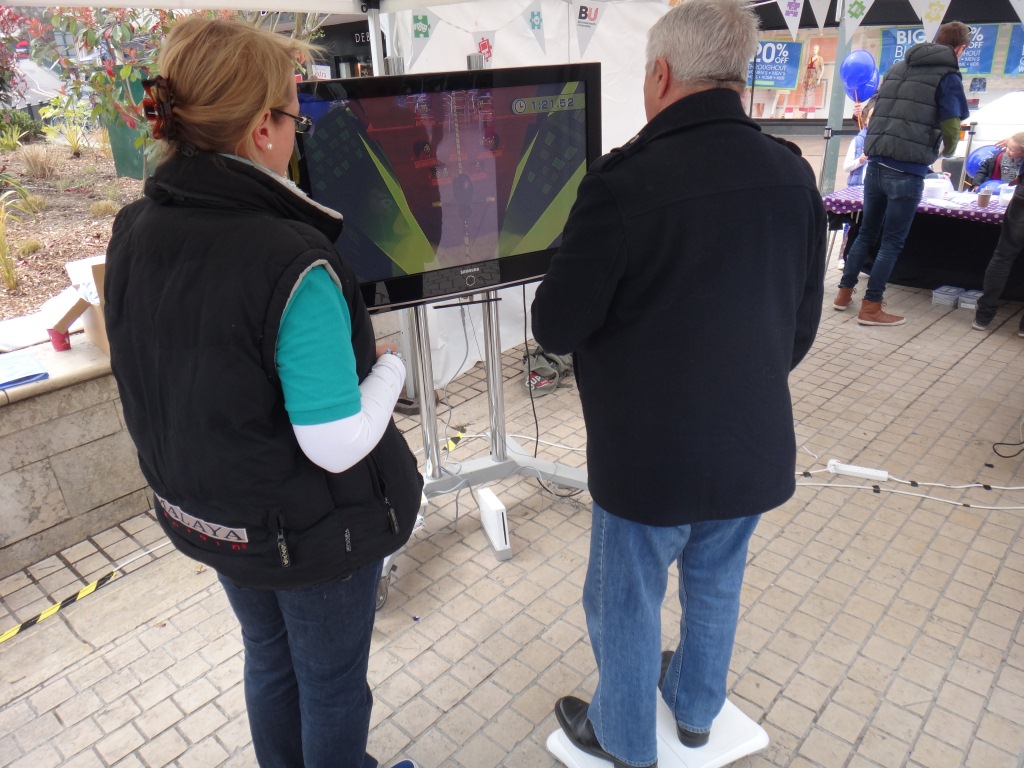
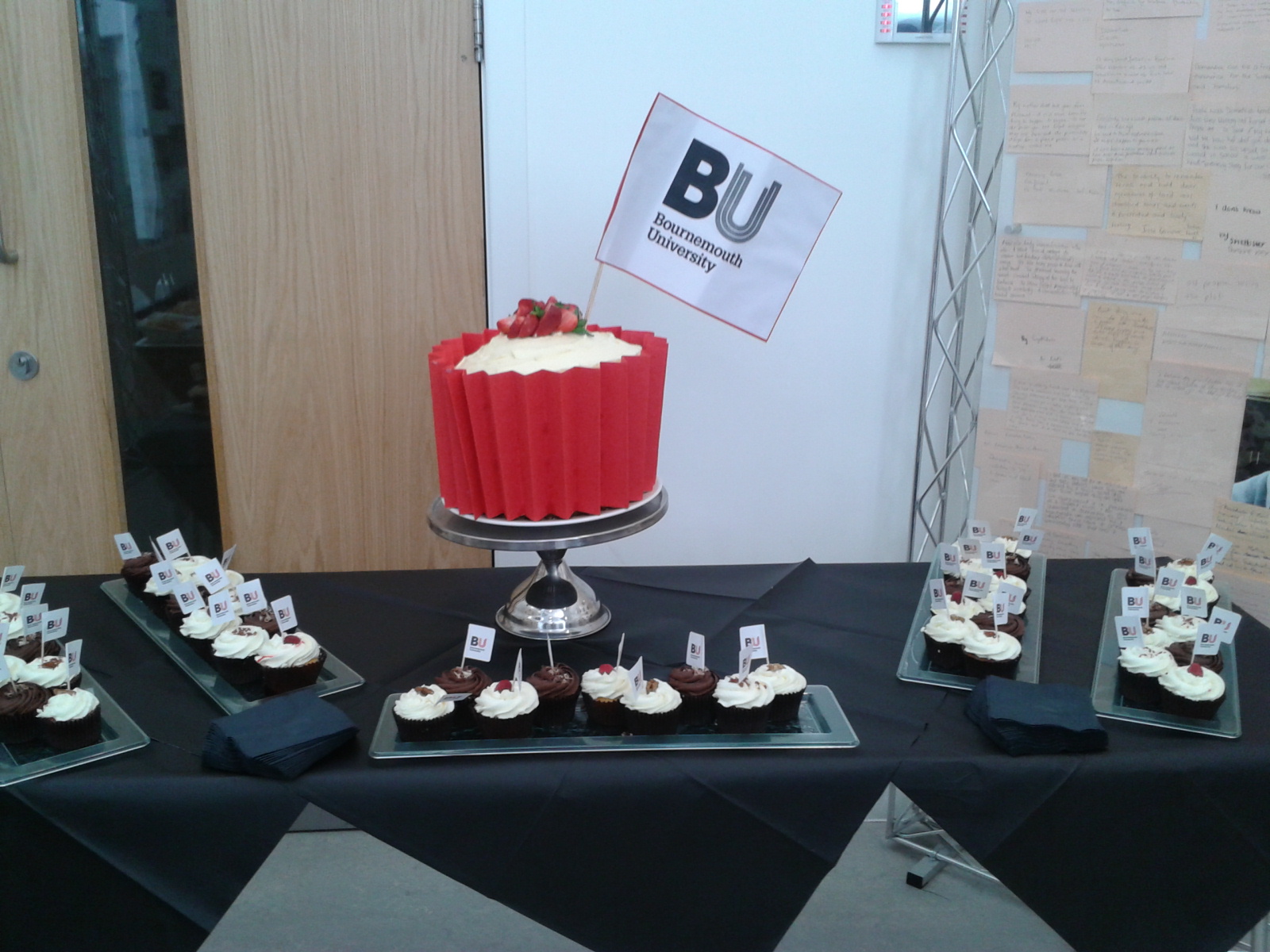
As the law of sod will dictate, as the mock exercise meetings for our impact case studies fell over the two weeks that the Festival was running. This meant for an extremely busy fortnight for me, with many costume changes – typically my day would start setting up the Festival by 7.30am, (in our Festival t-shirt and jeans), with a quick change into something smarter for the panel meetings, followed by Festival trouble shooting and most evenings a Festival event well into the evening. I didn’t really see home or my husband in that fortnight, but it was an incredibly productive two weeks and somehow the timing felt right. It was with a sense of pride that I was able to show our panel members around the Festival and demonstrated that ensuring our research is of benefit to society wasn’t just something we were doing for the purposes of the REF, but something embedded in BU’s DNA.
Sally’s return, impact statements and finalising our submission
Following the mock exercise, Sally came back from maternity leave. It has fantastic to have such a great colleague back with us and Sally was able to bring a fresh pair of eyes to the process and her superb writing skills. She bravely took up the baton of the impact case studies and honed those that had been selected following the mock exercise. This freed up my time to concentrate on the impact narratives, which proved to be especially tricky. Like the impact case studies, we did not have any examples to work from previous exercises. They also asked us to demonstrate the approach to impact taken by each unit of assessment; this was easier said than done as reach back to 2008, there was not necessarily any formalised plans for approaching impact – so this meant drawing on institutional knowledge to develop this section. Working with unit of assessment leaders on future impact strategies was exciting but challenging. Introducing impact as part of the REF has raised many questions, many of which we do not have the answers for.
When we reached November 2013, I remember it seeming quite surreal that the date which we had been focusing on for so long, was finally in view. Naturally, there were some last minute amendments to our submission, but overall the period in the REF team was reasonably cool, calm and collected. Waiting for the button to be pushed, and for the 29th November to pass, felt like time was suspended. And now we wait… although given the years of preparation that have already gone in, a year doesn’t feel so long.
Some early REF reflections
There are many reflections, observations and evaluations to be made over the coming year (and no doubt beyond). Publications are emerging on impact, which I am looking forward to reading and sharing the findings of these with colleagues across BU. I find myself musing over many thoughts, some of which are:
– The ‘impact agenda’ isn’t going anywhere. Many colleagues suggested that HEFCE would find a new way to torture us in REF 2020, but I think it is safe to say that demonstrating impact is here to stay, and is likely to be a larger element of the submission next time around.
– Our REF preparations have created a superb resource. Yes, it was a huge amount for everyone that was involved in the REF return, however, it has enabled us to demonstrate the very best of what BU does.
– We must not waste or lose the institutional learning or resources created in preparation for the REF. In creating an amazing resource for the REF, we share this learning throughout the HE sector an engage the public with it.
– It has opened the debate about what are Universities are for. Should Universities be drivers of economic growth? Should they be cultural providers? Should they provide the evidence demanded by policy makers? Questions about what universities are far are the as old as the institutions themselves, however, the impact case studies once published will provide interesting food for though. What the REF has perhaps made apparent is that within institutions, there are widely different views on what the future for HEIs could or should be, which in-turn can lead to considerable tension.
– It has raised questions about who sets the questions. Who drives our enquiry? Does research answer the questions needed by society, or is it our academic community that sets the questions? I suspect the answer lies somewhere within a continuous iterative process, but others may have a very different view.
– Impact is far more than happy what we can submit to the REF. So much of BU’s best impact does not meet the criteria set out by the HEFCE guidelines, but that does not mean we should stop doing in. In-fact, quite the opposite. As a community we need to challenge the definition of impact and take ownership of it. This means engaging with the impact agenda, not dismissing it.
– Public engagement is about far more than impact. Public engagement can be a pathway to impact, however, it is also about far more than impact as defined in-terms of the REF. It is also about inspiring and informing future research, demonstrating the broader public value of HE, celebrating what we do, being accountable and recruiting the research participants of the future.
I will, I am sure, have far more observations and reflections over the coming weeks and months. But until then, I will forward to a break over Christmas before starting in earnest with our REF 2020 preparations. This is something which I genuinely look forward to – despite the inevitable stresses that have arisen from the process, being part of the REF team has brought home just how fantastic BU is and how much opportunity there is to grow and develop as an institution moving forward.















 ESRC Festival of Social Science 2026: Application Deadline Extended to Thursday 25 June 2026
 First publication for two CMWH PhD students
 Opportunities to support our REF preparations
 SPROUT Returns: Designing Sustainability in Research Practice – Wednesday 20 May 12-2pm
 Innovative Approaches to Doctoral Supervision: Selected Case Studies
 Reminder: Register for the ESRC Festival of Social Science 2026 Information Session
 ECR Funding Open Call: Research Culture & Community Grant – Apply now
 ECR Funding Open Call: Research Culture & Community Grant – Application Deadline Friday 12 December
 MSCA Postdoctoral Fellowships 2025 Call
 ERC Advanced Grant 2025 Webinar
 Update on UKRO services
 European research project exploring use of ‘virtual twins’ to better manage metabolic associated fatty liver disease