We are collecting details of all events for external audiences taking place between 1 August 2022 – 31 July 2023
Thank you to everyone who has already provided information via the SharePoint site. The form will stay open for you to add your activities until Friday 29 September 2023. We encourage you to add your new data regularly throughout the year, while the details are easily recalled.
This data forms part of BU’s annual Higher Education – Business & Community Interaction (HE-BCI) survey and is used to calculate our Higher Education Innovation Funding grant. It also feeds into our submission to the Knowledge Exchange Framework so it is really important for us to provide a full and accurate picture of all our public engagement.
Which events do I need to report? 
- Public lectures & talks
- Performance arts (music, dance, drama etc)
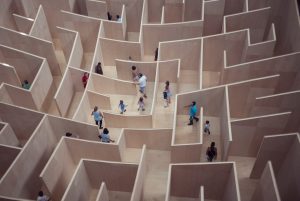
- Exhibitions (galleries, museums etc)
- Museum education
- Media engagement (TV/radio interviews, podcasts etc)
If you’re not sure if your event is eligible for inclusion, the SharePoint site includes further details and guidance.
All events that were part of the ESRC Festival of Social Science 2022, Online Public Lecture Series and Café Scientifique have/will be collated on your behalf centrally, so there is no need to add these.
What data is collected?
We collect a wider range of data than is required for HE-BCI, for additional external and internal reporting, e.g. HEIF Annual Monitoring Statement and Athena Swan. For the purposes of the HE-BCI survey, you must record the following:
- Event dates – to ensure eligibility
- Whether the event or activity was free or chargeable
- Number of attendees (or views/visitors)
- Amount of staff time in hours needed for delivery.
Without this specific data, we will not be able to include your event in the survey.
Contact us
If you have any further questions about the HE-BCI return, please contact publicengagement@bournemouth.ac.uk.
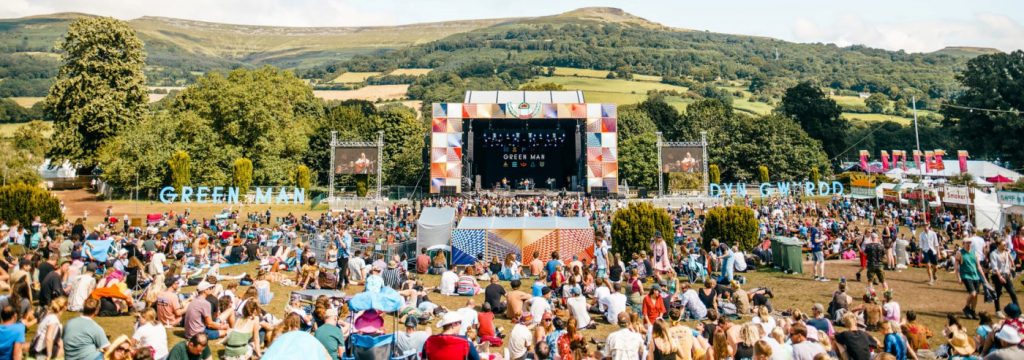
 Every year the Green Man Festival curate a line up which fuses performance, art, music and research to bring the world around us and our questions about it to life in the most wonderful ways.
 Pathways
 Join us to discover the latest advances in neuroscience and the possibility of creating machines that can read human minds.
 The next event in our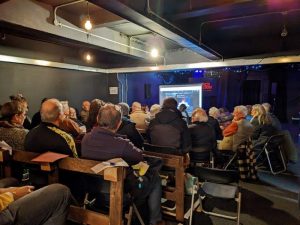
 Spatial memory is our ability to remember where things are, for example remembering where you put down your keys, or where you met a friend. Interestingly, our spatial memory is stronger when we have an emotional connection to a place or object.
 What activities can be included?
 The next









 Verbal autopsy paper published two days ago
 ESRC Studentships for 2027 Entry: Opportunity Now Open
 SONAMONI contributions to Safety Conference 2026 in South Africa
 Three CMWH presentations at Berlin conference
 Horizon Europe Cluster 3 (Civil Security for Society) 2026 Calls Now Open
 MSCA Doctoral Networks 2026 Call Information Webinar
 ESRC Festival of Social Science 2026: Application Deadline Extended to Thursday 25 June 2026
 Reminder: Register for the ESRC Festival of Social Science 2026 Information Session
 ECR Funding Open Call: Research Culture & Community Grant – Apply now
 ERC Advanced Grant 2025 Webinar
 Update on UKRO services
 European research project exploring use of ‘virtual twins’ to better manage metabolic associated fatty liver disease