The Société Française pour l’Etude des Lipides (SFEL) recently held the fourth iteration of their Lipids and Brain conference in Nancy France.
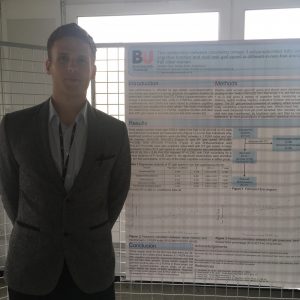 I was given the opportunity to present some preliminary results from an ongoing study I am conducting as part of my PhD, looking into the effects of a multi-nutrient omega-3 fatty acid supplement and exercise on mobility and cognitive function in ladies aged 60+. Analysis of the baseline data revealed relationships between levels of omega-3 fatty acids in the blood with cognitive and gait outcomes, however this effect differed between non-frail and pre-frail participants.
The conference brought together scientists, physicians and nutritionists to provide a unique prospective on the role of lipid nutrition in the prevention and treatment of neurodegenerative diseases with a large focus on Alzheimer’s Disease (AD). The conference was a mix of lectures, invited reviews, and poster sessions. There was a tremendous variety of topics presented, including lectures on the pathophysiology and epidemiology of AD, how AD can impact lipid metabolism and the effects of lipid intake on prevention and treatment of AD.
During the conference Professor Stephen Cunnane from the Research Center on Aging, Sherbrooke (Canada) was presented with the prestigious Chevreul Medal.
On a personal note this was an exciting opportunity for me to present my work and represent Bournemouth University and my supervisory team of Dr. Simon Dyall and Dr. Fotini Tsofliou at a respected conference. It was very satisfying to see some interest in my work from researchers whose work I myself look up to.
I would like to extend my gratitude towards Bournemouth University, for providing the funding that allowed me to attend the conference and to the scientific committee at the SFEL for organising such an impeccable event.
If you would like to learn more about our research, please feel free to contact me at pfairbairn@bournemouth.ac.uk
 I had the pleasure of spending the last three weeks in the Department of Life Sciences (University of Roehampton), working with Dr Giulia Corona and Dr Volker Behrends. We successfully validated an ultra-high performance liquid chromatography coupled with triple quadrupole mass spectrometry (UPLC-MS/MS) method to analyse lipid peroxidation products (breakdown products of fats) in human urine samples.
 hod had to be tested and validated, using adult urine samples.
 provided the standards used in this analysis. I am grateful that I had this opportunity to further develop my research skills and to learn a new state-of-the-art technique and would like to thank all involved for making this possible!
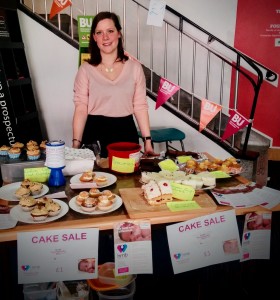 The amount raised will help to either
 If you would like to learn more about donor milk visit the website of the
  If you would like to learn more about the
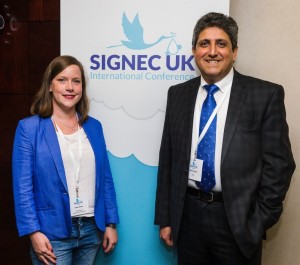 My supervisor Dr Simon Dyall and I were delighted to be invited to attend this event, since, together with Minesh, we are looking at the role of essential fatty acids in perinatal health. As stated above, NEC is a major health concern in the perinatal period, which potentially benefits from essential fatty acids. Furthermore, the event was a perfect opportunity to network with people working in the field of perinatal health and to get more ideas for future research.
 If you would like to learn more about SIGNEC UK or attend next year’s conference, please contact Prof Minesh Khashu at
  Date: 17th November
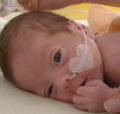 Preterm born babies are at high risk to develop a wide range of complications.
 The
The 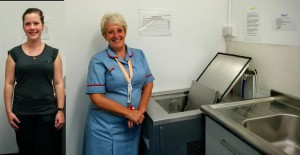 Most of you have probably heard/read about human milk banking by now from me or my previous posts, if not read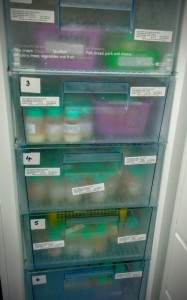
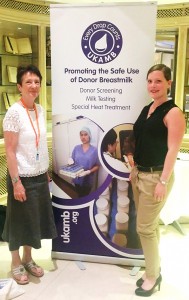
 If you would like to find out more about human milk banking in the UK or want to become a human milk donor visit the UK Association for Milk Banking website at
  We are often reminded that we should be paying attention to what we eat and making sure we exercise regularly. These recommendations are based on years of research into how diet and exercise can impact our health and well-being throughout the lifespan. However, it’s rare that these two crucial elements are studied together.
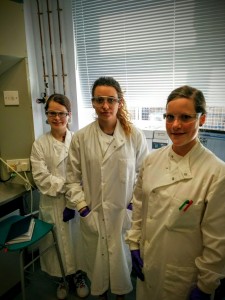 During the last 4 weeks, Sophie and Rose (left and middle in the picture), two AS level students, have spent their summer holidays gaining hands-on laboratory research experience at BU during their Nuffield Research Placement. Together with Dr Simon Dyall and PGR Isabell Nessel (right in the picture), they have worked on a research project which is investigating ways to increase the intake of omega-3 and omega-6 polyunsaturated fatty acids in preterm infants. Rose and Sophie have been helping to develop and validate a method to measure the fatty acid content of preterm formula milks by using gas chromatography (see picture).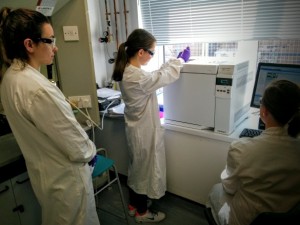







 NIHR Insight South West Central Conference 2026 at Bournemouth University
 BU PhD student presented at World Safety Conference in South Africa
 National Research Supervision Recognition: Apply Now & Join the Supporting Workshop on 16 September
 3C Event: ECR Network Café – Wednesday 16 September 2-3pm
 BU geography student’s undergraduate dissertation published in international journal
 Horizon Europe Cluster 3 (Civil Security for Society) 2026 Calls Now Open
 MSCA Doctoral Networks 2026 Call Information Webinar
 ESRC Festival of Social Science 2026: Application Deadline Extended to Thursday 25 June 2026
 Reminder: Register for the ESRC Festival of Social Science 2026 Information Session
 ECR Funding Open Call: Research Culture & Community Grant – Apply now
 ERC Advanced Grant 2025 Webinar
 Update on UKRO services
 European research project exploring use of ‘virtual twins’ to better manage metabolic associated fatty liver disease