Research Staff Coffee Break – The Place to Be!
On Thursday, 10 June, we held our second Research Staff Coffee Break and were delighted to welcome some new faces. We discussed recovering as a researcher from COVID-19-related disruption and lots of other topics. It’s always interesting to hear other people’s experiences, pick up tips, learn about each other’s research and meet colleagues with similar interests – even when we are working in different faculties and totally different specialities!
RSA Speed Networking
One intriguing suggestion was the idea of the RSA hosting ‘speed research networking events’ where attendees meet each other one-on-one in breakout rooms and present their research interests briefly. This could be a great first step in finding future collaborators and is in keeping with the university’s emphasis on inter-disciplinary research. In addition, we agreed that hearing about research from a wide range of disciplines and faculties fosters an exciting cross-fertilisation of ideas. We’re still considering this idea – but watch this space for future speed research coffee dating opportunities!
RSA Writing Workshop
We spent a lot of time talking about the need to publish, and agreed that making time to work on publications in a busy schedule is a constant challenge. One of the solutions that we considered was the idea of dedicated, regular (fortnightly or monthly) RSA writing workshops to create structured time and space to write. We thought this was a great suggestion and a very practical way of helping each other and the research community! We discussed whether we ought to conduct these face-to-face or online only; in the end, we agreed that a mixed or hybrid model would suit the needs of most people as all colleagues may not be able to be physically present on campus. In terms of the structure, we agreed on a 2-hour-long workshop with breaks in between.
So, we plan to host the first writing workshop on the afternoon of 29 June (1.30 pm – 4.30 pm). This is for anyone (PhD student, academic, full time researcher) who wants to/needs to write and would like to do that in the company of colleagues from across the university. If you would like to attend, please find the Zoom meeting link / log in details below.
Join Zoom Meeting
https://bournemouth-ac-uk.zoom.us/j/87978735999?pwd=aG5qN0xBb1ZjZVkxVmI1RkRSVUNPdz09
Meeting ID: 879 7873 5999
Passcode: 9t@BPf1M
RSA Feedback Survey
As the RSA, we want to run events that are helpful for you as researchers at BU. If you have 5 minutes to spare, it would be great if you could fill out our survey so that we can make sure the RSA is putting on events which you would find useful – please click the link (it should only take 5 minutes to complete):
RSA Representatives Contact Details
If you would like to contact any of the RSA reps to discuss any issues confidentially, our contact details are below:
University Research Staff Reps:
Michelle Heward mheward@bournemouth.ac.uk
Ashok Patnaik apatnaik@bournemouth.ac.uk
Faculty of Health & Social Science:
Preeti Mahato pmahato@bournemouth.ac.uk
Rachel Arnold rarnold@bournemouth.ac.uk
BU Business School:
Rafaelle Nicholson rnicholson@bournemouth.ac.uk
Ashok Patnaik apatnaik@bournemouth.ac.uk
Faculty of Media & Communications:
Oliver Gingrich gingricho@bournemouth.ac.uk
Ethzaz Chaudhry echaudhry@bournemouth.ac.uk
Faculty of Science & Technology:
Kimberley Davies daviesk@bournemouth.ac.uk








 The following RKEDF training events are coming up this month.







 Verbal autopsy paper published two days ago
 ESRC Studentships for 2027 Entry: Opportunity Now Open
 SONAMONI contributions to Safety Conference 2026 in South Africa
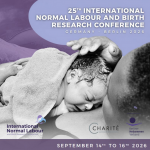 Three CMWH presentations at Berlin conference
 Horizon Europe Cluster 3 (Civil Security for Society) 2026 Calls Now Open
 MSCA Doctoral Networks 2026 Call Information Webinar
 ESRC Festival of Social Science 2026: Application Deadline Extended to Thursday 25 June 2026
 Reminder: Register for the ESRC Festival of Social Science 2026 Information Session
 ECR Funding Open Call: Research Culture & Community Grant – Apply now
 ERC Advanced Grant 2025 Webinar
 Update on UKRO services
 European research project exploring use of ‘virtual twins’ to better manage metabolic associated fatty liver disease