- Sloyan E, Leddy E, Clark C, Dufour S, Harper R, Dunford A, Elam, Öl. (2026) Antenatal education for labour and postpartum pain: A scoping review of content, delivery approaches, evidence gaps, and lived experiences. PLoS One 21(6): e0330399. https://doi.org/10.1371/journal.pone.0330399
Category / BRIAN
REF mock exercise 2026 – nominate your research outputs on BRIAN
The next Research Excellence Framework (REF) mock exercise opens today. Following the success of our REF21 submission, we have ambitious plans to include the majority of eligible staff in the submission, whilst increasing the quality of the research submitted.
The 2026 exercise will be our third formal mock exercise in our preparations for REF 2029.
Anyone who conducts or supports research is invited to nominate up to five research outputs to the exercise. We encourage the nomination of a diverse range of output types, including, but not limited to, journal articles, conference proceedings, books, chapters, films, performances, compositions, digital artefacts and any other output which is the product of original research, which has been published since 1 January 2021.
Outputs can be nominated for review between 26 May and 22 June 2026. Guidance on how to nominate outputs on BRIAN can be found on the REF 2026 Mock exercise page.
Points to note:
- Outputs can be nominated to more than one Unit of Assessment (UoA) for review. Nominators should ensure that outputs are reviewed by all relevant BU UoAs where the output meets the REF UoA descriptors
- Outputs that have previously been reviewed by a UoA as part of a previous mock exercise should not be nominated to that UoA Individuals can view the 2023 and 2024 mock exercises in BRIAN to check which of their outputs have already been reviewed.
Nominated outputs will be allocated to a panel of reviewers, and authors will be able to receive feedback on the overall shape of their outputs profile and advice on how to strengthen and position their future outputs.
More information on the 2026 mock exercise can be found on the REF 2026 Mock exercise page.
For queries relating to the mock exercise, including requests for access to additional UoA exercises on BRIAN, please contact REF@bournemouth.ac.uk.
For advice on output(s) selection and if an output meets the UoA descriptors, please contact the relevant UoA Team(s).
New BU Physiology paper
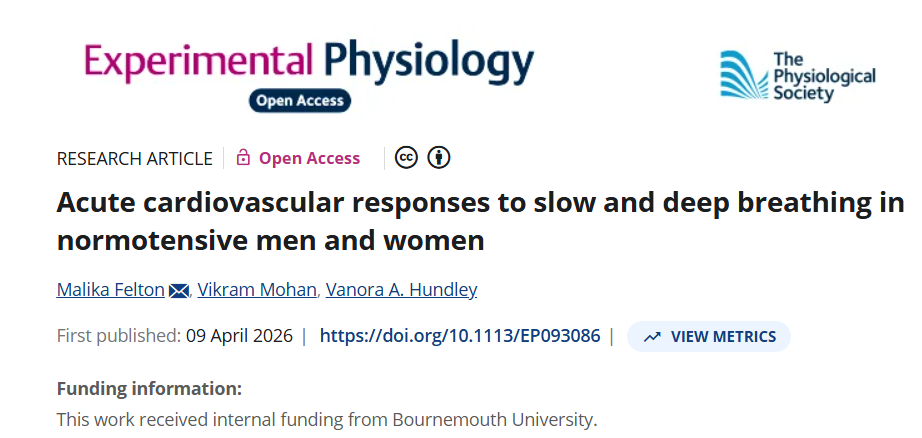
Congratulations to HEMS’s Dr. Malika Felton, Dr. Vikram Mohan and Prof. Vanora Hundley on the recent publication of their academic paper ‘Acute cardiovascular responses to slow and deep breathing in normotensive men and women‘ [1].
The BU authors outline that there differences in cardiovascular responses to different methods of slow and deep breathing (SDB) delivery. They query whether utilising a multi-parametric approach to measuring cardiovascular variables reveal new/different responses. Their key findings are that all SDB conditions elicited similar cardiovascular responses to each other when compared with spontaneous breathing. However, lower breathing frequencies elicit greater blood pressure oscillations, and higher breathing frequencies (∼8 breaths min−1) may not fully optimise cardiovascular responses. This has implications on the practice of SDB for management of hypertension.
Well done!
Prof.Edwin van Teijlingen
Reference:
- Felton, M., Mohan, V., & Hundley, V. A. (2026). Acute cardiovascular responses to slow and deep breathing in normotensive men and women. Experimental Physiology, 01–24. https://doi.org/10.1113/EP093086
BRIAN upgrade and new look
Following a routine upgrade last week, BRIAN is now accessible for use.
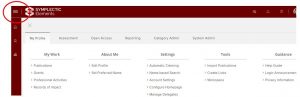
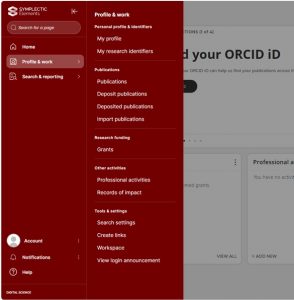
Users will notice that the navigation menu has been repositioned from the top of the screen to a new, left-hand sidebar. The heading bar, and the navigation items included in it, have been consolidated into the sidebar to enable quicker access to essential features and content, and help users more effectively locate the information they need.
Old view
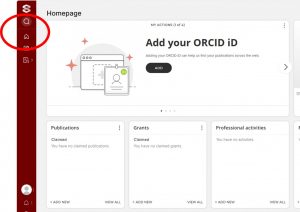
New view
The updated navigation introduces improved interaction patterns, providing a more dynamic and intuitive browsing experience.
- Hovering over the new left-hand sidebar will expand the first layer of navigation.
- Within this expanded menu, you’ll find various sections that can be further explored by mousing over them, revealing additional nested layers where applicable.
- For sub-sections containing more detailed options, these are now presented as nested menus that are collapsed by default, allowing for cleaner navigation while still providing access to lower levels of detail with a simple click.
- Additionally, you can interact with the logo to trigger the menu to open without needing to maintain a hover state.
In addition, the new ‘Find a Page’ search box now appears prominently at the top of the sidebar, allowing users to search for and jump directly to any page without navigating through sections.
We hope the new features will improve your BRIAN experience.
For any questions, email BRIAN@bournemouth.ac.uk
No access to BRIAN 5-6th February
A planned upgrade to the Bournemouth Research Information And Networking (BRIAN) system will take place this week on Thursday 5 and Friday 6 February, during which it will be unavailable.
Please plan your BRIAN usage accordingly to take this period into account.
BRIAN is expected to be fully accessible again by Monday 9 February 2026. While the system’s functionality will remain unchanged following the upgrade, users will notice an updated layout and appearance, including a new sidebar navigation.
For any BRIAN-related queries, please contact BRIAN@bournemouth.ac.uk.
BU paper among top 20 most cited papers
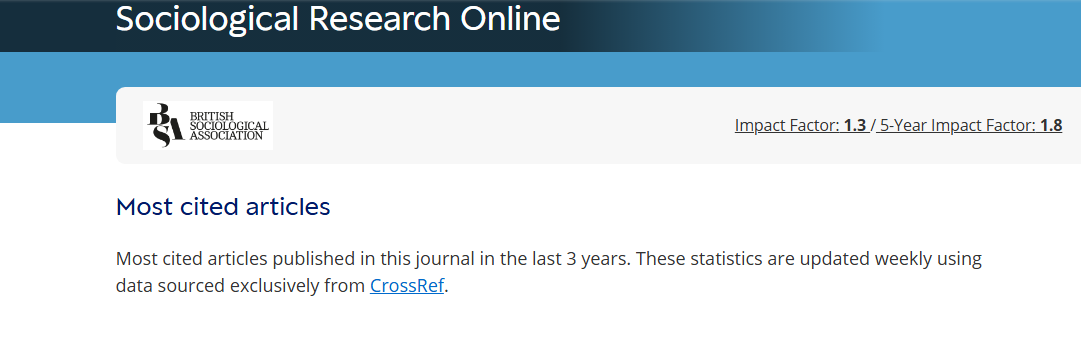
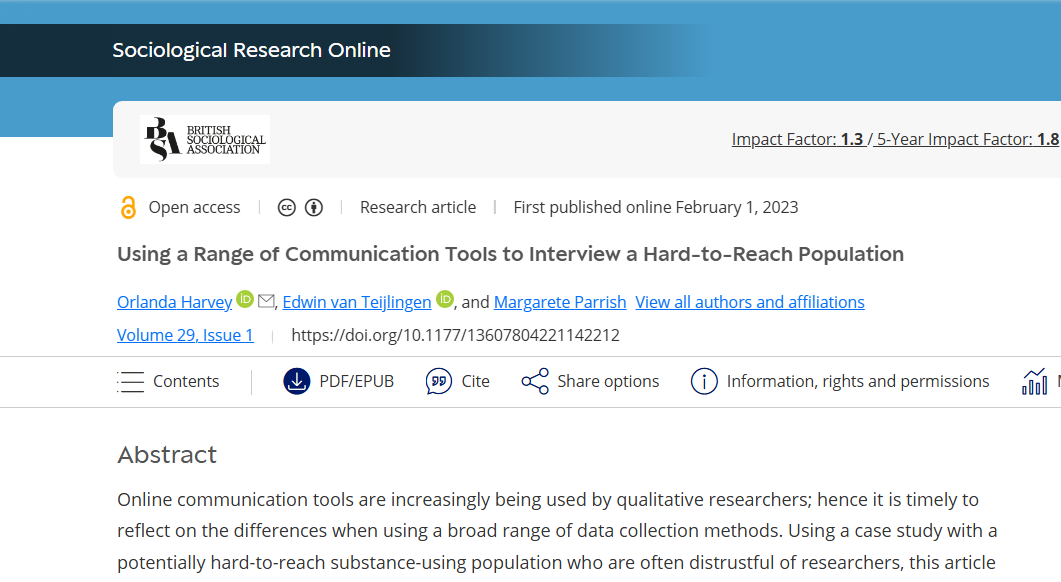
The international journal Sociological Research Online ranked a paper written by Bournemouth University academics in its top twenty most cited papers in the past three years. The methodological paper ‘Using a range of communication tools to interview a hard-to-reach population’ has as lead author Dr. Orlanda Harvey in the Faculty of Health, Environment & Medical Science.
Reference:
- Harvey, O., van Teijlingen, E., Parrish, M. (2024) Using a range of communication tools to interview a hard-to-reach population, Sociological Research Online 29(1): 221–232 https://journals.sagepub.com/doi/pdf/10.1177/13607804221142212
Academic Identity In The Age of AI
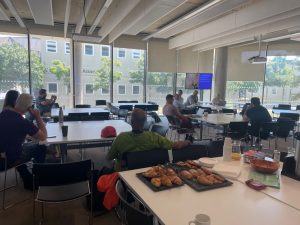
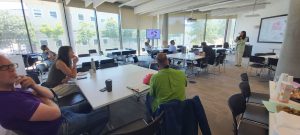
We had the pleasure of organising a thought-provoking session at made possible through funding from British Academy ECRN, focused on one big question: How is AI reshaping who we are as academics?
We were joined by two inspiring speakers:
-Peter Magnani, CEO and founder of BEEM, who shared the development journey of his AI-powered app and how it’s transforming user experiences
-@Prof. Professor Gelareh Roushan-Easton, reflected on how AI is influencing academic practice, from teaching and learning to research and student engagement
-Dr. Samreen Ashraf (organiser of the session) shared her research about identity and the timely nature of the topic considering the rapid changes in higher education.
The heart of the session was an interactive activity where participants explored:
1. How they define their academic identity.
2. Where and how AI intersects with their roles and values
3. The opportunities, tensions, and uncertainties this evolving landscape presents
The conversations were honest, reflective, and energising, reminding us that as AI continues to evolve, so too must our understanding of academic identity.
And finally massive thanks to all involved in this workshop, our guest speakers, audience, BAECRN, and my colleague Marianna for helping with this.
💬 I’d love to hear from others in higher education:
How is AI influencing your professional identity? What excites you or concerns you most about this shift?
Feel free to get in touch with me at sashraf@bournemouth.ac.uk , if you are interested in this topic area 🙂
BRIAN drop-in surgery – Lansdowne
Do you have a question about BRIAN? Need help populating your staff profile page? Then come along to the next BRIAN drop-in surgery!
- Date: Tuesday 17th June
- Time: 13:00-15:00
- Location: BG-315, Lansdowne Campus
Come along to this informal 2-hour drop-in surgery with questions or issues relating to BRIAN, or if you need a refresher on how to update your profile.
No booking is required, just bring your laptop and questions!
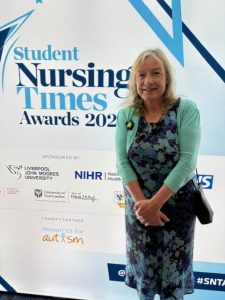
Sarah Morton, PhD student short listed for Nursing Times Award.
Congratulations to Sarah Moreton, PhD student at Bournemouth University, who was nominated and shortlisted for her research into the challenges faced by the nursing workforce in implementing the COVID-19 vaccination programme during the pandemic. A great achievement Sarah – very well done.
The awards bring together the nursing community to celebrate the brightest talent in the profession and to recognise innovation, inclusivity, and patient-centred care. The event aims to honour individuals who go above and beyond to inspire excellence across the nursing and midwifery community, contributing to the advancement of patient care and the healthcare profession as a whole.
The awards showcase innovation, perseverance, and outstanding contributions across 25 categories, spanning a diverse range of nursing specialties—including mental health, community care, inclusivity, and sustainability in nursing and midwifery.
BU academic Anastasia Veneti invited to participate at the prestigious Delphi Economic Forum, 9-12 April 2025 discussing on Radicalism and Challenges on Democracy
BU academic Anastasia Veneti has been invited to participate at the prestigious Delphi Economic Forum X that takes place 9-12 April 2025 at the historic town of Delphi, now a cultural UNESCO World Heritage Site.
Delphi Economic Forum Is a nonprofit, non-partisan organisation working in close cooperation with civil society, public organisations, business and individuals. It engages business, political, academic, and other top experts to address emerging challenges, influence the national and regional agendas and promote sustainable and socially responsible growth policies for Greece, the wider Eastern Mediterranean and Southeast Europe.
Delphi Economic Forum’s annual conference is the organization’s flagship event. Every year in the ancient city of Delphi, it gathers top leaders from across sectors to spark dialogue, inspire change, and transform conversation into action.
The Forum attracts distinguished speakers from across the world. This year’s conference includes more than 800 delegates among which the Greek Prime Minister Kyriakos Mitsotakis, Mathias Cormann, Secretary-General OECD, Rumen Radev, President of Bulgaria, Željka Cvijanović, Chairwoman of Presidency of Bosnia- Herzegovina, Abdullah Al Saud, Ministry of Foreign Affairs Saudi Arabia, Ana Abrudhosa, Minister of Territorial Cohesion of Portugal.
Previous speakers include former UK Prime Minister Tony Blair, Jose M. Barosso, former President of the European Commission and former Prime Minister of Portugal, Jean-Claude Junker, former President of the European Commission, Ekrem İmamoğlu, Mayor of Instabul, Timothy Garton Ash, Oxford University, Richard N. Haass, former President of Foreign Relations, USA and many more.
Dr Veneti will be participating in the panel of ENA Institute for Alternative Policies, discussing on the topic of Varieties of Radicalism: Challenges and Opportunities for Democracy. This panel examines the evolving landscape of radicalism in the 21st century, focusing on the dual dynamics of far-right extremism and the imperative for progressive radicalism. Amid a surge in authoritarian populism and anti-democratic practices, far-right radicalism poses an urgent threat to democratic institutions and values. In response, the panel explores the potential of progressive radicalism to counteract these forces, advocating for transformative policies and inclusive civic engagement to reinvigorate democracy. Panellists will discuss the ideological, cultural, and digital factors driving these radicalisms, from grassroots to digital activism and movements, emphasizing the need for strategies that challenge far-right extremism while fostering a bold, progressive vision for democratic renewal.
When is a ‘new’ paper no longer new?
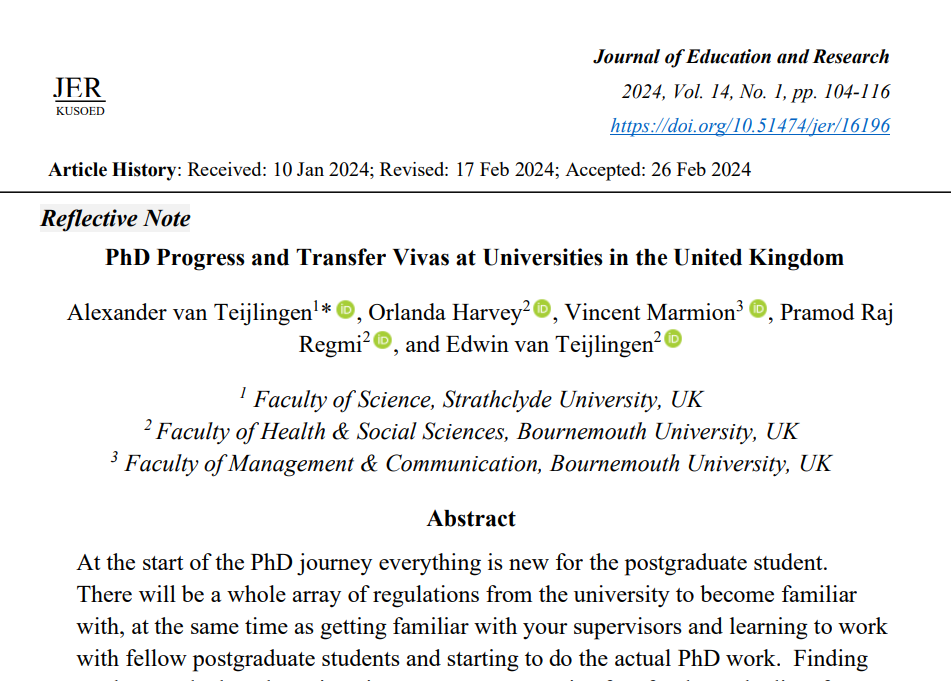
This week we had two new academic papers published online. The first paper was an education one ‘PhD Progress and Transfer Vivas at Universities in the United Kingdom‘ [1] and the second focused on ‘Knowledge, Attitude and Practices of Masters Level Students in the COVID-19 Pandemic‘ [2]. The first paper clearly states “Article History: Received: 10 Jan 2024; Revised: 17 Feb 2024; Accepted: 26 Feb 2024”, the online information for the second paper states: “Published 2024-12-31”, i.e. both are clearly identified as 2024 papers.
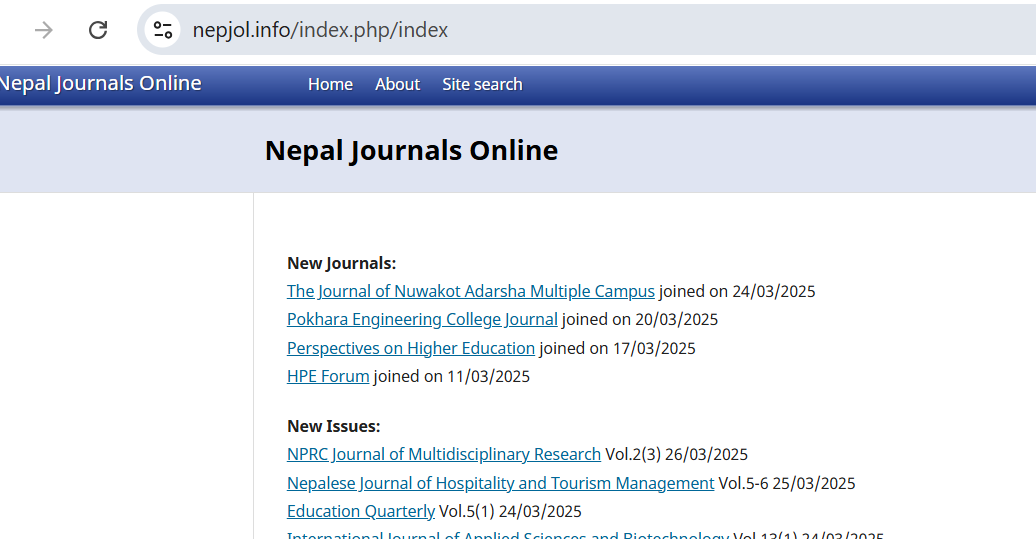
The problem for the authors is that both only appeared online this week. For example, today (27th March 2025) Nepal Journals Online (NepJoL) reports the publication of the latest issue of Education Quarterly, Volume 5 Issue 1, the one in which we published, as 24th March (see picture below). The reason this happens is because the journal editors experienced problems in the past year and did not manage to publish an issue in the calendar year, which makes the publication history look less professional. To avoid having a year missing the most recently published issue is given an official 2024 publication date.
In a world full of problems the minor inconvenience of papers being backdated is twofold for academic authors. First, we can not really announce the publication of a a new Bournemouth University paper since the dated stamped on it is last year’s. Secondly, paper can’t be used for the REF as the acceptance date is also set in the past, for papers to be acceptable for inclusion in REF 2029 typically papers need to be made available on Open Access within three months after the acceptance date .
Prof. Edwin van Teijlingen
Centre for Midwifery & Women’s Health 
References:
- van Teijlingen, A., Marmion, V., Harvey, O., Regmi, P., van Teijlingen, E. (2024) PhD Progress and Transfer Vivas at Universities in the United Kingdom, Journal of Education and Research, 14(1): 104-116, https://doi.org/10.51474/jer/16196
- Pasa, R.B., Khanal, K.P., Khatri, B.B., Adhikari, D., Kharel, S., Sharma, M.K., van Teijlingen, E.R. (2024). Knowledge, Attitude and Practices of Masters Level Students on the COVID-19 Pandemic. Education Quarterly, 5(1): 53–72. https://doi.org/10.3126/jeqtu.v5i1.76745
BRIAN drop-in surgery, 11th March.
Do you have a question about BRIAN or your staff profile page? Then come along to the next BRIAN drop-in surgery!
- Date: Tuesday 11th March
- Time: 14:00-16:00
- Location: F203, Talbot Campus
Come along to this informal 2-hour drop-in surgery with questions or issues relating to BRIAN, or if you need a refresher on how to update your profile.
No booking is required, just bring your laptop and questions!
Deposit function in BRIAN unavailable 11-12th February 2025
Please be aware that there will be a planned upgrade to BURO taking place 11-12th February. During this time, authors will not be able to deposit outputs into BURO via BRIAN.
Please do plan your use of the outputs deposit function in BRIAN accordingly to take this period of disrupted functionality into account.
For all BURO and BRIAN related queries, please email BURO@bournemouth.ac.uk and BRIAN@bournemouth.ac.uk respectively.
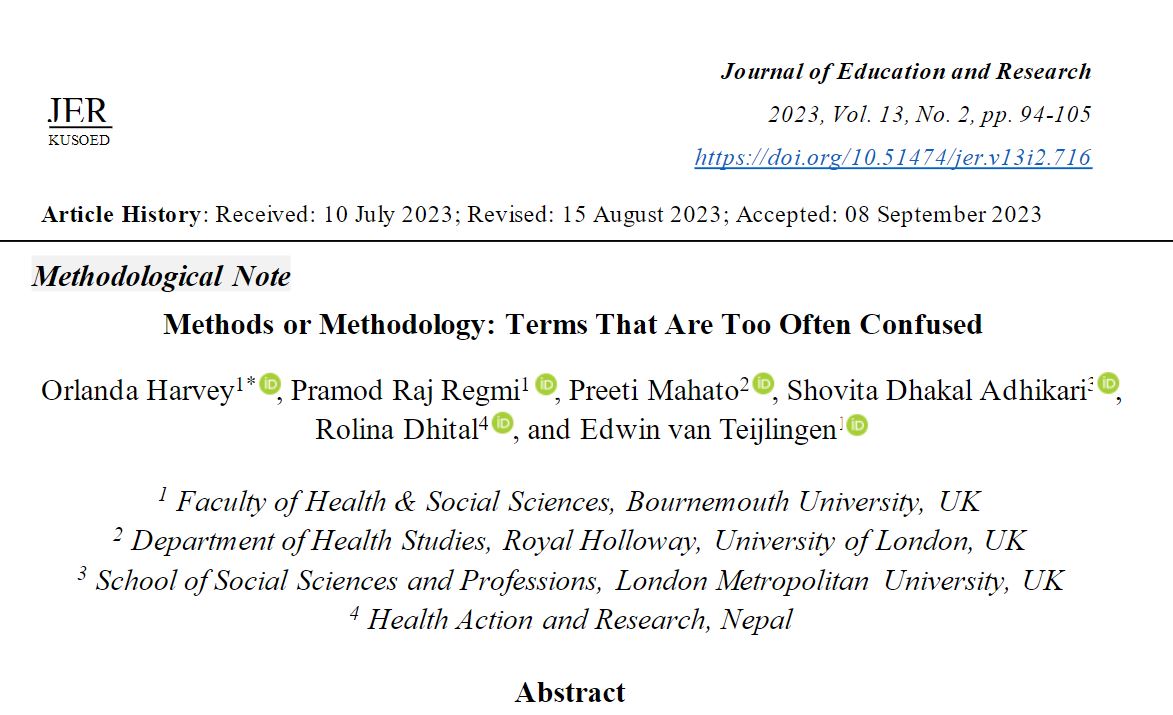
Methods or Methodology paper: 300+ reads
Last month ResearchGate informed us that our paper ‘Methods or Methodology: Terms That Are Too Often Confused’ has been read 300 times [1]. This paper started as a discussion among the authors about how many students, researchers, and authors of academic papers do not seem to know the difference between methodology and methods. This is true in many academic disciplines.
In simple terms, the term methods refers to the research tools and techniques; for example, in the qualitative field, interviews are a tool to collect data, and in the quantitative field, a questionnaire-based survey is an example of a data collection tool. Methodology is a broader concept as it refers to the overall approach to the research, includes a justification for this approach, and links to research philosophy, i.e., how we produce knowledge. This methodological note aims to explain the confusion, drawing on examples from the published literature in education research and beyond. It also considers the complexities and crossovers. The final section ends with key advice to researchers and authors on key mistakes to avoid regarding the difference between methods and methodology, including covering this in early supervision discussions.
Prof. Edwin van Teijlingen
Reference:
- Harvey, O., Regmi, P.R., Mahato, P., Dhakal Adhikari, S., Dhital, R., van Teijlingen E. (2023) Methods or Methodology: Terms That Are Too Often Confused. Journal of Education & Research, 13(2): 94-105. https://doi.org/10.51474/jer.v13i2.716
Academic Conferences Engagement: ISBE 2024
This November, supported by a BU Women’s Academic Network Small Research Grant and a BUBS QR grant, I presented my paper on Refugee Women, Entrepreneurship and Acceptance and Legitimacy at the Institute of Small Business Entrepreneurship (ISBE) Conference 2024 at Sheffield, UK.
The conference, titled ISBE 2024- Research, Policy and Practice for a More Equitable World, is one of the most significant occasions annually for academics in the UK and beyond whose contributions to the domain of small business entrepreneurship is not only limited to the academic journals but are strongly influential in policy design. The ‘More Equitable World’ in the conference title alludes to the changing nature of the world we inhabit- one where we are recognising more and more every passing day, that the existing economic models are not relevant anymore. Most of the discussions at the conference were connected to the wider global challenges underpinned by UN Sustainable Development Goals.
In the subject domain of entrepreneurship, we talk of the entrepreneurial process- one marked by dealing with uncertainty (Knight, 1921), uncertainty of the perfect kind- one that is not just unknown but unknowable. One might argue- but all uncertainty is like that isn’t it? Not if you look at our own human propensity to ambiguity aversion and risk taking- we are much more likely to contend with known risks then unknown risks. We engage in behaviour most of the time to lower our risks; we like clarity, we like to reduce ambiguity ( Ellsberg, 1961). But expert entrepreneurs, as Saras Sarasvathy suggests, are those who accept the perfectly unknowable nature of the future and yet they are comfortable with the uncertainty that comes with it because they remain open to opportunities, remain flexible, adaptable and open to change.
The Covid-19 pandemic brought with it an acceptance that we cannot, for the best of all the risk assessments undertaken, foresee the future. The smallest of mircoorganisms became the biggest disruptor in the marketplace and for humankind. Overnight, digital transformation was the demand of the marketplace. The acceleration of digitisation expected and demanded of smaller enterprises meant business survival was nigh impossible. But the human spirit, seen through the lenses of entrepreneurial spirit, prevailed. The world witnessed a (re)emergence of entrepreneurial leadership through creation of startups globally, focused on the taking small incremental steps to solving the grand challenges facing the planet and humanity. This had happened before when the 2008-2010 financial crisis occurred– as traditional for-profit businesses took a major hit, we saw in their wake, a growth in startups channelling their energies into creating economically sound business models which support communities and causes.
I reflect on this continually through my taught units in Entrepreneurship at BU and through my research. And I see this reflection in the world of academia and business around me. At ISBE 2024 this year, I had the privilege of engaging with individuals who are making profound impact on policy and society (economy after all must serve the needs of the society- it is not decoupled). Some of the discussions were on Inclusivity in entrepreneurship with focus on neurodivergence and the path of entrepreneurship; gender gap in entrepreneurship; focus on how to make finance equitable for all in the context of business startups; focus on newer economic models relevant to our current times.
My research focus is on marginalisation and entrepreneurship- gender bias in entrepreneurial finance; gendered roles and entrepreneurial experience; refugee crisis and integration into society through entrepreneurship. It was a breath of fresh air to witness how openly policy makers and highly influential academics are talking about how it is high time to stop talking about the problem e.g. Gender Bias and work to a solution that is real. There is no dearth of evidence on the problem of the gender gap in entrepreneurship. The last I checked it was a 3-6% loss to global GDP to the region of nearly USD 5 trillion. Inclusivity, just in the context of the binary gender gap here, is not just an argument of social justice and fairness (which would be a very strong argument) but an economic one.
My participation at the conference was facilitated by funding from the Women’s Academic Network at Bournemouth University (BU) and BU Business School QR funds. The value of the grants was not just limited to the paper presentation at the conference but is poised to lead to bigger outcomes in the form of collaborative research, joint external bid applications and public engagement.
Although I have had papers accepted at conferences in the last few years but this was the first conference I had physically attended (barring an online one in 2023) after a hiatus of nearly 4 years. Those 4 years began with the pandemic lockdown year of course and then life took over. The context of gender issues in entrepreneurship is not dissimilar to that of women or mother academics* or women in other industry sectors. Recently, I came across an interview with Indra Nooyi, former CEO of PepsiCo, who said that the work-life ‘balance’ is problematic; we ought to strive for work-life juggle. Not sure what you make of it, but I hear it from the perspective of a woman academic who wishes to make a positive impact through her work and also create a positive family experience. And in that process, relying on support network(s) and grants such as the ones I had are critically important. As I found through one of my recent research studies, social relationships (within family or externally) provide the much needed ‘propping up’ allowing women ( entrepreneurs) to work towards their (business) aspirations.
Participation at conferences is not just limited to academic feedback on papers; it is way beyond that- it becomes a supportive network; it is inspiration; intellectual stimulation; professional networking; creating a collaborative space for future projects; creating opportunities of PhD candidates; connecting with policy makers and ultimately, human connectedness that we all crave. For women academics like me, I feel it is a priceless experience. One that I would be looking forward to repeating more often.
- The blogpost refers to gender in the binary only.
BRIAN drop-in surgery – Lansdowne
BRIAN drop-in surgery
Date: November 26th
Time: 13:00-15:00
Location: BG-217, Lansdowne Campus
Come along to this 2-hour drop in surgery if you have any questions or issues relating to BRIAN, or if you need a refresher on how to update your profile.
No booking is required, just come along with your laptop and questions!
BU does well in offering Open Access publications
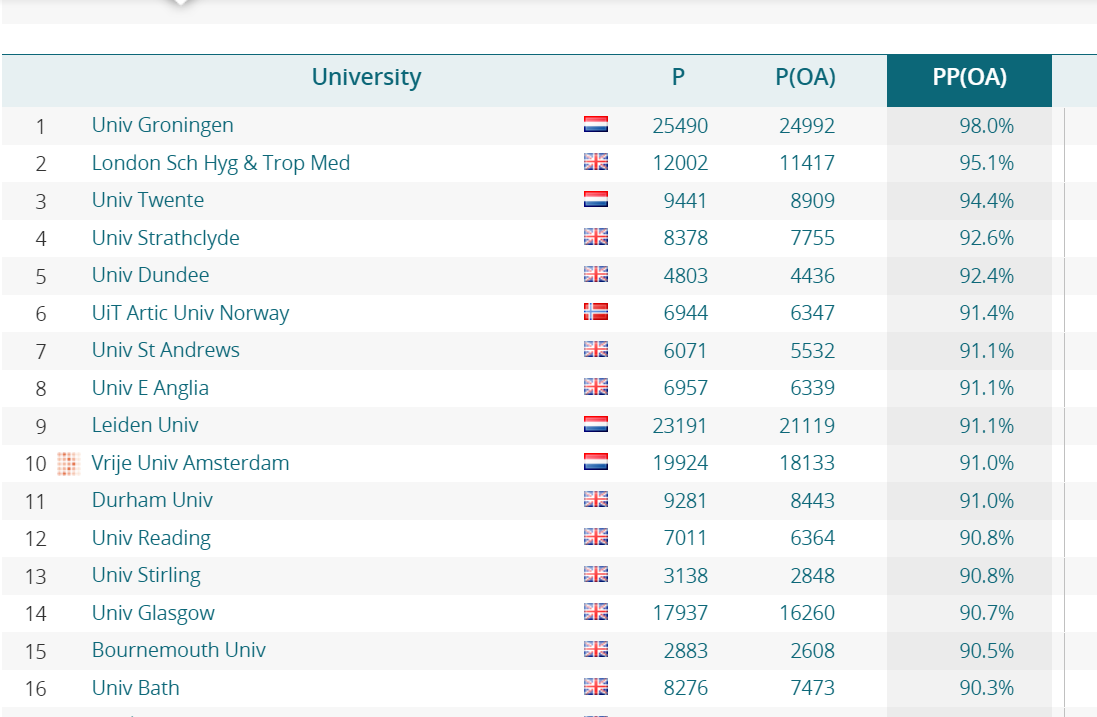
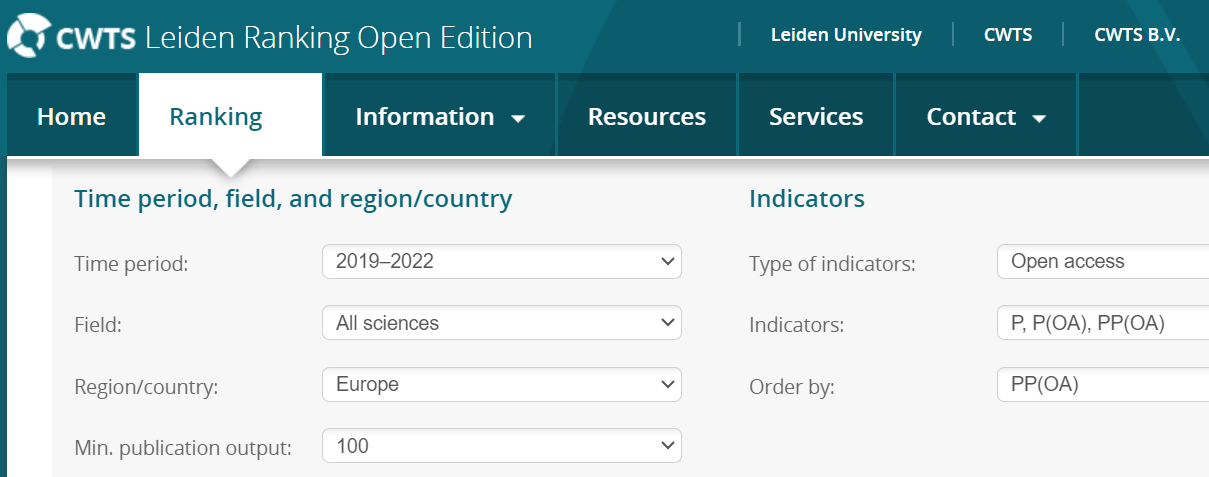
The latest online CWTS Leiden Ranking Open Edition lists Bournemouth University (BU) high among European universities when it comes to making academic papers easily available through Open Access. For all sciences combined BU ranks 15th out of 491 European universities when it comes to hybrid Open Access publications. BU ranks 12th out of 487 universities for the category ‘Biomedical & Health Sciences’ and 14th out of 475 universities in Europe for ‘Social Sciences & Humanities’.
The University of Leiden in the Netherlands compiles the CWTS Leiden Ranking Open Edition, and offers fully transparent information about the scientific performance of over 1500 major universities worldwide.
Prof. Edwin van Teijlingen
Research Culture Champion in the Faculty of Health & Social Sciences
BRIAN drop-in surgery – Talbot Campus
BRIAN drop-in surgery
Date: September 18th
Time: 10:00-12:00
Location: F203, Talbot Campus
Come along to this 2-hour drop in surgery if you have any questions or issues relating to BRIAN, or if you need a refresher on how to update your profile.
No booking is required, just come along with your laptop and questions!


BU students’ publishing success
BU presentation at the University of Bristol

Art and Design: History, Practice and Theory academics – would you like to get more involved in preparing our next REF submission?

UKCGE Recognised Research Supervision Programme: Final Deadline Reminder

The significance of Rights and Protocols in Disaster Response

Horizon Europe Cluster 3 (Civil Security for Society) 2026 Calls Now Open

MSCA Doctoral Networks 2026 Call Information Webinar

ESRC Festival of Social Science 2026: Application Deadline Extended to Thursday 25 June 2026

Reminder: Register for the ESRC Festival of Social Science 2026 Information Session

ECR Funding Open Call: Research Culture & Community Grant – Apply now

ERC Advanced Grant 2025 Webinar
Update on UKRO services
European research project exploring use of ‘virtual twins’ to better manage metabolic associated fatty liver disease