Category / BRIAN

BRIAN upgrade feature – add new items

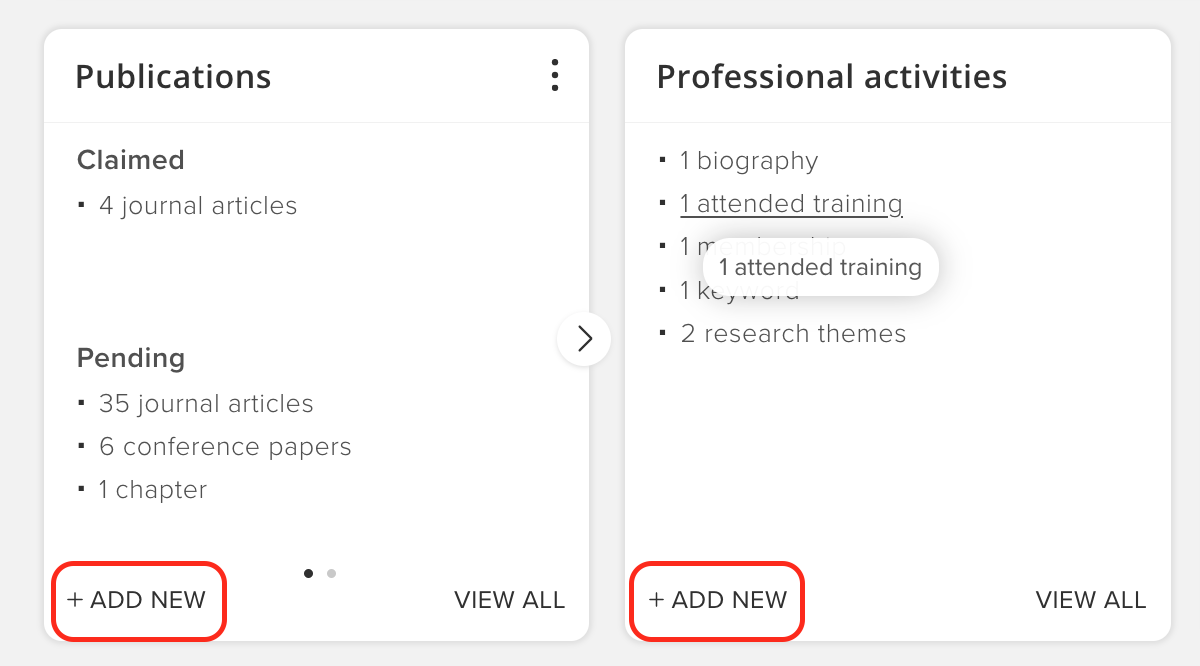
Similar to the current system, after BRIAN has been upgraded, you can add new items for each different element by clicking on the “add” button under each tile –

This function is also similar for the “Grants” and “Records of Impact” tiles.

There will be a planned upgrade to BRIAN taking place beginning the week commencing 19th April, during which time BRIAN will be unavailable for use. The planned upgrade is expected to take place all week, therefore we are hoping for BRIAN to resume running again by 25th April 2022 (if not earlier).

For all BRIAN related queries, please email BRIAN@bournemouth.ac.uk

BRIAN upgrade feature – the publications tile

As mentioned last week, after the BRIAN upgrade, you can look forward to seeing the different elements within your BRIAN account represented by its own ’tile’ on the homepage –

Let’s now take a closer look at the “Publications” tile –

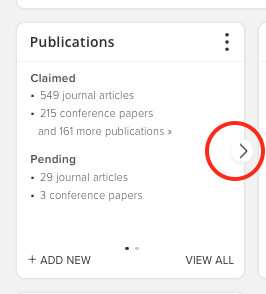
By default, your “Publications” tile shows you a condensed summary list view of your publications within your BRIAN account.

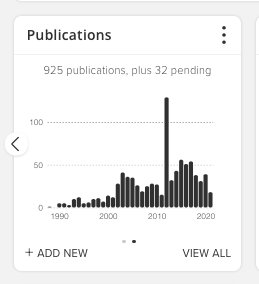
When you click on the right arrow key, you will then get to see the ‘graph’ view instead –

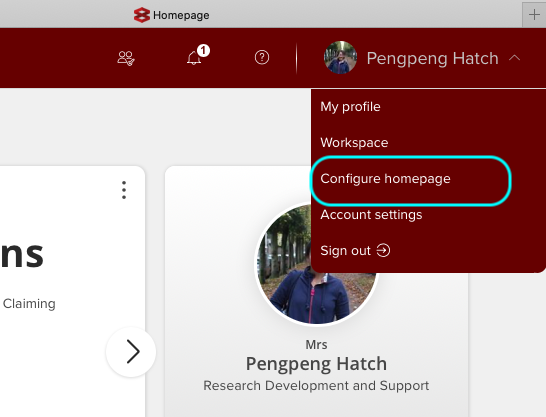
Clicking on the left arrow key will take you back to the list view. As mentioned, the publication “list” view is the default setting within your account; however, you can change the default view to “graph” if you wish, by clicking on the “configure homepage” option within the drop-down menu underneath your profile –

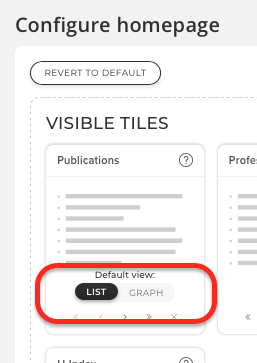
And by clicking on “graph” as shown below –

There will be a planned upgrade to BRIAN taking place beginning the week commencing 19th April, during which time BRIAN will be unavailable for use. The planned upgrade is expected to take place all week, therefore we are hoping for BRIAN to resume running again by 25th April 2022 (if not earlier).

Do stay tuned for more exciting new features from the BRIAN upgrade!

For all BRIAN related queries, please email BRIAN@bournemouth.ac.uk

BRIAN upgrade feature – the homepage

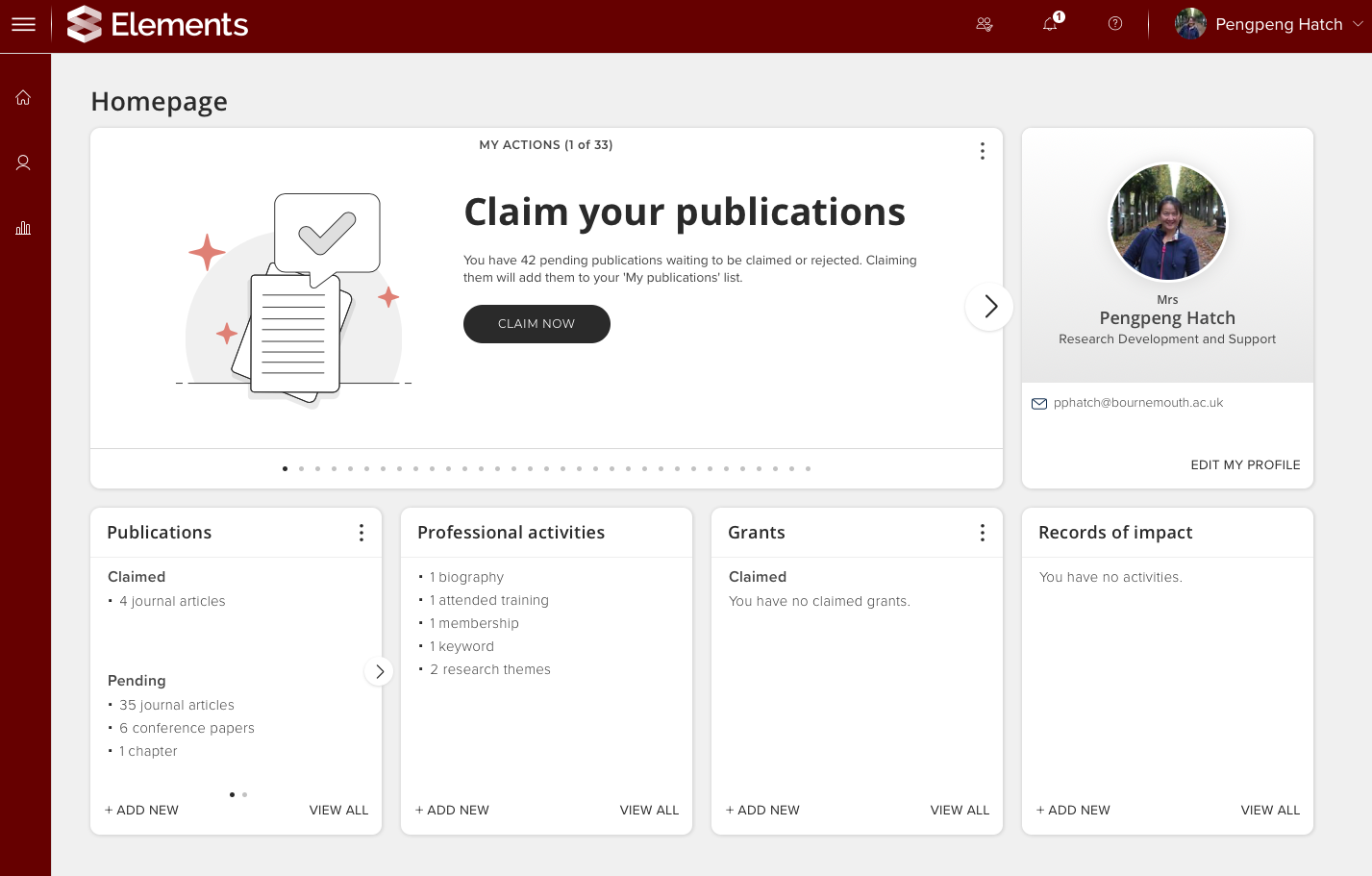
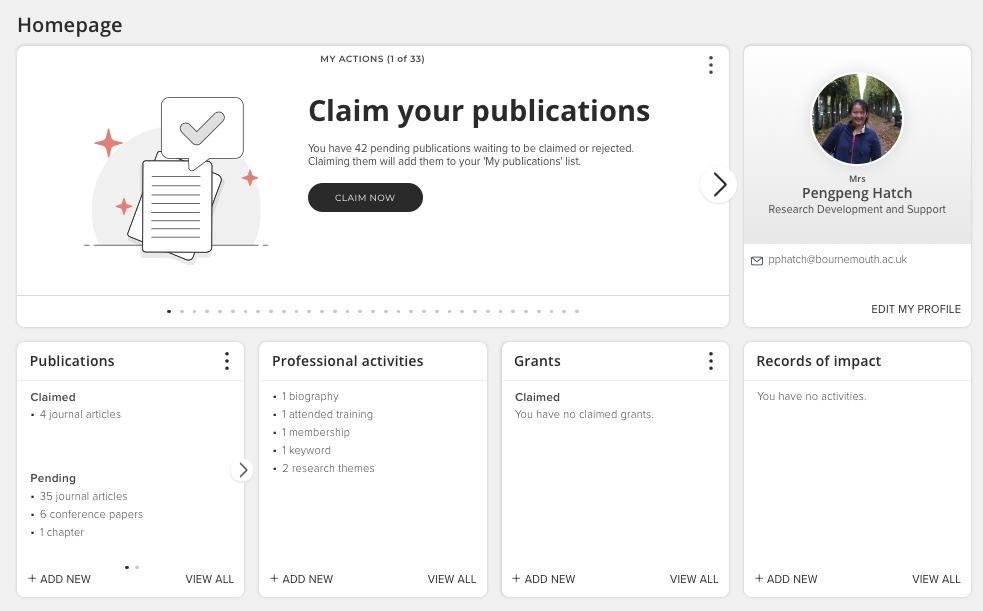
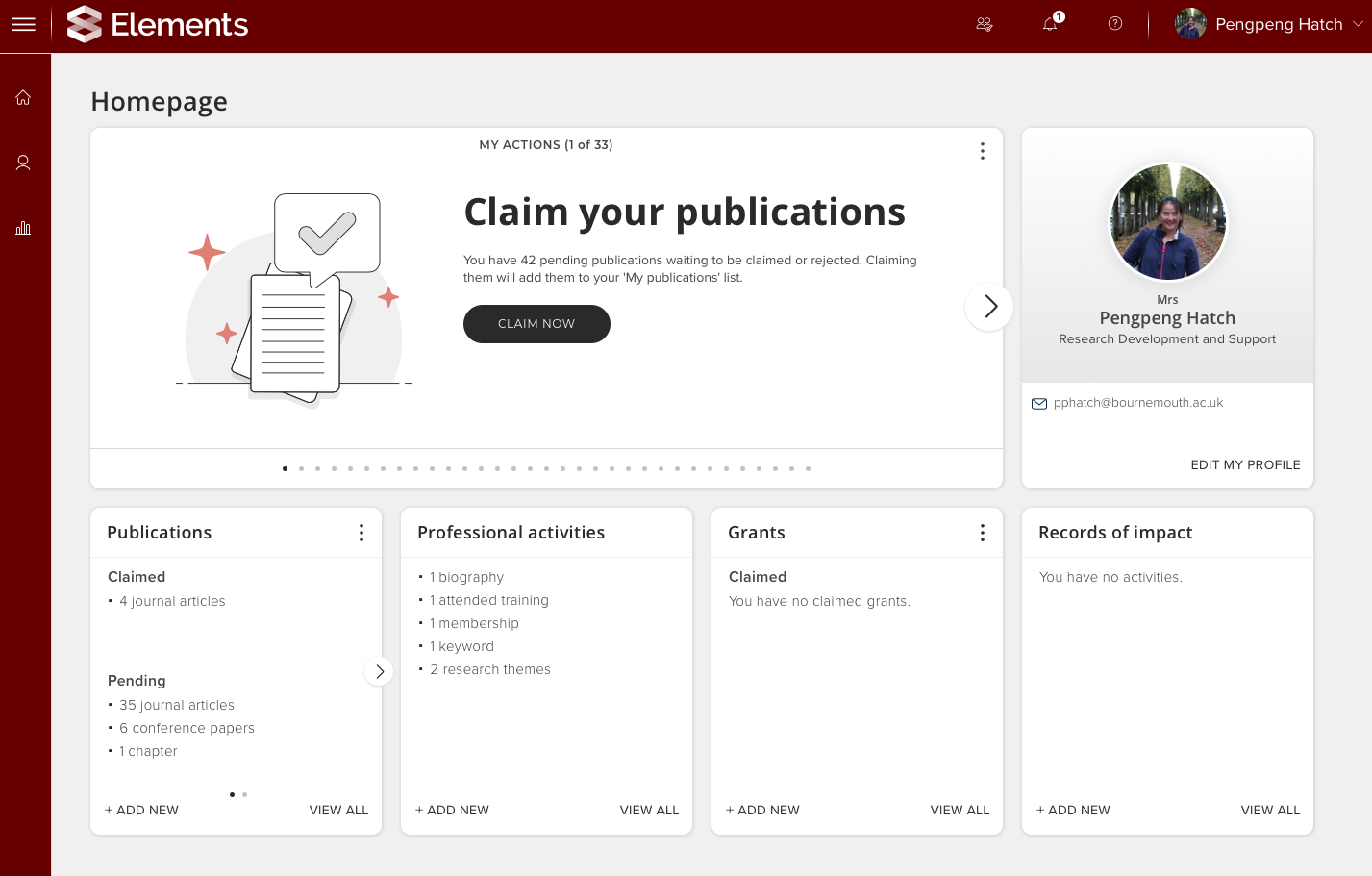
As mentioned last week, after the BRIAN upgrade, you can look forward to seeing a much more consistent and a “cleaner” feel to the overall look of the homepage –

The tiles for each core elements of “publications”, “professional activities”, “grants” and “records of impact” are now in the same shape and size and they are neatly arranged. If you refer to a previous post about this particular feature, you can also find out how you can customise this homepage.

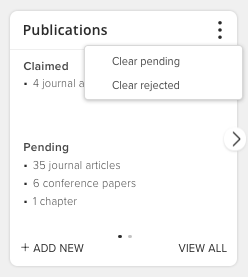
If you look closely at the top right corner of the “Publications” and “Grants” tiles, you will also notice a feature that will allow you to quickly clear any “pending” or “rejected” publications –

There will be a planned upgrade to BRIAN taking place beginning the week commencing 19th April, during which time BRIAN will be unavailable for use. The planned upgrade is expected to take place all week, therefore we are hoping for BRIAN to resume running again by 25th April 2022 (if not earlier).

Do stay tuned for more exciting new features from the BRIAN upgrade!

For all BRIAN related queries, please email BRIAN@bournemouth.ac.uk

BRIAN upgrade feature – My Actions summary box

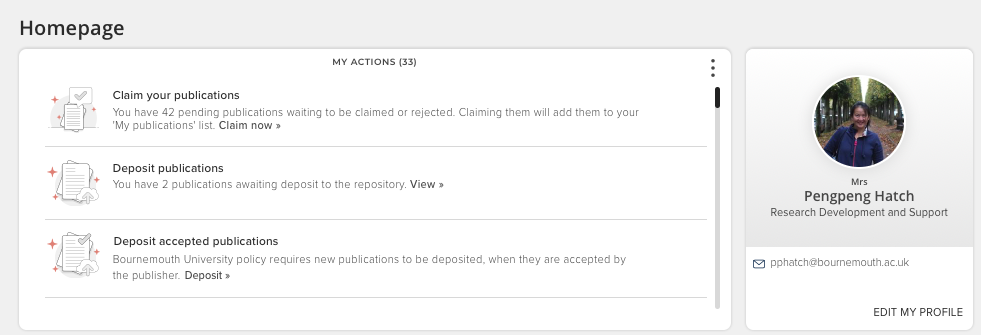
When you first log into BRIAN after the upgrade, similar to the current version, you will notice the “My Actions” box at the top, next to your profile picture. The functionality which has been retained is the ability to switch the actions to either a “carousel” or “list” view by clicking on the three dots to the top right corner –

If you switch it to the list view, it will look like this –

The advantage of the “list” view is that it allows you to have an overview of all the pending actions, and for you to act on them quickly and easily.

There will be a planned upgrade to BRIAN taking place beginning the week commencing 19th April, during which time BRIAN will be unavailable for use. The planned upgrade is expected to take place all week, therefore we are hoping for BRIAN to resume running again by 25th April 2022 (if not earlier).

Do stay tuned for more exciting new features from the BRIAN upgrade!

For all BRIAN related queries, please email BRIAN@bournemouth.ac.uk

BRIAN upgrade feature – customising your homepage

There will be a planned upgrade to BRIAN taking place beginning the week commencing 19th April, during which time BRIAN will be unavailable for use. The planned upgrade is expected to take place all week, therefore we are hoping for BRIAN to resume running again by 25th April 2022 (if not earlier).

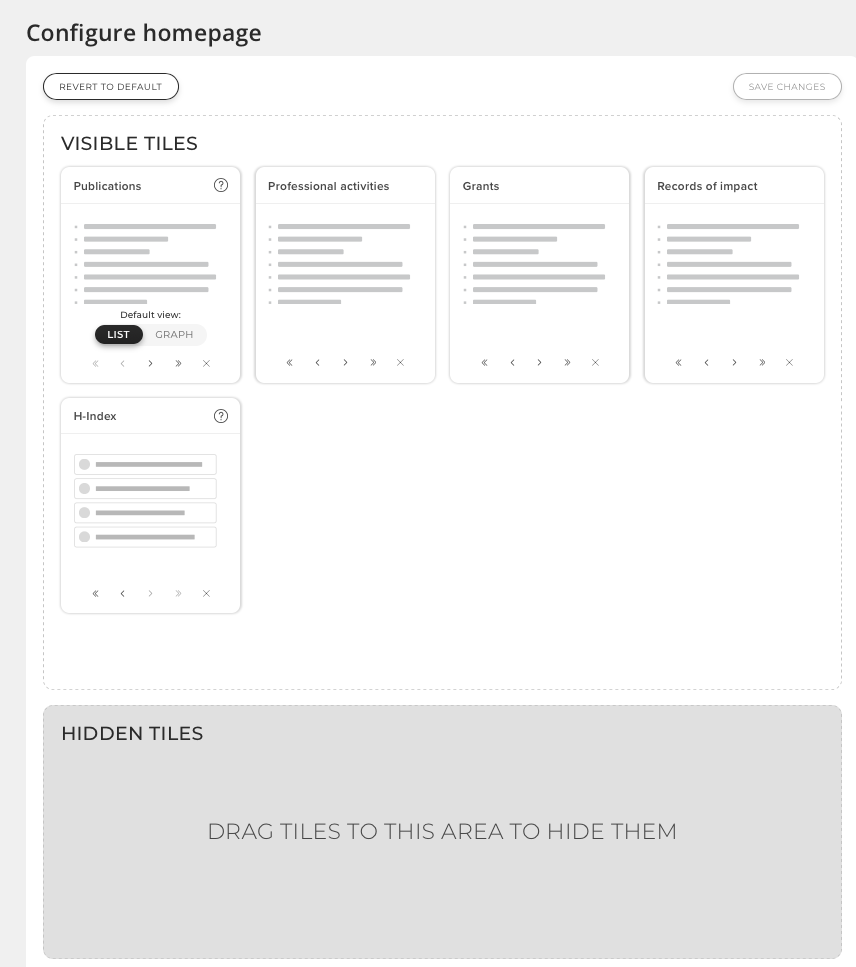
When you first log into BRIAN, you will notice that the “homepage” has completely been revamped. However, upon close inspection, you will discover that all functionalities remain the same. One notable improvement about the homepage from this upgrade is that it allows you to customise your own homepage, as circled –


The customisation functionality allows you to rearrange the “tiles” as how you would like them to appear on your BRIAN homepage; it will also allow you to hide certain “tiles” if you do not wish for them to be visible on your homepage –

Do stay tuned tomorrow for more exciting new features from the BRIAN upgrade!

For all BRIAN related queries, please email BRIAN@bournemouth.ac.uk

BRIAN is getting a new look!

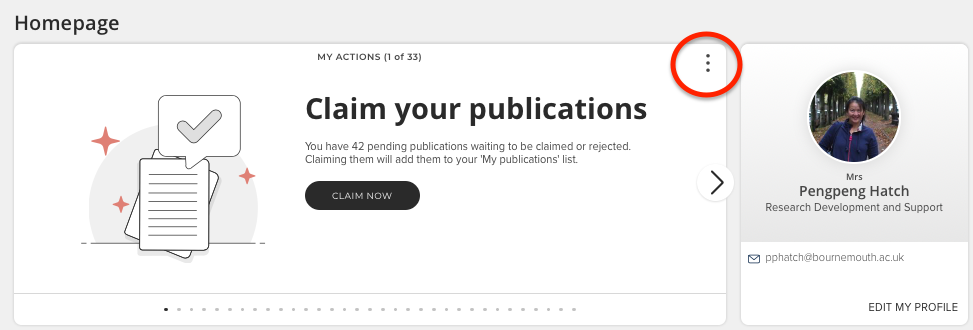
In approximately less than three weeks, we can all look forward to BRIAN getting a brand new look! 

There will be a planned upgrade to BRIAN taking place beginning the week commencing 19th April, during which time BRIAN will be unavailable for use. The planned upgrade is expected to take place all week, therefore we are hoping for BRIAN to resume running again by 25th April 2022 (if not earlier).

In the next few days, there will be a feature post on BRIAN on each day, showcasing the changes that you can expect from this upgrade. Today, we will start by showing you the “Homepage” when you first log into BRIAN –

Stay tuned for tomorrow’s feature post where you can see how you can customise this homepage!

For any questions or queries you have regarding BRIAN, please email BRIAN@bournemouth.ac.uk


New publication from the Department of Psychology

A paper titled, Individual factors in the relationship between stress and resilience in mental health psychology practitioners during the COVID-19 pandemic” is now published in Journal of Health Psychology and is available at https://doi.org/10.1177/13591053211059393.

This paper is an outcome of a QR funded project that was conducted by Dr Constantina Panourgia, Dr Agata Wezyk and Dr Ala Yankouskaya from the Department of Psychology in collaboration with academics from University of West London (Dr Annita Ventouris) and Catholic University of Lyon (Dr Amanda Comoretto) and a former BU MSc student (Miss Zoe Taylor).

This  paper explores the concurrent effects of pre-pandemic and COVID-19 stress on resilience in Mental Health Psychology Practitioners focussing on the mediation effects of specific individual factors. Optimism, burnout and secondary traumatic stress, but not coping strategies, self-efficacy, compassion satisfaction, or self-compassion, mediated both the relationship between pre-pandemic stress and resilience and COVID-19 stress and resilience. These findings may be explained by the increased workload caused by the pandemic, and the nature and duration of COVID-19. Very importantly, they address the role of training and supervision practices that allow Mental Health Psychology Practitioners to reflect on their capacity to deal with their job demands under circumstances of general and extreme stress and to identify early signs of burnout and secondary traumatic stress.

The research team plans to extend the above findings by examining the long-term effects of vicarious traumatisation on this group of professionals currently performing their duties in this complex historical moment.

NEW UKRI Open access policy

UKRI announced its new open access policy in August 2021.

This policy applies to publications which need to acknowledge funding from UKRI or any of its councils. This includes funding from:

  • the research councils
  • Research England
  • Innovate UK.

It aims to ensure that findings from research funded by the public through UKRI can be freely accessed, used and built on.

The policy applies to:

  • peer-reviewed research articles submitted for publication on or after 1 April 2022
  • monographs, book chapters and edited collections published on or after 1 January 2024.

Please see this link for the full policy document and other related information and details –

https://www.ukri.org/publications/ukri-open-access-policy/

BRIAN unavailable due to upgrade – 2nd & 3rd August!

Just a reminder that BRIAN will be unavailable to users today and tomorrow, Monday, 2nd August and Tuesday, 3rd August for a scheduled upgrade.

If you need any help using the new system or if you encounter any problems after the upgrade, please do send an email to BRIAN@bournemouth.ac.uk and a member of staff will be able to assist you.

In the meantime, if you do have general queries relating to the upgrade, please get in touch with BRIAN@bournemouth.ac.uk

Further information will be available once BRIAN is up and running again following the scheduled upgrade.

BRIAN will be unavailable due to upgrade – 2nd & 3rd August 2021

BRIAN will be unavailable to users next week on Monday, 2nd August and Tuesday, 3rd August for a scheduled upgrade.

If you need any help using the new system or if you encounter any problems after the upgrade, please do send an email to BRIAN@bournemouth.ac.uk and a member of staff will be able to assist you.

In the meantime, if you do have general queries relating to the upgrade, please get in touch with BRIAN@bournemouth.ac.uk

Further information will be available once BRIAN is up and running again following the scheduled upgrade.

Open Access @ BU – An overview

Open Access

Open access is a broad international movement that seeks to grant free and open online access to academic information, such as publications and data. A publication is defined ‘open access’ when there are no financial, legal or technical barriers to accessing it – that is to say when anyone can read, download, copy, distribute, print, search for and search within the information, or use it in education or in any other way within the legal agreements. 

Open Access Funding @BU

Bournemouth University is unfortunately not a current recipient of the UKRI Open Access block grant. However, there is a small centralised BU Open Access Fund that BU authors can get access to on a competitive basis. Due to a very limited budget, application for funding is extremely competitive, and the selection criteria are stringent. In the past years, through the centralised open access fund, Bournemouth University has been able to support open access outputs from various impactful key research, including Epibentic and mobile species colonisation of a geo textile artificial sur reef on the south coast of England, Dignity and respect during pregnancy and childbirth: A survey of the experience of disabled women, Seven Characteristics Defining Online News Formats, Applied screening tests for the detection of superior face recognition, and many more!

Open Access Funding through Transformative Deals

Through the UK JISC Agreements, Bournemouth University currently has Read and Publish open access transformative deals with publishers such as BMJ, SAGE, Springer and Wiley, which means that BU authors can publish open access for free in the journal titles covered under the deals, subject to their terms and conditions. Each transformative deal and what it covers varies from one another. For example, the BMJ transformative deal only covers original research articles from research funded by UKRI, British Hearth Foundation, Blood Cancer UK, Cancer Research UK, Parkinsons UK, Versus Arthritis or the Wellcome Trust. As for the SAGE transformative deal, there is no such restrictions; however, you can only publish open access for free under a select list of journal titles.

In order to ensure that you get the maximum benefit from these transformative deals, do head over to the Bournemouth University Library and Learning Support guide for more details and information!

Green Open Access @ BU

Green Open Access, also referred to as self-archiving, is the practice of placing a version of an author’s manuscript into a repository, making it freely accessible for everyone. The version that can be deposited into a repository is dependent on the funder or publisher. You can make use of the Sherpa Romeo online resource to check the copyright policies of your target journal or publisher. At Bournemouth University, the self-archiving process is done through our current research and information system called BRIAN (Bournemouth Research Information and Networking); and all successfully reviewed and deposited manuscripts will be housed in our institutional repository called BURO (Bournemouth University Research Online).

Stay tuned for the next segment where we’ll be talking more about “Open Access @ BU & how it works!”