Tagged / Centre for Social Work

New BU Social Work paper published this week

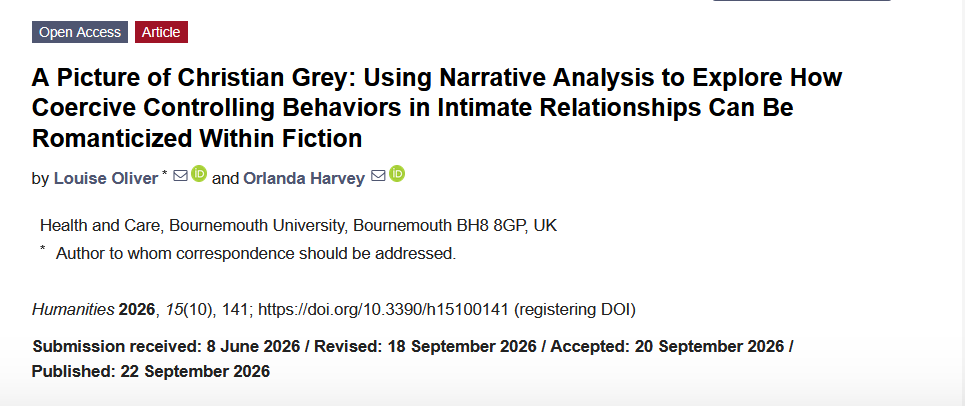
Congratulations to Dr. Louise Oliver and Orlanda Harvey on yesterday’s publication of ‘A Picture of Christian Grey: Using Narrative Analysis to Explore How Coercive Controlling Behaviors in Intimate Relationships Can Be Romanticized Within Fiction’ in the academic journal Humanities [1]. Intimate Partner Violence and Abuse (IPVA) is a public health phenomenon due to its prevalence and impact across the world.

The authors examine how coercive and controlling behaviors within intimate relationships are obfuscated, in other words, thrown into the shadows, romanticized, and normalized within romantic fiction, further adding to this global issue. Fifty Shades (novel series) - Wikipedia The “Fifty Shades of Grey” series is interpreted through the use of narrative analysis and the framework of Craven’s “Dominator” model. This illustrates how the distinct perpetrator personas, the Headworker, the Persuader, the King of the Castle, the Jailer, the Liar, the Bully, and the Sexual Controller, are present in the actions of the male protagonist throughout the series of books. This paper identifies how these books portray such behaviors that are used to coerce and control as desirable expressions of protection, masculinity, desire, and love. This paper, therefore, suggests that such texts contribute to the normalization of abusive relationships, embedding them within the cultural ideals of romantic love and, therefore, sustaining abusive relationships.
Well done!

Prof. Edwin van Teijlingen

Centre for Midwifery & Women’s Health


Reference:

  1. Oliver, L., & Harvey, O. (2026). A Picture of Christian Grey: Using Narrative Analysis to Explore How Coercive Controlling Behaviors in Intimate Relationships Can Be Romanticized Within Fiction, Humanities 15(10): 141. https://doi.org/10.3390/h15100141

BU Prof Jonathan Parker promoting social work in Malaysia

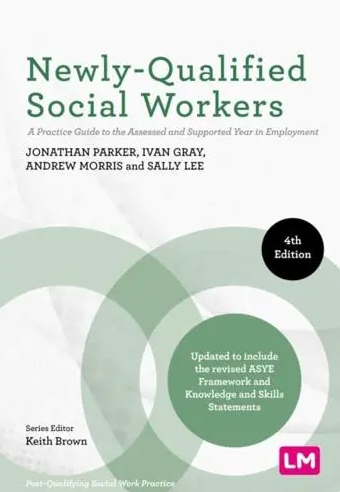
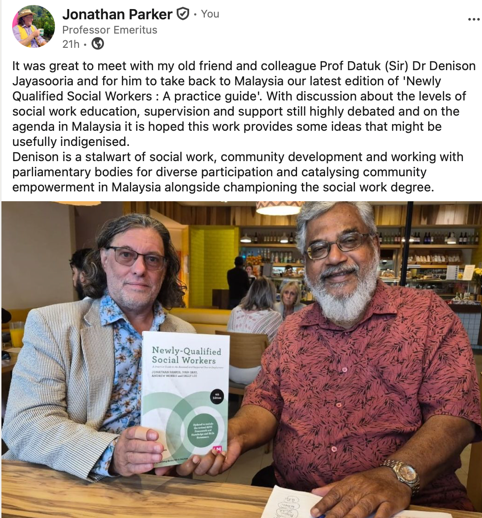
BU Professor Emeritus Jonathan Parker recently discussed his recently published latest edition of the book Newly-Qualified Social Workers: A Practice Guide to the Assessed and Supported Year in Employment to Prof. Denison Jayasooria from Malaysia.  Prof. Parker has a longstanding collaboration with social work researchers in Malaysia, for example in the field of social work education or the inclusion of indigenous people’s voices in the UN Sustainable Development Goals (SDG).

When is a ‘new’ paper no longer new?

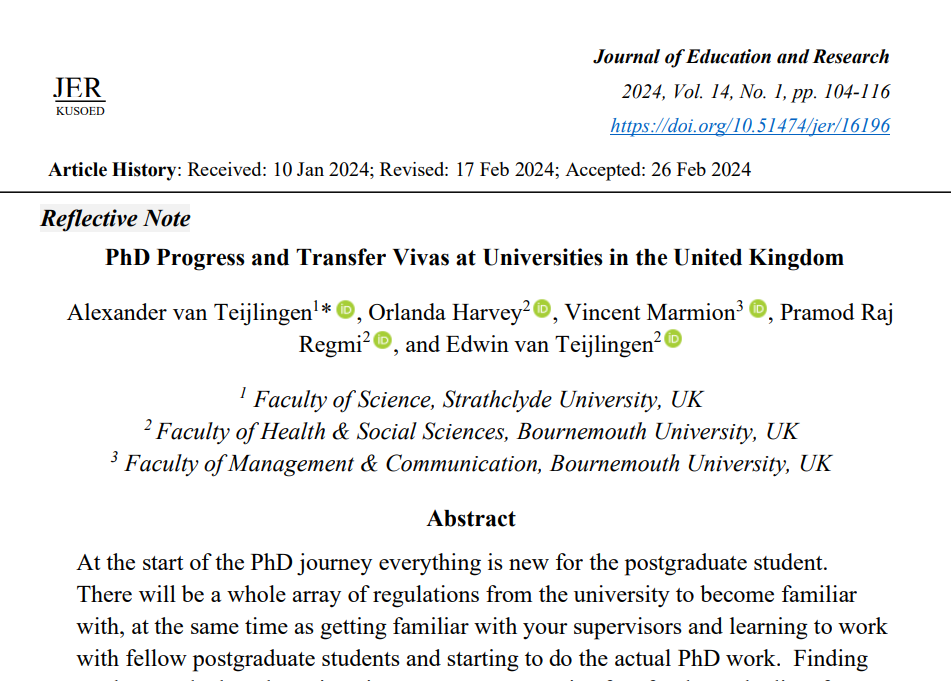
This week we had two new academic papers published online.  The first paper was an education one ‘PhD Progress and Transfer Vivas at Universities in the United Kingdom‘ [1] and the second focused on ‘Knowledge, Attitude and Practices of Masters Level Students in the COVID-19 Pandemic‘ [2].  The first paper clearly states “Article History: Received: 10 Jan 2024; Revised: 17 Feb 2024; Accepted: 26 Feb 2024”, the online information for the second paper states: “Published 2024-12-31”, i.e. both are clearly identified as 2024 papers.

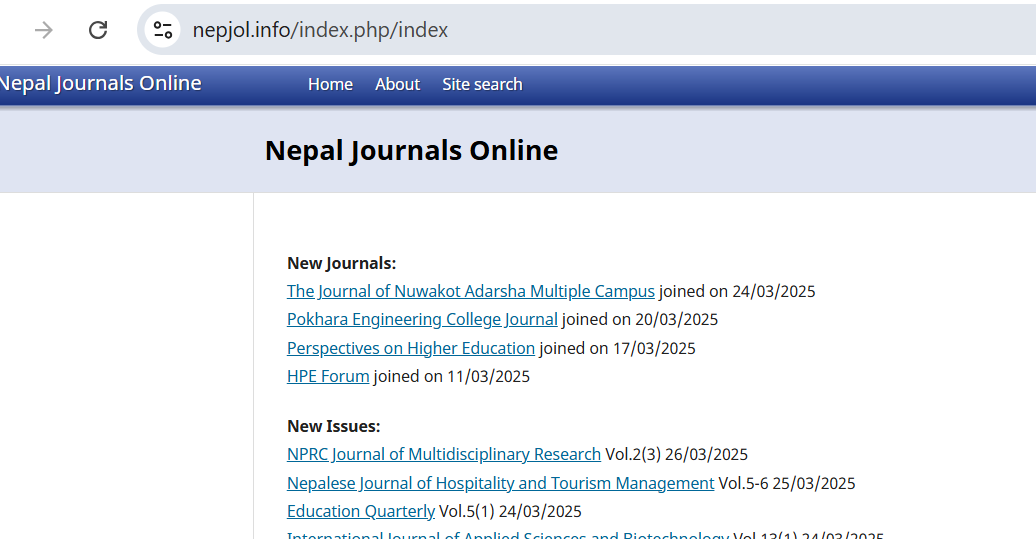
The problem for the authors is that both only appeared online this week.  For example, today (27th March 2025) Nepal Journals Online (NepJoL) reports the publication of the latest issue of Education Quarterly, Volume 5 Issue 1, the one in which we published, as 24th March (see picture below).  The reason this happens is because the journal editors experienced problems in the past year and did not manage to publish an issue in the calendar year, which makes the publication history look less professional.  To avoid having a year missing the most recently published issue is given an official 2024 publication date.

In a world full of problems the minor inconvenience of papers being backdated is twofold for academic authors.  First, we can not really announce the publication of a a new Bournemouth University paper since the dated stamped on it is last year’s.  Secondly, paper can’t be used for the REF as the acceptance date is also set in the past, for papers to be acceptable for inclusion in REF 2029 typically papers need to be made available on Open Access within three months after the acceptance date .


Prof. Edwin van Teijlingen

Centre for Midwifery & Women’s Health


References:

  1. van Teijlingen, A., Marmion, V., Harvey, O., Regmi, P., van Teijlingen, E. (2024) PhD Progress and Transfer Vivas at Universities in the United Kingdom, Journal of Education and Research, 14(1): 104-116, https://doi.org/10.51474/jer/16196
  2. Pasa, R.B., Khanal, K.P., Khatri, B.B., Adhikari, D., Kharel, S., Sharma, M.K., van Teijlingen, E.R. (2024). Knowledge, Attitude and Practices of Masters Level Students on the COVID-19 Pandemic. Education Quarterly, 5(1): 53–72. https://doi.org/10.3126/jeqtu.v5i1.76745

Seventh edition of Social Work textbook

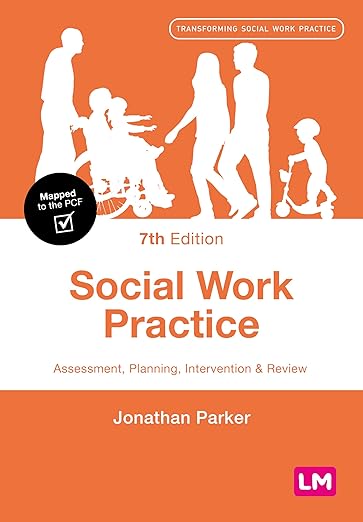
Congratulations to Bournemouth University’s  Emeritus Professor Jonathan Parker who has just published the 7th edition of his best-selling Social Work Practice. This latest edition of Social Work Practice comes with updated content and case studies.  First published in 2004, this textbook has guided social work students through the processes of working with people, groups and communities looking at the politics of assessment, planning, intervention and review and negotiating a value-based approach to practice that acknowledged the centrality of relationships and respect for the people with whom social workers practice.
Well done!
Prof. Edwin van Teijlingen

New BU Social Work publication

Growing international interest in approaches to social work focussing on human growth and development and including each social actor’s real freedoms to act, such as the capabilities approach, has fascinated BU Professor Emeritus, Jonathan Parker. In this new paper Parker and his German colleagues introduce a related, but internationally less well-known concept from German-language philosophy of education discourses, Bildung, arguing that Bildung represents a valuable additional framework that emphasises human growth and human flourishing.
The concept of Bildung has changed over time, with this paper charting development from its late enlightenment-period origins. Two particular variants are highlighted: the original 18th-century Bildung, which focussed on helping the individual reach a state of agency, and Mündigkeit (maturity), a late 20th-century critical theory-influenced Bildung, which focussed on the relationship between the growth of the individual and the society of which they are part. It is suggested that due to their shared tenets, both variants of Bildung can be seen a single concept, one with a strong conceptual closeness to the capabilities approach.
When applied to social work, Bildung suggests a shift away from thinking about the person in terms of utilities and outcomes, towards instead an understanding of a person’s humanness in their freedom to choose their own path and become the author of their own life. Parker and colleagues highlight four key elements of Bildung-informed social work: (1) the role of the social worker stimulating the service user’s dispositions in the context of their social environment; (2) shifting to a relationship-oriented practice, centring on direct work; (3) utilizing community settings in practice, and (4) the importance of refraining from using guidance, persuasion and coercion.
Congratulations!
Prof. Edwin van Teijlingen
Reference:
  1. Frampton, M., Friesenhahn, G. J., & Parker, J. (2024). Bildung, capabilities, human freedom and human flourishing: impulses for social work. Journal of Comparative Social Work, 19(1), 129–156. https://doi.org/10.31265/jcsw.v19i1.727

Positionality in qualitative research

At the online editorial board meeting today [Saturday 29th June] of the Dhaulagiri Journal of Sociology and Anthropology I had the pleasure of seeing Bournemouth University’s latest paper ‘The Importance of Positionality for Qualitative Researchers‘ ahead of publication [1].  The lead author of this paper is Hannah Gurr and this methodology paper is part of her M.Res. research project in Social Work.  Hannah is supervised by Dr. Louise Oliver, Dr. Orlanda Harvey and Prof. Edwin van Teijlingen in the Faculty of Health & Social Sciences (FHSS).

Dhaulagiri Journal of Sociology and Anthropology is a Gold Open Access journal so when it appears online it will be free to read for anybody across the globe.


Prof. Edwin van Teijlingen

Centre for Midwifery & Women’s Health

Reference:

  1. Gurr, H., Oliver, L., Harvey, O., Subedi, M.van Teijlingen, E. (2024) The Importance of Positionality for Qualitative Researchers, Dhaulagiri Journal of Sociology and Anthropology 18 (1): 48-54.

New BU Social Work publication

Yesterday the European Journal of Social Work published a new article co-authored by Prof. Jonathan Parker in the Department of Social Sciences & Social Work.  The paper ‘Alice Salomon: critical social work pioneer’ examines the theory and practice of early German social work researcher, activist, author and educator, Alice Salomon (1872–1948).  Salomon’s work is characterised by her orientation on social justice, her internationalism, her concern with the structural inequalities that shape clients’ lives, her sensitivity to oppression in society, and her commitment to feminist social work.

Congratulations!

Prof. Edwin van Teijlingen

CMMPH


Reference:

  1. Kuhlmann, C., Frampton, M., Parker, J. (2022) Alice Salomon: critical social work pioneer, European Journal of Social Work, [online first]  DOI:
    10.1080/13691457.2022.2161484

Congratulations to Prof. Jonathan Parker

Congratulations to Professor Jonathan Parker on his latest publication ‘By Dint of History: Ways in which social work is (re)defined by historical and social events‘.  This interesting paper is co-authored with Magnus Frampton from the Universität Vechta in Germany and published in the international journal Social Work & Society.


Reference:

  1.  Parker, J., Frampton, M. (2020) By Dint of History: Ways in which social work is (re)defined by historical and social events, Social Work & Society, Volume 18, Issue 3: 1-17.


FHSS PhD student Orlanda Harvey in this month’s edition of HED Matters

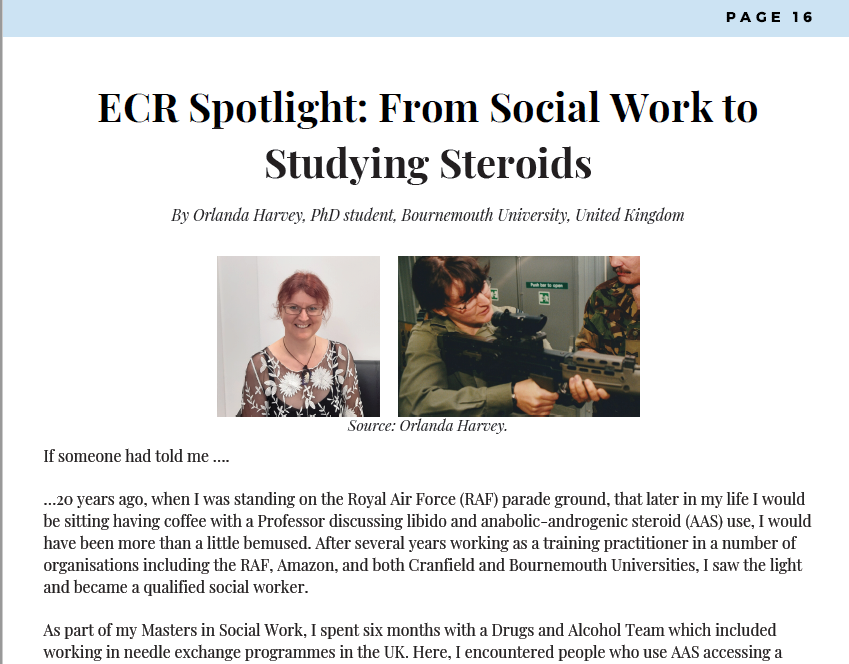
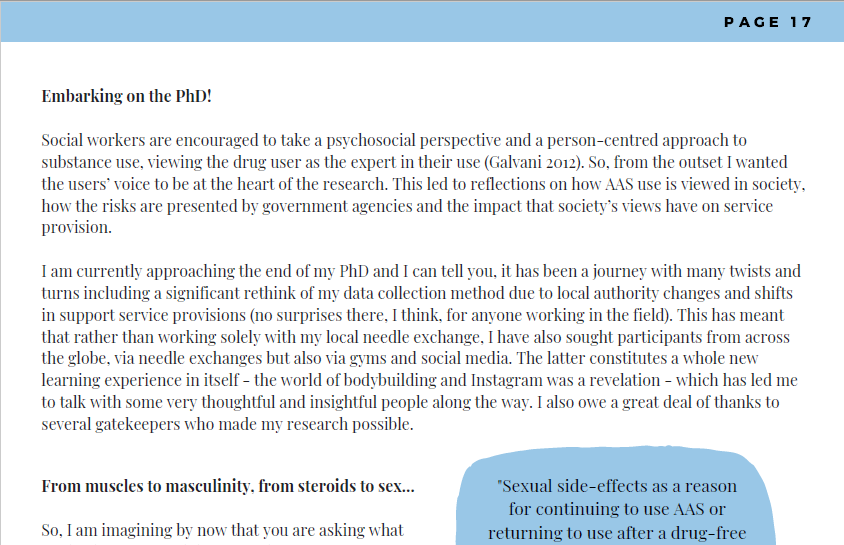
PhD student Orlanda Harvey featured in this month’s edition of HED Matters as Early Career Researcher (ECR) with an article on ‘ECR Spotlight: From Social Work to Studying Steroids’ [1].  HED Matters is an online magazine about the use of legal and illegal substances to enhance the human condition published biannually by the HED network. It brings together recent advances in drug research and experiences from both drug users and practitioners. This December 2019 issue focuses on sexual human enhancers.  Orlanda’s PhD research project addresses men’s experiences of recreational Anabolic Androgenic Steroid (AAS) use.

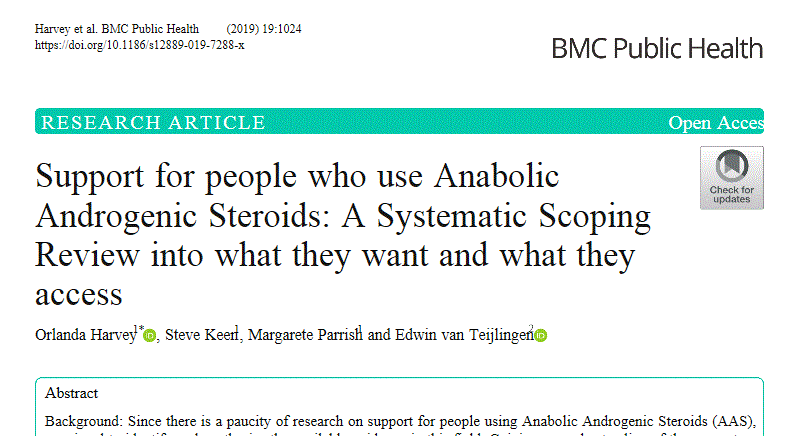
Earlier this year she also published a peer-reviewed paper form her research : “Support for people who use Anabolic Androgenic Steroids: A Systematic Scoping Review into what they want and what they access” in the Open Access journal BMC Public Health [2].  Since there is a paucity of research on support for people using Anabolic Androgenic Steroids (AAS), this latter article synthesised the available evidence.  Orlanda’s  PhD I the Faculty of Health & Social Sciences is being supervised by Dr Margarete Parrish, Dr Steven Trenoweth and Prof Edwin van Teijlingen.


References:

  1. Harvey, O., (2019) ECR Spotlight: From Social Work to Studying Steroids, HED Matters 2(2):16-19.
  2. Harvey, O., Keen, S., Parrish, M., van Teijlingen, E. (2019) Support for people who use Anabolic Androgenic Steroids: A Systematic Literature Review into what they want and what they access. BMC Public Health 19: 1024      https://rdcu.be/bMFon

Congratulations on academic paper by BU PhD student Orlanda Harvey

Congratulations to Orlanda Harvey, PhD student in the Faculty of Health & Social Sciences on her PhD publication “Support for people who use Anabolic Androgenic Steroids: A Systematic Scoping Review into what they want and what they access” in the Open Access journal BMC Public Health [1].  Since there is a paucity of research on support for people using Anabolic Androgenic Steroids (AAS), this article searched and synthesised the available evidence in this field. Gaining an understanding of the support both accessed and wanted by recreational AAS users will be of use to professionals who provide services to intravenous substance users and also to those working in the fields of public health and social care, with the aim to increase engagement of those using AAS.

This systematic scoping review identified 23 papers and one report for review, which indicated that AAS users access a range of sources of information on: how to inject, substance effectiveness, dosages and side effects, suggesting this is the type of information users want. AAS users sought support from a range of sources including medical professionals, needle and syringe programmes, friends, dealers, and via the internet, suggesting that, different sources were used dependent on the information or support sought.

The authors argue that AAS users tended to prefer peer advice and support over that of professionals , and access information online/specialist fora, reflecting the stigma that is experienced by AAS  users. These tendencies can act as barriers to accessing services provided by professionals.  The paper concludes that support needs to be specific and targeted towards AAS users. Sensitivity to their perceptions of their drug-use and the associated stigma of being classified in the same sub-set as other illicit drug users is relevant to facilitating successful engagement.


Reference: 

  1. Harvey, O., Keen, S., Parrish, M., van Teijlingen, E. (2019) Support for people who use Anabolic Androgenic Steroids: A Systematic Literature Review into what they want and what they access. BMS Public Health 19: 1024      https://rdcu.be/bMFon


Descent or dissent? Social work education in post-Brexit UK

Congratulations to Prof. Jonathan Parker on the publication of his article ‘Descent or dissent? A future of social work education in the UK post-Brexit‘ in the European Journal of Social Work. In true European style the journal also gives the title in Italian: Discesa o dissenso? Il futuro dell’istruzione nel settore dei servizi sociali nel Regno Unito dopo la Brexit.


Final publication of 2018

Congratulations to Orlanda Harvey on the publication of her paper ‘Shades of Grey’: The Ethics of Social Work Practice in Relation to Un-prescribed Anabolic Androgenic Steroid Use. Orlanda Harvey is a PhD student in the Faculty of Health and Social Sciences with a research interest in image and performance enhancing drug (IPED) use.  Her paper will be published in Practice: Social Work in Action.  

This paper highlights ethical dilemmas that social workers face when assessing risk in relation to those using substances. It explores how legislation and societal factors can impact not just on people’s choices and decisions but also on their ‘vulnerability’ and access to services. Vulnerability, a contested term, is linked, in this paper, to assessment of risk. There are ethical issues that arise when assessing risk with people who use Anabolic Androgenic Steroids (AAS) from both service user and professional perspectives. These ethical issues concern a person’s right to choose whilst making potentially harmful decisions. The paper argues that using substances such as AAS in and of itself does not suffice to make a person vulnerable but this does not mean that people using AAS are not in need of support. It suggests that there may be some groups of people who are more at risk to starting AAS use and that social workers should be aware of these. It also recommends the need for further qualitative research to understand the reasons for starting use and support to help people stop using AAS.

Well done!

Prof. Edwin van Teijlingen

CMMPH

Highly topical BU article on BREXIT

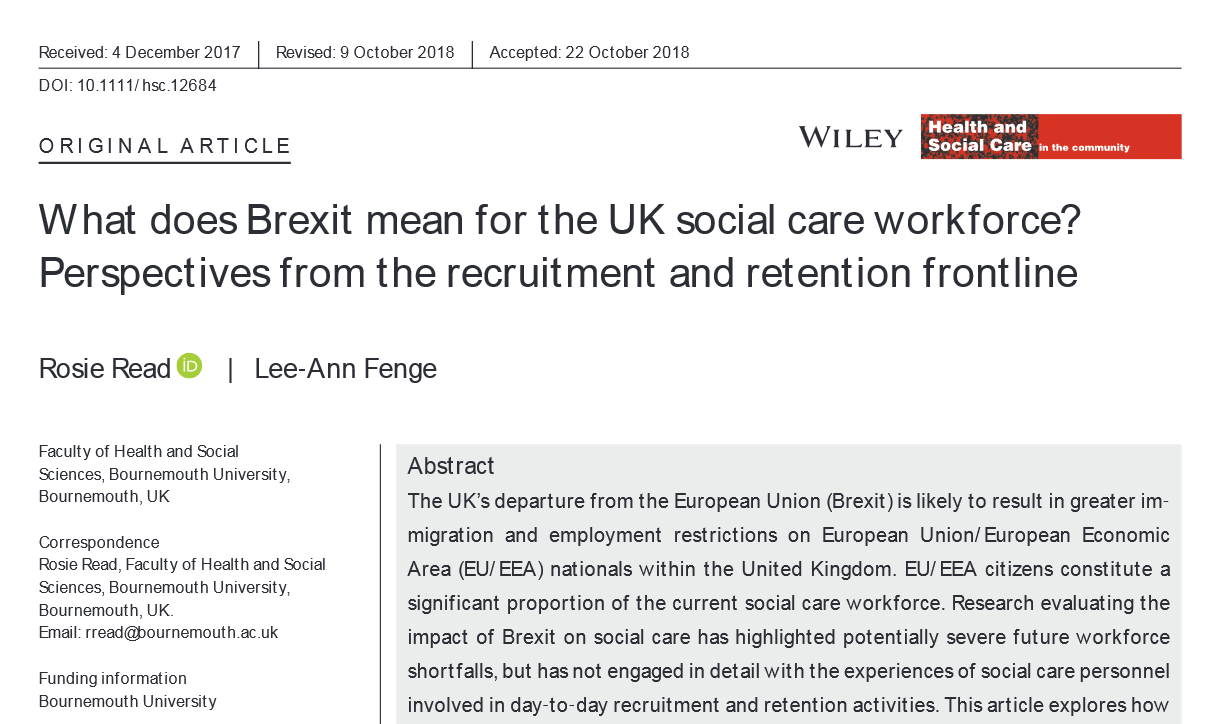
Congratulations to Dr. Rosie Read and Prof. Lee-Ann Fenge in the Faculty of Health & Social Sciences who just published in the academic journal Health and Social Care in the Community.  Their paper is called ‘What does Brexit mean for the UK social care workforce? Perspectives from the recruitment and retention frontline’ [1].  You can’t have a more topical academic paper and it is freely available on the web through Open Access!  

The paper is based on research on research they undertook last year on the impact of Brexit on the social care workforce.  A key finding is that, irrespective of whether they employ EU/EEA workers or not, research participants have deep concerns about Brexit’s potential impact on the social care labour market. These include apprehensions about future restrictions on hiring EU/EEA nurses, as well as fears about increased competition for care staff and their organisation’s future financial viability. This article amplifies the voices of managers as an under‐researched group, bringing their perspectives on Brexit to bear on wider debates on social care workforce sustainability.

Congratulations!

Prof. Edwin van Teijlingen


Reference:

  1. Read R, Fenge L‐A. (2018) What does Brexit mean for the UK social care workforce? Perspectives from the recruitment and retention frontline.
    Health Soc Care Community [online first] :1–7.    https://doi.org/10.1111/hsc.12684


Social Work, Precarity & Sacrifice as Radical Action for Hope

Congratulations to Professor Jonathan Parker on the publication of his latest article in the International Journal of Social Work & Human Services Practice. [1]   In this paper Professor Parker outlines the history and development of social work, primarily in the UK, in the context of uncertainty and ambiguity.  He suggests that in an age of increased precariousness, social work itself represents a precarious activity that can be misconstrued and used for political ends as well as for positive change. As a means of countering potentially deleterious consequences arising from this, the concept of sacrifice which is used to consider social work’s societal role as scapegoat on the one hand and champion of the oppressed on the other. The paper concludes that social work’s potential for developing and encouraging resilience and hope is indicated in the ‘sacrifices’ social workers make when walking alongside marginalised and disadvantaged people.

The paper is Open Access, meaning that anybody across the globe with internet access will be able to read it  free of cost.


Reference:

  1. Parker, J. ‘Social Work, Precarity and Sacrifice as Radical Action for Hope’, International Journal of Social Work and Human Services Practice Vol.6. No.2, 2018, pp. 46-55.

FHSS student needs help with online questionnaire for her research

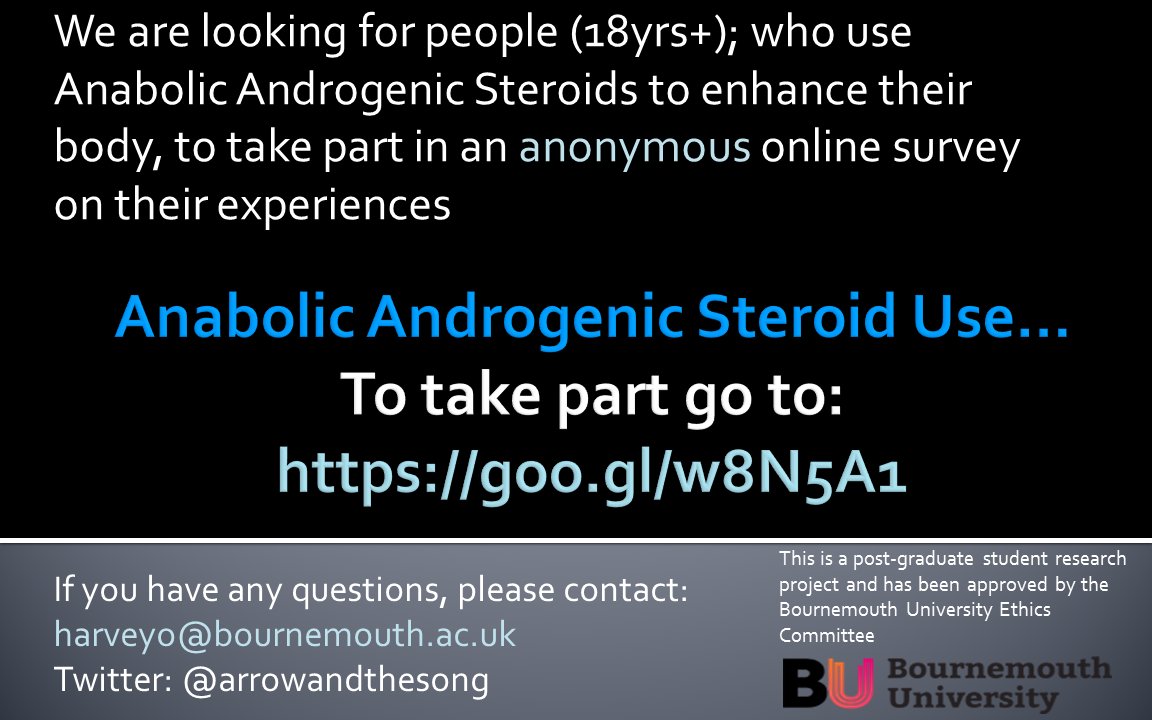
Our PhD student Orlanda Harvey is currently conducting her study on why people use Anabolic Androgenic Steroids (AAS).  Since steroid use is a sensitive topic and its users are a hard-to-reach population we need as much help as we can get to get her survey distributed to as many as possible potential steroid users (aged 18 and over).  We, as her PhD supervisors, would like to ask you to alert friends, family, neighbours, health care professionals working with this target group, etc. to the existence of this survey.   Her questionnaire is available in paper version (from harveyo@bournemouth.ac.uk or telephone Edwin van Teijlingen at: 01202-961564).  However, the easiest and most anonymous way would be for people to complete it online using the following online link.


Thank you very much in advance!

Dr. Margarete Parrish

Dr. Steven Trenoweth

Prof. Edwin van Teijlingen