Register for free, refreshements provided.
Latest research and knowledge exchange news at Bournemouth University
In June 2019 we embarked on a journey at BU, in collaboration with Association of Sustainability Practitioners and Poole Bay Rotary Club, and set up the BU Social Entrepreneurs Forum BUSEF- A collaborative, Inclusive forum to facilitate knowledge exchange between BU and local socially focused businesses.
https://www.bournemouth.ac.uk/news/2019-06-28/forum-launched-support-local-social-enterprises
Under the auspices of the BU Social Entrepreneurs Forum we organised a rather successful very first Global Entrepreneurship Week celebrations at BU in November 2019.
One of the main objectives of this Forum was to support the development of our students at BU towards their employ-ability skills. As a pilot, we generated dozens of projects with local social businesses for two final year cohorts at BU- FoM Entrepreneurship and Business Ventures and FMC Digital Communications. Students worked in groups in providing solutions (to challenges that the businesses shared with us at a previous session of BUSEF) on business model/business planning and digital communications/Social media marketing.
We are now in a position to reflect on those excellent projects and look ahead to what we can do better and more. If you are interested in working with local businesses via student projects please join us on the 19th of Feb at F305 Fusion Building at 1730, Talbot Campus to hear of the experiences of the local businesses and our students.
Free places on offer to hear how BU students successfully helped local social entrepreneurs
On 3rd December 2019, Prof. Dinusha Mendis was an invited speaker at the International Copyright Law Conference 2019 held at the Millennium Hotel London. Labelled as the ‘ultimate guide to the operation of copyright’, this event brings together a range of international speakers from different sectors.
The 2019 edition focused on Copyright and AI, Brexit, legal tech and copyright, funding of copyright claims as well as legal case law and legal updates.
Prof. Dinusha Mendis from the Department of Humanities and Law at Bournemouth University, explored the copyright issues surrounding technologies such as 3D printing and 3D scanning and offered a number of insights from her recent research including insights from her recently published co-edited book, 3D Printing and Beyond: Intellectual Property and Regulation.
The event held over two days included speakers from practice, academia and policy.
A full list of speakers can be accessed here: https://law.knect365.com/international-copyright-law/speakers
The 2-day agenda can be accessed here: https://law.knect365.com/international-copyright-law/agenda/1
On 14th October 2019, Prof. Dinusha Mendis hosted the final workshop of the European Commission funded project, ‘The Intellectual Property Implications of the Development of Industrial 3D Printing’ in Brussels.
The project aims to formulate a clear picture of the Intellectual Property (IP) framework that could enhance the competitiveness of the Additive Manufacturing (AM) sector in Europe. As such, the workshop was attended by academics, practitioners, businesses and policy makers thereby bringing together key stakeholders in the field of 3D printing and IP laws.
The workshop commenced with a welcome from Amaryllis Verhoeven, Head of the Intellectual Property Unit at the European Commission. Thereafter, Dinusha Mendis (Project Lead) presented the main results, which was complemented by presentations from invited speakers and a panel discussion consisting of members of the project team and industry partners.
Ben Redwood (Hubs), Phil Reeves (Reeves Insight Ltd) and Phill Dickens (Added Scientific Ltd) considered the future of manufacturing and its different applications and uses for industry as well as consumers.
Thereafter, various issues from the Study were explored in a panel discussion. Panelists consisting of Lieven Claerhout / Bram Smits (Materialise NV), Ann Marie Shillito (Anarkik3D), and members of the project team (see below), considered IP issues in light of the views from industry, obtained as part of the Study. In bringing the workshop to its conclusion, Jean-Francois Romainville (IDEA Consult) spoke about next steps, in taking this project and other similar projects forward. Virginie Fossoul, (Legal and Policy Officer, European Commission), closed the workshop with some concluding remarks.
The presentations as well as the panel discussion can be accessed/watched here:
https://webcast.ec.europa.eu/workshop-on-3d-printing#
The project which was awarded to Bournemouth University in 2018, by the European Commission’s Directorate-General for Internal Market, Industry, Entrepreneurship and SMEs has been led by Prof. Dinusha Mendis (Principal Investigator) from the Department of Humanities and Law at Bournemouth University.
The Co-Investigators of this project include Dr. Julie Robson (Bournemouth University, UK), Dr. Rosa Ballardini (University of Lapland, Finland), Prof. Dr. Jan Nordemann (Boehmert & Boehmert, Germany), Prof. Phill Dickens (Added Scientific Ltd, UK), Dr. Maria del Carmen Calatrava-Moreno, Mr. Alfred Radauer (Technopolis Group, Austria) and Hans Brorsen (Germany).
The final project report is due for publication in early 2020.
The UK Government’s Industrial Strategy ‘Building a Britain fit for the Future’ (2017) places an increased emphasis on the academic community to produce research that has impact in the form of societal and economic contribution. This impact can be achieved in many ways, for example, by creating and sharing new knowledge that results in the type of innovation that leads to market growth, improved corporate performance, jobs, new products and services.
My British Academy funded research into chronic corporate under performance has yielded some interesting findings, based on a unique methodological approach that draws on research from the field of epigenetics. I recently presented the findings to the Global Crisis Team at Edelman, a world leading consultancy for crisis management. As a result, we are now developing a number of workshops for their international senior executives.
A key factor in delivering research impact is to develop relationships and networks (1) with professional practitioners and to disseminate research in a user-friendly way. In this case, a short paper entitled “Culture also eats innovation for breakfast!” was published in Strategic Direction (2). This is a zero star rated journal that has an international readership of management consultants and business people which enabled Edelman to understand the idea in a non-academic way.
BUs Academic Career Framework informs staff that they should be disseminating professional practice outputs – and yet not many do. So, if you want to start on the road toward research impact, then think about the professional outlets that can help you disseminate your research and build a professional practice network.
1. Oliver, J.J. (2017). Developing a distinctive digital profile and network. In: Kurcirkova, N., and Quinlan,O. (eds). The Digitally Agile Researcher, Open University Press, Chapter 8, pp.80-87
2. Oliver, J.J. (2019). Culture also eats innovation for breakfast! Strategic Direction, Vol. 35 No. 12, pp. 1-3.
HEIF-6 funding now available for innovative Knowledge Exchange (KE) projects
Research England provide Higher Education Innovation Funding (HEIF) to universities to facilitate a broad range of knowledge-based interactions between them and the wider world, which result in economic and social benefit to the UK. The current round of funding is referred to as HEIF-6 and runs from August 2017 to July 2022.
An internal call is now open for applications from BU colleagues who wish to develop innovative projects. Funding will be awarded to those applications that clearly demonstrate how new/existing collaborations will be developed and how societal/economic impact will be achieved, specifically in relation to the generation and exploitation of Intellectual Property and commercialisation. Interdisciplinary and/or cross-Faculty/Professional Services proposal are encouraged, as are proposals with international collaborators.
We anticipate making awards of £25,000-£100,000 per project per year. Please note that the total fund allocated to this call is approximately £300,000 per year. Projects should be up to 24 months in duration and must align to one of BU’s HEIF-6 themes:
Colleagues wishing to apply should read BU’s HEIF-6 strategy and the HEIF-6 FAQs before completing the HEIF-6 application form (part 1 and part 2). These documents can be found on the i-drive (I:/RDS/Public/HEIF 6).
It is highly recommended that you contact Research Development and Support (RDS) prior to applying to this fund to ensure your project is within the scope of the fund. Please contact Knowledge Exchange Adviser, Rachel Clarke, who will discuss in further detail the purpose of the fund and how your project aligns to it.
Applications must be supported by the Project Lead’s Faculty and signed by their Head of Department and relevant Deputy Dean (Research and Professional Practice). Any queries should be sent to Rachel Clarke (heif@bournemouth.ac.uk) in the first instance.
Completed application should be sent to HEIF@bournemouth.ac.uk by midnight on Monday 9th December. The HEIF panel aims to confirm the outcomes of applications by the end of January 2020.
Looking ahead, this week we have the Queen’s Speech and talks are continuing to see if there is any chance of a Brexit deal ahead of the Benn Act deadline. Parliament will sit next Saturday. The government is expected to lose the vote on the Queen’s Speech (apparently for the first time in 95 years) and there will be a post-Brexit budget on 6th November assuming that the UK leaves the EU on 31st October. And we are getting closer to the time when the parties may agree to a general election being called.
We have news on T levels and what students really want in the tuition fees vs living costs debate.
Dods have produced an overview of all the Education and Skills policy announcements from the party conferences.
Private Members Bills: We are expecting the Private Members Bills (PMB) ballot to take place around Thursday 24 October (although in the Brexit disruption anything could happen). MPs enter a ballot and the first 20 picked out of the hat have the opportunity to introduce a PMB on a topic of their choice (or sponsor someone else to introduce the Bill) on a Friday set aside for this purpose. Those successful in the ballot get first opportunity for 7 of the extra Fridays. Another 6 Fridays are available later in the parliamentary calendar in which keen MPs unsuccessful in the ballot vie to introduce their own legislation.
Over 400 MPs enter the ballot which is only held once in a parliamentary session, so the chances of being selected are low. And even if they get their Bill before Parliament, few of them get very far partly due to parliamentary convention – whereby other MPs can vote them out early in the process (Christopher Chope is infamous for doing this). If they aren’t killed off this way, there is usually insufficient parliamentary time for them to go through the full process. Finally prorogation at the end of the session kills all Bills that have not become law before the end of the parliamentary session.
For example, all the current PMBs that were proceeding have now been closed down ahead of the Queen’s Speech, including:
Lastly, even if an MP is successful in the ballot they may be targeted by the Government to introduce a ‘handout’ Bill. This is where the Government persuades the MP to introduce legislation that the Government either does not wish to introduce themselves or did not find parliamentary time for.
In last week’s policy update we described Secretary of State for Education, Gavin Williamson’s, firm support for technical and vocational routes. This week the Government are pushing ahead in their T-level preparations and have launched the NexT Level national campaign building support for T levels which will commence next academic year as an alternative to A levels. A substantial amount of extra funding is available to the early adopters who are expected to work with DfE to tweak and develop the T levels.
From 2020/21 three T levels will be delivered – Digital, Education and Childcare, and Construction. In September 2021 seven more T levels will be added including subdividing digital and construction into two different pathways and adding a Health and Science route. From September 2022 three new sectors will be added: Legal, Finance and Accounting, Engineering and Manufacturing, Business and Administration. And from September 2023 the remaining T levels will come on board (making 25 T levels in all), including Agriculture, Environment and Animal Care, Creative and Design, Hair and Beauty and Catering and Hospitality.
Education Secretary, Gavin Williamson, said: T Levels are a complete game changer – high-quality technical courses that will give young people a head start in their careers and that will rival top performing technical education systems like those offered in Germany. With less than a year to go before the first T Levels are taught, we want to make sure young people and their parents know all about the brilliant opportunities these new qualifications will offer. Our new campaign will help make sure they have all the info they need.
Sir Gerry Berragan, Chief Executive of the Institute for Apprenticeships and Technical Education, said: We are extremely excited about launching T Levels that will provide a gold standard of technical education on par with A Levels. The Institute fully supports this campaign. It’s important that potential students and their parents are aware that they will be rolled out from next academic year. We know that many young people are looking for an exciting alternative to the academic route and want to start training for their chosen careers after completing their GCSEs.
Universities and Science Minister Chris Skidmore spoke at the TechUK conference on putting skills at the centre of innovation. Here is some of what he said:
No one can ignore the gathering force of technology that is reshaping the future of each and every one of us… Every day, developments in digital technologies are pushing the boundaries of what is possible. And, together, your companies and innovations are stretching the limits of what humanity can achieve, and what the UK can achieve as a nation….
I am keenly aware that our tech sector won’t go on thriving if we don’t concentrate on people. On putting people and skills at the centre of our innovation system. On ensuring that our regulatory system is as modern as the technologies that it supports. So, let’s take keeping the brightest and best people in the sector first. How do we do it?
Well, we need to recognise and address the challenges researchers and innovators face on a day-to-day basis. Developing a people-first research strategy is just one part of this.
Last month, I was pleased to support the launch of the revised Concordat to Support the Career Development of Researchers. This encourages signatories from across higher education and innovation to work together on the challenges facing researchers in the world today.
It is on all of us to ensure we are supporting people across the entire innovation and tech sector to be the best they can be. From researchers, academics and innovators, to technicians, postgraduates and post-docs.
All of these people together are integral to the overall strength and prowess of UK tech. Embracing diversity in the sector is crucial to getting this right.
This government is determined to address the gender imbalance in tech careers, in particular by improving girls’ take-up of maths, computing and physics at all stages of the education system from primary school through to university. We’re keen that more people from currently under-represented groups, including those with disabilities and those from Black, Asian and Minority Ethnic communities, realise a career in tech can be for them as much as anyone else.
…And we’re not just talking about young people here. We’re also talking about adult learners. Those people who, later in life, want to access the further technical training they need. In the digital age, education is going to become a lifelong endeavour, not just something you do until you’re 18 or 21…That’s why we’ve put in place now a commitment to introduce a national entitlement to adult basic digital skills training from 2020. Adults without the digital skills needed for life and work will have the opportunity to study new qualifications free of charge, so that nobody gets left behind as the world around us inevitably moves on.
…if we’re serious about meeting our target to invest at least 2.4% of GDP in R&D by 2027 then we can’t just rely on home-grown talent alone. Creating a climate based on the free movement of talent is obviously going to be key to generating the numbers and diversity the sector needs. The International Research and Innovation Strategy I launched earlier this year best evidences our commitment to global engagement in the science and tech sectors.
And the International Education Strategy, launched the same month, sets out our ambition to increase the number of international higher education students studying in the UK by over 30% to 600,000 by 2030.…And thanks to the hard work of my successor-come-predecessor, Jo Johnson, the introduction of the Graduate Route, or 2-year post-study work visa, will hopefully incentivise much of this talent to stay on our shores, work in our companies, and set up their own businesses.
…It cannot have escaped anyone’s notice that our Research and Innovation sector is incredibly concentrated in London and the South East. Per-capita spending on Research & Development in the North East is way under half that in London.…If we are to become an innovation nation, then we must learn from this, ensuring that the whole of the UK benefits from our tech revolution. This means ensuring that our most innovative SMEs can scale up and access seed funding as well as large grants, enter the market, and even shape new markets.
…I want us to build on the work we’ve done with University Enterprise Zones, which I launched last month, and to build on our amazing network of incubators, accelerators, catalysts and catapults – spreading the benefits right across the UK. To create a truly business-friendly environment. To join together research, development, and innovation. And to create a new unity of purpose.
For as long as I’m Universities and Science Minister, I want to help the UK to find a new gear, to put the UK tech sector in the fast line, and to grow an incredible tech ecosystem that can accelerate into the future.
HE metrics often focus on home students, however, SoS Gavin Williamson, has highlighted the Government is looking closes at the gaps for international students – their drop-out rate and the likelihood of them achieving a good honours degree. Two blogs on Wonkhe tackle these issues.
Julia Buckingham, President of UUK said: “Universities are listening to concerns about grade inflation and these initiatives show our determination to ensuring transparency and consistency in the way degrees are awarded.”
Wonkhe report that the UK Standing Committee for Quality Assessment (UKSCQA) has agreed initiatives to more widely publicise degree standards information and has produced institutional guidance. UKSCQA will expect providers to publish a voluntary Degree Outcomes Statement on their website which describes their degree outcome data and explains any changes. They’ve produced guidance for institutions.
SoS for Education Gavin Williamson states: “It’s crucial that students, graduates and employers can trust the value of a university degree and the achievements of students who put in the hard work aren’t undermined”, adding that “grade inflation has become entrenched in higher education”, and that he will be “watching closely” to see if these initiatives work, and expecting the OfS to “challenge institutions which continue to record unexplained rises in top degrees awarded”.
Julia Buckingham, President of UUK said: “Universities are listening to concerns about grade inflation and these initiatives show our determination to ensuring transparency and consistency in the way degrees are awarded.”
The Guardian covers the story and Wonkhe have a dissection blog by David Kernohan. Kernohan is quoted in the Guardian article: “the effort to boil down a complex set of algorithms and classifications into a brief text, as the code requires, was unrealistic…If you are setting out such broadly applicable descriptions you are in danger of not adding anything tangible to the subject specific learning goals and outcomes that already exist in course documentation…With such rubrics already available…what exactly do these non-exhaustive generic descriptors actually add? The idea of consistency in measures of learning is attractive, if unlikely. A mention of a provider’s adherence to these descriptions in their degree outcomes statements seems to be the likely endpoint. And I’m not sure who benefits from that.”
The Higher Education Policy Institute have published results from new research on undergraduate students’ views of the education funding system. It finds that students are mixed in their attitudes towards the current tuition fee model and Augar recommendation to lower fees. It finds:
Rachel Hewitt, HEPI’s Director of Policy and Advocacy, said:
Care students: UUK have a new blog on care leavers highlighting that the restrictive definitions that English universities apply and the strict criteria for access to bursaries is creating barriers. Earlier this year Scottish Universities unanimously agreed an open approach whereby any form of care experience, at any age, leads to enhanced support and consideration. The UUK blog calls on English universities to do more to remove barriers….Universities should consider the merits of adopting a definition of care experience which does not exclude certain individuals based on length of time in care, type of placement, or age, to ensure all individuals with care experience receive appropriate support. The most effective support replicates the financial and emotional safety-net that a family provides. Sensitivity is vital……and to recognise that many care leavers are often mature students.
Finally, the blog highlights that the National Network for the Education of Care Leavers (NNECL) is creating a sector-specific quality mark for supporting care leavers. (The hyperlink brings up a log in box, just press the X to get rid of the log in box and read the pilot quality mark launch article.)
Social Mobility: The Army and the Royal Air Force have been recognised as within the top 100 employers in the country for encouraging social mobility. The Minister of Defence was also listed within the Social Mobility Index. The Index lists organisations that have taken substantial action to improve social mobility in their workplace and ranks employers on the actions they are taking to ensure they are open to and accessible to progressing talent from all backgrounds.
New Trials: The Education Endowment Foundation has launched three new trials.
Nine- and 10-year olds in 150 primary schools across England will take part in the EEF-funded trial of Children’s University, which aims to raise the aspirations and attainment of pupils by providing learning activities and experiences outside of the classroom. Each pupil will get a ‘Passport to Learning’, used to record each activity and hours spent on the activities. Children will make their own choice from a wide range of activities and receive a stamp in their passport on completion. Activities range from walking trails and gymnastics, to trips to wildlife parks, sports sessions and performing arts classes.
A programme, delivered by the National Association for Special Educational Needs, that aims to improve provision for pupils with SEND in mainstream schools by helping schools to evaluate the effectiveness of their provision, and then implement a bespoke action plan to target areas of priority and drive improvement. Around 150 mainstream secondary schools will take part in the trial, which will be independently evaluated by a team from Manchester Metropolitan University.
A programme, delivered by Bangor University, which aims to improve reading skills through a computer programmes that adapts instruction in response to children’s answers. Activities are designed to be engaging, with pupils working through cartoon-based worlds via tasks that resemble computer games. Bangor University have piloted the programme in UK special schools, and over 100 special schools will now be invited to take part in a large-scale trial of the programme for primary-aged children with SEND.
Official figures show there is a larger attainment gap for pupils with SEND than for any other group. In 2018, just 21% of these pupils achieved the expected standard in reading, writing and maths at age 11, compared to 74% of their classmates. Pupils with SEND are twice as likely to come from disadvantaged homes, too (27% of pupils with SEND are eligible for free school meals compared to 12% of all other pupils) and so face a double disadvantage in the classroom.
Sir Kevan Collins, Chief Exec of the EEF, said:
Professor Elaine Fox, University of Oxford, has been appointed as UK Research and Innovation (UKRI) Mental Health Networks Impact and Engagement Coordinator. She will help encourage and facilitate engagement and collaboration between the eight Mental Health Networks and maximise their impact. The eight Mental Health Networks embrace a collaborative ethos, with researchers from a wide range of disciplines (including health, medicine, biology, social sciences, humanities and environmental sciences, insights from charity workers, health practitioners and people with lived experience of mental health problems). The networks aim to progress mental health research in themes such as the profound health inequalities for people with severe mental ill health, social isolation, youth and student mental health, domestic and sexual violence, and the value of community assets. The coordinator role will help to raise the public profile and quality of mental health research in the UK.
Professor Fox said: “I am absolutely delighted with this appointment and look forward to working with the eight Mental Health Networks to help shine a light onto the importance of mental health research. If we want a world in which mental health problems can be effectively treated and prevented we will need highly collaborative research teams bringing together expertise from many disciplines, including expertise that comes from lived experience.”
Universities Minister Chris Skidmore delivered a speech on international research collaboration at the British Academy. Key Points:
Chris Skidmore also wrote to Research England’s Executive Chair, David Sweeney on the KEF this week. In addition to the points already described above he also states:
And last week BEIS SoS Andrew Leadsom launched a package of measures supporting UK researchers and business to innovate and embrace the green tech revolution.
The Commission for Countering Extremism published its report into challenging hateful extremism. The report states the current strategy for countering extremism is “insufficient and too broad”, and calls for a major overhaul of government strategy. They propose a human-rights-based strategy to countering extremism, through detailed recommendations for government and civil society. Further recommendations include:
UUK also published results this week from their harassment and hate crime survey, following up on how institutions are responding to the ‘Changing the Culture’ taskforce report. Key points from the 100 university respondents:
Despite this progress, UUK state that the research shows there is still more to do to drive positive change across HE. In particular, while there has been good progress in responding to sexual harassment and gender-based violence, less priority has been afforded to tackling other forms of harassment including racial harassment and other forms of hate crime.
Professor Julia Buckingham CBE, President of Universities UK said:
Responding to UUK’s report Nicola Dandridge, Chief Exec OfS, said:
Finally United Response report that prosecutions for disability hate crime charges have fallen, despite sharp rises in reports and repeat offenders.
Q- The Lord Bishop Of Winchester: To ask Her Majesty’s Government what plans they have to extend the pupil premium to post-16 education.
A – Lord Agnew Of Oulton: The government is determined to ensure that disadvantaged students are supported in their post-16 education. The national funding formula for 16 to 19 year olds and the funding through the Adult Education Budget both include a disadvantage uplift. This provides extra funding for disadvantaged students (specifically for those with low prior attainment or those who live in the most disadvantaged areas). We will continue to consider how we can most effectively support disadvantaged students in post-16 education, and will continue to keep financial arrangements under review.
Competitiveness: Also this week was a response to a parliamentary question on how the Government is supporting UK universities to remain competitive with universities elsewhere in the world. There was no new news and the response mentioned OfS, TEF, fast track immigration to attract talent, research, and the graduate immigration route (post study work visa). Read the full response here.
Fitness to Practise: The Office of the Independent Adjudicator has published new guidance on Fitness to practise for courses leading to professional qualifications. Guidance is provided on:
The guidance will inform how The Office of the Independent Adjudicator handles fitness to practice complaints from 2020/21. Felicity Mitchell, Independent Adjudicator, said:
Nursing: Maria Caulfield MP presented a nurse staffing levels bill; a Bill to make provision about National Health Service bodies establishing nurse staffing levels. From the first reading of the Bill:
There is increasing evidence that the right number of qualified nurses can improve patient outcomes in terms of mortality, morbidity and quality of care, and that, conversely, insufficient nurses can have a potentially life-threatening effect on patients. The Bill has four main aims.
Other countries have realised the need for change and have made legislative changes to ensure safe staffing levels. That is why I support the RCN and Dame Donna Kinnair in promoting this Bill to create a legal framework that clarifies the roles and responsibilities and the accountability for the supply, recruitment and retention of nurses in England.
The Bill was read the first time and scheduled for a second reading but unfortunately prorogation meant it has been dropped. All hope is not completely lost, it could be picked up in the next session if special provision has been made, although we do not believe it has been. However, if luck is on her side Maria might be within the first twenty in the private members bills ballot.
Schools Funding: One of PM Boris’ campaigning points to become Leader of the Conservative party centred on increasing funding for schools. Since the announcement there have been various statistics and debates over whether it means a real terms increase for schools. The House of Commons Library has published school funding in England – FAQs which gives an overview and tackles some of the confusion.
Children’s mental wellbeing: The Government have issued the first ever State of the Nation report on children’s mental wellbeing. This publication fulfils a government commitment to bring together the best evidence on children and young people’s wellbeing, identifying trends and drivers so that the right support is in place to help them fulfil their potential. You can read a short summary of the key points here and the Government press release here.
Schools apace with housing: Developers creating new housing estates can access a loan from the Government to ensure they build a school alongside the new accommodation. The aim is to ensure the school is open and ready as the new communities move in (rather than there being a lengthy delay). The Government are running this scheme as a pilot which will commence shortly. More detail here.
To subscribe to the weekly policy update simply email policy@bournemouth.ac.uk
JANE FORSTER | SARAH CARTER
Policy Advisor Policy & Public Affairs Officer
Follow: @PolicyBU on Twitter | policy@bournemouth.ac.uk
BU is celebrating Global Entrepreneurship Week, for the first time, on the 19th of November with not ONE but TWO Mega Events! Supporting student experience; supporting BU commitment to the UN Sustainable Development Goals; and providing a platform to bring together wonderful examples of the power of enterprise in changing society.
Women in Entrepreneurship: An extraordinary panel of Women from various sectors and UK and Beyond, we have a number of Famous faces on the panel as well as women who are quietly making a huge impact on society and the economy; helping break down gender barriers to entrepreneurial activities. I am immensely proud to introduce the panel and the 3 wonderful ladies from Brazil who are also going to join us (see attached pic).The Women in Entrepreneurship Panel has been possible due to the support of funding from the Women’s Academic Network (WAN); ACORN award(Public dissemination of research); and Faculty of Management (Executive Dean Dr Lois Farquharson)
Venue- KG01 Time- 1245-1630
Also, on the 19th we are bringing SOUP to BU..what’s that you ask? BH SOUP (modelled on the Detroit SOUP movement) has been running successfully in the conurbation for the last few years and this year, to celebrate GEW and to harness the energy of the newly launched BU Social Entrepreneurs Forum, BH SOUP is coming to BU with BH SOUP Loves Social Enterprises. This event too is possible due to the Faculty of Management (Dr Lois Farquharson).
Venue- Fusion Building Ground Floor space- Time 1845-2100
Please see the eventbrite links below to register (for FREE) at the event(s)
https://www.eventbrite.co.uk/e/women-in-entrepreneurship-tickets-74693186331
https://www.eventbrite.co.uk/e/bh-soup-loves-social-enterprises-tickets-74205618001

The Panelists!

BH SOUP Loves Social Enterprises

Ana Lucia, Brazil, Founder of Vision for Good

Clarrise Seixas, from Brazil founder of MIMOS, a social impact business

Ivi Felix, From Brazil; Founder of Mantiquira Local Market
A bit more politics than policy this week…a bit of a trend this year.
Wonkhe report on the Conservative Party conference and visualise the following amongst the HE the HE tea leaves:
Education Secretary of State, Gavin Williamson, spoke at the Conservative Party Conference. The entire speech backs FE and technical education with little mention of HE. The main elements of the speech as the minister delivered it follow. Further below is a shorter summary and link to the official Government press release covering the speech.
Williamson:
The Government’s press release summarises Williamson’s speech as:.
Political Intelligence set out 5 scenarios through which the PM wouldn’t have to ask the EU for a further extension for Brexit. On Wednesday Boris’ letter to Jean Claude-Juncker proposing a new Ireland/Northern Ireland protocol was published. The BBC reported on Friday afternoon that government papers in a Scottish case said that the PM would send the extension letter to the EU if there is no deal.
It’s all a wait and see game now – whether there is a deal or not with the EU, whether it can get through Parliament, whether the PM will apply for an extension if there is no agreed deal in time, and whether the EU will grant one if he asks. And even if we don’t leave the EU without a deal in October, it seems likely that we will in January (unless a deal is agreed before then), because a Tory majority in a November election seems like a real possibility – and that would mean that there will be enough MPs to approve a no deal exit. And…even more importantly…whether we leave in October or January, with a deal or without, it is not over. A deal means a transition period while a longer term arrangement is sorted out – and in a no deal scenario the government will still want a trade deal with the EU. And who thinks that will be easier than the current negotiations, especially as the backstop or whatever arrangements replace it will be on the table from the EU’s point of view.
The EU will do what they do – in the UK, it is all about numbers. Are there the numbers for the PM to get his deal (and the necessary legislation) through? Are there the numbers to vote for an election? Will the Queen’s Speech be approved by Parliament and what happens if it isn’t? What will Labour and the Lib Dems and the 21 new independent MPs do when it comes to the crunch? The risk of the PM following through on his no deal rhetoric is now looking smaller so the question for the anti-no deal MPs is whether it is better to vote for the Johnson deal or wait and see what happens in an election. And some Labour MPs are calling for a referendum before an election – but it is hard to see how that will come about except via a vote of no confidence leading to a Corbyn government without an election – and that doesn’t look very likely either unless the Lib Dems and the Tory rebels back Corbyn – which at least this week they aren’t doing…..
Nick Hillman of the Higher Education Policy Institute (HEPI) has blogged about David Cameron following the release of his new book. Hillman uses the text to consider the complications behind Cameron’s decision to introduce higher fees and how the link between this and the removal of student number controls isn’t as obvious as might be assumed.
Chris Skidmore, Universities Minister, answered a parliamentary question on ensuring universities adopt system-wide planning processes in addition to number controls:
We reported the Labour conference discussions about fees last week – Nick Hillman has a blog about the impact of their promise here.
Bill Rammell, Chair of MillionPlus and Vice Chancellor of the University of Bedfordshire delivered a speech to a Conservative Fringe event entitled, The Age of Upheaval: what should post-18 education look like in 2030? The full speech can be viewed here. He said:
Greg Clark (ex- Secretary of State for BEIS, currently without the Conservative Whip due to voting against the Government) pushed for Boris’ Government to uphold the commitment to increase research funding during oral questions this week – and got a positive response from the Chancellor Sajid Javid:
Q – Greg Clark: As we leave the EU, we need to reinforce our international reputation as a powerhouse of scientific excellence. In 2017 we spent 1.7% of national income on research and development, while Germany spent 3% and Israel 4.3%. So will the Chancellor use his next Budget to make substantial progress towards our 2.4% target and recommit to the medium-term target of 3% of national income going into research and development?
A – Sajid Javid: First, may I thank my right hon. Friend for his excellent work as Business Secretary, including in this hugely important area of research and development? He set some ambitious targets. We intend to stick to those targets, if not go even further, which I am sure he would welcome. Obviously I will not set out the Budget now, but I absolutely share his ambition, and I think he will be pleased with what we eventually do.
Home Secretary Priti Patel stated at the Conservative Conference she intends to launch an Australian-style points-based immigration system and once again stated her commitment to “ending free movement once and for all”. She continued that the new system would welcome “brilliant scientists, the finest academics and leading people in their fields” coming to Britain. Patel also intends to lift police restrictions on ‘stop and search’, significantly increase the number of officers carrying tasers, and tackle gangs, particularly county lines children, with £20 million to tackle drugs running.
Parliamentary question on international student visas:
Q – Helen Goodman: To ask the Secretary of State for the Home Department, what estimate he has made of the effect on international student numbers by country of the decision to extend UK work visas for foreign graduates to two years after completion of their studies.
A – Seema Kennedy:
Monday saw an interesting discussion in the Lords chamber on T levels. The current hotspots were both raised – whether Russell Group universities will accept them as entry qualifications and how the grade thresholds were disproportionately disadvantage students with SEN, particularly dyslexia, and may bar them from accessing T levels.
Sarah has written a blog on BU’s Research site highlighting a new article on the Wonkhe site which considers why academics (do or don’t) engage with the media to communicate their research. Here are some excerpts from the Wonkhe blog which highlight why academic colleagues believe working with the media is now essential:
Wonkhe report that: the Scottish government has published a carers strategic policy statement, with the aim of connecting a range of disparate policies to support carers, including with progression into higher education. The policy statement is open for consultation, with particular concern about the extent to which the statement will help to inform carers about the opportunities available to them.
Graduate recruitment. Wonkhe report on an Institute of Student Employers report. – 2019 Inside Student Recruitment (members only access) which finds that: “the percentage of its members setting no minimum entry requirements for graduate recruits has risen from 7 per cent in 2014 to 22 per cent, whilst the proportion of employers requiring a 2:1 has dropped from 76 per cent to 57 per cent. The requirement for minimum A level grades or UCAS points has also declined to 16 per cent. The report also shows that the majority of companies (almost nine out of ten) do not look for a qualification in a particular subject, and just 2 per cent use postgraduate degrees as a minimum requirement. Firms are also giving a higher priority to diversity issues – 38 per cent are changing the universities they visit, and 36 per cent are undertaking blind recruitment.”
Prevent: Wonkhe report that the Home Office has published a “ways of working” note to inform Lord Alex Carlisle’s review of Prevent. Wonkhe explain that the note elaborates on how the review will address the terms of reference, and what evidence it will seek to gather. The review will consider the “concept and implications” of the Prevent duty, how well it is being implemented at the local level, and the validity of criticisms and complaints about Prevent.
Patent filings by women: Female innovators have doubled in the last 20 years – but there’s still a long way to go, says the IPO. The Intellectual Property Office (IPO) has published the Gender profiles in worldwide patenting report. Across the world female innovators have doubled in the last twenty years, however, women still only made up 12.7% of patent inventors in 2017 (compared to 6.8% in 1998). The report finds that:
Student Loan Mythbusting: Martin Lewis continues his campaign to help the nation understand student finance. Moneysavingexpert.com have released a new video – Student Loans Decoded. The video is an hour long but breaks up into separately accessible chapters. It is aimed at students in years 11-13 and sets out to explain student finance and bust the myths and misunderstandings so students make an informed choice.
To subscribe to the weekly policy update simply email policy@bournemouth.ac.uk
We’d also like to thank you for valuing and sharing the policy update with your colleagues. Over the last year we’ve seen our readership grow and grow!
JANE FORSTER | SARAH CARTER
Policy Advisor Policy & Public Affairs Officer
Follow: @PolicyBU on Twitter | policy@bournemouth.ac.uk
What a week! Parliament is sitting (but not quietly) and there is lots of coverage from the Labour Party conference including the fringe events.
Fresher loneliness: The British Association for Counselling and Psychotherapy and Louise Knowles (Sheffield University) have spoken out on tackling loneliness during the first few weeks when starting university.
Having a sense of community can be key to helping a student overcome homesickness.
Sense of belonging
There are university societies to pretty much cover every interest and hobby, as well as for specific groups of students, and they can often help people form a much-needed community to help them settle in.
Preparation
Freshers’ Week and the following few weeks can be a bit of a blur. Some people want to jump in and do everything. Others want to familiarise themselves with university life more slowly. “It’s important students remember to take it at a pace that they are comfortable with.”
Wonkhe have a fresher related blog: Are freshers the new realists when it comes to mental health support?
Initiations: UUK have published a briefing, Initiations at UK Universities, to raise awareness of the dangers associated with initiation tasks and excessive drinking among students. The briefing sets out recommendations and actions they suggest universities should take to prevent and respond to dangerous behaviours and aim to drive a change in attitudes towards these events.
The briefing includes a consensus statement on the best way forward from stakeholders across the university and health sectors and examples of emerging good practice. Here are the key recommendations:
Wonkhe have a new blog exploring the complexities for universities to walk the right balance over initiation.
The supreme court ruled that PM Johnson was unlawful in his advice to the Queen to prorogue parliament. A summary of the court’s decision is here. In essence:
The court ruled that Parliament was frustrated and its ability to debate the Brexit change curtailed:
So all bills that were previously passing through parliament are resumed and Parliament is sitting again. A recess for the Conservative Conference was not approved. Next week will be another interesting one.
Meanwhile, on Monday, Wonkhe reported that the Sunday Times confirmed that ministers have “shelved” implementing the Augar recommendation to cut full-time undergraduate English tuition fees to £7,500. Wonkhe continue:
And there is a new Wonkhe blog on the topic.:
Electoral Registration: With the prospect of an election before the end of 2019 looming an Electoral Commission report holds particular interest for the student voter registration hurdle. They find that local government registers are only 83% complete (so between 8.3 and 9.4 million people are not correctly registered). The greatest risk factors for non or inaccurate registration are:
Several of the risk factors chime with the HE student demographic, which also has the additional hurdles of understanding the electoral registration process given their dual (home/study address) residence status. Alongside the de-prioritisation of registering to vote against the many other items competing for their attention when they start or return to university.
A couple of significant announcements were made this week by the Universities Minister.
Universities Minister Chris Skidmore has today announced a new strategic direction for university knowledge exchange funding to drive the high performance needed to deliver the government’s commitment to raise research and development investment to 2.4% of GDP.
The measures announced at the Research England Engagement Forum event in London today, Thursday 26 September, include:
You can find more detail here: Research England
Universities Minister, Chris Skidmore, spoke to celebrate the broad range of topics and internationalism within the Future Leaders Fellowships second wave. He also spoke about early career researchers:
And on the academic juggle:
More detail on the Future Leaders projects can be found here.
Skidmore also spoke on Space and the importance of small business innovation this week.
Lastly, PM Boris visited a school and the BBC captured his talk with the children when he reminisced that he didn’t do enough work at university and frittered too much time at university. He advised them to use their time productively: “Don’t waste your time at university, don’t get drunk…use it well”.
The OfS have released a new area based measure of access named TUNDRA (tracking underrepresented students by area). As the name suggests it is a data source derived from the tracking of 16 year old state funded mainstream school pupils in England on an area basis who participate in HE at age 18 or 19. They have also updated the POLAR4 postcode data which measures how likely a young person is to participate in HE based on their postcode. Note: POLAR 4 covers all schooling types as it is an area based measure. However, questions of the validity of any postcode based metric remain due to start discrepancies which mask disadvantage within postcode areas. And Minister Chris Skidmore has been open within his criticism over the shortcomings of this measure. The Government (and OfS) are rumoured to be quietly investing more time in understanding whether the index of multiple deprivation has potential for greater use in the future. Back on the OfS site are also interactive maps selectable by each of the four types of recognised young participation measures (TUNDRA, POLAR 3 & 4, NCOP) and the calculation methodologies for each type of measure are here.
Data guru David Kernohan of Wonkhe gallops through the main features, issues and oddities of TUNDRA in A cold spot on the TUNDRA.
OfS data – Changes in Healthcare Student Numbers
The OfS have published data on healthcare student number changes following the removal of the bursary system (2017 entrants). The data compares 2016-17 to 2017-18 highlighting:
They said that the full impact of the reforms will not be evident until more years of data are available.
Yvonne Hawkins, Director of Teaching Excellence and Student Experience, said:
Immigration: The Tier 4 Visa list which catalogues the institutions licensed to sponsor migrant students has been updated. It includes information about the category of students a provider is licensed to sponsor and their sponsorship rating.
Students
UCAS have launched the UCAS Hub which aims to bring together all a student’s research about their next steps into one place including HE and apprenticeships. UCAS describe it as: a personalised, digital space for young people considering their post-18 choices, as well as anyone thinking about returning to education.
It seems it is a week for one-stop shops as UK music have launched their own to help students and parents consider a career in the creative industries. Excerpt:
DiscoverCreative.Careers is designed to help students and their parents, guardians and teachers find out more about the careers in industries including advertising, architecture, fashion, film and television, museums and galleries, performing arts and publishing – and the routes to them.
The creative industries are growing three times faster than the UK economy as a whole and to meet the predicted growth, there is a need for more young people to choose a career in one of the UK’s most dynamic sectors. The new site will signpost users to the full range of jobs available to counter an historic dearth of good careers information for the creative sector.
The initiative is part of the Creative Careers Programme being delivered by ScreenSkills, Creative & Cultural Skills and the Creative Industries Federation supported by the Department for Digital, Culture, Media and Sports as part of the Government’s industrial strategy. The lead partners have worked with organisations covering the 12 subsectors of the creative industries to provide expert information on the range of jobs. (More content here.)
HE Participation Stats
The DfE has published statistics on Participation Rates in HE from 2006 to 2018 (and this link gives previous years of data). It shows rise in the Higher Education Initial Participation rate, a stable gap between male and female HE participation and a highest rate of 18 year olds accessing HE. The detail is explained here.
New Insight: See the OfS press release in our WP and Access section on their new Experimental Statistics which group disadvantaged student demographic characteristics to, hopefully, provide answers to tricky questions such as why certain groups of students are more likely to drop out or encounter difficulties whilst studying.
Experimental Statistics: The OfS highlight new experimental statistics which consider the interaction of demographic characteristics. Imaginatively named ABCS (Associations Between Characteristics of Students) the OfS state the statistics could offer important insights on the combining factors which leader to non-access or poorer outcomes for disadvantaged students. The OfS press release says:
Associations between characteristics of students’ (ABCS) is a new, experimental set of analyses that seeks to better understand how multiple characteristics – like age, sex, ethnicity and area background – interact to affect students’ outcomes in higher education, including whether they get in to university and, if so, whether they continue beyond their first year.
The methodology could also be used in future to look at the results students achieve and whether they progress to graduate employment, and across all levels of higher education.
The kinds of findings that can be explored using the ABCS methodology include:
Chris Millward, OfS Director for Fair Access and Participation, commented:
Power of the Parent: FE Week has an article stating the truism that every WP practitioner knows – the power of the influencing parent on a young person considering their HE prospects. Towards the end of the article are some suggestions on how to bring parents on board.
Differentiated Fees: Colin McCaig (Sheffield Hallam) has a policy paper explaining how differentiated fees (e.g. based on higher fees for higher tariff entry points to a course) would significantly undermine widening access for underrepresented social groups. In particular they find that applicants from low income households would gravitate towards lower cost provision rather than accessing the prestigious, high tariff, high cost institutions.
Tricky Target Decisions: The Times letters to the editor contains Degrees of Privilege (scroll to half way down the page to find it) which explores the complexities (and hints towards a fairness question) in widening access targets.
Private Tuition
The Sutton Trust and Ipsos MORI surveyed schools and found that 24% of secondary teachers have offered paid for private tuition, two-thirds did so after direct approach by parents of pupils. In primary school it is 14%. The survey also found that in 2019 27% of 11-16 year olds have received private tuition at some point during the last four years, up from 18% in the 2005 survey. The duration of the tuition isn’t stated but looking at the data it appears around 10% of the 2019 27% had tuition across multiple years in the last four years.
24% accessed the private tuition for a school entrance exam, and 37% for a specific GCSE subject, 4% because their school doesn’t offer a particular subject they wish to study.
The increase in private tuition is contentious because, unsurprisingly, the young people who receive it come from better off backgrounds (34% from high affluence households, 20% from low affluence households). The Sutton Trust’s press release says:
The Sutton Trust’s other recommendations are available here. The survey results are available here.
This was a limited scope survey designed to provide a yearly update to the two key questions of how many mainstream teachers are offering private tuition and how many young people are being tutors. The research does not answer questions behind the increase in private tuition, such as whether the Government’s raising of curriculum standards may have been a factor in compelling parents that can afford additional tuition to do so. However, the data shows that accessing private tuition has increased at a steady rate since 2005.
The Ministers have made a big WP student success speech this week. SoS Education, Gavin Williamson, and Universities Minister Chris Skidmore both spoke out to compel universities to do more to reduce dropout rates, particularly within the disadvantaged student body. The Government news story highlights how the Government are looking to the Access and Participation Plans that all registered providers are required to have as a vehicle for sector movement to improve the drop out disparity. While more disadvantaged students now access university (although students from advantaged areas are still 2.4 times more likely to access HE) there is a gap with students from lower income backgrounds more likely to drop out of university. In 2016/17 6% of advantaged students dropped out compared to 8.8% of disadvantaged. Of concern is that the drop out gap has become wider from the previous year. The news story says:
The Education Secretary of State, Gavin Williamson, said:
Universities Minister Chris Skidmore said:
The Government news story concludes: The Government’s wide-ranging reforms to higher education has led to the publication of access and participation plans…The OfS will closely monitor all these providers to make sure they follow through on their plans.
UUK have responded to the speech – Julia Buckingham, UUK President, said: “there is more work to do” and called on the government to “quicken the progress” by “reintroducing maintenance grants for students most in need”.
Media coverage can be found in iNews and ITV.
32 hour working week: At the Labour Party conference John McDonnell said the next Labour government will reduce the average full time working week to 32 hours within a decade. A shorter working week with no loss of pay. HEPI have a short new blog on what this might mean for university staff and whether it also applies to students who work long hours as part of their course load (medicine, health, architecture and education).
Abolishing Student Fees: Jim Dickinson from Wonkhe highlights the unknowns within Labour’s commitment to abolish student fees:
MillionPlus call for maintenance grants to be reinstated: Professor Lynn Dobbs, VC London Metropolitan University was a key speaker at a Labour fringe event. She said under a National Education Service (NES) a Labour government should restore student maintenance grants and guarantee investment, in order to deliver a well-funded tertiary education system for all. She said:
She urged for part-time and mature students to become a priority: The need to focus on part-time and mature students is much needed … Despite the populist narrative of ‘too many students’, fewer than 50% of 30 years olds in the UK have had the opportunity to experience any form of higher education – this is a low bar that we should be seeking to leap over.
Abolishing Ofsted: There were tweets (and another tweet) and news stories from the Guardian and Politics Home on scrapping Ofsted to be replaced by a teaching standards support system. Angela Rayner: Schools will no longer be reduced to a one-word grade or subjected to a system that hounds teachers from the classroom.
Further Education and the Fair Economy: The Social Market Foundation and the Further Education Trust for Leadership (FETL) ran the Further Education and the Fair Economy fringe event. The panel discussed further education and the opportunities it opened for elderly people, as well as disabled students. Time was also spent discussing the impact it had on social mobility and the future economy.
Immigration – What should be in Labour’s manifesto?: The session focussed on immigration policies as a whole and didn’t specifically cover HE.
Industrial Strategy, Skilled Jobs and Education; Run by the Fabian Society and the Association of the British Pharmaceutical Industry this event focused on assessing on how places, communities and regions can all see good work grow. The panel questioned what methods can be undertaken to ensure not only high employment, but also high skilled jobs. There was consensus that stronger regional strategy for providing skilled jobs is needed but also a strategy which guarantees that jobs remain “good” with the implementation of automation and new technology.
Shadow Minister for Business, Energy and Industrial Strategy Chi Onwurah MP opened the discussion on the topic of skilled jobs everywhere which she said is driving part of the industrial strategy. [Note – Labour have their own version of the Industrial Strategy.] Key points are:
Labour’s Anti-Private Schooling Motion: At the Labour Party Conference a motion was passed intending to dismantle the private school system should Labour win the next general election. Previously Labour said they intended to close the tax loopholes available to elite private schools, redistributing this money to ‘improve the lives of all children’. However, the motion, spearheaded by the Momentum faction, said the next Labour manifesto should include a: “commitment to integrate all private schools into the state sector…[and]…withdrawal of charitable status and all other public subsidies and tax privileges, including business rate exemption. Plus: “endowments, investments and properties held by private schools to be redistributed democratically and fairly across the country’s educational institutions”. It also said that universities only admit 7% of students from private schools, to reflect the proportion of all pupils who attend them. More details are in this Politics Home article. Laura Parker, Momentum’s national co-ordinator, said: “This is a huge step forward in dismantling the privilege of a tiny, Eton-educated elite who are running our country into the ground.
The Letters to the Editor of the Times on Labour’s proposed abolition of private schools provide some interesting questions on how beneficial it would be to society to carry this policy through.
From the Labour NASUWT fringe event on valuing teachers:
The Class Ceiling: Barriers to Social Mobility in the UK today. This event run by Demos and The Investment Association focused on the challenges facing social mobility today. In particular, how aspirations, access to jobs and attitudes can be altered amongst those who have the least opportunity and come from backgrounds that traditionally limits how far people go in life.
Labour’s cradle to grave careers service and the quality of careers advice was also discussed.
Our guest blog series by Sophie Bradfield of SUBU continues this week
With a new cohort of students joining us this week, Unite’s recent report with HEPI on ‘The New Realists’ can help us gain some insights about prospective students, students enrolling and already enrolled at BU. The aim of the report is to “investigate young people’s transition to university, their expectations and their experiences in the first year, looking at both academic and non-academic aspects.” There are 4 stages to the research: desk research, online communities, friendship triads, and a quantitative survey. (You can download the full methodology here). Respondents are diverse with a range of genders, nationalities, ethnicities, grades achieved, sexualities and abilities, ensuring a reflective view of the student mind set. 5,108 students were surveyed, with a fairly even split between applicants (2,535) and first year students (2,573). The majority of these respondents are in the 16-19 age bracket (86%) with the remaining 14% in 20+ age bracket. The report has 3 key themes which I have unpicked below.
Key Theme 1: University Provides a Bridge to a Stable Future
One of the key findings from the report is the general belief carried by generation Z that University is a way to foster stability in an unstable world where their futures are otherwise uncertain. 69% of respondents agreed “going to University is the only way to make sure I’ll get the life I want”. 68% felt they would face more challenges than their parents in becoming successful in life which may be because 59% felt there is more “chaos and risk in the world than there was 20 years ago”. ‘Independent but not adults’ is a term used in the report to explain how students felt. I’ve heard BU students refer to themselves as feeling ‘adultish’ which links to the findings of this report and shows how widespread it is. University is a place where students can try new things, challenge themselves and develop their future selves. For many students, University is a key development time to ‘become adults’.
Key Theme 2: Students are more Diverse than ever
The report finds that more than ever, students have diverse individual identities dispelling the myth that there is a ‘typical student’. For example over a fifth (22%) of students in the research study identified as being teetotal, demonstrating a shift away from the drinking culture often associated with the student experience. As noted in the report, this means it is essential that students are continuously listened to so their education experience meets their needs.
With the research depicting a rise in students declaring a disability (including mental health); a higher proportion of Black and Minority Ethnic students (BAME); a rise in students from lower participation neighbourhoods; and a higher proportion of students identifying as LGBT+, higher education institutions are fantastically diverse places for students to develop and grow as open-minded and progressive individuals. Nevertheless, the report finds that respondents from minority and under-represented groups are slightly less likely to see themselves as successful which shows there is still some way to go to level the playing-field for all students, through empowerment and liberation.
The report also finds that over 80% of respondents combined either don’t follow trends or don’t pay attention. We can see this in the political world too; 40% of respondents didn’t identify with a particular political party. Labour came top being supported by 19% of respondents, followed by 8% supporting the Green party; 7% the Conservatives and the remaining gaining 1-3%. We’ve seen this move away from tribal politics over the last few decades but these latest results show how pertinent it will be for political parties to attract the student vote in the anticipated General Election.
Key Theme 3: Peers Play a Pivotal Role in a Successful Student Experience
The report asks students about successful aspects of their student experience.
In SUBU we’ve been asking BU students a similar question for the last 7 years in an annual student experience survey: ‘When you graduate from BU, what are the 3 most important things that will determine whether your time at BU has been as good as it could have been for you?’ With an open text response, students have always chosen the same three themes: Degree Grade, Friends Made; and Employability Prospects. This shows similar themes to the Unite report above.
The report finds that the majority of students report feeling lonely occasionally with a further 22% saying they feel lonely often and 4% saying they feel lonely all the time. The BBC loneliness experiment reported in 2018 found a higher proportion of 16-24 year olds were lonely compared with the oldest in society. Wonkhe reported on this issue earlier in the year too making the link between loneliness, student activities and mental wellbeing. The Unite report also shows that students understand that they can increase their wellbeing through socialising, making friends and taking part in activities, demonstrating the importance of balancing the academic experience with the non-academic experience whilst at University. ‘Freshers’ Week’ events are highlighted as specifically making a positive difference to the experience of students who are estranged from their parents or have been in care. Yet, more can be done ‘to help students connect, make friends and integrate when they first come to University’.
The research shows that students feel ‘pressure to solve their own problems independently or with peers’ connected to ‘transitioning to adult life’. This belief is reflected in their approach to mental health too as despite an increase in students identifying as having a mental health condition, many want to manage it themselves rather than seeking support from University services. Only half of students report their condition to their University and trust their peers far more than their University to reach out to for support. The report found that 47% of respondents considered their mental health condition to be part of who they are, forming part of their identity, however 46% also acknowledge there is still a stigma around mental health. This reluctance to seek support due to stigma and trust is something that continues to be a key area for Universities’ to address in the midst of an ongoing national debate about whose responsibility it is to ensure students get support for mental health issues.
Conclusions
The Unite/HEPI report highlights some very interesting insights from the student perspective, some of which are detailed above. Ultimately it all relates to conversations around transitions and support. There has been lots of research and work around improving the transition of students into University, for example Michelle Morgan developed the Student Engagement Transitions Model for Practitioners to demonstrate the importance of transition at all stages of University. This Unite report highlights this too; the whole University experience is a transitionary experience for many students into ‘adulthood’. As director of HEPI Nick Hillman notes, “Today’s students are not, in the main, going to university because they want to be rich; they are going because they want to absorb the lifelong transferable benefits that degrees continue to confer.” Therefore it seems Universities and Students’ Unions should continue to do all they can to shape and nurture a diverse and malleable University community for students to share, experiment and grow into progressive, engaged citizens of the future.
Click here to view the updated inquiries and consultation tracker. There aren’t any new inquiries and consultations this week however, email us on policy@bournemouth.ac.uk if you’d like to contribute to any of the open inquiries or consultations.
Climate Change Funding: At the United Nations General Assembly on Monday PM Boris announced £1 billion aid funding to develop and test new technology targeted at tackling climate change in developing countries. The innovative new Ayrton Fund to give developing countries access to the latest cutting-edge tech to help reduce their emissions and meet global climate change targets.
The UK is home to some of the world’s best innovators in clean energy technology. Through the Ayrton Fund they and other scientists from around the world can work in partnership with developing countries to transform their energy sectors and reduce emissions by:
Meanwhile Labour seem to have interwoven the environmental crisis through all their policy areas during their Party Conference this week. For example, when speaking of planned NHS reforms they said their: Green New Deal for our NHS – A Labour government will deliver the greenest health service in the world. As we rebuild our hospitals we’ll invest in solar panels and energy efficiency schemes. We’ll move to a fleet of low emission ambulances. And we’ll guarantee patients and staff a right to green space with an ‘NHS Forest’ – 1 million trees planted across our NHS estate – a tree for every member of staff.
Graduate Employment: The Times describe the biggest graduate recruiters in Top 100 Graduate Employers: bright young things flock to prison careers. In 2019 the Civil Service was the biggest graduate recruiter followed by PwC, Aldi, Google and the NHS. You’ll need to follow another link to find out about the variety of work within the prison service, however, this article talks about how young designers are influencing the prison environment. And WONKHE have a quick and interesting new blog: Who is responsible for getting a graduate a graduate level job.
Positivity towards TEF (or not): Steven Jones (Manchester) speaks of how to harness TEF for positive gains during the SRHE conference:
Apprenticeships Access: The OU surveyed 700 employers in England and have published their Access to Apprenticeships report. Wonkhe describe the report contents: [the report]
To subscribe to the weekly policy update simply email policy@bournemouth.ac.uk
JANE FORSTER | SARAH CARTER
Policy Advisor Policy & Public Affairs Officer
Follow: @PolicyBU on Twitter | policy@bournemouth.ac.uk
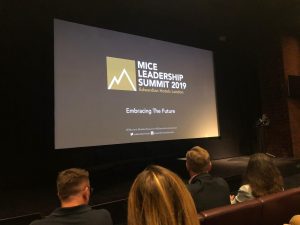
Mary Beth Gouthro PhD of the Faculty of Management was invited to join an expert panel for the MICE Leadership Summit 2019 this September at the May Fair Hotel (Edwardian Hotels Group) in London. Now in its second year, the one day Summit was attended by 200 agents working in the event industry and came from UK, South Africa and Israel.
The MICE (Meetings Incentives Conferencing & Exhibitions) Summit consisted of speakers, the panel and workshop content that addressed the opportunities and challenges of the industry go forward, through to 2025. The events sector is worth £39.1 billion to the UK economy in terms of direct spend by event delegates, attendees and organisers (BVEP). Nurturing talent in the workforce as well as issues related to sustainability were key themes covered on the day.
Joining Mary Beth on the panel providing insights to the future proofing for the events sector were Tracy Halliwell MBE, Director of Tourism, Conventions & Major Events for London & Partners; Jamie Vaughan, Head of European Sales for Cvent and Michael Begley, Managing Director of venuedirectory.com. The panel was chaired by Max Fellows, Director of Client Services at MCI Experience. The value and role of degree education in the field of events management was furthermore highlighted. Post-secondary education in the field underpins the economic sustainability of the International Business Events Action Plan published by DCMS alongside of the Tourism Sector Deal in summer 2019.
The next Summit is planned for September 2020 and plans to incorporate a bigger presence of HE education in event management, ie to include BU students & alumni.
Businesses and health researchers can apply for up to £20 million to develop new diagnostic tools based on linking technologies, data and systems.
This competition is part of the Industrial Strategy Challenge Fund’s £120 million Data to Early Diagnosis and Precision Medicine Challenge.
The challenge aims to fund researchers and industry to combine data and real-world evidence from UK health services and create new products and services that diagnose diseases earlier and more efficiently.
Innovate UK and the Medical Research Council, as part of UK Research and Innovation, have up to £17 million to invest in collaborative consortia developing integrated diagnostics. Cancer Research UK has a further £3 million to invest in cancer-related projects.
Summary:
Deadline : 25 September 2019
Eligibility : Businesses of any size may apply, and consortia must include at least 1 NHS or academic partner and 1 SME
Please see this link for more information.
A quieter week for HE policy, however, there’s news on the KEF and lots of other relevant content.
As a member of the Parliamentary and Scientific Committee BU’s early career researchers and PhD and post-doc researchers all have the opportunity for exposure of their work through the annual poster competition. Posters are being accepted for the following areas:
Prizes will be awarded for the posters presented in each discipline which best communicate high level science, engineering or mathematics to a lay audience.
Please share this information with ECR, PhD and PDR colleagues and those who work directly with them. This is a rare opportunity to showcase work within parliament at this level. All the shortlisted posters will be shared during a parliamentary reception in March 2020 and there will be the opportunity to talk about the research directly with policy makers.
The poster competition is open now please contact Lisa Andrews, RDS Research Facilitator, for more details and to enter.
The House of Commons library has a briefing paper setting out data on the prevalence of mental health conditions in higher education students in England and outlines the action higher education providers, the government and the Office for Students are taking to help students with mental health issues. It also flags up how students can get support.
From the briefing:
A Chartered Management Institute commissioned survey finds 3 in 4 parents believe that qualifications that combine with work experience and study are the best way to prepare young people for the workplace.
With record numbers of young people going through university clearing, the survey also shows that:
Rob Wall, Head of Policy at CMI said: “Innovations like degree apprenticeships – which bring together work and study, and allow apprentices to apply their learning in the workplace – are hugely attractive to employers. Our survey shows that they are now increasingly popular with parents, with the vast majority rating a degree apprenticeship with a FTSE 100 corporate over a traditional 3 year degree at a top university. Our message to all those young people receiving their GCSE results this week is that, whatever your results and whatever path you take next, developing those employability skills like self-management and leadership will always give you an edge in a competitive jobs market.”
The Association of Colleges are capitalising on the recent announcement that there will be an accelerated spending round by the end of September. They have issued a paper to the Treasury and the DfE making recommendations for tertiary education. In headline their proposals cover the full remit of college work and request a one-off cash injection of £1,114m in revenue and £240m in capital. The paper capitalises on the Augar Review which discussed the lower funding rates and investment in FE education. It covers the items you would expect such as a higher funding rate for all FE provision, better pay and status for FE teachers. It also suggests a ten year funding plan for education. A larger adult education budget to support retraining, improve skills and develop lifelong learning (at a one-year cost of £250 million).
Of relevance to HE are the apprenticeship funding reforms they suggest (at a one year cost of £200m).
They also suggest a development fund for higher technical education (one year cost of £40m).
On regulating to protect students and employers while maximising impact:
David Hughes, Chief Executive, Association of Colleges, said: After making great efficiencies over the last decade, there is a strong consensus now that colleges need major investment to put them in a position to be able to thrive and from that position to be able to maximise the impact they can have. The UK’s industrial strategy identifies skills as an issue across a range of priority sectors and the need for action to avoid shortages. Without thriving colleges, this priority will not be met.
Recent news has detailed Jeremy Corbyn’s efforts to amalgamate enough support that should the autumn vote of no confidence succeed he may be able to form a temporary caretaker Government. Labour are hoping for an early General Election and Wonkhe have covered all their recent Education related announcements into one blog.
Research England have published the outcomes of the Knowledge Exchange Framework (KEF) consultation and pilot exercise. Final decisions on the KEF will follow later in 2019.
Below follow the main points picked out of the KEF report narrative
Clusters The KEF clusters institutions together, BU is in cluster E.
“There were a substantial number of points in the commentary focussing on the descriptions and presentation of the clusters:
“There were also multiple comments and suggestions on the variables used to create the clusters, including on the role of professional services staff not being represented, concerns that variables were too heavily skewed towards research activities, and that 3* (as well as 4*) REF outputs should be used.
“Overall, there was no clear consensus from the responses received on a course of action that would satisfy all and no appropriate alternative models were proposed that would meet the requirements of providing a means of fair comparison. Given that the concept of clustering was well received for those in the main clusters, it is unlikely the fundamental approach to this aspect of the KEF proposals will change….”
Perspectives and metrics
“For the proposed perspectives and associated metrics, we asked for feedback on both the overall range and balance, and also views on the metrics proposed under each perspective.
“The majority of recommendations for KE activities that could be considered for inclusion in the KEF fell into four key areas:
Other common themes expressed in the commentary related to:
On working with business:
“A significant number of responses considered there was a disconnect between the broad nature of the perspective title ‘Working with business’ and the proposed income metrics. The metrics were considered by over a quarter of respondees to be very narrow, and not reflective of the full breadth of knowledge exchange activities undertaken in HEIs. In particular 15% of respondees felt that income from use of specialist facilities and equipment should be included as a useful indicator of interactions with business.”
“The nature of the metrics as income measures brought feedback across a number of points:
About a fifth of respondees provided feedback on the use of ‘academic FTE’ as the denominator for two of the metrics. While 4% expressed support for the use of academic FTE to account for the size of the institution, 10% considered it to be misleading to restrict it to academic staff when a signification proportion of knowledge exchange activity is undertaken by professional services staff or students. Some 5% requested a clearer definition of who is included in ‘academic FTE’ and 2% felt that it would be more relevant to restrict it to research active academic staff.”
On local growth and regeneration:
“We recognise that this metric on its own does not sufficiently capture the breadth of activity in this area and therefore have proposed the use of additional narrative. The feedback from respondents verified this view, with over a quarter expressing support for the use of narrative. The primary areas of concern expressed for the proposed metric were:
A number of alternative or additional metric areas were suggested by respondees:
A small proportion of respondees (4%) also looked to create links to the strategies and action plans being developed by institutions who have signed up to the Civic University Commission’s Civic University Agreements.”
On IP and commercialisation:
“A wide range of comments concerned timeframes around these metrics including:
This question also elicited specific suggestions for new metrics based on other areas of the HE-BCI collection:
On public and community engagement
‘Public and community engagement’ received the lowest average score when participants were asked to rate their percentage agreement…while the inclusion of the perspective in the KEF was broadly welcomed, there was also a clear message that the metric did not adequately capture the range of activities undertaken by HEIs in this area.
Additional metrics that were suggested included:
Use of Narratives:
The NCCPE concluded that there is strong rationale for adopting and adapting the approach to narrative within the KEF. Whilst the proposed template delivers some effective prompts that elicited useful information, there was considerable variety in the level of specificity and supporting evidence provided in the pilot drafts.
The NCCPE have provided specific recommendations to Research England on how the templates and use of narrative could be improved to draw out more relevant and consistent information. Alongside the consultation responses these recommendations are informing the development of the KEF.
Respondees showed an exceptionally strong preference for the provision of an overarching institutional statement being provided by the HEI with 89% agreeing to some extent (and almost half strongly agreeing). 101. This was echoed through the written responses which expressed the broad view that an overarching narrative would be beneficial and that it should be provided by the institutions themselves. There was also a strong articulation that the local economic context needs to be considered to place knowledge exchange activities in context, and that it may be appropriate for Research England to provide this data in a standardised format
A number of respondees felt that an overarching statement could also be a useful tool to demonstrate an institution’s overall strategic goals in relation the perspectives. This may help mitigate any perceptions of relative ‘poor’ performance in areas that were not of strategic importance to a particular HEI. However, it was recognised that this would be difficult to achieve through the visualisation. Other voices expressed concern that the statements could become marketing tools with little added value.
And finally: We note the concerns expressed in both the consultation and pilot regarding timing of implementation and potential overlaps with the REF and TEF. We will pay regard to this when agreeing implementation timescales.
You can read the report in detail here.
Click here to view the updated consultation tracker. Email us on policy@bournemouth.ac.uk if you’d like to contribute to any of the current consultations.
New consultations and inquiries this week: Lords inquiry in Ageing: Science, Technology and Healthy Living
Arts rise: The DfE published information on GCSE entries on results day. It highlights that entries to arts subjects have risen by 3.2% to 320,000. The DfE see this as positive new because previously the EBacc was criticised as squeezing these subjects out of the curriculum because of the opportunity to select them was less than other curriculum models. The news sits alongside a 3.7% rise in entries to EBacc subjects and an increase in foreign language entries (particularly Spanish and French). For more detail, including the key stats for other subjects click here.
T levels: The House of Commons Library have one of their helpful briefing papers on T Levels: Reforms to Technical Education which provides an overview of the proposals to reform the technical education system.
Student Debt Sanctions: the CMA have taken action causing the University of Liverpool to change their student debt penalty policy. They will no longer issue academic sanctions – such as the as the removal of library or email access – for students who have debts which are unrelated to their fees. Susan Lapworth, Director for Competition and Registration, at the Office for Students, said: “We welcome today’s announcement that, following CMA action, the University of Liverpool has formally committed to drop academic sanctions for students with debts, for example for accommodation costs, that are not related to their tuition fees. The fair treatment of students is important to us as a regulator. All universities and other higher education providers should be mindful of today’s CMA announcement and ensure that their debt collection policies comply with consumer law. Our own regulatory framework sets out the need for universities to demonstrate they are complying with consumer protection law, and we will continue to support the important work of the CMA on these issues.”
AI job displacement scheme: On Tuesday new Education Minister, Kemi Badenoch, announced an extension in the roll out of a pilot programme aiming to help adults whose jobs may change due to new technologies – such as automation and AI – to retrain and get on the path to a new career. The Get Help to Retrain digital service will now be rolled out to the West Midlands and the North East following success in Liverpool City during the summer.
Student Grants: The Student Loan Company are raising awareness of their practitioners’ page. They are also sharing information on their grants – Childcare Grant; the Adult Dependants’ Grant; and the Parents’ Learning Allowance – to ensure those eligible apply for the funds.
Market Signalling: HEPI have a new blog exploring the marketisation of HE alongside the Augar Review and institutional autonomy.
Unconditional Admissions: The most effective and fairest admissions system continues to be debated this week. A provocative Wonkhe article makes the barest nod to grades asking what if all university offers were unconditional? The comments at the end are well worth a read too as sector colleagues suggest other alternatives and admissions tweaks, primarily moving away from the overreliance on A level grades. And The Guardian have an article which suggests social class is a barrier to good A level/exam performance.
PQA: Post qualification admissions. Mary Curnock Cook, ex-CEO of UCAS, explains the factors that made her turn from determined to implement post qualification admissions to remaining with the current system.
OfS Student Tool: The OfS have a new online tool for prospective students which launches in September: Discovering Uni: planning your HE journey.
NEETS: Office for National Statistics published the quarterly stats on 16-24 year olds who are classified as NEET (not in education, employment or training).
The report details examples of specialist projects (Medway, Southwark, Blackpool) which have effectively decreased the NEET population.
Schools Funding: One of Boris’ campaigning objectives was his pledge to increase the minimum per pupil funding level for English schools – this House of Commons Insight Guide has an interactive mechanism which checks which schools within a constituency area will see an increase against the £4k (primary) and £5k (secondary) proposed thresholds.
To subscribe to the weekly policy update simply email policy@bournemouth.ac.uk
JANE FORSTER | SARAH CARTER
Policy Advisor Policy & Public Affairs Officer
Follow: @PolicyBU on Twitter | policy@bournemouth.ac.uk
We focus on the interesting set of reports released as people clear their desks before their summer holidays.
The OfS have published evaluations of the various learning gain projects that have been running for some time. The OfS website is very clear “The report below is independent research which we have commissioned. As such, it does not necessarily reflect the views or official position of the OfS.” You will recall that one reason for HEFCE setting up these projects was to see if a learning gain measure could be created for the TEF. The answer would seem to be “no” although given the disclaimer, that might not stop them having a go.
On the final evaluation of 13 projects, the conclusions are:
The report on the National Mixed Methods project has the following recommendations:
For policy-makers and providers
For higher education providers
And finally the report on Higher Education Learning Gain Analysis (HELGA): says:
And that brings us nicely to the next item…the OfS have published their latest review of degree classifications:
The report and Excel versions of the data tables have been published.
The use of the word “unexplained” (again) is shocking given that it means “unexplained by prior attainment and social advantage”. Inevitably this has been picked up in the media and by the Education Secretary.
BBC story here with a Damien Hinds comment:
Wonkhe point out the escalation of threat level here: “Back in December, he said “I am urging universities to tackle this serious issue and have asked the Office for Students to deal firmly with any institution found to be unreasonably inflating grades” – so this feels like threat inflation to us.”
The OfS seem to be totally unaware of the damage that their choice of language may be doing. In a blog, Susan Lapworth, the Director of competition and registration at the OFS, says about the plan to follow up with universities (emphasis added);
“To ensure that all universities, colleges and other registered providers are playing their part in maintaining the standard of degrees, we are likely to write to those providers that held degree awarding powers in 2010-11 and where the data show the most significant increases in the percentage of first class degrees awarded between 2010-11 and 2017-18. We’re focusing on providers with:
We will ask them to provide further information to help us understand how they account for these increases. We want to understand, for example, whether a provider has made recent changes to the way it calculates degree classifications, or whether it can point to other evidence – such as investment in staffing, teaching, services or facilities – that would credibly account for the ‘unexplained’ increase. We are also interested in the steps governing bodies have taken to ensure that academic governance arrangements are adequate and effective.
In seeking this additional information, we are not implying that the trends we can see in the published data indicate any form of wrongdoing from these providers – we are trying to understand better the reasons for performance that will be subject to public scrutiny and so are focusing our attention on those providers with the biggest unexplained increases. Given the significant public scrutiny of degree standards we want to understand how providers have assured themselves that they continue to apply consistent standards.
Doing so is essential to maintaining public confidence in degrees.”
There has been little to say on Brexit recently because of the speculation and posturing of the Conservative leadership race. The news is all about what the two candidates might actually do (rather than what they say they will do as some promises may turn out to be completely unachievable if the EU or Parliament don’t play ball). The Conservatives, despite bitter Brexit infighting, are keen to retain power and remain in Government, avoiding an election at all costs. However, there has been increasing talk of how a general election may now be inevitable. There is a good article in Politics Home House magazine which explains the election scenarios.
UCAS released their analysis of all full time undergraduate applications (made by end June 2019) noting a new record as almost 4 in 10 young people apply to university. Overall the number of young applications has increased by 1%, an additional 2,600 people, (despite the 1.9% fall in the young UK population). Across the UK figures are:
International
Disadvantage
For the first time, UCAS utilised the index of multiple deprivation measures to consider applications from disadvantaged communities.
UCAS have also release a new interactive dashboard should you wish to interrogate the data further.
Clare Marchant, UCAS’ Chief Executive, said:
The global appeal of UK higher education has never been clearer, with record, demographic beating application rates in England and Wales, and the steep rise in international applications, especially from China.
Today’s analysis shows how attractive undergraduate study continues to be for young people, although university isn’t the only route on offer. Our survey insight shows that around a quarter of students are interested in apprenticeships as an alternative option.
The DfE has launched a consultation on Higher Technical qualifications and published a Written Ministerial Statement to accompany it. Key points within the statement:
This is very interesting in its own right, but also because of the direction of travel.
This came up in Parliamentary questions this week.
Q – Tom Brake (Carshalton and Wallington): To ask the Secretary of State for the Home Department, if he will make it his Department’s policy to exclude scientific research occupations from proposals in the immigration White Paper for a minimum salary threshold.
A – Caroline Nokes (Romsey and Southampton North):
Universities Minister, Chris Skidmore, made his fourth (and final) speech in his series on R&D investment focusing on how to bring about major increases in private R&D investment.
The previous speeches covered:
On private R&D investment he said:
The Minister goes on to set out the additional funding, including a real terms QR funding uplift, and collaborative assistance that has led to successful business gains, such as Jaguar Land Rover committing to produce it’s electric cars in the UK (previously the company had been shedding staff and moving assets due to Brexit complexities).
To respond to this challenge the minister announced 7 focal areas:
I see universities as ‘protagonists’, working with businesses to address problems where others cannot or dare not, and stimulating private investment.
Whether they are spinning out a company, licensing their IP, or undertaking contract or collaborative research with business, universities are remarkably skilled at identifying where they can have the greatest impact – locally, regionally, nationally and globally – and just getting on and doing it.
Other points made:
There are NINE new consultations and inquiries this week! Click here to view the updated tracker. Email us on policy@bournemouth.ac.uk if you’d like to contribute to any of the current consultations.
Assistive Technology: The Student Loans Company plan to put out a tender for Assistive Technology Equipment and Training, results will be published during autumn 2019.
Industry partnership: Universities Minister, Chris Skidmore, announced UK pioneering technologies under development as part of 4 new partnerships between businesses and universities. The projects aim to help UK industry and academia lead the way in bringing new products to market that contribute to tackling the big generational challenges such as climate change and the needs of an ageing society. Skidmore stressed the importance of both government and industry contributing to the Industrial Strategy ambition of raising public and private investment in research and development to 2.4% of GDP by 2027. Projects include:
Student transitions: Education Secretary Damian Hinds announced ‘Leapskills Workshops’, developed by student accommodation provider Unite Students which offer schools and colleges resources to teach Year 12 and 13 pupils about independent living, managing money and dealing with conflict. The sessions aim to act as a digital interactive masterclass to enhance how schools and colleges teach young people about what to expect and how to prepare for the leap of living away from home for the first time.
Apprenticeships: The DfE have published a summary document giving Apprenticeships and Traineeships figures. The data shows how higher level apprenticeships have boomed (68% growth since last year) with the main decline at the intermediate apprenticeship level. Apprenticeship starts from mature (19+) learners has increased by 13.8%.
To subscribe to the weekly policy update simply email policy@bournemouth.ac.uk
JANE FORSTER | SARAH CARTER
Policy Advisor Policy & Public Affairs Officer
Follow: @PolicyBU on Twitter | policy@bournemouth.ac.uk
September will see the completion of a 2 year HEIF project which has been investigating the potential of introducing additive manufacturing (3D Printing) into the RNLI to disrupt the supply chain and enhance engineering design.
The findings of the project will be disseminated at a Business Breakfast to be hosted by the RNLI on 5th September. The event will also be attended by local engineering businesses. If you are interested in the project and/or networking with engineering businesses, please sign up to attend the breakfast here.
For further information on the project please contact either Phil Sewell (psewell@bournemouth.ac.uk) or Abi Batley (abatley@bournemouth.ac.uk).
The political news has been dominated by the Conservative leadership battle this week. Plus lots on research funding and tough conversations on social mobility.
“State of the Relationship is the National Centre for Universities and Business (NCUB) flagship annual report showcasing university-business collaboration across the UK and providing an authoritative source on emerging and critical trends in collaboration”. You can read the full report here.
BU features in a case study on page 28: ‘The Engagement Zone’ is the world’s largest study into audience’s mind-sets and responses to ‘Out-of-Home’ (OOH) advertising. In collaboration with COG Research and Exterion Media, Bournemouth University (BU) have designed and carried out this study using innovative technology to determine engagement statistics leading to increased advertising revenues on the Transport for London network (TfL).
Alice Frost of UKRI writes about the future of the relationship on page 38 with a rather complex visualisation.
We’re down to the last two – Hunt and Boris – the battle of the Foreign Secretaries. Our vote tracking table follows below but first what are their positions on Education?
Boris Johnson – HEPI have blogged their opinion of Boris’ stance on education. HEPI say:
Excerpt from Mickey Mouse (2007) degree article Boris wrote [still a very current debate today]:
HEPI continue: On the issue of tuition fees, Johnson spoke out against the Labour Party policy at the 2015 election, to lower tuition fees to £6,000.
And The Sun report Boris’ concerns over the level of student debt (2017).
Boris’ frequent references on the importance of female education as a ‘spanner’ while well intentioned could have been more eloquently expressed:
In addition, Boris’ leadership campaign headline education statement was on schools funding. He intends to increase secondary spending to at least £5k per pupil if he becomes PM due to “growing gulf” between students in London and the rest of the UK. This is £200 more per pupil than the Government’s current policy. Boris says:
This argument has been refuted by Institute of Fiscal Studies. IFS says: any attempt to decrease funding differences between local authorities would be likely to reduce funds for the most disadvantaged pupils, as well as for London weighting. (source: TES) And Schools Week state Johnson’s intended school funding boost is only a 0.1% increase in overall schools spending.
His policy was criticised in the Commons. Mike Kane (Labour) said:
The right hon. Member for Uxbridge and South Ruislip [Boris Johnson] said that all schools should “level up”, that there should be no differentiation in funding formulas, and that school funding should be protected “in real terms”. There are no facts or figures behind that statement, but he obviously does not want the truth to get in the way of a good story on education (Education Funding debate, June 2019)
And his intention to cut tax attacked because it reduces the funds available to support education and health care. Lyn Brown MP (Labour):
…the right hon. Member for Uxbridge and South Ruislip (Boris Johnson), who has promised £10 billion of tax cuts. That money would pay for more than 400,000 new teachers, but of course it is not teachers or nurses who would benefit from those tax cuts. More than 80% of the financial gains would go to the highest earning 10% of families. It is clear where his priorities lie, and it ain’t in investing in our children. (June 2019, Social Mobility Treasure Reform debate)
Finally, speaking to The Sun (3 June) Boris pledged his attention for the environment. The Sun writes:
As well as promising to take Britain out of the EU at last, he made an appeal to centrist MPs by promising to protect the environment and spend more on public services. Speaking to camera, BoJo [Boris] concluded: “If there is one lesson from that referendum in 2016, it is that too many people feel left behind – that they’re not able to take part fully in the opportunities and success of our country…That’s why now is the time to unite our society and unite our country. To build the infrastructure, to invest in education, to improve the environment and support our NHS.
Jeremy Hunt – The HEPI blogs paint a different picture of Hunt’s approach to education – despite his self-confessed interest in it as a key policy area. HEPI write:
Who might Boris appoint to the Cabinet?
It’s a long wait until the party leader is announced on 22 July but speculation on who Boris may appoint to his cabinet has started already.
It is interesting who the key Education and Universities Ministers backed as party leader at ballot 3 – it wasn’t Boris!
When a new leader comes in we can expect to see changes at the top. Damien Hinds and Greg Clark were both appointed by Theresa May and have both proved rather resilient and hung on through the turbulent times and Brexit arguments. When the party leader is appointed Hinds will have been in post 17 months and Clark for 2 years. Ministerial changes will bring small changes for Dorset’s local MPs, some of whom hold junior Government positions. However, when the Minister they serve is moved on they (usually) resign too.
Conor Burns (BU is in Conor’s Bournemouth West constituency) served as PPS to Greg Clark (BEIS) and then Boris Johnson, during his stint as Foreign Secretary, and is an outspoken supporter of Boris. While Conor doesn’t currently hold parliamentary office might his service and loyalty to Boris be rewarded and allow him to gain status rising above the PPS ranks and/or holding party position?
Recess?
Let’s hope the MPs have insurance clauses covering their booked summer holidays. Parliament usually enters recess at the end of July. However, the party leader won’t be confirmed until 22 July. The Queen should then confirm the leader as PM. Although potentially, should Tory rebels create enough trouble, there could be two weeks in which the Opposition have the opportunity to demonstrate they can round up enough support to form an alternative Government. And if they can’t a general election would be called.
It is looking likely that Recess could be shortened and delayed (or cancelled altogether). Once confirmed we can expect the new PM to announce the key appointments within their cabinet quickly. Yet with the EU leaders absent on their long summer hols during this period how will the PM take forward the EU re-negotiations for Brexit?
Parliamentarians usually return from summer recess during the first full week of September, spend three weeks on parliamentary business, then disappear off for Party Conference season (roughly 3 weeks) taking us very close to the Halloween Brexit exit deadline.
The IfS have some new analysis on education spending in England – timely as Conservative candidates for PM rush to promise more cash in a bid to win votes. It’s a bit of a fact checking article.
There are other things happening in the UK but TEF rolls on. This year had a low participation rate and there are a lot of alternative providers and FE colleges in the list. All year two TEF awards (like BU’s) have been extended for another year to allow for changes after the independent review. We anticipate all institutions will submit in 2020 for results in 2021 under whatever new regime is designed. Wonkhe have some analysis here. Amongst this year’s results
It’s been a busy week for the Lords Science and Technology Committee.
Firstly they held two sessions discussing University research funding in the light of Augar. You can read a fuller summary by Dods here. The session questioned the impact of the Augar Review upon research. The key points made were:
Next was a session with similar themes this time answered by the Ministers and Directors. Lord Patel chaired the meeting questioning:
Skidmore was asked how much of the Augar review would be implemented. He responded that key decisions about Augar would be taken under the next prime minister and the 2019 Spending Review. That if he was still universities minister in two months, he would take forward the consultation period. Skidmore said he was under no illusions about the impact of Augar’s recommendation on fee level reductions, which would take £1.8 billion out of Higher Education (HE) and had been honest about the need for a top up to offset this, in order to keep up the ability of UK universities to finance their research.
QR research was broached next, and in contrast to the above reported session, it was recognised that QR funding had reduced. Skidmore took the side of the HE sector stating he was aware QR funding had reduced in real terms, and whilst the government had invested in the Industrial Strategy Challenge Fund, there was still a challenge in maintaining base-level, flexible research. He supported increasing QR funding (as part of the 2.4% GDP target) and hoped there would be an uplift announced ‘shortly’ on QR funding for 2019-20.
On cross-subsidisation Skidmore was questioned whether BEIS had done anything to address the potential collapse of cross-subsidy with regard to the research base in UK universities. He replied that longer term there was a wider issue about whether the cross-subsidy should be kept in place. That the premise that most courses cost less than tuition fees was an illusion and that there were a wide range of funding sources universities needed to look to, such as levering business investment and funding from charities, as well as providing doctoral training.
Paul Drabwell, BEIS, said UKRI should be looking at how research is commercialised and that UK universities needed to market themselves to investors better, particularly with regards to licencing and spin out.
The Minister agreed with the earlier sessions stating public subsidy was needed to leverage private investment in research. Lord Vallance suggested using tax credits could be a solution, however, Skidmore said that BEIS already had several ideas in play to discuss with the Treasury. He praised the grand challenges (industrial strategy) as successful in incentivising private and university collaborative efforts. Infrastructures surrounding research institutions also played an important role, he added, mentioning various initiatives such as healthy aging in Newcastle and graphene in Manchester. Furthermore, Innovate UK was currently looking at how loans could be used to incentivise SME investment into research, such as through hiring researchers.
On the research funding balance Skidmore did not think there was any trend away from funding experimental reach because of too much of a focus on applied research.
On PhD researchers needed to meet the 2.4% target Skidmore noted overall an additional 260,000 researchers were needed, PhDs contributing as part of this. However, in line with current Government thinking, he was opposed to the idea of ‘academia or bust’ for researchers, and that people should be able to work in private industry and come back to universities in the future.
Brexit – Skidmore said the UK should be making a bold offer to pay whatever was possible to retain membership of EU programmes such as Horizon and the ERC (European Research Council). Skidmore is also opposed to the £30,000 salary cap and minimum entry requirements and felt the post-study work visa was essential for the UK to be competitive with other countries.
International Students: Skidmore spoke about meeting the target for having 600,000 international (EU and non-EU) students (implying an additional 260,000) studying in the UK highlighting his recent 2020-21 home fee status for EU students announcement. He also said he was hopeful that issues around postgraduate student funding would be announced ‘shortly’. However, he noted there was an issue with regard to broadening the portfolio of countries from which students could come to the UK. Meaning the new PM would need to deal with the issue of visa fees and post-study work visas to encourage a broad range of nationalities to study in the UK. Skidmore is in favour of a milder approach to immigration in an HE context.
Two bosses
Lord Griffiths noted a recent comment from Lord Willetts (ex-Universities Minister) stating there was a mismatch with regard to departmental attitudes to university funding between the DfE and BEIS and that universities could be the sole responsibility of the DfE.
Skidmore disagreed, saying he enjoyed working across two departments and that the two departments broadly agreed on: international research and innovation, international education strategy, and the importance of the challenge-based approach. He was also concerned that being under the sole responsibility of the DfE might mean that universities lost out to funding due to campaigns to increase funding to schools. In addition, he said there was latitude for a post-18 minister on Further Education. An interesting comment, unless Skidmore is looking to expand his remit, as two post-18 ministers could compete and create friction – slowing down the progress of the sector.
There is another research funding oral evidence session next week – with Phillip Augar scheduled to be questioned on Tuesday.
Following Sajid Javid’s plans for a new single, skills-based immigration system when free movement the Government is consulting with stakeholders and employers on where to set the bar within the new immigration system. A series of engagements are planned to look at the technical detail of the proposals. Several advisory groups have also been set up to discuss policy, system design and implementation. There is a specific group for education. Organisations that will be members of the Education Sector Advisory Group are listed on this link (second set down). The new immigration system will be implemented in a phased approach from January 2021.
The Social Mobility Commission came under fire during this week’s Education select committee session. You’ll recall the last Social Mobility Commission resigned en masse in protest at the Government’s failure to take note and act on the Commission’s recommendations and the stalling or regression of social mobility within the UK. Six months in and Dame Martina Milburn’s new Commission was questioned on their lack of progress. Dame Marina said that the commission has not made a large impact since the most recent commissioners were appointed six months ago, but she said that this is because they have been busy commissioning new research, publishing research already in the pipeline, and figuring out the commission’s new strategy. She said the commission felt they “haven’t quite come up for air” since starting work and that, when she took over, permanent staff had been “demoralised”.
In further questioning Dame Martina had to admit that she had very little contact with Ministers and the Government had not responded to the Commission’s report on skills. She said she had not witnessed the increased engagement from ministers that was promised by the Government when the new Commission was set up.
Dame Martina was also criticised for failing to make use of the work/research already done by the previous Commission and for earmarking a £2 million budget for research. Lucy Powell MP suggested that there are plenty more “nimble” charities and research organisations delivering similar research for much less money.
The Commission said their focus moving forward is to press the Government to do more to support FE. They emphasised the need for a 16-19 pupil premium and for education to form the ‘cornerstone’ of the Commission’s strategy. Again the minister has not engaged with the Commission on FE. In response to a question from Ben Bradley MP, Dame Martina said that if a future prime minister decided to scrap the Social Mobility Commission, along with other Government commissions, and plough the money into FE, her response would be “thank God – go ahead and do it”.
The Commission was asked why it didn’t do more, e.g. set up pilot projects in FE colleges, rather than simply commissioning research. Panellists said they would welcome their remit being expanded in this way, but it is currently not possible given the constraints attached to the funding they are allocated.
Dame Martina also said that the 2020 change to T levels should be paused, but that the Secretary of State has refused to do so.
HE: In regard to HE Dame Martina insisted that the commission has “started conversations” with universities about how to ensure that fewer students from disadvantaged background drop out of their courses. She said there is a great deal higher education institutions can do to improve retention rates, including making it clearer what bursaries are available. However, it is important not to portray university as the only way of getting on in life, citing, again, the importance of FE and also of increasing the take-up of apprenticeships. Dame Martina said a majority of apprenticeships are going to people over 25, something she described as “quite urgent to address”.
Social mobility versus social justice: The Commission were questioned on whether they should be focused on the issue of social justice rather than social mobility, as few people understand what the term “social mobility” really means. Dame Martina said a social justice focus would be broader, and this would require more resources. She told the committee that social mobility is defined as a person’s ability to do significantly better than their parents, while social justice takes into account all aspects of poverty and disadvantage. She said a Social Justice Commission would still have to concern itself with social mobility.
Other Social Mobility News
Les Ebdon (ex-Head of the Office for Far Access) has been appointed as the non-executive Chair of NEON (the National Education Opportunities Network). He said: “while we have made advances in widening participation in recent years much more remains to be done to promote and safeguard fair access so that higher education can be for millions more students the life transforming experience that it was for me.” Joining him on the committee are several university officers from various WP related roles.
Nicola Dandridge, OfS, expressed her dissatisfaction at HE providers who have poor outcomes for disadvantaged students. You can read it in full here. Excerpts:
Click here to view the updated inquiries and consultation tracker. Email us on policy@bournemouth.ac.uk if you’d like to contribute to any of the current consultations.
This week there was an interesting oral evidence session on immersive and addictive technologies.
PG Outcomes: The DfE has published statistics on employment and earnings outcomes of HE postgraduates.
Widening access: NEON report that Russel Group universities have pledge to scrap their ‘facilitating subjects’ list (preferred academic A level subjects – which ignore the arts) following criticism from ‘sector figures’ and schools stating that it limits students’ choices and narrows the school curriculum. Access HE explore how targeting could be improved to benefit widening access aims in Polar Opposite.
To subscribe to the weekly policy update simply email policy@bournemouth.ac.uk
JANE FORSTER | SARAH CARTER
Policy Advisor Policy & Public Affairs Officer
Follow: @PolicyBU on Twitter | policy@bournemouth.ac.uk
Another busy week in national politics and also in HE policy. The government may be having a slightly quieter time while they elect a new leader but that gives us time for plenty of speculation….
BU is running a Research Communication Day on Thursday 20 June. The morning (from 10:30) will share tips and hints on successful communication through talks from the Editor of The Conversation and a BU academic colleague experienced in research communication. The afternoon provides choice in a series of 50 minute sessions covering everything from broadcast training, developing the impact of your research, sharing research through social media and – saving the best for last – the BU policy team will be there to talk colleagues through how to engage with policy makers from 14:30. See this intranet page to book. Please share with colleagues!
The Higher Education Policy Institute published their annual student academic experience survey with AdvanceHE. The lead press story was about disclosure of mental health concerns to parents:
The Radio 4 Today programme (Thursday) covered this story. Nick Hillman (HEPI) gave his personal view that the decision to share mental health status should be opt out rather than opt in to consent –– because it is more efficient to run a system on opt out where the majority (over 50%) of the student body consents.
Chris Skidmore answered a Parliamentary question: Q – Dr Matthew Offord: To ask the Secretary of State for Education, what guidance his Department has published on suicide prevention strategies for universities.
A – Chris Skidmore:
There was also a parliamentary question on mental (and physical) ill health research spending.
The key findings of the report include:
Policy recommendations
Chris Skidmore was at the launch of the HEPI survey and took a very different approach from his predecessors. Unlike Sam Gyimah and Jo Johnson, who arrived with a flock of minders and gave big speeches from the podium, notably in Sam Gyimah’s case attacking the sector for focussing on putting “bums on seats” at the expense of student outcomes, the Minister took part in a fireside chat with Nick Hillman in which he came across pretty well. He was necessarily a bit vague on policy – Augar being a question for the new PM and the spending review – but repeated his message on a 3D threshold (something he was prepared to “die on a hill” over. And he said that the “bums on seats” line should be banned, because no institution was doing that. He also failed to attack the sector on unconditional offers and grade inflation – unlike Nicola Dandridge, who spoke later and claimed credit for the OfS on progress made in the sector on both issues.
He was most animated on Research – in his role as Minister for the 2.4% [investment in R&D], being very clear that he is campaigning ahead of the spending review. And he trailed his speech on Thursday evening, the third of 4, with a focus on working with industry and IP, and commercialisation. Research Professional have reviewed that speech, so we don’t have to.
He talked about investment in research [we’ve included the RP commentary]:
The Minister also spoke about the Government’s recently published white paper on Regulation for the Fourth Industrial Revolution, which sets out plans to transform the UK’s regulatory system, to support innovation while protecting citizens and the environment. This followed concerns raised by industry that overzealous regulation would stifle innovation.
In related news, University Alliance members have been awarded £76m to fund the establishment of 13, new innovative research institutes and centres. Their research will be funded by a grant from the Expanding Excellence in England Fund. This is part of the government’s modern Industrial Strategy aimed at maintaining the UK’s position at the forefront of innovative scientific research.
UUK published their annual student mobility report – Gone International: rising aspirations. It finds 18,510 respondents to the DLHE survey have undertaken a period abroad during their undergraduate study. This equates to 7.8% of all undergraduates with almost half of all mobility funded through Erasmus+ (49.2%).
Language graduates had the highest mobility rate of 34%, rising to 87% if linguistics students were excluded. The next highest mobility rates were for combined subjects (33%), medicine and dentistry (31%) and veterinary science (17%). Social work, computer science, sport science and nursing students are still least likely to undertake time overseas. English students were less mobile (7.2%) than the other nations.
UUK note an increase in more students from ‘underrepresented demographics’ studying abroad (including students from lower socio-economic backgrounds, black and minority ethnic (BME) students and disabled students). 5.6% of mobile students were from socio-economically disadvantaged backgrounds (9.6% of advantaged students were mobile). White students (8.3%) were more mobile than Asian (5.5%) or black (5.1%) students. Care leavers participation was 4.5%. Page 4/5 has more statistics on the other disadvantaged categories.
Most mobility was for study (75%), followed by work (22%) and volunteering (4%).
Duration:
50.8% of mobility activities were in Europe, with 18.5% in North America and 12.3% in Asia.
Consistent with findings from previous years the report confirms that graduates who had undertaken time abroad were more likely to be in graduate employment or further study, have a higher average starting salary and less likely to be unemployed than their non-mobile peers. Here are the stats:
You can explore more of the detail in the report here.
Research England has published a delivery plan outlining how it will fund and support universities to deliver world-leading research and knowledge exchange. It sets out the research and knowledge exchange priorities and describes how Research England will work in partnership with other organisations such as the Office for Students. It’s one of 10 delivery plans published this week by UK Research and Innovation (UKRI), outlining how UKRI will work with its partners to ensure that world-leading research and innovation continues to flourish in the UK. The 2019-20 plans highlight the areas of focus and key activities of UKRI’s nine constituent councils and its cross-cutting themes. The plans also detail UKRI’s approach to delivering the government’s target of 2.4% GDP spend on research and innovation by 2027.
Research England Executive Chair, David Sweeney, said: I’m delighted to set out in full, for the first time, the wide range of activity that Research England delivers as part of UK Research & Innovation, and our plans for the near future. The partnership between universities and UKRI is at the heart of the UK’s research and innovation success. Our Delivery Plan describes how Research England will have a key role, along with the other three devolved administration funding bodies, in supporting and building that partnership.
UK Research and Innovation Chief Executive, Professor Sir Mark Walport, said: The delivery plans announced today are the blueprints for UKRI’s ambition to deliver the future of research and innovation. They outline how we will address the major global and societal challenges of our time, catalyse collaboration and contribute to meeting the government’s ambitious 2.4% target. UKRI has had a strong first year – the Future Leaders Fellowships programme, the Strength in Places Fund and the Industrial Strategy Challenge Fund are all examples of the difference we can make working together as one organisation.
The Student Loans Company have published stats on student loans in England. Key Findings:
There was a parliamentary question on tuition fees (in light of Augar report) this week – the expected answer was given.
Q – Faisal Rashid: To ask the Secretary of State for Education, if the Government will bring forward plans to reduce university tuition fees to £7,500.
A – Chris Skidmore: The independent panel’s report to government forms an important step in the Review of Post-18 Education and Funding. The government will consider the panel’s recommendations carefully and will conclude the review at the Spending Review. The government has not yet taken decisions with regards to the recommendations put forward.
Advance HE have evaluated the £4.7 million Catalyst funding which supported 119 projects (71 HEIs including BU) to tackle hate crime and sexual violence on campus. The OfS also published a news story publicising the evaluation and highlighted the following positive outcomes:
Jim Dickinson blogged for Wonkhe to explore how concern for an institution’s reputation and other hindrances can stall initiatives to tackle hate crime, sexual misconduct and harassment.
Click here to view the updated inquiries and consultation tracker. Email us on policy@bournemouth.ac.uk if you’d like to contribute to any of the current consultations.
The OfS published equality and diversity data on 1st June. Findings include:
Immigration: Last week we briefly mentioned Sajid Javid wants restrictions on international students’ visas lifted to enable them to work in the UK for two years post-graduation. Here is the Financial Times article if you would like to read more on this.
Senior staff pay restraint: Chris Skidmore answers a parliamentary question on VC pay restraint this week – and gives similar answers to his predecessor Universities Minister colleagues.
Carers Innovation Fund: the Government launched the Carers Innovation Fund competition which aims to support accessible, carer-friendly communities and public services and provides evidence on effective interventions to support carers. The Government is looking for creative and innovative models that look beyond statutory services to ensure that carers are:
Proofreading: The Times explore how paid for proofreading services are likely to blur boundaries into contract cheating by providing a similar service to essay mills. Of course the reader comments on the article are as entertaining as the text itself.
Environment: Greg Clark spoke about his proposed legislation which aims to reduce Britain’s contribution to global warming. The statutory instrument aims to amend the Climate Change Act 2008 with a legally binding net zero emission target by 2050. (The Committee on Climate Change have confirmed the target is feasible and deliverable). Greg also confirmed the Government would lead a Treasury review into the costs of decarbonisation. The Minister went on to call for international action from global partners and said that whilst the UK “retain the ability in the Act to use international carbon credits that contribute to actions in other countries” the Government want them to take their own actions and do not intend to use those credits. Many members across the House echoed the sentiments of welcoming the legislation wholly but pushed the government to do more to ensure targets were met across all areas. Greg Clark was pushed to ban onshore wind, however, he said this strategy was off limits and it allowed the UK to become a world leader in this area.
Local: Local MP Simon Hoare was elected as the Chair of the Northern Ireland Affairs Committee.
Social mobility: Justine Greening attacked the Treasury this week stating system change is needed to achieve social mobility outcomes. After eight years in government, overwhelmingly as a Cabinet Minister and running three different Departments, my conclusion is that we effectively need to abolish the Treasury in its current form. What we have right now is dysfunctional and not fit for purpose. It does not achieve the transformation in opportunity and social mobility that Britain needs. Greening went on to state the budget statement held up “the best ideas” so that the Chancellor could personally announce them through the Budget. She described the spending review as ‘dysfunctional’ and isn’t a fan of Augar which she said: “managed to waste well over a year coming up with obvious conclusions about additional funding for further education, but no doubt the Treasury is delighted that it can kick the issue into the long grass for another 12 to 18 months.” She spoke passionately about different ways the Treasury has failed on policy ideas, before suggesting “breaking up the Treasury, perhaps splitting it into a Ministry of Finance and an Economics Ministry, while merging the former with some elements of the Cabinet Office and having it report properly to the Prime Minister, so that it genuinely delivers a Prime Minister’s strategy for our country.”
To subscribe to the weekly policy update simply email policy@bournemouth.ac.uk
JANE FORSTER | SARAH CARTER
Policy Advisor Policy & Public Affairs Officer
Follow: @PolicyBU on Twitter | policy@bournemouth.ac.uk
This week’s policy update is an early (almost) mid-week treat. There will be a bumper edition next week.
Chris Skidmore was in front of Education Committee on Wednesday at an accountability hearing. You can watch it here. In the parts we watched, he answered questions on encouraging apprenticeships, and while he agreed, he also countered by talking about placements and sandwich years as another way to support employability. He also defended “post 92s” as being world class and criticised those who leap to conclusions based on whether universities are in the Russell Group or not. And he said that teaching was important and a focus only on research (and negative press about institutions) was not helpful.
On the Augar review his advisor said it is not finalised yet and the Minister said he hasn’t seen a draft. He expects there will be changes “within the financial envelope that has been set”. He also says the terms of reference remain the same for the review. That’s important because (set before the ONS decision on the deficit) they said:
Separately he has given his second speech on research, which we cover in the next section, but he also delivered a speech on ‘going global’ in higher education, outlining his vision for the sector. In this speech he repeated a lot from other recent speeches and announcements, but also talked about TNE (trans national education) with enthusiasm and international research collaboration. He spoke of UK students becoming truly global citizens (and he didn’t say that they were citizens of nowhere). I think international student loneliness and mental health will be picked up increasingly alongside the other mental health stories. He mentioned “Step Change” and the University Mental Health Charter.
New Research and Innovation Strategy: The Minister gave the second of his four planned speeches on research as the “Minister for the 2.4% [GDP investment in research and innocation]”. We reported last week’s in our update. This week’s was a little bit repetitive, if we’re honest [you can read the annotated version by HE for Research Professional here], but he did launch the International Research and Innovation Strategy which was trailed last week. As with all such documents it is long on images and rhetoric (and case studies) and short on specifics.
Some fun facts:
There are seven themes each with a set of commitments:
A global partner: a partner for open, excellent and entrepreneurial research and innovation.
Our commitments:
One of our core objectives is to continue to collaborate with European partners on major science, research, and technology initiatives. We want to explore association to EU research and innovation programmes, including Horizon Europe and Euratom Research and Training, networks and infrastructure.
The new strategic partnership approach with Africa announced by the Prime Minister in 2018 is underpinned by a coherent cross government science, technology and innovation approach. …
We are creating a long-term research and innovation infrastructure roadmap, incorporating leading UK and international facilities as a cornerstone, to develop an effective strategy for future requirements and investment priorities.
We will use our extensive diplomatic networks, led by our Science and Innovation Network teams …. to enhance international cooperation, build partnerships and deliver this strategy.
We will work with our universities, research institutes, the academic and business communities to promote and facilitate international collaboration and use their networks and influence to build new partnerships that produce excellent research and innovation.
Bringing together the best talent from around the world
Our commitments
We are committed to funding research talent, including:
We are ensuring our visa arrangements support international researchers, innovators, their teams and their families.
A suite of UK based Fellowships for promising global researchers….
Commitments to build research capacity in partner countries and create a global network of promising early career researchers with links to the UK, including FLAIR Fellowships for African researchers.
Our Knowledge Exchange Framework will support closer working between industry and academia promoting a culture of continuous improvement in knowledge exchange.
Regional DFID technology acceleration platforms working with Innovate UK Knowledge Transfer Network …
The £900m UK Research Partnership Investment Fund.
A global hub for innovation
Our commitments
In the UK’s Industrial Strategy we have set out the goal of making the UK the most innovative country in the world by 2030.
We have established hubs of tech innovation throughout the UK that are world-leading. …
We are working towards a global digital marketplace supporting greater transparency in public procurement…
We have an extensive Catapult network …
We are extending Innovate UK’s Global Expert Missions and Business Innovation programmes …
Through the UK Chairmanship of and participation in EUREKA we are working with members to develop a global framework for business-led R&D and innovation collaboration, and have committed a further £20m to support international collaboration through EUREKA
Incentives and financial support
Our commitments
A £20bn, 10-year Patient Capital Action Plan, including £2.5bn for British Patient Capital to drive £7.5 bn of investment into innovative high-growth potential SMEs.
The upper limits on the Enterprise Investment Schemes and Venture Capital Trust investment reliefs were doubled from April 2018 for knowledge-intensive companies.
British Business Bank’s Enterprise Capital Funds programme …
We will work with businesses, our leading universities, research institutes and UK Research & Innovation to make the UK an even more attractive location for R&D activity. …
Global Entrepreneur Programme helps overseas entrepreneurs and early stage technology businesses that want to relocate to the UK.
R&D Tax Credit relief for SMEs and R&D Expenditure Credit …
A global platform for the technologies of tomorrow
Our commitments
We are bringing forward plans to transform the UK’s regulatory system to enable innovation…. including through a Regulators’ Pioneer Fund to support regulator-led initiatives.
We will work with other countries to develop a balanced and fit for purpose international intellectual property framework that maximises the benefits of innovation and creativity. We are establishing a new partnership with the World Economic Forum Centre for the Fourth Industrial Revolution to develop regulation ….
We will promote better governance frameworks around the globe through the FCO‘s network of overseas posts, and BSI’s leadership role in European and international standards.
We will provide a safe and secure environment for research and innovation through physical and cyber protection.
A partner for a sustainable future
Our commitments
The Industrial Strategy Challenge Fund …
The UK’s commitment in law of 0.7 per cent of our Gross National Income to Official Development Assistance ….
We have invested across government in targeted programmes for international research and innovation for sustainability and the Sustainable Development Goals.
We are committed to bring a whole of government approach to maximise the impact of international collaborative programmes…..
An advocate for better research governance, ethics and impact
Our commitments
The UK will play a full and active role in the global governance of scientific research and innovation organisations through critical global fora [there’s a huge list]
New Inquiry into Research Funding: The Science and Technology Committee have launched a new inquiry to assess the impact of potential changes in funding on the ability of UK universities to conduct high-quality research.
The committee will begin taking oral evidence on 21st May 2019 and will likely cover;
CBI report on R&D: The Confederation of British Industry has published a report on the ‘Changing Nature of R&D’, which highlights that despite the Government’s aim of raising R&D investment to 2.4% of GDP by 2027, it is not expected to reach this level until at least 2053. As part of this, the CBI has called on the Government to commit to making a number of commitments to enhancing the UK’s research and innovation ecosystem:
Last week we mentioned that UUK and GuildHE consultation on the draft Knowledge Exchange Concordat, linked to the KEF. RDS will be leading on preparation of a BU response.
A joint UUK/Research England working group has developed a Knowledge Exchange Concordat for universities and colleges in England. UUK are doing the consultation with GuildHE for Research England. The PDF consultation document is here
The Concordat aims to:
Principles – The eight guiding principles are:
For each principle, a set of possible enablers is proposed. These are examples of good practice and give an indication of the sort of activities that could contribute towards the achievement of the aims of the concordat. They should not be considered as a prescribed set of activities and they do not represent a checklist against which universities can be judged.
Universities that sign up commit to:
The Resolution Foundation published Growing Pains – the impact of leaving education during a recession on earnings and employment. It explores the severe effect experienced by those leaving education during the 2008-09 recession and highlights that the negative effects were enduring – around 6% less hourly pay for graduates (20% less for sub-HE qualification) with these effects continuing for 6 years and the likelihood of graduates to be in a low paying occupation rose by 30% (and continued for 7 years). The report says:
The Institute for Fiscal Studies and Nuffield Foundation have launched a report into Inequalities in the twenty-first century: introducing the IFS Deaton Review.
You can read the report here. It is only 34 pages long and an interesting read. Some points here:
Over last weekend Kier Starmer, Shadow Brexit SoS said no deal would be passed by Labour MPs without a confirmatory Brexit referendum. Deputy Labour leader Tom Watson spoke on Radio 4’s Today programme on Monday to reiterate this message (although in a toned down version). Starmer said on Sunday that cross-party talks would end this week unless an offer or breakthrough occurred.
On Saturday Tony Blair took to the Guardian stating Labour should never have put itself in such a position of destructive indecision. His article aimed to encourage everyone to vote (against Brexit extremism), arguing that the final decisions in Westminster on the Brexit deal will be influenced by the European election results.
Damien Hinds appeared on Sunday’s Andrew Marr show and said that the European elections could be an ultimate protest vote opportunity.
Theresa May is expected to set out the timescale for her departure when she meets the 1922 Committee (Conservative backbenchers) on Thursday.
And as we go to press [early this week] the government is saying that they will put the EU withdrawal legislation before Parliament in early June, by-passing the meaningful vote. They have said that before. A helpful summary from Dods:
Labour has confirmed it would not back this deal without a cross-party deal agreed, and ERG Whip Steve Baker said bringing the Bill back would “eradicate the Government’s majority” by alienating the DUP and Brexiteers: “Unless she can demonstrate something new that addresses the problem of the backstop, then it is highly likely her deal will go down to defeat once again.”
The OfS have published a report on these courses.
The key findings of this report are as follows:
The Education Policy Institute published a report on 16-19 education funding trends and implications. Some highlights are below. It is relevant to the Post-18 review because of the funding pressures and also to the debate on university admissions and access and participation.
Funding trends in sixth forms and colleges
Between 2010/11 and 2018/19, real terms funding per student in school sixth forms, sixth form colleges, and further education (FE) colleges declined substantially, by 16 per cent, from £5,900 to £4,960. This is twice the rate that the overall schools budget fell by between 2009/10 and 2017/18 (8 per cent).
Funding in school sixth forms declined by 26 per cent per full time student from 2010/11 to 2018/19. In the further education sector (sixth form colleges and FE colleges), funding declined by 18 per cent per full time student. Within this, funding for sixth form colleges fell faster than in FE colleges.
Despite funding being shifted towards disadvantaged students over this period, students in all institutions have experienced real terms funding cuts.
16-19 education has been the biggest real terms loser of any phase of education since 2010/11, but it has also suffered from a long run squeeze in funding: 30 years ago, 16-19 funding was far higher (almost 1.5 times) than secondary school funding, but is now lower.
Provision in sixth forms and colleges
Students in 16-19 education are receiving fewer hours of learning: learning hours with a teacher for students in all institutions fell by 9 per cent between 2012/13 and 2016/17. The deterioration of 16-19 institutions’ finances may exacerbate these trends further.
This fall in taught hours is particularly prominent in academic subjects: level 3 subjects (A level or equivalent) have seen a sharp decline in hours by 21 per cent between 2012/13 and 2016/17.
For academic subjects, there has been a large decline in AS provision, which has not been offset by rises in the number of hours elsewhere. This may raise concerns about the curriculum becoming even narrower: upper secondary education in England is already narrow compared to leading education nations in the OECD.
Policy recommendations
The government should urgently review the adequacy of 16-19 funding, to understand whether current funding rates are jeopardising the sector’s financial sustainability.
The government should assess the impact of 16-19 funding changes on curriculum breadth, ensuring that young people have a good choice of high quality post-16 academic and vocational qualifications.
The government should review the impact of funding changes on disadvantaged students and consider whether funding is supporting the government’s aim of narrowing the attainment gap.
Martin Lewis, MoneySavingExpert.com, has been a vocal contributor to the student loans debate calling for both reform, greater understanding (e.g. of parental contribution) and for the way student loans are talked about to be changed to aid understanding. Martin Lewis is concerned that the word ‘debt’ is described puts off those from lower income backgrounds from considering university – stalling their chances at climbing the social mobility latter. He has collaborated with the Russell Group to pilot a new student loan statement named the Graduate Contribution Statement. He says the current student loan statement is not fit for purpose and the new statement aims to inform people of their personal situation whilst using this information to illustrate how student loan repayments really work over the short and long-term – cutting through the confusion. The report describes the features of the new statement:
The Graduate Contribution Statement was tested in an online survey of 5,796 students, former students and parents, some institutions (such as students unions) as well as in a series of student focus groups.
Here is an example of the new statement.
The report from the pilot statement will be presented to the Government, and to Philip Augar (Post-18 HE Education and funding review).
Martin Lewis said:
David Thompson, Senior Policy Analyst at the Russell Group, added:
“The feedback it [the new statement] received through both our online survey and the focus groups we conducted was overwhelmingly positive. Respondents praised the new, expected lifetime repayments feature and the improved information about the 30-year forgiveness period as particularly helpful. I hope that the Department for Education and the Student Loans Company can act swiftly to adopt the best features of our proposed new statement. Doing so would not only be in the clear interest of graduates currently receiving statements, but may also help reassure both current and prospective students about the way student finance really works.”
If you’d like to receive the Wonkhe daily policy summary email you can sign yourself up here – it’s free for BU staff and students!
Funding: Late last week the OfS announced the £1.24 billion recurrent grant funding for HE providers which supports high quality teaching and learning. The budget has increased by 1.5% (+£19 million) from the 2018-19 level. Notable is the increase (4.7%) to £713 million for the high cost medicine, science, technology and engineering programmes. £337 million for boosting equality of opportunity and promoting greater choice in HE, of this £60 million is dedicated to the National Collaborative Outreach Programme (NCOP). It is stated that the OfS will be reviewing the funding method in the future to ensure the post-19 education and funding review outcomes are addressed.
Wonkhe report on the for-profit providers that will receive the direct grant in 2019-20. that £10 million has been allocated to 25 providers that are being funded directly by the OfS for the first time in 2019-20. These include the British and Irish Modern Music Institute (BIMM), a music college owned by Sovereign Capital; Arden University and the University of Law, both owned by for-profit group Global University Systems; SAE Education; and Pearson College – all of which were previously able to access student loans but were not previously in receipt of direct grants.
FE/HE Collaboration?: New Chief Exec of the University Alliance, Vanessa Wilson, previously Commercial Director at UK Sport, blogs for Wonkhe drawing parallels between elite sports and the HE sector:
Immigration: Ex-HE Minister, Sam Gyimah, spoke in defence of Universities in the Financial Times: I know from my time as a minister that no one in government ever took a decision deliberately to undermine the competitive position of our universities. Speaking of how the immigration policy is detrimental to universities Sam continued: you get a barely noticeable process of de-prioritisation, in which strategic decisions follow the path of least resistance. And in the current anti-elitist climate it is unfashionable to defend universities… Even in a successful sector you need to keep swimming to stay afloat — we assume our universities will continue to do well because they have always done so. This is alarming.
Gyimah highlights how the Netherlands will have the most English speaking universities in the European block and that others, worldwide, will seek to exploit the gaps we open as Brexit concludes. He says ‘we’ (presumably the Government and universities) have to be become more adept at global outreach and play the long game. Sam urges Government to bring together migration policy with export opportunities, the potential for young Britons to live and study abroad and moves to make it easier for our universities to expand overseas. Our reputation as an educational superpower is based on attracting the talented and the entrepreneurial...if we are to succeed as a country that lives by its wits and stands at the forefront of science, technology and learning, then a world class university sector must lie at the heart of a positive vision of Britain’s future.
OfS Pilot Postgraduate survey: A Wonkhe blog highlights a pilot OfS survey on the postgraduate experience outside of the standard NSS realm. It includes new questions on pre-course information and expectations, how cutting edge the programme offer is, whether there is engagement with experts in the field but from outside the HE sector (fitting with a key message in last week’s Universities Minister’s speech – which wanted to see more PhD graduates pursing a research career in industry), plus mental health questions. In the blog Jim Dickinson speculates what it could mean for the future of the NSS and concludes: The morphing of NSS into a tool that can test things that OfS thinks are important like VFM or student wellbeing is well under way. And whilst to date it’s mainly been used by OfS within the TEF, it’s starting to become clear that NSS will soon be a much more wide ranging tool for testing OfS’ success at meeting its objectives.
Subscribe!
To subscribe to the weekly policy update simply email policy@bournemouth.ac.uk
JANE FORSTER | SARAH CARTER
Policy Advisor Policy & Public Affairs Officer
Follow: @PolicyBU on Twitter | policy@bournemouth.ac.uk