The following funding opportunities have been announced. Please follow the links for more information.
Engineering and Physical Sciences Research Council
The NSPCC and ESRC are working together to commission research that contributes to their joint interests in mental health and the NSPCC’s new research programme: Helping Children Get Back on Track. The aim of this research programme is to increase the evidence base about what kinds of therapeutic or social intervention work for which children with experience of abuse and when; how to identify children whose mental health is vulnerable; and how to identify the things that make others more resilient.
It is expected that this research will result in one or more of the following outcomes: A better understanding of how to identify the children whose mental health is vulnerable because of abuse, including those with ‘latent vulnerability’; that is, those children who are susceptible to poor outcomes including mental ill health but are not overtly symptomatic, or who need help in order to get their development back on track after experience of abuse, including to prevent the onset of mental health problems either in childhood or later; A better understanding of when support should be offered to children in order that poor outcomes including poor mental health can be prevented; A better understanding of what sort of help is effective in preventing poor outcomes for children with experience of abuse including poor mental health; A better understanding of how to identify the factors that make some children more resilient and adaptive and others more vulnerable to the mental health consequences of maltreatment.
Maximum award: Not specified. Closing date: 07/10/2016.
The Engineering and Physical Sciences Research Council and the Government Communications Headquarters (GCHQ) invite applications for their scheme to recognise Academic Centres of Excellence in Cyber Security Research. The scheme makes collaboration and knowledge sharing between the best of the UK academic sector, business and government easier. It encourages exploitation of current leading-edge research and the identification of the future work needed to ensure the UK is well prepared to meet coming cyber security challenges and threats. The relevant research areas include: cryptography, key management and security protocols; information risk; information assurance science; hardware engineering; total network defence; strategic technologies and products; side channel and fault analysis; engineering processes and assurance; building trusted and trustworthy systems; operational technology security; Internet of Things.
This call applies both to universities currently recognised who wish to extend their recognition for a further 5 years, and to universities not previously recognised. An institution whose submission is successful in this call will be able to hold the title of ‘Academic Centre of Excellence in Cyber Security Research’ for a period of 5 years, subject to complying with appropriate terms and conditions of membership of the scheme. They will also be supported by an EPSRC research grant to support activiteis associated with the recognition.
Maximum award: £60,000. Closing date: 4pm, 12/12/16.
National Centre for the Replacement, Refinement and Reduction of Animals in Research
The National Centre for the Replacement, Refinement and Reduction of Animals in Research, in collaboration with Arthritis Research UK, the Engineering and Physical Sciences Research Council and Innovate UK, invites applications for its CRACK IT challenges. This aims to fund collaborations between industry sponsors, academics and the NC3Rs to develop innovative, integrated approaches to better predict the GHS classification category for acute oral, skin and eye irritation in the development of agrochemical formulations without using animals or generating new in vitro data. The challenge also requires a disruptive business model whereby access and storage of industry data can be managed to provide predictive testing strategies for complex mixtures.
Maximum award: £1 million. Closing date: 09/11/17.
Wellcome Trust
The Wellcome Trust invites applications for its Collaborative Awards in Humanities and Social Science. Collaborative Awards promote the development of new ideas and bring disciplines together to speed the pace of discovery. Teams will have a track record of working together to tackle research questions that can only be approached collaboratively. Teams can come from the same discipline or from a combination of disciplines. They can be from the same university department or a number of organisations (anywhere in the world). Applications that combine humanities and social science research with biomedical science research and/or product development and applied research are particularly encouraged.
Maximum award: £1.5 million. Closing date (preliminary applications): 16/01/17.
The Wellcome Trust invites applications for its Investigator Awards in Humanities and Social Sciences. These awards support researchers in established posts at all career stages working on important questions of relevance to health. The level of funding provided for an Investigator Award is flexible and can be anything from under £300,000 to around £1 million. Awards can last for up to five years.
Maximum award: £1 million. Closing date (preliminary applications): 16/01/17.
The Wellcome Trust invites applications for its University Awards in Humanities and Social Science. A University Award provides support for up to five years at lecturer, senior-lecturer or reader level. After this, we expect you to take up a permanent position at the academic organisation. Up to five years’ support is available, providing full salary for three years, 50 per cent in the fourth year and 25 per cent in the fifth year. Awards also support research expenses, materials and consumables, animals, equipment, and travel and subsistence costs. During its first three years, the award allows you to focus on research rather than teaching and administration.
Maximum award: Not specified. Closing date: 18/01/17.
The Wellcome Trust invites applications for its Humanities and Social Science Doctoral Studentships. This scheme enables researchers to undertake humanities or social science doctoral degrees in any area of health. Studentships are available for up to three years and cover the student’s stipend, approved tuition fees, as well as travel to meetings and conferences of up to £1,500, equipment and research expenses worth up to £1,500.
Maximum award: Not specified. Closing date: 22/03/17.
If you are interested in submitting to any of the above calls you must contact RKEO with adequate notice before the deadline. Please note that some funding bodies specify a time for submission as well as a date. Please confirm this with your RKEO Funding Development Officer.
You can set up your own personalised alerts on Research Professional. If you need help setting these up, just ask your School’s/Faculty’s Funding Development Officer in RKEO or view the recent blog post here. If you are thinking of applying, why not add an expression of interest on Research Professional so that BU colleagues can see your intention to bid and contact you to collaborate.
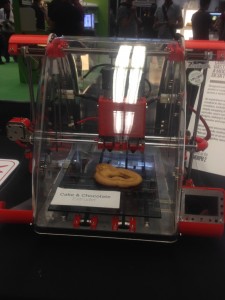

 Horizon Prize – Birth Day
 Every BU academic has a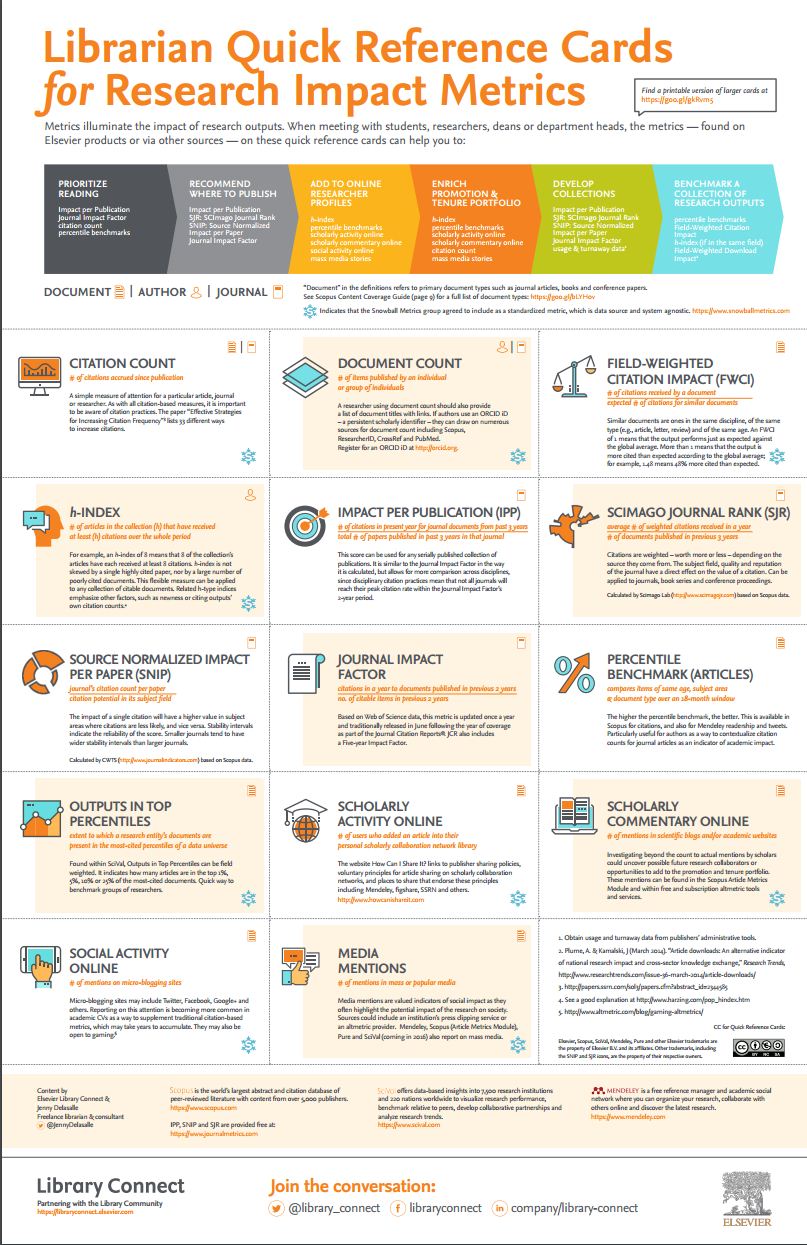
 The AHRC’s Annual Report and Accounts 2015-16 have been
  Please refer to the
  The Research and Knowledge Exchange (RKE)









 ECR Opportunities: New Development Programme, Research Grants & Upcoming Events
 Help us capture BU’s knowledge exchange activity HE-BCI survey 2025–26
 Verbal autopsy paper published two days ago
 ESRC Studentships for 2027 Entry: Opportunity Now Open
 SONAMONI contributions to Safety Conference 2026 in South Africa
 Horizon Europe Cluster 3 (Civil Security for Society) 2026 Calls Now Open
 MSCA Doctoral Networks 2026 Call Information Webinar
 ESRC Festival of Social Science 2026: Application Deadline Extended to Thursday 25 June 2026
 Reminder: Register for the ESRC Festival of Social Science 2026 Information Session
 ECR Funding Open Call: Research Culture & Community Grant – Apply now
 ERC Advanced Grant 2025 Webinar
 Update on UKRO services
 European research project exploring use of ‘virtual twins’ to better manage metabolic associated fatty liver disease