Prof apl. Professor Dr iur Dr rer pol Sanden, Leuphana University, Germany,has been invited by CRoLS to speak about:
Dignity as a Pivotal Legal concept in Human Rights?
EB303
Tuesday 08-03-2016
Start: 12:00 Finish: 13:00
Latest research and knowledge exchange news at Bournemouth University
Prof apl. Professor Dr iur Dr rer pol Sanden, Leuphana University, Germany,has been invited by CRoLS to speak about:
Dignity as a Pivotal Legal concept in Human Rights?
EB303
Tuesday 08-03-2016
Start: 12:00 Finish: 13:00
The fifth edition of the Bournemouth Research Chronicle (BRC) is now available. This year’s edition focuses on interdisciplinary research taking place at Bournemouth University (BU).
The issues facing our society and the world are becoming increasingly complex, requiring solutions that work across disciplines, taking the best thinking and knowledge from a range of subject areas. Here at BU, we encourage our academics to break down barriers and take an interdisciplinary approach to their research, as we believe that by working together we can create the most innovative ideas and solutions.
This year’s Bournemouth Research Chronicle (BRC) is a celebration of our interdisciplinary research. By connecting experts in different fields, we collaborate on interdisciplinary research, the aim of which is to develop novel approaches and innovative schools of thought that can be applied to complex problems. By taking a holistic view of an issue, more rounded solutions can be developed than would have been possible if a societal challenge was examined through the lens of just one discipline.
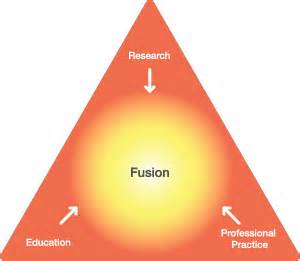
The new perspectives developed through interdisciplinary research not only help to give a better understanding of some of the complex problems facing our society, but also help to inform both the teaching and professional practice undertaken by our academics. Our blend of teaching, research and professional practice is at the heart of our Fusion strategy which underpins our work and culture at BU. Introducing different disciplines to our teaching helps to give our students a richer understanding of the world and their subject areas.
Inside this year’s BRC, you can read about BU researchers who are working to make a difference to the world around them. Academics in our Faculty of Health and Social Sciences are working to improve orthopaedic practices, while others in the Faculty of Science and Technology are developing reliable sources of renewable energy.
Meanwhile, academics in the Faculty of Media and Communication have been working with a local college for young disabled people to develop the award winning SHIVA project, which enables children with physical disabilities to design and print their own 3D models. In the Faculty of Management, researchers have been looking at the effects of terrorism on tourism – a very topical issue.
This is but a small sample of the work that goes on in BU every day. The BRC illustrates how Bournemouth University’s researchers are collaborating and working across subject areas to develop interdisciplinary research projects that are making a real difference to the world.
Original article taken from the LSE Impact blog – http://blogs.lse.ac.uk/impactofsocialsciences/2016/03/04/academic-profile-services-many-mirrors-and-faces-for-a-single-ego/
Academic profiling services are a pervasive feature of scholarly life. Alberto Martín-Martín, Enrique Orduna-Malea and Emilio Delgado López-Cózar discuss the advantages and disadvantages of major profile platforms and look at the role of ego in how these services are built and used. Scholars validate these services by using them and should be aware that the portraits shown in these platforms depend to a great extent on the characteristics of the “mirrors” themselves.
The model of scientific communication has recently undergone a major transformation: the shift from the “Gutenberg galaxy” to the “Web galaxy”. Following in the footsteps of this shift, we are now also witnessing a turning point in the way science is evaluated. The “Gutenberg paradigm” limited research products to the printed world (books, journals, conference proceedings…) published by scholarly publishers. This model for scientific dissemination has been challenged since the end of the twentieth century by a plethora of new communication channels that allow scientific information to be (self-)published, indexed, searched, located, read, and discussed entirely on the public Web, one more example of the network society we live in.
In this new scenario, a set of new scientific tools are now providing a variety of metrics that measure all actions and interactions in which scientists take part in the digital space, making some hitherto overlooked aspects of the scientific enterprise emerge as objects of study. In the words of Jason Priem the First Revolution promoted the homogeneity of outputs (through academic journals, the main communication channel), and the Second Revolution promotes the diversity of outputs. We can draw a comparison between those revolutions and the changes that are taking place in the field of scientific evaluation: the First Revolution promoted the homogeneity of performance metrics (through the Impact Factor, the “gold standard” of scientific evaluation), and the Second Revolution promotes a diversity of metrics (h-index, altmetrics, usage metrics). The emergence of academic profiling services (most of them created in 2008) was a collateral consequence.
Because each of these tools focuses on fulfilling a different set of needs, caters to a specific audience (diverse communities), and provides a variety of different metrics, it stands to reason that they should reflect different sides of academic impact. Each platform becomes then a mirror reflecting the likeness of the communities that use it.
Recently, we set out to radiograph the discipline of Bibliometrics, not only trying to identify the core authors, documents, journals, and the most influential publishers in the field, but also comparing the diverse portraits shown by each platform, with special attention to the one offered by Google Scholar Citations. We collected data for a sample of 814 researchers who work mainly or incidentally in the field of Bibliometrics. These data can be browsed in the website Scholar Mirrors, and an analysis of the results can be found in this working paper.
During this exercise we isolated some of the main features of these academic profiling services (Google Scholar Citations, ResearchGate, Mendeley, and ResearcherID) in terms of their general advantages and disadvantages, which are summarized below in Table 1.
TABLE 1: COMPARISON OF DIFFERENT ACADEMIC PROFILING SERVICES
Each academic profile platform offered distinct and complementary data on the impact of scientific and academic activities as a consequence of their different user bases, document coverage, specific policies, and technical features. Not all platforms have a homogenous coverage of all scientific disciplines. Likewise, their user bases aren’t uniform either. Researchers should be aware that the bibliometric portraits shown in these platforms depend to a great extent on the individual characteristics of the “mirrors” themselves.
Google Scholar Citations profiles draw upon the vast coverage of Google Scholar (giving voice to all disciplines, languages, countries; academics and professionals) at the cost of a little accuracy (errors in parsing citations or authorship) and with an austere approach (few indicators, and little user interaction). Nonetheless, it offers the most advanced management system for versions and duplicates.
Regarding ResearchGate, the great amount of documents already uploaded by a growing user base (especially from the biomedicine community) supports the usefulness of some of its indicators (especially Views and Downloads, now combined into Reads). However, the lack of transparency compromises its reliability. Likewise, unannounced changes in some of its key features make this platform unpredictable at the moment.
Mendeley, despite being an excellent social reference manager, offers the most basic author profiling capabilities of all the platforms we analysed, although we should acknowledge the usefulness of the Reader metric. The term used to define this metric is, however, misleading, because it doesn’t accurately reflect the nature of the metric. Lastly, the fact that profiles aren’t automatically updated makes the system completely dependent on user activity. This fact strongly limits the use ofMendeley’s profile page for evaluating purposes.
ResearcherID does not offer automatic profile updates either. As a result, a great percentage of profiles have no public contributions listed in their profile (34.4% in our sample of bibliometricians, which should be the ones who are most aware of these tools). Moreover, we found errors in citation counts inherited from the Web of Science. A word of warning: the Web of Science also makes mistakes.
At any rate, the growth of academic profiling services is unstoppable, and practices like the aggressive marketing used by ResearchGate fuel the ego that dwells in every researcher through the systematic e-mail bombing directed to the Narcissus that lives inside of us. The potential positive effects are clear: new channels of information and new collaboration tools. However, this road might also lead us to look ourselves in the scholar mirror every day, and there lies the path to the Dark Side.
Paraphrasing Bill Clinton’s famous quote for the 1992 North American presidential campaign: “it’s the economy, stupid!” we could now state the following: it’s not the collaboration; it’s the ego, stupid! Ego moves Academia. These new platforms, whether they are integrated in other products or not, will be massively used by universities, research institutions, and national funding agencies to evaluate scholars, because scholars are validating them by using them massively. Hence, we should not conclude without warning about the dangers of blindly using any of these platforms for the assessment of individuals without verifying the veracity and exhaustiveness of the data.
This blog post is based on a working paper which can be found here. All the data obtained for each author profile and the results of the analysis can be found at Scholar Mirrors.
Note: This article gives the views of the author, and not the position of the LSE Impact blog, nor of the London School of Economics. Please review our Comments Policy if you have any concerns on posting a comment below.
About the Authors
Alberto Martín-Martín is a PhD Candidate in the field of bibliometrics and scientific communication at the Universidad de Granada (UGR).
Enrique Orduna-Malea works as a postdoctoral researcher at the Polytechnic University of Valencia (UPV).
Emilio Delgado López-Cózar is a Professor of Research Methods at the Universidad of Granada (UGR).
This first week of March has been a good week for FHSS publications. On March 1st CMMPH Prof. Vanora Hundley published her collaborative paper ‘Do Cochrane summaries help student midwives understand the findings of Cochrane systematic reviews: the BRIEF randomised trial’.[1] With colleagues based across the UK and Ireland she surveyed over 800 midwifery students at nine universities. This results of the study can be found in the journal Systematic Reviews. This is a Gold Open Access journals, hence the paper is freely available for anybody to read across the globe. To read this paper click here!
The second FHSS publication is a chapter in a Kindle book on the Importance of public health in low- and middle- income countries, written by Dr. Puspa Raj Pant,CMMPH’s Prof. Edwin van Teijlingen, and BU Visiting Faculty Prof. Padam Simkhada.[2] Padam Simkhada is Professor of International Public Health and Associate Dean (Global Engagement) for the Faculty of Education, Health and Community at Liverpool John Moores University. The chapter is part of the Kindle book with the long title: Public Health for the Curious: Why Study Public Health? (A Decision-Making Guide to College Major, Research & Scholarships, and Career Success for the College Students and Their Parents) edited by Richard Lee Skolnik from Yale University, USA.
The third paper is by FHSS PhD student Clare Farrance with her supervisors Dr. Fotini Tsofliou and Dr. Carol Clark. This systematic review ‘Adherence to community based group exercise interventions for older people: A mixed-methods systematic review’ assessed the views and adherence of older participants attending community-based exercise programmes of over six-months duration. Reporting that evidence is still very limited, although the preliminary limited evidence is positive regarding long-term adherence rates. This paper is also Open Access, funded by BU’s Open Access fund.
Prof. Edwin van Teijlingen
CMMPH
References:
Below is a list of committee inquiries with current open calls for evidence. Please contact Emma Bambury-Whitton if you would like to discuss submitting evidence.
Commons Select Committee inquiries
Lords Select Committee inquiries
Joint Committee inquiries
Monday
TEF
The BIS select committee has published its report on The Teaching Excellence Framework: Assessing quality in Higher Education following its recent inquiry. The report recommends that government should provide further detail on the balance between qualitative and quantitative assessment in the TEF. The report also supports the principle of linking differentiated levels between teaching quality and fee level. The report argues that the quality assurance of universities should remain administratively and visibly independent from Government or the new regulator.
Higher Education Bill
The government looks set to introduce a higher education bill, possibly following a White Paper in May, with David Cameron said to be convinced of the need for legislation. Higher education bill ‘odds-on’ after Cameron backs legislation. (THE).
EU Referendum
The Observer has looked at how a Brexit would affect different aspects of society, including HE and research. What would Brexit mean for everyday life in the UK? (The Guardian).
Tuesday
Widening Participation
An article in the Guardian HE network looks at why white working class boys are put off going to university. The article reveals that the large amount of debt they will have is the main reason which is putting them off considering university. What puts working class boys off university? (Guardian Higher Education Network).
Wednesday
EU Students
The government is to make it harder for students from other European Union countries to get financial support for their living costs in England by extending UK residency requirements from three years to five years.
Crackdown on EU students’ support funding (BBC).
Thursday
Women in Higher Education
Many more women are taking leadership positions in universities but still remain heavily outnumbered by men in higher education’s top jobs. More women in senior university jobs, says report (THE).
Friday
International Students
Vivienne Stern, Director of the International Unit, writes for WonkHE about the strengths and weaknesses of the UK HE system from the perspective of international students. We need to keep the UK’s competitive advantage (WonkHE).
Religion at Universities
It has been reported that Jewish students are avoiding universities due to perceived growing campus anti-Semitism. We cannot allow British universities to become bastions of religious segregation (Telegraph).
EU Referendum update
On 15 April the official “referendum period” begins and campaigning limits and restrictions are put in place. The EU Referendum Act also compelled the Government to publish two reports by this date. The first, setting out the renegotiation outcomes and the Government’s opinion of it, was published last week. The second requires the Government to publish a report setting out the rights and obligations of UK citizens as members of the EU and provide examples detailing the arrangements of European countries that are not in the EU.
Purdah begins on 27 May. After this date, publically funded institutions are not able to publish any information promoting a view point on the referendum or the issues associated with it. This covers Westminster and Devolved ministers and departments and local authorities.
The BBC are televising three live debates on 19 May, 15 June and 21 June with the referendum taking place on 23 June. Results will be announced on 24 June.

The following is a snap-shot of funding opportunities that have been announced. Please follow the links for more information:
British Council
Newton Fund: Researcher collaboration workshop – supporting sustainable ecosystems for poverty alleviation in the Amazon
The British Council and FAPEAM will be holding a workshop on the above theme. It is now inviting Early Career Researchers from the UK or Brazil to apply to attend this workshop. All travel and accommodation expenses will be covered by the Researcher Links programme.
Maximum Award: Not specified Deadline: 20 March 2016
Ministry of Defence
CDE enduring challenge competition
The enduring competition is continually open to all highly innovative research ideas that challenge existing conventions and have a high potential benefit for the defence and security end user.
Maximum Award: £40,000 – £150,000 Deadline: 22 March 2016 and recurring through the year
Medical Research Council
Biomedical catalyst – developmental pathway funding scheme
The DPFS scheme is a key part of our Translational Research Strategy and supports the translation of fundamental discoveries toward benefits to human health. It funds the pre-clinical development and early clinical testing of novel therapeutics, devices and diagnostics, including “repurposing” of existing therapies.
DPFS is an ongoing scheme, with outline deadlines every 4 months.
Maximum Award: Not specified Deadline: 27 July 2016
Wellcome Trust
People awards
People Awards are two related schemes supporting projects that encourage the public to explore biomedical science. The schemes are open to a wide range of people, including: mediators, facilitators and practitioners of science communication; science centre/museum staff; artists; educators. Project activities and outputs may include:
Maximum Award: £40,000 Deadline: 20 May 2016, with 3 other deadlines in the year
Humanities & Science Small Grants
This scheme is for small-scale humanities and social science research projects, scoping exercises or meetings in any area of human or animal health, including projects relating to research resources.
Maximum Award: £10,000 Deadline: Open
Nuffield Foundation
Grants for research & innovation
This funder has seven programmes that fund research and innovation in areas of social policy and education. These are all open to applications.
The programmes are: Children and Families, Early Years Education and Childcare, Economic Advantage and Disadvantage, Education, Finances of Ageing, Law in Society, and Open Door.
Maximum Award: £350,000 Deadline: 18 April 2016 and other dates
British Tinnitus Association
Large research project scheme
Applications are actively encouraged in the following areas, although all applications will be considered:
Maximum Award: £75,000 Deadline: 30 April 2016
Fisheries Society of the British Isles
Small research grants
The Research Grant programme provides members of the Society with the opportunity to bid for financial support for carrying out research on any topic that is relevant to fish biology and management.
Maximum Award: £5000 Deadline: 1 May 2016
British Psychological Society
Research Seminar competition
The Competition provides grants to enable institutions to co-operate to hold a series of at least three scientific seminars.
The proposed seminars should have tangible goals and should focus on developing and extending the understanding of a psychological process in any field of scientific psychology.
Maximum Award: £3000 Deadline: 1 July 2016
Sections Initiative Fund
This Research Board fund is for Sections of the British Psychological Society. It provides grants of up to £15,000 to support scientific initiatives that promote or advance psychology.
Examples of initiatives include:
Maximum Award: £15,000 Deadline: 1 September 2016
If you are interested in submitting to any of the above calls you must contact your RKEO Funding Development Officer with adequate notice before the deadline.
For more funding opportunities that are most relevant to you, you can set up your own personalised alerts on Research Professional. If you need help setting these up, just ask your School’s/Faculty’s Funding Development Officer in RKEO or view the recent blog post here.
If thinking of applying, why not add notification of your interest on Research Professional’s record of the bid so that BU colleagues can see your intention to bid and contact you to collaborate.


Although the call does not formally open until 14/4/16, now is the time to start working with your potential fellow to ensure that your application is ready in good time. This is a popular scheme for applications from BU and, as it has a deadline of 14/9/16, this puts pressure on your fellow academics undertaking quality reviews at an already busy time. You may also wish to avoid writing your application in August when you are preparing for the new academic year.
To this end, RKEO are providing a two-day workshop with Dr Martin Pickard (our external bidding consultant) on 16th and 17th March 2016 for BU academics and we have now confirmed additional workshop dates on the 24th and 25th of May 2016 when the workshop will be repeated – we will, however, be gauging demand for this. This workshop will take you through all aspects of exploring the call requirements and writing your bid, plus the opportunity to discuss your developing application with academics on the same journey.
You are encouraged to attend with your potential fellow but they will need to make their own travel arrangements and cover any financial outlay.
Booking are now open for these two-day workshops. Please note that you will need to attend both days. Please send your request to attend to Dianne Goodman, RKEO Funding Development Team Co-ordinator by Friday 11th March. Please let us know if you will be bringing your potential fellow so that sufficient catering can be ordered.
In the meantime, to find out more about this call, please refer to the funding opportunity page on the Horizon 2020 Participant Portal and the Work Programme for Marie Skłodowska-Curie Actions, which gives vital information on the Horizon 2020 context for this call. If you have any questions before the workshop, please contact Emily Cieciura, RKEO Research Facilitator: EU & International.
Just to advise you details of our next BU Researcher/Academic Development (BRAD) events programme will be coming out very soon….watch out for our announcements on the Research BLOG and BU Intranet and get yourself booked in via Organisational Development.
BRAD sessions be held from the 4th of April – 11th of April 2016.
Pop these dates in your calendars and get ready!
It’s with great pleasure that we invite you to submit an abstract to a special track on “Lifestyle and communities: sharing in the digital era” of the ATLAS annual conference. It will take place in Canterbury, Kent, UK, 14th-16th September 2016.
Please see below for details, or click here… and share!
Led by: Lenia Marques, Jules Hecquet and Dimitrios Buhalis (Bournemouth University, UK)
Supported by: ETourism Lab
The leisure and tourism landscape has been subject to rapid changes in a world where internet and technologies have contributed to shape experiences, relationships, practices and lifestyles. In the network society, the sense of community is also varied and we can interrogate different meanings, values and practices at the heart of changing social interactions. The boundaries between online and offline communities seem to be blurred and they present new societal challenges, which also affect the industry, namely with sharing economy / collaborative consumption practices and communities (such as AirBnB, Uber, Couchsurfing, Meetup, Mealsharing, etc.).
The causes and consequences of such platforms in terms of lifestyle and the sense of community is yet to be studied. Therefore, we welcome papers which may explore, but are not limited to, the following themes:
The convenors are looking at possibilities for publication.
For more details, click here or contact Dr Lenia Marques, lmarques@bournemouth.ac.uk .
http://www.atlas-euro.org/event_2016_canterbury/tabid/248/language/en-US/Default.aspx#track6
*Image courtesy of Stuart Miles at FreeDigitalPhotos.net
Professor Stephen Page in the Faculty of Management has just published his 40th book, Event Studies with Routledge, a collaboration with one of the top scholars in the field of events research, Professor Don Getz from the University of Calgary, which is a third edition of this major student text.
Event Studies is the only book devoted to developing knowledge and theory about planned events. It focuses on event planning and management, the experience of events and the meanings attached to them, the dynamic processes shaping events and why people attend them. In essence it is a synthesis of the different disciplines that have contributed to the development of events research, also highlighting important discourses on event management, event tourism, and the study of events within various disciplines that are able to help understand the impacts of events in society.
New opportunity for your students to contribute to environmental, economic and social sustainability
As part of helping our students to make a difference to the world, BU has signed up to an NUS initiative called Dissertations for Good (DfG). The initiative connects students with external organisations who then work collaboratively to complete research projects into social, economic and environmental sustainability. The outcome is a piece of student work that contributes in a tangible way, a report that is useful for their partnered organisation and a project that forms their dissertation.
DfG helps students to improve their communication, interpersonal, problem-solving and organisation skills, as well as developing their ability to use their initiative and self-motivate. It also provides valuable CV-enhancing experience of working in the outside world.
All students looking to undertake a research project at BU can register at www.nus.org.uk/dfg and create a profile. This allows them to search the organisations participating in DfG. They then request to be partnered with the organisation and organise a planning meeting. The student, their supervisor and a representative from the partner organisation meet to discuss the project and work together to make the project a success.
Details will be circulated to students via the portal. We shall be monitoring and will seek to evaluate engagement.
With just four months to go until the referendum on British membership of the EU on 23 June, academics are lining up on either side of the debate. Scientists’ lobby groups on both sides will register with the government as parties to the vote in the next two weeks.
Research Professional have written an interesting article which sets out both sides of the camp. Click here to read more.
I recently received 45 45’s (7” singles or if you’re still too young, small records) for my birthday (guess how old I was?). I thought I would make a shameless attempt to cram some of the records into a research focussed blog post. Here goes!
I fall to pieces (by Patsy Cline) – most funder success rates are lower than 20% and so don’t be disheartened when that rejection email pops in your in-box. Statistically, you only have a one in five chance of being successful and so do ‘try and try’ again. RKEO are here to support you and our Facilitators can review your unsuccessful applications and funder feedback to see how your next application can be stronger and successful.
You don’t miss your water (till your well runs dry) (originally by The Byrds but I have it by The Triffids) – don’t wait until your last grant has finished to apply for your next; start planning your next applications a year before your grant ends. Have a chat about your research plans with RKEO and submit your next intention to bid form to your Funding Development Officer.
Monotony (by Sauna Youth) – it can sometimes seem like you’re on a research funding treadmill but remember why your research excites you and why it should excite others. Think about the impact your research can have to society and find inspiration with the KEIT team.
Dancing in the dark (by Bruce Springsteen) – sometimes it can feel like that as an academic in the competitive world of research funding, but as Bruce said in the song – ‘you can’t start a fire without a spark’ and so make sure you are a ‘gun for hire even if you’re just dancing in the dark’. We have lots of opportunities to interact with other academics and RKEO can help you make those connections and collaborations. We also hold ‘sandpit’ events where you can form interdisciplinary teams to submit new and exciting research ideas for external funding. Check out our research blog for the next sandpit.
Here comes the summer (by The Undertones) – well, it’s almost here and a good time to really think about those research plans as you set your objectives for the next academic year. Have a chat with the RKEO team about how we can support your plans and what development opportunities we have available to you, particularly to support your application writing.
Complete control (by Clash) – you do have control over your research career and RKEO are here to help. Get in touch and see what we can do for you.
Hey ho, let’s go (by Ramones) – as Joey said ‘they’re all revved up and ready to go’. I hope you are feeling this way by now and that this will lead to Success – (by Iggy Pop).
Are you involved in research around the topic of food?
We are looking for anyone interested in running a food related activity at the Christchurch Food Festival as part of our “Festival of Learning on Tour”. We have a stool booked at the Family Fun day on Sunday 8th May where we’d like to run some food related research activities that families, children, members of the public could get involved with when passing by.
Could this be of interest to you? If so please contact Katie Breadmore (kbreadmore@bournemouth.ac.uk/ 61356)
We are happy to inform you that Bournemouth Research Information and Networking System (BRIAN) will be upgrading to a new version. The current system will be offline from 8.00am on Thursday 10th March 2016, and will hopefully be restored and functioning fully on Friday 11th March 2016.
Some of the improvements from this upgrade include:
We do apologise for the inconvenience but we hope that these exciting new features will be up and running for you to use on the 11th March 2016.
All relevant guidance notes on the Staff Intranet will be updated in due course. If you need any help using the new system or if you encounter any problems after the upgrade, please do send an email to BRIAN@bournemouth.ac.uk and a member of staff will be able to assist you.
Monthly BRIAN training sessions are also available:
If you are interested to book on to any of these training sessions, please get in touch with OD@bournemouth.ac.uk (dates are subject to change)
Please watch out for announcement on future dates on the RKEO Research blog.
In the meantime, if you do have queries relating to the upgrade, please feel free to get in touch with Pengpeng Hatch at pphatch@bournemouth.ac.uk (01202 961354).
The EBC hosted the second in a series of ‘Meet the Entrepreneur’ events on Wednesday 2nd March.
This seminar featured Peter Czapp, co-founder of The Wow Company, a proactive accountancy practice that advises small creative businesses across the UK. Peter and his team are committed to helping their clients make more profit and pay less tax, whilst at the same time having more fun.
The event attracted staff and students from across the University and they heard Peter share his experiences as an entrepreneur and the valuable insights and lessons he has learned along the way.
Organised by Mark Painter, Business Development Manager for The Business School, this series of events aim to provide students and staff the opportunity to hear about the personal journey of the profiled entrepreneur, learn about their experiences as a business owner and their approach to founding and growing a successful business.
Mark Painter said, ‘as one of our valued Entrepreneurs in Residence I am delighted that Peter has been able to visit us and share his experiences’. Mark added, ‘during his presentation Peter stressed the importance of being focussed, clearly defining your targets, and doing the tasks that really matter – something for us all to think about, regardless of our own personal goals and ambitions.’
The next event in this series will be on Wednesday 20th April and will profile Simon Phelps, founder of Fluvial Innovations Ltd. For more information and to book a place, stuents and staff should follow the link to www.bucfe.com/events
![InnovateUK_LogoA_Interim_RGBx320govuk[1]](http://blogs.bournemouth.ac.uk/research/files/2014/12/InnovateUK_LogoA_Interim_RGBx320govuk1-300x90.jpg)
Date: Thursday 17 March
Location: Bournemouth
For more information and to register – check out this link