/ Full archive

A year in the Life of an Early Career Researcher

I joined BU as a lecturer in the Faculty of Media and Communication on 1 September 2014, three months after being awarded my PhD in Media and Cultural Studies from the University of Salford.

So, as the anniversary of my appointment approaches, I consider it timely to reflect on my first year as a full-time academic. I hope that my experience will be of interest to others starting new academic roles this year, at a similar stage in their careers.

To put my experience in context, while technically an early career researcher, I’m no spring chicken! I was a very mature PhD student (even though no-one ever guesses my real age) and joined BU with baggage in tow!

The eclectic baggage I brought with me was six years’ experience as a lecturer in higher education on a part-time basis combined with a variety of other roles including journalist, research assistant, blogger, PhD student, social entrepreneur and Chief Executive of Black British Academics.

I arrived at BU with drive, motivation and ambition intact, after four years of intense doctoral study, with my carefully prepared 5-year research plan, diligently completed after receiving my PhD award, which accompanied me to my interview at BU in June 2014.

By my own observations, the first five years post PhD is make-or-break time. With aspirations to become a professor one day, performing the yearly regime of international conferences, journal articles, books, book chapters and funding bids are necessary tasks.

My primary area of research in media and communication is centred on racial constructions and representations in media and popular culture and how race shapes and influences engagement with and use of digital technologies.  My PhD thesis is a study on the social, cultural and counterhegemonic practices of Black British bloggers.

DG-MPG-Nov2013

A the Media and Politics Group conference

Year 1 of my 5-year research plan included developing publications from my PhD thesis. In November 2013 I had presented a paper from the chapter: Alternative Voices, Alternative Spaces, Counterhegemonic Discourse in the Blogosphere at BU for the Media and Politics Group annual conference. It won the James Thomas Memorial Prize, and is the first chapter in a new book being published with Palgrave Macmillan in September, edited by four faculty colleagues, called Media, Margins and Civic Agency.

I presented another chapter of my thesis at the Cyberspace conference in the Czech Republic in November 2014, which I recently submitted for review at Information, Communication and Society: Blogging While Black, British and Female: A Critical Study on Discursive Activism.

A third chapter: Challenging the Whiteness of Britishness: Co-Creating British Social History in the Blogosphere, was presented at the ICCMTD conference in Dubai in May, and has been accepted for publication in the Online Journal of Media and Communication Technologies for a special issue in September.

My PhD thesis now exhausted publication-wise, I am currently focusing on three strands of research: race and ethnicity in media and communication, pedagogies of social justice and cultural democracy and race equality and cultural democracy. These research interests are broadly linked to three key dimensions of my role as an academic: 1) research (extending knowledge within my discipline) 2) education (teaching), and 3)professional practice.

Cultural democracy, a recurring theme in my research, is a conceptual framework developed in the US more than a decade ago, surprisingly unfamiliar and underexplored on this side of the Atlantic. However, I plan to change that by advancing understanding through research based on its application in practice. After setting up the Cultural Democracy Network in May, shortly after being awarded a small grant from the Grants Academy to develop partnerships with UK-based institutions, I was invited to deliver a guest lecture on cultural democracy to 14 journalists at Research Fortnight’s London offices.

DG at RG [2] 260515

At Research Fortnight

Two of my current research projects represent research papers based on consultancy projects completed this past year. The first is a journal article I am co-authoring with Prof Kevin Hylton called Culturally Democratic Voices: Enhancing Race Equality Through Minority Staff Experiences, which we plan to submit to Race, Ethnicity and Education.

The second is a co-authored paper with Aisha Richards called Social Justice Pedagogy and Cultural Democracy: Promoting Inclusion and Equality in Further and Higher Education. It has just been accepted for presentation at the IAFOR International Conference on Education taking place in Hawaii in January, and we hope it will be selected for publication in the Journal of Education.

I have a book chapter coming out in September being published by Verlag Springer called Race, Racism and Resistance In British Academia, which I presented at the Surviving in a White Institution symposium at Leeds University in May, organised by the Critical Race and Ethnicities Network.

Finally, I am co-editor of a book project with Dr Shirley Tate, an Associate Professor in sociology at Leeds University, which is a collection of autoethnographies called Hear Us: Women Academics of Colour: Surviving and Thriving in British Academia, which we plan to publish next Autumn. It is a project I developed for the Black Sister Network at Black British Academics.

It has been a busy and productive year as an early career researcher, and in terms of my plans for the year ahead, this will be focused on the completion of work in progress, developing a funding bid and turning my attention to new areas of research.

One of these areas is advertising, which will inform my teaching on the BA Advertising degree. I plan to examine issues around constructions and representations of race and gender in TV advertising, examining audience perceptions. The other new area of research which builds on my doctoral study is engagement with digital technologies among Black elders.

In terms of the 5-year research plan I started out with, I discarded it within the first three months! I prefer to work with a yearly plan as I have found that in practice, the research culture and environment is too fluid, dynamic and constantly changing to plan specific publications so far in advance.

However, it is still a useful exercise post PhD to prompt thinking about the areas of research to focus on and the types of research projects to undertake. I have a target for publications and funding bids I aim to complete by 2019 – just before REF2020, so forward planning helps to ensure I stay on track!

By Dr Deborah Gabriel, Lecturer in Politics, Media and Marketing Communications in the Faculty of Media and Communication.

Creative Skillset – news & updates – August 2015

theme - creative-digitalView all of these stories and more in full:

News

* Trailblazer apprenticeships on the way: Help build your ideal apprentice

* Tick talent takes jobs: Why to Pick the Tick as we celebrate our graduates’ success

* Film and TV Launchpad: A stellar line-up for our Tick graduates

 Opportunities

* Are you in the 500?: Digital companies can pledge a vacancy for the Tech London 500 talent pool

* Film Trainee Finder: Film placements open!

* The Old Vic 12 hit Hiive: New competition for directors, playwrights, producers, and designers

 Events

* Edinburgh TV Festival: We’re sponsoring with inspirational diversity sessions

* Into Film Festival: Open students’ eyes at over 2,500 free screenings for 5-19s

* Open Doors Meetups: 16-24? Find your digital career at our next company-hosted meetup

About Creative Skillset


Introducing Katarina Krumplevska: Undergraduate Research Assistant

Hello! My name is Katarina Krumplevska and I have just finished my Undergraduate Research Assistantship position within the Faculty of Health and Social Sciences. The project I worked on was to validate a questionnaire which explored attitudes and beliefs of pain. This involved data collection, data analyses and starting to write up the results in a paper. As a graduate in psychology I had the experience of being a research assistant last year within the Psychology Department where I was involved in a health psychology project. I really appreciated the challenge of learning about pain and completing statistical analyses which were new. I think this project provided a great opportunity to realize that I can rise to the challenge of a project and work with people I have not worked with before. This has given me confidence which I believe will contribute to my next venture to do the MSc of Clinical and Developmental Neuropsychology at Bournemouth University in September.

Lunchtime Seminar on Measuring and Monitoring Research Impact 1-1.50pm, Wednesday 19th August in R301!

For those who will be around, please come along to support Jo George’s lunchtime seminar to hear her ‘Reflections on Measuring and Monitoring Research Impact from my Undergraduate Research Assistantship’.  She will present her findings around what makes a good impact case study, the case studies she has been working on, as well as her personal learnings.  Hope you can make it!

EC Info Day – EU Brokerage Event on Key Enabling Strategies taking place on the 1st of Oct 2015

EC Info days: relating to EU Brokerage Event on Key Enabling Strategies is being held on the:

1st of October 2015 in Strasbourg, France  euflag

Info days and brokerage events run by the EC are an opportunity to get an overview of work programmes covering the 2016 and 2017 calendar years, meet up and hear from others who are interested in the same programme and potentially form links and build consortia for future applications.

Please click on the link below to book or register your interest:

http://ec.europa.eu/research/index.cfm?pg=events&eventcode=2DE41882-FADE-977A-8FDF508D5871C5AA

Please let Emily or myself know if you intend to go so we can co-ordinate if others also wish to attend.

RCUK Telling Tales of Engagement Competition 2015

RCUKThe RCUK Digital Economy Theme (DET) is running a competition designed to help capture and promote the impact that your digital economy research is having. Three prizes of £10,000 are available to support researchers to further tell the story of research impact in an interesting and engaging way to a wider audience.

The competition, which has been co-developed with the National Centre for Universities and Business (NCUB), is designed to produce very informative case study exemplars which can be used to help the wider research community develop understanding of the nature of a pathway to impact. It aims to encourage applicants to tell a story to describe the pathway to impact which actually occurred. This should be even more informative because understanding how impact arises is key to planning for future impact pathways.

They want the stories to portray impact as including what capability has changed outside the institutions, and what benefits that exercising this capability change has then delivered. Each ‘Tale of Engagement’ in showing how the actual impact arises and the evidence of the impact itself will thereby show clearly the link between the impact and the research. Choosing how to tell the story should reflect the nature of the story itself. They hope that giving the timeline of the whole story should stimulate thinking on more imaginative and illustrative ways to tell the tale of engagement and the resulting impact.

You will need to complete the form on this page, addressing the questions raised in the ‘Scope of Competition’ section of the full call document, and taking into account the “Guidance on completing proforma” notes. You will need to attach to the form, a single PowerPoint slide which summarises your entry in an interesting and engaging way.

Closing date: 01 December 2015 at 12:00

Please contact your RKEO Funding Development Officer in the first instance if you are interested in applying to this call.

New publication by BU PhD student Jib Acharya

Jib paper India 2015

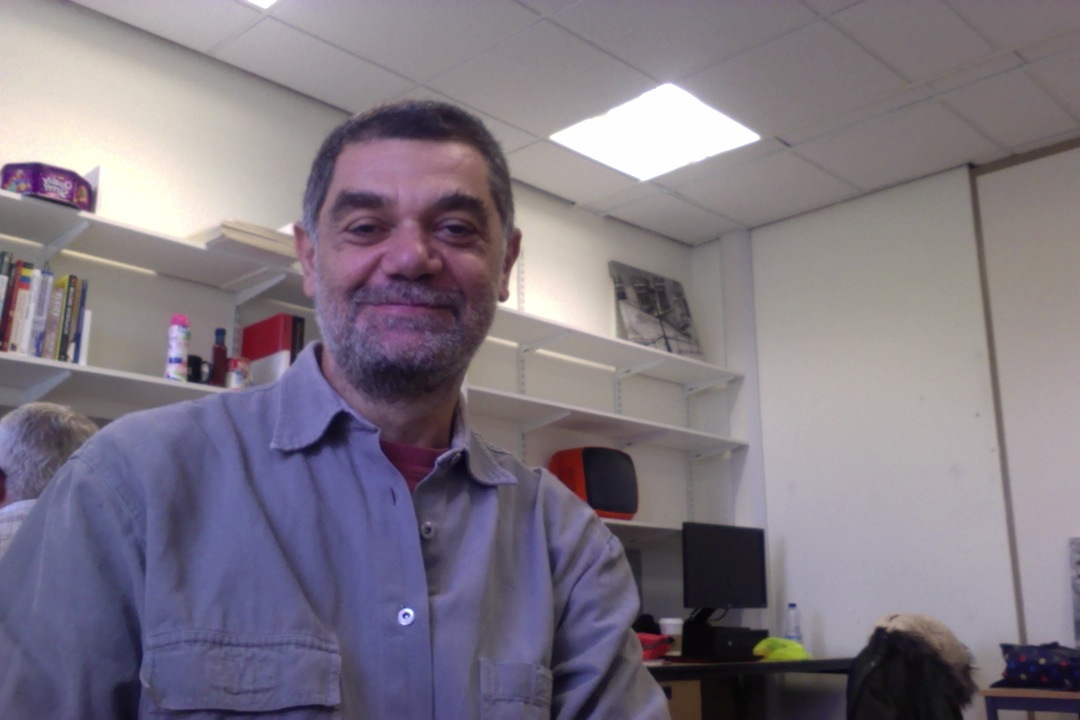
Congratulations to FHSS Ph.D. student Mr. Jib Acharya, whose paper ‘Study of nutritional problems in preschool aged children in Kaski District in Nepal’  has just been published in the Journal of Multidisciplinary Research in Healthcare [1].  The academic paper, based on his Ph.D. thesis, reports on his mixed-methods Public Health study addressing attitudes and knowledge of mothers of young children (pre-school aged) in one particular district in Nepal.  The research comprises a quantitative survey and qualitative focus groups.   Jib Acharya, who is originally from Nepal, compares and contrasts the attitudes, knowledge and behaviour of poor rural and poor urban women (=mothers) in that district.   The research is supervised by Dr. Jane Murphy, Dr. Martin Hind and Prof. Edwin van Teijlingen.

SAM_3423

Prof. Edwin van Teijlingen

CMMPH

Reference:

  1. Acharya, J., van Teijlingen, E., Murphy, J., Hind, M. (2015) Study of nutritional problems in preschool aged children in Kaski District in Nepal, Journal of Multidisciplinary Research in Healthcare 1(2): 97-118.

Progress on public engagement: Institutional survey – your support is required!

bubbles

In 2012, Bournemouth University signed up to the National Co-ordinating Centre for Public Engagement (NCCPE) Manifesto for public engagement. Further details can be found here: http://bit.ly/1LNCZZv.

In order to understand the extent to which as BU is embedding public engagement, staff and students are being asked to complete this survey on annual basis. This will be used to assess progress and inform future plans.

The survey can be found here: http://bit.ly/1L1Rryf and I would be most grateful if you could promote participation in the survey to any staff and students that you work with.

Three £20 Amazon vouchers will be given to participants entering the prize draw. It is anticipated that this survey will take 10 minutes to complete. Responses must be received by 4th September.

Any queries about this survey should be sent to Rebecca Edwards (redwards@bournemouth.ac.uk). All responses will remain confidential.


Reminder that EoI are required for NERC standard grants round January 2016

nerc-logo-50thFollowing on from my previous blog post informing you of NERC’s demand management measures, this is a reminder that only one application can be submitted to the January 2016 standard grant round.  Therefore, expressions of interest are required by 21st August.  All details of the competition process and the form can be found here.

Media training for ESRC-funded researchers

Media training is changing at the ESRC.ESRC

Having taken on board extensive feedback from their delegates they are moving their media training forward to focus on the practical elements of working with the media.

They now offer a one day-long media training session that provides the opportunity to develop practical media skills in a safe environment.

They believe by concentrating their resources this way they will be able to give maximum opportunity for researchers, no matter what stage of their career, to develop their skills and feel comfortable handling media interviews. Whether a PhD student, postdoctoral researcher or senior fellow, the new practical media training session provides the guidance needed to engage the media with confidence – and plenty of opportunity to practice.

For more information, please see the article here.

The course will be taking place in different locations throughout the year. The forthcoming course dates are:

  • 17 September 2015 – London
  • 15 October 2015 – Cambridge
  • 30 October 2015 – London
  • 12 November 2015 – London

Book a place on a media training course.

For further information on any aspect of ESRC media training days please contact esrcmediatraining@esrc.ac.uk

EC Info Day – Health, Demographic Change and Well-being taking place on the 18th Sept 2015

EC Info days: relating to Health, Demographic Change and Well-being are being held on the:

18th September 2015, Brussels, Belgium euflag

Info days and brokerage events run by the EC are an opportunity to get an overview of work programmes covering the 2016 and 2017 calendar years, meet up and hear from others who are interested in the same programme and potentially form links and build consortia for future applications.

Please click on the link below now to book or register you interest – this will definitely be a popular event!

http://ec.europa.eu/research/index.cfm?pg=events&eventcode=7829B368-BCD2-7BA8-039C396F0C62FA5D

Please let Emily or myself know if you intend to go so we can co-ordinate if others also wish to attend.

Launch of BU’s new Bridging Fund Scheme for research staff

Golden gate Bridge wallpaperThis month sees the launch of the new BU Bridging Fund Scheme which aims to provide additional stability to fixed-term researchers who continue to rely heavily on short-term contracts usually linked to external funding. This situation sometimes impacts negatively on continuity of employment and job security and can result in a costly loss of researcher talent for the institution.

The new Bridging Fund Scheme aims to mitigate these circumstances by redeploying the researcher where possible, or where feasible, by providing ‘bridging funding’ for the continuation of employment for a short-term (maximum three months) between research grants. It is intended to permit the temporary employment, in certain circumstances, of researchers between fixed-term contracts at BU, for whom no other source of funding is available, in order to:

(a) encourage the retention of experienced and skilled staff, and sustain research teams and expertise;

(b) aconcordat to support the career development of researchersvoid the break in employment and career which might otherwise be faced by such staff;

(c) maximise the opportunity for such staff to produce high-quality outputs and/or research impact at the end of funded contracts/grants.

This is a great step forward for BU and for BU’s researchers and is an action from our EC HR Excellence in Research Award which aims to increase BU’s alignment with the national Concordat to Support the Career Development of Researchers (further information is available here: https://research.bournemouth.ac.uk/research-environment/research-concordat/).

You can read the full guidelines here: BU bridging fund scheme guidelines v1 070815

HE Policy Update

Monday

Ernst and Young

Ernst and Young, one of the UK’s biggest graduate recruiters is to remove degree classification from the entry criteria for its hiring programmes. The company claims they have found “no evidence” that success at university was correlated with achievement in professional qualifications. Ernst and Young drops degree classification threshold for graduate recruitment (THE).

Tuesday

UCAS

UCAS has been accused of blocking efforts to improve social mobility by refusing to release important data it holds on students from poor backgrounds. The Chair of the Social Mobility and Child Poverty Commission, has called on UCAS to open up its gold mine of information to help end the “national scandal” of disadvantaged children missing out on places at top universities. Ucas refusing to release data it holds on students from poor backgrounds – while making £12m a year selling applicants’ details  (The Independent).

Wednesday

A Level Results

A shift towards teenagers taking the more traditional academic subjects will be revealed when A-level results are published next week. More students are now opting to take English and Maths at A-Level. A-level results will reveal shift in focus towards more traditional academic subjects  (The Independent).

Thursday

Graduate Wages

According to a study by the Sutton Trust and upReach, Graduates’ wages increase more quickly if they went to a private school, compounding the fact that privileged university leavers attract higher starting salaries too. Graduates who went to private school ‘get bigger pay rises’ (THE).

Friday

Graduate Tax

When speaking on BBC Radio 4’s Today programme, Andy Burnham, a Labour leadership contender, promised to replace tuition fees with a graduate tax if he leads the party into government.  This policy would be a shift from Labour’s current policy of lowering tuition fees in England to £6,000 a year by reducing tax relief enjoyed by those earning above £150,000. Andy Burnham pledges to replace tuition fees with graduate tax (THE).