Category / Business & Management Studies

Re-thinking the Profession of Project Management for Sustainability

Project management contributes trillions to the global economy; driving business innovation and converting politicians’ promises into new systems and constructions that are intended to improve everyday life.

Sustainable development is a global priority and yet sustainability and project management do not sit comfortably together.  There is tension between the long-term focus of sustainable development and the inherent pressure on projects to deliver against short-term measures of success.  Furthermore, projects regularly fail.  For example, Meier (2017) suggest 71% of projects in 2015 failed or were challenged.  The financial, social and environmental costs of wasted resources and lost opportunities each year are also measured in trillions across the globe.

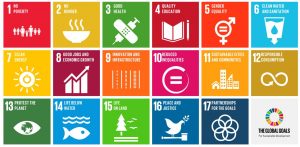
The UN’s 17 Sustainable Development Goals

Dr Karen Thompson and Dr Nigel Williams, both from the Department of Leadership, Strategy and Organisations, recognise that principles of responsible management and sustainability must be effectively incorporated into project management research and practice.  Without responsible project management, projects are likely to hasten degradation of the environment and increase tensions in society.  As a growing population competes for scarce resources, human conflict across the globe is likely to worsen.  Responsible management of projects is therefore globally significant.

An international, cross-disciplinary workshop to think about Responsible Project Management was recently hosted by Nigel and Karen at BU.  One focus was the project manager competencies because Wheatley (2018), among others, argues that enhanced project management capabilities would increase the beneficial impact of projects.  A central premise to emerge was that managing projects responsibly will require project managers to go beyond delivering defined results for specific customers to managing the impact of their activities on society and the environment.

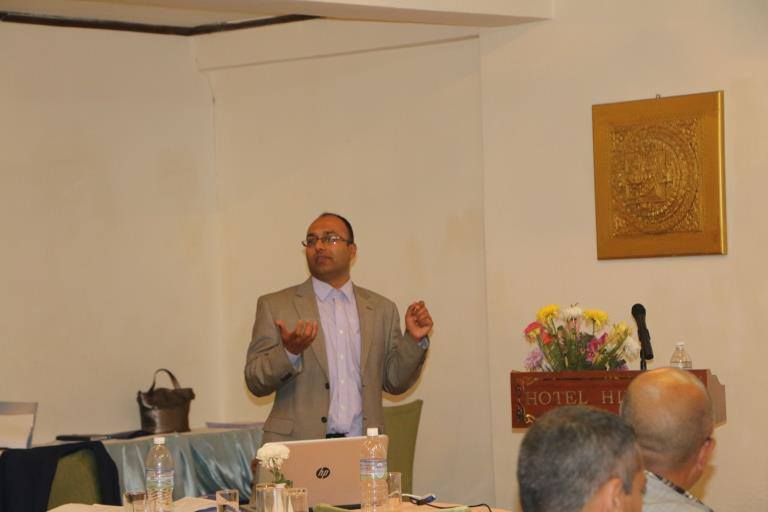
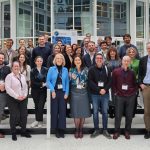
The workshop brought together leading academics and practitioners to begin exploring the concept of Responsible Project Management, with a particular focus on what competencies project managers require to think and act responsibly.  An amazing 43 people engaged with us over two and a half days.  Feedback collected formally and informally was incredibly positive.  One outcome is recognition that the role of a project manager need to shift from a functional role, to leading and facilitating sustainable change.

Steve Knightley

The event began with a relaxed and informal afternoon with Steve Knightley, multi-award-winning musician/song writer, who shared his journey of creating a sustainable business.  The following day, BU’s Deputy Vice Chancellor, Professor Tim McIntyre-Bhatty, welcomed participants and shared his vision of the future, including BU2025.  Other participants from BU included the Head of BU’s Programme Management Office, Jackie Pryce; BU project managers; and Sustainability Manager, Neil Smith.  Colleagues Dr Mehdi Chowdhury, Senior Lecturer in Economics, Tilak Ginige and Dr Sulaf Assi, both from the Faculty of Science and Technology, and several BU students contributed presentations and stimulated discussion.

External participants included Professor Darren Dalcher, Director of the National Centre for Project Management; Professor Andrew Edkins, Director of the Bartlett Real Estate Institute and Professor of the Management of Complex Projects; Professor Gilbert Silvius, thought leader and author on sustainable PM from the Netherlands, and other UK academics.  Representatives from two professional bodies – the Association for Project Management (UK) and the Project Management Institute (USA) – reflected a range of practitioner perspectives; Arup Director Rob Leslie-Carter joined us via Skype, and Rowan Maltby, Project Consultant at Pcubed participated.  Sustainability thinking was used to provoke discussion and challenge norms, led by a Director of the Association of Sustainability Practitioners, Gwyn Jones.  We discussed B-corps, a new type of business organisation where the aim is to deliver value to stakeholders without preference.  Unlike not-for-profit organisations, B-corps recognise the importance of profit, because without profit a business is not sustainable.  Organisation and governance of B-corps reflect a need for stewardship of resources and impacts across a wide range of stakeholders, including the environment, users of outputs, staff, suppliers, and the wider community.

The workshop generated ideas about making project management a profession that goes beyond a technical function delivering outcomes defined by others.  We suggested a range of competences and understandings project managers will require if projects are to be managed responsibly in the future, such as dealing with uncertainty, ethical complexity, and better anticipation and mitigation of damaging unintended consequences.  Workshop outputs included ideas for research bidding, writing papers, learning, teaching and module content.  Already we are collaborating on a guide for project practitioners to begin sharing the ideas with national and international audiences.

References

Meier, S.R. 2017. Technology Portfolio Management for Project Managers. Available online: https://www.pmiwdc.org/sites/default/files/presentations/201703/PMIW_LocalCommunity_Tysons_presentation_2017-02.pdf [Accessed 7 July 2018]

Silvius, A.J.G. 2017. Sustainability as a new school of thought in project management.  Journal of Cleaner Production. Vol. 166. Pages 1479-1493

Wheatley, M. 2018.  The Importance of Project Management.  ProjectSmart. Available online: https://www.projectsmart.co.uk/the-importance-of-project-management.php [Accessed 8 July 2018]

Creative launch for Responsible Project Management research

Dr Karen Thompson and Dr Nigel Williams, of the Department of Leadership, Strategy and Organisations, are drawing on the creative industries to kick-start research on Responsible Project Management.

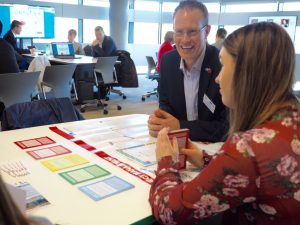
They have designed a 2-day interactive workshop that will bring together leading researchers and practitioners from across the UK and Europe.  This inter-disciplinary event will begin to consider how Project Managers can develop sustainability competencies to meet the UN’s 17 Sustainable Development Goals (SDGs).  A social learning approach, incorporating ‘Open Space Technology’, will be used to develop new understandings, practices and relationships.  Building on existing literature on Responsible Management, an important objective of this workshop is to identify a future research agenda for Responsible Project Management.

To get participants into a creative mindset, the workshop will be preceded by a relaxed and informative event with multi-award winning singer/songwriter Steve Knightley.  His journey is one of growing a business from grass roots to international fame.  A business that delivers excellence and fosters a warm embracing sense of community, and a journey that has taken him from local pubs to the Albert Hall, and beyond.

Academics and practitioners with a keen interest in sustainability from any discipline are invited to join one or both events.  Booking is essential.

Monday 2 July Growing a Sustainable Business  https://growingasustainablebusiness.eventbrite.co.uk

Tuesday 3 & Wednesday 4 July: Responsible Project Management Interactive Workshop https://responsibleprojectmanagement.eventbrite.co.uk


Background and rationale for research on Responsible Project Management

Responsible project management is the concept of incorporating the UN’s 17 Sustainable Goals in Project Management.

Projects and project management are now widely recognized by organizations as being essential to achieving their strategic objectives (Turner 2014).  Project management is a transferable skill, and projects are the engines of change across industries and in many aspects of business.  Research on project management therefore sits at the heart of business, management and education.  Since projects are conceptualized and realized by temporary, heterogeneous groups of individuals, existing management interventions from Operations and Supply Chain Management such as ISO14000 may be of limited value. There is therefore a need for Project Management researchers to develop academic insights that can encourage the application of responsible principles as well as the development of Project Managers with the competencies to deliver projects informed by knowledge of sustainability issues.

Sustainability is formally recognized as a global priority and impacts all aspects of project management (Silvius 2016).  The domain of management has begun to incorporate sustainable principles using the UN Goals which inflenced the Global Compact framework on Human Rights, Labour, Anti-Corruption and the Environment. At BU, Sustainability is a strategic investment area.

There is an emerging strand of research at the intersection of project management and sustainability.  However, the focus of existing research is developing metrics to evaluate project outcomes.  Incorporating sustainability into projects requires project managers to go beyond delivering defined results for specific customers to managing the impact of their activities on society and the environment.

Building on existing literature on Responsible Management, an important objective of this workshop is to identify a future research agenda for Responsible Project Management, with a focus on developing new researchers and practitioners. The workshop will feature organised, cross-disciplinary interaction among researchers and practitioners.


Dr Alison Cronin’s book on economic crime published

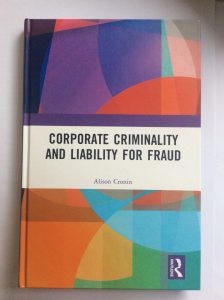
Congratulations to Dr Alison Cronin on the publication of her book, “Corporate Criminality and Liability for Fraud” by Routledge which builds on her PhD thesis. Taking a rational reconstruction of orthodox legal principles, and reference to recent discoveries in neuroscience, Alison reveals some startling truths about the criminal law, its history and the fundamental doctrines that underpin the attribution of criminal fault. With important implications for the criminal law generally, the focus of the book is the development of a theory of corporate criminality that accords with the modern approach to group agency. Alison puts forward the theoretical and practical means by which companies can be prosecuted, where liability cannot or should not be attributed to its individual directors/ officers.
AiMM researcher provides expert opinion

With the imminent arrival of General Data Protection Regulation and continued fallout from the Cambridge Analytica scandal, the misuse of people’s personal data and privacy has become a topic of strategic importance for governments, regulators and businesses alike.

Conor O’Kane, from the Advances in Media Management (AiMM) research group, has been researching the use of ‘privacy seals’ as a means to enable individuals to better control their personal data. His work continues to resonate with the popular press who have sought out his expert opinion in order to demystify the key issues surrounding data protection. His latest piece in the Daily Mirror argues that the use of a privacy seal would be an important step in rebuilding our public trust.

Responsible Project Management in Bangladesh

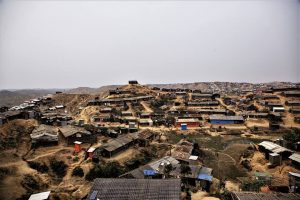
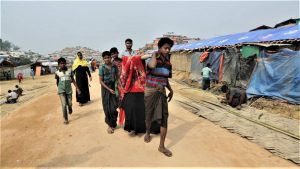
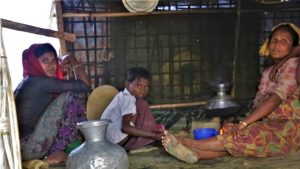
A multi-disciplinary team led by academics from the Business School have been awarded part of BU’s Global Challenges Research Fund (GCRF) to conduct research on Responsible Project Management (RPM) in the context of the ‘Rohingya crisis’ in Bangladesh.

“New knowledge about project management will be developed by studying and sharing understandings in the context of a human and environmental crisis, with particular emphasis on the competencies required to successfully engage diverse stakeholders” explains Dr Karen Thompson, from the Department of Leadership, Strategy and Organisations (LSO).

Dr Nigel Williams, Senior Lecturer in the LSO Department, elaborates, “Project management is often presented as an instrumental sequence of activities with defined outcomes.  However, the reality of project practice involves uncertainty, ambiguity and complex human interactions with unpredictable outcomes.  These challenges vary by context and particularly in developing countries which may be recovering from natural or man-made disaster, the rational/instrumental perspective of project management may be of little value.”

Bangladesh faces a large scale human disaster and is a country already highly vulnerable to the adverse effects of natural disasters due to its geographical location, flat and low-lying landscape and population density.  Refugees arriving from neighbouring Myanmar are living in “an extremely precarious situation” (MSF 2018), and creating serious economic, social and environmental challenges.  The economic impact of Rohingya refugees on the Bangladesh economy was already the subject of investigation by Dr Mehdi Chowdhury, Senior Lecturer in Economics at the Business School, who is a former resident of Bangladesh and joins the team.

Tilak Ginige, Senior Lecturer in Environmental Law, Faculty of Science and Technology, completes the team and has previously worked in the field of asylum immigration law.

The project will be funded for two years and will bring together the two disciplines of project management and responsible management.  Empirical research in Bangladesh will be complimented by a collective social learning process with stakeholders to jointly frame and define problems, determine boundaries and intra team interactions.  Outcomes are expected to improve the management of projects in Bangladesh and to develop new understandings, practices and sustainable relationships.  New knowledge will have the potential to improve the management of projects and stakeholder engagement in other developing countries and projects where sustainable development is a priority.

For further information please contact Dr Mehdi Chowdhury  mchowdhury@bournemouth.ac.uk

MSF 2018. Rohingya Refugee Crisis. Available online at: https://www.msf.org.uk/issues/rohingya-refugee-crisis?gclid=EAIaIQobChMIrd6skYCP2gIVyZkbCh2BKAwZEAAYASAAEgLEOPD [Accessed 29 April 2018]

Photographs courtesy of Mohammad Romel


ICB Research Cluster Sandpit (Trust Repair, Food Waste, B2B Marketing)

The Influences on Consumer Behaviour research cluster will be holding a small series of research sandpits over the coming months on key topics of research that have emerged from their work over the past 5 years.  The first of these on Wednesday 16th May 2018 3-4.30pm will focus on the areas of Trust Repair, Food Waste, and B2B Marketing. The aim of the event is to introduce the clusters work in these areas, discuss them further and share knowledge/expertise within the audience, before looking for opportunities for within- and cross-faculty collaborations in similar or complementary areas that could result in collaborative projects, papers, bids, etc.  All are welcome to come along and join in discussions, although tickets are limited.  Tea and coffee will be provided.  The event is free, but please sign up via Eventbrite by Sunday 13th May 2018 so we can manage refreshment numbers.

https://icbcluster.eventbrite.co.uk

A ‘user friendly’ guide to personal information disclosure

As the controversy over the use of personal data by Cambridge Analytica and Facebook continues to rage, many firms around the world are bracing themselves for further revelations of data privacy infringement.

Conor O’Kane (FMC) was recently asked to provide his expert opinion on the issue of data transparency and privacy. His research examines how provisions in the new General Data Protection Regulation impacts on personal information disclosure.

In a recent US Senate hearing, Mark Zuckerberg, was criticised for the complexity of Facebook’s privacy approach, with Senators asking why the firm couldn’t provide more user friendly information on their disclosure policies. In line with this sentiment, the Daily Mirror asked Conor to write an article summarising the controversy for their readership.

The online version of the article can be found at:

https://www.mirror.co.uk/news/uk-news/facebook-admits-grabbing-personal-data-12312131

Good representation BU research at 2018 BNAC conference

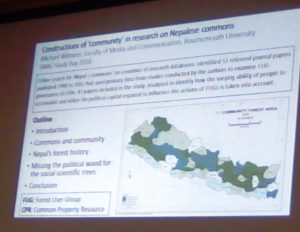
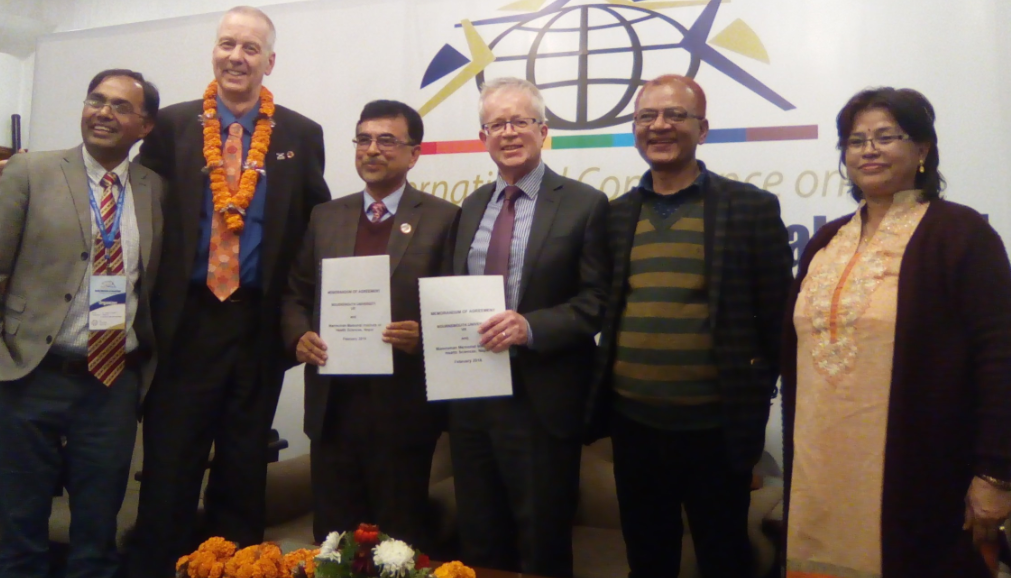
Today on the second day of the 2018 BNAC (Britain-Nepal Academic Council) conference there was a very good representation of Bournemouth University (BU) research at Durham University.  BU’s Professor Michael Wilmore presented his paper: Construction of ‘Community’ in Research on Nepalese Commons.  In the morning FHSS’s PhD student Jib Acharya had an oral presentation on Impact of Healthy Snacks on Children’s Health: An Overview of a Pilot Study.

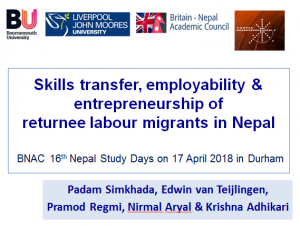
Prof. Edwin van Teijlingen presented joint work between BU, Liverpool John Moors University (LJMU) and the University of Oxford on the topic Skills transfer, employability & entrepreneurship of returnee labour migrants in Nepal. Bournemouth University was involved in this project through Dr. Pramod Regmi, Dr. Nirmal Aryal and Prof. Edwin van Teijlingen.

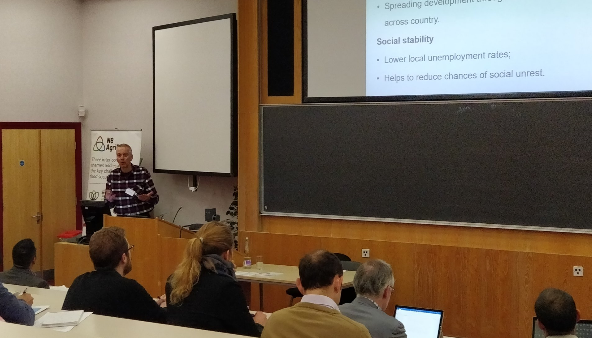
The final talk of the day (and of the conference) was by Prof. Padam Simkhada from LJMU.  Prof. Simkhada is also Visiting Professor at the Centre for Midwifery, Maternal & Perinatal Health at Bournemouth University.  He was presenting Debate on Educational Reform in Nepal: Outcomes of the International Conference on Quality of Higher Education in Federal Nepal on behalf of LJMU, Bournemouth University and Manmohan Memorial Institute of Health Sciences (MMIHS) in Nepal.  Earlier this year BU signed a Memorandum of Agreement with MMIHS in Kathmandu.


Global Traction in the USA!

New York is the world’s media capital and it is no surprise that American academic institutions dominate the field of Media Management. Fordham University in New York extended an invitation to me as a Visiting Scholar, and as a Santander Universities Network partner, the process of engaging with them was straight forward.

My application to the Santander Mobility Scheme had 3 primary objectives which fused research, education and professional practice. During my visit to the USA, I taught on Fordham’s MSc Media Management programme, had discussions with leading media management scholars and the Editor of The International Journal on Media Management.
I also met with the Managing Director of the Boston Consulting Group to discuss the metrics that are used to measure the level of innovation in firms, as well as their the chronic under performance. I also had a meeting with the Editor of Strategy & Leadership to discuss developing a ‘Masterclass’ paper on Scenario Planning and how best to encourage Early Career Researchers to write for the journal.

All of this activity aims to develop a number of fusion based outputs and impacts into the near and medium term future. Overall, it was a great trip and many thanks to the Santander Staff Mobility Scheme!

12 Journal Editors will join Bournemouth University prestigious CHME2018 conference

12 Journal Editors will join Bournemouth University prestigious CHME2018 conference

27th Council for Hospitality Management Education (CHME) Annual Research Conference –
Innovation in Hospitality: connecting all stakeholders to deliver memorable experiences
22-25 May 2018 Bournemouth University, UK  www.bournemouth.ac.uk/CHME

Professor Levent Altinay, Editor in Chief, Service Industries Journal, Oxford Brookes University, UK
Professor Clayton Barrows Editor of the International Journal of Hospitality & Tourism Administration, University of New Hampshire, USA
Professor Dimitrios Buhalis, Editor in Chief, Tourism Review, Bournemouth University, UK
Professor Cihan Cobanoglu Editor in Chief Journal of Hospitality and Tourism Technology, University of South Florida, USA
Professor Ulrike Gretzel Associate Editor, Annals of Tourism Research,  University of Southern California, USA
Professor Jay Kandampully, Editor, Journal of Service Management, Ohio State University, USA
Dr Peter Lugosi,  Reviews Editor, Hospitality & Society, Oxford Brookes University, UK
Professor Fevzi Okumus, Editor-in-Chief, International Journal of Contemporary Hospitality Management, University of Central Florida, USA
Professor Hanqin Qiu,Editor-in-Chief, Journal of Quality Assurance in Hospitality and Tourism, Nankai University, China
Dr Ioannis Pantelidis, Co-Editor-in-Chief, Journal of Tourism and Hospitality Research, University of Brighton, UK
Professor Bruce Tracey, Editor-in-Chief, Cornell Hospitality Quarterly, Cornell University, USA
Professor Perry Hobson, Editor-in-Chief, Journal of Vacation Marketing, Taylor’s University, Malaysia

They will hold two workshops during the conference 

Tuesday 22 May 16:00-17:30 Research Publication Retreat Meet the Editor and Publish high impact papers
Friday 25 May 15:30-17:00 Research and Knowledge cocreation, REF2021 and publications

Please contact Dr Hanaa Osman or Professor Dimitrios Buhalis if you are interest in joining CHME2018 or those workshops.

22-25 May 2018 Council for Hospitality Management Education
CHME 2018 Conference Bournemouth University http://www.bournemouth.ac.uk/CHME
Provisional programme https://www1.bournemouth.ac.uk/sites/default/files/asset/document/CHME2018Programme.pdf

CMMPH lecturer Daisy Wiggins’ paper published

Congratulations to Daisy Wiggins in the Centre for Midwifery, Maternal & Perinatal Health (CMMPH) on the publication of her paper ‘The effect of a birthplace decision support tool on women’s decision-making and information gathering behaviours during pregnancy: mybirthplace study protocol’.  The paper is published in the Open Access journal Journal of Innovation in Health Informatics and can be accessed by clicking here!  The paper is co-authored by CMMPH’s Prof. Vanora Hundley, Dr. Carol Wilkins, as well asProf. Carol Bond (University of Wolverhampton) and the Chief Executive of the Royal College of Midwives (RCM) Gill Walton.


Congratulations to all!

Prof. Edwin van Teijlingen

CMMPH


Reference:

Wiggins D, Hundley VA, Wilkins C, Bond C, Walton G. The effect of a birthplace decision support tool on women’s decision-making and information gathering behaviours during pregnancy: mybirthplace study protocol. J Innov Health Inform.2018;25(1):001–006.


The impact of strategic transformation on employee productivity

A strategic commentary on the interconnected areas of corporate strategy and employee performance are discussed in the latest issue of Strategic HR Review. The paper provides a longitudinal analysis of how two firms adapted, reconfigured and transformed their businesses to meet the demands of an operating environment characterized by inexorable changes in digital technologies. It presents data and conclusions on how the management of “human resources” had delivered different employee productivity outcomes over the long term.

50 FREE downloads are available at: https://doi.org/10.1108/SHR-10-2017-0069

Two papers on health & migration in Nepal

This last week two separate papers have been accepted on aspects of health and well-being among migrants workers from Nepal.  The first in the International Journal of Migration, Health and Social Care is based on a completed PhD project in the Faculty of Health & Social Sciences with Dr. Pratik Adhikary as first author [1].  This paper ‘Health and well-being of Nepalese migrant workers abroad’ is co-authored by two former FHSS staff Dr. Zoe Sheppard and Dr. Steve Keen, and Prof. Edwin van Teijlingen of the Centre for Midwifery, Maternal & Perinatal Health (CMMPH).


The second paper ‘A study of Health Problems of Nepalese Female Migrants Workers in the Middle-East and Malaysia’ was accepted by the Open Access journal BMC International Health & Human Rights [2].  The lead author of this paper is Bournemouth University (BU) Visiting Faculty Prof. Padam Simkhada (based at Liverpool John Moores University) and two of his co-authors are based in Nepal: Manju Gurung (chair of Pourakhi Nepal) and Dr. Sharada Prasad Wasti and one at BU: Prof. Edwin van Teijlingen .

There is  a growing momentum in migration research at BU with further academic papers being published related to studies on migrant workers from Nepal [4-8], relatives of migrant workers [9], migration into the UK [10-12], Eastern European migration issues [13-15], migration and tourism [16], migration and the media [17] as well as migration in the past [18].


References:

  1. Adhikary P, Sheppard, Z., Keen S., van Teijlingen E. (2018) Health and well-being of Nepalese migrant workers abroad, International Journal of Migration, Health and Social Care (accepted). https://doi.org/10.1108/IJMHSC-12-2015-0052
  2. Simkhada, P.P., van Teijlingen, E.R., Gurung, M., Wasti, S. (2018) A study of Health Problems of Nepalese Female Migrants Workers in the Middle-East and Malaysia, BMC International Health & Human Rights (accepted Jan.).
  3. Adhikary, P., Simkhada, P.P., van Teijlingen E., Raja, AE. (2008) Health & Lifestyle of Nepalese Migrants in the UK BMC International Health & Human Rights 8(6). Web address: www.biomedcentral.com/1472-698X/8/6.
  4. van Teijlingen E, Simkhada, P., Adhikary, P. (2009) Alcohol use among the Nepalese in the UK BMJ Rapid Response: www.bmj.com/cgi/eletters/339/oct20_1/b4028#223451
  5. Adhikary P., Keen S., van Teijlingen, E. (2011) Health Issues among Nepalese migrant workers in Middle East. Health Science Journal 5: 169-175. www.hsj.gr/volume5/issue3/532.pdf
  6. Adhikary, P., Sheppard, Z., Keen, S., van Teijlingen, E. (2017) Risky work: Accidents among Nepalese migrant workers in Malaysia, Qatar and Saudi, Health Prospect 16(2): 3-10.
  7. Aryal, N., Regmi, PR., van Teijlingen, E., Simkhada, P., Adhikary, P., Bhatta, YKD., Mann, S. (2016) Injury and Mortality in Young Nepalese Migrant Workers: A Call for Public Health Action. Asian-Pacific Journal of Public Health 28(8): 703-705.
  8. Simkhada, PP., Regmi, PR., van Teijlingen, E., Aryal, N. (2017) Identifying the gaps in Nepalese migrant workers’ health & well-being: A review of the literature, Journal of Travel Medicine 24 (4): 1-9.
  9. Aryal, N., Regmi, PR., van Teijlingen, E., Dhungel, D., Ghale, G., Bhatta, GK. (2016) Knowing is not enough: Migrant workers’ spouses vulnerability to HIV SAARC Journal of Tuberculosis, Lung Diseases & HIV/AIDS 8(1):9-15.
  10. Scammell, J., 2016. Nurse migration and the EU: how are UK nurses prepared? British Journal of Nursing, 25 (13), p. 764.
  11. Holscher, J., 2017. The effects of Brexit on the EU, the UK and Dorset – a migrant’s account. BAFES Working Papers, 1-11.
  12. Sapkota, T., Simkhada, P., van Teijlingen, E. (2014) Nepalese health workers’ migration to United Kingdom: A qualitative study. Health Science Journal 8(1):57-74.
  13. Filimonau, V., Mika, M. (2017) Return labour migration: an exploratory study of Polish migrant workers from the UK hospitality industry. Current Issues in Tourism, 1-22.
  14. Janta, H., Ladkin, A., Brown, L., Lugosi, P., 2011. Employment experiences of Polish migrant workers in the UK hospitality sector. Tourism Management, 32 (5): 1006-1019.
  15. Mai, N., Schwandner-Sievers, S. (2003) Albanian migration and new transnationalisms, Journal of Ethnic & Migration Studies 29(6): 939-948.
  16. Dwyer, L., Seetaram, N., Forsyth, P., Brian, K. (2014) Is the Migration-Tourism Relationship only about VFR? Annals of Tourism Research, 46: 130-143.
  17. Marino, S., Dawes, S. (2016). Fortress Europe: Media, Migration and Borders. Networking Knowledge, 9 (4).
  18. Parker Pearson, M., Richards, C., Allen, M., Payne, A., Welham, K. (2004) The Stonehenge Riverside project Research design and initial results Journal of Nordic Archaeological Science 14: 45–60.

Fake conferences are not fake news: beware predatory conferences

Introduction

Academic have been warned for a decade about predatory Open Access publishers (van Teijlingen 2014). These are commercial organisations charging academics a publication fee on submission of their manuscripts with a promise to publish their work quickly online. The problem is twofold: first, these commercial organisations don’t offer proper peer-review and editorial quality assurance; and secondly, academic are being tricked into believing the journal is a legitimate scientific publication.  The second author receives on average six to eight invitations a week to publish in this kind of predatory journals – see below for examples. The first author, who despite having not worked in an academic institution for over three years, still receives such invitations to publish in ‘Journal X’.

Predatory conferences

A similar phenomenon to predatory journals is the predatory conference (Moital 2014; Nobes 2017; Grove 2017). These are pretend academic conferences of questionable value, established first and foremost to make money, not for the greater good of the academic discipline.

Both authors have received bogus and legitimate invitations to attend conferences. A predicament with such an invitation, which 99% of time arrives by email, is that it is not easy to distinguish between fake and real offers. For example, the first author recently received an offer (at short notice), to attend a conference in Miami in November 2017 (see below). This was on the back of an editorial he had published couple of months earlier. For a career researcher going from contract to contract, the appeal of being invited to present a keynote at a conference can be flattering, far less an honour and a boost for one’s career. Therefore, while the idea that if it seems too good to be true, is a prudent one to hold; there is also a temptation to follow through.

The author replied to the request quizzing the reason for the invite out of the blue. The answer was less than convincing, and a swift email by the author saying “Don’t tell me… You are offering me a keynote with travel and accommodation… Lol!!” called their bluff and ended correspondence.

But digging a little deeper he found there was a webpage dedicated to taking payments to attend the conference. In the digital world, a fool can be easily and quickly separated from his or her money.

Of course, it may have been a real conference at a real venue, and they really wanted him to speak. But discerning this is not easy at first…

Some of the warning signs/What to look out for

  • The conference email invitation looks very convincing (if not don’t even read it!).
  • The venue is good location as Nobes (2017) highlighted, “the organizers are more interested in marketing the tourist destination rather than the academic value of the conference”.
  • The conference covers too many different aspects or topics, as if the advert is designed to catch the eye of many people as possible who are vaguely connected to the discipline.
  • Mentions on associated predatory journals and ‘important’ organisations in the discipline.
  • Email and bank accounts that don’t look professional/ official.
  • Little mention of attendance fees, but after acceptance emails demanding a high conference fee and other charges.
  • Conference organisers are not academics, or unknown names.
  • Conference does not peer-review submission/ not provide proper editorial control over presentations
  • Signs of copying of names of existing academic conferences or scientific organisation and even copying of their webpages
  • Even more advertising than normal at a scientific conference.

Furthermore, Andy Nobes (2017) offered some helpful advice on quality of the conference websites in the list below. Andy is based at AuthorAID, a global network providing support, mentoring, resources and training for researchers in developing countries.

Who is at risk of falling for predatory conferences?

Academics need to be aware of money-making conferences and meetings without a true commitment to science. But some academics might be more at risk than others. Young researchers, PhD students and fledgling academics, living from contract to contract may feel any conference attendance is a potential career boost. Thus, such an invitation might seem flattering and an opportunity to good to miss. A way to show that he or she is a capable and independent academic.

Final thoughts

Most academics go to conferences for a combination of presenting their work to get critical feedback, making new contacts, sharing ideas and to be inspired. With such broad combination of motivating factors, the exact purpose of conferences is difficult to ascertain because there is no a priori agreed role and value of conferences (Nicolson, 2017a). However, there is evidence that academic conferences function to facilitate commodity transactions, be that knowledge, tools, skills, reputations, or connections, which reflects the neoliberal ethos in the modern academy (Nicolson 2017b). The predatory conference can be viewed in this light, where academia is more and more focused on generating revenue. It is at best scurrilous, and worst, criminal, for organisations to make money using such a confidence trick.  Always check which conferences are organised and advertised by recognised scholarly organisations in your own discipline. If uncertain ask a more experienced academic, a senior colleague or mentor.


Donald J. Nicolson

(Health Services Researcher, NHS Fife, and Independent Scholar; twitter @_mopster )

Edwin R. van Teijlingen

(Centre Midwifery, Maternal & Perinatal Health)


References:

Moital, M. (2014) Ten Signs of a Bogus/Fake Conference.

Grove, J. (2017) Predatory conferences ‘now outnumber official scholarly events’  (26th Oct.)

Nicolson, D.J. (2017a) Do conference presentations impact beyond the conference venue? Journal of Research in Nursing. 22(5), pp.422-425.

Nicolson, D.J. (2017b) Academic Conferences as Neoliberal Commodities, Palgrave Macmillan

Nobes, A. (2017) What are ‘predatory’ conferences and how can I avoid them?

van Teijlingen, E. (2014) Beware of rogue journals.


Upcoming conference: Rethinking the Business to Business (B2B) label

B2B marketing is an important sector in social sciences and relevant to many academics and practitioners. The B2B label has become out-dated; lacks focus, clarity and accuracy as a descriptive classification; and fails to inspire interest and enthusiasm. This event calls on marketers to rethink the B2B label by engaging relevant stakeholders: researchers, practitioners and educators, in an in-depth conversation on what B2B means today.

4th B2B colloquium – welcome talk by Dr Kaouther Kooli

Led by Dr Kaouther Kooli academics from the Department of Marketing, Faculty of Management (BU) and Professor Merlin Stone from St Mary’s University are co-organising a conference aimed at rethinking the Business to Business label. This event calls on marketers to rethink the B2B label by engaging relevant stakeholders: researchers, practitioners and educators, in an in-depth conversation on what B2B means today.

4th B2B colloquium – parallel session

The conference is taking place on 18thDecember 2017 at St Mary’s University Twickenham. The half day event will engage the B2B community (researchers, practitioners and educators) in an in-depth conversation on B2B marketing with the aim to define what B2B is and exchange new ideas about how to advance academic and practitioner thinking in this area.

Guest speakers include Professor Merlin Stone, Professor Len Tiu Wright (University of Huddersfield) and a senior B2B practitioner.

Round tables will be facilitated by Dr Kaouther Kooli, Dr Julie Robson and Dr Elvira Bolat, all of Bournemouth University and specialists in B2B marketing. A detailed programme can be downloaded in here.

Attendance is free. We are welcoming all academics, PhD candidates, UG and PG students as well as practitioners.

If you wish to attend, please confirm your attendance via email at merlin.stone@stmarys.ac.uk

Location: St Mary’s University, Twickenham, London. For instructions about getting to St Mary’s, see https://www.stmarys.ac.uk/contact/directions.aspx.

In that past three years, the B2B SIG (Academy of Marketing) has published two special issues in Journal of Customer Behaviour and Journal of Business and Industrial Marketing, featuring academic and practitioners’ research. At the moment Dr Kaouther Kooli is preparing new special issue for the Journal of Business to Business Marketing. If you wish to benefit from such amazing publishing and networking opportunities, do become a member of the SIG by emailing at kkooli@bournemouth.ac.uk or ebolat@bournemouth.ac.uk.