The following funding opportunities have been announced. Please follow the links for more information:
British Academy
Through Mid-Career Fellowships, the British Academy intends both to support outstanding individual researchers with excellent research proposals, and to promote public understanding and engagement with humanities and social sciences.
The aim of the scheme is to allow successful applicants to obtain time freed from normal teaching and administrative commitments. The time bought by the scheme should be devoted to the completion of a major piece of research, and the Academy will also look for evidence of a clear commitment to a strategy of public engagement with and communication of the results of the research during the period of the Fellowship.
The awards support outstanding individual researchers and outstanding communicators who will promote public engagement and understanding of the humanities and social sciences. Applicants should set out in their proposals specific plans for the dissemination of their research to a broad audience, in addition to publication in the usual academic press and journals. Awards will be judged both on the excellence of the research proposed and on the capacity of the applicant to communicate with a broad audience. Applicants are invited to indicate ways in which their proposed programme will contribute to advances in understanding, including public understanding, in their subject area and to the identification of appropriate strategic priorities in the social sciences and humanities.
These Fellowships are covered under the Full Economic Costing (FEC) regime, but the Academy’s contribution to the salary of the Mid-Career Fellow will be capped at an upper limit of £80,000. It is not expected that the total value of an award will exceed £160,000 (BA contribution to FEC). Awards can be held over a minimum of 6 months and a maximum of 12 months, beginning in the autumn of 2016.
Please refer to Funder’s website for eligibility criteria
Closing date: 16/09/15 17:00
British Academy Postdoctoral Fellowships
The aim of the British Academy in making these awards is to offer opportunities for outstanding early career researchers to strengthen their experience of research and teaching in a university environment which will develop their curriculum vitae and improve their prospects of obtaining permanent lecturing posts by the end of the Fellowship. The primary emphasis is on completion of a significant piece of publishable research, which will be assisted by full membership of an academic community of established scholars working in similar fields.
Applicants must be supported by the UK host institution in which they wish to hold the Fellowship
Please see Funder’s website for eligibility criteria
45 awards are expected to be offered and awards are for 3 years.
Awards are offered on a Full Economic Costing basis. There is no fixed amount awarded for the Fellowships and the value of award will vary depending on the host institution. Awards cover the salary of the Postdoctoral Fellow to work full-time on the Fellowship, small-scale research expenses (up to a maximum of £6,000), costs towards the time of a mentor (equivalent to one hour per month for the 36 months of the Fellowship) and the host institution’s estates and indirect costs.
Applicants must be supported by one self-nominated referee. The referee should normally be the external examiner or, if not available, someone else who is as external to the applicant as possible.
Closing Date: (for outline applications) 07/10/15 17:00
44th International Congress of Americanists Fund
Surplus funds resulting from the 44th International Congress of Americanists, held in Manchester in 1982, were entrusted to the British Academy. Grants are offered for travel expenses in connection with a research project relating to Latin American studies and may support British scholars or scholars from Latin America.
Applications may only be submitted by scholars resident in the UK.
Maximum Award: £1,000
Closing date: 14/10/15
The object of this fund, established by the family of Elie Kedourie, FBA, is to promote the study of Middle Eastern and Modern European History, and the History of Political Thought by recent postdoctoral scholars of any nationality. Awards are offered to support any aspect of research, including travel and publication. Funds are not available to support travel to or attendance at conferences, workshops, or seminars, either in the United Kingdom or elsewhere.
Maximum Award: £1,000
Closing date: 14/10/15
The Fund was established in memory of Elisabeth Barker (1910-1986), diplomatic correspondent and historian of modern Europe. This fund is intended to support studies in recent European history, particularly the history of Central and Eastern Europe. Grants may be made for individual, or collaborative projects and may support British scholars, or scholars from other European countries.
Maximum Award: £1,000
Closing date: 14/10/15
Thank-Offering to Britain Fellowship
The British Academy invites applications for the Thank-Offering to Britain Fellowship. This Fellowship enables an established scholar to have time away from their normal teaching and administrative responsibilities for one year to concentrate on a major piece of research that is related to “human studies, widely interpreted”.
This call is repeated every 2 years.
Closing date 18/11/15 17:00
British Academy/Leverhulme Trust
Senior Research Fellowships
The Academy continues to offer the Senior Research Fellowship scheme, with funding generously provided by the Leverhulme Trust (on a non-FEC basis). This enables mid-career scholars to have one year’s research leave with funding being provided to cover the costs of replacement teaching. There is an annual closing date in the autumn.
Eligibility: The Academy takes no account of an applicant’s age or current status (e.g. Professor, Lecturer) in determining eligibility for these awards. Rather, in all cases, award-holders are expected to be able to disseminate the results of their research not only through publications, but also through feeding into their future academic career after the end of the awards. Any field of study in the humanities and social sciences is suitable for support.
Closing Date: 18/11/15 17:00
British Council
Researcher Links workshops in the Philippines on sustainable cities
We have grants for early-career researchers to participate in a workshop in the Philippines entitled ‘Process Systems Engineering Approaches for the Provision of Supplies and Utilities for Sustainable Cities’.
The workshop is part of Researcher Links, funded under the Newton Fund, and is being organised by the University of Nottingham (UK) and De La Salle University (Philippines).
The grants will cover all transport, accommodation and meals. Participants are encouraged to purchase adequate travel insurance (not covered by grant).
Please refer to the Funder’s website for full details and eligibility criteria.
Closing date: 08/11/15
CRACK IT Challenges 2015
The National Centre for the Replacement, Refinement and Reduction of Animals in Research (NC3Rs) is an independent scientific organisation that supports the UK science base through the application of the 3Rs.
CRACK IT Challenges is a challenge-led funding competition from the NC3Rs which is designed to fund collaborations between industry, academics and SMEs; minimise the use of animals in research; support the development of marketable products and/or improved business processes.
This year the Challenges are funded by the NC3Rs and Dstl with in-kind contributions from the Challenge Sponsors (for example, data, access to compounds and equipment).
This year the NC3Rs intends to launch two Challenges: the first one is called ‘METABODERM’ where successful completion of this Challenge will deliver new capability to understand/interpret human relevant skin metabolism, including rates of metabolism in the skin and approaches towards metabolite identification.
The second Challenfe is called ‘InMutaGene’ where successful completion of this Challenge will result in the development of a new platform to address the risks of insertional mutagenesis/oncogenesis and to improve the efficiency of translational research in gene therapy.
Please refer to the Funder’s website for further information on these Challenges
Closing date: (for Registration) 04/11/15 12:00
Biotechnology and Biological Sciences Research Council
Biotechnology Young Entrepreneurs Scheme
Biotechnology YES, now in its 20th year, is an innovative competition developed to raise awareness of the commercialisation of ideas among early career researchers. The competition is funded by sponsorship and aims to encourage an entrepreneurial culture in the UK postgraduate and postdoctoral base for the benefit of the UK bioeconomy. The competition is organised jointly by The University of Nottingham – The Haydn Green Institute and Innovation and Skills Group, BBSRC.
Over the course of a three day residential workshop, teams will develop a business plan for a company based on a hypothetical but plausible idea based on real markets. The workshop comprises presentations and mentoring sessions from leading figures in industry and culminates in the presentation of the business plans to a panel of ‘equity investors’ drawn from industry and academia. Up to three teams from each workshop are selected to progress to the final stage in London.
In addition to the general Biotechnology YES workshops there are several themed workshops which are run in conjunction with industry: the Plants, Microbial and Environmental Workshop, hosted by Syngenta; the Biomedical Workshop, hosted by GSK and the Stevenage Biosciences Catalyst; and new for this year, the Food, Nutrition and Wellbeing workshop, hosted by Unilever. The Royal Society of Chemistry is also sponsoring a Chemistry YES workshop for the third year.
The benefits of taking part include a prize fund of £5,000, including a first prize of £2,500, a trip to the USA, and an invitation to the BIA Gala dinner. As well as enhancing their CVs, participants will develop and improve transferable skills such as communication, time-management, negotiation and team-building. There will be opportunities for networking with industry professionals, and increasing your commercial awareness and technology transfer knowledge.
Closing date: September 2015 – exact date to be confirmed
Economic and Social Research Council
The ESRC wishes to improve the standards of research methods and to stimulate the uptake of high quality training courses in research methods across the UK social science community.
Bursaries are available for up to £1,000 each to enable staff in the UK social science community engaged in research, teaching research methods or supervising research to update their research skills. Contract researchers working in HEIs are also eligible for the bursaries.
Please refer to funder’s website at link above for eligibility criteria
Maximum award: £1000
Closing date: 15/08/15 17:00
Engineering and Physical Sciences Research Council
The Balance Network invites proposals for activities within the themes of ‘work-life balance in the digital age’ which support the network’s aims of collaboration and impact. These events will form part of the network’s programme of activities between November 2015 and April 2016. A maximum of £35k will be awarded in total, and we anticipate the majority of successful proposals will be under £4k. We aim to fund at least one activity led by an early career researcher.
All events funded through this invitation will feed into BEYOND BALANCE, a one-day large-scale Balance Network event taking place Monday 27 June 2016 at IET London, Savoy Place. Details will be circulated via the bulletin and made available on the funder’s website.
Maximum award: £4000
Closing date: 15/09/15 17:00
Healthcare technologies impact fellowships
Please note the above dates are indicative only and are subject to change
This is an advance notice that EPSRC will be issuing a call in early September 2015, inviting recently funded EPSRC fellows who have a permanent post to apply for funding to progress the outputs of their fellowship towards impact within a healthcare application. Proposal should align to one of the four Healthcare Technologies Grand Challenges. The fellowship can be a maximum of 24 months in duration. A budget of around £2.5 million will be available to support the call. EPSRC expects to fund 4 – 6 Healthcare Technology Impact Fellowships depending on demand and available budget.
This call is open to all EPSRC fellows holding a permanent post, whose fellowship end dates are in the period 01 July 2014 – 30 September 2016. Prospective applicants are encouraged to discuss their proposal with the call contacts (see below) at the earliest opportunity.
Please refer to the Funder’s website for full details.
Healthcare Technologies Programme Grants
Please note the above dates are indicative only and are subject to change.
This is an advance notice that EPSRC’s Healthcare Technologies theme will shortly be issuing a call for ‘Healthcare Technologies Programme Grants’. The full call document will be available by early September.
The Healthcare Technologies Theme has recently announced a new long term strategy, and in order to deliver on this, the EPSRC invites applications for Programme Grant proposals that seek to address significant major research challenges that align to the Healthcare Technologies Grand Challenges of: Developing Future Therapies – Supporting the development of novel therapies with technologies to enhance efficacy, minimise costs and reduce risk to patients (note: this specifically relates to drug, biological, cell and regenerative therapies); Frontiers of Physical Intervention – Restoring function, and optimising surgery and other physical interventions to achieve high precision with minimal invasiveness; Optimising Treatment – Optimising care through effective diagnosis, patient-specific prediction and evidence-based intervention; Transforming Community Health and Care – Using real-time information to support self-management of health and wellbeing, and to facilitate timely interventions.
Applications should also draw on one or more of the cross-cutting capabilities of:
Advanced materials
Disruptive technologies for sensing and analysis
Future manufacturing technologies
Medical device design and innovation
Novel computational and mathematical sciences
Novel imaging technologies
Programme Grants are a flexible mechanism to provide funding to world-leading research groups to address significant major research challenges and are intended to support a variety of activities focussing on one strategic research theme. It is expected that proposals will be interdisciplinary and collaborative.
Please refer to the Funder’s website for further information on the Programme Grants scheme, including details of the peer review process and assessment criteria.
Applicants must discuss their suitability for Programme Grant funding with one of the EPSRC contacts for this call before submitting an Outline application.
Up to £15 million will be available to fund 3-5 Programme Grants through this call for proposals.
Closing date: (for Outline) 27/10/15 16.00
Systems Integration of energy supply and demand
The RCUK Energy Programme is bringing together engineers and physical scientists from across the energy sector to tackle the research challenges involved in integrating the energy supply, storage, transmission and demand sectors.
The RCUK Energy Programme seeks to encourage cross energy-sector collaboration designed to enable future energy systems integration. This integration will help the UK meet its ambitious 2050 emission targets (the UK is legally committed to reducing greenhouse gas emissions in the UK by at least 80% by 2050, relative to 1990 levels) and address the energy trilemma by providing resilient, affordable and sustainable future energy systems.
In this call we seek applications for research addressing the co-evolution of supply and demand across an integrated network over the next 35 years – in order help identify potential solutions and frame the challenges. Proposals should pull together existing and complimentary research from across the whole energy-sector to add meaningfully additionally and context.
All proposals must cover research covering the entire energy sector from supply to demand, and can include storage, across the energy networks of electricity, heat and gas.
Up to £5 million is available for this call with EPSRC looking to fund a research centre. The successful proposal must clearly identify how the research will complement and add to existing RCUK Energy Programme investments, in particular the UK Energy Research Centre (UKERC). Applicants are strongly encouraged to open a dialog with existing RCUK Energy Programme investments before submitting an application.
Maximum award: £5 million
Closing date: 24 /09/15 16:00
Medical Research Council
Confidence in Concept Scheme
Ensuring that fundamental science is translated into new therapies, diagnostics and medical devices is central to our mission. The Confidence in Concept scheme aims to accelerate the transition from discovery science to the early stages of therapeutic/biomarker development by providing locally-administered, responsive and flexible funding to support preliminary translational work.
The award can be used flexibly by the institution to support a number of preliminary-stage translational projects. The projects supported should aim to provide sufficient preliminary data to establish the viability of an approach –– before seeking more substantive funding (e.g. from the Developmental Pathway Funding Scheme (DPFS).
Applicants are encouraged to explore how awards could be used to develop academic-industry interactions. People exchange (in either direction) is permitted, where focused on the delivery of specific project objectives. Other routes (e.g. co-funding projects, developing early-stage collaborations) are also encouraged. Standard terms and conditions apply (see in particular the “MICA” webpage).
Institutions may apply for an award between £250k and £1.2m.
We anticipate that individual projects funded from an institution’s award will be of the order of £50-100k and approximately 6-12 months in length, although this will be dictated by the needs of each project.
Institutional awards will be of 24 months duration. Successful institutions are expected to allocate funds to projects within the first 12 months of the award.
Closing date: 15/10/15 16:00
Proximity to discovery – industry engagement fund
This Fund is designed to provide flexible funding for innovative ways to enable the initial development of academic-industry collaborations.
MRC’s Confidence in Concept (CiC) scheme provides responsive and flexible funding to support preliminary work aimed at assembling the data to support an application for a translational project grant. CiC permits academic-industry collaboration where focused on the delivery of the specific project objectives. The Proximity to Discovery: Industry Engagement Fund aligns with CiC to further enable research organisations to establish academic industry relationships. Short term people exchanges between industry and academia are seen as a key way of exchanging skills and knowledge and developing a longer term working relationship. Proximity to Discovery: Industry Engagement Fund can be used for people and knowledge exchange at the very earliest stage of a collaboration and may not necessarily be aligned to a specific project objective.
Please refer to Funder’s website for further details and examples of potential uses.
Institutions may apply to this scheme and CiC in the same round. The two applications do not need to be led by the same individual but the applying institution will need to present a persuasive case that the proposed governance structures will be coherent.
Institutions applying to the scheme must be able to demonstrate that they have sufficient critical mass to be able to deliver engagement with industrial partners that will result in partnership opportunities.
Applications are not expected to be in excess of £250k and are to be spent within 18 months of the award starting.
Only one application per institution is permitted. It is expected that applications will be led by one or more senior members of the institution (e.g. Dean of Medical School or equivalent).
A total budget of £15M is available to support CinC and Proximity to Discovery: Industry Engagement Fund.
Natural Environment Research Council
Antimicrobial resistance in the real world
Antimicrobial Resistance (AMR) in the Real World is a programme under the AMR Cross-Council Initiative. This call is co-funded by NERC, the Biotechnology & Biological Sciences Research Council (BBSRC) and the Medical Research Council (MRC), and has potential co-funding from the Arts and Humanities Research Council (AHRC).
This programme aims to address the need for a greater understanding of the role of the outdoor environment and host microbiome in influencing the evolution, acquisition and spread of antibacterial resistance, and as a reservoir for resistance. The programme is restricted to antibacterials and resistant bacteria or resistance genes, of relevance to bacteria of clinical and/or veterinary importance. Research supported can be based in agricultural, aquaculture, wastewater and natural environments, the human and animal host microbiome, and also includes elements of the way people and human communities interact with the environment.
Research Grants should be up to £1.5m (100% FEC), with funding for up to four years’ duration, and projects starting no later than 1 May 2016 and complete by 31 March 2020.
Maximum award: £1.5million at 100%fEC
Closing date: (for outline) 06/10/15 16:00
Sustaining Water Resources for Food, Energy & Ecosystem Services in India
NERC and India’s Earth System Science Organisation (ESSO) – Ministry of Earth Sciences (MoES) jointly invite proposals for research on sustaining water resources for food, energy & ecosystem services in India. This collaboration is supported by the Newton-Bhabha Fund, established by the governments of the UK and India to provide a framework for increasing research and innovation collaborations that support sustainable economic growth, and builds on existing NERC-MoES activities.
Proposals are sought for interdisciplinary collaborative research projects involving UK and Indian researchers. The focus should be on the main hydrological processes and how they interact within one of the 3 case study regions: the Himalayas, the Indo-Gangetic Plain, or Peninsular India.
Up to £3m is available from NERC for this call with up to £1m (80% FEC) available for the UK contribution to each of the case studies, which will be matched by MoES in terms of research effort.
Closing date: (for Notification of Intent) 07/09/15 16:00
Research Councils UK
RCUK-CONICYT Research Partnerships Call: UK – Chile Call for Proposals
Research Councils UK (RCUK) and National Commission for Scientific Research and Technology (CONICYT) are pleased to invite applications to the RCUK-CONICYT Research Partnerships Call.
This initiative will provide funding for high-quality collaborative research projects between UK and Chilean researchers which contribute to the economic development and welfare of Chile and to developing countries more broadly. We invite proposals which address the following topics:
- Disaster Management
- Diet and health
- Education, Inequality and Social Reform
- Sustainable Aquaculture for Nutrition and Food Security
The objective is to deliver significant 2-3 year research funding for internationally competitive and innovative collaborative projects between researchers from Chile and the UK that will allow the pursuit of shared research interests.
Proposals within the themes listed above are welcomed from across the remits of the UK Research Councils. Recognising the multidisciplinary nature of the thematic areas, the development of interdisciplinary collaborations is particularly welcome.
Consortia should consider how their proposal makes the best use of available expertise in the UK and Chile, the added value of collaboration and how the proposal will meet the ODA requirements of this Newton Fund activity. Whilst still currently on the OECD DAC list, Chile may graduate from the list in the next few years and, as a result, and a condition of the Newton Fund, proposals must contribute towards the economic development and welfare of Chile and articulate a broader applicability to the issues of poor people globally.
Closing date: 08/10/15 16:00
Wellcome Trust
Funding for world-leading groups proposing novel and innovative ways of tackling important research and translational questions.
The Wellcome Trust awards Centre status to programmes that we expect to catalyse and enable world-leading research and innovation in fields that are central to our mission. We expect our support to allow Centres to achieve exceptional impact in any or all of basic research; translation into clinical practice; health product research and development; and public policy.
We currently fund eight Centres at UK universities and four Medical Engineering Centres.
We are now offering other groups the opportunity to become Wellcome Trust Centres. We invite eligible institutions in the UK and Republic of Ireland to submit Letters of Interest proposing new Centres, for a competition to be decided in late 2016. We will also consider renewal applications from existing Centres.
We encourage Centres to develop specific innovation and translation strategies and to support effective programmes of public engagement, and to identify the necessary resources.
Our existing Centres work in four broad areas of biomedical science – neuroscience; cell and developmental biology; genetics/genomics; and infectious disease – and in medical engineering.
For this new competition, we will consider proposals in any area relevant to the Trust’s mission, including the humanities and social sciences as well as basic biomedical research and translation.
Centres will normally be funded for five years, with the possibility of competitive renewal (we expect to make the next set of awards in 2021).
Please refer to the Funder’s website for further details of what costs the fund will support; what is expected of the host institution; key stages and dates of the application process.
This is a one-off call for applications.
Closing date: (for Letter of Interest) 21/09/15 12.00



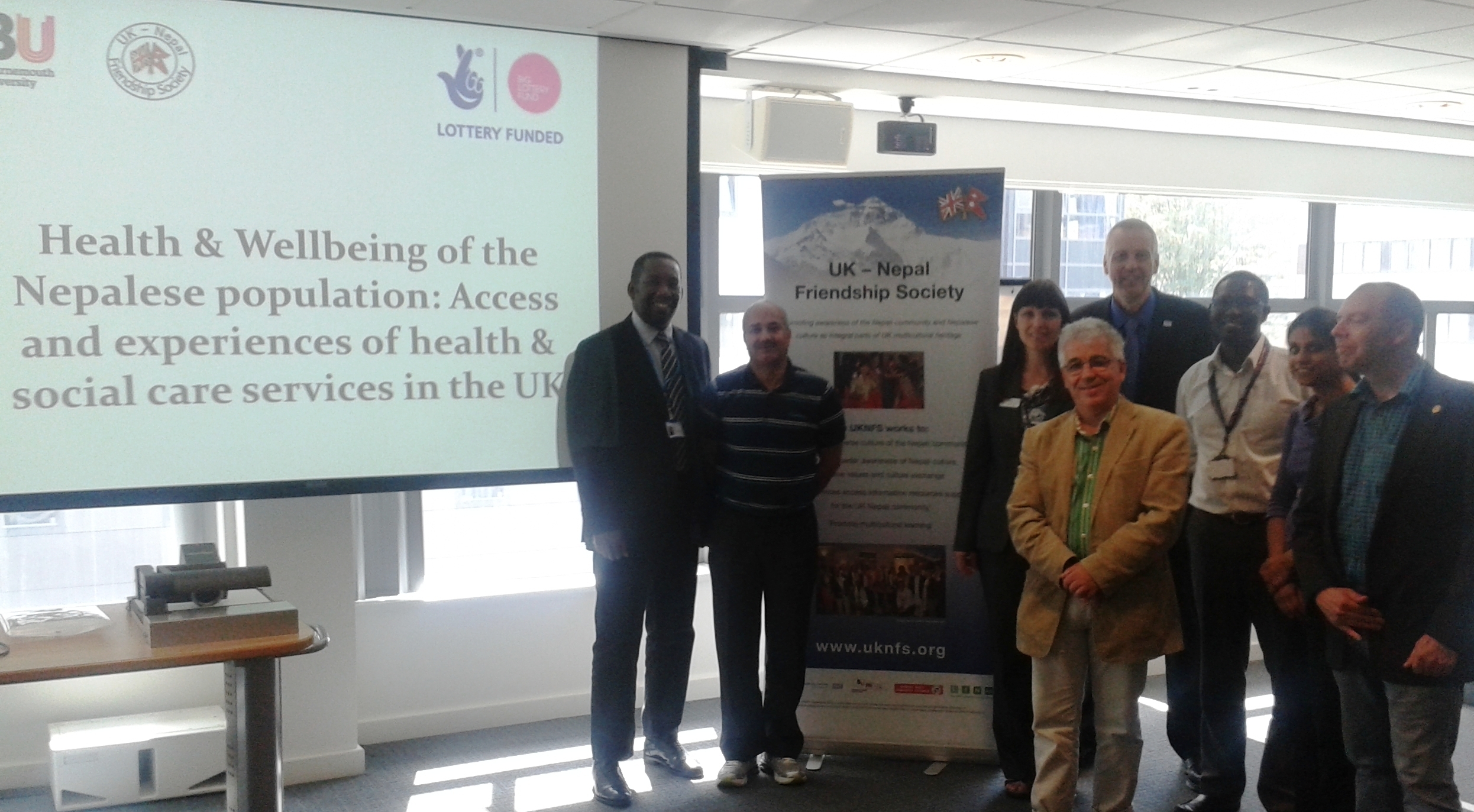
 uth Asian and broader Black & Minority Ethnic (BME) communities in the UK.

 This e-learning tool has been developed with funding from the Big Lottery Fund, and builds on previous work which has used participatory performative research methodologies, including performance poetry to enable young people with disabilities (aged 14-20 years) to explore the nature of disability within society and their own experiences of being disabled. The previous outputs from this project have included live performances as part of the Cultural Olympiad 2012, local literary festivals, a performance at the House of Commons in December 2014, as well as a documentary film
 ![photo[2]](https://microsites.bournemouth.ac.uk/hsc/files/2015/07/photo2-e1437396081780.jpg)


 Many of those contacting the FOS had lost substantial sums of money, and the 185 complaints reviewed involved losses of up to £4.3 million.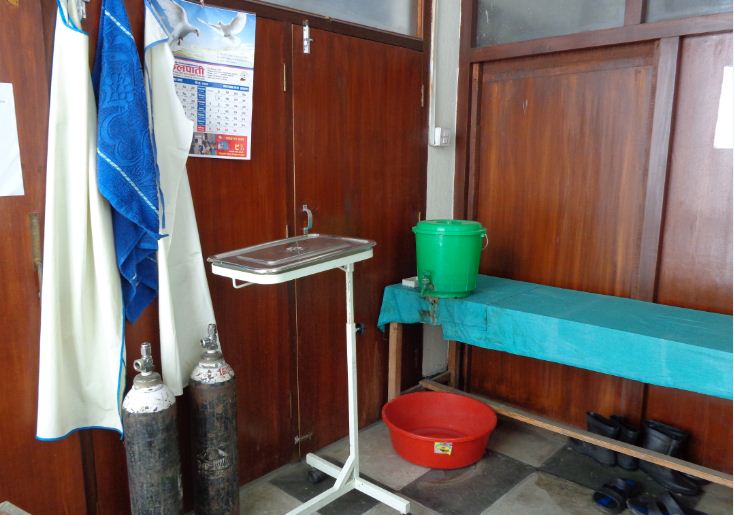
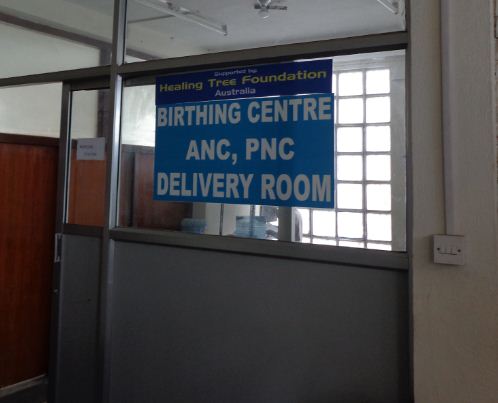
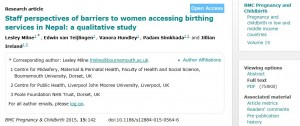







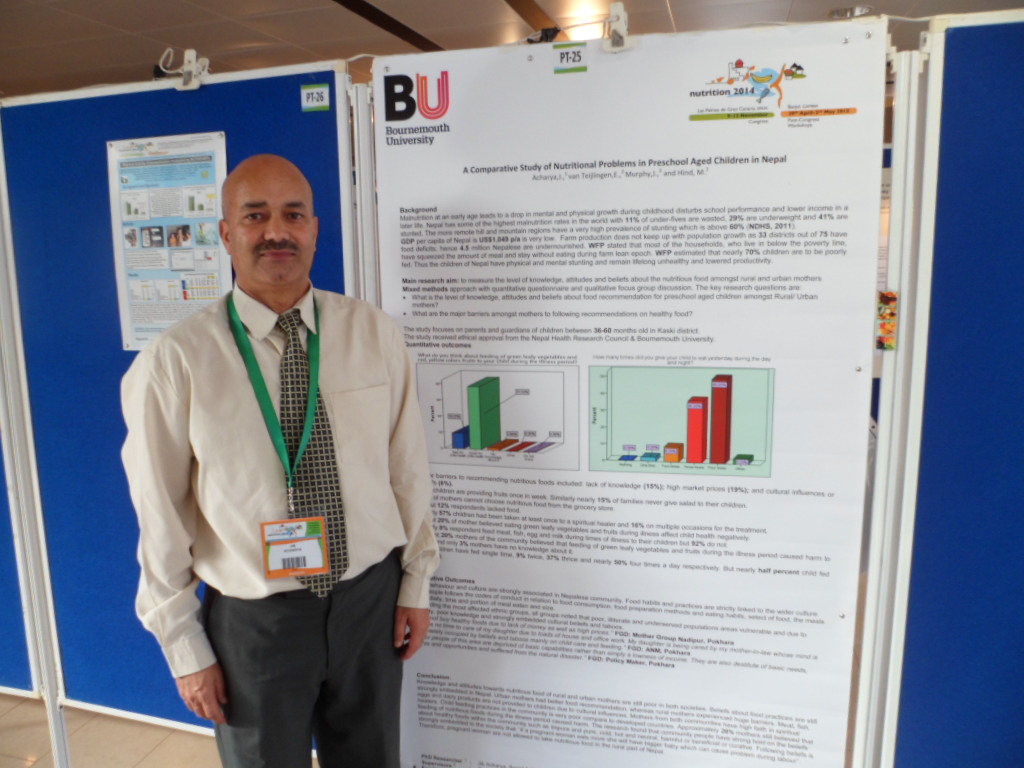
 New interdisciplinary paper on Nepal
 National Postdoc Appreciation Week 2026: The Changing Landscape of Postdoc Careers
 NIHR Insight South West Central Conference 2026 at Bournemouth University
 BU PhD student presented at World Safety Conference in South Africa
 Horizon Europe Cluster 3 (Civil Security for Society) 2026 Calls Now Open
 MSCA Doctoral Networks 2026 Call Information Webinar
 ESRC Festival of Social Science 2026: Application Deadline Extended to Thursday 25 June 2026
 Reminder: Register for the ESRC Festival of Social Science 2026 Information Session
 ECR Funding Open Call: Research Culture & Community Grant – Apply now
 ERC Advanced Grant 2025 Webinar
 Update on UKRO services
 European research project exploring use of ‘virtual twins’ to better manage metabolic associated fatty liver disease