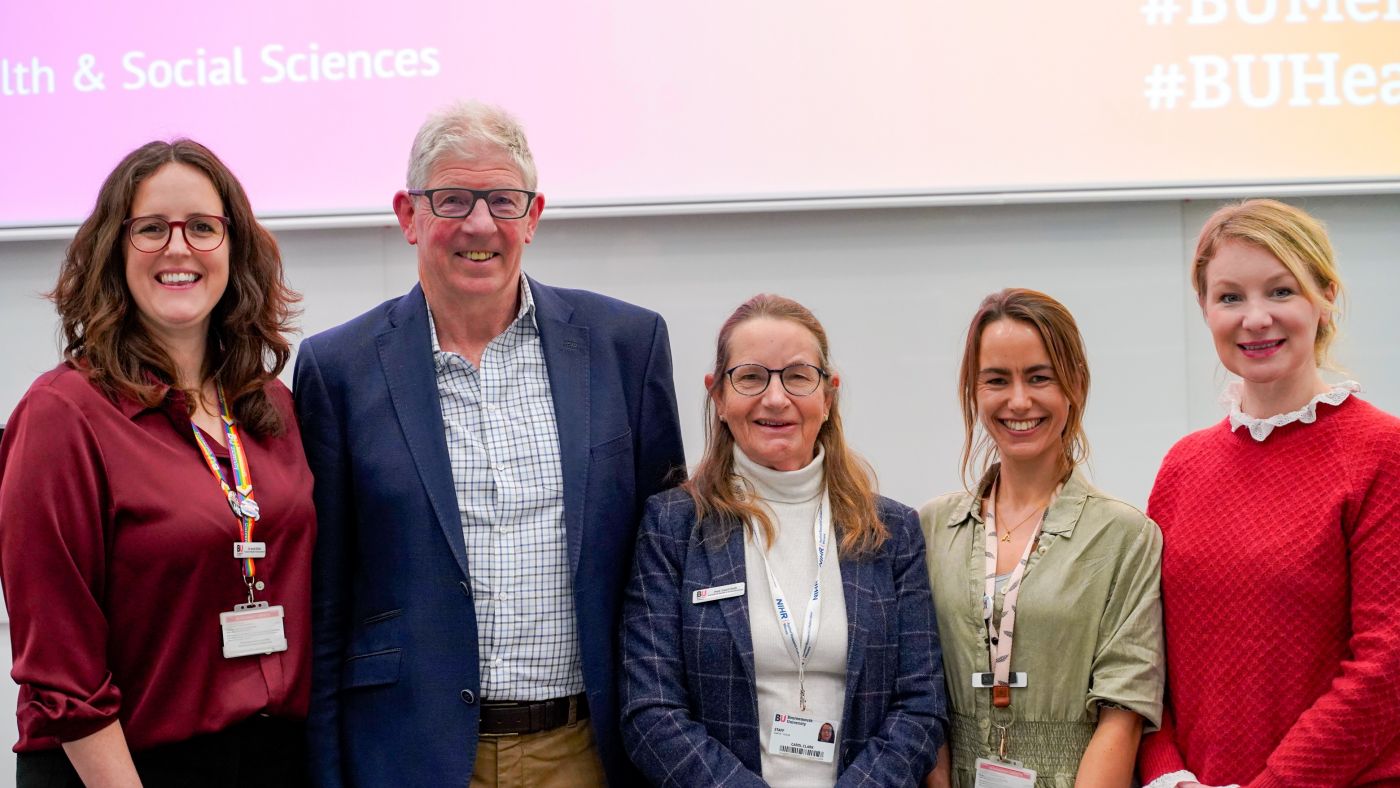
We were thrilled to host the first of our new ADRC seminar series last Wednesday and welcomed a range of attendees including academics, practitioners, students and community members.

Latest research and knowledge exchange news at Bournemouth University


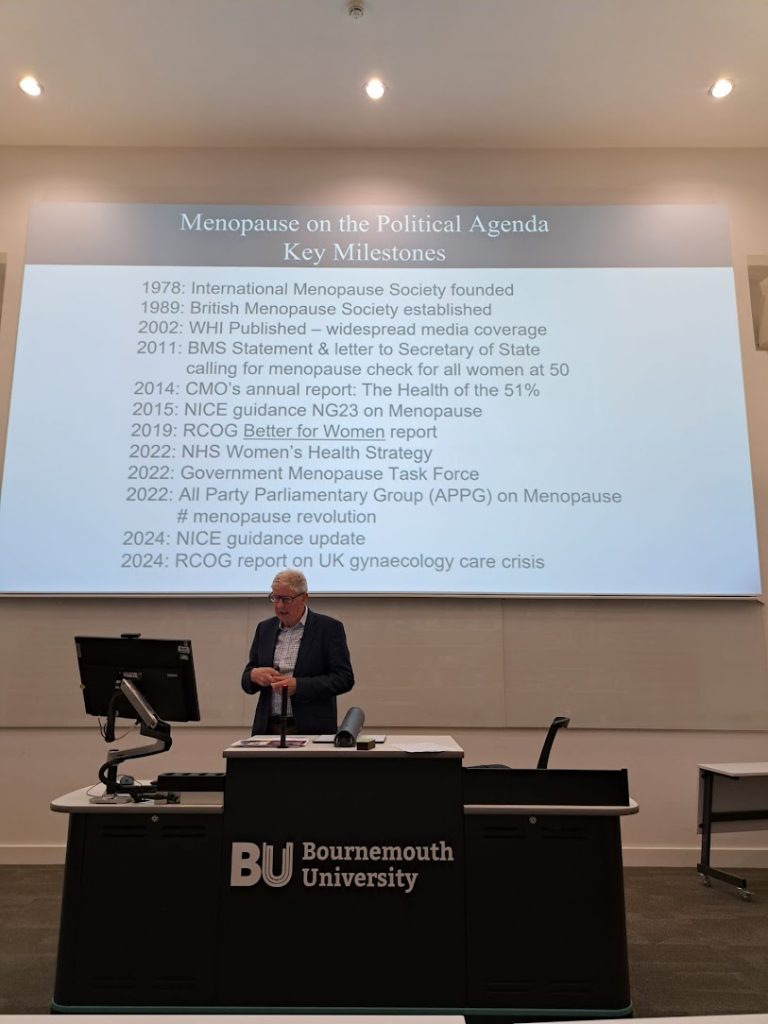
Last Wednesday we had the pleasure of hosting the Director of Leverhulme at Bournemouth.
Professor Anna Vignoles talked to us about the small but mighty team she leads (one of the most responsive funder teams), the Trust’s approach to funding and all the various funds they offer, gave us valuable insights and tips on making our cases heard at the applications and left us all inspired to think big.
Really important to hear from Funding leaders such as Anna during these difficult times for the sector and the high number of attendance made that very clear as well.
Please get in touch with the Research office if you have any ideas you wish to discuss, no matter how much out there your idea might be, you will get a sympathetic ear from us and support to find the most fitting funder.
Thanks to Anna and those who attended our session,
Eva
Dr Julia Round of the Faculty of Media and Communication has been awarded a 2024 Comics Education Kinnard Award for outstanding work with comics and education.
The Kinnard Awards are named in honour of pioneering queer cartoonist Rupert Kinnard. The brown, yellow and red represent Rupert’s iconic character the Brown Bomber. The awards were founded in 2022 and are presented by Laneha House, a family run small press from Breena Nuñez and Lawrence Lindell. Laneha House is built on the foundation of family, love of comics, zines and coffee. Projects include comics, graphic novels, art books, zines, music and cartoons.
The Kinnard Awards are an annual celebration of the community who make, contribute to and love comics. Each category honors 5 awardees. Dr Round was nominated for her work in comics education alongside international scholars such as Professor Charles Hatfield, Ana Merino, Lauren McCubbin and Paul Karasik.
Thank you to all of our presenters, poster exhibitors, session chairs and of course delegates who supported the 16th Annual Postgraduate Research Conference. It is always a highlight on the Doctoral College events calendar and we hope you all enjoyed the day.
We were thrilled with the energy and enthusiasm on the day, and we were delighted to see a strong turnout of PGRs and colleagues showing their support and helping to promote a positive research culture and community across BU.
Here is some of the feedback received:
“Always an uplifting and inspiring event. I highly recommend attending in any capacity – as a guest or contributor.”
“Loved the atmosphere”
“I enjoyed it all. I gained confidence in exhibiting my poster and enjoyed networking with others.”
If you attended, either as a presenter or delegate, we would love to hear your feedback via this anonymous feedback form.
Your feedback will help us improve future conferences so please let us know your thoughts, or just let us know what you liked most!
Feedback collection will close soon – 11 December 2024.
You can see some highlights of the day on LinkedIn #BUPGRConf24 and a video here.
Virtual Exhibition and Postgraduate Research Showcase
Did you miss the conference? Do not worry, you can visit our Virtual Exhibition on the BU website and in February you will be able to visit the Atrium Gallery to view a selection of the conference posters.
We will be holding a celebration event on Wednesday 5 February 2025, with more information to follow so watch this space!
The Conference Team
The Doctoral College team have been delighted with the large number of nominations that have come in recently for the ‘Doctoral College Outstanding Contribution Awards’. We wish to extend our congratulations to all recipients who have received their award certificate.
Here are some of the wonderful nominations we have received:
“Elizabeth’s support is instrumental in advertising our suite of studentships, including the ESRC SW DTP. This is critical to supporting the recruitment of high quality PGRs and increasing our PGR numbers. Thank you :)”
“Thank you, Abier, for all of your support with organisation of the 2nd HSS PGR Conference. Your support for this event has had a positive impact on the sense of PGR community and connection that we have in HSS. Thank you.”
“Tash has supported the Doctoral College with the promotion of studentships for several years. Her quick response has been invaluable in the recruitment of high quality PGRs and in turn helping to grow the PGR numbers. I know Tash has moved on to a new role so wish her luck with that! Thank you.”
Why not make someone’s day and take five minutes and nominate a PGR, academic or professional staff member for a Doctoral College Outstanding Contribution Award to say thanks and give recognition for their hard work?
These awards recognise the outstanding contributions to postgraduate research degrees at BU by any PGR, academic or professional staff member. They can be nominated throughout the year by any member of the postgraduate research community to anyone that they feel is exceptional, has exceeded expectations, and has had a positive impact on the postgraduate research culture at BU.
Eligibility
You can nominate anyone involved in postgraduate research at Bournemouth University to receive an award certificate. There are no award criteria, as long as the submission falls within the guidelines, whoever you’ve selected will receive a Doctoral College Outstanding Contribution Award!
How to nominate
We’ve made it really easy for you to nominate someone for a Doctoral College Outstanding Contribution Award – it’s just a short online nomination form!
Race Equity Month – Can the UK finally tackle health disparities in maternity care?
Last week Prof. Hora Sultani, who leads the joint bid submitted by Sheffield Hallam University (SHU) and Bournemouth University (BU) in reply to the ‘NIHR Challenge: Maternity Inequalities funding call’, wrote an article on the website of the Council of Deans for Health. This piece with the title ‘Race Equity Month – Can the UK finally tackle health disparities in maternity care?‘ can be freely accessed (click here!). One of Prof. Soltani’s key arguments is that it is vital that national policy makers and service providers collaborate with researchers and communities to co-design and provide practical solutions for such important maternity challenges in UK society.
Prof. Soltani was writing on behalf of the UK Network of Professors in Midwifery and Maternal and Newborn Health, an organisation to which both Profs Hundley and van Teijlingen belong.
Last month ResearchGate informed us that our paper ‘Methods or Methodology: Terms That Are Too Often Confused’ has been read 300 times [1]. This paper started as a discussion among the authors about how many students, researchers, and authors of academic papers do not seem to know the difference between methodology and methods. This is true in many academic disciplines.
In simple terms, the term methods refers to the research tools and techniques; for example, in the qualitative field, interviews are a tool to collect data, and in the quantitative field, a questionnaire-based survey is an example of a data collection tool. Methodology is a broader concept as it refers to the overall approach to the research, includes a justification for this approach, and links to research philosophy, i.e., how we produce knowledge. This methodological note aims to explain the confusion, drawing on examples from the published literature in education research and beyond. It also considers the complexities and crossovers. The final section ends with key advice to researchers and authors on key mistakes to avoid regarding the difference between methods and methodology, including covering this in early supervision discussions.
Prof. Edwin van Teijlingen
Reference:
Davide Parrilli, Professor of Regional Economic Development at BUBS, was invited as Keynote Speaker at the International Conference on “DUI Innovation Policy” in Gottingen University, Germany, on November 21-22. The keynote talk was on “DUI innovation policy in catching-up regions”. The audience was formed by a group of well-known professors and academics specialised in innovation studies and regional economic development from Germany, Canada, Norway, the UK, among others, as well as government officials from the federal government of Germany that is funding this project. It represents a very good opportunity to develop an effective knowledge exchange on successful regional innovation and competitiveness experiences across advanced and catching-up economies, and a possible avenue for joint RKE projects.
Davide Parrilli, Professor in Regional Economic Development, was recently invited to an exclusive round table discussion to help shape regional growth strategies for the UK. The event, hosted by the British Academy at Carlton House in London, was organised in collaboration with the Canadian Research Institute (CAFAR).
The round table brought together leading experts in regional economic growth, with academics from universities including the University of Manchester, University of Birmingham, London School of Economics, Cardiff University, Newcastle University, Aston University, University of Reading, and Bournemouth University. Senior officials of the UK Government, representing departments for Business, Skills and Innovation, International Development, and Trade, also participated in this pivotal discussion.
The conversation centred on the regional growth strategy for the new UK government, aiming to provide direct contributions to policy-making. Further sessions are planned to continue these impactful discussions.
We are proud to see our Business School represented in this important initiative, contributing to the future of regional economic development in the UK
December’s Community Voices Webinar welcomes Jae Harris SYCC Manager.
SYCC is a small independent non-government funded charitable organisation at the heart of the Somerford community that aims to meet the needs of young people, their families, and the wider community. SYCC runs youth clubs, activities and other services for young people such as mentoring and mental health support. SYCC runs a community food project called The People’s Pantry – a low-cost service for families who are experiencing food poverty and there is a gym open to the community to use – and so much more.
Professor Dimitrios Buhalis Chaired THE MEDITERRANEAN TOURISM KNOWLEDGE EXCHANGE & POLICY CONFERENCE https://mediterraneantourismresearch.com/ followed by the 9th Mediterranean Tourism Forum https://mediterraneantourismforum.com/
The event was organised by the Mediterranean Tourism Foundation (MTF) an independent international organisation dedicated to fostering public-private cooperation in the tourism sector. MTF aims to enhance sustainable tourism across the Mediterranean, transforming the region into one of peace, cooperation, and prosperity through collaborative efforts and impactful projects. The conference, now in its second edition, has demonstrated significant growth and evolution, marking a pivotal step forward in advancing critical discussions and innovative research in the field of tourism. The maturity it has achieved in such a short time is evident in the depth and diversity of topics addressed, the quality of the presentations, and the global representation of experts and practitioners. Building on the foundations laid during its inaugural edition, the conference has expanded its scope to encompass emerging themes such as the integration of advanced technologies like AI and VR, sustainable tourism strategies, and inclusive policymaking. The wide array of interdisciplinary contributions reflects its commitment to addressing the complex and interconnected challenges facing the tourism industry today. This progression offers a compelling vision for the future, as the conference continues to serve as a collaborative platform for knowledge exchange and thought leadership. By fostering dialogue among academics, industry leaders, and policymakers, it sets the stage for actionable insights and innovative solutions that can shape the trajectory of tourism in the coming years. This conference’s success and growing impact give us great confidence that it will continue to influence and inspire sustainable and transformative developments in the field.
Her Excellency, L-E. T. Myriam Spiteri Debono, the President of Malta invited Professor Buhalis and Mediterranean Tourism Foundation Senators for lunch at the Saint Anton Palace, the official residence of the President of Malta since 1974.
Bournemouth University International Centre for Tourism and Hospitality Research Tourism and Hospitality team members Professor Dimitrios Buhalis, Dr Arkadiusz Tomczyk, Dr Mariana Consoni Rubio and Dr Hande Turkoglu met the Hon Clayton Bartolo Malta’s Minister for Tourism and Public Cleanliness as well as Mediterranean Tourism Foundation President Tony Zahra.
Professor Dimitrios Buhalis also met Shadow Tourism Minister Hon. Mario de Marco after 14 years. In 2010 Professor Buhalis facilitated The Advance Programme for Developing Leaders for Change and Innovation in Tourism Programme when Hon. Mario de Marco was Parliamentary Secretary for Tourism, the Environment and Culture. This great programme trained more than 1380! Tourism and Hospitality professionals in Malta, many of whom in leading positions today.
Conference Chair Professor Dimitrios Buhalis synthesised the 2024 conference and the meetings happening during the MTF and concluded a range of Key Trends Shaping Mediterranean Tourism and a Future-Focused Perspective driving impactful research effort for the future. The Mediterranean, as a cradle of civilization, art and way of living is a globally sought-after tourism region. Mediterranean Tourism is undergoing significant transformation, driven by innovation, technology revolution, sustainability, and inclusivity. Emerging trends in Mediterranean tourism reflect a shift toward regenerative practices that balance economic growth, cultural preservation, and environmental stewardship.
Technology Driving Mediterranean Tourism Innovation requires the adoption of advanced technologies like augmented reality (AR) and virtual reality (VR) is enhancing the Mediterranean’s rich cultural heritage. By improving accessibility to underwater archaeological sites, historical landmarks, and museums, these tools enable immersive storytelling that brings history to life. AI and machine learning are increasingly used in Mediterranean tourism to personalize visitor experiences, optimize booking systems, and enhance marketing strategies, ensuring destinations remain competitive in a tech-driven global market. Marketing and Branding with the Mediterranean Appeal lies in its unique blend of culture, history, and natural beauty and the authenticity of the experiences cocreated. AI-driven marketing strategies and data analytics are enhancing destination branding by tailoring campaigns to diverse l preferences. Younger generations, such as Gen Z, are drawn to destinations promoting authenticity, cultural diversity, and immersive experiences. Cross-cultural marketing, celebrating Mediterranean heritage, is becoming a key strategy for building strong, recognizable destination brands.
Sustainability is a Priority and at the core of Mediterranean tourism strategies, with coastal and island destinations leading the way in green travel initiatives, waste management, and eco-friendly accommodations. Destinations like Malta, the Azores, and Croatia are implementing sustainable tourism indicators to balance environmental protection with the demands of increasing visitor numbers. Rural and island tourism, combined with agri-tourism, is emerging as a solution to combat tourism related pressures while preserving the unique landscapes and biodiversity of the region.
Inclusivity and Community Engagement is shaping Mediterranean tourism, with growing efforts to improve accessibility and empower marginalized groups. Small islands like Gozo in Malta are exemplifying community-driven tourism models that prioritize resident well-being alongside visitor satisfaction. Efforts to preserve cultural landscapes and avoid overdevelopment reflect the region’s commitment to balancing modern tourism needs with its rich heritage. Policy and Governance for Responsible Tourism Growth need to drive Mediterranean tourism policies that are increasingly focused on combating negative impacts in cities like Venice and Barcelona while supporting sustainable regional development. Initiatives such as tourism clusters and collaborative governance models aim to empower local communities, diversify tourism offerings, and manage visitor flows. Breaking path dependency by adopting innovative tourism frameworks is becoming critical for ensuring long-term resilience and competitiveness.
A Vision for Mediterranean Tourism is evolving into a hub of sustainable, inclusive, and tech-driven tourism. By leveraging its unparalleled cultural heritage, embracing innovative technologies, and prioritizing regenerative practices, the region is positioning itself as a model for global tourism. These trends are paving the way for a resilient future where the Mediterranean remains a vibrant and responsible tourism destination. Collaborative Business Ecosystems require collaboration among governments, non-governmental organizations, and local businesses is driving innovation in Mediterranean tourism. Smart tourism initiatives are being developed to connect residents and visitors through data-driven insights, improving service delivery and fostering meaningful interactions. For example, Portugal and Greece are utilizing such systems to bridge gaps in communication and create seamless visitor experiences.
Wednesday saw the opening of the exhibition ‘Creative Health Nepal’ in Kathmandu. Creative Health Nepal reflects our interdisciplinary public health work, for the website click here! Our work on alcohol in Nepal’s society, which resulted in the paper ‘Participatory asset mapping and photovoice interviews to scope cultural and community resources to reduce alcohol harm in Chitwan, Nepal’ was represented in the exhibition.
Prof. Edwin van Teijlingen
Reference:
Dhital R, Yoeli H, Adhikari A, et al. Participatory asset mapping and photovoice interviews to scope cultural and community resources to reduce alcohol harm in Chitwan, Nepal. Perspectives in Public Health. 2024;144(5):312-323. doi:10.1177/17579139231180744

Book now for RKEDF training in December 2024
Click on the titles to find further details and book your place
For one final time in 2024, join this drop-in session 1pm-2pm on Wednesday 4 December, online. This is an open session for all BU ECRs and PGRs, to discuss any issues around career development, or the ECR experience with the peer network, and receive advice and guidance from the network’s academic leads.
Meet The Leverhulme Trust, at 1pm on Wednesday 4 December (online). The Trust has been funding research for almost 100 years supporting fundamental and higher-risk research. You will hear from the Director of Leverhulme about the funding schemes they offer, advice for applicants, Strategy and Looking into the future. Please send Eva Papadopoulou your questions in advance.
REDCap basic training – Book here
On 4 December, 9am until 1pm, in person at BGB – learn from REDCap expert, Will Crocombe, about data collection and management best practices in research and why REDCap is better that MS Excel or Qualtrics for almost every type of data collection, either through online surveys or direct entry into a database.
Advanced REDCap training Book here
On 5 December, 9am until 4pm, in person at BGB – this advanced, one-day, course for those with some REDCap knowledge will be led by our external REDCap expert, Will Crocombe, and will cover:
Journeys through Research Book here
On Wednesday 11 December 2024,10:00-14:00, in person at Talbot campus – hear from BU academics about their journeys, the challenges they’ve overcome and the role the Research Development and Support (RDS) team has played in their success. Spaces are limited, so don’t miss out! If you’re interested, please be sure to book your ticket — and if you can’t make it, kindly let us know so someone else can take your spot. For further information on this event please contact RKEDF@bournemouth.ac.uk
KTP Development – Strategic planning: Aligning & communicating ambition
This Knowledge Transfer Partnership development session is in person, at Talbot campus, on Wednesday,18 December at 1pm. It will cover the tools needed to ensure systematic design capture, to encourage engagement and promote co-formulation of the project.
Please help us in avoiding any waste of resources; make sure you can attend or cancel your booking prior to the session. For any further information, please contact RKEDF@bournemouth.ac.uk
The FLIE report:
FLIE joined colleagues from BU and Imperial College to present at the NK Fusion conference on Digital Education and AI in the 21st Century. We talked about the creation of our AI Literacy resources for staff and students and showcased some of the innovative practice of BU academics who have worked with us employing digital tools such as 360 cameras, immersive films and H5P interactive learning objects. It was a really interesting day with some really thought-provoking speakers.
Further information email Debbie Holley: dholley@bournemouth.ac.uk


The event was designed to explore critical questions in developing secure care for children, offering national and global perspectives. Secure care, in its traditional form, is locked institutional care for children aged 10 to 17. Children can enter secure care either on criminal justice grounds, when aspects of their behaviour are considered to pose a risk of harm to others, or on welfare grounds, when the risk of harm is to themselves, though there is often an overlap. Our workshop aimed to explore how the continuum of services, including secure care could evolve to better meet the needs of the children, and young people who may require such responses and often come from challenging backgrounds, with experiences of childhood trauma and poly-victimisation. The event’s target audience included practitioners, managers, and stakeholders who are involved with secure care for children.
To start with the most important bit, the food at the venue – which itself was very cool – was incredible. The day started with freshly baked pastries, followed by cakes mid-morning, a delicious grazing platter for lunch (with some accidental haggis consumption by one member of our party!), and an unexpected, yet very much enjoyed, basket of pittas, olives and homemade houmous in the afternoon. If nothing else, our attendees went home full, but we have a feeling they took away much more than satisfied taste buds.
Kicking off the day, three experts provided insightful presentations to secure care in their respective jurisdictions. First, Donna McEwan and Dan Johnson presented the recently released CYCJ ‘Re-Imagining Secure Care’ report. Donna detailed key questions that need to be asked when we think about what the future of secure care could look like, including:
The second presentation, by Eva Mulder (Professor by Special Appointment at the University of Amsterdam), was particularly impressive as Eva and her colleagues had spent the night standing on the street following a fire alarm at their hotel, and Eva had not had any sleep. Hats off to Eva! Eva described her research exploring how secure institutions can be made to look and feel like home, using young people’s photographs of home. It was interesting to hear how ‘home’ was conceptualised in terms of feelings – for example, home is somewhere where there are people you know, you feel like you belong, you can be alone when you want to be, there is food that you like, and you feel free. Eva encouraged us to contrast these ideas with how institutional buildings make children feel. Eva described new small-scale residences for children in the Netherlands, without locked doors, where there is continuity with a small team of staff and integration with the community. Research in these places revealed that staff feel that they can develop better relationships with the young people, and the young people want to make more of an effort with the staff and their treatment, and parents feel more included. Eva ended by describing how there is a campaign in the Netherlands to end secure care completely, and how this requires a solution within the community that can keep children safe.
Last, but by no means least, Dr Kate Crowe took to the stage. Kate was awarded a Churchill Fellowship in 2022 to investigate alternatives to secure care in Hawaii, Canada, Scotland and the Netherlands. In 2023 she was awarded a Creswick Fellowship and she travelled to Iceland, Finland and Scotland to investigate the position and design of secure care in light of Australian jurisdictions raising the minimum age of criminal responsibility (MACR). Kate prompted the audience to consider how models of secure care might need to change as the MACR increases. She also posed the perennial question in this area – should children on welfare placements be placed alongside children deprived of their liberty on criminal justice grounds? Along with other details from her travels, the audience were very intrigued to find out from Kate that all secure facilities in Finland have saunas!
With these thought-provoking presentations in mind, participants were divided into six focus groups. Discussions between the group members were audio recorded so that they could be captured as research data. Participants explored critical questions, such as:
At the end, participants explored three core questions that aim to lead to calls for action in the participant’s respective spheres of influence:
Several preliminary findings emerged from the discussions:
This event was about exchanging information, but it also aimed at suggesting meaningful options for further development. The participants shared creative ideas, and the discussions showed a willingness to push for progress to improve care for arguably the most vulnerable children in out-of-home care.
One of the most interesting ideas was to embed secure care services more closely in local communities. This would promote closer cooperation among providers, mental health services, and educational support systems.
At the end of the event, it became clear that this seminar was a stepping stone towards future progressive developments in secure care. Participants identified critical areas for immediate action, both within secure care settings and in the broader community and at the intersection between these two worlds. This is crucial for building a system that protects children and communities and supports their long-term rehabilitation and reintegration.
This workshop was a success because it allowed participants to share knowledge, discuss challenges, and develop actionable solutions for the future of secure care. It is an essential reminder of how far we have come—and how much further we want and need to go—to ensure that secure care can continue to meet the needs of children and young people who meet the criteria for secure care. This event provided an excellent opportunity to reflect on the challenges in secure care and consider future development options.
This event also acts as a reminder of how much can be achieved when a group of like-minded people with a common goal come together. We feel privileged to be working with our national and international partners, and we look forward to our next event, wherever in the world that might be. Our thanks go out to our Faculty at Bournemouth University who funded this event.

Wednesday 4 December 2024 at 13.00-14.00
This is an open session for all BU ECRs and PGRs, to discuss any issues around career development, or the ECR experience with the peer network, and receive advice and guidance from the network’s academic leads.
For further information on this event please contact RKEDF@bournemouth.ac.uk
BU Economics professor received intriguing email – Read the report then watch the launch of our latest Transition Report live!
Special Invite From: European Bank for Reconstruction and Development
Watch the launch live online! Navigating Industrial Policy EBRD Transition Report 2024/2025
www.youtube.com/live/jrTqDu9FFAI broadcast from 16.00 – 1730, Canary Wharf, London (26 November) with over 150 participants attending the prestigious launch event live online link up.
The EBRD transition reports are one of the leading rigorous gold standard sources that are well read reporting tools for financial economists, investment market, media, economic departments, universities, researchers and policy makers worldwide.
The launch discussion was moderated by Richard Porter, EBRD Managing Director of Communications, featured:
Joseph Stiglitz, Nobel laureate in economics and Professor at Columbia University. USA link up.
Rana Foroohar, global business columnist and associate editor at the Financial Times
Jeromin Zettelmeyer, Director of Bruegel, the European Union’s economic think tank
Beata Javorcik, EBRD Chief Economist
“In a world of rapid geopolitical and economic shifts, the discussion on industrial policy has never been more critical. This report takes an extensive look at industrial policies in the EBRD regions and beyond. Such policies, which are aimed at changing the sectoral composition of production in an economy, have seen a resurgence in recent years, seeking to address increasingly pressing market failures such as environmental degradation.” EBRD 2024
“Their track record is mixed, with their growing popularity being shaped primarily by domestic political economy considerations and rising geopolitical tensions. While industrial policies are typically employed by higher-income economies, they are also being seen more frequently in economies with less administrative and fiscal capacity to implement them.” EBRD 2024
Other attendance highlights included discussions on: implications of the president-elect Trump of USA and his concerning new tarifs to hike imports into USA from rest of world, with implications for costs, trade wars and economic growth, likely to impact economic growth especially for large exporters to USA such as Canada, China, parts of Europe like UK; that sustainability should include the word environment; furthermore that since GFC 2008/9 majority of special economic zones had seen flattening of exports, FDI and productivity (especially related to manufacturing sector), whereas some areas in south east Europe/Asia borders had seen an upturn and what factors determine achieving this?
Professor Dr Jens Hölscher has published in over 140 academic publications and is a leading economist and spokesperson for Bournemouth University for multi-media, media interviews and broadcasts on Economic and Finance matter e.g. Bank of England comment