Audience: This workshop is suitable for PGRs with some knowledge of qualitative analysis approaches.
Intended learning outcomes. By the end of this workshop you should be able to:
• Confidently identify the main elements of the NVivo interface
• Open and create new NVivo projects
• Prepare and modify documents
• Create codes and code documents
• Rearrange the coding system
• Perform simple retrieval of coded documents
• Use annotation and linking tools.
If you are already using NVivo for your research, you might like to drop in for the last half an hour of the session, when an open surgery will be held.
Jacqueline Priego has been delivering CAQDAS workshops and training postgraduate students and researchers on qualitative analysis since 2010. She is also available for queries relating to MAXQDA (not supported at BU).
*Spaces are limited due to room capacity – please book through myBU to avoid disappointment.
For me last academic year (2015-16) was amazing in terms of fantastic things I have been working on with UG and PG students. One of these projects was study on Slacktivists’ behaviour – study initiated and conducted by brilliant BA (Hons) Business Studies with Marketing student (about to graduate), Freya Samuelson-Cramp.
Results of Freya’s study have been extensively shared with external audiences, i.e. at ‘Parallel worlds: real life vs digital personalities‘ BU Festival of Learning event organised in partnership with Barclays Digital Eagle Labs and at ‘Digital Planet and its People’ BU Global Festival of Learning in Sias Internationa, China. ‘Slacktivism’ is a term that combines the words “slacker” and “activism“, it is most commonly associated with actions like signing online petitions, copying social network statuses or changing a profile photo in aid of a cause. Freya’s study, under my supervision, haa examined how slacktivists are behaving when it comes to charity-related content and what personality traits as well influencing factors drive slacktivist behaviour.
This topic in actual fact deserves recognition in other contexts of studies as slacktivism is a norm behaviour in online, social media, context and is exercised in relation to any type of social media content.
However, the reason for this post was primarily to communicate latest recognition and progress events that both Freya and I were part of.
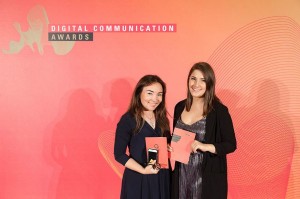
Firstly, Freya’s final year research project was shorlisted for the ‘Best Bachelor’ thesis category at the Digital Communications Awards (DCA) 2016. The DCAs exclusively honour achievements in the field of digital communication throughout Europe and welcomes practitioners from various industries! It is prestigious event judged and attended by world-known pioneers in the field of digital communications. Freya has defended her work and was praised for rigorous methodological approach as well as topic that has interest and relevance to all businesses involved in use of social media channels.
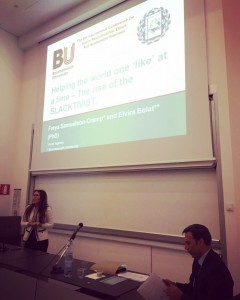
Secondly, on 6-7 October 2016 I have presented joint conference paper titled ‘Helping the world one ‘like’ at a time – The rise of the Slacktivist‘ at the 5th International CSR Conference which took place in Bocconi University, Milan – fantastic conference, organised and chaired by BU academic Dr Georgiana Grigore. Once again, the paper has received enormous interest with follow-up controversial discussions around the notion of slacktivism and we are now working on submission of full paper as the book chapter.
Freya now works as account executive at Good Agency and about to graduate with First-class honours degree. In contradiction to all stories of UG student-academic collaborations, which end at the graduation point, I and Freya are planning to continue working together on understanding further what constitutes stacktivism behaviour. Apart from that we invite to Digital Me photo gallery event, part of the ESRC Festival of Social Science, which takes place on 5th November at the Sovereign Shopping Center.
Finally, hope this positive story can inspire you to co-create with students. We also would love to thank CEL for funding the project through Co-creation fund, GlobalBU team, Department of Marketing (Faculty of Management) and Department of Leadership, Strategy and Organisational Behaviour (Faculty of Management) for ongoing support in conducting research and disseminating results of our study.
Any questions about our story, mentioned conference paper or Digital Me event, email at ebolat@bournemouth.ac.uk
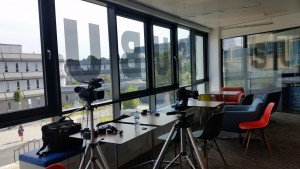
With its vast agile space, glass-fronted seminar rooms and buzzing collaborative zones, BU’s new Fusion Building offers the perfect opportunity to reimagine learning scenarios – both inside the new walls and elsewhere on our campuses.
The Centre for Excellence in Learning (CEL) is supporting staff to ‘try something different’ and inspire our students through innovative learning.
There are resources on the Try something different pages of the CEL website, looking specifically at how academics can use the spaces for different learning scenarios.
The Try something different video includes advice from BU’s Professor Stephen Heppell, who is a world expert in contemporary learning.
A series of i:Innovate workshops will help staff explore different technologies to deliver the curriculum, take new approaches to assessment and feedback, reimagine teaching large groups and much more. View the full list of i:Innovate workshops on the Staff Intranet.
Try something different today – and see where it takes you.
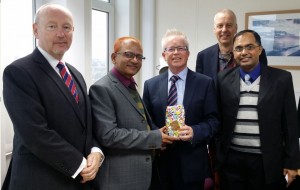
As part of FHSS’s sustained research in Nepal Dr. Sujan Marahatta and Mr. Jiwan Sharma from Manmohan Memorial Institute of Health Sciences (MMIHS) came to the UK to discuss further future collaborations. The Nepali visitors met with our Dean Prof. Steve Tee and Dr. Malcolm McIver FHSS’s Associate Dean for Global Engagement as well with Postdoctoral Fellow Dr Pramod Regmi and BU PhD student Mr. Jib Acharya.
BU academics have been collaborating with MMIHS for over seven years. Currently, we have three projects in Nepal with MMIHS: one funded by the Centre for Excellence in Learning on introducing CPD (Continuous Professional Development) in nursing in Nepal and coordinated by Dr. Catherine Angell; and project designed by Dr. Regmi on transgender issues in Nepal which is funded by FHSS monies, and study on returned trafficked women in Nepal which has received a small small amount of money from both FHSS and Liverpool John Moores University. Prof. Edwin van Teijlingen, in the Centre for Midwifery, Maternal & Perinatal Health (CMMPH), has been a Visiting Professor at Manmohan Memorial Institute of Health Sciences for nine years so it is a long-standing working relationship. MMIHS publishes its own journal the Journal of Manmohan Memorial Institute of Health Sciences which is part of Nepal Journals Online (NepJOL) and Open Access. Apart from Prof. van Teijlingen, CMMPH Prof. Hundley, Dr. Regmi, or our BU media colleague Dr. Luce (Faculty of Media & Communication) and various members of FHSS’s Visiting Faculty have published in this journal.
FHSS and MMIHS are now working towards a more formal academic relationship.
“I want to take a break… stop autopiloting … everything that you do makes you feel”
Student, 10/10/2016
In My Voice, My Story, we explore what it means to be a non-traditional student at university through the participatory photographic and story technique, photovoice. This technique sees students become the researchers of their own lives through taking photos and telling their stories.
The photovoice method is a participatory approach used to inform policymakers, so that meaningful policy changes can be shaped the lived experiences of the communities the policies are intended to serve.
We focus on students from non-traditional backgrounds because we know how the lived experiences of these students are often marginalised by institutions and that this impacts upon their attainment and degree outcomes. Learning together in this way is a central tenet to our programme of Fair Access Research.
This research contributes to new, more participatory, ways of doing and thinking about widening participation which is a core tenet to BU’s Fair Access Research project.
We invite you all to a workshop where we will listen to the students’ voices, learn from the students’ stories, gain insights into different research methods and work together to develop practical responses to what we see and hear.
Monday 7th November 2016 10:00 -13:00 in the Fusion Building, F105
You will gain insights into the power of arts-based social participatory research methods for eliciting deep stories and re-represented for social action. Having engaged with storytelling, participants will discuss ways in which the students’ lived experiences could shape policy changes and interventions to better enable students to belong.
Feel free to share this invitation with your colleagues or networks.
For more information about this project or BU’s innovative Fair Access Research, email the Principal Investigators, Dr Vanessa Heaslip (vheaslip@bournemouth.ac.uk) and Dr Clive Hunt (chunt@bournemouth.ac.uk).
Dr Debbie Holley and David Biggins presented a paper, co-authored with Dr Marketa Zezulkova and George Evangelinos, at the 3rd EAI International Conference on e-Learning e-Education and Online Training (eLEOT) in Dublin between 31st August and 2nd September 2016. The paper was entitled Digital Competence and Capability Frameworks in the Context of Learning, Self-Development and HE Pedagogy. The paper was possible through funding granted by the REF Committee as part of Unit of Assessment 25 (Education).
The paper was awarded the conference’s Best Paper Award.
The paper explores and compares the EU digital competence framework with the digital capabilities framework introduced within the UK higher and further education context in 2009 and updated in 2015. The similarities and differences between the frameworks were explored. Similarities include the focus on data in the context of privacy and overall literacy, as well as the inclusion in the latest release of both models of wellbeing into the key areas. The main difference between the digital competence and capabilities frameworks is in the former’s neglect of life-long learning and self-development. The paper concludes by arguing for a human-centered approach to digital competence and capability frameworks, in which learning, self-development and wellbeing should play a vital role.
BU’s TEL Toolkit was used as a case study example of how the frameworks can be used to underpin and inform physical implementations of digital solutions that benefit staff and students. The team’s presentation at the conference acknowledged the creation of the Toolkit was a collaborative project for BU involving LLS, IT and academic staff. The TEL Toolkit contains help, support and information to allow academic staff to use technology to develop their teaching, promote learning and enhance the student experience. Since its launch in February 2016 it has been accessed 2,409 times, with 40% of the traffic coming from outside BU. To access the TEL toolkit please click here.
The team were very pleased to receive this prestigious award. Their research into frameworks and how TEL can be used to support teaching and learning is continuing.
For further information about the papers delivered at eLEOT 2016, the twitter feed is #eleot2016.
If you would like more information on using TEL in your teaching, please contact David Biggins, TEL Theme Leader.
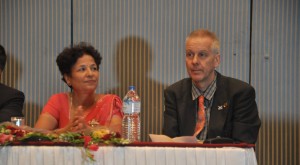
Congratulations to Dr. Catherine Angell (FHSS) who just had her paper ‘Continual Professional Development (CPD): an opportunity to improve the Quality of Nursing Care in Nepal’ accepted in Health Prospect. The paper is co-authored with BU Visiting Faculty Dr. Bibha Simkhada and Prof. Padam Simkhada both based at Liverpool John Moores University (LJMU), Dr. Rose Khatri and Dr. Sean Mackay (also at LJMU), Prof. Edwin van Teijlingen in the Centre for Midwifery and Maternal & Perinatal Health (CMMPH), and our colleagues in Dr. Sujan Marahatta and Associate Professor Chandra Kala Sharma. Ms. Chandra Kala Sharma is also the president of the Nepal Nursing Association (left in photo). Health Prospect is an Open Access journal, hence freely available to anybody in Nepal (and elsewhere in the world).
This paper is first of several based on a study aiming to improve CPD in Nepal and it is partly funded by LJMU and partly funded by BU’s Centre for Excellence in Learning (CEL). The CEL-funded part of the project centres on focus group research with representatives of the Ministry of Health & Population, the Ministry of Education, the Nepal Nursing Association and the Nursing Council, and Higher Education providers of Nurse Education (both form Government-run universities and private colleges). The focus group schedule will include starter questions to initiate discussions around the kind of CPD nurses in Nepal need, its format, preferred models, the required quality and quantity, and ways of checking up (quality control). In addition we will be asking a subgroup of nurses registered in Nepal about midwifery skills as midwifery is not recognised as a separate profession from nursing in Nepal. Hence there will be three focus groups specifically about midwifery CPD: one at MIDSON (the Midwifery Organisation of Nepal), one with nurses providing maternity care in private hospitals and one with nurses doing this in government hospitals.
The research is a natural FUSION project in the field of nursing & midwifery as it links Research in the field of Education to help improve Practice in Nepal.
Prof. Edwin van Teijlingen
CMMPH
Reference:
(CPD): an opportunity to improve the Quality of Nursing Care in Nepal, Health Prospect (Accepted)
During November 2016, BU will be hosting the ESRC Festival of Social Science. This is part of a a national celebration of the social sciences that open up sites of sharing and critical reflection through debates, conferences, workshops, interactive seminars, film screenings, virtual exhibitions and much more.
Our programme of Fair Access Research draws on innovative insights and research approaches from the social sciences in order to understand and make a difference for students who are underrepresented in or marginalized by higher education.
For the Festival we will be working with a group of students to support them to share their stories through photography, group reflection and creative retelling. In telling individual stories we hope to elucidate collective responses to the very real challenges of being a student at this current moment.
You are invited to a workshop on Monday 7th November between 10:00-13:00 exploring what it means to become and be a student in the 21st century.
The workshop will be a space where students’ voices and stories are heard, listened to and reflected on. This project is rooted in the idea that the most effective research and policies are those shaped by the voices of the communities intended to be reached. The stories and exhibition will creative the space for us all to learn together to make higher education more accessible, engaging and equitable for all.
If you want to listen, reflect and help make a difference book here. Please share with colleagues and networks.
Between now and November go to Poole House to see the exhibition our colleague Dr Jacqueline Priego has curated that documents the lives and experiences student carers.
For more information about BU’s Fair Access Research, email the Principal Investigators, Dr Vanessa Heaslip (vheaslip@bournemouth.ac.uk) and Dr Clive Hunt (chunt@bournemouth.ac.uk).
We’ve been finding out how people working in higher education learn, think and feel about and put into practice widening participation.
Exploring the idea of widening participation as a process of organisational learning aligns with the core strategy of BU’s innovative Fair Access Research project — through working and learning together we can make a difference for students, where we work, how we work, yourselves and society.
At a time of uncertainty and inequality in society and great changes in the sector, finding ways for us all to learn together in kinder and more effective ways matters.
Over the summer we have been doing some fieldwork and collecting sector-wide survey data to establish how different people in different organisations learn about widening participation.
We want to know how you, here at BU, understand, learn about and practice widening participation. We’ve designed a survey to capture your voices and experiences.
In July we had the privilege of meeting with colleagues from across the university to explore some of these issues – we want to open that invitation to more of you through this survey.
For more information about the organisational learning project, email Dr Maggie Hutchings on mhutchings@bournemouth.ac.uk
For more information about BU’s innovative Fair Access Research, email the Principal Investigators, Dr Vanessa Heaslip (vheaslip@bournemouth.ac.uk) and Dr Clive Hunt (chunt@bournemouth.ac.uk)
From 12 September, the Centre for Excellence in Learning (CEL) is holding a photo exhibition in Poole House, next to the Cash Office. This exhibition is part of the ‘Students who bounce back’ project, a study funded by Bournemouth University’s Fair Access Agreement Management Group. The study is being conducted by researchers at CEL, in co-production with student carers*.
The photographs displayed in the exhibition were taken by student carers as part of a photodiary exercise. Some of them also came to the University this week to formally launch the exhibition.
‘Students who bounce back’ has the following objectives:
To explore the life experience of student carers at BU and the impact of caring in their learning experiences.
To determine, in co-production with students, the main motivations and expectations of their university experience, and their contact with the different support mechanisms in place at BU.
To contribute with empirical data to the development of the concept of psychosocial scaffoldings as enablers of resilience (or the ability to ‘bounce back’).
To contribute to wider debates and developments about the learning experience of student carers in the Higher Education sector.
The exhibition will be on display for six weeks. For more information about the project, email Jacqueline Priego.
*A carer is defined as anyone who cares, unpaid, for a family member who, due to illness, disability, a mental health problem or an addiction, cannot cope without their support.
BU’s Fair Access Research project concentrates on the idea of learning and working together to transform higher education. We are interested in how widening participation works differently in different institutions.
Widening participation is emerging as emotional work. It is an emotional labour which sees personal stories intersect with and sometimes rub up against complex economic and political landscapes.
You can join us in this collective reflection and learning exercise by contributing to our survey. For more information about the organisational learning project, email Maggie on mhutchings@bournemouth.ac.uk
For more information about BU’s innovative Fair Access Research, email the Principal Investigators, Dr Vanessa Heaslip (vheaslip@bournemouth.ac.uk) and Dr Clive Hunt (chunt@bournemouth.ac.uk)
Our Fair Access Researchers have written a blog-post exploring the necessity of hope and solidarity for widening participation – particularly when any glimpse of a silver cloud seems very out of reach.
Drawing on the work of José Esteban Muñoz, our researchers see hope as a troubling but very necessary thing for those working to transform higher education:
“Practicing educated hope, participating in a mode of revolutionary consciousness, is not simply conforming to one group’s doxa at the expense of another’s…It is not about announcing the way things ought to be, but, instead, imagining what things could be. It is thinking beyond the narrative of what stands for the world today by seeing it as not enough” (from Duggan and Muñoz, 2009: 278).
One of the cornerstones of the Fair Access Research project is that it is through working and learning together that just such a hope can be practiced.
Developing the thinking that underpinned an article that suggested how research can be used to better enable and embed an institutional culture that works for social justice, Maggie and Alex are now researching how the ideas, rhetoric and policies of widening participation are being learnt in different organisations. To contribute to this research and share your learning, please do complete our survey for the sector to help understand this more. They will be going up to Liverpool over the coming weeks to do some fieldwork with colleagues in different organisations.
For more information about the Fair Access Research project please email the Principal InvestigatorsDr Vanessa Heaslip and Dr Clive Hunt.
This week we filmed some video clips with our new full-time officers and colleagues from across the university. Next week we’ve invited experts from the HE sector to come and participate in a workshop exploring why working with Students’ Unions matters for widening participation.
We are trying to nurture a culture of solidarity, trust and care to help transform what higher education looks like.
We want to explore how the sector is working and learning together for widening participation research, policy and practice. We’ve designed a survey to find out how the policies and ideas of widening participation are being learnt and lived in different organisations.
Feel free to share this survey with colleagues working in all areas of higher education. If you want to know more about the survey, get in touch with Maggie or Alex.
Thank you to everyone who has supported the Fair Access Research project through the year.
For more information about the Fair Access Research project please email the Principle Investigators, Dr Vanessa Heaslip and Dr Clive Hunt.
Members of the Fair Access Research project would like to invite you all to a workshop exploring issues of widening participation on Monday 11th July.
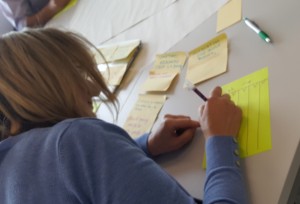
During the workshop we will engage in debates and participate in group activities as we work together to make visible the invisible needs of all of our students.
There will be a poster exhibition showcasing the variety of widening participation activities happening across the university.
The workshop is open to staff across all faculties and for professional service staff interested in this area. We want to collectively work to make the university and higher education a more equitable, more socially just place for our students, our selves and our society.
Monday 11th July 2016
10:00 -14:00
EBC 202 and 203
Lunch will be provided.
Here is our invitation. To book a place email awardrop@bournemouth.ac.uk
We explored how universities and colleges use research as part of their plans to widen participation and open up higher education to people from disadvantaged backgrounds. They found that while national policy is leading to more institutions mentioning research as part of their Access Agreements; it tends to be in the context of justifying spending rather than leading to significant behaviour change.
The most recent strategic guidance from the Office for Fair Access emphasised the importance of building a community of practice across institutions, with practitioners and academics working and learning together to understand effective practice and the impact of interventions.
It is hoped that when the 2017-18 access agreements are published over the coming months we see a sector engaging much more with research in order to transform thinking, practice and the sector as a whole.
For more information of this paper email Alex Wardrop (awardrop@bournemouth.ac.uk). For more information about the Fair Access Research project email Vanessa Heaslip (vheaslip@bournemouth.ac.uk) and Clive Hunt (chunt@bournemouth.ac.uk)
We are living through a time of great change and discontent the sector and the country. Finding spaces for hope, solace and respect seem even more important then they usually do.
Members of the Fair Access Research project are trying to make just such a space on Monday 11th July.
We are extending our arms to you to invite you all to an event where we share with you our research and find ways work and learn together at a time when partnership is so vital.
During the workshop we will engage in debates and participate in group activities as we work together to make visible the invisible needs of all of our students.
There will be a poster exhibition showcasing the variety of widening participation activities happening across the university.
The workshop is open to staff across all faculties and for professional service staff interested in this area. We want to collectively work to make the university and higher education a more equitable, more socially just place for our students, our selves and our society.
Lunch will be provided.
Here is our invitation. To book a place email awardrop@bournemouth.ac.uk
Are you a student carer? Do you know a BU student who has caring responsibilities?
BU student carers – those students who provide unpaid support to someone who could not manage without your help – are invited to take part in a photo-diary research project entitled ‘Students who bounce back’, led byDr Jacqueline Priego, from BU’s Centre for Excellence in Learning.
The project seeks to explore the life experience of student carers at BU and the impact of caring in their learning experiences.
By taking part, student carers will help us to enhance the academic and pastoral support for student carers at BU in the future.
The Student Carer bursary was funded through apilot schemein 2015/2016. This research will evaluate the effectiveness of the bursary and inform whether to continue with the bursary in future years. We would like to hear from students who were and were not successful in securing the bursary, and also from those student carers who were not aware of the bursary.
For details about the project, including itsreimbursement scheme (up to £50 Amazon voucher + travel expenses), please emailjpriego@bournemouth.ac.uk.
A carer is defined as anyone who cares, unpaid, for a family member who, due to illness, disability, a mental health problem or an addiction, cannot cope without their support.
All welcome to the seminar happening today. Room R301 (Royal London House), 13:00-14:00. Feel free to bring your lunch with you.
An exploration into the dynamics of being an international student and the complexities surrounding their placement and employability prospects
Abstract
The experience of students gaining work placement has become an integral part of the United Kingdom (UK) Higher Education (HE) system in an attempt to help prepare students for the world of work. Whilst much has been written about this subject, the majority of the research centres on the UK domicile learner. Considering the importance of the HE internationalisation agenda, the drive to increase the recruitment numbers of international students (IS) and the fact that the need to gain work experience extends to include IS, there is little published literature which explores the work placement experiences from an international student perspective. This presentation reports on an instrumental case study which explored the experiences of IS with a view to understanding the challenges they face identifying, securing and successfully completing a work placement. Findings suggest substantial challenges exist and a framework is proposed to help the university improve the international students’ placement experience and employability prospects.
Marcellus is Research Fellow in the Centre for Excellence in Learning at Bournemouth University. His involvement in the Centre touches on some of the key areas in the discipline of Education such as University Community Engagement, Graduate Employability and Education for Sustainable Development.
If you have any queries about Social Science Seminar Series, please get in touch with Dr Mastoureh Fathi (mfathi@bournemouth.ac.uk).
BU staff can login below:
Other services
Don’t miss a post!
Subscribe for the BU Research Digest, delivered freshly every day.
 However, the reason for this post was primarily to communicate latest recognition and progress events that both Freya and I were part of.
 MMIHS publishes its own journal the



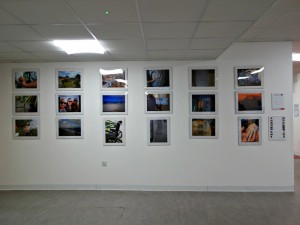 From 12 September, the Centre for Excellence in Learning (CEL) is holding a photo exhibition in Poole House, next to the Cash Office. This exhibition is part of the ‘Students who bounce back’ project, a study funded by Bournemouth University’s Fair Access Agreement Management Group. The study is being conducted by researchers at CEL, in co-production with student carers*.
 Members of the







 Three CMWH presentations at Berlin conference
 New interdisciplinary paper on Nepal
 National Postdoc Appreciation Week 2026: The Changing Landscape of Postdoc Careers
 NIHR Insight South West Central Conference 2026 at Bournemouth University
 Horizon Europe Cluster 3 (Civil Security for Society) 2026 Calls Now Open
 MSCA Doctoral Networks 2026 Call Information Webinar
 ESRC Festival of Social Science 2026: Application Deadline Extended to Thursday 25 June 2026
 Reminder: Register for the ESRC Festival of Social Science 2026 Information Session
 ECR Funding Open Call: Research Culture & Community Grant – Apply now
 ERC Advanced Grant 2025 Webinar
 Update on UKRO services
 European research project exploring use of ‘virtual twins’ to better manage metabolic associated fatty liver disease