Category / Doctoral College

Beyond Academia: Exploring Career Options for Early Career Researchers – Online Workshop

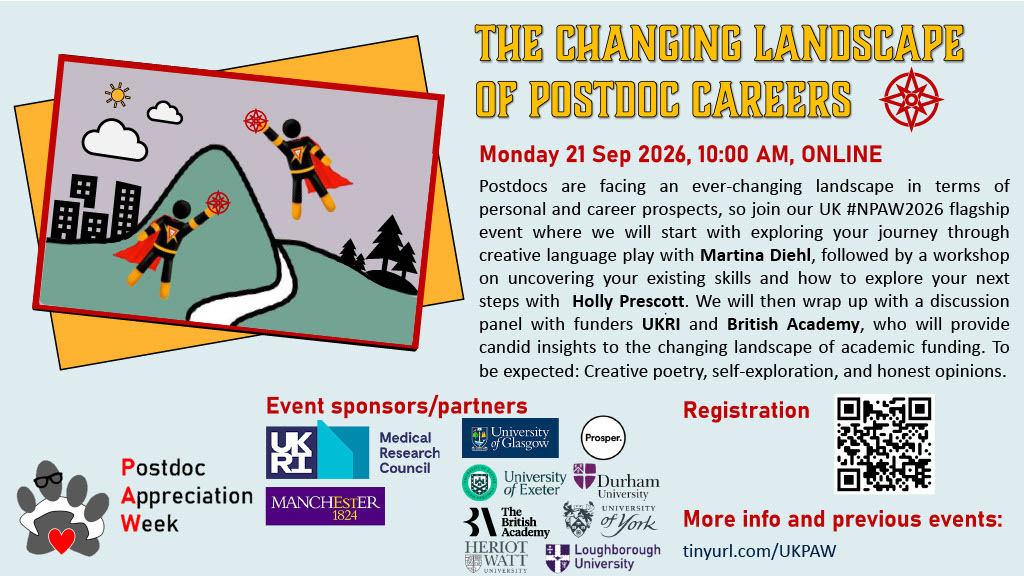
Enhance your professional growth with this upcoming researcher development and research culture opportunity for ECRs

Beyond Academia: Exploring Career options for ECRs

Wednesday 25 February, 1:30 – 4:30 pm

Online

Facilitated by Margaret Collins from Training for Universities

This engaging, practical 3-hour workshop supports early-career researchers considering their next professional chapter. Whether moving by choice or necessity, many researchers are now seeking meaningful, fulfilling alternatives to the traditional academic path. This session helps participants recognise their transferable skills, explore a wider range of careers options, and build the confidence to take their next steps, both inside and outside academia.

Find out more and register here
For more opportunities, explore the Researcher Development Hub and catch up on our February Newsletter.

If you have any questions, please contact the Researcher Development and Culture Team researcherdevelopment@bournemouth.ac.uk.

UKCGE Recognised Research Supervision Programme: Deadline Approaching

Whether you are a seasoned supervisor or just starting out in supervision, professional recognition is a powerful way to validate your expertise and contribute to a thriving research culture at Bournemouth University.

The UK Council for Graduate Education (UKCGE) offers a national accreditation programme that allows you to benchmark your practice against the Good Supervisory Practice Framework.

Why apply?

UK universities are increasingly prioritising supervisor development to enhance research culture and doctoral support. The Research Supervisor Recognition Programme (RSRP) encourages supervisors at all levels to engage in structured self-reflection, using the Good Supervisory Practice Framework to identify strengths and target areas for growth.

Key benefits of RSRP Awards:

  • Structured Self-Reflection: Evaluate your methods and decision-making.
  • Benchmarked Excellence: Map your practice against national standards.
  • Professional Growth: Identify clear pathways for improvement, whether applying for Full or Associate awards.

With over 30 BU supervisors already recognised, now is the perfect time to join their ranks.

Which pathway is right for you?

The Research Supervisor Recognition Programme offers two levels based on your current experience:

Award Level Eligibility
Recognised Supervisor (Full Award) For those who have supported doctoral candidates all the way through to final examination and completion
Recognised Associate Supervisor (Associate Award) For those who haven’t yet seen a candidate through to completion, or who supervise in an informal capacity

Steps to apply

1. Write your reflective account

You will need to write a reflective account of your supervisory practice aligned with the Good Supervisory Practice Framework.

Submit your application using the relevant form:

Recognised Supervisor Reflective Account Form  Word 56.37KB

Recognised Associate Supervisor Reflective Account Form Word 55.72KB

Find out more about structured self-reflection

2. Gather your references and supporting documentation

To authenticate your reflective account, you are required to provide supporting documentation.

For the Full Award, you will need:

  • A reference from a former doctoral candidate.
  • A reference from a colleague who knows about your supervisory practice (e.g., a co-supervisor).

For the Associate Award, you will need:

  • A reference from a colleague who knows about your supervisory practice (e.g., a co-supervisor).
  • A Supervision Observation report.

Forms for Referees:

3. Seek formal approval

Before your application can move to the final review stage, a formal approval email must be sent from your Associate Dean Research, Innovation and Enterprise directly to researcherdevelopment@bournemouth.ac.uk 

Key information

Peer-reviewed feedback: Applications are reviewed by a two-person panel. You will receive detailed, actionable feedback regardless of the outcome.

Fully funded: The Doctoral College is covering the full cost of applications for all BU supervisors.

Support for your application: Access the guidance and tips shared during our recent Supervisory Lunchbite workshop here.

FAQs:UKCGE | Frequently Asked Questions

Important Deadlines

Internal BU Deadline: 9am, Monday 16 March 2026

UKCGE Deadline: Friday 20 March 2026

Expected Outcome: June 2026

Complete applications should be submitted to Julia Taylor (Doctoral College) at researcherdevelopment@bournemouth.ac.uk

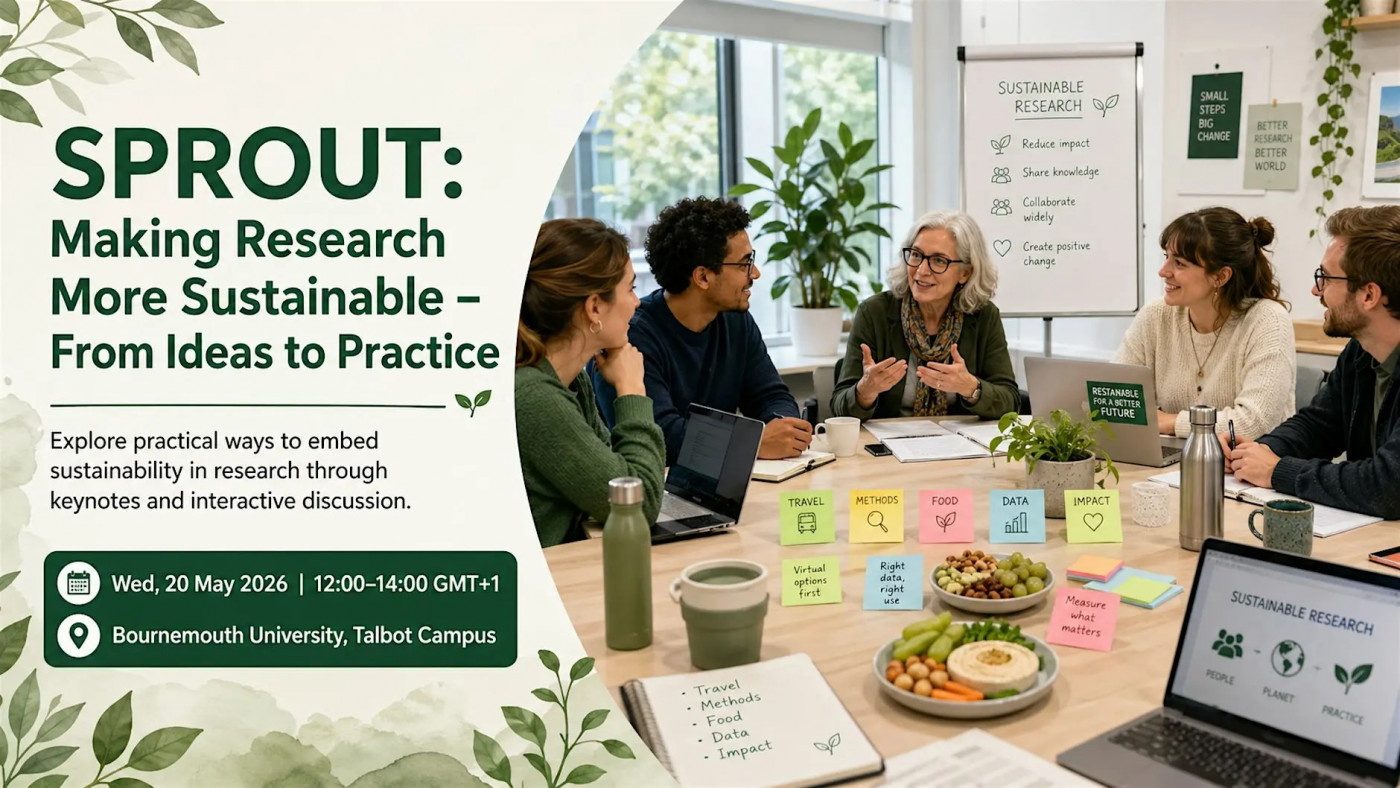
SPROUT: From Sustainable Research to Sustainable Research Lives

A different way of external examining

Last month I had the honour of chairing a committee to review the first three years of the MSc in Midwifery in the Netherlands.  Since all Higher Education Institutions (HEI) in the Netherlands offer this joint degree there is only one in the country.  This national collaboration meant there were very few academics working in the field of midwifery who can claim to be independent.  All midwifery educators/academic midwives are employed by one of the HEIs participating in the joint Master’s degree. Hence, two of the four committee members, including myself came from abroad.

Today’s blog highlights that there is a different way to the UK version of external examining as a form of quality control in Higher Education.  In the UK each undergraduate programme, or year in a programme, or module has its own external examiner, who is appointed typically for three years to act as independent assessor.  External examiners typically reviews all education aspects of the programme/module and discuss their assessment examiners’ meetings held at the host university.  For more details on external examining in the UK, see also:”Acting as External Examiners in the UK: Going Beyond Quality Assurance[1].

The Netherlands and Flemish-speaking Belgium has a single cross-national organisation which is responsible for assessing the quality of higher education degrees.  This organisation, the NVAO [Accreditation Organisation of the Netherlands and Flanders], has an accreditation system that covers Associate Degree, Bachelor’s, and Master’s programmes in the Netherlands.   First, there is the need for initial accreditation of a new programme, valid for a period of six years.  Secondly, the accreditation of an existing programme, which, following a positive assessment, is valid indefinitely, as long as the programmes passes the six-yearly assessment by a panel of independent experts (peers engaged by the NVAO).  Between these periodic assessments there is no equivalent of the UK’s annual external examiners’ meeting.

Reference:

  1. Poobalan, A., Simkhada, P. & van Teijlingen, E. (2021), “Acting as External Examiners in the UK: Going Beyond Quality Assurance“, In: Sengupta, E., Blessinger, P., Ssemwanga, A. & Cozza, B. (Ed.) The Role of External Examining in Higher Education: Challenges and Best Practices (Innovations in Higher Education Teaching and Learning, Vol. 38), Emerald Publishing Limited, Bingley, pp. 13-23. https://doi.org/10.1108/S2055-364120210000038002

Prof. Edwin van Teijlingen

Exploring Embodied Research: Body Map Storytelling Workshop & Research Seminar

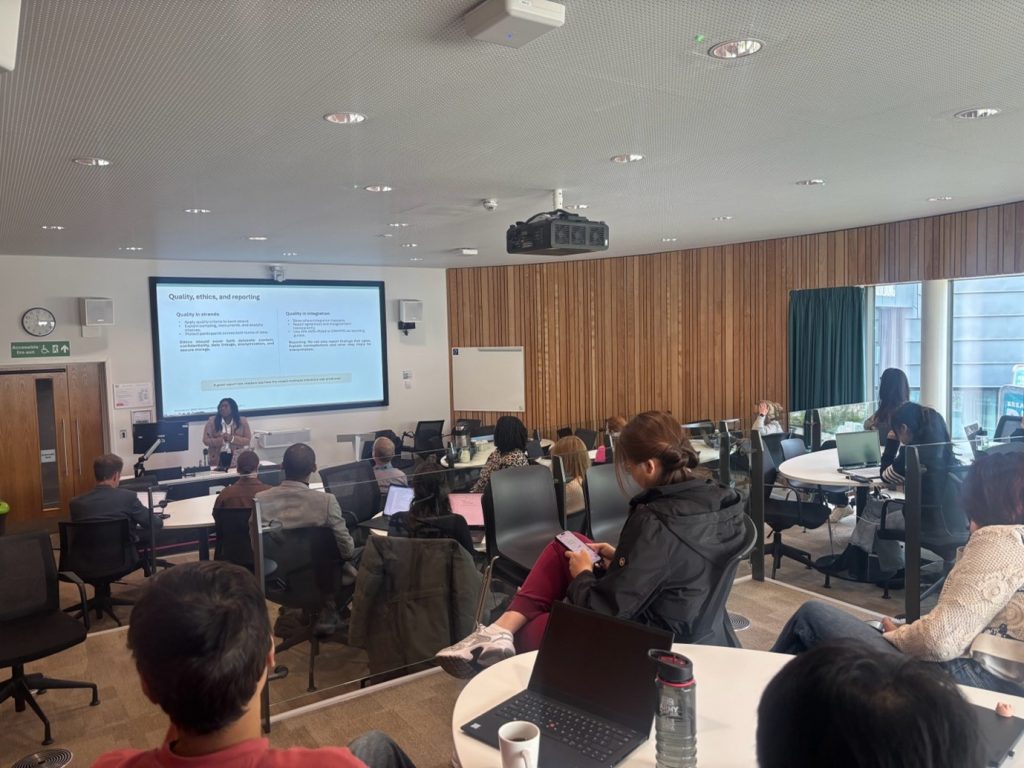
Supported by the PGR Research Culture and Community Grant, Zahra Eskandari (PhD Candidate, Faculty of Business & Law) recently hosted a two-day workshop introducing Body Map Storytelling to the BU research community. This innovative, arts-based method focuses on using creative expression to explore lived experiences, empowering participants to bridge their personal journeys with broader academic practices.

A space for reflection and connection

The interactive session took place at Poole House on Thursday 22 January. Designed specifically for international women PGRs and ECRs, the workshop provided a supportive environment to explore themes of physical activity, wellbeing and belonging. Participants engaged in a hands-on creative process, developing unique body maps that combined visual expression with storytelling.

One participant noted:

“Through this workshop, I realised more about my choices and my engagement.”

Examples of body maps created during the workshop, where participants used colour and symbols to represent their lived experiences and emotional wellbeing.

Examples of body maps created during the workshop, where participants used colour and symbols to represent their lived experiences and emotional wellbeing.

Interdisciplinary learning

The following day, the focus shifted to the Fusion Building for a research seminar led by Dr Anna Smirnova (Creative Health Associate, Edge Hill University). Dr Smirnova shared insights from her PhD research using this method with young people in Kyrgyzstan, providing a deep dive into the ethical and analytical foundations of the approach.

The seminar attracted a diverse group, including five postgraduate researchers and nine lecturers, creating an engaging cross-disciplinary exchange of ideas.

A participating lecturer described it as:

“One of the few events where you could learn something new and hear about the incredible research being carried out elsewhere.”

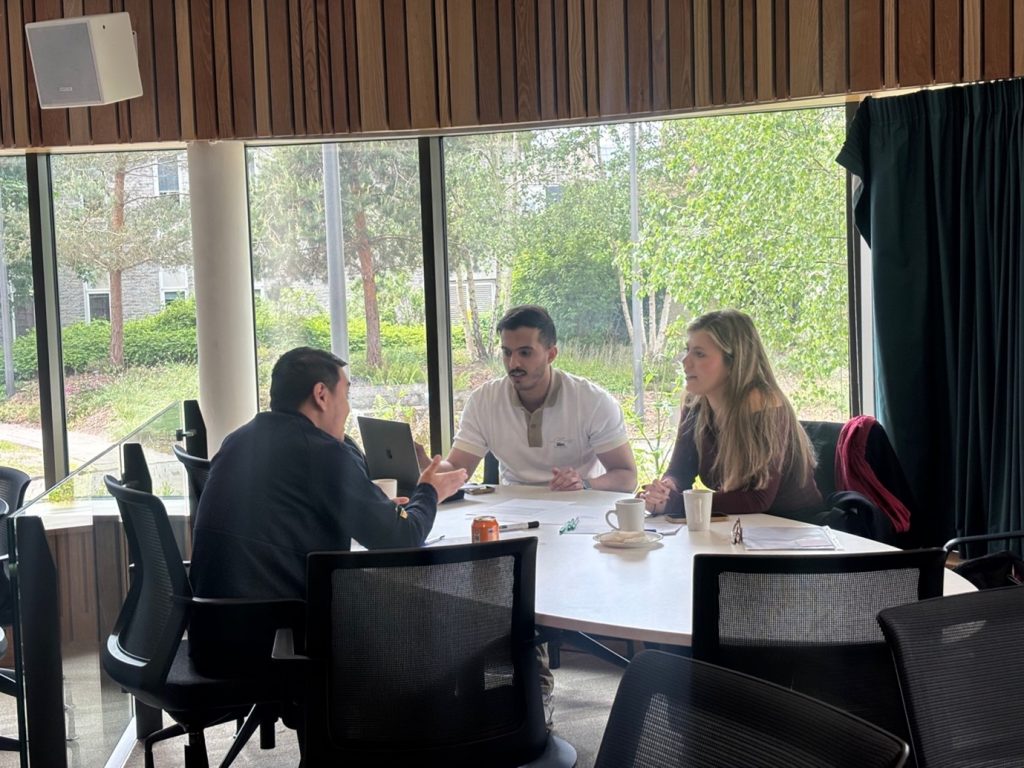
The PGR community in action: participants at the Body Map Storytelling workshop exploring embodied research methods

Impact

For the organiser, Zahra Eskandari, managing this project was “Empowering, Transformative, and Challenging”. While building Zahra’s project management and budget skills, the project also gave BU researchers new, creative tools for inclusive research. The positive engagement from both the workshop and seminar showed a clear demand for more arts-based sessions at BU in the future.

Apply for the PGR Research Culture and Community Grant

Do you have an idea for an event or initiative that could strengthen the research culture at BU? We invite you to follow in Zahra’s footsteps and apply for funding to bring your project to life.

Find out more and submit your application here: Research Culture and Community Grant PGR Application

Closing date 4pm, Monday 9 March 2026

If you would like to discuss your ideas before submitting your application, please contact Enrica Conrotto, Researcher Development Manager, at pgrskillsdevelopment@bournemouth.ac.uk.

Marking a Milestone: The Swash Channel Wreck Book Launch

Supported by the ECR Research Culture and Community Grant, Tom Cousins (Faculty of Health, Environment & Medical Sciences) recently organised a public lecture and book launch to celebrate the publication of research on the Swash Channel Wreck. This event served as a major milestone for a project that has spanned Tom’s entire career at Bournemouth University, from his time as an undergraduate and postgraduate student to his current role as a full-time member of the technical staff.

A Celebration of Maritime Archaeology

The Swash Channel Wreck Book

The Swash Channel Wreck Book

The event, held at Talbot Campus on 28 January, featured a well-attended public lecture and celebrated the launch of a new book by Dave Parham and Tom Cousins. The session featured an in-depth presentation on the Swash Channel Wreck, a 17th-century Dutch shipwreck first located in 1990 and rediscovered in 2006. As one of the most complete shipwrecks of its kind outside the Baltic, the site offers rare insights into 17th-century ship construction and life on board.

Combined with a display of archaeological finds, the event showcased years of research to members of the public and the wider BU community, including the University Executive Team and the Vice-Chancellor. The presentation was followed by a wine reception, allowing attendees to view the artifacts first-hand and discuss the findings

Beyond the university, the launch brought together long-term stakeholders from government agencies, harbour authorities, and museums. It was a reminder that the project was a shared effort, involving divers, students, and partners across two countries. Seeing everyone reunite to mark the publication, highlighted the project’s lasting significance for BU’s maritime archaeology and all who contributed to its journey.

Presenting the history of the Swash Channel Wreck during a public lecture, followed by a networking session where researchers, stakeholders, and the public gathered to celebrate the project's milestone.

Presenting the history of the Swash Channel Wreck during a public lecture, followed by a networking session where researchers, stakeholders, and the public gathered to celebrate the project’s milestone.

Supporting the research community

The launch was a collaborative effort that directly supported the development of early-career researchers and postgraduate students. Several PGRs and ECRs assisted in setting up and managing the day, providing them with valuable opportunities to network with members of the public, industry professionals, and senior university leadership.

Tom described the overall experience as “Interesting, welcoming, and collaborative,” noting that the greatest benefit was the opportunity to share this significant research with both the BU community and members of the public.

Apply for the ECR Research Culture and Community Grant

Do you have an idea for an event or initiative that could strengthen the research culture at BU? We invite you to follow in Tom’s footsteps and apply for funding to bring your project to life.

Find out more and submit your application here: Research Culture and Community Grant

Closing date 4pm, Monday 9 March 2026

If you would like to discuss your ideas before submitting your application, please contact Enrica Conrotto, Researcher Development Manager, at researcherdevelopment@bournemouth.ac.uk

ECR Funding Open Call: Research Culture & Community Grant – Apply now

Building on the success of our first call, we have reopened grant applications for BU’s ECRs. This is your opportunity to secure the resources you need to innovate, collaborate, and lead.

Whether you’re planning a training workshop or a creative networking event, these grants are designed to empower you to strengthen the BU research environment.

Explore our two dedicated funding streams:

Stream 1: Researcher Development

  • Supports the organisation of skills focused workshops, events, or initiatives.
  • Grants of up to £500 per activity are available.
  • Examples: specific research methods workshops, guest speakers, writing sessions etc.

Stream 2: Research Culture and Community

  • Supports the delivery of research culture and community building, well-being or social activities.
  • Grants of up to £300 per activity are available.
  • Examples: cultural and social events, wellbeing enhancing activities.

Terms

Please review the following terms before submitting your application:

  • No ECR should be the primary organiser of more than one activity.
  • Activities should be engaging and available to the full PGR community.
  • The organisers should be committed to promoting, delivering and evaluating the activity.
  • Activities must take place and be invoiced before 31 July 2026.
  • Activities should not duplicate those already on offer.
  • Contributions from other sources may complement the Doctoral College grant.
  • Funding will not be offered retrospectively.

Apply here by 4pm, Monday 9 March

If you have an idea that you would like to discuss before submitting your application, please contact Enrica Conrotto, Researcher Development Manager, at
researcherdevelopment@bournemouth.ac.uk

We look forward to seeing your ideas and supporting you in shaping the future of community and development at BU.

The Researcher Development and Culture Team

Celebrating our Research: Postgraduate Research Showcase 2026

The Doctoral College invites the BU community to the Postgraduate Research Showcase, hosted in the Atrium Gallery from Tuesday 3 February to Thursday 26 February 2026.

This exhibition features a curated selection of posters from our 17th Annual Postgraduate Research Conference. It is a fantastic opportunity to explore the diverse research being driven by our Postgraduate Researchers. The selected posters will remain on display throughout the duration of the showcase, allowing you plenty of time to visit and engage with the work.

Join us for the Launch Event

To kick off the exhibition, we are hosting a celebratory launch event. This is a chance to network with fellow researchers, meet academics, and show your support for the PGR community.

  • Wednesday 4 February 2026
  • 3-4pm
  • Atrium Gallery, Poole House, Talbot Campus
  • Cheese and wine will be provided (with vegan and non-alcoholic options available).

Register your place via Eventbrite here

Please note there will be no virtual exhibition this year, so make sure to stop by the Atrium Gallery in person to experience the showcase. If you would like a taste of the energy from our recent conference, you can catch highlights and images from the event on YouTube.

We look forward to seeing you there and celebrating the incredible contributions of our Postgraduate Researchers

UKCGE Recognised Research Supervision Programme

UKCGE Recognised Research Supervisor Programme

Whether you’re just starting out in supervision or already experienced, you can apply for national recognition of your doctoral supervision through the UK Council for Graduate Education (UKCGE).

There are two levels of recognition, based on your experience:

Recognised Supervisor (Full Award) – for those who have supported doctoral candidates through to final examination and completion.

Recognised Associate Supervisor – for those who have not yet supervised candidates to completion and/or who contribute to supervision in an informal capacity.

Why apply?

UK universities are increasingly prioritising supervisor development to enhance research culture and doctoral support. The Research Supervisor Recognition Programme (RSRP) encourages supervisors at all levels to engage in structured self-reflection, using the Good Supervisory Practice Framework to identify strengths and target areas for growth.

Key Benefits of RSRP Awards:

Structured Self-Reflection: Evaluate your methods and decision-making.

Benchmarked Excellence: Map your practice against national standards.

Professional Growth: Identify clear pathways for improvement, whether applying for Full or Associate awards.

BU already has over 30 recognised research supervisors, and you could be next.

How to apply

Write a reflective account of your supervisory practice aligned with the Good Supervisory Practice Framework.

Submit your application using the relevant form:

Recognised Supervisor Reflective Account Form  Word 56.37KB

Recognised Associate Supervisor Reflective Account Form Word 55.72KB

Your application will be peer-reviewed by a two-person panel. Whatever the outcome, you will receive detailed feedback.

UKCGE | Frequently Asked Questions

To complete your application, please ensure we receive a formal approval email sent directly from your Associate Dean Research, Innovation and Enterprise to researcherdevelopment@bournemouth.ac.uk. This confirmation is required before the application can move to the final review stage.

For more information, to register your interest, or to discuss your application, please email Julia Taylor (Doctoral College) at researcherdevelopment@bournemouth.ac.uk

Please note: The Doctoral College will cover the cost of applications submitted by BU supervisors.

Application Deadlines

BU Window Closes – 9am, Monday 16 March 2026

UKCGE Window Closes – Friday 20 March 2026

Expected Outcome – June 2026

Complete applications should be submitted to Julia Taylor (Doctoral College) at researcherdevelopment@bournemouth.ac.uk by the above deadlines.

Supporting Workshop

Supervisory Lunchbite | UKCGE Recognised Research Supervisor Scheme

This session provides an introduction to the UKCGE Good Supervisory Practice Framework and the two levels of recognition:

Recognised Supervisor (Full Award)

Recognised Associate Supervisor

Staff attending this session will be able to:

Understand the application process for UKCGE recognition (including deadlines and timescales)

Apply the UKCGE Best Practice Framework to their own supervisory experience

Appreciate the wide-ranging, highly complex and demanding set of roles that modern research supervisors undertake to perform the role effectively

Register here

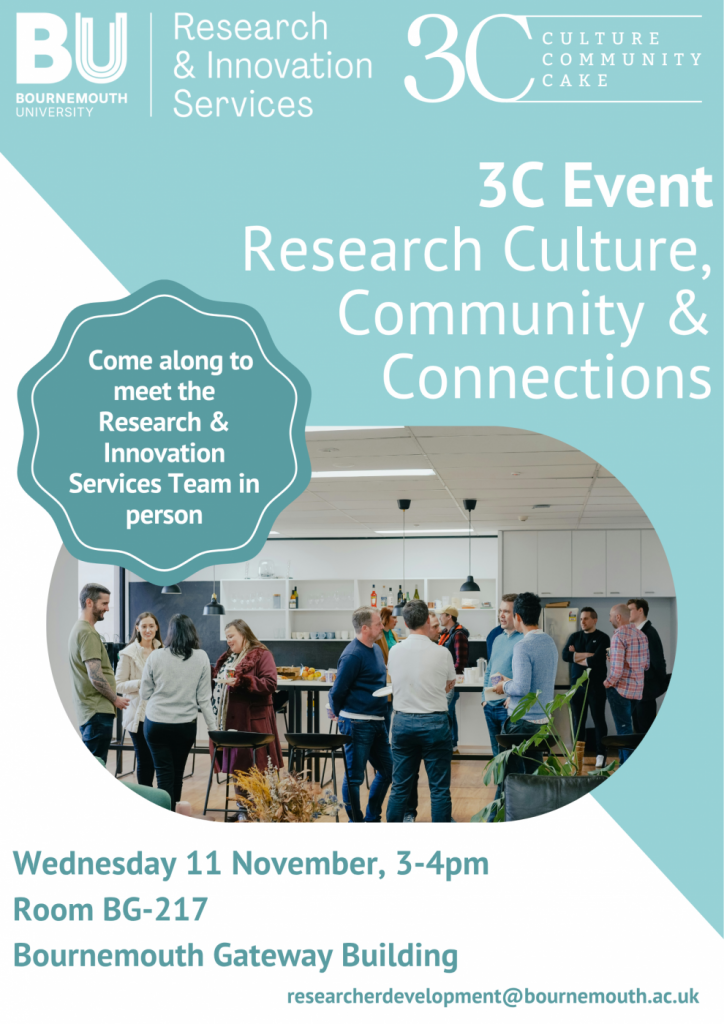
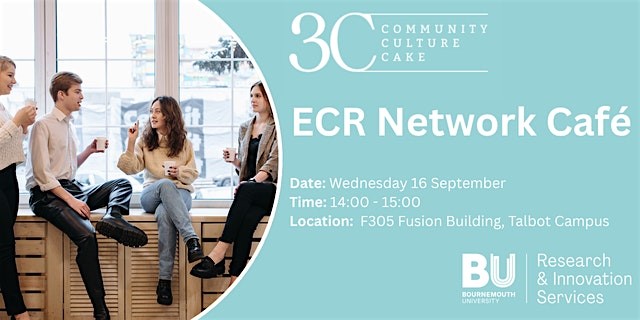
3C Event: Research Culture, Community & Cookies – Tuesday 13 January 10-11am

Behind every successful grant and impact case study, is a dedicated support team. Join us at our next 3C event to meet the Research & Innovation Services staff in person. Discover the specialised support available to help you navigate and succeed on your research journey.

No slides, just support

Grab a coffee and a cookie, and have an informal chat with the Research and Innovation Services Team. No appointments, no formal presentations, just a chance to connect with the people behind your research support services. The same friendly 3C atmosphere you love, now with added expertise.

Who’s joining us?

The following RIS staff members will be joining us to answer your questions or simply say hello:

  • Shumana Begum – Research Governance Adviser
  • Claire Fenton – REF Lead
  • Eva Papadopoulou – Research Grants Manager (Pre-Award)
  • Julia Taylor – Head of Doctoral College
  • Alex Morrison – Research Grants Programme Manager

Event Details

Date: Tuesday 13 January

Time: 10-11am

Location: Room K103, Kimmeridge House, Talbot Campus

How to join: Find out more and register here

We’re looking forward to seeing you there!

If you have any questions about the event, please do get in touch with the Research Development & Culture Team: researcherdevelopment@bournemouth.ac.uk

Bournemouth University Cyber Security Researcher Wins Best Poster Award at HISC 2025

Bournemouth University (BU) is proud to announce that PhD Cyber Security researcher Serdar Akar, has been awarded Best Poster Winner at this year’s High Integrity Software Conference (HISC) 2025, held in Newport, Wales.

HISC is a leading international forum that brings together software engineers and industry practitioners to exchange knowledge, address critical challenges, and strengthen the foundations of a trustworthy software ecosystem.

Serdar’s winning poster, titled Towards Productive Cyber Resilience and Safety Analysis in Model-Based Systems Engineering (MBSE), was showcased in the conference’s Future Zone, which highlights innovative research shaping the future of high-integrity software.

Serdar was also recently named the Winner of our BU’s ‘Business Idea Challenge’, organised by the Students’ Union (SUBU). This award recognises a student-led venture that is not only highly feasible but also carries a strong social impact, aligns with the university’s sustainability priorities, and demonstrates impressive potential for future growth.

Serdar said, “To have my work recognised in both academic and entrepreneurial spheres in such a short time is immensely encouraging. It is a great privilege to be able to contribute to the research and innovation environment here at Bournemouth University.

Dr Duncan Ki-Aries at Bournemouth University, commented, “These awards reflect the high calibre of research being undertaken at BU. Serdar’s work contributes to advancing cyber resilience and safety in complex systems, and we are delighted to see it recognised on an international stage.”

Prof Huseyin Dogan mentioned, “There are challenges centred on Model Based Systems Engineering in industry, and we are bridging theoretical benefits with practical applications. Serdar’s PhD will contribute to this domain by integrating cyber resilience and safety analysis through software tool support.”

The recognition underscores Bournemouth University’s commitment to pioneering research towards safer, secure, and more resilient digital infrastructures.

If you’re interested in learning more about these impactful projects, please don’t hesitate to get in contact with Prof. Huseyin Dogan and Dr. Duncan Ki-Aries, and others.

ECR Funding Open Call: Research Culture & Community Grant – Application Deadline Friday 12 December

Research Culture & Community Grant – Relaunch with dedicated ECR Funding

Following the success of the Doctoral College Research Culture & Community Grant for our PGR community, we are excited to announce a new funding strand specifically for Early Career Researchers.

This is your opportunity to secure dedicated funding to develop your ideas, build essential collaborations, and grow professionally within BU’s research environment.

We have set aside grants to support ECR-led social and/or academic events. Whether it is a social mixer, a focused training workshop, or a creative new initiative, we want to empower you to enhance the BU research culture and community.

Which stream is right for your idea?

We have two dedicated streams to support a diverse range of activities:

Stream 1: Researcher Development 

This stream supports the organisation of skills-focused workshops, events, or initiatives designed to build research capacity. 

  • Grants Available: Up to £500 per activity
  • Examples: Specialised research methods workshops, inviting an external guest speaker, or dedicated academic writing sessions. 

Stream 2: Research Culture & Community 

This stream supports initiatives focused on community building, well-being, or social activities that enhance the overall research culture at BU. 

  • Grants Available: Up to £300 per activity. 
  • Examples: Cultural and social events, or activities specifically designed to enhance researcher well-being. 

Key Terms & Conditions 

Please review the following terms before submitting your application: 

One Activity Limit: No ECR should be the primary organiser of more than one activity. 

Community Reach: Activities should be engaging and made available to the full PGR community. 

Commitment: Organisers must be committed to promoting, delivering, and evaluating their activity. 

Timeline: Activities must take place and be invoiced before 31 July 2026. 

Originality: Activities should not duplicate those already on offer elsewhere within the Doctoral College or wider University. 

Match Funding: Contributions from other sources are welcome to complement the Doctoral College grant. 

Non-Retrospective: Funding will not be offered for activities that have already taken place. 

Ready to apply?

If you would like to discuss your ideas before submitting your application, we encourage you to get in touch. Please contact Enrica Conrotto, Researcher Development Manager at researcherdevelopment@bournemouth.ac.uk

The closing date for all applications is 4pm, Friday 12 December 2025

Apply here 

We look forward to seeing your ideas and supporting you in shaping the future of community and development at BU.

The Researcher Development and Culture Team

Register now to attend the 17th Annual Postgraduate Research Conference – Wednesday 3 December 2025

Register now to attend the 17th Annual Postgraduate Research Conference, hosted by the Doctoral College.

Join us for a day of showcasing some of the excellent research taking place across BU by our postgraduate research community. This event provides a platform for our postgraduate researchers to present their research, share insights, and engage in meaningful discussions with peers, university colleagues, and external partners.

Date & Time: Wednesday 3 December, 9am-4:30pm

Location: Fusion Building, Talbot Campus

This year, the Poster Exhibition will take place in FG04 & FG06, Fusion Building, with viewings taking place in the morning and during the lunch break. Oral presentations hosted in Share Lecture Theatre in the Fusion Building.

Read the full brochure here

Whether you’re a researcher, academic, colleague, or just interested in the cutting-edge work happening at BU find out more and book your place here 

SPROUT: Embedding Sustainability in Doctoral Research Practice

Join us for the first SPROUT network event of 2025/26 – a collaborative session between Bournemouth, Cardiff, and Durham Universities exploring how sustainability and impact can be embedded in doctoral research practice.

We’re delighted to invite postgraduate researchers and early career researcher to the first SPROUT event of the 2025/26 academic year.

SPROUT the Sustainability and Postgraduate Research Network is a collaboration between Bournemouth University, Cardiff University, and Durham University. The network aims to explore how sustainability and impact can be embedded within our research practices, collaborations, and everyday academic lives.

Event Overview

Date: Wednesday 19 November 2025
Time: 1-2pm
Format: Online (via Microsoft Teams) and in person at INSPIRE, Fusion Building, Talbot Campus, Bournemouth University, Fern Barrow, Poole BH12 5BB
Host University: Bournemouth University
Organisers: BU academic and PGR leads, in collaboration with Cardiff & Durham Universities
Theme: Personal and Institutional Sustainability: Embedding Sustainable Practice in Doctoral Research
Open to: Doctoral and early career researchers across all disciplines

About the Event

Join the SPROUT hybrid event, a new network uniting BU, Durham, and Cardiff Universities to embed sustainability and impact in research collaboration.

This interactive one-hour session explores how sustainability can shape both our research and our daily practices as postgraduate and early career researchers. Together, we’ll consider:

  • What does sustainability mean personally, institutionally, and academically?
  • How can we make our research processes more sustainable and ethical?
  • What practical steps can we take as a community?

Meeting Objectives

  • Reintroduce the SPROUT network for the 2025/26 academic year
  • Explore how sustainability can be understood and practised at personal, institutional, and research levels
  • Create space for doctoral and early career researchers to share experiences and connect
  • Promote opportunities for participation and leadership in future SPROUT events

Why Attend?

If you’re a doctoral or early career researcher interested in embedding sustainability and ethical practice into your research, this session offers:

  • A chance to connect with peers across three UK universities
  • Inspiration on integrating sustainability into your research and everyday academic activities
  • A collaborative space to share experiences, challenges, and ambitions for more sustainable research cultures

How to Join

Participation is free, but registration is required – please sign up via [SPROUT: Embedding Sustainability in Doctoral Research Practice Tickets, Wed 19 Nov 2025 at 13:00 | Eventbrite].
After registering, online attendees will receive a Teams link by email.

For further information, please contact Dr Tahani Mohamed at tmohamed@bournemouth.ac.uk.

We look forward to seeing you at the first SPROUT event of the new academic year and to working together to embed sustainability in doctoral research practice.

Join the 17th Annual Postgraduate Research Conference – Wednesday 3 December 2025

17th Annual Postgraduate Research Conference: Register now

Register now to attend the 17th Annual Postgraduate Research Conference, hosted by the Doctoral College.

Join us for a day of showcasing some of the excellent research taking place across BU by our postgraduate research community. This event provides a platform for our postgraduate researchers to present their research, share insights, and engage in meaningful discussions with peers, university colleagues, and external partners.

Date & Time: Wednesday 3 December, 9am-4:30pm

Location: Fusion Building, Talbot Campus

This year, the Poster Exhibition will take place in FG04 & FG06, Fusion Building, with viewings taking place in the morning and during the lunch break. Oral presentations hosted in Share Lecture Theatre in the Fusion Building.

Whether you’re a researcher, academic, colleague, or just interested in the cutting-edge work happening at BU find out more and book your place here 

The detailed programme will be available soon.

Exciting Opportunities for Early Career Researchers

We are delighted to share upcoming events from the British Academy Early Career Researcher Network (BA ECRN) Southwest & South Wales cluster. These are fantastic opportunities for networking, skill development, and engaging with key topics relevant to ECRs in the humanities, arts, and social sciences.

SWSW Connect Online Community Meeting: Research Culture and Excellence Frameworks

Date & Time: Tuesday 11 November, 12-1pm

This is a monthly online meeting for ECRs in the humanities and social sciences. It is a space to network, share knowledge, and support each other across the region. November’s session will focus on how ECR research can contribute to the research culture environment and to key UK frameworks: Research Excellence (REF), Knowledge Exchange (KEF), and Teaching Excellence (TEF).

Register on the BA ECRN Portal to find out more and book

Reaching Out: Forming Interdisciplinary Connections

Date: Tuesday 18 November, 10am-4pm

Location: University of Exeter

This in-person workshop is for ECRs who want to work together on research projects that cross different disciplines. The goal is to teach ECRs how to find partners, start these interdisciplinary projects, and gain better insights and funding advice from experienced researchers.

Register on the BA ECRN Portal to find out more and book

Development Fund Workshop: The Impact of the ‘Impact Agenda’

Date & Time: Thursday 27 November, 10:30am-5:30pm

Location: The British Academy, London

This workshop will examine the effect of the ‘impact agenda’ on the professional development and career paths of ECRs in the Humanities, Arts, and Social Sciences. It will bring together ECRs, senior academics, and policy actors to develop practical recommendations for improving impact training and career progression.

Register on the BA ECRN Portal to find out more and book

SWSW Webinar Series

The SWSW Webinar Series brings monthly knowledge and skill-based content from engaging expert speakers.

Knowledge Exchange and Commercialisation

Date & Time: Thursday 4 December, 11am-12pm

Directors of the University of Exeter’s SHArD 3D Lab will present an overview of successful Knowledge Exchange initiatives. They provide specialised training, workshops, and research solutions for the heritage and emergency services sectors. The presentation highlights insights from their experience in departmental business engagement and impact leadership.

Register on the BA ECRN Portal to find out more and book

Research Impact Culture: AHRC and ESRC Impact Accelerator Accounts

Date & Time: Friday 5 December, 10am-12pm

This workshop introduces Impact Accelerator Accounts (IAA): research council funds provided to universities to develop a research impact culture. The session will cover the concept of research impact, examples of IAA-supported projects, and the aims of the Arts and Humanities Research Council (AHRC) and Economic and Social Research Council (ESRC) IAA programmes. Participants will learn about available internal IAA support and funding to help researchers translate their work into real-world impact.

Find out more and book here

Stay Connected

We encourage all Early Career Researchers to join the BA ECRN Portal and ECRN platform for continuous updates on events, funding opportunities, and other resources relevant to your career development.

Our Researcher Development Hub is now available as your dedicated space to easily find resources and development opportunities for your research career stage.