Seen But Seldom Heard, Tonight at 7:30
Latest research and knowledge exchange news at Bournemouth University
As you may be aware, the Society of Biology, holds an annual celebration of biology through a range of public engagement activities. This year, biology week 2012 will run from 13th-19th October.
The purpose of biology week 2012 is to give a everyone a chance to learn more about biology across the country. You do not have to be a member of Society of Biology to take part, anyone that wishes to share their passion for biology through events (including debates, field trips, demonstrations) is welcomed to propose an activity.
If you are already planning to organise an event for biology week 2012 please do let Becca Edwards know (redwards@bournemouth.ac.uk/01202 961206) so we can spread the word.
Alternatively, if you would like to organise an event that could be included as part of biology week 2012, please get in-touch! We can help you explore ideas about what you could do, help you source any necessary funding and provide event co-ordination support. Again, please contact Becca to discuss further.
Given the fantastic research that we have here at BU, it would be great to see an event (or several!) being held here as part of biology week 2012
If you are looking for some inspiration, some events that are already scheduled to take place include:
Further information about biology week 2012 can be found here
You may have seen earlier this month a post about the work being done by BU academics from the Media School and the School of Health and Social Care, working with performance poets to help disabled young people from the Victoria Education Centre have a voice through poetry. This Thursday marks the first showcase of the Paralympic inspired work these students have produced.
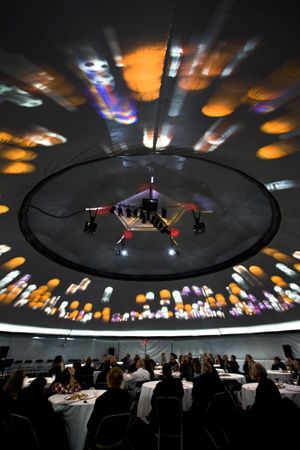
Running from 7:30pm – 11:00pm at the ICCI 360 arena in Weymouth, this event includes spoken word, film and performance by young Dorset voices supported by poets John Hegley, Jonny Fluffypunk and Liv Torc in a 360 degree audio-visual spectacle that promises to take poetry to the next level! This is an excellent example of public engagement and looks to be an exciting event so if you’re free come along this Thursday (30th August), tickets are £5, available from the Weymouth Pavilion Box Office.
Having just come into post as the Events Co-Ordinator for BU’s Festival of Learning I am just being introduced to the concept of public engagement, and Eric Jensen’s recent podcast on “Public Engagement and the Public Understanding of Science” was an enlightening listen on what public engagement is, and why it is so important.
Jensen starts by telling us about how the idea of public engagement came about from public understanding of science, and how it spread across several other academic disciplines such as the social sciences and humanities. He also tells us about the implications of this change, how events such as public lectures are only focused outwards whereas engagement events need to have inward input as well. This message is at the heart of the upcoming Festival of Learning as well as smaller events such as Café Scientifique Bournemouth being launched this October by colleagues from BU and AECC.
Another key point mentioned is the importance of evaluation and assessment. Evaluation and reflection are how we learn so should be applied to every situation in order to improve for the future. Asking yourself questions about the events being hosted, for example “Is this event cost effective and sustainable?” or perhaps “Could I engage more people more effectively through a different style of event?” are simple ways to assess what you’re doing and make sure the events are a worthwhile use of time and resources!
As public engagement becomes more and more important, with it now featuring as an aspect to be considered in research funding applications, it becomes vital to use engagement funding creatively and efficiently to provide interesting events as a forum for debate, discussion and interaction with those from all walks of society.
If you’d like to learn more about the development of public engagement activities around your research please contact Becca Edwards.
From discovery to display; M.A.D. About The Wreck will invite people to join the adventure of maritime archaeology through a series of Maritime Archaeology Days (MAD).
Maritime archaeologists at Bournemouth University are collaborating with Borough of Poole’s Museum Service to open the world of maritime archaeology to the public via the Swash Channel Wreck.
The project, made possible thanks to a grant of £140,200 from the Heritage Lottery Fund, aims to utilise the local underwater heritage so everyone can find out about how archaeologists discover, investigate and protect our underwater past.
The discovery and investigation of the Swash Channel Wreck just outside Poole Harbour is the inspiration behind the project. Work includes a series of events, workshops, talks and online resources, allowing people of all ages, background and circumstances even those unable to attend events or come to the museum to engage and take an active role in their underwater cultural heritage.
The idea for the project came from BU’s MSc Maritime Archaeology Programme Leader and Project Manager Ms Paola Palma. She said: “I was working with my students on this fascinating underwater site when I realised that only a small group of us – myself and my colleague Dave Parham, the students and few others – would be able to enjoy this incredible maritime heritage. And this made me realise how important it is that we involve not just students, but the wider community.”
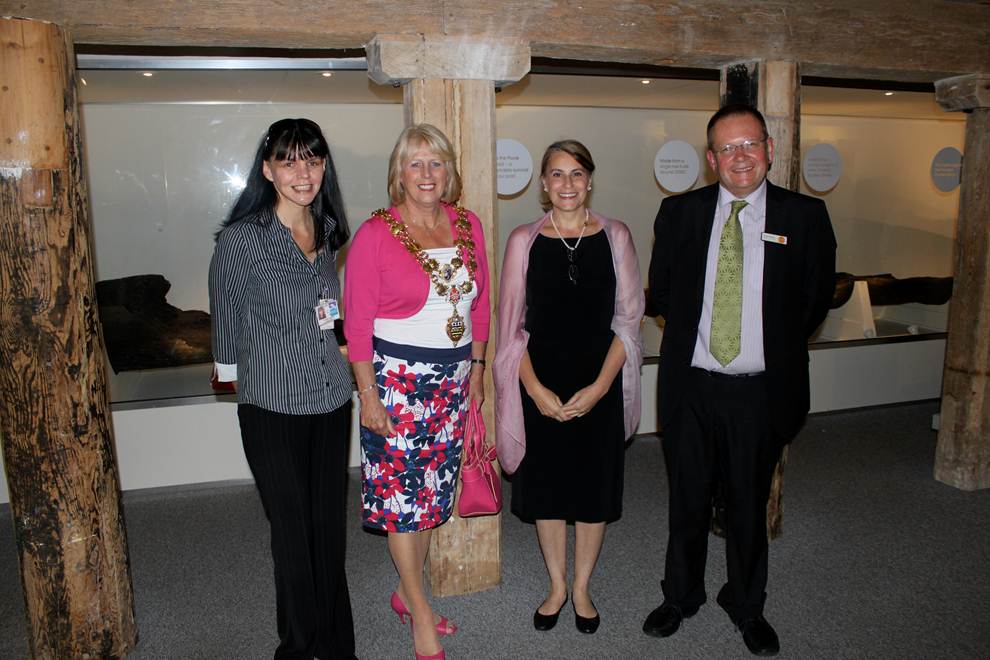
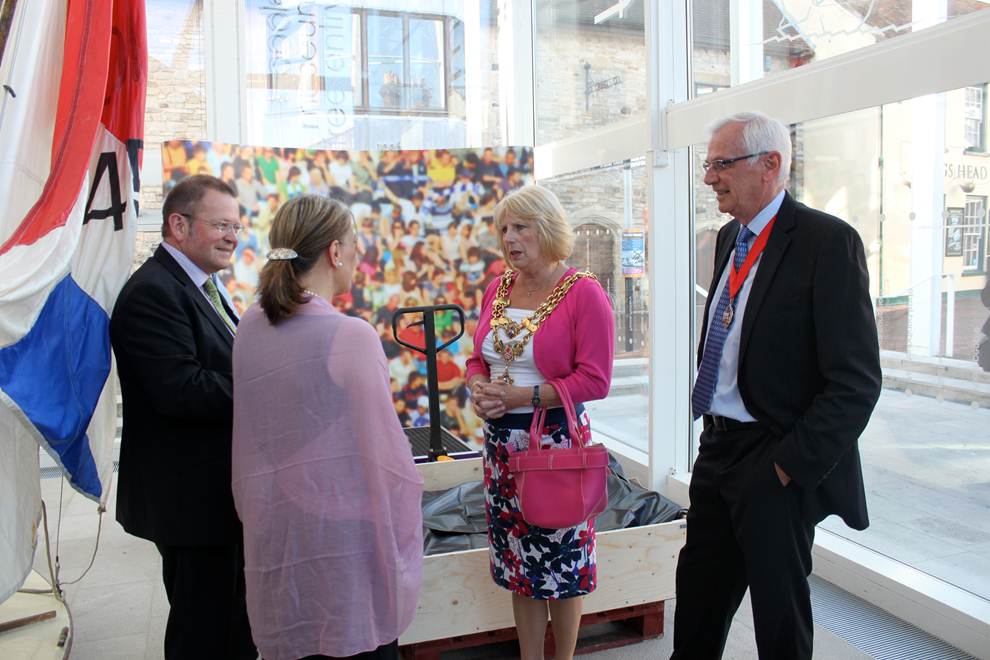
The project was launched at Poole Museum by the Mayor of Poole, Cllr Carol Evans, on Wednesday 15 August with similar events planned in the near future.
Cllr Carol Evans, Mayor of Poole, said: “We are pleased to be working with Bournemouth University on this exciting project which will involve the whole community. Poole has a fantastic maritime history and I would encourage people to get involved in what is a great opportunity. I look forward to visiting the Museum to see the finds from the Wreck on display.”
If you are interested in hosting a Maritime Archaeology Day at your school, office or organisation, or if you wish to be involved actively with the project, then you can contact a member of the team by e-mail at madaboutthewreck@bournemouth.ac.uk.
For further details about the MAD about the Wreck project, please contact Paola Palma, MSc Maritime Archaeology Programme Leader and Project Manager or see the project website
If you would like to learn more about public engagement at Bournemouth University, please contact Dr Rebecca Edwards
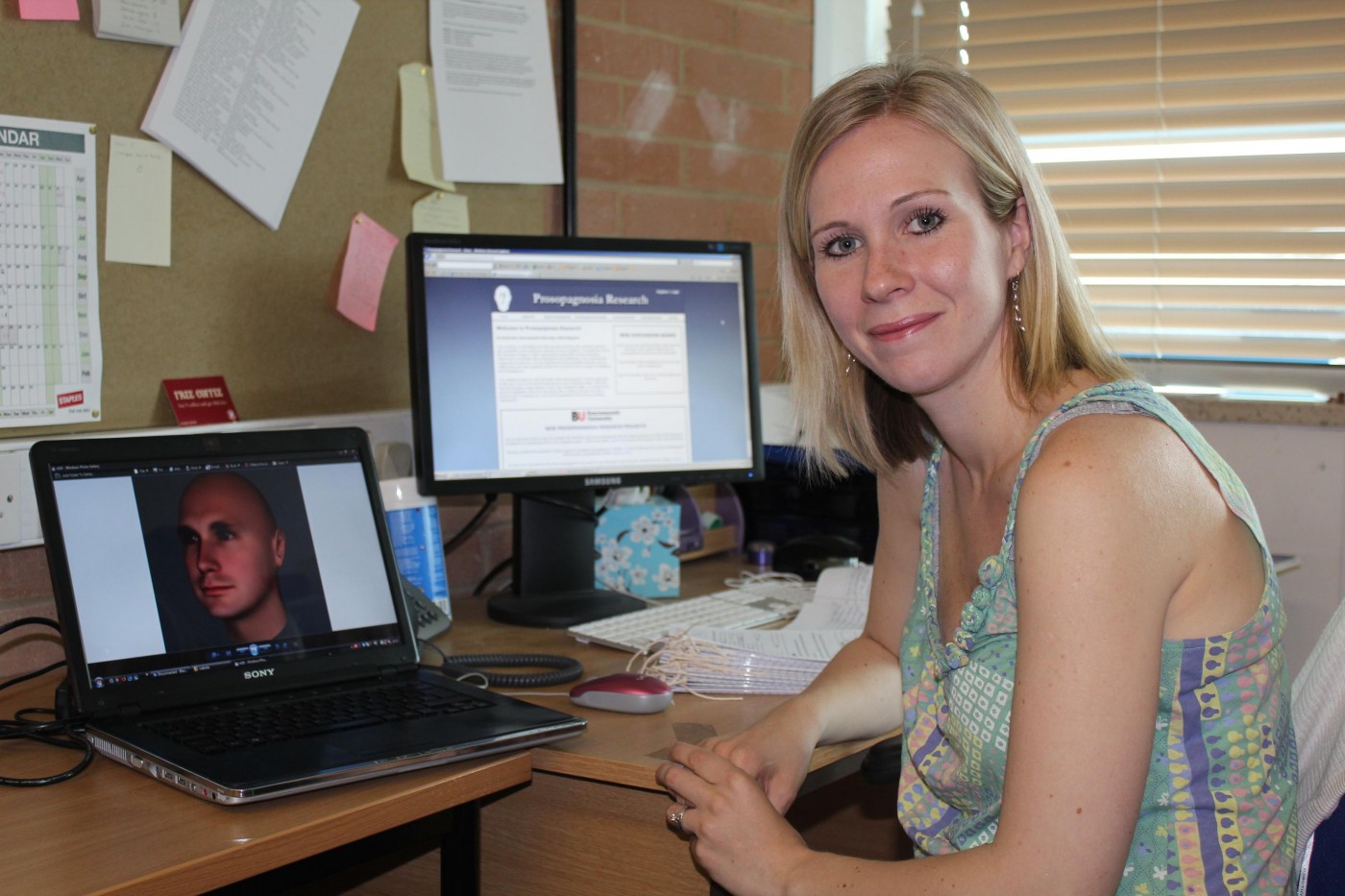
Dr Sarah Bate from the Psychology Research Centre has been awarded £63,050 from the CCCP strand of the Fusion Fund to develop a Centre for Face Processing Disorders at BU. Sarah’s work to date has explored the cognitive presentation and treatment of face processing deficits in adults and children with a range of neuropsychological conditions, such as developmental or acquired prosopagnosia (face blindness), autistic spectrum disorder, and Moebius syndrome. The initiative was launched in response to the large amount of media attention generated by Sarah’s research. After Sarah’s work was featured in The Guardian newspaper and in a BBC1 documentary last year, she has been contacted by over 700 people who believe they have prosopagnosia and would like to participate in her research. Given that most investigations into prosopagnosia to date have examined relatively small numbers of cases, Sarah now has the unique opportunity to develop large-scale academic and societal impact by having the resources to test this large patient group. Importantly, this work forms the basis of an Impact Case Study for the forthcoming REF, and the additional funds will be invaluable in the further development of the Case Study over the next year.
Initial funding of the new Centre was provided by HEIF money, and a postdoctoral ‘Centre Manager’ (Dr Nicola Gregory) was recently welcomed to this position. A second postdoctoral research position funded is currently being advertised. Sarah and Nicola are currently working hard to implement their plans for the first 12 months of the Centre, and are using the Fusion money to achieve the following aims:
One of Sarah’s key aims is to utilise this pump priming to sustain the project beyond the lifetime of the Fusion grant. She plans to submit bids for funding to both charities and small organizations, in addition to developing larger bids targeted at the research councils. The Centre is already off to a flying start having secured sponsorship from the Encephalitis Society, and is soon to receive media coverage in The Independent newspaper. In addition, the Centre is to be featured in a CBBC documentary that will be filmed next month.
Sarah and Nicola are currently working hard with two undergraduate research assistants and a MSc student to develop the battery of tests required for the research programme, and to develop information packs and web presence for the Centre. Watch out for the Centre’s regular updates on the Research Blog, and check out www.prosopagnosiaresearch.org for more information. You can also follow the Centre’s work on Twitter: @BUfacecentre.
Details of October event: Cafe Scientifique: Prof Jeff Bagust – “Slow, slow, quick, quick, slow – The Cardiac Foxtrot” – 7pm, 2nd October, Cafe Boscanova. No need to reserve a ticket, just buy a drink or snack at the venue!
***
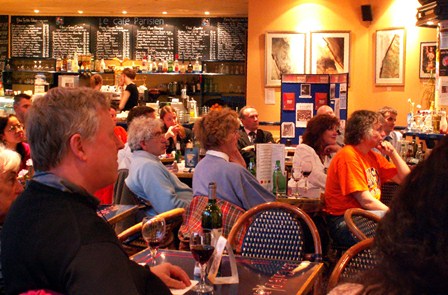
I am delighted to announce that Bournemouth will soon be hosting its very own Café Scientifique or Science Café (SciCafé) as they are often called, held first Tuesday of the month (7-9pm-ish) at Café Boscanova. What is this all about I hear you cry?
In brief, Café Scientifique is a forum for fostering public engagement with science. It’s about getting academics out of the university and into a pub, café, restaurant (not that academics necessarily require a push in this direction) or similar type of place to give a short talk related to the field in which they are researching, and then for the public to engage in asking questions of the expert and, indeed, of each other. As the Café Scientifique website neatly puts it this is “science for the price of a coffee” or, you may prefer my take on this strap-line, “science for the price of a couple of beers”.
The talk is important, but most important of all is the discussion that it stimulates. Should Oscar Pistorius have been allowed to participate in the Olympic Games? Was it worth spending billions of pounds discovering the Higgs-Boson, and what does its discovery mean? Is climate change definitely largely man-made? Why does toast always land buttered-side down? 
The benefits of the discussion ought to be reciprocal – the public gets to benefit from up-to-date knowledge and to learn about what scientists actually do, and why they do what they do, ‘from the horse’s mouth’, as it were; academics meanwhile get to play their part in the wider dissemination and understanding of their field to the general public. Reporting of science in the media is often sparse and more often inaccurate. Science will never sell newspapers or magazines in quite the same numbers as will news of the signing of Wayne Rooney to Manchester City (wee joke), the Duchess of York’s latest dress or Katie Price’s latest marriage (totally serious). The Bournemouth SciCafé is one option for us to help redress the balance, dispel myths, empower, stimulate and inspire. The Bournemouth SciCafé is being organised by myself (chiropractor and BU PhD student) with Sharon Docherty (biologist and fellow AECC researcher) and two colleagues at BU, Becca Edwards (Research Development Officer – Public Engagement) and Naomi Kay (Events Co-ordinator).
Contact me, Jonny, if you’d like more information about attending or, even better, if you’d like to give a talk yourself. We’d particularly like to hear from you if you can give a talk related to the Olympics, whether on sports performance, psychology, training, the economic and social impact of the Games etc. We look forward to seeing you, or, listening and discussing with you, very soon! First speakers to be announced soon! Further updates will be posted here.
If you would like more details about public engagement activities at BU, please contact Becca Edwards on redwards@bournemouth.ac.uk or 01202 961206.
In the golden afterglow of the London 2012 Games, this one-day event will investigate the potential for the London Olympics to generate national and regional tourism benefits long after the hosting of the Games.
Whilst previous activity has focused on maximising benefits in the run up to, and during the London 2012 Games, the main tourism opportunities will fall in the years immediately after the Games (Weed, 2009; Shipway and Fyall, 2012). Drawing from the experiences of industry practitioners and academics involved in both the London Games and other global mega sports events, delegates will discuss and debate potential strategies to optimise the success of managing tourism in the post 2012 era. 
The event, supported by the ESRC (Economic and Social Research Council), is part of their tenth annual ‘Festival of Social Science’ week and is aimed primarily at tourism businesses and stakeholders across the UK, exploring the potential to optimise tourism benefits.
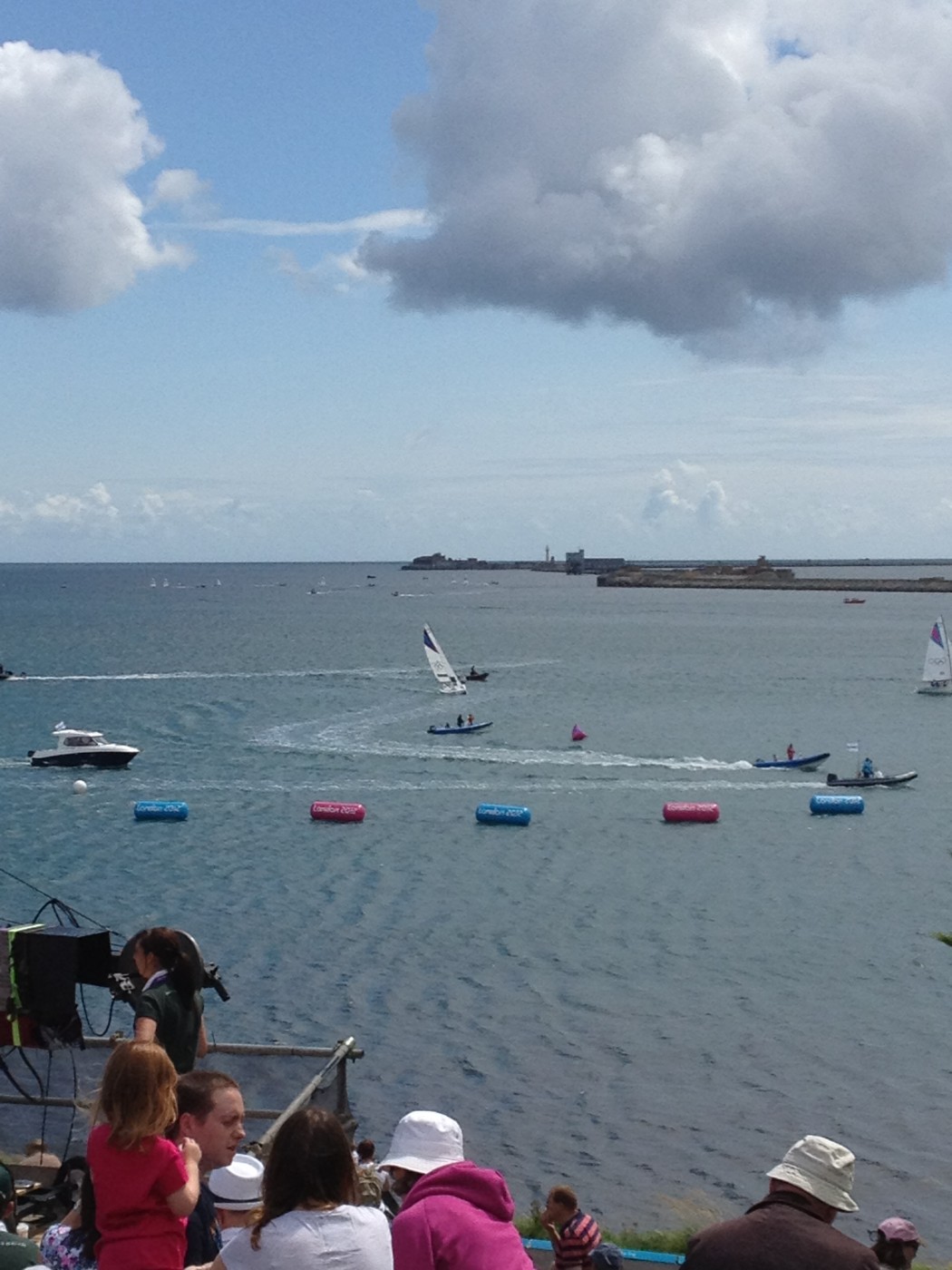
The event will take place at the Executive Business Centre (EBC) at Bournemouth University: a location that is in relative close proximity to Weymouth and Portland, the host venue for the Sailing events of the 2012 Games. As such, high on the agenda for the day will be to explore the regional opportunities that exist linked to the 2012 Games, and it is anticipated that these discussions will provide unique and contrasting insights into maximising tourism opportunities outside of the host city, London.
In summary, this one-day event will explore the extent to which the 2012 Games remains able to deliver global networks to support tourism promotion overseas, to engage industry and Government in supporting the growth of the visitor economy, and to maximise the impact of public investment in tourism.
To register for this event, or for further details, please contact Dr Rebecca Edwards on redwards@bournemouth.ac.uk or 01202 961206.
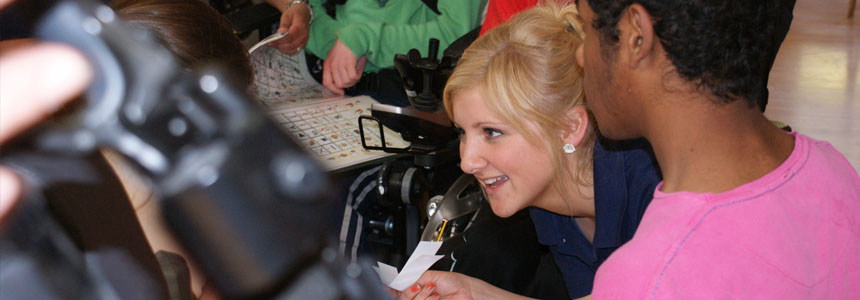
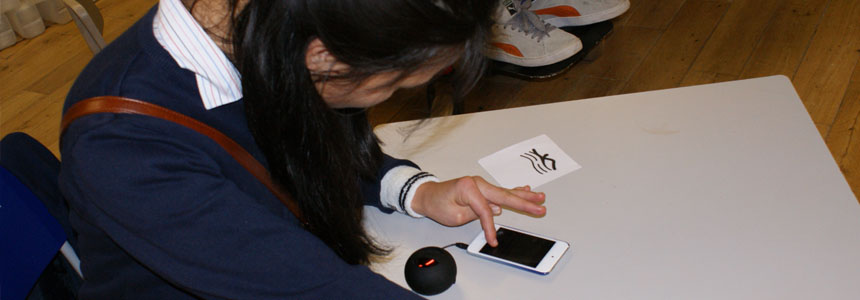
Students at the Victoria Education Centre in Branksome, Poole, have been taking part in poetry workshops and will be performing their work as part of the Paralympics celebrations in Weymouth.
Seen but Seldom Heard, is an on-going collaboration between academics from the Media School and the School of Health and Social Care, artists and the school using creative participatory methods to help young disabled students to find a voice through poetry.
The project, which has received funding from the BU Fusion Fund, BU Aim Higher and the BU Foundation, aims to give the students at the Victoria Education Centre the creative tools to explore perceptions and representations of disability within society using their own individual and collective experiences.
The students involved, working with Performance Poets Liv Torc and Jonny Flufflypunk, have produced some startling and surprising work drawing inspiration from Paralympic symbols and media portrayals of Paralympic athletes. This work will then be showcased at three major events via live performance and film:
1. Thursday 30 August, 7.30pm – Live performance at ICCI 360 Arena in Weymouth as part of the Paralympics celebrations in Weymouth.
2. Friday 21 September – Live performance and first public viewing of the documentary of the project. Allesbrooke Lecture Theatre, Talbot campus at Bournemouth University.
3. Wednesday 10 October– Live performance at the Bridport Open Book Festival 2012
Videos of the students performing their work as well as a blog detailing the workshops and a selection of poems can be found on the Seen but Seldom Heard website.
A poetry book will also be available for purchase from the end of August with proceeds going towards the funding of a Poet in Residence at Victoria Education Centre.
Seen But Seldom Heard Live featuring guest poet John Hegley will be held on Thursday 30th August – 7.30pm Weymouth Pavillion. Tickets are just £5 and are available now from the Weymouth Pavilion Theatre Box Office. Contact 01305 783225 or click here to purchase online.
Now is the time to find out if your area of research interest can be applied in the work-place
with the assistance of a government grant.
The Technology Strategy Board has just released figures from their recent Knowledge Transfer Partnership approvals meeting. In May 2012, 42 classic KTP proposals were submitted with 34 being supported. That is an 81% success rate. Only 12 Shorter KTPs were submitted, with 10 of these being supported. This gives an excellent 83% success rate. They are looking for over 100 per approval meeting. Consequently, the Technology Strategy Board is very keen to see more quality applications.
So, if you are thinking of engaging with the technology exchange process, now would be a good time to make the most of your industry contacts. The TSB offers support throughout the process via their KTP Advisors. You do not always need to submit a full proposal at the outset but can use an Expression of Interest application to ‘test the water’.
For those of you not familiar with KTPs, Classic KTPs are normally between 12 and 36 months and are broadly strategic in their outcomes. Shorter KTPs are between 26 to 51 weeks and have more tactical outcomes. Both employ a recent graduate as the project associate, supported by the company and academic supervisors, to complete a specific company-based project. For more detailed information on this successful and long-running funding scheme, please go to the KTP website or just search for ‘KTP’. There are resources specific to the needs of the academic, the company and the associate. Check out _connect and join one of the Knowledge Transfer Networks.
There is also help within BU. Peter Delgado (BU’s Commercialisation and KTP Officer) should be your first port of call (pdelgado@bournemouth.ac.uk or 01202 961215). In addition, if you are visiting a company and think that a KTP might be just what they need, KTP marketing materials are available from Emily Cieciura (ecieciura@bournemouth.ac.uk or 01202 968241).

Regular blog readers will have heard me talk a lot about how, as academics, we can engage with a much wider public and the benefits of doing so.
However, questions around how to engage the public are not just for academics, but critical for our politicians, policy makers and proponents of democracy seeking to ensure our political system is representative.
At BU, researchers from the Politics and Media Research Group including Dr Richard Scullion, Prof Barry Richards, Dr Dan Jackson, Dr Shelley Thompson, Dr Darren Lillker, Dr Kris Erickson and Dr Ana Adi are exploring how politics can engage the public, excite them, interest them and involve them in a time of seemingly widespread disinterest, disengagement and distrust in our political system.
As a group, their research focuses on political communication and in particular understanding the political consumer, how to engage and mobilise members of the public using the latest technologies, and how to understand the impacts of communication.
The purpose of the event was to create a two-way dialogue between political communicators, members of the public and our researchers, with attendees including local politicians, local campaigners, MPs and members of the public recruited via social media.
The day was divided around brief, interactive presentations before lively and animated discussion took place. In particular, debate was focused around why the public show disinterest in our political system and how we might consider re-engaging the public, encouraging people to get involved in politics. Dr Ana Adi has put together a Storify of the day that capture some of this discussion, which you can find here.
The event was a great example of the importance of sharing research findings with a targeted audience, who in turn through the lively discussion have been able to contribute to the co-creation of knowledge around this key political issue of our time.
For further details about the event, please contact Dr Darren Lilleker or see his blog
Further materials that helped inform the debate can be found on Dr Ana Adi’s website, which can be found here
More information about the Politics and Media research group can be found on their microsite.
If you are interested in developing an activity to engage the public around your research, please contact Becca in the RDU on redwards@bournemouth.ac.uk / 01202 961206.
Do you want to take your public engagement activities to a much wider audience and be part of the UK’s premier science festival? In which case, you might want to think about putting in a proposal for the British Science Festival is 2013. Now is the chance to get involved!
The Festival theme for 2013 is ‘Making Waves’ – so if you will need to think about ideas that have impact and will have impact in the future! The British Science Association is also looking for lots of creativity and controversy, so get your thinking caps on – it would be great to see a BU presence!
You can propose events to take place in the main programme, the city programme and the young people’s programme. For full details, please click here
If you would like some help in thinking about what you could offer or preparing a proposal, please do not hesitate to contact Becca on 01202 961206.
Colleagues with an interest in the Heath, Wellbeing and Ageing research theme, may be keen to hear details of this conference which is taking place locally on 12st August. Registration is required this week!
Date/Time
Date(s) – 12 Aug 2012 10:30 AM – 3:30 PM
Location
Kingston Maurward College
Discover how to increase your mental potential, improve your memory and enhance the well-being of your mind at this unique event.
You only have one mind and its well-being is intrinsically linked to the success of your future. By taking care of your mind now, you can maintain its vitality for longer. As a business owner, manager, student or individual, you need your brain to be working at its full potential to cope with the pressures and vast amounts of information of every day life.
£95 – Pay by PayPal or card
Businesses are built on brain power, so it is vitally important that you make the best use of this most important asset. If you increase the mental potential in your business by engaging your team emotionally and mentally, then you can gain a competitive edge.
This amazing conference is for anyone who wants to take a pro-active approach to maintaining and enhancing the phenomenal power of their own or their employees’ brains.
It brings four internationally renowned speakers to Dorset. They will deliver their expertise on how you can increase your mental potential and wellbeing. Tony Buzan will also dispel some of the myths about the ageing brain and encourage a more positive attitude to those working in their later years.
The conference will be chaired by Valerie Singleton
Speakers:
Tony Buzan: Older, Better and Still Working Brain
Creator of Mind Mapping and Founder/ President of The Brain Trust Charity
Dominic O’Brien: How to Unleash Your Memory
Eight times world memory champion
Wayne Bennett: The Benefits of Lifelong Learning
Director of Dillington House and Chair of ARCA
Leontxo Garcia: Chess, the Best Gym for the Mind
Spanish journalist, researcher, lecturer and Chess Master
TICKETS : Just £95 inclusive of conference, buffet lunch and entry to the Showcase.
Group discount for tickets are available on request. Ring 01305 261540
BOOK NOW TO AVOID DISAPPOINTMENT.
Proceeds will be used to sustain the voluntary community project Mind Your Head Challenge, which is enabling older people to stay more mentally active. Dementia is estimated to increase by 93% in West Dorset by 2020. This is 23% higher than the UK average. Research suggests that the more brain cells are stimulated the impact of dementia can be reduced. For more detail, please visit www.mindyourheadchallenge.org.uk
As an attendee of the Conference, you will have access to the Mind Your Head Challenge Showcase, which is running alongside the conference and demonstrates a wide range of mind stimulating activities available in Dorset. This includes a special simultaneous Chess competition between Raymond Keene, OBE, Chess Grand Master and twenty local chess players.
If you can’t come to the conference, you could bring your family to the Showcase. Price is £3 per person on the day.

The Large Awards Scheme makes awards of £10,000 to £100,000 for projects which are expected to have “significant regional or national impact”
Applicants should have strong links with the Science & Technology Facilities Council’s scientific research community. Partnerships between universities and partners that can enhance impact e.g. science centres are strongly encouraged.
Projects must be relevant to one of the following research areas:
Examples of previous awards can be found here.
Full details of the call can be found here – please note that applications close on 8th November at 4pm.
If you are interested in applying, please contact Becca on (01202) 961206.
The deadline for proposals for the Festival of Learning is Tuesday 31st July. We want to be able to showcase the best of what we do here at BU, which means we are looking for proposals from as many colleagues as possible. If you have not submitted a proposal as yet, there is still time – just! The Festival of Learning Proposal Form is relatively brief, but it is crucial that we are aware of your ideas now so we can incorporate your activity into the planning of the Festival.
If you are looking for some sources of inspiration, a good place to start can be the National Coordinating Centre for Public Engagement website, which has a useful how to do it section featuring many case studies. You may also find it useful to consider the outputs from some of the Beacons for Public Engagement, including UCL, the Beacon for Wales and Beacon North East.
It could also be useful to reflect on your short courses that you have run in the past or training that could be adapted to be part of the Festival.
If have any further queries or would like to talk through your proposal, please do not hesitate to contact Becca on 61206 / 01202 961206.
The deadline for Festival of Learning proposals is Tuesday 31st July, leaving just a few more days to develop your proposals. You may be thinking, why do I have to put something in so early for an event that takes place between 3rd-14th June, 2013? This deadline has been set in order that we can ensure we can make the Festival of Learning the best possible showcase of activity at BU which means planning space, marketing and engaging the appropriate audiences now, rather than in 6 months time!
If you would like to be part of the Festival of Learning, but find yourself stuck for ideas or would like some further help with your proposal, please do call Becca on 61206/01202 961206 to talk it through.
The Festival of Learning Proposal Form is relatively brief, but we do need these details to ensure that your activity is captured in the planning for the event.
You ma
y ask what has stand-up comedy got to do with research? Well, the founders of Bright Club have taken public engagement to an entirely different level, by founding a variety night whereby academic researchers take the stage alongside established comedians and musicians.
But, given the prospect of stand-up comedy is frankly terrifying for the vast majority of people, why do it? Firstly, it takes your research to an entirely new audience – people may not think to spend their Thursday evening at a seminar or public talk from academics. However, they might be tempted to head out to a local pub to watch a variety night.
A stand-up gig is also a great way to develop skills around reading and reacting to your audience. Naturally, giving any sort of public talk means considering (and reacting to your audience), however a stand-up routine takes this to a whole new level. Key to a successful act is reading what your audience is reacting to and building on that.
Plus, for the researcher taking part, Bright Club offers a positive way to explore the frustrations and idiosyncrasies that are are part of a research career.
Want to see Bright Club in action? There are many examples online, such as this one here (warning – this clip contains strong language!) or you can access the weekly podcast here
The Wellcome trust has announced an exciting new project looking for researchers working in biomedical sciences or medical humanities to send in ideas about how to turn their PhD into a game.
The Trust is also looking for game development teams to help turn these ideas into playable video games during a hack session.
The best game that comes out of the hack session will receive additional support and be further developed for release.
This takes public engagement to an exciting new dimension, and we will be keenly awaiting the results!
For further details, click here: Gamify Your PhD | Wellcome Trust
You may also be interested to read Wired‘s feature on the Call.
If you are interested in getting involved, do let the RDU know! Contact Becca on redwards@bournemouth.ac.uk or 01202 961206.