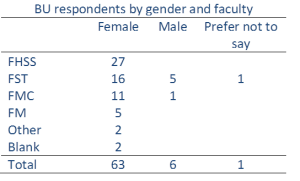
Last month we (Ashencaen Crabtree, Ann Hemingway and I) started a survey to collate data from the Women’s Academic Network on the impact of C-19 lockdown, initially targeting BU women academics, and then opening the survey to the wider academic community. We aim to identify lessons learned that can inform what staff and universities can do to reduce the impact of these abrupt changes on our work-life balance, particularly focusing on people who have been most affected. We have received 157 responses to date, 70 we could identify as being from BU staff (63 from female colleagues). The answers are providing a wealth of quantitative and qualitative data and we have just starting the analysis. However, we know how important and timely the findings are and so we have decided to disseminate our initial results in a series of blogs.
If you have not yet contributed to this survey, you are kindly invited to do so here: https://bournemouth.onlinesurveys.ac.uk/impact-of-lockdown-on-academics, and please do share with your networks. If you want us to be able to identify that you are BU staff, you will need to provide this information in one of the open questions.
This Part 1 presents (crude) initial analysis (graphs mainly) focusing solely on the 70 responses from BU staff. We hope this will give you a timely glimpse of how recent changes have affected BU academics. Every day next week we will post a blog with further insights on each aspect covered in the graphs below and others we are yet to analyse, including the key coping mechanisms staff have used during lockdown and the changes respondents think could help improve work-life balance if they remain an option in the longer-term.
Work-life balance during lockdown got worse for 59% of respondents and improved for 37% (Figure 1). Blog Part 2 will discuss differences across age groups, faculties and career levels.
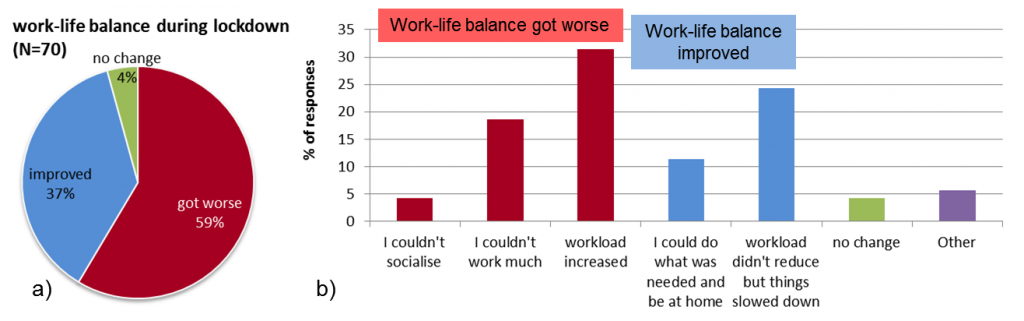 Figure 1. Changes in work-life balance of respondents during Covid-19 lockdown (a) and the selected reasons for identifying positive or negative change (b). ‘Other’ refers to other reasons for improved or worsened work-life balance.
Some factors have impacted the work-life balance of more than 70% of respondents (switching to online teaching, changes in the number of emails, changes in the number of meetings and not being able to socialise in person), while others were considered to have minor/no impact by most respondents (not being able to access campus facilities, switching to online meetings, lack of suitable work space at home and not having access to suitable IT equipment at home) (Figure 2). Some of these factors had a positive effect on the work-life balance of most respondents, while others affected a higher number of staff negatively than positively (see next week’s blogs for more details).
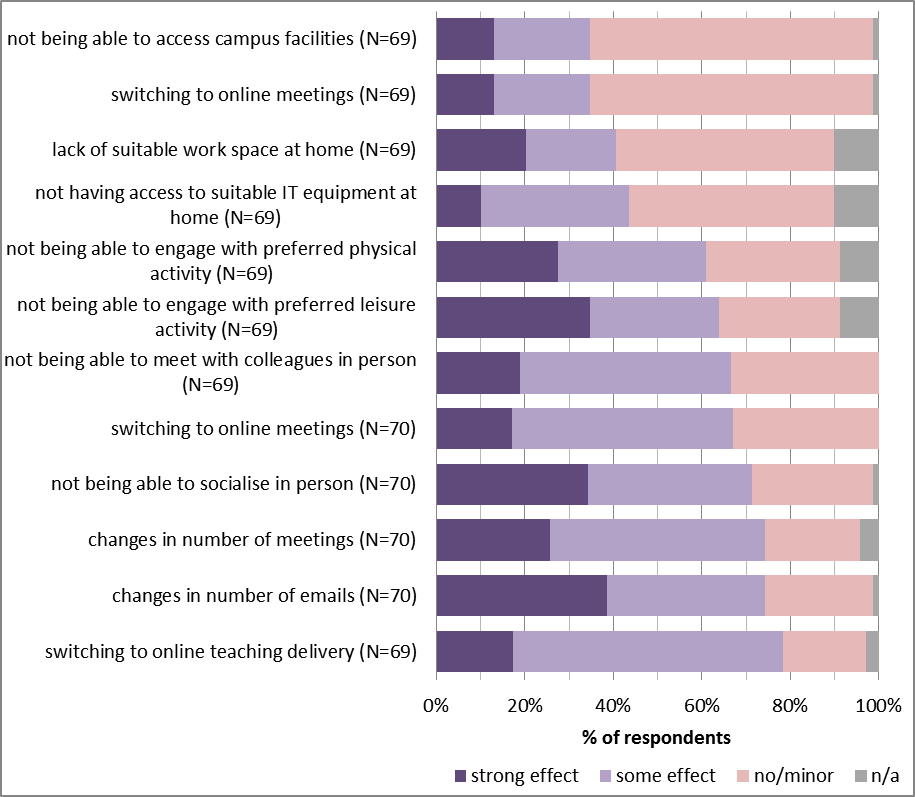 Figure 2. The level of impact of selected factors on the work-life balance of respondents during lockdown.
In an open question, less time commuting or travelling for work (46% of respondents) and student support requests (27%) were the most cited factors affecting respondents’ work-life balance positively and negative, respectively (Figure 3).
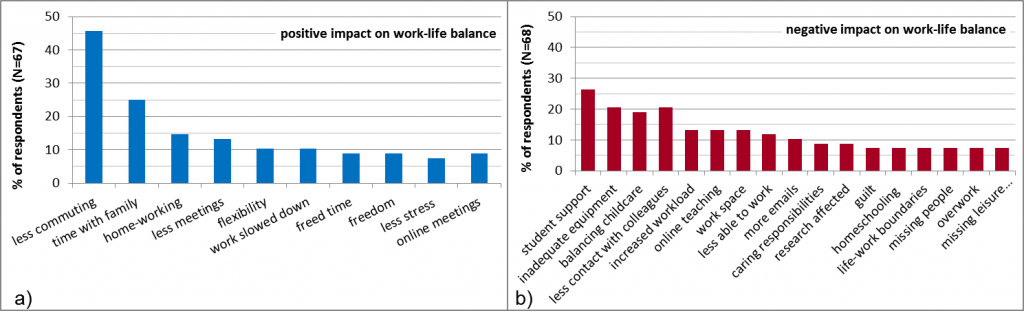 Figure 3. Most cited top two aspects that have affected respondents’ work-life balance (a) positively and (b) negatively (showing categorised responses cited at least five times).
Respondents’ main concerns have changed through time: longer-term impacts in the country or the world in general and work-life balance have become more of a concern at present, while the health of a family member or close friend have always remained within the top three (Figure 4).
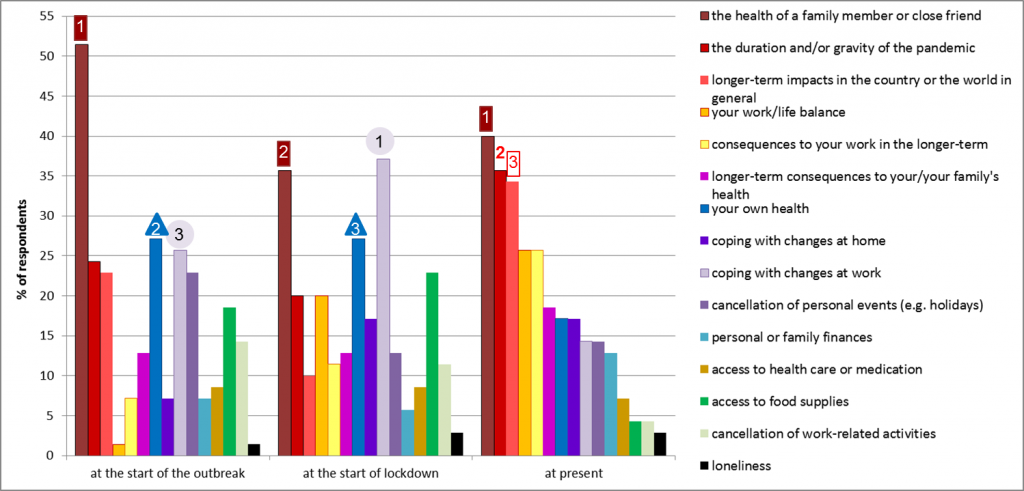 Figure 4. Respondents’ main concerns at the start of the outbreak, at the start of the lockdown and at present.
Figure 5 highlights the type of support that was considered to be helpful and the ones that need to be improved to help a larger number of staff (e.g. provision of IT equipment, which BU is currently addressing and support from line managers). Look for the next blogs for further insights on these aspects and suggestions from staff of other support they would welcome from the university.
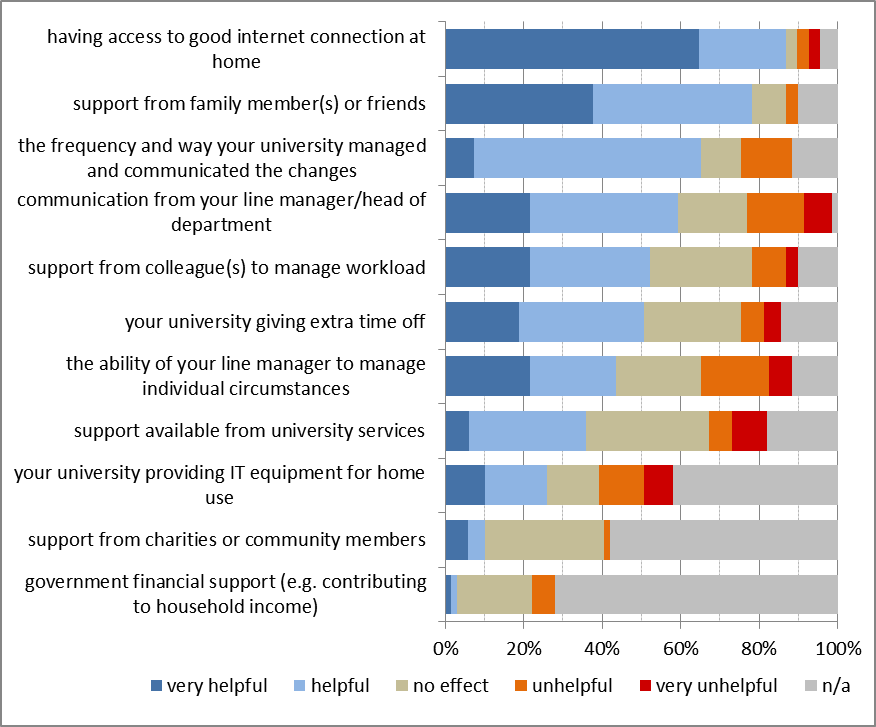 Figure 5. Respondents indication of how helpful were these particular types of support available to them.
Finding or maintaining work-life balance when lockdown ends was identified as a major challenge by 51% of respondents (Figure 6).
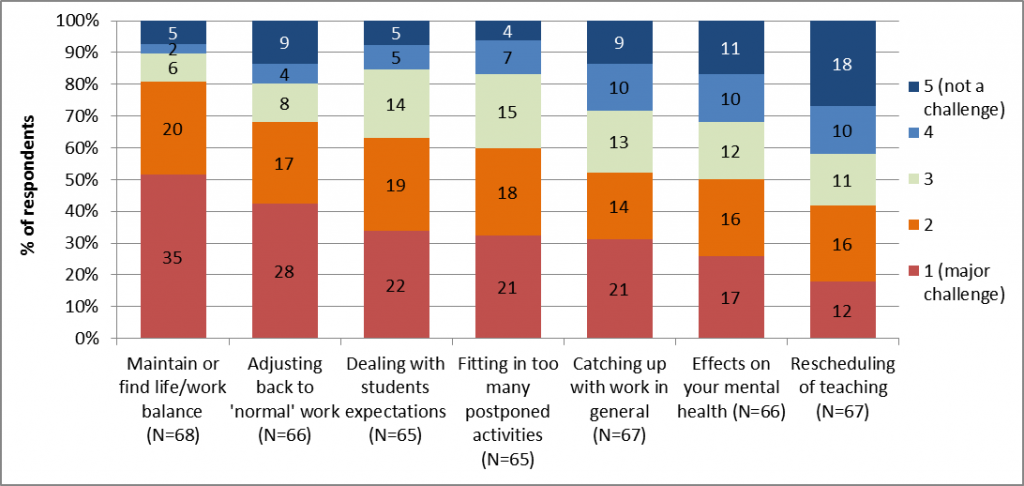 Figure 6. Major challenges identified regarding work at the end of lockdown.
80% or more of respondents think the C-19 outbreak has brought long-lasting changes in their attitude to ‘priorities and needs’ and work, considerably for 27% and 19% of respondents, respectively (Figure 7).
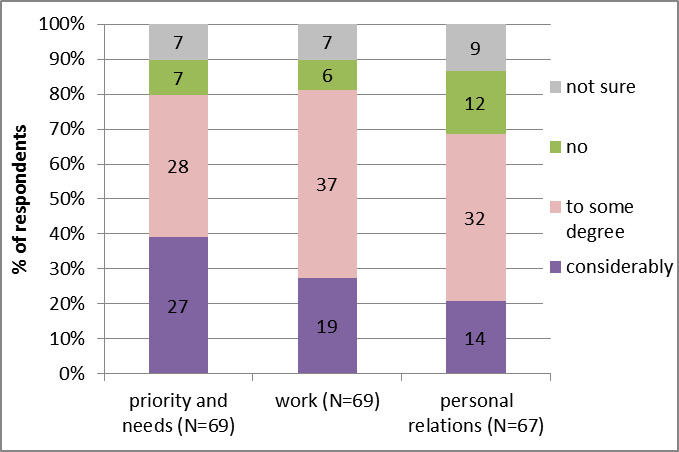 Figure 7. Perception of long-lasting changes brought by the C-19 outbreak.
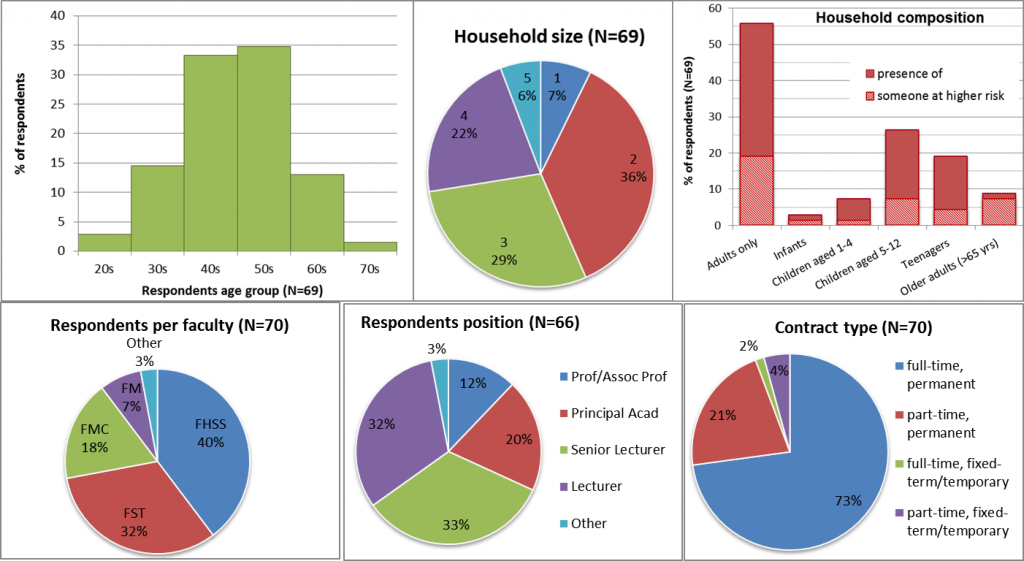
Who are the respondents?
Exposure to Covid-19
- 7% of respondents (5 out of 68) had severe symptoms of Covid-19 or tested positive or live with someone who did. All are female respondents in their 20s, 30s and 50s.
- 22% of respondents (15 out of 68) had close family members, friends or colleagues who had severe symptoms of Covid-19 or tested positive. All are female respondents in their 30s, 40s and 50s (the majority, 10 respondents).
- 41% of respondents (28 out of 68) live in a household where there is at least one person at higher risk for severe illness from COVID-19.





 elation to their needs, rather than the focus being almost exclusively on their babies.

















 ESRC Studentships for 2027 Entry: Opportunity Now Open
 SONAMONI contributions to Safety Conference 2026 in South Africa
 Three CMWH presentations at Berlin conference
 New interdisciplinary paper on Nepal
 Horizon Europe Cluster 3 (Civil Security for Society) 2026 Calls Now Open
 MSCA Doctoral Networks 2026 Call Information Webinar
 ESRC Festival of Social Science 2026: Application Deadline Extended to Thursday 25 June 2026
 Reminder: Register for the ESRC Festival of Social Science 2026 Information Session
 ECR Funding Open Call: Research Culture & Community Grant – Apply now
 ERC Advanced Grant 2025 Webinar
 Update on UKRO services
 European research project exploring use of ‘virtual twins’ to better manage metabolic associated fatty liver disease