Funding Development Briefings kicked off on 14th of September 2022 for this academic year.
What are Funding Development Briefings?
Each session will cover the latest major funding opportunities, followed by a brief Q&A session. Sessions will also include a spotlight on a particular funding opportunity of strategic importance to BU. Sessions will be on Wednesdays, from 12 pm for half-an-hour. The same link can be used each week to join here.
Next Weds 21 September, we will cover NERC Pushing the Frontiers (previously known as Standard Grants).
Date
Spotlight Funding Opportunity
Briefing Research Facilitator Lead
14/09/2022
Innovate UK SMART Grants
Innovation & Infrastructure
21/09/2022
NERC Pushing the Frontiers
Life Sciences
28/09/2022
23/24 Horizon Europe Work Programmes
EU & International
05/10/2022
ESRC
Humanities & Social Sciences
12/10/2022
EPSRC
Innovation & Infrastructure
19/10/2022
Wellcome Trust
Life Sciences
26/10/2022
HALF TERM
02/11/2022
MSCA Overview of Actions
EU & International
09/11/2022
AHRC
Humanities & Social Sciences
16/11/2022
Regional Funding
Innovation & Infrastructure
23/11/2022
NIHR Overview
Life Sciences
30/11/2022
Horizon Europe Societal Challenges
EU & International
07/12/2022
Leverhulme Trust
Humanities & Social Sciences
14/12/2022
KTPs (Business Engagement and Knowledge Exchange Managers)
Innovation & Infrastructure
Sessions will be recorded and made available after the session for those who cannot attend.
Mel Hughes, associate professor in social work and deputy director of the Research Centre for Seldom Heard Voice; Stevie Corbin-Clarke, research assistant based within the National Centre for Post Qualifying Social Work and Research Centre for Seldom Heard Voices; and Peter Greensmith, chair, NHS England South West Transformation Patient Reference Group and previous chair of Weymouth and Portland Patient Participation Groups (PPGs) have had their paper ‘Insights into patient voices on digital access to health care’ published in the Journal of Community Nursing.
The paper analyses research that was conducted around the impact of digital exclusion on people at risk of marginalisation. Read this paper and others in the August/September edition issue, here: https://www.jcn.co.uk/journals/latest-issue/jcn
If you’re interested in sharing your scientific research with a friendly public audience – complete our form.
We’re looking for a speaker for Café Scientifique on Tuesday 4 Oct 2022 (6-8pm).
Café Scientifique is a public event format, popular around the world, where anyone can come along to explore the latest research in science and technology in a casual café setting. Following a short presentation by a researcher, there is plenty of time for questions and discussion from a varied public audience.
They’re organised centrally by the BU Public Engagement with Research Team, part of Research Development and Support (RDS). It’s a fantastic opportunity to get experience in engaging with the public in a friendly atmosphere and gain surprising insights into your own work.
We welcome academics at all career stages, although this is particularly valuable for those just getting started in engaging with the public. We also encourage collaboration between less experienced and more experienced public speakers – to provide a valuable learning experience with the support to keep things going smoothly.
Regarding your research – although we use a broad definition of ‘science’, the audience do have certain expectations from the name, so we do not tend to feature research outside of the broad ‘science’ theme.
If you’re available and interested, please complete our brief form which collects all the information we need at this point.
Whether we will be able to host your talk depends on several factors including the subject matter, so completing this form does not guarantee you will be able to take part. If everything does align, we will be in touch.
Are you interested in mental health research and engaging with researchers across Wessex?
Join us for a seminar (6 October 2022) given by Professor Sam Chamberlain, Professor of Psychiatry, University of Southampton and NIHR ARC Wessex Mental Health Research Hub Lead.
He will highlight projects currently supported through the Mental Research Hub, as part of the NIHR ARC Wessex. The Hub aims to bring together researchers from different disciplines and partners throughout the region to plan and conduct research and look at ways to implement findings at the point of care. It also encourages and support new research talent through mentorship, internships, a summer school, and new post-doctoral positions.
This seminar will provide a valuable opportunity to find out more about the Mental Health Research Hub, engage with researchers in Wessex to develop new research and potentially be involved with current projects.
Please sign up asap using this Eventbrite link (venue to be confirmed)
Greetings Students and Colleagues –
I am Dr Anthony ‘Skip’ Basiel, the new Post-doc Researcher for HSS on Healthcare Simulations. Currently, I am hot-desking between the 4th & 5th floor offices from Monday to Wednesday. You can reach me by email: abasiel@bournemouth.ac.uk or by Teams text chat.
Please do visit my blended learning research website to find out more of my R&D interests at: https://abasiel.wordpress.com A temporary home page on our project work is at:
Acknowledging the Complexity of Your Role: The Good Supervisory Practice Framework helps you navigate the wide-ranging, highly complex and demanding set of roles that modern research supervisors must undertake to perform the role effectively. Informed by academic research and approved by the sector, the 10 criteria of the GSPF acknowledges this complexity and sets a benchmark of good practice for all supervisors.
Identify your professional development needs: Reflecting on your own practice, compared to a benchmark of good practice, often reveals new perspectives on the challenges inherent in supervision. Identifying your strengths and weaknesses enables you to build upon the former and address the latter with targeted professional development.
Recognition of your expertise by a national body: Becoming a UKCGE Recognised Research Supervisor, you can demonstrate to your university, peers and candidates that your supervisory practice has been recognised by a national body.
Individuals to complete application form, including 2 supporting statements from a co-supervisor and a PGR.
Individuals to submit application to the Doctoral College by 25 October 2022, including email support from your Deputy Dean for Research & Professional Practice
Doctoral College to submit applications to UKCGE by 28 October 2022
UKCGE to review application and feedback to individuals.
In line with the UKCGE guidance, individuals should send their completed application to the Doctoral College (fknight@bournemouth.ac.uk) before the BU Window Closing date below:
The key dates for the next application windows and review outcome dates are:
Funding Development Briefings are back from the 14th of September 2022.
What are Funding Development Briefings?
Each session will cover the latest major funding opportunities, followed by a brief Q&A session. Sessions will also include a spotlight on a particular funding opportunity of strategic importance to BU. Sessions will be on Wednesdays, from 12 pm for half-an-hour. The same link can be used each week to join here.
Date
Spotlight Funding Opportunity
Briefing Research Facilitator Lead
14/09/2022
Innovate UK SMART Grants
Innovation & Infrastructure
21/09/2022
NERC Standard Grants
Life Sciences
28/09/2022
23/24 Horizon Europe Work Programmes
EU & International
05/10/2022
ESRC
Humanities & Social Sciences
12/10/2022
EPSRC
Innovation & Infrastructure
19/10/2022
Wellcome Trust
Life Sciences
26/10/2022
HALF TERM
02/11/2022
MSCA Overview of Actions
EU & International
09/11/2022
AHRC
Humanities & Social Sciences
16/11/2022
Regional Funding
Innovation & Infrastructure
23/11/2022
NIHR Overview
Life Sciences
30/11/2022
Horizon Europe Societal Challenges
EU & International
07/12/2022
Leverhulme Trust
Humanities & Social Sciences
14/12/2022
KTPs (Business Engagement and Knowledge Exchange Managers)
Innovation & Infrastructure
Sessions will be recorded and made available after the session for those who cannot attend.
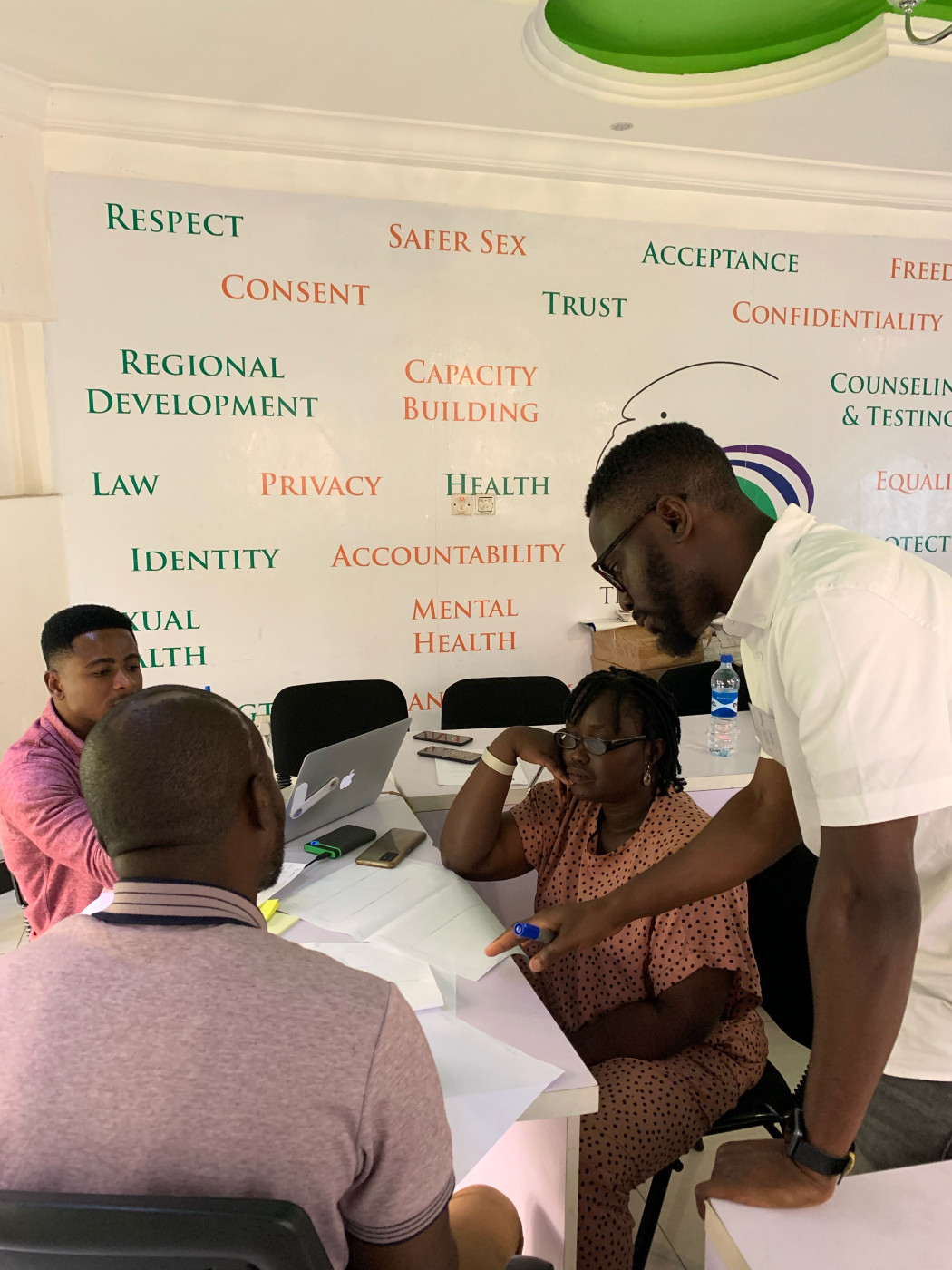
Academics from the Bournemouth University Computer-Human Interaction (BUCHI) research group based in the Department of Computing & Informatics are exploring digital interventions for managing medication and healthcare service delivery to Key Populations (KPs) in Underserved Communities in Africa. KPs are defined as males who have sex with other males (MSM); Drug Users that inject themselves; Sex workers; and transgender living with HIV/AIDS.
The project is looking to co-create a digital solution that can boost access to treatments and counselling by KPs. The user behaviour and impact of the intervention will also be examined. Unfortunately, the LGBTQ+ community has the highest occurrence of HIV/AIDS and faces a higher rate of hostility within the Nigerian context.
In July 2022, Dr Festus Adedoyin held an interactive management workshop involving participants from across various fields such as NGOs that work directly with KPs, Clinical Psychologists, Health Counsellors, Medical Doctors, Nurses, Pharmacists, Psychologists, Lab scientists, and Social Workers.
Due to the nature of these communities, HIV/AIDS+ status, and other health concerns, a digital solution that creates a supportive environment, enhances confidentiality, encourages the use of prescribed medication/therapy, and can be easily accessed at a reasonable cost is highly desirable. This digital intervention will also ease the difficulties stakeholders encounter in providing healthcare services for underserved communities in a developing country like Nigeria.
If you have funding (or links), charity partners in any part of the world, published (or working) papers, or interest and experience working with key populations with specific health concerns, kindly get in touch with Dr Festus Adedoyin (fadedoyin@bournemouuth.ac.uk).
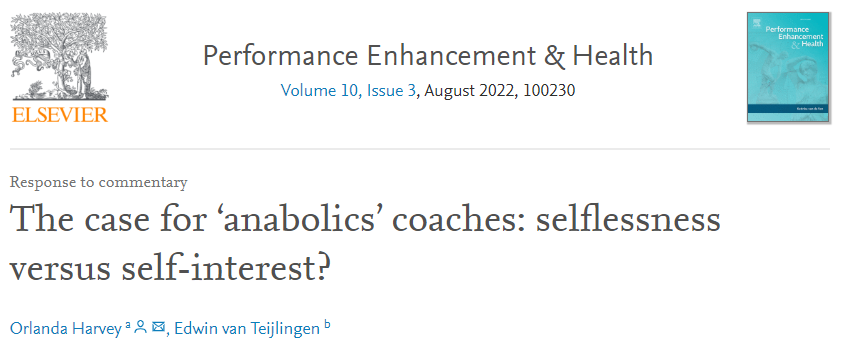
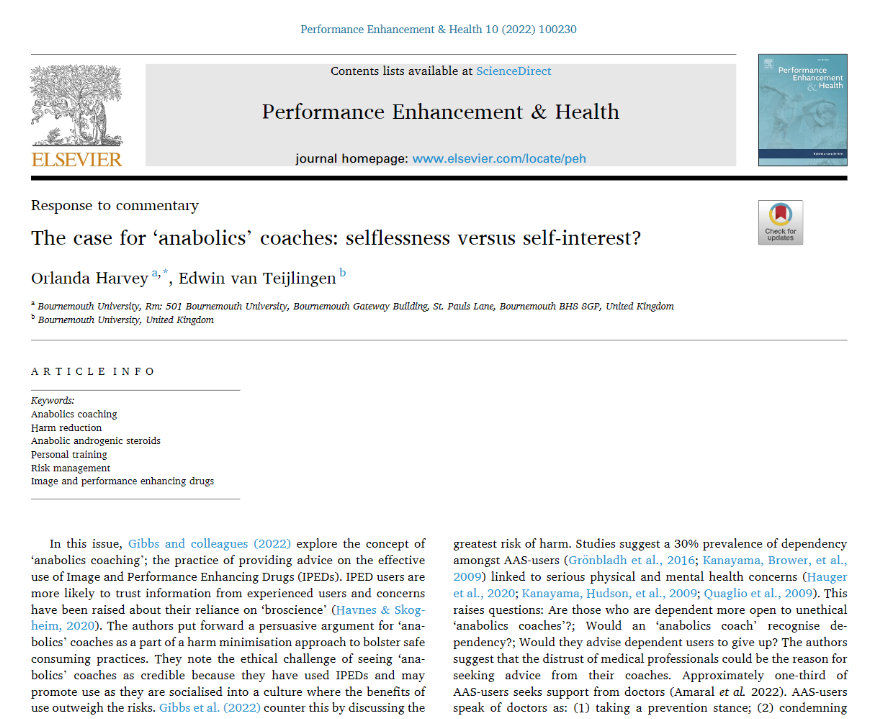
This week the journal Performance Enhancement & Health published Orlanda’s latest paper. This time a Response to a Commentary under the title ‘The case for ‘anabolics’ coaches: selflessness versus self-interest?’ [1]. It is good to see Orlanda making her name in this research field, and the invitation by the journal to write this Response is evidence of this. Dr. Harvey is Senior Lecturer in the Department of Social Sciences & Social Work.
The authors highlight that in the UK AAS (Anabolics Androgenic Steroid) are classified as Class C substances and supplying AAS, including via online from outside the UK, sharing or giving them away free, is unlawful and can lead to a jail sentence. However,Despite being banned in many sports, the use of AAS per se is not illegal and, therefore, health promoters should offer advice, information and support to users as a pragmatic, although not perfect, solution. Since an ‘informal’ structure already exists, health promotion agencies should consider using ‘anabolics coaches’ in their endeavours. If ‘anabolics coaches’ could bring together the prevention-focused medical profession, a harm-minimisation approach, and those from the users’ subculture to develop a platform whereby they can take an inter-disciplinary approach then an opportunity exists to do a lot of good.
References:
Harvey, O., van Teijlingen, E. (2022) The case for ‘anabolics’ coaches: selflessness versus self-interest? Performance Enhancement & Health, 10(3) August, 100230
At BU we promote and celebrate the work done to engage public audiences with BU research.
The public engagement with research team in Research Development and Support (RDS) can help promote your event to relevant audiences through our regular newsletter and social media channels. It also helps us to stay informed on the public engagement work being carried out by BU.
Working within schools has evolved over the past few years and due to pressures on schools and scientists alike, it is imperative that partnership working is effective, rewarding and sustained.
You will hear examples of successful sustained partnerships, whether that is by supporting a school project or by school students actively contributing to your own research.
The session lasts for 30 minutes and will serve as an introduction to the scheme. It is repeated over several dates for convenience.
Please note: the Partnership Grant application must be initiated by the school team, not the STEM partner. For further information about the scheme please see here
Every beat of the heart is finely tuned to eject a certain amount of blood. As we exercise, more blood flows into the heart, the cardiac muscle stretches and this leads to an increased force of contraction. Known as the Frank-Starling law, it is one of the most important aspects of human cardiac physiology but the molecular mechanisms are not entirely understood.
We do know that increases to the calcium levels in the heart cells (cardiomyocytes) support stronger contractions (anyone remember the ‘sliding ratchet model’ from GCSE biology!?) but how this calcium is regulated by stretch is not fully understood. What my colleagues and I have established (to be published in Frontiers of Physiology) is that a ‘mechanosensitive’ protein known as Piezo helps increase calcium when the cardiomyocytes are stretched. A lot of this work was done at BU’s Drosophila (fruit fly) genetics facility in Dorset House, using physiological tests of heart function in flies without the Piezo protein. When stretched, normal hearts respond by releasing more calcium and they continue to beat. In Piezo mutants, there’s no increase in calcium and the hearts often stop beating.
This is an important observation that contributes to our fundamental understanding of cardiac physiology and points to Piezo as a protein of considerable interest when considering the underlying causes of cardiac dysfunction in disease and ageing.
Paul Hartley.
(The image shows the contractile protein ‘scaffold’ within an insect heart)
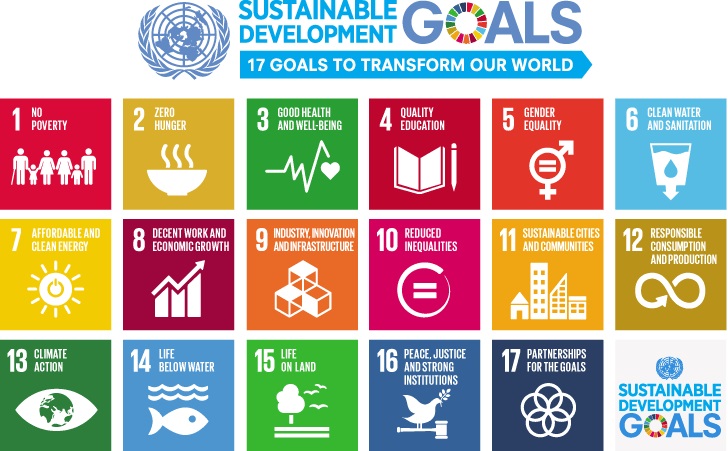
In 2015, UN member states agreed to 17 global Sustainable Development Goals (SDGs) to end poverty, protect the planet and ensure prosperity for all.
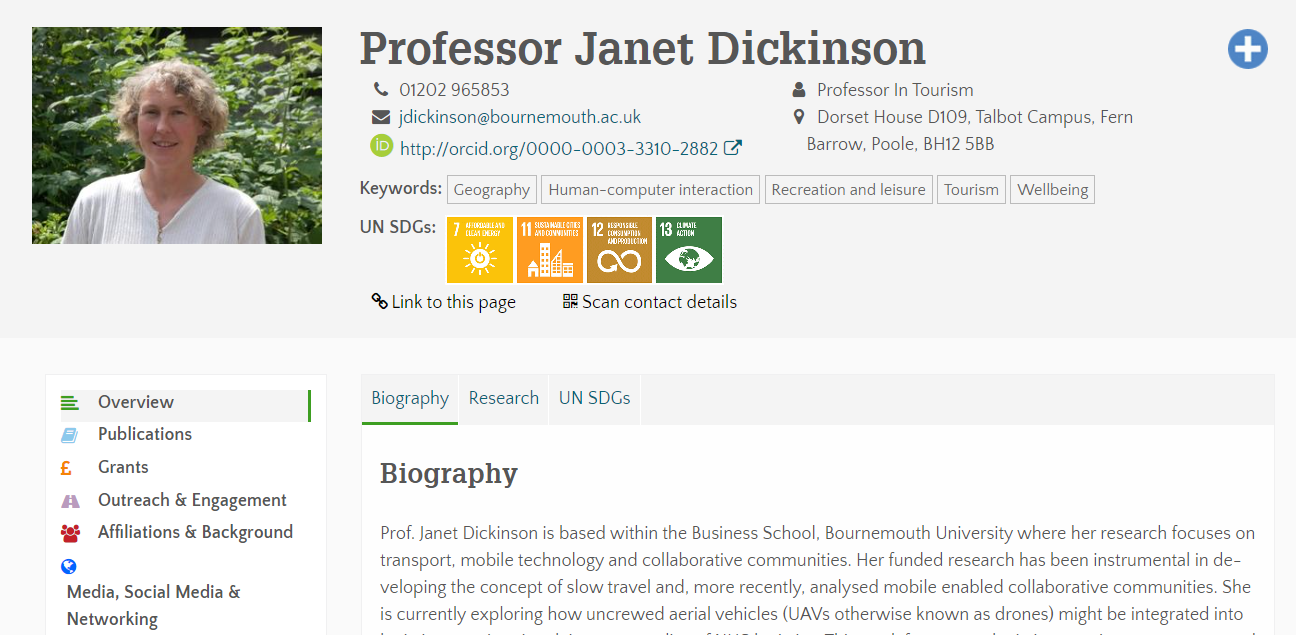
BRIAN, Bournemouth Research Information and Networking system now allows you to record up to 4 of the most relevant UN Sustainable Development Goals which your work contributes towards. This information from BRIAN will also be displayed on your staff profile page and it will look like this –
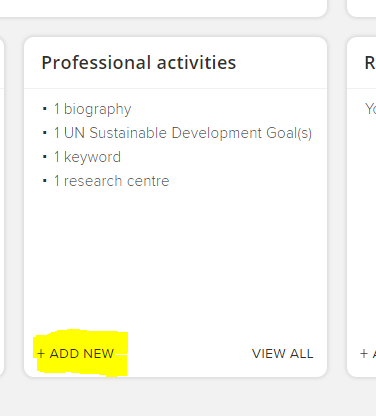
To record this information on BRIAN, log into your BRIAN account and choose to add a new “Professional activity”,
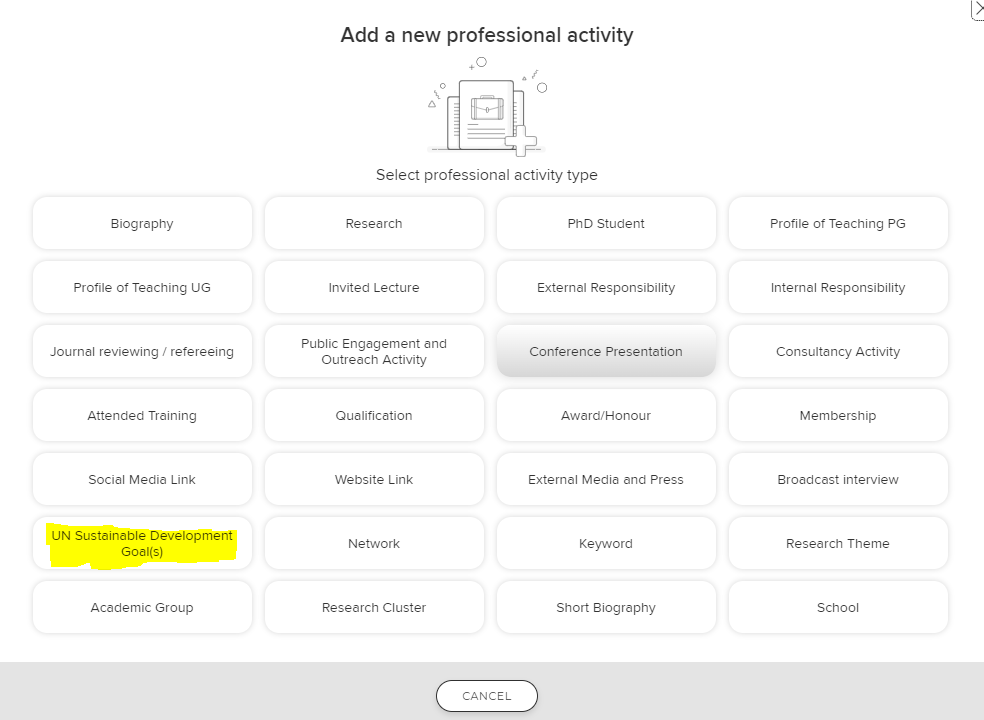
Once you have clicked on “+add new”, you will be presented with a menu box. Choose “UN Sustainable Development Goals” as highlighted –
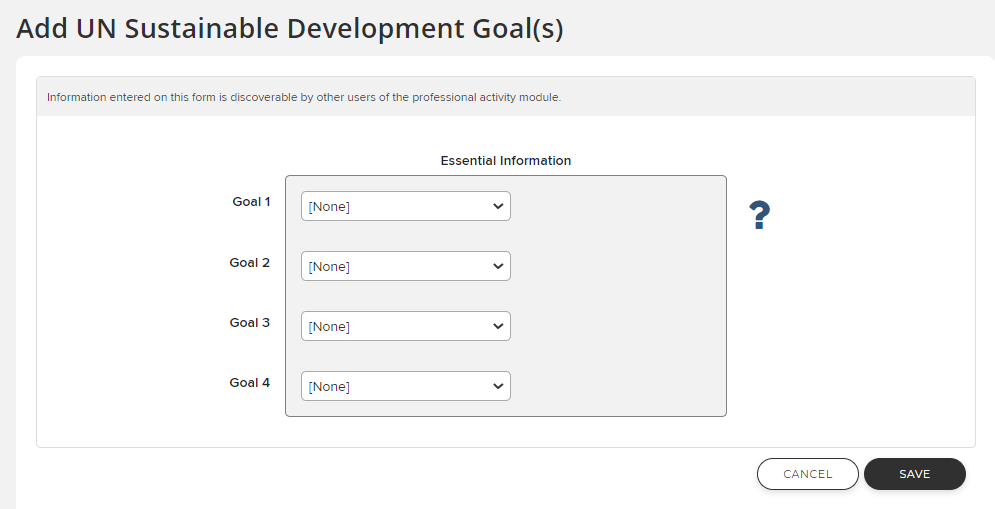
On the next page, you are then given the option to select from the drop down menu, up to 4 UN Sustainable Development Goals which your work contributes towards. Don’t forget to click “save” when you have finished.
To have this newly added information displayed on your staff profile page, you can either choose to wait for the overnight auto-refresh process for the information to be drawn from BRIAN to populate the staff profile page; or you can instantly refresh your staff profile page manually by scrolling to the bottom of your profile page and click on “Refresh now”
Collaborative Futures Academy 2022: Ethics and Equity in Engagement – Applications open.
Over the past two years, more than 100 researchers and practitioners from across the world have explored how to connect research and the public in innovative and meaningful ways.
Are you ready to push the boundaries of your engagement and join others to shape the future of research dialogue? You can now apply to be part of the Collaborative Futures Academy 2022.
The Academy will empower you to develop a bold, creative and innovative engagement practice with integrity and equity at its heart.
Before you start, please read the applicant commitment found here
Prepare a short 1-minute video on the question of “What does a culture of equitable and ethical research engagement look like to you?” More details, including advice on video recording and possible alternative formats, can be found in the applicant guide.
Complete the application form below and submit it together with your video. For reference, the full form is available here.
DEADLINE FOR APPLICATIONS: MONDAY 19 SEPTEMBER 2022
If you have any questions about the programme or application, please contact BerlinSchool@mfn.berlin
Alternatively, if you would like to discuss your application with the Public Engagement with Research team, please contact Adam Morris at publicengagement@bournemouth.ac.uk.
It’s a crime story fit for the digital era. It was recently reported that a number of restaurants in New York had been targeted by internet scammers threatening to leave unfavourable “one-star” reviews unless they received gift certificates. The same threats were made to eateries in Chicago and San Francisco and it appears that a vegan restaurant received as many as eight one-star reviews in the space of a week before being approached for money.
It’s surprising this sort of thing hasn’t emerged before. An over-reliance on the “wisdom of the crowd”, whereby many people measure things by the approval of the rest of the community, leaves us vulnerable to this kind of fraud.
It’s all about numbers. Products and companies are measured online by the number of stars they get on a five-star scale, influencers are measured by numbers of followers, posts are measured by the numbers of likes or retweets. The satirical Kardashian index provides a quantitative measure for academics by comparing citations of their research papers with their number of Twitter followers.
But why are these systems considered to be of value and why do we consult them almost blindly? In an age of information overload, feedback and reputation systems enable fast decision-making, providing us with the sense (or illusion) that we are in control as the decision taken is perceived to be informed.
Another idea at play here is the “attention economy paradigm”. Under this way of thinking, human attention is a scarce commodity and – as with all resources that are limited on this planet – it is of high value.
Businesses compete for a high as possible place on the first page of Google’s search results in order to capture this attention. And user feedback is one of the many parameters that influence the search engine’s secret ranking algorithms.
The notable success and acceptance of such reputation systems is grounded in the idea of the wisdom of the crowd comes in. If a sufficiently large sample of the population is asked to estimate something, the average of these estimations is expected to be very close to the actual value. This is because any personal bias becomes insignificant when a considerable amount of opinions is collected.
But all systems that come along with successful business models are open to abuse and can attract opportunistic and malicious actors, to an extent that organised criminal groups may form and systematically exploit such systems. For example, business opportunities that emerged during the COVID-19 pandemic were instantly matched by an assortment of criminal activities including shopping scams, disinformation, illegal streaming and even child sexual exploitation.
Fake reviews
There are several reasons and motivations for fake reviews. Business competitors may try to flood a business target with negative reviews in order to harm their competitor. Others may attempt, by creating fake profiles or “bribing” customers with free or discounted products, to engineer positive reviews and misrepresent the quality of their products.
Everyone has an opinion, but some people have a vested interest. kheira benkada via Shutterstock
But extortion via threats of negative review is particularly insidious. A surge of negative reviews on a business’s Google profile not only affects its search engine ranking, but significantly influences the potential customers’ purchase decisions.
Although these practices are reported to have been streamlined from organised groups in India, variations of this have also been observed from other countries. Amazon recently sued 10,000 Facebook group administrators exceeding 43,000 members who allegedly solicit fake (positive) reviews in exchange for free products.
What can be done?
The abuse of online feedback and reputation systems has grown to epidemic proportion. Countering it will require the coordination of everyone involved.
Google and other feedback and reputation service providers need to invest more resources into the prevention, detection and removal of fake reviews. Machine learning technologies have made impressive leaps in recent years and could help in weeding out fake content.
Tighter rules governing the selection of reviewers enabling their participation under specific conditions. We’ve seen this with verified buyer schemes that aim to provide assurances that the reviewer has had a genuine experience with the business.
The presentation of the feedback and particularly the star scoring system could also have more contextual information, say through additional colour coding to communicate the sentiment mined out of the textual comments. In this case, highly emotional comments based on less factual or useful information could have a different colour from those trying to be impartial and objective.
Businesses also need to embrace the system for reporting problem reviews and use it responsibly. They should not report negative feedback if it is genuine, as this affects the relationship with the feedback platform, which will understandably be more distrustful to the business.
And consumers should be more alert and educated about this rather than following these rankings religiously. There are many telltale signs of a fake review, including simply checking the language to see if they are generic. It’s also instructive to check whether the reviewer produces a lot of negative reviews across many and seemingly unconnected products in a short time.
We, the crowd should be active participants by being always fair with our purchase experiences and acknowledge and support business when they exceed our expectations – but also provide candid negative reviews and recommendations for improvement. Only then the wisdom of the crowd will truly serve us.
VOICES explores the use of song to teach STEM content at college or secondary school level, and includes reviewed interactive sessions, video-posters, and discussions of interest to both practitioners and researchers.
We asked Dr Panourgia to share a bit about what this study was about, the benefits of making the data open access, and for any advice that can be passed on to help others manage data effectively for deposit in BORDaR.
Q- Tell us about your research – what’s most exciting about it?
A – The current investigation highlighted the vital role of psychology, counselling and psychotherapy practitioners who played and still play an essential part in providing care for people whose mental health has adversely been affected by the pandemic. This study explored self-compassion’s ability to predict approach and avoidance coping in psychology, counselling and psychotherapy practitioners during COVID-19, and whether this differed between genders. The most exciting part of this project is that our findings have practical implications for training, supervision, and clinical practice for practitioners, to ensure they remain competent when faced with extreme stress. This paper is based on the final year project of a former UG Psychology student; working and publishing with one of our students was the most rewarding part of it.
Q – What do you see as being the benefits of making your data available?
A – There are several benefits. Making the data available allows other researchers not only to investigate further research questions but also to check the accuracy of our findings. Furthermore, making data available may lead to potential collaborations.
Q – Do you have any advice you would give other researchers to help them with depositing data?
A – Being organised is the key. When you work on your data, ask yourself “Does my dataset make sense for someone who is not involved in this project?”. Using precise labels for the variables of your dataset, keeping notes about the way that your variables were scored and what these scores mean can be very useful. Also, you need to be prepared to answer any questions about the ethical procedures you followed.
Q – Anything else you want to say about your data or the process?
A – You shouldn’t worry if you haven’t done this before. The process is very straightforward and the BORDaR team is incredibly helpful. When our paper was published and became available on BRIAN, I emailed the BORDaR team who sent me detailed instructions for uploading data to BORDaR. The dataset was processed and published very quickly. The final step of this process includes the generation of a DOI which you can share with the publisher of your paper.
 Funding Development Briefings kicked off on 14th of September 2022 for this academic year.


















 International Open Access Week: open access and the REF
 Food Price Research Shortlisted for Civil Service Prize
 3C Event: Research Culture, Community & Connections – Wednesday 11 November 3-4pm
 ECR Opportunities: New Development Programme, Researcher Grants & Upcoming Events
 Horizon Europe Cluster 3 (Civil Security for Society) 2026 Calls Now Open
 MSCA Doctoral Networks 2026 Call Information Webinar
 ESRC Festival of Social Science 2026: Application Deadline Extended to Thursday 25 June 2026
 Reminder: Register for the ESRC Festival of Social Science 2026 Information Session
 ECR Funding Open Call: Research Culture & Community Grant – Apply now
 ERC Advanced Grant 2025 Webinar
 Update on UKRO services
 European research project exploring use of ‘virtual twins’ to better manage metabolic associated fatty liver disease