Latest research and knowledge exchange news at Bournemouth University

This development session is aimed at any colleagues dealing with feelings of imposter syndrome in academia. The session will offer a space to discuss this growing issue as well as offer advice, guidance and support on how to manage, avoid and overcome such feelings. At the end of the session, attendees will have achieved greater confidence in developing their career and profile.
This workshop is facilitated by our ECRN leads, Prof Sam Goodman & Prof Ann Hemingway, and is aimed at: All staff – Academic, teaching, research, professional services & PGRs.
Book your place HERE
For any queries regarding this workshop, please contact RKE Development Framework
NERC Pushing the Frontiers Call – internal competition
NERC introduced demand management measures in 2012. These were revised in 2015 to reduce the number and size of applications from research organisations for NERC’s discovery science standard grant scheme. As the standard grant scheme has been superseded, demand management measures will be applied to the Pushing the Frontiers scheme only. Full details can be found in the BU policy document for NERC demand management measures.
BU has been capped at one application per Pushing the Frontiers round. An application counts towards an organisation, where the organisation is applying as the grant holding organisation (of the lead or component grant). This will be the organisation of the Principal Investigator of the lead or component grant.
BU process
BU has a process for determining which application will be submitted to each NERC Pushing the Frontiers round. This takes the form of an internal competition, which will include peer review. The next available round is estimated to be in July 2024. The deadline for internal Expressions of Interest (EOI) which will be used to determine which application will be submitted is 14 March 2025. Please email kpercival@bournemouth.ac.uk for the EOI form.
Following the internal competition, the Principal Investigator will have access to support from RDS and will work closely with Research Facilitators and Funding Development Officers to develop the application.
RDS Contacts
Please contact Kate Percival, RDS Research Facilitator – kpercival@bournemouth.ac.uk if you wish to submit an expression of interest.
Do you have a question about BRIAN or your staff profile page? Then come along to the next BRIAN drop-in surgery!
Come along to this informal 2-hour drop-in surgery with questions or issues relating to BRIAN, or if you need a refresher on how to update your profile.
No booking is required, just bring your laptop and questions!
The call for applications for Being Human Festival 2025 is now open
Being Human is the UK’s national festival of the humanities. Each year researchers and staff from universities and research organisations are invited to take part in the national festival by organising a public engagement event or activity, rooted in humanities research.
This year’s festival will take place 6-15 November with the theme ‘Between the Lines’.
Being Human is a place-based festival that emphasises interaction, collaboration and engaging with communities outside higher education. The festival supports innovative, participatory and creative activities that foster genuine, two-way connections with communities.
You can get an idea of what the festival looks like, and the types of activities they support, in the 2024 highlights film, and by reading the 2024 highlights blog.
There are various ways to participate in the festival:
Funded pathway
Festival Event Grants: up to £4,000 to organise a single event or multiple events. Deadline: Thursday 10 April Being Human 2025 – Festival Event Grant – Further Information.pdf
Please note: only applicants from UK Higher Education Institutions and AHRC-recognised IROs are eligible to receive grants.
Unfunded pathway
Festival Event: organise a festival event that does not require funding from Being Human. Deadline: Friday 4 July
Funding details and support available
Further details about how to apply, and answers to some frequently asked questions, are available here.
Training Programme 2025
The full training programme for 2025, has sessions running from February to October. This year’s programme includes new events on engagement and inclusion and creative engagement, alongside sessions on audiences, partnerships, promoting events and delivering events.
The sessions are led by expert facilitators, alongside members of the Being Human Festival team. Training is primarily aimed at those taking part, or thinking of taking part, in Being Human Festival, but will be of interest to those working in public engagement more broadly.
All sessions are free and take place online, but booking is required. Find out more and book individual sessions.
Toolkits
The Public Engagement Toolkits have recently been updated. These downloadable PDF resources cover subjects including working with partners, delivering inclusive activities and finding the right format. Browse the toolkits
Contact
Should you require advice on public engagement activities or support with your application, please contact BU’s Public Engagement with Research Team: publicengagement@bournemouth.ac.uk
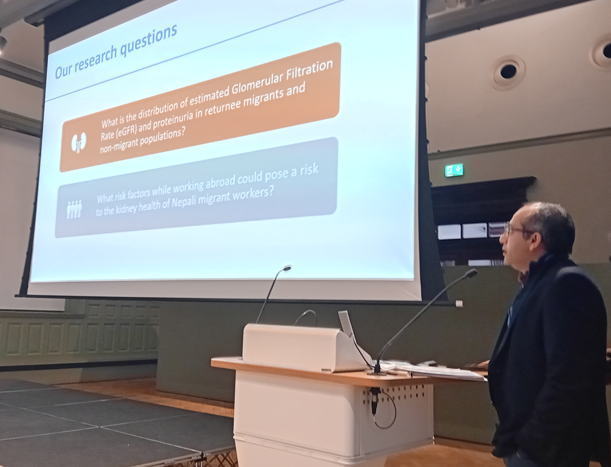
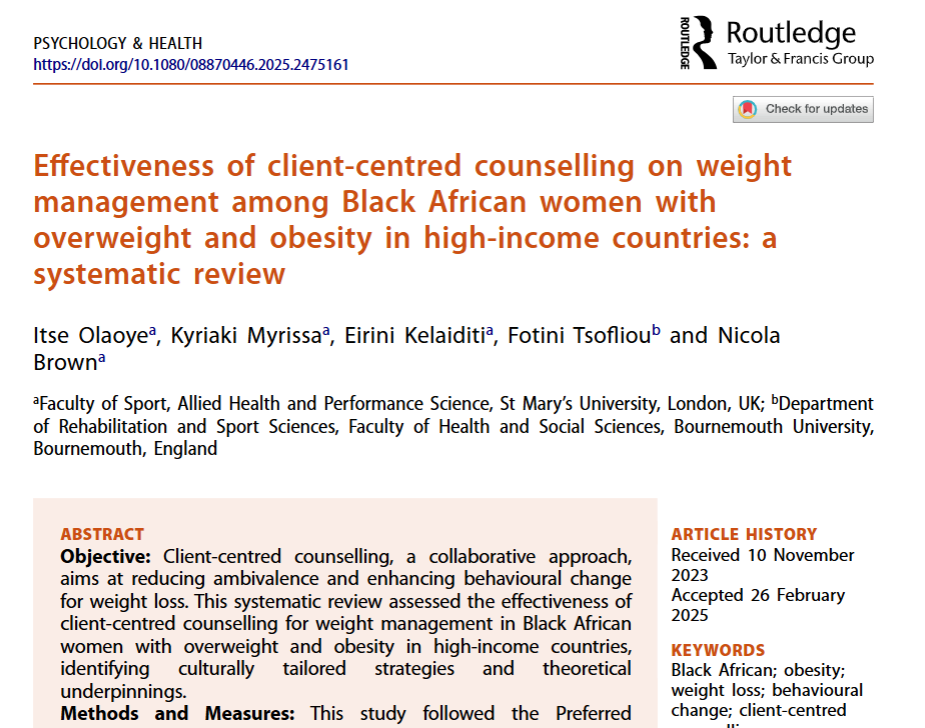
Today, Saturday morning, BU Visiting Professor Padam Simkhada from the University of Huddersfield was guest speaker at the third Nepal Dialogue UK webinar series of the Centre for Nepal Studies UK (CNSIK). His presentation was titled Is Nepal’s Health System fit for Purpose? Reflections on Transformations, Maladies and Future Needs. He outlined the state of health (epidemiology) as well as that of the health system. He presented a lot of change in the health of the population, in the health system, as well as issues around human resources, including the high rate of migration of health workers. He highlight that there is in Nepal insufficient investment in health, unethical practices,
He introduced some the key findings from our recently completed study on the effects of the federalisation process on Nepal’s health system. Padam was one of the co-applications on this study together with academics from the University of Sheffield, Canterbury Christ Church University and Bournemouth University in the UK, and colleagues in Nepal from Manmohan Memorial Institute of Health Sciences (MMIHS) and PHASE Nepal. The project was funded by the UK Health Systems Research Initiative (Grant ref MR/T023554/1). For more information on the Nepal Federal Health System Team, see: https://www.nepalfederalhealthsystem.com/. This interdisciplinary study has been disseminated in the form of eight published papers [1-8].
Prof. Edwin van Teijlingen
CMWH
References:
BU is a key partner in Dorchester’s annual celebration of science during the British Science Week (7-16 March 2025), significantly contributing to its success and educational impact. The Dorchester Science Festival features diverse scientific events, culminating in the Family Science Day on Sunday, March 16th, at the Dorset Museum & Art Gallery.
The university’s involvement brings valuable research expertise and hands-on learning experiences to attendees of the Family Science Day, contributing to the 24 science stalls on offer. BU staff and students actively share their research with children and families, representing various fields including Neuroscience and virtual reality (MINE Research Cluster, Xun He, Fred Charles Charles and Damla Kuleli); Forensic Sciences (Richard Paul and Nikky Jones); Biomedical Sciences (Anna Mantzouratou and Sarah Upson); Biological Sciences (Demetra Andreou); Marine Conservation (Jocelyn Elson-Riggins); Microbial Ecology (Genoveva Esteban).
These presentations offer hands-on activities for visitors of all ages, increasing BU’s visibility in the local community while promoting understanding of scientific issues and encouraging interest in STEM fields. BU’s involvement demonstrates its commitment to widening participation in science and creating positive impact in the community, helping to make the Dorchester Science Festival an engaging and educational event that inspires future generations of scientists and fosters connections between academia and the public.
Professor Genoveva Esteban from the Department of Life and Environmental Sciences (SciTech) co-organises the Dorchester Science Festival and the Family Science Day in collaboration with the Town Council and others. The Dorchester Science Festival has been funded by the Royal Society of Biology, the Institute of Physics, Dorchester Town Council, Market Cross UK LTD and the Dorset Museum & Art Gallery.
Full programme of events can be found on the Festival’s facebook page. For more info, please contact Genoveva Esteban gesteban@bournemouth.ac.uk
Yesterday the international journal PLoS ONE published the latest paper of former Centre for Midwifery & Women’s Health (CMWH) PhD student Dr. Sulochana Dhakal-Rai [1]. As in many countries, Caesarean Section (CS) rates are rising in urban hospitals in Nepal. However, the reasons behind these rising rates are poorly understood. Therefore, this study explores factors contributing to rising CS rates in two urban hospitals as well as strategies to make a more rational use of CS. Dr. Dhakal-Rai was supervised by Dr. Juliet Wood, Dr. Pramod Regmi and Prof. Edwin van Teijlingen all based in the Faculty of Health & Social Sciences.
The paper highlights that high CS rates in the private hospital reflects the medicalisation of childbirth, a public health issue which needs to be urgently addressed for the health benefits of both mother and baby. Multiple factors affecting rising CS rates were identified in urban hospitals. This study provides insights into factors affecting the rising CS rate and suggests that multiple strategies are required to stem the rise of CS rates and to make rational use of CS in urban hospitals.
The journal is Open Access and the paper is freely available to read in Nepal (and elsewhere) for anyone with internet access.
Reference:
The BU ECRN & RKEDF are delighted to offer funding to organise an event, roundtable, meeting, training, or workshop in support of research at BU.
This funding supports BU Early Career Researcher Network members to organise and facilitate an event that can be thematic, subject/discipline based, foster community engagement, knowledge exchange or networking and does the following;
– Brings ECRs and others together to share ideas, knowledge and learning.
– Provides a space for intellectual discussion.
– Helps to facilitate collaboration and future opportunities.
– Enables an opportunity for networking.
BU ECRN members can access up to £500 to organise and host an event, roundtable, meeting, training, or workshop at BU. Please see the requirements below.
Read about past successful applicants here: BU Research Blog | Early Career Researcher networking funding outcomes: A Tabletop Discussion on Cyber Signatures in Human Trafficking | Bournemouth University
– Please note all requests are subject to approval by the RKEDF Team and must be made at least 3 weeks in advance of the event date. No reimbursements for payments will be made without prior authorisation from the team.
– All expenses must be paid by the end of the BU financial year (July 2025)
– You will need to receive written confirmation from RKDEF that your request has been successful before you can proceed with organising the event.
– The event cannot have taken place prior to submitting your application.
Eligible costs
Ineligible Costs
How to apply:
Please download and complete all of the sections of the EOI for BU ECRN Funding 2425 (500 words max per section) and email your completed application to: RKEDF@bournemouth.ac.uk by 10th March 2025. Successful applicants will be notified by 17th March 2025.
If you have any questions or queries, please contact BU ECRN Academic Leads Ann Hemingway (aheming@bournemouth.ac.uk) and Sam Goodman (sgoodman@bournemouth.ac.uk) or RKEDF Advisor Joelle Fallows (jfallows@bournemouth.ac.uk).
Book now for RKEDF training in March 2025
Click on the titles to find further details and book your place
ECRN: Intellectual Property and Your Research
Tuesday 4th March 14:00-15:30 – online
Intellectual Property underpins academic research, as it is through Intellectual Property protection that we can protect, commercialise, and own our research & creative outputs. As researchers, we are constantly engaged in the works and products of others, all of which are underpinned and protected by Intellectual Property. We are also constantly creating our own outputs that can be protected by Intellectual Property. This workshop will explain the key areas of Intellectual Property that relate to academic research; how to protect your own Intellectual Property; and how to avoid infringing on the Intellectual Property of others.
Research Data Management: An introduction
Wednesday 5th March 12:00 – 13:00 – online
Attendance is recommended for any academic wishing to maximise the impact of their research data, and to learn how it can be managed through the research life cycle in a way that complies with research best practice and any legal, ethical or commercial requirements. It aligns with BU’s Research Data Policy, which closely reflects many funder and journal requirements.
Writing for The Conversation interactive workshop
Wednesday 5th March 14:00-16:00, in person, Talbot Campus
Learn how to consider the news potential of your expertise, how to look for story hooks and angles from the news, how to write a quality story pitch to section editors, and other advice. In this interactive session, you’ll find out more about communicating your research to the public, what The Conversation is looking for, and have the chance to discuss your research with a Conversation editor and pitch potential story ideas.
BRIAN – drop-in surgery – no booking required
Tuesday 11th March 14:00-16:00, F203, Fusion Building, Talbot Campus
This is a 2 hour drop in surgery for any questions or issues relating to BRIAN. No question is a stupid question so pop in and ask.
Wednesday 19th March 13:00-14:00, in person, Talbot Campus
This session is aimed at colleagues dealing with feelings of imposter syndrome in academia. The session will offer a space to discuss this growing issue as well as offer advice, guidance and support on how to manage, avoid and overcome such feelings. At the end of the session attendees will have achieved greater confidence in developing their career and profile. This workshop aimed at: All staff – Academic, teaching, research, professional services.
Principal Investigation – Post Award for RKE
Wednesday 19th March 13:00-14:30, in person, BGB, Lansdowne
This session is aimed at any researcher who is or plans to be a Principal Investigator for an externally funded research or knowledge exchange project. By the end of the session, attendees will have a strong foundation of what to expect when being responsible for their awarded projects. Topics covered include:
Wednesday 19th March 13:00-14:00, in person, Talbot Campus
Sometimes organisations can see an opportunity for growth, something that will supercharge their business, but they don’t quite know where or how to start. That’s when a Knowledge Transfer Partnership could help. We are hosting a series of developmental sessions for staff (and businesses) to debunk myths, provide insights, and forge connections. This session will focus on Fiduciary Responsibility and Evaluation of Company Accounts, Demonstration of Financial Strength, Suitability of Company Finances & Eligibility for KTP Scheme.
Links for further RKE information and support are below:
RKE SharePoint page: RKE – Home
RKEDF SharePoint for development opportunities: Research and Knowledge Exchange Development Framework RKEDF – Home
RKEDF Brightspace: Homepage – Research & Knowledge Exchange Development Framework
Please help us in avoiding any waste of resources; make sure you can attend or cancel your booking prior to the session. For any further information, please contact RKEDF@bournemouth.ac.uk
The Centre for Wellbeing and Long-Term Health‘s next Research Seminar and Centre meeting will be 13:00-14:00 on Wednesday 19th March. Dr Chris Long (Principal Academic on Healthcare Statistics) with be speaking about ‘Avoiding the common statistical pitfalls when planning a research project.’ For more information contact CWLTH@Bournemouth.ac.uk.
Andrew M’manga and colleagues are seeking international students in the UK to participate in a British Academy Leverhulme-funded project. This research investigates and models the dimensions of contactless transaction literacy, focusing on key principles such as security, privacy, trust, risk awareness, and wellbeing. By conducting focus groups at at least 16 universities across the UK, the study aims to develop approaches that help international students integrate successfully into the UK’s academic and societal environment. Kindly share this with your university networks outside BU. As a token of appreciation, participants will receive a £15 voucher. Click here for more information.
Professor Matthew Bennett and Dr Sally Reynolds write for The Conversation about their research at White Sands National Park, where they have found the earliest evidence of prehistoric transport…
Matthew Robert Bennett, Bournemouth University and Sally Christine Reynolds, Bournemouth University
If you’re a parent you’ve probably tried, at some point, to navigate the supermarket with a trolley, and at least one child in tow. But our new study suggests there was an ancient equivalent, dating to 22,000 years ago. This handcart, without wheels, was used before wheeled vehicles were invented around 5,000 years ago in the Middle East.
Recently our research team discovered some remarkable fossil traces which might give a hint. These traces were found alongside some of the oldest known human footprints in the Americas at a place called White Sands in New Mexico.
In the last few years, several footprint discoveries at this site have begun to rewrite early American history – pushing back the arrival of the first people to enter this land by 8,000 years.
There is some controversy around the age (23,000 years old) of these footprints, with some researchers unhappy with our dating methods. But they provide a remarkable picture of past life on the margins of a large wetland at the end of the last ice age.
The footprints tell stories, written in mud, of how people lived, hunted and survived in this land. Footprints connect people to the past in a way that a stone tool or archaeological artefact never can. Traditional archaeology is based on the discovery of stone tools. Most people today have never made a stone tool but almost all of us will have left a footprint at some time, even if it is only on the floor of the bathroom.
Today, modern shopping trolleys can be found rusting in canals, rivers or abandoned in shrubbery. But ancient versions would have probably been of wood and simply rotted away. We know that transport technology must have existed.
Everyone has stuff to transport, but we have no record of it until written histories. At White Sands, we found drag-marks made by the ends of wooden poles while excavating for fossil footprints. Sometimes these appear as just one trace, while at other times they occur as two parallel, equidistant traces.
A pole or poles used in this fashion is called a travois. These drag-marks are preserved in dried mud that was buried by sediment and revealed by a combination of erosion and excavation. The drag-marks extend for dozens of metres before disappearing beneath overlying sediment. They clip barefoot human tracks along their length, suggesting the user dragged the travois over their own footprints as they went along.
To help interpret these features, we conducted a series of tests on mud flats both in Dorset, UK, and on the coast of Maine, US. We used different combinations of poles to recreate simple, hand-pulled travois.
In our experiments the pole-ends dragged along the mud truncate footprints in the same way as the fossil example in New Mexico. These features in the fossil examples were also always associated with lot of other human footprints travelling in a similar direction, many of which, judging by their size, were made by children.
We believe the footprints and drag-marks tell a story of the movement of resources at the edge of this former wetland. Adults pulled the simple, probably improvised travois, while a group of children tagged along to the side and behind.
The research team has benefited from the insight of the Indigenous peoples we work with at White Sands, and they interpret the marks in this way as well. We cannot discount that some of the marks may be made by dragging firewood, but this does not fit all the cases we found.
Travois are known from historical documents and accounts of Indigenous peoples and their traditions. They were more commonly associated with dogs or horses, but they were pulled by humans in our tests.
As such they represent early examples of the handcart or wheelbarrow, but without the wheel. The earliest record of a wheeled vehicle dates from Mesopotamia (modern day Iraq), in 2,500BC. We think the travois were probably improvised from tent poles, firewood and spears when the need arose.
Maybe they were created to help move camp, or more likely, transport meat from a hunting-site. In the latter context the analogy with the shopping trolley comes to the fore, as does the pained expression of the adults faces as they quest for resources with a gaggle of children in tow.![]()
Matthew Robert Bennett, Professor of Environmental and Geographical Sciences, Bournemouth University and Sally Christine Reynolds, Associate Professor in Hominin Palaeoecology, Bournemouth University
This article is republished from The Conversation under a Creative Commons license. Read the original article.
Do you experience low back pain? Researchers at Bournemouth University are conducting a study to explore how posture and movement throughout the day relate to low back pain.
We are seeking participants who experience low back pain triggered by prolonged sitting or standing. The study involves wearing small sensors on your lower back and thigh to monitor posture and movement during daily activities. You will also complete a short pain diary and receive a routine physiotherapy assessment, including personalised posture advice.
By taking part, you will contribute to important research that aims to improve low back pain management. Participation is entirely voluntary, and you can withdraw at any time.
If you are interested or would like more information, please contact fmcclintock@bournemouth.ac.uk
This is a landmark collaborative initiative between BU’s NanoCorr, Energy and Modelling (NCEM) Research Group led by Professor Zulfiqar Khan and team members including Dr Adil Saeed, Dr Mayank Anand and Aerk Dimri and Lush Cosmetics Ltd a major stakeholder in the conurbation. “Born in Poole, Lush offers a range of quirky and unique handmade bathing and cosmetic products with signature ‘Lush’ scents. The brand boasts an extremely ethical promise to consumers with all products being cruelty free, vegetarian and ethically sourced.” [Source]. “Lush Limited is a British cosmetics retailer which is headquartered in Poole, England. It was founded in 1995 by trichologist Mark Constantine, his wife Mo Constantine and five other founders.” [Source].
“We laid the foundation for capitalising on tidal energy sources and providing clean energy solutions for local and regional domestic and commercial applications through Community Interest Company (CIC) / Standard Industrial Classification (SIC), Poole Tidal Energy Partnership (PTEP), more than a decade ago, said Professor Zulfiqar Khan, one of the founding directors of PTEP.
This work led to UK based energy company collaboration in BU’s energy research: capture, conversion and storage through full funding of two PhDs, two Post Docs, one PhD in-kind support, industrial labs resources and funding patent applications, a three quarter of a million pound sterling research portfolio led by Professor Zulfiqar Khan. This has yielded in commercial patents in the US and GB, covering novel nano fluids, energy systems (capture, conversion and storage).
“This recent collaboration with LUSH is a testament of our full commitments to UNSDGs, UK and EU clean energy directives, initiatives which has led to emergence of BU as a global leader in Clean Energy Systems,” Professor Zulfiqar Khan added.
Dr Saeed said, “we provide opportunities for our UG/PGT courses to benefits from our research collaborations to enhance students learning and teaching experience through research informed educational provisions.” Dr Saeed, the Programme Leader of Mechanical Engineering course, said, we currently have three final year projects in energy systems which have been inspired and are linked to BU-LUSH collaborative project.
LUSH Creative Technologist Jim Woodward said, “We look forward to starting this journey with Professor Khan, his colleagues and students at Bournemouth University, researching the potential tidal energy in our beautiful Poole Harbour. We welcome the newly appointed PGR and wish him good luck in this exciting PhD project with us. What a force – Lush a local Poole company working with a fantastic local University.”

We are excited to host the Three Minute Thesis (3MT®) competition at BU for the very first time! Originally developed by the University of Queensland in 2008, 3MT® is an internationally renowned research communication challenge. It challenges doctoral researchers to condense their thesis into a compelling three-minute presentation, communicating its originality and significance to a non-specialist audience.
On Wednesday 26 March we will have four parallel sessions, one for each Faculty, to select the 2 finalists to advance to the final round, which will take place in the afternoon. The winner will take part in the national competition run by Vitae.
More information about the history of 3MT® can be found on the Vitae and 3MT® websites.
Eligibility
Active PhD and Professional Doctorate Research candidates who have successfully passed their Probationary Review (including candidates whose thesis is under submission/examination) by the date of their presentation (26 March 2025) are eligible to participate. Graduates are not eligible.
Please Note: MRes/MPhil students and students on interruption are NOT ELIGIBLE to enter the 3MT Competition.
Competition Rules
Make sure you read the international 3MT® rules before applying.
In order to allow all our P/T and remote PGRs to take part, if unable to attend in-person a pre-recorded video will be accepted, in line with the 3MT® rules.
Prizes
Key dates
Why should I take part?
Further information available on Brightspace.
Registration to attend will open in March.
Please do contact us if you have any questions: pgrskillsdevelopment@bournemouth.ac.uk
Best wishes,
The RDP Team
The National Institute for Health and Care Research (NIHR) INSIGHT programme is a unique opportunity designed to inspire and equip the next generation of health and social care researchers. As part of its commitment to fostering a world-class research workforce, the NIHR INSIGHT programme offers a transformative experience with numerous benefits:
This morning ResearchGate alerted us that our paper ‘The importance of pilot studies’ [1] had reached 500 citations.
Profs. Vanora Hundley and Edwin van Teijlingen, both in BU’s Centre for Midwifery & Women’s Health (CMWH) have published several methods papers [1-6] on the importance of (a) conducting pilot studies, but also (b) reporting on their outcomes and lessons learnt. It started more than two decades ago with lessons learnt from the Scottish Birth study [2]. Followed by a methods paper in a sociology journal [3], one in a midwifery journal [4] and one in a family planning journal [5]. The icing on the pudding was an encyclopedia entry in 2003 [6].
References: