/ Full archive

What do Fishbone, Amusement Park and Apigee have in common?

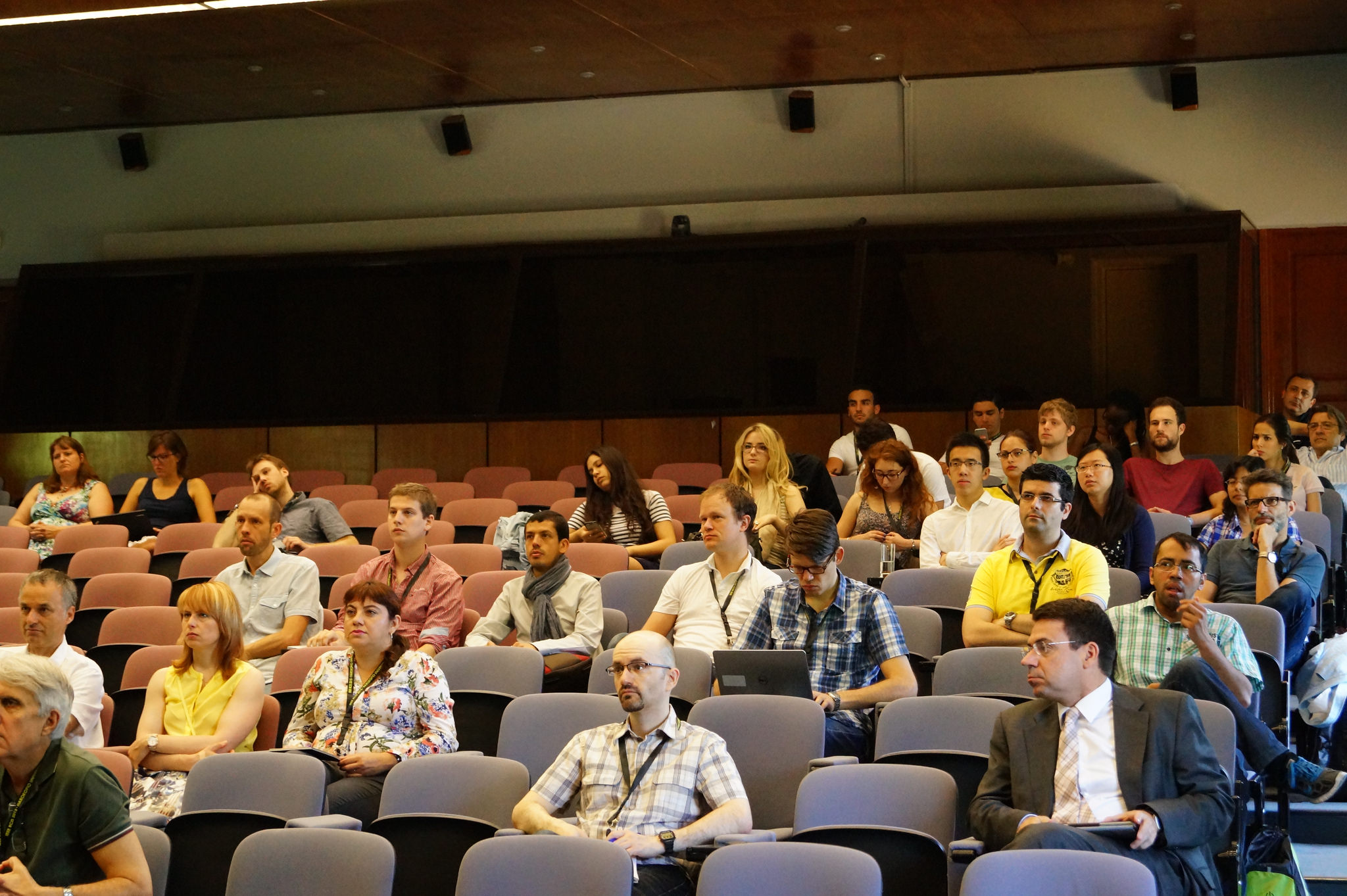
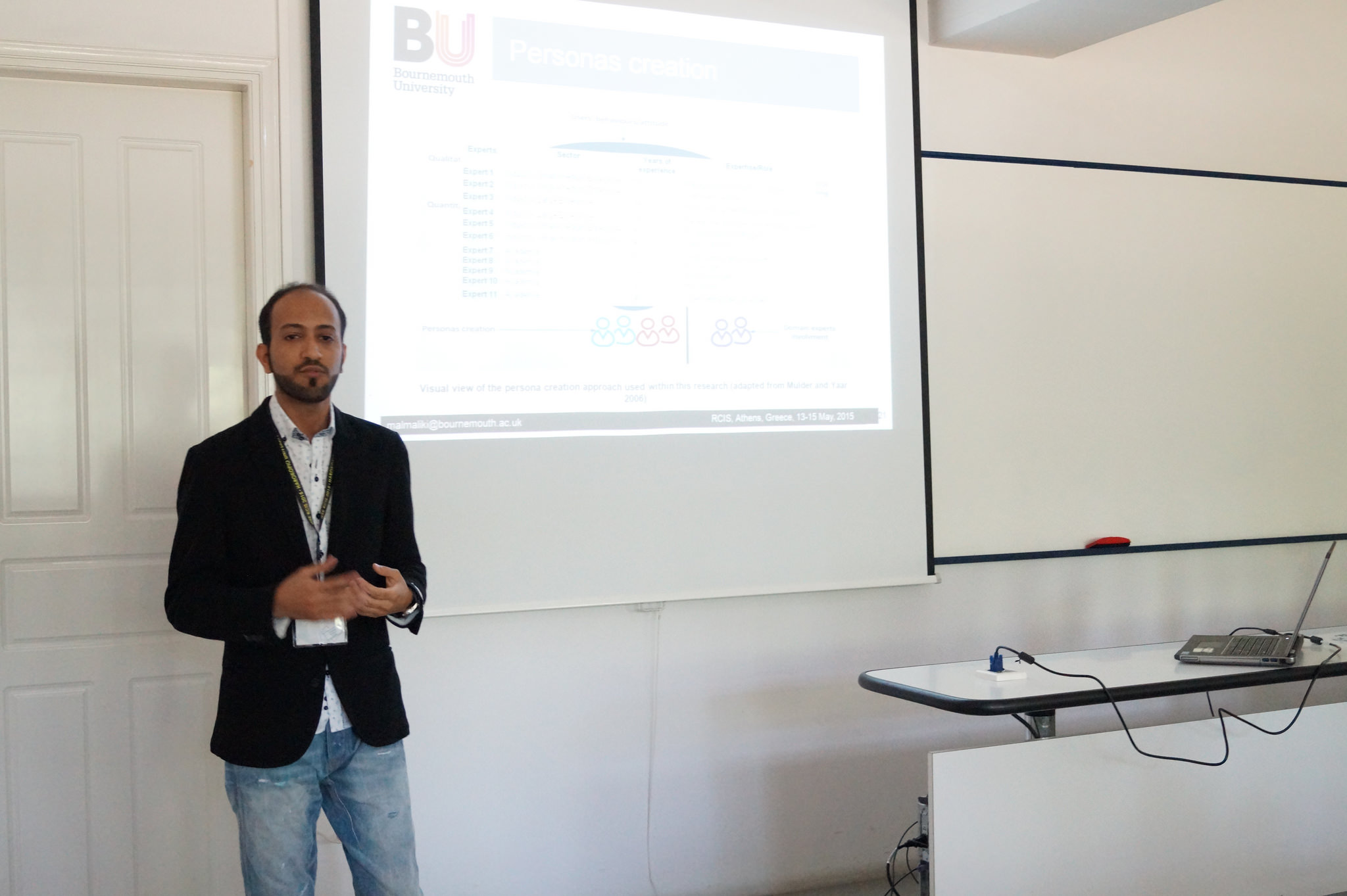
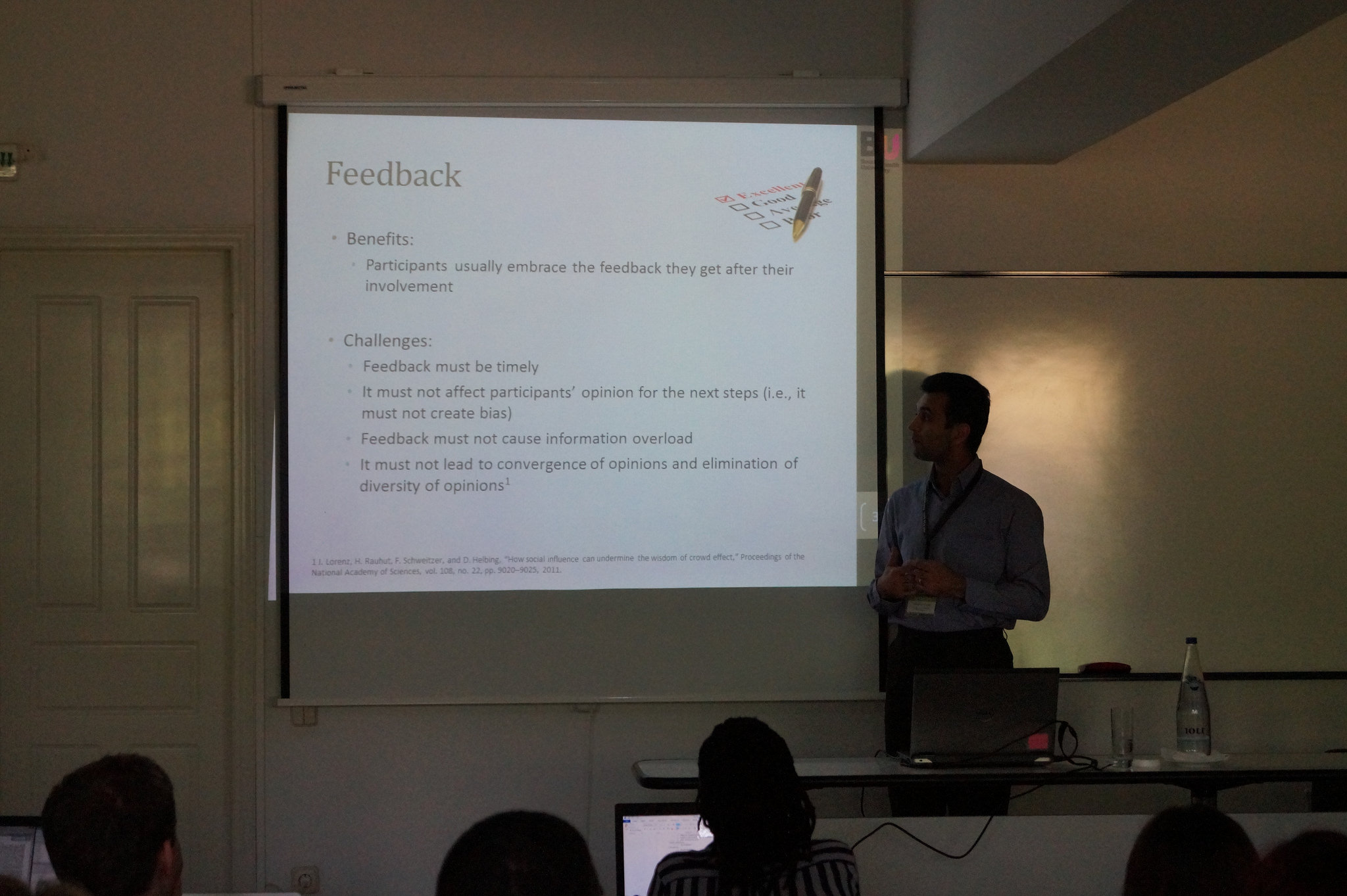
They are all tools for digital storytelling. On Thursday May 14th, the Fusion-funded, inter-faculty BU Datalabs team presented at Interdisciplinary Research Week. Guests from across the University and beyond came to learn about digital storytelling and how visual data stories can better communicate the significance of research findings to policy-makers and the public.

Weathering the rain, the event kicked off with a reflective exercise called ‘Analogue Twitter.’ Participants were asked to write down a story of their research in 140 characters or less. From sports management to midwifery, research stories spanned the disciplines.

To get things going, Senior Lecturer in Digital Storytelling, Dr. Brad Gyori brought his expertise in interactive media, and his experience as the Head Writer of the Emmy award winning show Talk Soup, to introduce the audience to the many storytelling patterns that have emerged with the rise and innovation of digital platforms. Digital storytelling can range from Fishbone narratives that have one main linear narrative with suggested diversions, to the Amusement Park that offers loosely clustered, different perspectives with no central hub, as we see in Highrise: Out of my Window.

Next up, Dr. Anna Feigenbaum, a Senior Lecturer from the Faculty of Media and Communications, introduced the audience to the power of storytelling with maps and infographics. Drawing from her own tear gas project and others’ expertise, she explored how visuals can act as ‘infobait’, drive curiosity, and interrupt dominant narratives.

After lunch, BU Datalabs project partner Malachy Browne from the social media journalism outfit reportedly shared insights and strategies for using online tools to do investigative research, share your findings, and dig deeper into social data. From apigee for APIs to mine social media data, to wolframalpha that can return the weather from any date in history, Browne made connections between the tools of his trade and the possibilities for expanding our digital methods in academia.

For more information on the BU Datalabs project, email: afeigenbaum@bournemouth.ac.uk  If you would like to get involved, we will be hosting a meeting open to all staff and students in early July. Details to follow. 

Fusion Fund – Study Leave – Manuscript submitted

A little while back (August 2014-Jan 2015) I had Fusion Investment study leave to work on my manuscript ‘Straight Girls and Queer Guys: the Hetero Media Gaze in Film and Television’.  Just wanted to follow up from this, to advise that the manuscript has now been submitted to Edinburgh University Press, and its on its way for production.  I expect it will be a few months before its eventually published, but its such a relief to actually finish it.  The research process was most engaging, and as with all concepts it changes and modifies, as a ‘work in progress’.

Here is a taster of the agreed back cover:

“Exploring the archetypal representation of the straight girl with the queer guy in film and television culture from 1948 to the present day, Straight Girls and Queer Guys considers the process of the ‘hetero media gaze’ and the way it contextualizes sexual diversity and gender identity. Offering both an historical foundation and a rigorous conceptual framework, Christopher Pullen draws on a range of case studies, including the films of Doris Day and Rock Hudson, the performances of Kenneth Williams, televisions shows such as Glee, Sex and the City and Will and Grace, the work of Derek Jarman, and the role of the gay best friend in Hollywood film. Critiquing the representation of the straight girl and the queer guy for its relation to both power and otherness, this is a provocative study that frames a theoretical model which can be applied across diverse media forms.”

Now I am on to my next book project, the educational biography of Pedro Zamora.

ResearchGate – An Overview

Picture by bschwehnLast year I wrote a post titled ‘ResearchGate Reviewed’ which outlined the pros and cons for BU researchers using ResearchGate. Here again I thought I’d summarise here what ResearchGate is and more importantly what it isn’t…

ResearchGate in a nutshell…..

ResearchGate is a social networking site for researchers (particularly those engaged in broadly scientific research) to share papers, ask questions and find collaborators.

What is it?

ResearchGate’s mission is “to connect researchers and make it easy for them to share and access scientific output, knowledge, and expertise”. It has similar features to networking sites such as Facebook, Twitter and LinkedIn where users can create profiles, like and follow researchers and their publications, ask questions, feedback and share news items and updates.

It is free to join and currently has about 6 million members across the world. Once you have a profile, ResearchGate will email you with publication updates from those researchers you are following and developments in your skilled areas of research. On your home page it will include a live feed of activity from your connected researchers, display jobs you may be interested in and suggest connections to related researchers.

What isn’t it?

Accessing documents usually requires an account so ResearchGate is not considered to be Open Access.

(Why) should I use it?

ResearchGate is growing fast and is a useful tool for researchers to promote their work. However, if a researcher’s sole aim is promote their work then ResearchGate alone will probably not be sufficient and they should also consider using ResearchGate in conjunction with other sites such as Academia.edu, Mendeley, Google Scholar, figshare and others. Activity and membership varies from one site to another and from one discipline to another, so researchers will need to investigate for themselves in order to evaluate potential value.

Uploading research outputs to ResearchGate will not meet funder policy requirements for Open Access or Research Data Management; on the contrary you may be in breach of the publisher policy.

ResearchGate was built by scientists for scientists in 2008 and has received more than $35 million in investment capital over its lifetime from investors such as Bill Gates and Tenaya Capital.

(How) Does it fit with all the others?

You can add links in your profile to Facebook, Twitter, LinkedIn, Skype, your website and include your ORCID ID.

 Our verdict:

A great networking tool but has limitations which researchers should be wary of . The more effort you put into maintaining and regularly updating your profile, the more you will get out of ResearchGate.

An overview of Information Security today and into the future

Kevin Henry is *the* guru in security certifications and training and we are delighted that he will be presenting at the University on the 11th and 12th of June.  Kevin is going to deliver a handful of lectures which will take you on an enlightening journey through the world of Information Security!

Kevin will present on the following topics:

Thursday 11th June

Shelley Lecture Theatre, Poole House

10.00am – 12.30 pm

Content of the CISSP

What is Information Security and its Role in Business?

2pm – 4pm

How is the face of Information Security Changing?

Hackers versus APTs

Where should my career go?

Friday 12th June

Shelley Lecture Theatre, Poole House

10.00am – 12.30pm

The Value of the CISSP and other Certifications

International Standards and Practices – An Overview of ISO/IEC 27001 and PCI-DSS

If you would like to attend any of the lectures please contact the BU Cyber Security Unit to reserve your place – 01202 962 557 or email 


Kevin is recognized as one of the Leaders in the field of Information Security worldwide. He has been involved in computers since 1976 when he was an operator on the largest minicomputer system in Canada at the time. He has since worked in many areas of Information Technology including Computer Programming, Systems Analysis and Information Technology Audit. Following 20 years in the telecommunications field, Kevin moved to a Senior Auditor position with the State of Oregon where he was a member of the Governor’s IT Security Subcommittee and performed audits on courts and court-related IT systems. The co-chair of the CBK for the CISSP and several other certifications, as well as an author with published articles in over ten books and magazines, Kevin is the principal of KMHenry Management Inc. and served until recently as the Head of Education for (ISC)2 and Vice President of ITPG, responsible for all educational systems, products and instructors for training programs. Currently Kevin is an Authorized Instructor for (ISC)2, ISACA, and BCI.


Visit the BUCSU website for more information on enterprise consultancy, research and education

EPSRC Research Software Engineer (RSE) Fellowships

This EPSRC call will support Research Software Engineer (RSE) Fellowships for a period of up to five years. The RSE Fellowship describes exceptional individuals with combined expertise in programming and a solid knowledge of the research environment. The Research Software Engineer works with researchers to gain an understanding of the problems they face, and then develops, maintains and extends software to provide the answers.

To support the role of RSEs and establish a cohort in the academic environment, up to £3m is available for this pilot call. Candidates are invited to provide an ‘Intent to Submit’ document in the first instance to register interest. Full proposals will be subject to a rigorous peer review and sift process before a final selection by interview.

Background

Software developed for experimental facilities and instrumentation, modelling, simulation and data-analysis is a critical and valuable resource. Software and algorithm development represents major investments by skilled scientists and engineers, and the large suite of codes and algorithms used in research should be regarded as a research infrastructure, requiring support and maintenance along the innovation chain, and throughout its lifecycle.

Through the publication of “EPSRC Software as an Infrastructure strategy”, EPSRC has recognised the importance of investing in software development. Previous funding has focused on support for the development of the key software codes that are used by the EPS community in their research. However, other important aspects of the strategy are the development of skills and career development for those engaged in software engineering, and it is these aspects that this call addresses.

The EPSRC-funded Software Sustainability Institute has begun a campaign to develop a UK community of Research Software Engineers, with the aim of raising awareness of their roles, and improving their career paths and reward/recognition within Universities.

This funding opportunity is a pilot in support of the concept of Research Software Engineers. For further background, please see the following links:

Resources

Closing date for Statement of Intent is 4pm, 12 June 2015.  You mush submit a Statement of Intent first and these will be used to select who can submit a full application.  The full application closing date is 4pm, 21 July 2015.

If you are interested in applying for this fellowship then you must contact RKEO Funding Development Team in the first instance.

Academic induction to research and knowledge exchange at BU

The Research and Knowledge Exchange Office (RKEO) invite all ‘new to BU’ academics and researchers to an induction.  The purpose of the induction is to inform you of the following:

  • how we can support you when planning your research career;
  • how to apply for funding (the policies and processes around costs and approvals);
  • how to manage your successful research applications (including ethics, governance, risks and finance);
  • how we can support you on impact, public engagement, outputs and open access, case studies, and a whole lot more.

The second induction will be held on 16th June 2015 on the 4th floor of Melbury House.  The format of the day is as follows:

9.00-9.15 – Coffee/tea and cake will be available on arrival

9.15 – RKEO academic induction (with a break at 10.45)

11.30 – Opportunity for one to one interaction with RKEO staff

12.00 – Close

There will also be literature and information packs available.

If you would like to attend the induction then please contact Charmain Lyons, clyons@bournemouth.ac.uk for an official invitation.  We will directly contact those who have started at BU in the last five months.

We hope you can make it and look forward to seeing you.

Regards,

The RKEO team

Interdisciplinary Research Week Lunchbyte Session – 13th May 2015

Join us for an Interdisciplinary Research Week Lunchbyte session and learn about effective interdisciplinary research writing.

Date : 13th May 2015 (Wednesday)

Time : 12.00 – 13.00 (presentation); 13:00 – 13:30 (lunch)

Venue : S217, Studland House, Lansdowne Campus

In this lunchbyte session, Professor Vanora Hundley and Professor Edwin van Teijlingen from the Faculty of Health and Social Sciences; and Dr. Anne Luce from the Faculty of Media and Communication will be sharing their years of experience in writing about research across disciplines as varied as media, sociology, midwifery, health economics, medicine and public health.

Interdisciplinary or multidisciplinary research has been slowly growing in importance over the past decades, but has recently become more fashionable since many of the high scoring impact case studies in REF2014 involved a number of disciplines. However, interdisciplinary writing is not always as straightforward as it may seem. In this lunchbyte session, the presenters will draw on many years (in some cases decades) of experience working across disciplines and they will share what works and what has been more challenging.

Come and join us in this session and afterwards, there will be opportunities to have informal discussions with the presenters while having a bite to eat.

To ensure that we place the right catering order, please get in touch with Staff Development to book your place.

Photo – https://sites.google.com/site/uswatunkhairah2412/showcase/domain1/learning-journal

What’s Happening at the Consumer Research Group?


The Consumer Research Group (CRG) has a number of activities planned over the coming months, which it would like to inform colleagues about.

Forthcoming Events

​1. Interdisciplinary Research Week – May 13th, 12-2pm, Barnes LT, Talbot Campus

As part of this week of events, Juliet & Jeff (Management School), Janice (Media) and Siné (Science & Technology) will be presenting on interdisciplinary research in Consumer Behaviour. The event will start with lunch at 12 followed by our presentation at 12.30.   All are welcome to attend.

Contact: Juliet Memery is hosting this event so please contact her if you have any queries or just come along!

2. Ideas Camp – 11th June, Russell-Coates Museum
Most of you will have seen Janice’s email about this.  The idea is to have a day away from Campus when we can meet together as a group and start to think about working on research together.  We hope that each of us will emerge with the beginnings of a research project that we can take forward.
Contact: Janice Dengri-Knott is hosting this event so please contact if you have yet to book a place on this event.  We already have 20 bookings so please hurry as we may soon reach capacity for this event.

3.  Making Contact with Business Event – 23rd June, Venue: TBA, Talbot Campus

As we work out our research we may wish to make contact with business in order to seek funding or work with industrial partners.  Jayne Codling, Liam Toms and Rachel Clarke have kindly agreed to give a short workshop introducing you to how you might go about this.  Many of you will have been involved with business previously but this will provide an up-to-date picture of how this is working at BU currently.

4.  Writing effective research grants and getting research grant support – TBA, September

5.  Speaker Series
Speakers are now being booked for September, November and January.  We hope to be able to hold these in the early evening to allow both academics and business contacts to come along.  Our aim is to provide high profile speakers talking on interesting/controversial subjects.  More news will follow shortly.

 Best wishes

 Siné, Juliet, Janice & Jeff

Next Research Staff Association (RSA) meeting – 10 June 2015 in S219

We would like to invite all research staff at BU to the third meeting of the recently formed Research Staff Association (RSA), on Wednesday 10th June from 3-4pm in S219.  

The RSA is a forum to promote BU research culture. Research staff from across the University are encouraged to attend to network with others researchers, disseminate their work, discuss career opportunities, hear updates on how BU is implementing the Research Concordat, and give feedback or raise concerns that will help to develop and support the research community at BU. 

Refreshments will be available so please confirm your attendance by email to: rhurst@bournemouth.ac.uk

We look forward to meeting you.

Michelle Heward and Ana Ruiz-Navarro

Research Staff Representatives – Research Concordat Steering Group

Inspirational opening to the Interdisciplinary Research Week

The BU Dementia Institute kicked off the Interdisciplinary Research Week last night with an inspirational and interactive lecture on improving the lives of people affected by dementia in Dorset.

Professor Anthea Innes opened the week and then went on to explain the interdisciplinary research that her institute carries out and the importance of collaboration in the community.  She informed the audience how the language used to describe the people diagnosed with dementia can often be negative and derogatory and how people are often treated differently upon diagnosis.  The Institute work with care providers, hospitals, GPs, etc. to change their perception and enable better lives for those diagnosed with dementia.

Anthea handed over to her team to show some of the ways that lives can be improved and how a dementia diagnosis does not mean that you can no longer learn.  Andy Baker from the BUDI orchestra had half the audience clapping to the ‘oo-ah’ parts of ‘oo-ah Cantona, say oo-ah Cantona’ and the other half clapping to the ‘wood’ and ‘chuck’ in ‘how much wood could a woodchuck chuck if a woodchuck would chuck wood’.  This was not an easy task but a good demonstration of how to play your part in an orchestra.  He went on to show how his work had given people diagnosed with dementia the ability to learn something new and engage in a rewarding activity.

Clare Cutler then talked about the Intergenerational Technology club where school pupils have welcomed people with dementia and their carers into their schools to work together in an after school club where they have been learning to play on the wii, xbox and ipads together.  This way of working offers opportunities to educate younger generations about dementia and to combat associated stigma, ignorance and fear of what it might mean to live with dementia. 

Samuel Nyman ended the evening with an enthusiastic lecture on ‘Falls Prevention’ and how the amount of time we spend being sedentary increases our chances of falling and injuring ourselves.  Research has shown that the more active we are in our 30’s and 40’s will decrease our chances of developing dementia.  Samuel’s research is looking to develop behavioural change techniques that can be used to encourage a much more active lifestyle.  He showed a clip of people choosing to use an escalator instead of the stairs.  The stairs were transformed into a working piano overnight and usage of the stairs increased by 66% the next day. 

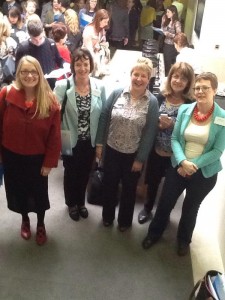
The IRW audience clapping to 'Oo-ah Cantona'

It was an excellent evening with a great opportunity for the audience to engage with the BUDI team.  I’ll end with just one of the positive comments from the audience, which was ‘Wonderful to hear from such enthusiastic and passionate presenters forging strong partnerships with those in the community. Many thanks.’

There are nine more interdisciplinary research events being held this week and so please do come along: https://research.bournemouth.ac.uk/interdisciplinary-research-week-2015/.  Today’s events are:

VeggiEAT goes to Lyon

Bournemouth University team from Faculty of Management, Faculty of Health and Social Sciences and Faculty of Science and Technology were at the Institute Paul Bocuse for VeggiEAT (@veggieat) mid-term review. It was a very productive meeting with a lot of effective outcomes for research and knowledge exchange. Professor Heather Hartwell represented Bournemouth University as PI and manager of the project and the team is pleased to announce that VeggiEAT will continue to move towards a healthier future for European Union.

If you want to know more about the project and get involved, please contact Professor Heather Hartwell (hhartwell@bournemouth.ac.uk) and join Professor Ann Hemingway during the Interdisciplinary Research Week (https://www.eventbrite.co.uk/e/veggieat-a-voyage-of-discovery-tickets-16206313520).

New book: Corporate Social Responsibility in the Digital Age


Dr Georgiana Grigore was part of the editorial team for the recently published Emerald book ‘Corporate Social Responsibility in the Digital Age’.

With social and digital media reshaping the way in which business is conducted, and with the number of corporations embracing the new social medium for their marketing and communication programmes, this book re-examines corporate social responsibility practice and theory from a digital perspective. In doing so, it revisits some of the theoretical discussions about CSR while inquiring whether and how CSR can be applied and used online.

This book examines key conceptual insights about CSR and digital platforms, and explores the practices of online CSR. In this way, the edited collection explores the impact and influence of the new ‘social’ on responsibility and its feasibility, measurability and success in a boundary-less world.


4th International Conference on Social Responsibility, Ethics and Sustainable Business

Academics in CMC at the Media School are organizing the 4th International Conference on Social Responsibility, Ethics and Sustainable Business to be held at the American College of Greece, Athens, Greece on 8-9 October 2015. The purpose of the conference is to create a networking opportunity for both researchers and practitioners to discuss recent insights on socially responsible practices in various industries and profit or non-for profit sectors. Although academic in nature, representatives in the business environment will deliver case studies on sustainability practices and will reflect on the challenges and opportunities that corporate social responsibility brings to different industries.

The main topics of the conference, but not limited to these, are:
• CSR and Sustainability,
• CSR and Business Ethics,
• CSR and Social Media,
• CSR and Education,
• CSR and Reputation,
• CSR and Crisis Management,
• Communicating CSR in the digital age,
• CSR initiatives/strategies,
• Corporate Governance,
• NGO Marketing,
• Ethical Stakeholder Engagement

If you want to participate to this conference, please send an abstract of 300 words in a Word document format via email to Dr Georgiana Grigore by 15 June 2015. No more than two papers will be accepted from any author.

Abstracts registration: 15 June 2015 (extended deadline)
Full paper deadline: 1 September 2015

You can find more information about the event on the conference website.

Latest Major Funding Opportunities

The following funding opportunities have been announced. Please follow the links for more information:

Biotechnology and Biological Sciences Research Council, GB

The Biotechnology and Biological Sciences Research Council, together with the Medical Research Council, the Engineering and Physical Sciences Research Council and the Economic and Social Research Council, invites outline proposals for its Diet and Health Research Industry Club. Funding enables UK universities and institutes to carry out research that will enhance understanding and facilitate the development of products with health and nutrition benefits, and help address diet-related health issues in the longer term. Research proposals must address at least one of the challenges: Understanding the relationship between food processing and nutrition; designing foods to maintain and improve health; understanding food choice and eating behaviour to improve health through diet. Maximum award: Not specified. Closing date: 4pm, 01/07/15 for outline proposals. Full proposals are by invitation.

Economic and Social Research Council, GB

The Economic and Social Research Council, the Medical Research Council, the Arts and Humanities Research Council, the National Council of State Funding Agencies (CONFAP) and the Conselho Nacional de Desenvolvimento Científico e Tecnológico (CNPq) invite applications for their Healthy Urban Living call and the Social Science of the Food-Water-Energy Nexus, under the Newton Fund. For the Healthy Urban Living stream, all proposals must address the theme of health inequalities and justice and one or more of the following areas: urban design, planning housing and infrastructure; communities, culture and heritage; leadership, governance and institutions. The total fund from the Research Councils is £2.5m, with matched equivalent for Brazilian partners. For the Social Science of the Food-Water-Energy Nexus stream, proposals should clearly identify one or more of these themes as the focus of the research project and demonstrate how it will be applied to the development of the Social Science of the Food-Water-Energy Nexus: Measuring, modelling and understanding the Nexus; innovation for sustainable transformations; the political economy and governance of the Nexus; human welfare, development and the Nexus. The total fund from the Research Councils is £1.25m, with matched equivalent for Brazilian partners. Maximum award: Not specified. Closing date: 4pm, 02/07/15.

Engineering and Physical Sciences Research Council, GB

The Engineering and Physical Sciences Research Council and Innovate UK invite expressions of interest to attend their state of the art in simulation and design workshop. This aims to identify the state of the art in fundamental simulation and modelling techniques that can help improve the design process within engineering design, and to enable users to progress in their use of these tools and determine key areas of need not currently being addressed by research programmes. The workshop will be held on 16 July 2015. The workshop will focus on the areas of optimisation, multiphysics, materials modelling and multiscale, with challenges identified in the sectors of automotive, aerospace, energy, built environment, healthcare technologies, electronics, and the process industries of chemicals and food.Awards cover reasonable travel and subsistence costs, including accommodation, refreshments and meal costs. Maximum award: Not specified. Closing date: 4pm, 10/06/15.

Innovate UK, GB

Innovate UK, Biotechnology and Biological Sciences Research Council and the Engineering and Physical Sciences Research Council invite expressions of interest for the fourth round of their Early-stage Translation studies, under the Industrial Biotechnology Catalyst. This supports research and development for the processing and production of materials, chemicals and bioenergy through the sustainable exploitation of biological resources, including tissues, enzymes, and genes from organisms that include algae, marine life, fungi, microorganisms and plants, and accelerate commercialisation. Projects must be pre-competitive and academic-led. Funding is only available to academics in line with the standard BBSRC and EPSRC eligibility rules. Total project costs should be between £2m and £5m and projects should last between three and five years. Maximum award: £5m. Closing date: 12pm, 05/08/15 for expressions of interest.

Medical Research Council, GB

The Medical Research Council, together with the Economic and Social Research Council, the Brazilian Council of State Funding Agencies and the Brazilian National Council for Scientific and Technological Development, invite proposals for the UK-Brazil Neglected Infectious Diseases Partnership. The initiative will provide funding for collaborative research projects, focussed on neglected infectious diseases in Brazil. Proposals may focus on Dengue Fever and other vector-borne diseases, Leishmaniasis, Chagas Disease, Leprosy, Schistosomiasis, Omtestinal Helminth Infectious, Rotaviruses and emerging viruses. Projects should last between two and three years. Maximum award: Not specified. Closing date: 01/06/15.

Natural Environment Research Council, GB

The Natural Environment Research Council invites applications for its Industrial CASE Studentships. This scheme promotes collaboration between the research community and the end users of research. Applicants must demonstrate excellent science research along with the potential for societal or economic impact through strong collaboration with the non-academic partners and the provision of high quality training in research skills. The CASE partner must be an end user organisation that can use the outputs of research in developing business, technology, regulation, policy or social and environmental enterprise, within the public, private or third sector. The CASE partner must have a base in the UK.  Maximum award: Not specified. Closing date: 4pm, 08/07/15.

Please note that some funding bodies specify a time for submission as well as a date. Please confirm this with your  RKEO Funding Development Officer

You can set up your own personalised alerts on Research Professional. If you need help setting these up, just ask your School’s/Faculty’s Funding Development Officer in  RKEO or view the recent blog post here.

If thinking of applying, why not add notification of your interest on Research Professional’s record of the bid so that BU colleagues can see your intention to bid and contact you to collaborate.


Seminar on political violence today

The Politics and Media Research Group in FMC has a very stimulating guest speaker lined up for this afternoon (Monday). Dr. Jeffrey Murer is Lecturer on Collective Violence at the University of St. Andrews, in the School of International Relations. He is unusual for an IR specialist in that he draws deeply on ideas from psychoanalysis in his studies of violent political conflict. The title of his talk is “The Politics of Splitting: Anxiety, Loss and the Anti-Semitic, Anti-Roma Violence of Contemporary Hungary”. While focussing on the situation in Hungary, his talk will illustrate how an interdisciplinary, psycho-social approach can be applied to generate insights into violence in many other contexts.

The talk will be in P406. It will start at 5.00 and be followed, until 6.30, by questions and discussion.

All staff and students are welcome.