The ESRC website lists its Festival events for 2015 and amongst the interetsing events is a record number of BU events! The full list can be found on the ESRC webpages, click here!
Pathways to impact: part deux!

This event aims to engage participants who attended a previous one-day ESRC Festival of Science event which took place in 2012 entitled, “Pathways to Impact: ageing, diversity, connectivity and community”.
Creatively mapping the coast
Children will have the chance to take part in a creative mapping exercise using coastal artefacts and pictures to create their own sensory and emotional maps of the topic, starting with the question of ‘how does it make me feel to be here?’
Safeguarding vulnerable adults from financial scamming
Older people are increasingly at risk of falling victim to financial scams that target vulnerable people, including mass marketing fraud via post, telephone or email and doorstep fraud.
This event will give practitioners, agencies and members of the public, the opportunity to come together to learn more about the threats posed.
Church as place: ethnography
This event asked the question:
- what meanings of place and space are constructed by secular or non-specifically religious and religious visiting of church buildings?
Creativity and dementia: making a connection
Bournemouth University Dementia Institute (BUDI) will bring dementia awareness to life through running creative activities including a performance from the BUDI Orchestra – made up of people affected by dementia and musicians – poetry and technology such as IPads and Nintendo Wii.
Child deaths and poverty: disadvantaged British children!
Are British children disadvantaged compared to children in other Western countries? An analysis of data from global sources compares the standards of mortality, poverty and health funding for children and adults in Britain vs. those in 20 other Western countries.
Copyright reform: the implications one year on
One year ago, in October 2014, the UK Government introduced major changes to the Copyright Law with the aim of promoting innovation and creativity. These included a range of exceptions and limitations benefiting users as well as educational and cultural institutions.
Enhancing social life through global social research – event 1
These exhibitions run over the course of three days presenting a showcase of Bournemouth University research projects demonstrating our research impacts on social and community wellbeing and our concern for diverse groups and work with a wide variety of stakeholders.
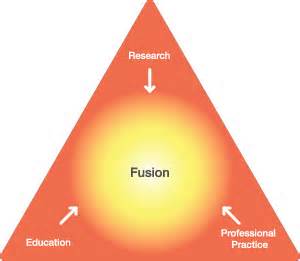
Fused all ways: transdisciplinary insider research
A group of researchers from Bournemouth University are researching the lived experience of students entering higher education from and in ‘non traditional’ contexts. By bringing together research, educational practice and students as research co-creators, a unique lens is created through which to observe the question.
Increasing fruit and vegetable intakes: Why? How? – Event 3
The 5-a-day campaign went global after a recommendation from the World Health Organisation that we should all be eating a least 400g of fruit and vegetables per day. Variations on this message are repeated in countries all across the world. But does the message cause more confusion than good?
Enhancing social life through global social research – event 2
These exhibitions run over the course of three days presenting a showcase of Bournemouth University research projects demonstrating our research impacts on social and community wellbeing and our concern for diverse groups and work with a wide variety of stakeholders.
Enhancing social life through global social research – event 3
These exhibitions run over the course of three days presenting a showcase of Bournemouth University research projects demonstrating our research impacts on social and community wellbeing and our concern for diverse groups and work with a wide variety of stakeholders.
Prof. Edwin van Teijlingen
CMMPH



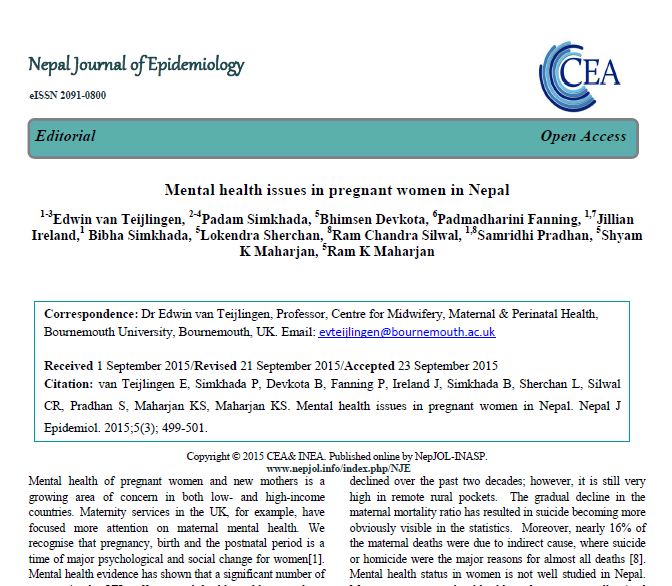

 Today I attended a contract-signing meeting at the Department of Health, Physical and Population Education at Nepal’s oldest university, Tribhuvan University (TU).
 Midwives (ANMs) about the key mental health issues in pregnancy and in the months after birth. A local charity Green Tara Nepal (GTN) will support the work through some of the curriculum design, sensitising UK volunteers to live in rural Nepal, assisting in translating, as well as helping to recruit the local health workers. The two UK universities have a long history of working with GTN as well as its sister organisation Green Tara Trust (GTT), a Buddhist charity based in London. The new project will be based in Nawalparasi in the sub-tropical part of the country bordering India. The target population consists of grassroot health care practitioners since there are no doctors in these rural villages.
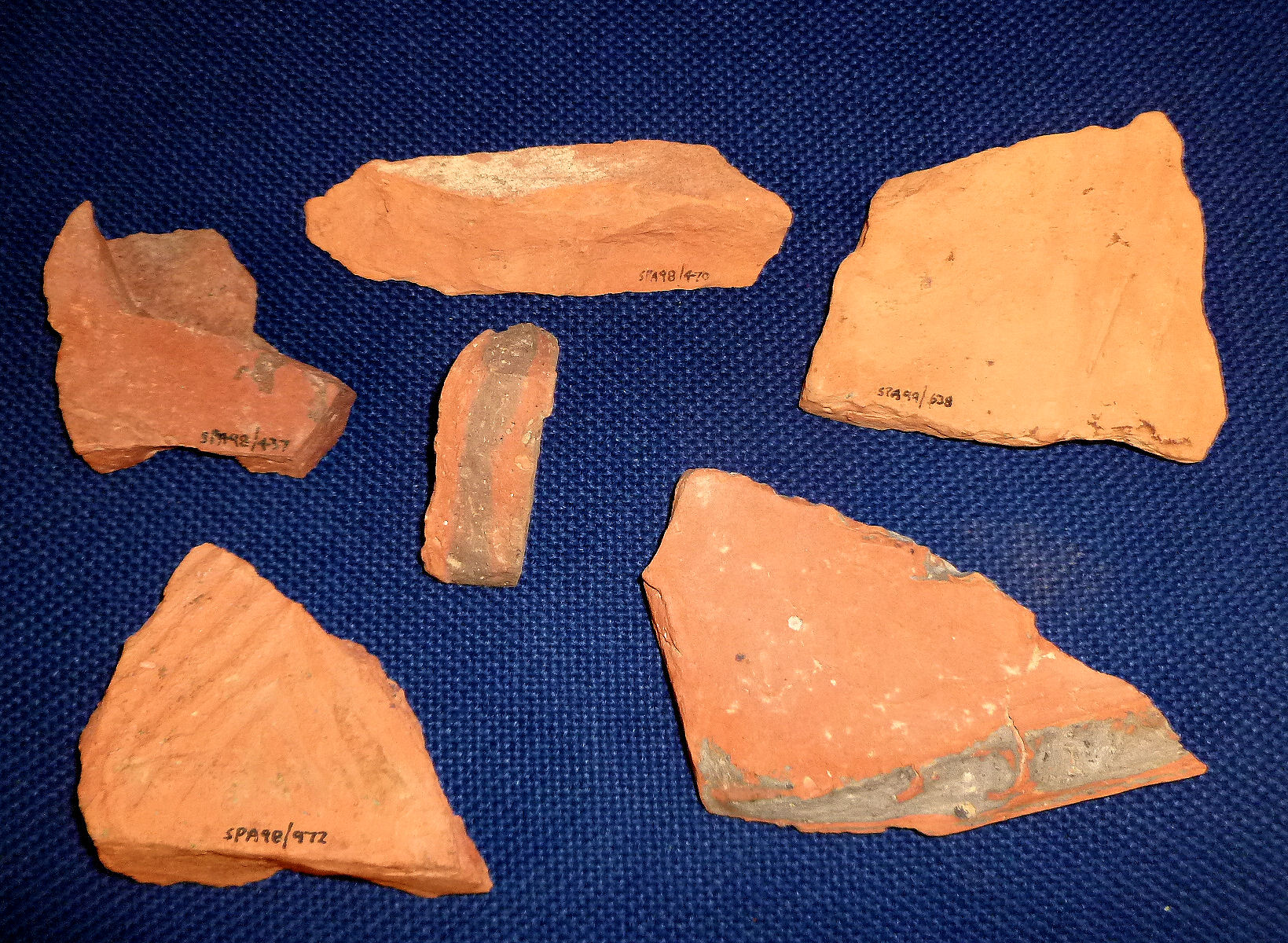
 Thanks to Fusion Investment Funding, the developing Forensic Psychology group in SciTech will be working on an international project aimed at improving the UK’s management of child suspects of crime.
 Young offenders have been shown to have increasingly delayed neuro and socio-cognitive development in comparison to their non-offending peers, leading to deficits in inhibition, attention, time-perception, perspective-taking and interpersonal abilities (Al-Attar, 2010). These additional developmental delays mean that the established age-related difficulties experienced by children in interview are likely to be greatly exaggerated in suspects. Without additional precautions to account for these extended (but often well-hidden) difficulties, evidence from child suspect interviews can be inaccurate or misleading, resulting in the potential for serious miscarriages of justice. With a suspect’s testimony often being key to their own prosecution, its reliability as evidence is central to a fair trial – a basic human right.
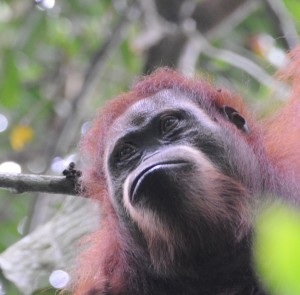
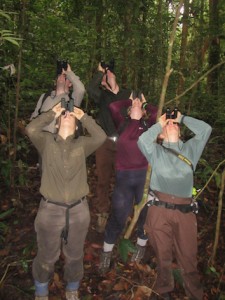 We could show the important skills we bring to this collaboration and are now well embedded into various research opportunities. We are the main primate community researchers at this field site (although Prof Wich from Liverpool John Moores and the SOCP remain the prime orang-utan researchers) and can truly call it a Bournemouth University field site.
![Stanford[1]](http://blogs.bournemouth.ac.uk/research/files/2015/07/Stanford1.jpg)








 ECR Opportunities: New Development Programme, Research Grants & Upcoming Events
 Help us capture BU’s knowledge exchange activity HE-BCI survey 2025–26
 Verbal autopsy paper published two days ago
 ESRC Studentships for 2027 Entry: Opportunity Now Open
 SONAMONI contributions to Safety Conference 2026 in South Africa
 Horizon Europe Cluster 3 (Civil Security for Society) 2026 Calls Now Open
 MSCA Doctoral Networks 2026 Call Information Webinar
 ESRC Festival of Social Science 2026: Application Deadline Extended to Thursday 25 June 2026
 Reminder: Register for the ESRC Festival of Social Science 2026 Information Session
 ECR Funding Open Call: Research Culture & Community Grant – Apply now
 ERC Advanced Grant 2025 Webinar
 Update on UKRO services
 European research project exploring use of ‘virtual twins’ to better manage metabolic associated fatty liver disease