Category / Social Work and Social Policy
The impact of COVID-19 on workforce stress and resilience – Parliamentary Health and Social Care Committee Publication
The COVID-19 pandemic has created major upheaval across the world, and for frontline practitioners in social work, this led to sudden changes in working practices alongside homeworking. In the summer of 2020, Parliament started to conduct an inquiry exploring workforce burnout and resilience in the NHS and social care as a result of the COVID-19 pandemic. As part of this they put out a call for evidence from interested parties, and were particularly interested into early research findings. Areas of interest to the inquiry included the impact of the COVID-19 pandemic on resilience, levels of workforce stress, and burnout across the NHS and social care sectors and the impacts of workforce burnout on service delivery, staff, patients and service users across the NHS and social care sectors.
At the beginning of the COVID-19 pandemic in March 2020 Professor Lee-Ann Fenge and Emily Rosenorn-Lanng from Bournemouth University developed a collaborative research project with Tilia Lenz from the Pan-Dorset and Wiltshire Teaching partnership (PDWTP) to explore the impact of COVID-19 on practitioners and managers, and to date this has been completed by 146 participants. We submitted evidence to this inquiry based on our preliminary findings, and this has now been published by the Health and Social Care Committee.
This publication recognises the importance of the research undertaken by BU and the PDWTP during COVID-19, and the contribution this makes to understanding how practitioners have responded to the unprecedented challenges created by the pandemic.
Community Hospitals: An international perspective
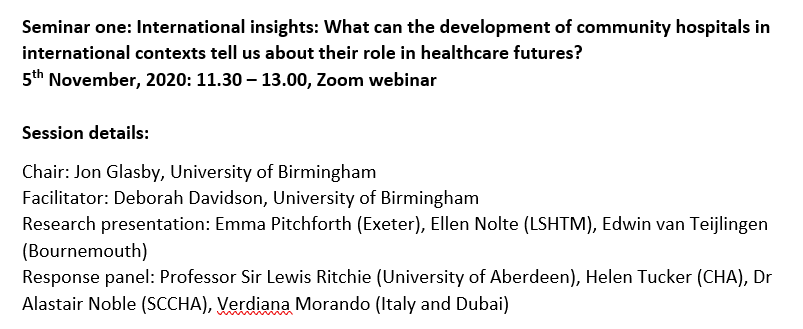
 BU Visiting Faculty Dr. Emma Pitchforth (Senior Lecturer in Primary Care, University of Exeter) spoke this week at International insights: What can the development of community hospitals in international contexts tell us about their role in healthcare futures?, the first of three UK Community Hospital online seminars. Emma presented our NIHR study on Community Hospitals [1-3].
 Community hospitals are a crucial but often neglected part of the health care systems in the UK. Community Hospitals are often very popular with local communities but they often face political challenges. COVID-19 has prompted us to make dramatic changes to way we think about and organise health care. Community hospitals have made a significant contribution to the health and wellbeing during the pandemic. The flexibility, resilience and strong community engagement typical of many community hospitals is being brought to the fore. At this critical time, questions are being asked about the future role of community hospitals and what lessons we can learn from other countries.
 The notion of a Community Hospital in the UK is evolving from the traditional model of a local hospital staffed by general practitioners and nurses and serving mainly rural populations. Along with the diversification of models, there is a renewed policy interest in community hospitals and their potential to deliver integrated care. However, there is a need to better understand the role of different models of community hospitals within the wider health economy and an opportunity to learn from experiences of other countries to inform this potential.
There will be two further webinars at lunch time on the 12th and 19th November. You can register using the following link: https://bham-ac-uk.zoom.us/webinar/register/WN_dX8LwdHxQX2-Mf8nlt8nwg .
Prof. Edwin van Teijlingen
Centre for Midwifery, Maternal & Perinatal Health
References:
- Pitchforth, E., van Teijlingen, E., Nolte, E. (2017) Community hospitals: a traditional solution to help today’s NHS? Health Services Journal (11 July) https://www.hsj.co.uk/community-services/community-hospitals-a-traditional-solution-to-help-todays-nhs/7020019.article#/scientific-summary
- Pitchforth, E., Nolte, E., Corbett, J., Miani., C, Winpenny., E, van Teijlingen, E., Elmore, N,, King, S,, Ball, S,, Miler, J,, Ling, T. (2017) Community hospitals and their services in the NHS: identifying transferable learning from international developments – scoping review, systematic review, country reports and case studies Health Services & Delivery Research 5(19): 1-248.
- Wimpenny, E.M., Corbett, J., Miami, C., King, S., Pitchforth, E., Ling, T., van Teijlingen, E. Nolte, E. (2016) Community hospitals in selected high income countries: a scoping review of approaches and models. International Journal of Integrated Care 16(4): 13 http://dx.doi.org/10.5334/ijic.2463
NIHR Grant Applications Seminar ONLINE


Dear colleagues
– Do you have a great idea for research in health, social care or public health?
– Are you planning to submit a grant application to NIHR?
Our popular seminar has now moved online and will take place on Tuesday 24th November 2020 from 10.00am – 12.30pm.
The seminar provides an overview of NIHR funding opportunities and research programme remits, requirements and application processes. We will give you top tips for your application and answer specific questions with experienced RDS South West advisers.
Find out more and book a place.
Your local branch of the NIHR RDS (Research Design Service) is based within the BU Clinical Research Unit (BUCRU)
We can help with your application. We advise on all aspects of developing an application and can review application drafts as well as put them to a mock funding panel (run by RDS South West) known as Project Review Committee, which is a fantastic opportunity for researchers to obtain a critical review of a proposed grant application before this is sent to a funding body.
Come as early as possible to benefit fully from the advice
Feel free to call us on 01202 961939 or send us an email.
Congratulations to Prof. Bouchachia on latest paper
Yesterday the scientific journal Nepal Journal of Epidemiology published in its latest edition a paper co-authored by BU’s Prof. Hamid Bouchacha. The Short Discussion paper ‘Artificial Intelligence and Health in Nepal’ [1] is an interdisciplinary paper written by two chemists, a computer scientist, an epidemiologist, and a social scientist.
The Nepal Journal of Epidemiology is the official journal of the International Nepal Epidemiological Association (INEA). It is freely available as an Open Access journal on the journal’s own website and it is indexed in PubMed and PubMed Central.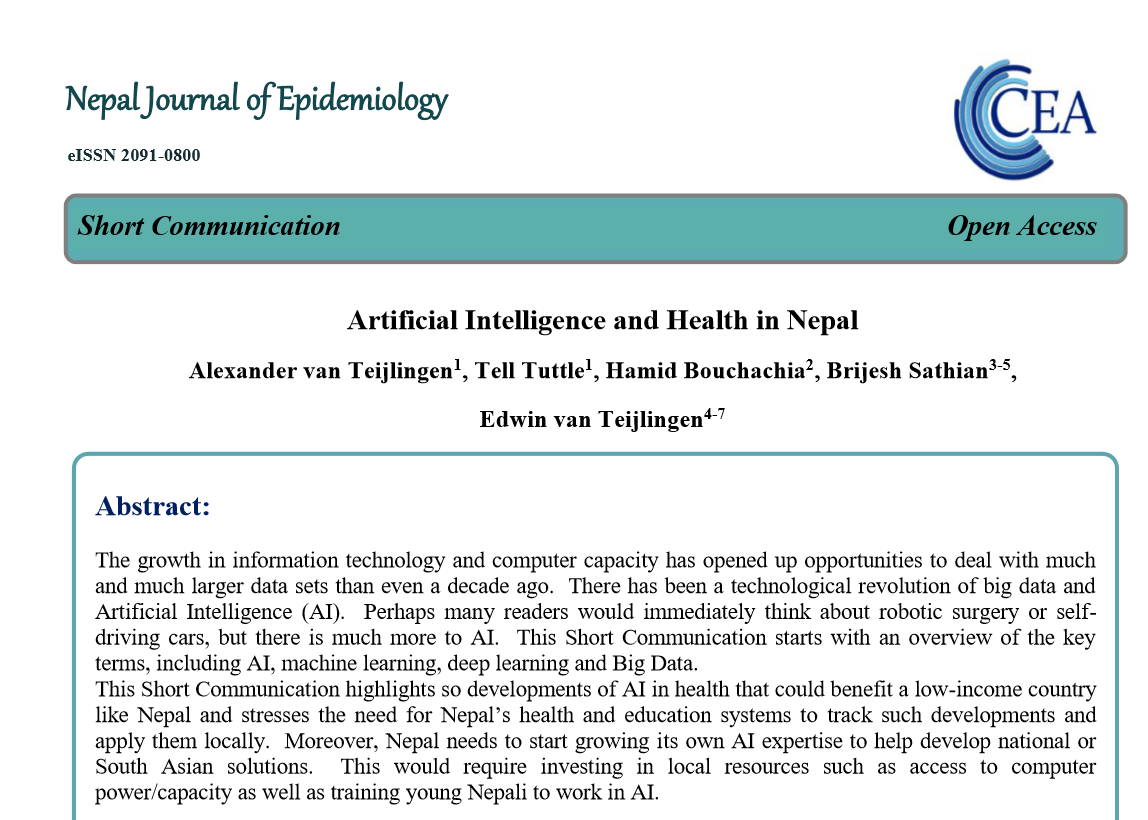
Reference:
- van Teijlingen, A., Tuttle, T., Bouchachia, H., Sathian, B., van Teijlingen, E. (2020). Artificial Intelligence and Health in Nepal. Nepal Journal of Epidemiology, 10(3):915-918. https://doi.org/10.3126/nje.v10i3.31649
New paper concerning COVID-19 and Advance Decisions by Bournemouth academics
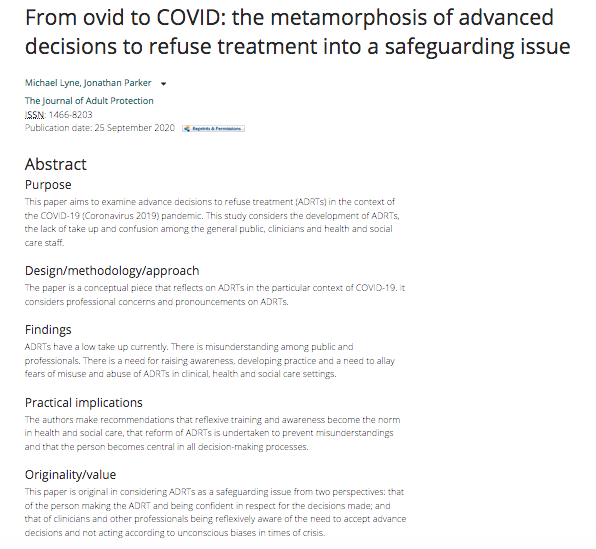 Mike Lyne and Prof Jonathan Parker of the Department of Social Sciences and Social Work and Centre for Seldom Heard Voices have published new research arguing for clarity and greater knowledge of Advance Decisions to Refuse Treatment as a means of increasing respect for people’s wishes at a time of urgency and uncertainty.
The full paper can be found on the Emerald Insight pages for advanced publication:
Lyne, M. and Parker, J. (2020), “From Ovid to COVID: the metamorphosis of advanced decisions to refuse treatment into a safeguarding issue”, The Journal of Adult Protection, Vol. ahead-of-print No. ahead-of-print. https://doi.org/10.1108/JAP-07-2020-0027
Invitation to SAIL Webinar
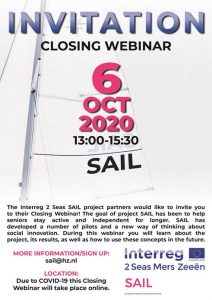 SAIL (Staying Active and Independent for Longer) has been a three year EU funded project that utilised a social innovation approach to developed 10 pilots that aimed to support active aging. Four pilots were developed in the Netherlands, 2 in France, 2 in Belgium and 2 within the UK. The role Bournemouth University Team (Prof Ann Hemingway, Prof Adele Ladkin and Dr Holly Crossen-White) was to undertake an evaluation of the pilots and develop a feasibility study regarding the use of social innovation.
Unfortunately, due to Covid-19 the presentation of the findings was postponed in March. The decision has now been taken to have a virtual presentation and if you are interested in hearing more about SAIL please register at SAIL@hz.nl.
New FHSS nutrition publication
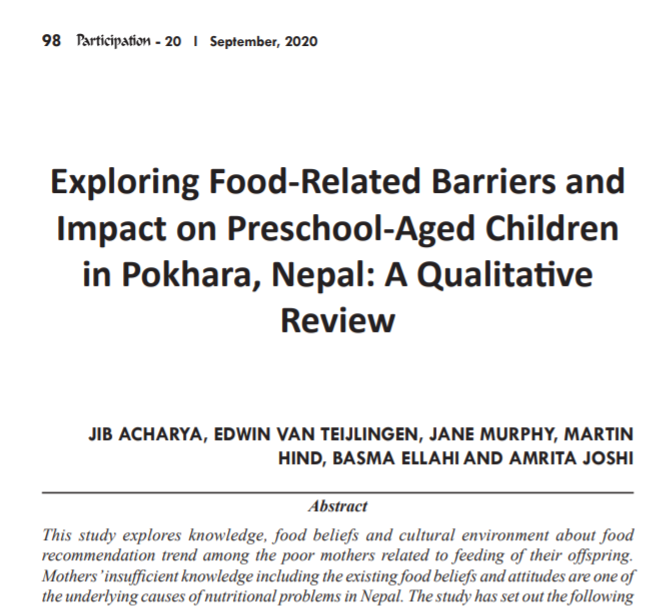 Congratulations to Dr. Jib Acharya on the publication of his latest research paper ‘Exploring Food-Related Barriers and Impact on Preschool-Aged Children in Pokhara, Nepal: A Qualitative Review’ which is based on his PhD research [1]. Dr. Acharya has published several papers [2-3] from his PhD thesis in collaboration with his supervisors, Prof. Jane Murphy, Dr. Martin Hind and Prof, Edwin van Teijlingen.
Congratulations!
References:
- Acharya, J., van Teijlingen, E., Murphy, J., Hind, M., Ellahi, B., Joshi, A. (2020) Exploring Food-Related Barriers and Impact on Preschool-Aged Children in Pokhara, Nepal: A Qualitative Review, Participation 22(20): 98-110.
- Acharya, J., van Teijlingen E., Murphy, J., Hind, M. (2015) Assessment of knowledge, beliefs & attitudes towards healthy diet among mothers in Kaski, Nepal, Participation 17(16): 61-72.
- Acharya, J., van Teijlingen E, Murphy, J., Hind, M. (2015) Study of nutritional problems in preschool aged children in Kaski District Nepal, Journal of Multidisciplinary Research in Healthcare 1(2): 97-118. http://dspace.chitkara.edu.in/jspui/bitstream/1/560/1/12007_JMRH_Acharya.pdf
PhD student paper out in print today
Congratulations to FHSS Social Worker Dr. Orlanda Harvey, whose Ph.D. paper ‘Support for non-prescribed anabolic androgenic steroids users: a qualitative exploration of their needs’ published this week in the journal Drugs: Education, Prevention and Policy [1].
Anabolic Androgenic Steroids (AAS) are used by the general population (particularly male gym users) for their anabolic effects (increased muscle mass). Few studies have sought AAS users’ views on what information and support they need. This study focuses on ideal support wanted by people who use AAS. Interviews were conducted with 23 self-declared adult AAS users. Using thematic analysis, six themes were identified aligned to support and information wanted by AAS users: (1) specific types of information wanted: managing risks, (2) mechanisms for communication of advice, (3) specific types of support wanted: medical and emotional, (4) stigmatisation of people who use AAS, (5) paying for support services, (6) legality of AAS use.
This interesting qualitative piece of work was submitted over one year ago (August 2019) it was accepted by the journal late last year (13th Dec ember 2019 and published online the following months. It has taken from January 2020 till mid-September to appear in the print issue!
The paper is co-authored by Orlanda’s supervisors: Dr. Margarete Parrish, Dr. Steven Trenoweth and Prof. Edwin van Teijlingen. Moreover, this is Orlanda’s third paper from her thesis research, her systematic literature review has been published in BMC Public Health [2] and a further findings papers has been submitted to an academic journal.
References:
- Harvey, O., Parrish, M., van Teijlingen, E., Trenoweth, S. (2020) Support for non-prescribed Anabolic Androgenic Steroids users: A qualitative exploration of their needs Drugs: Education, Prevention & Policy 27:5, 377-386. doi 10.1080/09687637.2019.1705763
- Harvey, O., Keen, S., Parrish, M., van Teijlingen, E. (2019) Support for people who use Anabolic Androgenic Steroids: A Systematic Literature Review into what they want and what they access. BMC Public Health 19: 1024 https://doi.org/10.1186/s12889-019-7288-x https://rdcu.be/bMFon
New CMMPH midwifery paper
Today the European Journal of Midwifery published our paper ‘Midwives’ views towards women using mHealth and eHealth to self-monitor their pregnancy: A systematic review of the literature’. There are many apps to help women to monitor aspects of their own pregnancy and maternal health. This literature review aims to understand midwives’ perspectives on women self-monitoring their pregnancy using eHealth and mHealth, and establish gaps in research. mHealth (mobile health) is the use of mobile devices, digital technologies for health, health analytics, or tele-health, whilst eHealth (electronic health) is the health care supported by electronic processes.
It established that midwives generally hold ambivalent views towards the use of eHealth and mHealth technologies in antenatal care. Often, midwives acknowledged the potential benefits of such technologies, such as their ability to modernise antenatal care and to help women make more informed decisions about their pregnancy. However, midwives were quick to point out the risks and limitations of these, such as the accuracy of conveyed information, and negative impacts on the patient-professional relationship. The authors conclude that with COVID-19 making face-to-face maternity service provision more complicated and with technology is continuously developing, there is a compelling need for studies that investigate the role of eHealth and mHealth in self-monitoring pregnancy, and the consequences this has for pregnant women, health professionals and organisations, as well as midwifery curricula.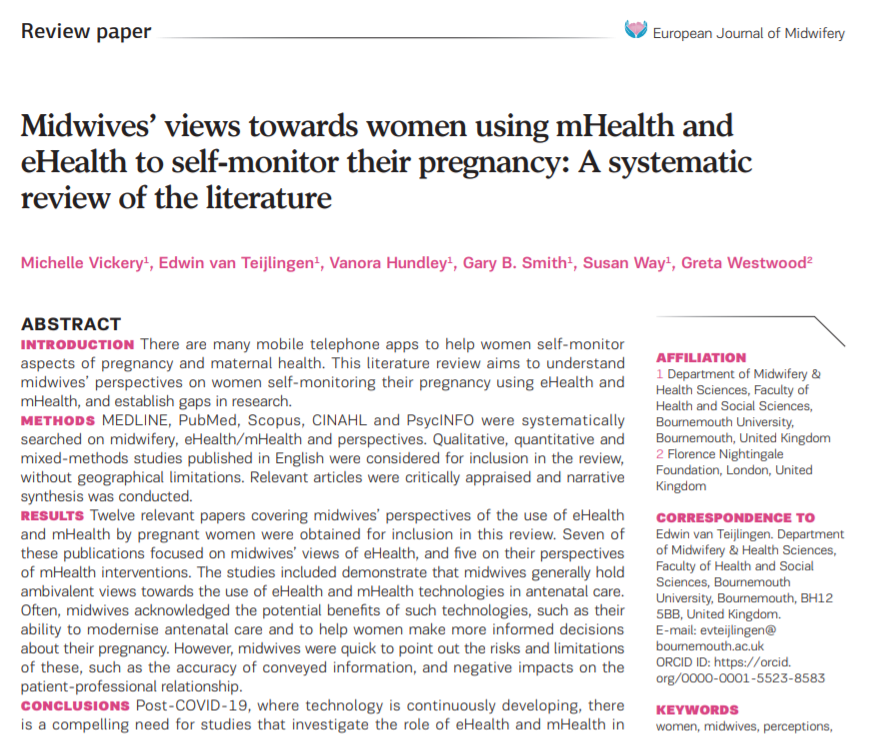
Prof. Edwin van Teijlingen
Centre for Midwifery, Maternal & Perinatal Health (CMMPH)
Reference:
- Vickery, M., Way, S., Hundley, V., Smith, G., van Teijlingen, E., Westwood G. (2020) Midwives’ views women’s use of mHealth and eHealth to self-monitor their pregnancy: A systematic review of the literature, European Journal of Midwifery 4: 36 DOI: https://doi.org/10.18332/ejm/126625
New publication: International study on academic misconduct calls for collaborative approaches across the HE sector
An international, three-country study on academic integrity has been accepted for publication by the BMC Springer International Journal for Educational Integrity.
It examines academic misconduct as identified by university academics and quality control administrators.
It is a multi-voice interpretation of what constitutes academic misconduct, how it systemically manifests, and the need for proactive, innovative, diverse, and consistent approaches to management across the sector. It advocates for preventative education and technology for both staff and students in order to counter the ‘arms race’ of contract cheating services that are feeding growth in academic misconduct.
The paper “Managing the mutations: Academic misconduct in Australia, New Zealand, and the UK” is a collaboration between BU’s Prof. Stephen Tee and Dr Steph Allen with Prof. Melanie Birks at Massey, and Prof. Jane Mills at La Trobe and has been widely acclaimed by participating universities as a ‘much needed study’.
Available: https://link.springer.com/article/10.1007/s40979-020-00055-5
Professional practice informs article on charity governance at Management Research Review
The professional practice of Associate Professor Donald Nordberg is the subject of a paper accepted for publication at the Emerald journal Management Research Review. It examines how the concept of psychological ownership applies in charities, and how its effects differ from those of corporate boards. The paper, “Who’s in charge? In Whose interest?” (doi: 10.1108/MRR-04-2020-0190) is a first-person narrative drawing on Nordberg’s work as chair of the board of a major social care provider and as a board member in the performing arts sector.
An earlier version won the prize of best paper in corporate governance at the British Academy of Management conference last year.
COVID-19 publications at BU
Over the past half year or so BU academics have produced a healthy crop of publications on COVID-19/ corona virus. Searching the word ‘COVID’ today Saturday 5th September, on the university’s repository BURO (Bournemouth University Research Online), resulted in 59 records of publications whilst searching for ‘corona’ gave 48 publications. Removing duplicates, obviously irrelevant papers (e.g. one paper had a co-author called ‘Corona’) and papers published prior to 2020 resulted in a combined total of 66 BU publications. Some papers are obviously focused on COVID-19/corona virus, as the title suggests.  Others may merely mention corona virus or COVID-19 in the body of the text, perhaps as a reason for delay in the research, as a new opportunity or barrier and so on. A search on Scopus and BRIAN added nine more Bournemouth co-authored papers to the reference list below.
References from BURO & Scopus:
- Adedoyin, F., Bekun, F.V., Driha, M.O. and Balsalobre-Lorente, D., 2020. The Effects of Air Transportation, Energy, ICT and FDI on Economic Growth in The Industry 4.0 Era: Evidence from the United States. Technological Forecasting and Social Change. (In Press)
- Ahmed, O., Carmody, S., Walker, L. and Ahmad, I., 2020. The need for speed! 10 ways that WhatsApp and instant messaging can enhance communication (and clinical care) in sport & exercise medicine. British Journal of Sports Medicine. (In Press)
- Ahmed, O., Fulcher, M., Malone, D., Mira Y Lopez, C., Rho, M. and Strojna, A., 2020. The introduction of temporary concussion substitutions in disability football: Are we “headed” in the right direction? Football Medicine & Performance, Spring (32), 13 – 16.
- Akudjedu, T.N., Lawal, O., Sharma, M., Elliott, J., Stewart, S., Gilleece, T., McFadden, S. and Franklin, J.M., 2020. Impact of the COVID-19 pandemic on radiography practice: findings from a UK radiography workforce survey. British Journal of Radiology. (In Press)
- Alhassan, G., Adedoyin, F., Bekun, F.V. and Agabo, T., 2020. Does Life Expectancy, Death Rate and Public Health Expenditure matter in sustaining Economic growth under COVID-19: Empirical Evidence from Nigeria? Journal of Public Affairs. (In Press)
- Al Maamari, G., 2020. Multiple stakeholders’ perception of the long-term success of project: a critical study of Oman tourism resort projects. Doctoral Thesis (Doctoral). Bournemouth University
- Angelopoulos, C.M. and Katos, V., 2020. DHP Framework: Digital Health Passports Using Blockchain – Use case on international tourism during the COVID-19 pandemic. arXiv (2005.08922v2 [cs.CY]).
- Asim, M., Sathian, B., van Teijlingen, E., Mekkodathil, A., Subramanya, S.H. and Simkhada, P., 2020. COVID-19 Pandemic: Public Health Implications in Nepal. Nepal Journal of Epidemiology, 10 (1), 817 – 820.
- Azman, A., Singh, P., Parker, J. and Ashencaen Crabtree, S., 2020. Addressing competency requirements of social work students during the Covid-19 pandemic in Malaysia. Social Work Education. (In Press) DOI: 10.1080/02615479.2020.1815692
- Balsalobre- Lorente, D., Driha, O.M., Bekun, F.V., Sinha, A. and Adedoyin, F., 2020. Consequences of Covid-19 on the Social Isolation of the Chinese Economy: Accounting for the Role of Reduction in Carbon Emissions. Air Quality, Atmosphere and Health. (In Press)
- Cai, W., McKenna, B., Wassler, P. and Williams, N., 2020. Rethinking Knowledge Creation in Information Technology and Tourism. Journal of Travel Research. (In Press)
- Caudwell, J., 2020. Transgender and Non-binary Swimming in the UK: Indoor Public Pool Spaces and Un/Safety. Frontiers in Sociology, 5, 64
- Clarkson, B.G., Culvin, A., Pope, S. and Parry, K. D., 2020. Covid-19: Reflections on threat and uncertainty for the future of elite women’s football in England. Managing Sport and Leisure. (In Press)
- Côté, P, Bussières, A, Cassidy, J., Hartvigsen, J, Kawchuk, G., Leboeuf-Yde, C, Mior, S, Schneider, M, and more than 140 signatories# call for an end to pseudoscientif, and Breen, A. C., 2020. A united statement of the global chiropractic research community against the pseudoscientific claim that chiropractic care boosts immunity. Chiropractic & Manual Therapies, 28 (1), 21.
- Cretan, R. and Light, D., 2020. COVID-19 in Romania: transnational labour, geopolitics, and the Roma ‘outsiders’. Eurasian Geography & Economics. (In Press)
- Escaith, H., Khorana, S., MacGregor, J., Vickers, B. and Ali, S., 2020. The Potential Impact of COVID-19 on Commonwealth Trade, Recovery and Resilience. The Commonwealth Trade Hot Topics, 161.
- Esteves, L., Ashencaen Crabtree, S. and Hemingway, A., 2020. Impacts of C-19 lockdown on the work-life balance of BU academics – Preliminary results. Working Paper. Poole, England: Bournemouth University.
- Fowler-Watt, K., Majin, G., Sunderland, M., Phillips, M., Brine, D., Bissell, A. and Murphy, J., 2020. Reflections on the Shifting Shape of Journalism Education in the Covid-19 pandemic. Digital Culture and Education (June 22). (In Press)
- Gingrich, O., Shemza, A. and Almena, M., 2020. TRANSFORMATIONS: New media art between communities and professional practice. In: EVA London, 16-18 November 2020, London. (In Press)
 Giousmpasoglou C, Marinakou E, Zopiatis A. 2020. Ο ρόλος των Γενικών Διευθυντών στα ξενοδοχεία 4* και 5* κατά τη διάρκεια της πανδημίας COVID-19: μία έρευνα σε 45 χώρες. Money & Tourism Magazine
- Hobson, S., Hind, M, Mojsilovic, A, Varshney, KR. 2020 Trust and Transparency in Contact Tracing Applications, CoRR, abs/2006.11356
- Hodge, S. and Johnson, L., 2020. The digitally resilient student. The Psychologist.
- Hughes, J.G., Leydon, G.M., Watts, S., Hughes, S., Brindle, L.A., Arden-Close, E., Bacon, R., Birch, B., Carballo, L., Plant, H., Moore, C.M., Stuart, B., Yao, G., Lewith, G. and Richardson, A., 2020. A feasibility study of a psycho-educational support intervention for men with prostate cancer on active surveillance. Cancer Reports, 3 (2), e1230.
- Jackson, D., Bradbury-Jones, C., Baptiste, D., Gelling, L. H., Morin, K., Neville, S. and Smith, G.D., 2020. Life in the pandemic: Some reflections on nursing in the context of COVID-19. Journal of Clinical Nursing, 29 (13-14), 2041-2043.
- Jackson, D., Bradbury-Jones, C., Baptiste, D., Gelling, L.H., Morin, K., Neville, S. and Smith, G.D., 2020. International Nurses Day 2020: Remembering nurses who have died in the COVID-19 pandemic. Journal of Clinical Nursing, 29 (13-14), 2050-52.
- Jan, R. and van Teijlingen, E., 2020. COVID-19: The New Corona Virus Upsetting Our World. Journal of Asian Midwives, 7 (1), 1 – 3.
- Kaolawanich, R., Oe, H., Yamaoka, Y. and Chang, C. Y., 2020. A discussion of a luxury apparel brand strategy in an emerging market: Conceptual model with network perspectives. Journal of Social, Cultural and Political Studies, 4 (2), 58 – 72.
- Khashu, M., Provenzi, L., Adama, E., Garfield, C., Koliouli, F., Fisher, D., Nørgaard, B., Thomson-Salo, F., van Teijlingen, E., Ireland, J. and Feeley, N., 2020. COVID-19 restrictions and fathers of infants in neonatal care. BMJ Global Health, 5 (4).
- Khorana, S, Escaith, H, MacGregor J, Vickers B, Ali S., 2020 The Potential Impact of COVID-19 on Commonwealth Trade, Recovery and Resilience he Commonwealth Trade Hot Topics Article number 161
- Li, Z., Feng, C., Zheng, J., Wu, M. and Yu, H., 2020. Towards Adversarial Robustness via Feature Matching. IEEE Access, 8, 88594 – 88603.
- Light, D., Cretan, R., Voiculescu, S. and Juca, S., 2020. Introduction: Changing Tourism in the Cities of Post-communist Central and Eastern Europe. Journal of Balkans and Near Eastern Studies, 22 (4), 465-477.
- Lyne, M., Brown, K. and Grimshaw, K., 2020. Advance care planning. Poole, England: NCPQSW Bournemouth University.
- Lyne, M., Grimshaw, K. and Brown, K., 2020a. The Mental Capacity Act requirements for clinical decisions regarding treatment and care. Poole, England: NCPQSW Bournemouth University
- Lyne, M., Grimshaw, K. and Brown, K., 2020b. Guidance on the use of the Mental Capacity Act for decisions regarding clinical treatment and care: An introduction. Poole, England: NCPQSW Bournemouth University.
- Lyne, M., Grimshaw, K. and Brown, K., 2020c. The Mental Capacity Act requirements when an individual lacks the mental capacity to consent to treatment and care. Poole, England: NCPQSW Bournemouth University.
- Lyne, M. and Parker, J., 2020. From Ovid to Covid: The metamorphosis of Advanced Decisions to Refuse Treatment into a safeguarding issue. Journal of Adult Protection. (In Press)
- Mahato, P. K., Tamang, P., Shahi, P., Aryal, N., Regmi, P., Van Teijlingen, E. and Simkhada, P., 2020. Effects of COVID-19 during lockdown in Nepal. Europasian Journal of Medical Sciences, 2 (2).
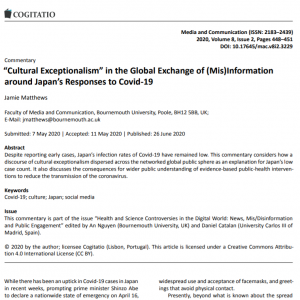
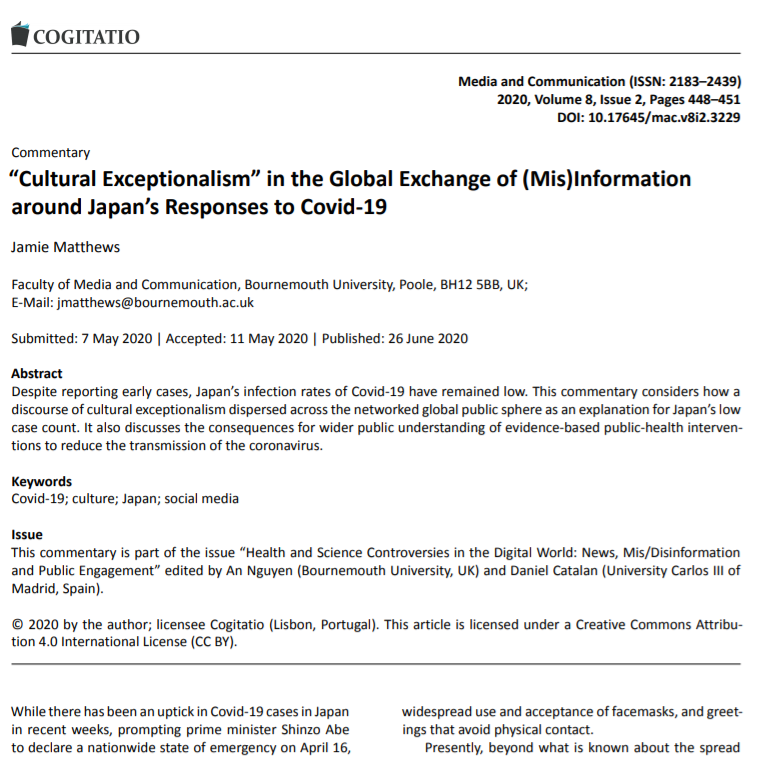
- Matthews, J., 2020. “Cultural exceptionalism” in the global exchange of (mis)information around Japan’s responses to Covid-19. Media and Communication, 8 (2), 448-451.
- McAlaney, J. and Hills, P.J., 2020. Understanding Phishing Email Processing and Perceived Trustworthiness Through Eye Tracking. Frontiers in Psychology, 11, 1756.
- Miles, L. and Shipway, R., 2020. Exploring the COVID-19 Pandemic as a Catalyst for Stimulating Future Research Agendas for Managing Crises and Disasters at International Sport Events. Event Management, 24 (4), 537- 552.
- Mimler, M., 2020. Current developments – Europe: The final nail in the coffin for the patent with unitary effect or just another bump in the road? The German Constitutional Court declares void the German Act of Approval on a Unified Patent Court (2 BvR 739/17). Intellectual Property Forum, 120 (June), 89 – 91.
- Muniz-Pardos, B., Shurlock, J., Debruyne, A., Steinacker, J.M., Börjesson, M., Wolfarth, B., Bilzon, J.L.J., Löllgen, H., Ionescu, A., Zupet, P., Dohi, M., Swart, J., Badtieva, V., Zelenkova, I., Casasco, M., Geistlinger, M., Bachl, N., Tsofliou, F., Di Luigi, L., Bigard, X., Papadopoulou, T., Webborn, N., Singleton, P., Miller, M., Pigozzi, F. and Pitsiladis, Y.P., 2020. Collateral Health Issues Derived from the Covid-19 Pandemic. Sports Medicine – Open, 6 (1), 35.
- Ndasi, W., Bolat, E. and Roushan, G., 2020. Digital cause-related marketing advertising formats: Do the perceived donation amount offer and gender matters in display advertising on non-profit digital sites? Journal of Advertising Research. (In Press)
- Nguyen, A. and Catalan, D., 2020. Digital Mis/Disinformation and Public Engagment with Health and Science Controversies: Fresh Perspectives from Covid-19. Media and Communication, 8 (2), 323 – 328.
- Nguyen, H. and Nguyen, A., 2020. Covid-19 Misinformation and the Social (Media) Amplification of Risk: A Vietnamese Perspective. Media and Communication, 8 (2), 444-447.
- O’Carroll, V., Owens, M., Sy, M., El-Awaisi, A., Xyrichis, A., Leigh, J., Nagraj, S., Huber, M., Hutchings, M. and McFadyen, A., 2020. Top tips for interprofessional education and collaborative practice research: a guide for students and early career researchers. Journal of Interprofessional Care. (In Press)
 Oe, H., 2020. Discussion of digital gaming’s impact on players’ well-being during the COVID-19. arXiv (2005.00594v1 [cs.CY]).
- Oe, H., Takemoto, T. and Ridwan, M., 2020. Is Gamification a Magic Tool?: Illusion, Remedy, and Future Opportunities in Enhancing Learning Outcomes during and beyond the COVID-19. Budapest International Research and Critics in Linguistics and Education (BirLE) Journal, 3 (3), 1401 – 1414.
- Oe, H. and Weeks, M., 2020. How to Support Vulnerable Citizens during the COVID-19 Lockdown: A Community Initiative from Ubiquitous Network Perspectives. Budapest International Research and Critics Institute (BIRCI-Journal), 3 (2), 1369 – 1377.
- Parrilli, M. D., Balavac, M. and Radicic, D., 2020. Business innovation modes and their impact on innovation outputs: Regional variations and the nature of innovation across EU regions. Research Policy, 49 (8), 104047.
- Patsakis, C., Casino, F. and Katos, V., 2020. Encrypted and Covert DNS Queries for Botnets: Challenges and Countermeasures. Computers and Security, 88 (January), 101614.
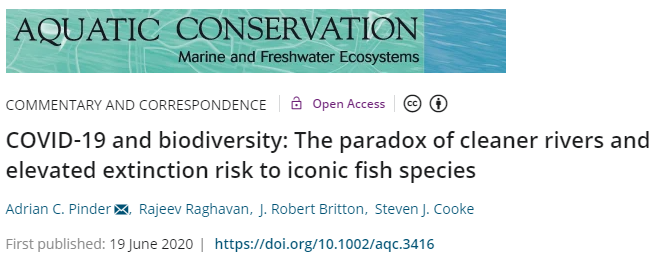
- Pinder, A.C., Raghavan, R., Britton, J. R. and Cooke, S.J., 2020. COVID-19 and biodiversity: The paradox of cleaner rivers and elevated extinction risk to iconic fish species. Aquatic Conservation: Marine & Freshwater Ecosystems, 30 (6), 1061-1062.
- Richards, B., 2020. The causes of sanity. Free Associations (78), 19-32.
- Rosser, E. Westcott, L., Ali, P.A., Bosanquet, J., Castro-Sanchez, E., Dewing, J., McCormack, B., Merrell, J., Witham, G. 2020 The Need for Visible Nursing Leadership During COVID-19. Journal of Nursing Scholarship. (In Press)
- Rutherford, and Cownie, F., 2020. Teaching Advertising for the Public Good. Westminster Papers in Communication and Culture, 15 (2), 162-177.
- Short, M., Bitzer, J. and Rowlands, S., 2020. Testing times. The European Journal of Contraception and Reproductive Health Care. (In Press)
- Sathian, B., Asim, M., Mekkodathil, A., van Teijlingen, E., Subramanya, S.H., Simkhada, P., Marahatta, S.B. and Shrestha, U.M., 2020. Impact of COVID-19 on community health: A systematic review of a population of 82 million. Journal of Advances in Internal Medicine, 9 (1), 4 – 11.
- Simmonds A, Nunn A, Gray M, Hardie C, Mayo S, Peter E, Richards J. 2020. Pedagogical practices that influence professional identity formation in baccalaureate nursing education: A scoping review. Nurse Education Today 93:104516
- Soopramanien, A., Jamwal, S. and Thomas, P., 2020. Digital health rehabilitation can improve access to care in spinal cord injury in the UK: A proposed solution. International Journal of Telerehabilitation, 12 (1), 3 – 16.
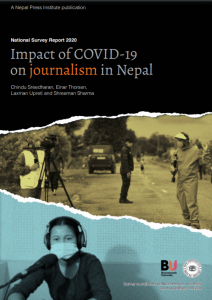
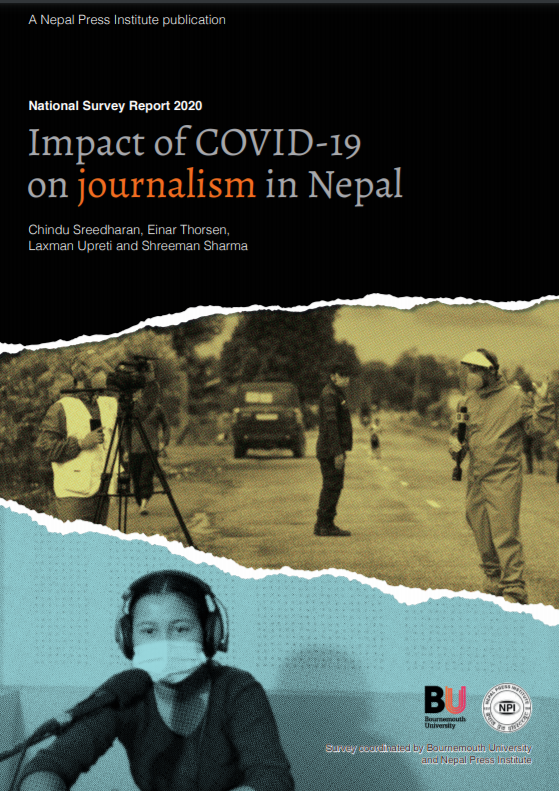
- Sreedharan, C., Thorsen, E., Upreti, L. and Sharma, S., 2020. Impact of COVID-19 on journalism in Nepal. Project Report. Tripureshwor, Kathmandu: Nepal Press Institute.
- Stankov, U., Filimonau, V. and Vujičić, M.D. 2020. A mindful shift: an opportunity for mindfulness-driven tourism in a post-pandemic world. Tourism Geographies. (In Press)
- Swain, I. D., 2020. Why the mask? The effectiveness of face masks in preventing the spread of respiratory infections such as COVID-19 – a home testing protocol. Journal of Medical Engineering & Technology, 1 – 4.
- Tamang, P., Mahato, P., van Teijlingen E, Simkhada, P. 2020 Pregnancy and COVID-19: Lessons so far, Healthy Newborn Network [14 April] healthynewbornnetwork.org/blog/pregnancy-and-covid-19-lessons-so-far/
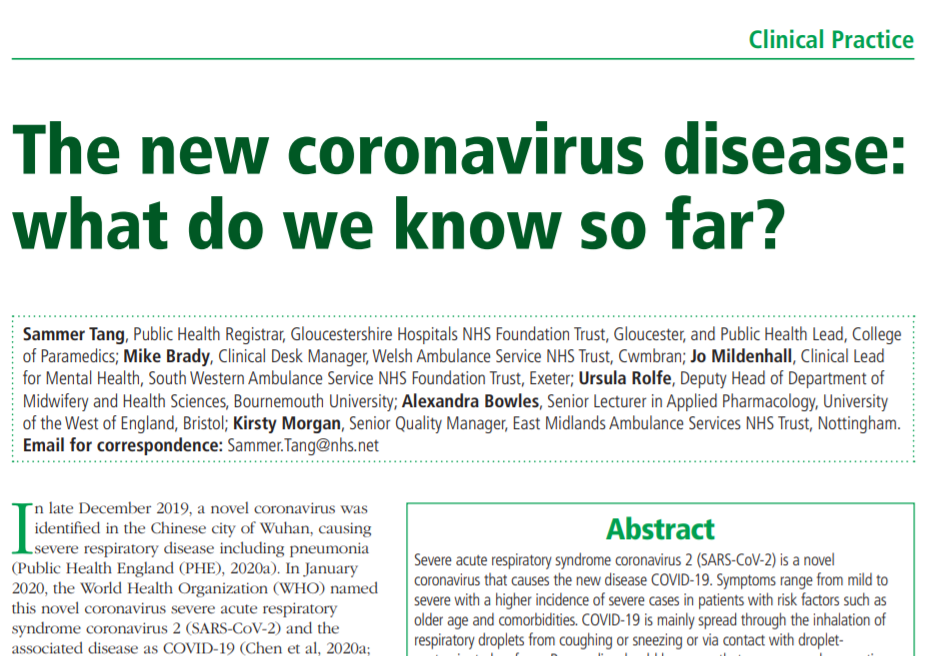
- Tang,S., Brady,M., Mildenhall, J., Rolfe, U., Bowles,. A., Morgan,K,. 2020. The new coronavirus disease: what do we know so far? Journal of Paramedic Science, 12(5) https://doi.org/10.12968/jpar.2020.12.5.193
- Umesh U, Kundu, D, Selvaraj, C, Singh SK, Dubey, VK., 2020 Identification of new anti-nCoV drug chemical compounds from Indian spices exploiting SARS-CoV-2 main protease as target, Journal of Biomolecular Structure and Dynamics
- van Teijlingen, E., Asim, M. and Sathian, B., 2020. Coronavirus Disease (COVID-19) and the risk of Post-Traumatic Stress Disorder: A mental health concern in Nepal. Nepal Journal of Epidemiology, 10 (2), 841 – 844.
 Wallis, R. and Van Raalte, C., 2020a. If industry-oriented degrees are the answer, what are some of the questions? How do students attribute value to their undergraduate experience from the perspective of post-university employment? WONKHE (19 May 2020).
- Wallis, R. and Van Raalte, C., 2020b. ‘Just the way the industry works’: how film and TV need to be more than fair weather industries. The Talent Manager (29 June 2020), 377.
- Wallis, R. and Van Raalte, C., 2020. Growing a sustainable workforce: A response to the DCMS Committee’s Call for Evidence for its inquiry into the ‘Impact of Covid-19 on DCMS sectors’. Discussion Paper. UK Parliament.
- Wainwright, T. and Low, M., 2020c. Beyond Acute Care: Why collaborative self-management should be an essential part of rehabilitation pathways for COVID-19 patients. Journal of Rehabilitation Medicine, 52, jrm00055.
- Wainwright, T., Gill, M., McDonald, D.A., Middleton, R.G., Reed, M., Sahota, O., Yates, P. and Ljungqvist, O., 2020. Consensus statement for perioperative care in total hip replacement and total knee replacement surgery: Enhanced Recovery After Surgery (ERAS®) Society recommendations. Acta Orthopaedica, 91 (1), 3- 19.
- Weidhase, N. and Wilde, P. 2020. ‘Art’s in pop culture in me’: Posthuman Performance and Authorship in Lady Gaga’s Artpop (2013). Queer Studies in Media and Popular Culture. (In Press)
- Wood, C. 2020. COVID-19: Protecting the medically vulnerable, British Journal of Nursing 29(12):660
 Zhao, X., 2020a. How China’s State Actors Create a “Us vs US” world during Covid-19 Pandemic on Social Media. Media & Communication, 8 (2), 452 – 457.
- Zhao, X., 2020b. Auditing the “Me Inc.”: Teaching personal branding on LinkedIn through an experiential learning method. Communication Teacher. (In Press)
Whilst searching BU Research Blog added a further eight references:
- Aryal, N. (2020) Misinformation: a visible enemy of public health, BU Research Blog (27 May) https://blogs.bournemouth.ac.uk/research/2020/05/27/misinformation-a-visible-enemy-of-public-health/
- Alloh, F.T., Regmi, P., van Teijlingen, E. (2020) Is ethnicity linked to incidence or outcomes of Covid-19? (Rapid Response) BMJ (14 May) 369:m1548
- Ballardini, R., Santos Rutschman, A., Mendi, D. (2020) 3D Printing: How an Emerging Technology May Help Fight a Pandemic https://iprinfo.fi/artikkeli/3d-printing-how-an-emerging-technology-may-help-fight-a-pandemic/
- Heaslip, V., Parker, J. (2020) The hidden impact of coronavirus on Gypsy, Roma Travellers, The Conversation (18 August) https://theconversation.com/the-hidden-impact-of-coronavirus-on-gypsy-roma-travellers-141015
- Clarkson, B., Culvin, A., Parry, K., Pope, S. (2020) Coronavirus: the future of women’s football is under threat, The Conversation (15 June) https://theconversation.com/coronavirus-the-future-of-womens-football-is-under-threat-139582
- Batey, J., Parry, K. 2020. Coronavirus: why self-isolation brings mental health strain for elite athletes, The Conversation (14 April) https://theconversation.com/coronavirus-why-self-isolation-brings-mental-health-strain-for-elite-athletes-135273
- Hemingway, A. 2020. Nurses are on the coronavirus frontline, so why are they being left out of the response? The Conversation (9 Sept) https://theconversation.com/nurses-are-on-the-coronavirus-frontline-so-why-are-they-being-left-out-of-the-response-143658
- Miles, L. 2020. Sierra Leone faces coronavirus as rainy season hits – local disaster planning will be key, The Conversation (19 June) https://theconversation.com/sierra-leone-faces-coronavirus-as-rainy-season-hits-local-disaster-planning-will-be-key-139604
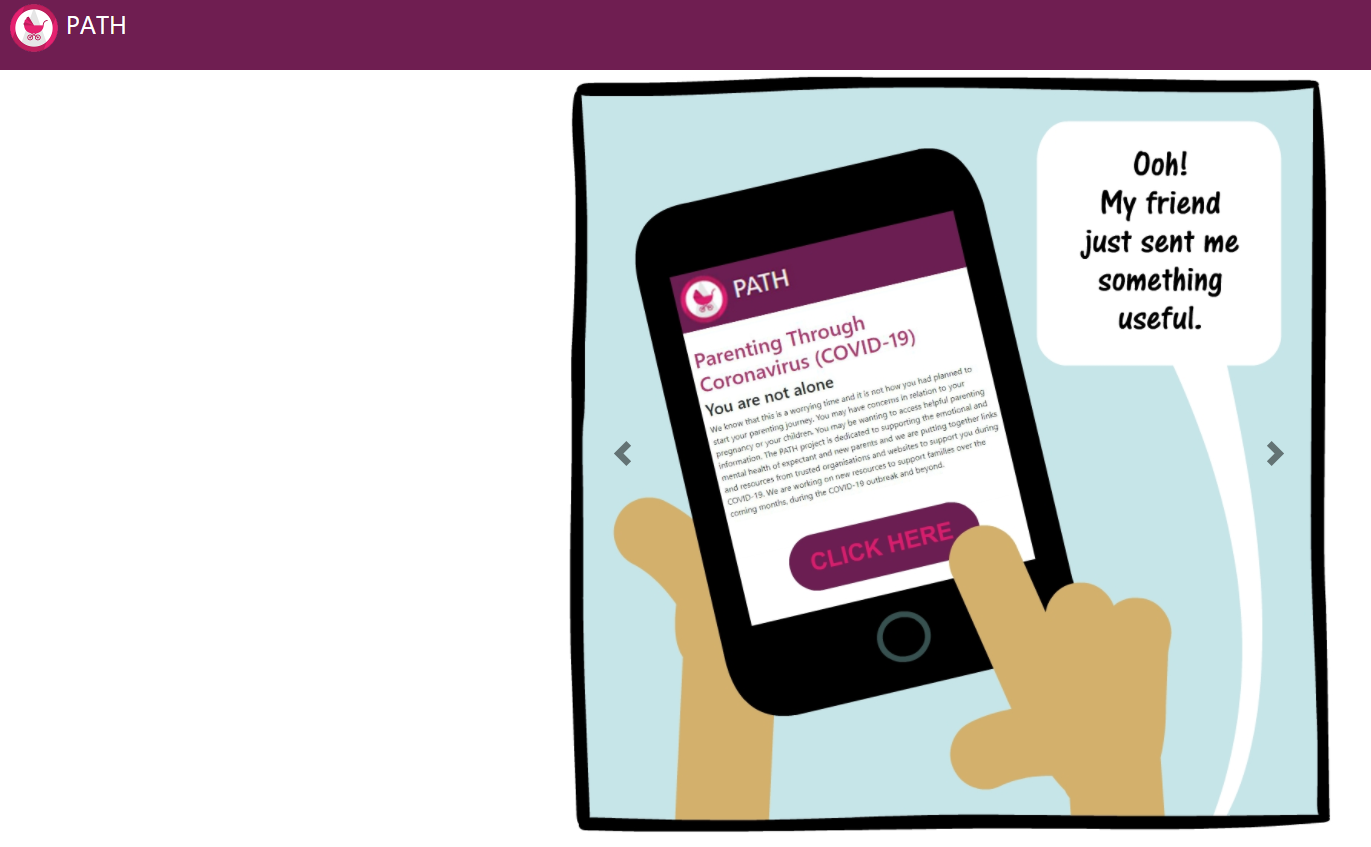
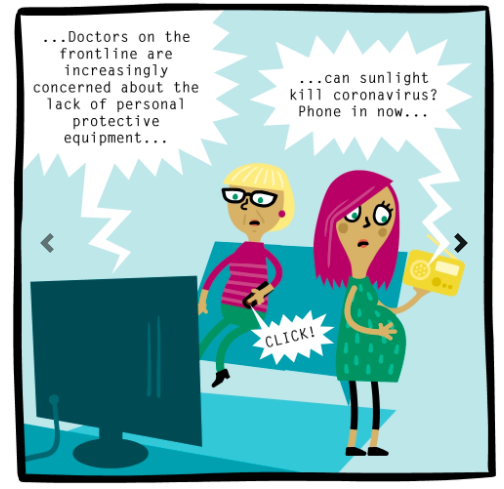 And last, but not least, BU’s PATH project team has produced a comic book to point pregnant women and their families to a collection of trusted online resources The interactive version of the book is here.
Prof. Edwin van Teijlingen
Centre for Midwifery, Maternal & Perinatal Health (CMMPH)
Supporting integrated theses at BU
Over the last few months Library and Learning Support has been developing its guidance for integrated theses. This is a new format for BU which allows a candidate to incorporate material into their PhD already published or which they intend to publish elsewhere.
Orlanda Harvey was the guinea pig for our new guidlines when she submitted her thesis in July. Her title was “Male anabolic androgenic steroid-users: A mixed-methods study” and included articles which had been published as well as some intended for publication in the future.
I caught up with Orlanda recently to see how she had found the process, why she had taken the route of doing her thesis in this way and what advice she had for us in planning support for students doing integrated theses in the future.
You can watch our conversation and see our guidance for submitting an integrated thesis to the library in our Postgraduate Researcher Library Guide.
Writing Week – support from BUCRU and RDS
Writing Week in the Faculty of Health and Social Sciences is coming up next week and we wanted to highlight some of the expertise within BUCRU and NIHR RDS (Research Design Service) and remind you that we’re available to provide support for your health or social care research.
Bournemouth University Clinical Research Unit (BUCRU) supports researchers in improving the quality, quantity and efficiency of research across the University and local NHS Trusts.
We do this by:
- Helping researchers develop high quality applications for external research funding (including small grants)
- Ongoing involvement in funded research projects
How can we help?
BUCRU/RDS can provide help in the following areas:
- Formulating research questions
- Building an appropriate team
- Study design
- Appropriate methodologies for quantitative research, e.g. statistical issues, health economics
- Appropriate methodologies for qualitative research, e.g. sampling, analytical strategies
- Advice on data management and data analysis
- Identifying suitable funding sources
- Writing plain English summaries
- Identifying the resources required for a successful project
- Critical reviews of proposed grant applications can be obtained through our Project Review Committee before they are sent to a funding body.
- Patient and public involvement in research
- Trial management
- Ethics, governance and other regulatory issues
- Linking University and NHS researchers
Over the coming weeks we’ll cover some of these areas in more detail in future blogs and how we can help you.
Our support is available to Bournemouth University staff and people working locally in the NHS, and depending on the support you require, is mostly free of charge. There are no general restrictions on topic area or professional background of the researcher.
If you would like support in developing your research please get in touch through bucru@bournemouth.ac.uk or by calling us on 01202 961939. Please see our website for further information, details of our current and previous projects and a link to our recent newsletter.
Interdisciplinary Public Health
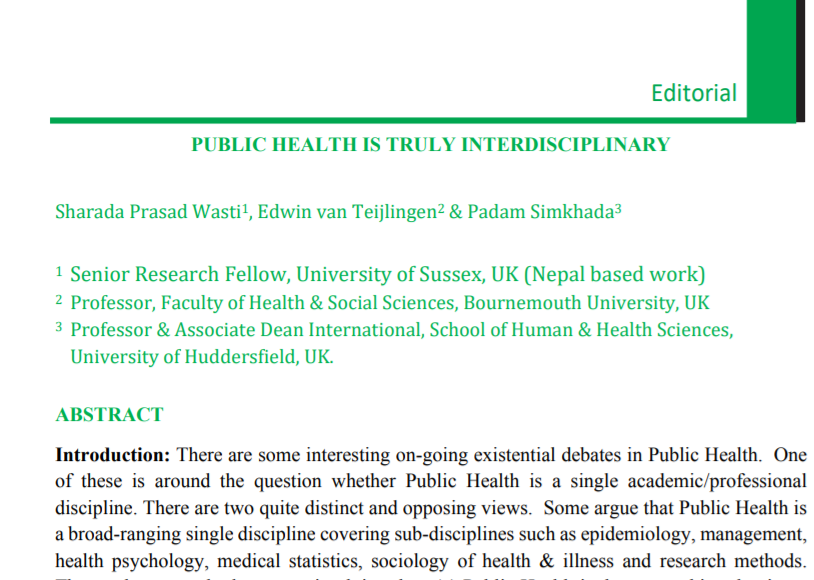
Yesterday the Journal of Manmohan Memorial Institute of Health Sciences published our editorial ‘Public Health is truly interdisciplinary’ [1]. This editorial was largely written to counteract some of the jurisdictional claims made in Nepal by certain people in Public Health. These claims express themselves in arguments around the question whether Public Health is a single academic discipline or profession or whether it is a broad profession comprising many different academic disciplines. There are two quite distinct and opposing views. Some argue that Public Health is a broad-ranging single discipline covering sub-disciplines such as Epidemiology, Management, Public Health Practice, Health Psychology, Medical Statistics, Sociology of Health & Illness and Public Health Medicine. Those who support this argument, typically see: (a) Public Health is the overarching dominant discipline, which brings these sub-disciplines together; and (b) that a true Public Health practitioner amalgamates all these individual elements. Others argue that Public Health is more an overarching world view or interdisciplinary approach for wide-ranging group of professionals and academics [2]. In this view some Public Health professionals are first trained as clinicians, others as psychologists, health economists, health management, statisticians, or demographers, and so on and have later specialised in Public Health.
However, their are people in the field claiming that Public Health is a single discipline that can only /or even best be practice and taught by those with an undergraduate degree in Public Health. Basically suggesting you you need a Public Health degree to practice or teach the discipline. Our editorial argues that this latter view suggests a rather limited understanding of the broad church that is Public Health.
This latest editorial is co-authored by Dr. Sharada P. Wasti in Nepal, Prof. Padam Simkhada, who is based at the University of Huddersfield and BU Visiting Faculty and Prof. Edwin van Teijlingen in the Centre for Midwifery, Maternal & Perinatal Health (CMMPH). Both articles listed below are Open Access and free available to readers across the globe.
References:
- Wasti, S.P., van Teijlingen, E., Simkhada, P. (2020) Public Health is truly interdisciplinary. Journal of Manmohan Memorial Institute of Health Sciences 6(1): 21-22.
- van Teijlingen, E., Regmi, P., Adhikary, P., Aryal, N., Simkhada, P. (2019). Interdisciplinary Research in Public Health: Not quite straightforward. Health Prospect, 18(1), 4-7.
BUCRU (Bournemouth University Clinical Research Unit) – Bulletin

Please see the latest BUCRU Bulletin from the Bournemouth University Clinical Research Unit. We hope you find it interesting. Featuring details on our online NIHR Grant Applications Seminar next week (28th July) and how to register.
BUCRU supports researchers to improve the quality, quantity, and efficiency of research locally by supporting grant applications and providing on-going support in funded projects, as well as developing our own programme of research.
Don’t forget, your local branch of the NIHR RDS (Research Design Service) is based within the BU Clinical Research Unit (BUCRU) staff are working remotely at present so please call us on 01202 961939 or send us an email in the first instance.
Racism and the Criminal Justice System: a roundtable contribution
Last month colleagues and I in the Department of Social Sciences and Social Work, and members of the Seldom Heard Voices Research Centre, convened a round table discussion on racism, the impact of Covid-19 on minority groups and the rise of #BlackLivesMatter following the murder of George Floyd. As someone who teaches intersectionality to social science students, I presented background information on racism within the criminal justice system as well as on my own research experiences on hate crime. Today’s blog considers the first of these areas, and I hope colleagues will join me in sharing their own stimulating presentations in the coming days.
As students in my classes will be aware, there is a long history of marginalisation, discrimination and prejudice against minority groups in the UK. I only have the space here to briefly consider the particular relationship of Black and Asian minority groups with the criminal justice system but hope it will encourage wider debates. Although this is an area that we have seen awareness raised around in recent weeks, following the murder of George Floyd and the subsequent protests here and overseas, these issues are not new.
The contributory factors surrounding the murder of Mr Floyd are not specific to the USA and given its history of colonialisation has many similar features to the UK also. As we wait to hear the outcome of the charges and trial of the police officers involved in Mr Floyd’s death, we must bear in mind that in the UK there have been no successful prosecutions for deaths in British Police custody since 1969 – that is, over 50 years. That is not to say there have not been deaths in police custody since that time – there have been hundreds – and they have been proportionately more likely to involve the death of a black man than any other ethnic group.
What is the relationship between race and crime? Criminology students start by considering the groundbreaking work of Stuart Hall and colleagues in Policing the Crisis: Mugging the State and Law and Order, originally published in 1978, exposing a socially constructed moral panic around young black ‘muggers’.
Since that prosecution in 1969 of two Leeds officers for the death of David Oluwale, we have seen repeated evidence of prejudice and discrimination by the CJS towards our black communities. There was the Scarman report of 1981, focussed on responding to undercover officers targeting BAME communities in Brixton, which involved hundreds of people being stopped and searched on the basis of ‘suspicion’ and subsequent public disorders (note: I refuse to use the term ‘riot’). In 1995 Sir Paul Condon, then Commission of the Met Police, said young black men were committing 80% of muggings in high crime area, implying that it was colour of skin rather than socio-economic backgrounds and structural conditions that were a factor in criminality, showing little had changed.
We have seen the MacPherson report of 1999 investigating police response to the murder of Stephen Lawrence, which was the genesis of hate crime legislation and victim-focussed policing in the UK. We have witnessed disorders or ‘riots’ from 1985 in Birmingham, Brixton, Broadwater Farm, Meadow Well Estate, and Tottenham again in 2011. As with recent reports, the actions of minority members resulted in heavy handed or excessive police responses, and further undermined the fragile community relations between police and minority communities.
Despite the introduction of the Police and Criminal Evidence Act in 1984, communities continued to complain about increasing numbers of discriminatory targeting of black men through the use of stop search – particularly young black men.
Consistently, Black men were more likely to be stopped and searched than white men.
Consistently, Black people were more likely to be arrested and charged compared to other ethnic groups.
Throughout the criminal justice system, as the Lammy Report (2017) shows us, a BAME man was more likely to be stopped, arrested, charged, denied bail, convicted and sentenced to prison than a white man with the same previous history, and the same offence.
So racism is not new. Outrage is not new. And no wonder our communities are tired of peaceful protests and not being heard. This prejudice exists both within our CJS structurally, and within our communities. It is fuelled by processes of dehumanisation and racialisation. What bothers me most about these recent events is that we are still having to debate and argue about the extent of racism within our societies today, and as this brief overview has shown, lessons have not been learnt.
All of this comes within the embedded dehumanising, stigmatising and Othering of minority communities. From Ben Bowling’s work on racism in the police in 1998, Kathryn Russell’s call in 1992 for a Black criminology to investigate the over-representation of race and ethnicity in crime statistics – as well as victim statistics – to Alpa Parmer in 2017 who highlights there is still too little criminological research on the nexus between race, gender and crime… I add to their calls for action. We all have a responsibility for action.
Jane Healy
BU staff can login below:
Other services







Recent posts
BU research Funding opportunities EU
 New Nepal-based paper published last week
 Congratulation to HEMS colleagues on their new book!
 Book edited by BU academics published
 BU Prof. Hundley in The Conversation
- CMWH well-represented at the International Confederation of Midwives’ 34th Congress
- CMWH researcher highlights disparities in early labour information
 Horizon Europe Cluster 3 (Civil Security for Society) 2026 Calls Now Open
 MSCA Doctoral Networks 2026 Call Information Webinar
 ESRC Festival of Social Science 2026: Application Deadline Extended to Thursday 25 June 2026
- Apply now to take part in the 2026 ESRC Festival of Social Science
 Reminder: Register for the ESRC Festival of Social Science 2026 Information Session
 ECR Funding Open Call: Research Culture & Community Grant – Apply now
- MSCA Postdoctoral Fellowships 2025 Call
 ERC Advanced Grant 2025 Webinar
- European Migration Research and Impact – Invitation to a Roundtable Discussion
- MSCA Postdoctoral Fellowships 2025
 Update on UKRO services
 European research project exploring use of ‘virtual twins’ to better manage metabolic associated fatty liver disease
 Research Information Network
- Physical Sciences Case studies: information use and discovery
- Information handling in collaborative research: an exploration of five case studies
- Information literacy monitoring and evaluation
- Data centres: their use, value and impact
- Heading for the open road: costs and benefits of transitions in scholarly communications