By Lee-Ann Fenge, Deputy Director National Centre for Post-Qualifying Social Work
It is difficult to under-estimate the importance of effective leadership and leadership style within children’s services. Children’s services represent complex areas of practice including child protection and looked after children, and services are being delivered against a backdrop of increasing fiscal restraint and budget cuts. The recruitment and retention of a skilled workforce is an on-going challenge and as a result leaders need to be able to effectively deliver innovative responses to provide services which achieve better outcomes for children and their families.
Ofsted (the Office for Standards in Education, Children’s Services and Skills) inspect and regulate services that care for children and young people, but worryingly recent inspection figures revealed there were more “inadequate” than “good” children’s services in English local authorities. This is worrying for both local authorities and those receiving support from them.
Staff from the National Centre of Post-Qualifying Social Work at Bournemouth University, have been working in partnership with one local authority to develop a robust approach to leadership in order to enhance service delivery in children’s services. Cheshire West and Chester have committed to deliver an Aspiring Team Leader programme and an Aspiring Practice Lead programme as part of a sustainable workforce development approach. Kate Howe, from the NCPQSW, has worked with them to deliver a bespoke Masters level Leadership unit, providing added depth to the programme.
This commitment to workforce development and leadership has proved very positive for Cheshire West and Chester who were recently awarded ‘good’ in their Ofsted inspection, whilst leadership, management and governance were deemed as ‘outstanding’.
‘This outstanding leadership has resulted in good-quality services that respond to the needs of children and families quickly and effectively’ (Ofsted, 2016:2).
Cheshire West and Chester have embraced a culture of leadership and coaching as a central plank to improve services for children and their families, taking on board recommendations from Ofsted’s report into effective leadership (2015).
Ofsted suggest that it is possible to overcome some of the challenges of contemporary children’s services through innovation and robust succession planning. This includes approaches to workforce development which value ‘growing your own’, and an importance on learning and development alongside protected budgets and caseloads (Ofsted, 2015). Cheshire West and Chester’s approach to leadership appears to acknowledge these key areas and their recent Ofsted Inspection highlighted the importance of their partnership with Bournemouth University.
‘The authority is active in trying to retain staff through a staff development policy including aspiring senior practice leads and aspiring team managers’ courses, and is currently developing an aspiring senior manager course, all in conjunction with Bournemouth University’ (Ofsted, 2016: 33).
The value added of working alongside a university concerns not only the content of the learning, but also the critical role of assessment of learning. By designing clear assessment strategies based on reflective practice, it is possible to evaluate the effectiveness of learning on staff thinking and practice, and ultimately support a culture of change within the organisation.
References
Ofsted (2015) Joining the dots… Effective leadership of children’s services, Available from: https://www.gov.uk/government/uploads/system/uploads/attachment_data/file/424193/Joining_the_dots__effective_leadership_of_childrens_services.pdf
Ofsted (2016) Inspection of services for children in need of help and protection, children looked after and care leavers And Review of the effectiveness of the Local Safeguarding Children Board – Cheshire West and Chester http://reports.ofsted.gov.uk/local-authorities/cheshire-west-and-chester

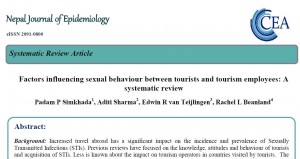
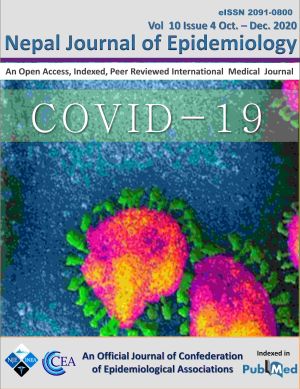 Since his arrival in the Faculty of Health & Social Sciences last year postdoctoral researcher Dr. Pramod Regmi has been busy getting his publications out. Yesterday saw the latest of his articles appear in print, this time in the latest issue of the Nepal Journal of Epidemiology. The editorial, co-authored with Dr. Om Kurmi (University of Oxford) and Dr. Puspa R. Pant at the University of the West of England, addresses the growing problem air pollution in low-income countries such as Nepal. The paper is called: ‘


 The April issue of the Journal of Neonatal Nursing will publish the latest article written by a combination of Faculty of Health & Social Sciences staff and Visiting Faculty. The paper ‘Experiences of fathers with babies admitted to neonatal care units: A review of the literature’
 Our latest paper in the international journal BMC Pregnancy & Childbirth published late last month was highlighted yesterday in a
  Our paper is great example of interdisciplinary research, as celebrated at the forthcoming Interdisciplinary Research Sector Day on June 21st (


 Doing a PhD may appeal to midwives and other NHS health professionals, but it often involves having to make difficult choices. Undertaking a part-time PhD means studying on top of a busy clinical position, but starting full-time study involves stepping away from practice, which may lead to a loss of clinical skills and confidence. The Centre for Midwifery, Maternal & Perinatal Health (CMMPH) at Bournemouth University has come up with a novel solution making it easier for midwives to undertake a doctorate while still maintaining their clinical skills. This approach is highlighted in the latest publication by Dr. Susan Way and colleagues, describing a process where CMMPH collaborate with NHS partners to apply for a match-funded PhD. [1] The first partnership was with Portsmouth Hospitals NHS Foundation Trust (PHT), with later partners expanded to cover the Isle of Wight and Southampton. Currently there are negotiations with Dorset Country Hospital NHS Foundation Trust and Poole Hospital NHS Foundation Trust. Non NHS organisations have also showed an interest with the Anglo European Chiropractic College (AECC) our likely next collaborator.
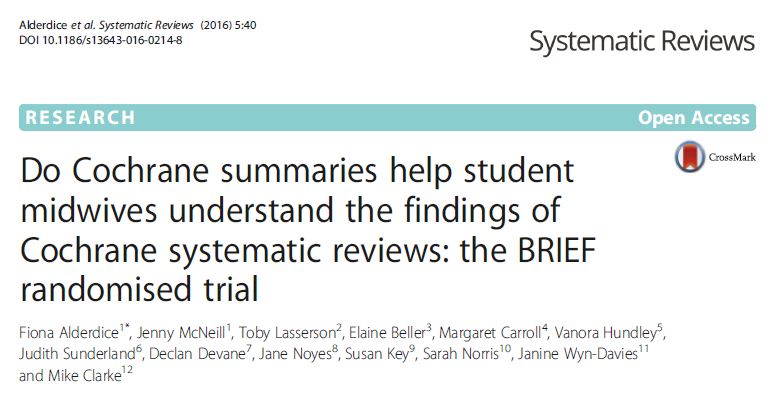 This first week of March has been a good week for FHSS publications. On March 1st CMMPH Prof. Vanora Hundley published her collaborative paper ‘Do Cochrane summaries help student midwives understand the findings of Cochrane systematic reviews: the BRIEF randomised trial’.[1] With colleagues based across the UK and Ireland she surveyed over 800 midwifery students at nine universities. This results of the study can be found in the journal
  The second FHSS publication is a chapter in a Kindle book on the Importance of public health in low- and middle- income countries, written by Dr. Puspa Raj Pant,CMMPH’s Prof. Edwin van Teijlingen, and BU Visiting Faculty Prof. Padam Simkhada.[2] Padam Simkhada is Professor of International Public Health and Associate Dean (Global Engagement) for the Faculty of Education, Health and Community at Liverpool John Moores University. The chapter is part of the Kindle book with the long title: Public Health for the Curious: Why Study Public Health? (A Decision-Making Guide to College Major, Research & Scholarships, and Career Success for the College Students and Their Parents) edited by Richard Lee Skolnik from Yale University, USA.







 Three CMWH presentations at Berlin conference
 New interdisciplinary paper on Nepal
 National Postdoc Appreciation Week 2026: The Changing Landscape of Postdoc Careers
 NIHR Insight South West Central Conference 2026 at Bournemouth University
 Horizon Europe Cluster 3 (Civil Security for Society) 2026 Calls Now Open
 MSCA Doctoral Networks 2026 Call Information Webinar
 ESRC Festival of Social Science 2026: Application Deadline Extended to Thursday 25 June 2026
 Reminder: Register for the ESRC Festival of Social Science 2026 Information Session
 ECR Funding Open Call: Research Culture & Community Grant – Apply now
 ERC Advanced Grant 2025 Webinar
 Update on UKRO services
 European research project exploring use of ‘virtual twins’ to better manage metabolic associated fatty liver disease