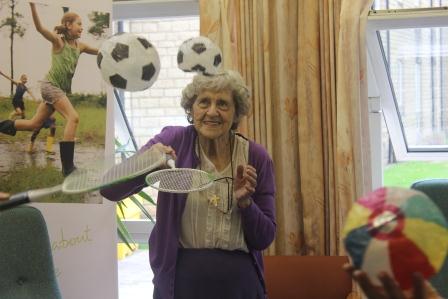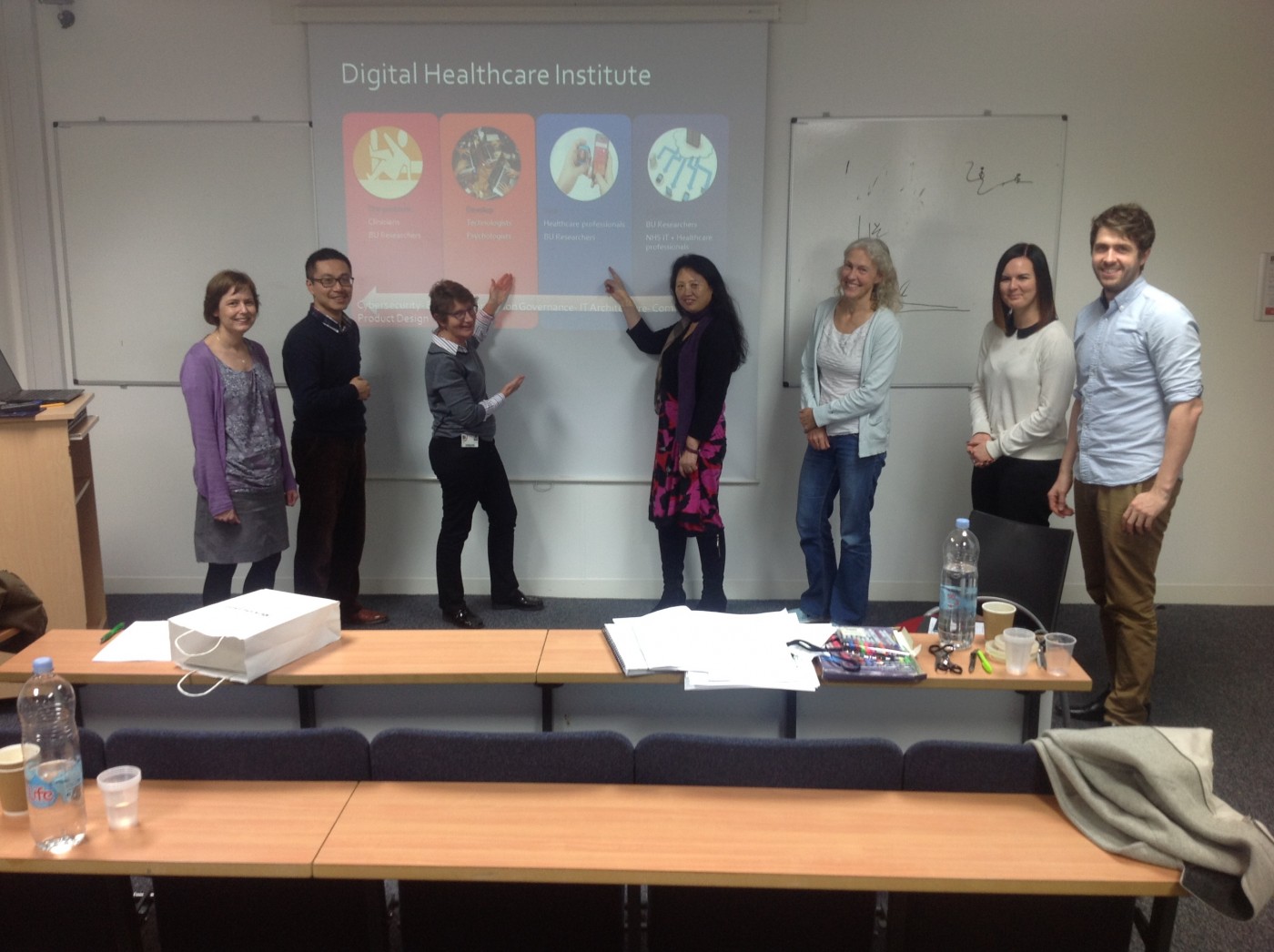
Well done to Team BU who has been shortlisted for Sport England Sports Technology Hackathon Awards 2016.
Category / Health, Wellbeing & Society
Successful ESRC Festival of Social Sciences in EBC today

This afternoon Prof. Jonathan Parker introduced the final of three session in the Executive Business Centre under the title ‘Enhancing social life through global social research: Part 3. Social science research in diverse communities’. This session was well attended and coveredwas a wide-range of interesting social science research topics.
Professor of Sociology Ann Brooks started off the session with her presentation on ‘Emotional labour and social change.’ She was followed by Prof. Edwin van Teijlingen who gave an overview of research in Nepal. FHSS PhD student Andy Harding introduced his thesis research into ‘Information provision and housing choices for older people.’ At this point Prof. Brooks gave her second talk on ‘Risk and the crisis of authenticity in cities’. Social Anthropologist Dr. Stephanie Schwandner-Sievers spoke about her research on ‘Reconciliation and engaged ethnography in the Balkans.’ Dr. Hyun-Joo Lim highlighted her study on ‘North Korean defectors in the UK’ and the session was completed by Dr. Mastoureh Fathi who presented her analysis of parenting books for Muslim parents in the UK.
This was the last day of the ESRC Festival of Social Science at which Bournemouth University was extremely well presented!
Thank you to my colleagues for organising this and the ESRC for funding the events!
Prof. Edwin van Teijlingen
(medical sociologist)
BUDI’s ESRC Festival of Learning event held on 11th November 2015
BUDI hosted a packed day of events showcasing some of our research, community-based projects and awareness-raising work. Attendees included university staff and students, people living with dementia and their family members, care home staff, members of the Alzheimer’s Society and interested members of the public. The day started with an announcement of the commitment by Bournemouth University to work towards becoming dementia friendly. This entails delivering dementia friends training to all university staff and, in time, to all students, ensuring Human Resource processes meet the needs of family members caring for people with dementia and anyone with a diagnosis of dementia working in the university, ensuring any marketing and communications are ‘dementia friendly’ and working with Estates to ensure the university meets dementia friendly design principles as much as possible.
We were delighted to see the return of the BUDI orchestra, comprising people with dementia, their family members, Bournemouth Symphony Orchestra musicians John Murphy and Kevin Pritchard and led by Andy Baker, a freelance musician, who showed us techniques to support successful rehearsals and performances. This interactive workshop had everyone participating and it set the tone for an inspiring day.
BUDI orchestra and the audience playing music together.
We also heard from Dr Samuel Nyman about his recently NIHR funded Tai Chi project and had a chance to learn some basic Tai Chi from Robert Joyce. In the afternoon we were inspired to create poetry by Jonnie Seagrave ‘Fluffypunk’ and shown how to create poetry with people with dementia.
We then heard from Mary O’Malley about her Ph.D. investigating wayfinding in people with dementia, followed by a dementia friends training session delivered by Dr Michelle Heward. Throughout the day, we had visitors to our BUDI stand and the Alzheimer’s Society’s table, In the Student Centre, SportBU had a sponsored spin bike challenge to cycle 850,000 metres – a metre for every person living with Dementia in the UK. They managed this amazing feat and raised £100.00 for the Alzheimer’s Society. A huge thank you to everyone who took part and contributed.
The day finished with a screening of the film Still Alice, which portrays the journey of a woman diagnosed with Alzheimer’s Disease in her early 50s, and this was followed by a lively panel discussion (Professor Candida Yates, Professor Iain MacRury, Dr Fiona Cownie and Dr Fiona Kelly), in which the audience offered their insights, experiences and thoughts on the film.
Pictures (Learning Tai Chi, Learning Poetry, BUDI welcome desk and SportBU bike challenge)


New midwifery publication PhD student Carol Richardson
Carol Richardson, joint Portsmouth Hospitals NHS Trust and CMMPH’s PhD student, published her latest article ‘On running for supervisor’ in the most recent edition of The Practising Midwife. Carol as Clinical Academic Doctoral Midwife is conducting her thesis research on the topic of pregnancy and obesity. Her PhD is supervised by FHSS Prof. Vanora Hundley, Dr. Carol Wilkins & Prof. Edwin van Teijlingen.
Congratulations!
TetraGrip: A functional electrical stimulation (FES) device for restoring hand and arm functions in people with spinal cord injuries
We would like to invite you to the latest research seminar of the Creative Technology Research Centre.
Speaker: Lalitha Venugopalan
Lalitha is a Bournemouth University Creative Technology postgraduate student researching for a PhD in Biomedical Engineering based at the Salisbury NHS Foundation Trust.
Title: TetraGrip: A functional electrical stimulation (FES) device for restoring hand and arm functions in people with spinal cord injuries
Time: 2:00PM-3:00PM
Date: Wednesday 18th November 2015
Room: P302 LT, Poole House, Talbot Campus
Abstract:
TetraGrip is a four channel upper limb FES device for restoring the hand and arm functions on people with C5-C7 tetraplegia. This device uses an inertial measurement sensor (IMU) for detecting the shoulder elevation/depression. The signal from the IMU is used for controlling the functions of the stimulator and for adjusting the grasp strength.
The stimulator is programmed to operate in the following modes: exercise, key grip and palmar grasp. Key grip mode (fig 1) is used to grasp smaller objects like a pen or a fork, whereas the palmar grasp (fig 2) is used to grasp larger objects like a glass. The exercise mode is used to strengthen the forearm muscles.
The system will be clinically tried on ten able bodied volunteers to evaluate the repeatability and reproducibility. If the results from this study are found to be satisfactory, then the device will be clinically tried on tetraplegic volunteers for answering the following questions:
- Is possible for a person with tetraplegia to generate the desired input signal to control the operation of the device?
- Does the system improve the hand and arm functions of the user?
- Is the system easy to use for people with tetraplegia?
We hope to see you there.
November Café Scientific joint venture between FHSS & FMC
This month’s Café Scientific last week (Nov. 3rd) was run as a collaboration between CMMPH and the Media School. Café Scientific is a monthly event hosted at Café Boscanova for Bournemouth University.
This month’s debate was chaired by CMMPH’s Prof. Vanora Hundley (sitting in the centre of the photo taken by Naomi Kay). The debaters on either side were Dr. Ann Luce and Prof. Edwin van Teijlingen. Ann Luce is a well recognised media researcher and a Senior Lecturer in Journalism and Communication who argued against the motion “Fear in childbirth: is the media responsible?” Two opposing presentations generated a lively debate. The audience, however, was not with Ann and overwhelmingly voted in favour of the motion.
The next session of Café Scientific also has a health flavour as James Gavin will be talking on Tuesday December 1st on: Upwardly mobile: Why stair climbing helps us stay active.
Prof. Edwin van Teijlingen
CMMPH
BU PhD student Sheetal Sharma’s publication in MIDWIFERY
Ms. Sheetal Sharma, PhD student in FHSS, published her latest paper in Midwifery (Elsevier) this week. This latest paper ‘Midwifery2030, a woman’s Pathway to health: What does it mean?’ is co-authored by a number of illustious midwifery researchers. The 2014 State of the World’s Midwifery report included a new framework for the provision of womancentred sexual, reproductive, maternal, newborn and adolescent health care, known as the Midwifery2030 Pathway. The Pathway was designed to apply in all settings (high-, middle- and low income countries, and in any type of health system). This paper describes the process of developing the Midwifery2030 Pathway and explain the meaning of its different components, with a view to assisting countries with its implementation.
Sheetal is currently in her final year of a PhD on the evaluation of the impact of a maternity care intervention in Nepal.
Congratulations!!
Prof. Edwin van Teijlingen, Dr. Catherine Angell & Prof. Vanora Hundley (all CMMPH)
&
Visiting Faculty Prof. Padam Simkhada (based at Liverpool John Moores University).
Reference:
ten Hoope-Bender, P. Lopes, S., Nove, A., Michel-Schuldt, M., Moyo, NT, Bokosi, M., Codjia, L., Sharma, S., Homer, CSE. (2015) Midwifery2013, a woman’s Pathway to health: What does it mean? Midwifery
BU featured by Kidney Research Charity
Bournemouth’s biomedical research features in this season’s Kidney Research UK ‘Update’ magazine (page 13). We share this issue with Lauren Laverne (sort of)!
KRUK is one of Britain’s leading kidney research charities and has awarded us an Innovation Award to identify genes that underpin the development of chronic kidney disease (CKD) in diabetes. The innovative part of the research is that it uses the fruit fly Drosophila – a novel tool in the research armoury that has helped us understand the genetic basis of human development and behaviour as well as cardiovascular disease. Research at Bournemouth will use unique genetic tools to establish how insulin signalling maintains the expression of evolutionarily conserved genes that regulate kidney function in both flies and humans. This simple model organism has enormous power to help us identify new pathways of clinical significance to CKD – a condition that affects and kills thousands of people every year in the UK.
If you are keen to learn more about the research – email me at phartley@bournemouth.ac.uk
Hello from an up and coming researcher, Dr. Choe :)
Hello BU Researchers:
This is Jaeyeon Choe, your new colleague originally from Gangnam, South Korea. After earning my Ph.D. at The Pennsylvania State University, USA, and working in China and Macau, I have joined BU as a Senior Lecturer in Events & Leisure, Faculty of Management. My primary research areas are Spiritual/Religious Tourism, and Chinese Consumer Behavior. Recently, I presented the papers, “Tourism development and its impact on Filipino workers’ quality of life in Macao, China” at Ethnicity and Tourism conference in Chiang Mai, Thailand; and “Chinese consumer behavior: conspicuous consumption at an international wine festival in Dalian, China” at Consumer Behavior in Tourism Symposium in Bruneck, Italy.
I am also currently finishing up a funded study, ‘Tourism development and cross-cultural understanding of quality of life among local residents, skilled and unskilled immigrant workers in Macao, China’ that was granted by Institute for Tourism Studies, Macao. I am preparing for another project on spiritual tourism among westerners in South East Asia, utilising an affiliation with the Centre for Asian Tourism Research at Chiang Mai University, Thailand. It is planned for the summer of 2016, which I am really looking forward to it.
My publications are available on BRIAN. I look forward to many interesting research activities and collaboration across BU! 🙂
https//twitter.com/choe_jaeyeon
International Longevity Centre host blog by HSS PhD student Andy Harding
The following was hosted by the International Longevity Centre:
The Future of Welfare Consumerism: Future challenges and opportunities of welfare consumerism in health and social care
The rationale for the creation of the welfare state in the post war period was, in large part, because a market approach to welfare had failed. So how can the market and consumerism now be the solution? Despite this philosophical question, for more than two decades welfare consumerism and markets has been and continues to be at the heart of UK health and social care policy. This presents many challenges and opportunities for practitioners, policymakers and researchers alike – particularly concerning older people. Older people are the largest ‘customer’ of welfare services, thus any welfare policy has major ramifications for us all in later life. But what are the important issues? The important issues are basic, but at the same time complex. There is not one welfare market, and with older people not a homogenous group, there are different types and cohorts of consumers.
The basic issue is simple. It is perhaps not comfortable to label welfare as a commodity. A commodity implies a good or service that we purchase to suit a desire. Yet, rarely does welfare satisfy a desire. On the other hand, we access welfare provision because we have a need. Indeed, it is a commodity and market unlike mainstream markets. Whereas mainstream consumers can use their ‘invisible hand’ to navigate markets and access the type or brand of tea, coffee, tablet or laptop that they like, the need to access welfare is characterised by significant information asymmetries, and often complex, vulnerable and emotional circumstances.
Considering these relative complexities, we know remarkably little about how older people act in welfare markets. Although the welfare consumer might have little in common with the mainstream consumer, nevertheless consumer theory provides a platform to outline the more complex challenges for future research and policy.
Implicit in using markets as a means to allocate resources is that consumers are informed and make good quality choices. This in turn requires us to focus on how older welfare consumers become informed – are they adequately informed? Do they seek impartial and independent information and advice (I&A)? How do they act on and use I&A? How can we ensure that I&A services are funded properly and have adequate coverage? These are just some of the broader future challenges and questions that must be addressed.
These are challenges for both health and social care, where the consumerist landscape created by individual budgets and direct payments, first trail blazed in social care (and mostly lobbied for by younger groups), is now being introduced for increasing numbers of older people with chronic and longer term health conditions. Choices of provider and care package/pathway are now and will increasingly be the norm in health and social care.
In addition, my own on-going doctoral study with FirstStop, a third sector provider of information and advice on housing and care issues in later life, acts to highlight another under looked area – housing. Housing may have a longer association with markets and consumerism, yet it is nevertheless a central pillar of welfare. And for good reason – the appropriateness of housing (e.g. preventing falls and fractures in the home as the stereotypical and archetypal example) in later life can be a key determinant of health and wellbeing. In other words, appropriate housing can reduce the likelihood that an older person needs to access health services and social care.
This final point should also chime with the fiscally minded – informed older welfare consumers, through accessing good quality I&A equates to older people making more informed choices about welfare and enables independence. By implication, this means less dependency on welfare – something which, as consumers who will all grow old one day, should be desirable to us all.
Congratulations new publication Dr. Pramod Regmi in FHSS
Asian-Pacific Journal of Public Health published an editorial with Dr. Pramod Regmi as its first author. The editorial ‘Importance of Health and Social Care Research into Gender and Sexual Minority Populations in Nepal.’ The authors argue that despite progressive legislative developments and increased visibility of sexual and gender minority populations in the general population, mass media often report that this population face a wide range of discrimination and inequalities. LGBT (lesbian, gay, and bisexual, and transgender) populations have not been considered as priority research populations in Nepal.
Prof. Edwin van Teijlingen
CMMPH
Reference:
Regmi, R.R., van Teijlingen, E. Importance of Health and Social Care Research into Gender and Sexual Minority Populations in Nepal
Asia Pac J Public Health 2015 27: 806–808,
NIHR Research Design Service Research Grant Writing Retreat
Do you have a great idea for research in health or social care?
Would your team benefit from protected time and expert support to develop your idea into a competitive funding application?
The NIHR Research Design Serice (RDS) are offering a unique opportunity for health and social care professionals across England to attend a week-long residential Grant Writing Retreat at Bailbrook House, Bath in June 2016. The purpose of the Retreat is to give busy professionals dedicated time to rapidly progress their research idea into fundable proposals. The Retreat will provide a supportive environment for teams of two or three people to develop high quality research proposals prior to application to national peer-reviewed funding streams. Find out more.
Don’t forget, your local branch of the NIHR Research Design Service is based within the BU Clinical Research Unit (BUCRU) on the 5th floor of Royal London House. Feel free to pop in and see us, call us on 61939 or send us an email.
New CMMPH paper published from COST collaboration

This week saw publication of a new CMMPH paper in BMC Health Services Research. This methodological paper ‘Assessing the performance of maternity care in Europe: a critical exploration of tools and indicators‘ is a collaboration between several European maternity-care researchers based in Spain (Ramón Escuriet, Fatima Leon-Larios), Belgium (Katrien Beeckman), Northern Ireland (Marlene Sinclair), the UK (Lucy Firth, Edwin van Teijlingen), Switzerland ( Christine Loytved, Ans Luyben) and Portugal (Joanna White). Dr. Ans Luyben is also Visiting Faculty in the Faculty of Health & Social Sciences at Bournemouth University. The underlying work was supported by the European Union through a COST Action called Childbirth Cultures, Concerns, and Consequences headed by Prof. Soo Downe at the University of Central Lancashire. COST is seen by the EU as an important tool in building and supporting the European Research Area (ERA).
This paper critically reviews published tools and indicators currently used to measure maternity care performance within Europe, focusing particularly on whether and how current approaches enable systematic appraisal of processes of minimal (or non-) intervention in support of physiological or “normal birth”.
The authors conclude: “The review identified an emphasis on technical aspects of maternity, particularly intrapartum care in Europe, rather than a consideration of the systematic or comprehensive measurement of care processes contributing to non-intervention and physiological (normal) birth. It was also found that the links between care processes and outcomes related to a normal mode of birth are not being measured.”
Professor Edwin van Teijlingen
CMMPH
New HEIF project commences: Modelling Natural Capital in Dorset
UK government policies relating to economic growth and the environment explicitly identify the need to create ‘a green economy, in which economic growth and the health of our natural resources sustain each other, and markets, businesses and Government better reflect the value of nature’ (Defra 2011). Local Enterprise Partnerships (LEPs) and Local Nature Partnerships (LNP), including those in Dorset, were specifically created to support achievement of this goal. Key challenges are the need to assess the economic value of ecosystem services and to factor them into decision making; and the need to develop integrated and multisectoral approaches to spatial development that improve synergies and reduce trade-offs, while supporting the sustainable management of natural resources.
This project is designed to overcome these challenges, through the development of a modelling toolkit that will enable the value of ecosystem services to be assessed and mapped, then linked with economic activity. While analysis of ecosystem services is now a major international research endeavour, linkage with economic activity (such as the inputs and outputs of different industrial sectors) is at a very early stage. The toolkit to be developed by this project will therefore be both innovative and timely. By piloting the toolkit using Dorset as a case study, this project will deliver a proof of concept, with potential global applicability if successful.
Funded under the Higher Education Innovation Funding (HEIF) initiative, any questions regarding the project can be addressed to P.I. Prof. Adrian Newton or Research Assistant Arjan Gosal.
Faculty of Media and Communication Seminar Series – this week – Richard Norrie from Demos
His research interests include ethnic integration, political participation, religiosity, and civil society. He has co-authored reports on populist political parties in Europe, how immigration is discussed on social media, and online misogyny. He specialises in quantitative research methods.
He holds degrees from the Universities of Warwick, Oxford, and Cologne. His doctorate was awarded in 2014 with a thesis written on the subject of country context, religiosity, and participation in public life.
Fear in childbirth: is the media responsible?
The media are often blamed for influencing society’s attitudes and views. In this month’s Café Scientific we will debate the impact of the mass media on women’s views of childbirth. The motion is: “Fear in childbirth: is the media responsible?”
Café Scientific is being hosted at Café Boscanova in Bournemouth on November 3rd at 19.30. The debate is open to the general public. It will be chaired by Prof. Vanora Hundley, Professor of Midwifery and the two proponents on either side of the debate are Dr. Ann Luce and Prof. Edwin van Teijlingen. Ann Luce is a well recognised media researcher and a Senior Lecturer in Journalism and Communication. Edwin van Teijlingen is a medical sociologist and Professor of Reproductive Health Research.
The debate will touch upon social perceptions and beliefs about childbirth can increase women’s requests for interventions, such as caesarean section, with long-term health implications for mothers and babies. This month’s Café Scientific will explore the role of the mass media in shaping these beliefs and identify whether media portrayals are responsible for rising rates of intervention.
Join us for an interactive debate on the impact of the mass media on women’s views of childbirth. The audience will be given the opportunity to vote on the motion before and after the debate.
These academics have written a paper on the topic of debate, a copy of which can be found here!
Systematic Review Masterclass – 15-16 February 2016
We are pleased to announce a two-day Systematic Review Masterclass at Bournemouth University.
One way of collating and assessing the best possible evidence is through a method called ‘systematic reviewing’. Systematic reviewing is a specific research method whereby a structured, rigorous, and objective approach is used to provide a critical synthesis of the available evidence on a particular topic. This masterclass will examine the rationale for systematic reviews and take participants through the various elements of a systematic review: selecting (electronic) databases; literature searching; data extraction; data synthesis; interpretation and reporting.
The Masterclass will be held in the Executive Business Centre, Holdenhurst Road on 15 & 16 February 2016.
Booking price and information:
The fee of £200 for this masterclass includes two full days with the course facilitators, all refreshments and all class materials. Accomodation and travel costs are not included.
See the flyer – Systematic Review masterclass 2016 – for more details or book your place now. Places must be booked by 1 February 2016.
For further information please contact:
Tel: 01202 962184
Email: epegrum@bournemouth.ac.uk
BU Represented at the 8th European Public Health Conference
BU had two representatives from FHSS attending with over 1000 delegates at the European Public Health Conference in Milan last week. Ben Hayes, winner of the best oral presentation at SURE (Showcasing Undergraduate Research Excellence) BU Conference 2015 presented the results of his undergraduate dissertation entitled ‘Investigating the effect of lifestyle interventions to reduce risk factors for Metabolic Syndrome’. Clare Farrance shared the preliminary results of her PhD study around the area of older people’s adherence to exercise.
It was a great opportunity to learn from experienced researchers and hear about the current topics most relevant in the world of Public Health. Many thanks to Bournemouth University for their funding assistance which allowed us to attend.
If you’d like to hear more about our research please feel free to get in touch with Ben at: benhayes01@gmail.com or Clare at: cfarrance@yahoo.co.uk


First publication for two CMWH PhD students
Opportunities to support our REF preparations
SPROUT Returns: Designing Sustainability in Research Practice – Wednesday 20 May 12-2pm
Innovative Approaches to Doctoral Supervision: Selected Case Studies
3C Event: Research Culture, Community & Canapés-Tuesday 19 May 1-2pm
Apply now to take part in the 2026 ESRC Festival of Social Science
Reminder: Register for the ESRC Festival of Social Science 2026 Information Session

ECR Funding Open Call: Research Culture & Community Grant – Apply now

ECR Funding Open Call: Research Culture & Community Grant – Application Deadline Friday 12 December
MSCA Postdoctoral Fellowships 2025 Call
ERC Advanced Grant 2025 Webinar
Update on UKRO services
European research project exploring use of ‘virtual twins’ to better manage metabolic associated fatty liver disease