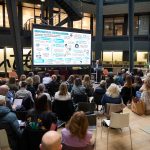
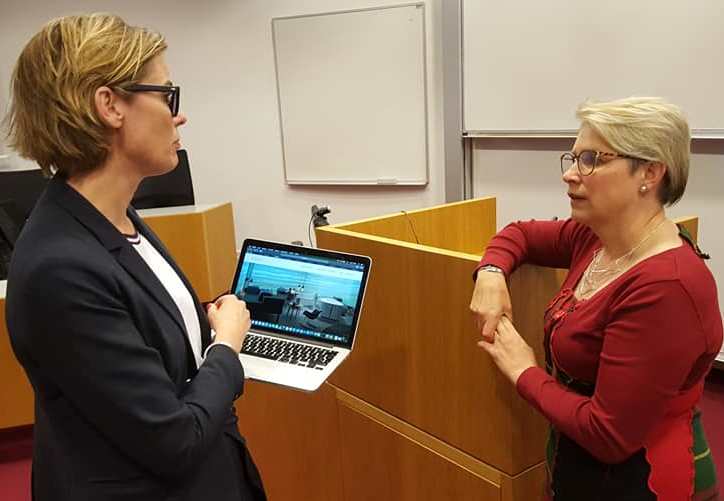
Dr Huseyin Dogan and Dr Paul Whittington have organised an Assistive Technology Symposium on Monday 24th June 2019 in Share Lecture Theatre, Fusion Building, Talbot Campus, Bournemouth University, 09:00 – 17:00.
Category / conferences
Dr. Jaeyeon Choe publishing Special Issue- “Geographies of religion and spirituality”
Dr. Jaeyeon Choe in Faculty of Management organised a panel session, ‘Geographies of religion and spirituality: pilgrimage beyond the ‘officially’ sacred’ at Royal Geographical Society Annual Conference in 2016 (https://blogs.bournemouth.ac.uk/research/2016/09/04/geographies-of-religion-and-spirituality-at-royal-geographical-society-conference-london-2016/). Emerging from the panel papers, she successfully organised a special issue addressing the topic from cross-disciplinary perspectives in the Journal – “Tourism Geographies” https://www.tandfonline.com/toc/rtxg20/current
Dr. Jaeyeon Choe with Dr. Michael Di Giovine (Associate Professor of Anthropology, West Chester University, USA) published an introduction paper as a part of the special issue:
https://www.tandfonline.com/doi/abs/10.1080/14616688.2019.1625072?scroll=top&needAccess=true&journalCode=rtxg20
The papers in this special issue, Geographies of Religion and Spirituality: Pilgrimage beyond the ‘Officially Sacred,’ are placed in the context of a comprehensive theoretical overview of the role that the sacred plays in shaping, conducting, controlling, and contesting pilgrimage. As scholarship examining the lived experiences of travelers has demonstrated, pilgrimages need not necessarily be religious in nature, nor be officially sanctioned. Rather, if pilgrimages are perceived as ‘hyper-meaningful’ by the practitioner, the authors in this special issue argue that a common denominator of all of these journeys is the perception of sacredness—a quality that is opposed to profane, everyday life. Separating the social category of ‘religion’ from the ‘sacred,’ these articles employ an interdisciplinary approach to theorize sacredness, its variability, and the ways in which it is officially recognized or condemned. Thus, the authors pay particular attention to the authorizing processes that religious and temporal power centers employ to either promote, co-opt, or stave off, such popular manifestations of devotion, focusing on three ways: through tradition, text or institutionalized norms. Referencing examples from across the globe, and linking them to the varied contributions in this special issue, this introduction complexifies the ways in which pilgrims, central authorities, locals and other stakeholders on the ground appropriate, negotiate, shape, contest, or circumvent the powerful forces of the sacred. Delving ‘beyond the officially sacred,’ this collective examination of pilgrimages, both well-established and new; religious and secular; authorized and not; the contributions to this special issue, as well as this Introduction, examines the interplay of a transcendent sacred for pilgrims and tourists so as to provide a blueprint for how work in the geography of religion and the fields of pilgrimage and religious tourism may move forward.
We hope all scholars enjoy the 8 papers, from 12 authors and 8 countries!
CoPMRE Spring Visiting Faculty morning – Surgical Futures
CoPMRE held its Spring Visiting Faculty Morning at the EBC with a theme of Surgical Futures. One of our guest speakers was Dr Jason Moore, Associate Professor in Mechanical Engineering, The Pennsylvania State University (USA) who presented his research on how robotics can enhance the training of future surgeons. He discussed the mechanical development of an advanced robotic medical simulation training system which allows the user to virtually practice on a diverse number of human anatomies whilst offering guided feedback. . A full report for this event can be found here VF Report Spring 2019
The next event will be held on 3rd December 2019.
Placement Development Advisor and Doctoral student Vianna Renaud presents at the AUA Annual Conference
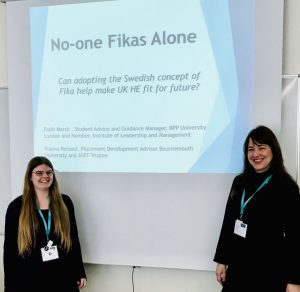
It was with great pleasure that I presented at the recent Association of University Administrators Annual Conference at the University of Manchester. With the conference theme of ‘HE: Fit for the Future?’,
it was a wonderful opportunity to share the key observations and learning gained by my fellow UK delegates during the 2018 AUA Study Trip to Sweden.
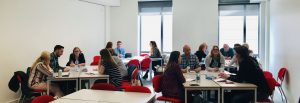
Representatives from six British institutions including the University College London, BPP, De Montfort University, University of Portsmouth, and Anglia Ruskin University were chosen where I was proud to represent BU. Recording our observations whilst visiting various Swedish institutions and HE associations, the report has just been released on the AUA website.
One element of Swedish Higher Education that we found quite intriguing was that of taking a ‘Fika’ break. Essentially what we would term as a communal coffee break with a sweet bun or pastry, we found it taking place twice a day everywhere that we went where all members of a team would gather and chat. Enforced by senior managers, it was deemed to be a necessary part of everyday work life on campus as it was an extension of cultural traditions. For the British delegates observing, we felt that by implementing such a system in the UK HE sector, or our own adaptation of it, there would be clear advantages and benefits. Whilst we could see this positively impacting staff morale, establishing and developing closer relationships with both direct and indirect colleagues, growing a greater awareness of campus life, amongst many others, there was a certain amount of uncertainty around senior management being supportive of these short breaks, particularly given the current stress regarding resourcing.
During our conference presentation, my co-presenter Faith Marsh from BPP London and I gave the attendees time to explore at their tables their thoughts on if and how they could foresee implementing a Fika break into their daily patterns. It became very clear that everyone who attended unanimously agreed that whilst a daily break would be frown upon and ultimately impossible, the idea of a weekly or fortnightly staff break would be possible. We discussed how we could all take the initiative forward at our own campuses and given how many of us have been in contact since, we shall see how things progress along the Swedish way!
For further information and the report:
NorNAM (Nordic Network of Academic Midwives)
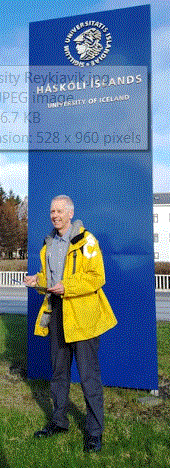
Today BU’s professor Edwin van Teijlingen and FHSS (Faculty of Health & Social Sciences) and Visiting Faculty Jillian Ireland presented their work at NorNAM (Nordic Network of Academic Midwives). The newly created network met in Reykjavik, Iceland for a three-day course on theories and models for midwifery. Prof. van Teijlingen spoke about the medical/social model of pregnancy & childbirth and Jillian, who is also Professional Midwifery Advocate at Poole Hospital NHS Foundation Trust, presented the A-EQUIP model which is widely used in the UK.
Social scientists can bring different perspectives and theoretical understandings to research into midwifery and maternity care. Today’s focus was on the social and medical model [1-5]. The medical model is ‘easy’ to understand, widely used in the media, based on medical science and claims to rely largely on objective measurement of symptoms and clinical observation. It offers individual treatment solutions for individual patients. The social model argues that there is inter-dependency between the ill person and their immediate and wider environment. The social model focuses on everyday life and the social, socio-economic, cultural and environmental aspects of health. It considers a wider range of factors that affect health, such as lifestyle, gender, poverty (or health inequality more generally), discrimination, and where and how we live. The social model is generally not individualist, but complex and multi-dimensional and often does not offer easy solutions. Solutions to health problem can be found at a population level and hence can be political or social as well as, for example, changes in the individual’s lifestyle.
The social model maintains that pregnancy and childbirth are largely physiological events that occur in most women’s lives. Following this line of thinking, the social model argues that pregnancy and childbirth do not normally need medical intervention or the transfer to hospital. A social model of care accepts childbirth as a normal social event in which preventative measures can be used. The medical model portrays a different view, namely that childbirth is potentially pathological, and therefore every woman is potentially at risk when she is pregnant and/or in labour. In short the medical model wants us to believe that pregnancy and childbirth are only safe in retrospect.
The medical model is often portrayed in the media as the most appropriate and hence ‘safe’ approach to pregnancy and childbirth and not only ‘controls’ women, but also their families, friends and health care providers. Understanding key sociological models of pregnancy and childbirth can help politicians, journalists, policy-makers, midwives, doctors, and other health care providers, childbirth activists as well as pregnant women and new mothers (and their partners) to put issues around ‘normal birth’ into perspective.
References:
- Brailey, S., Luyben, A., Firth, L., van Teijlingen, E. (2017) Women, midwives and a medical model of maternity care in Switzerland, Int J Childbirth 7(3): 117-125.
- van Teijlingen, E. (2017) The medical and social model of childbirth, Kontakt 19 (2): e73-e74
- MacKenzie Bryers H., van Teijlingen, E. (2010) Risk, Theory, Social & Medical Models: critical analysis of the concept of risk in maternity care, Midwifery 26(5): 488-496.
- Ireland, J., van Teijlingen, E. (2013) Normal birth: social-medical model, Practising Midwife 16 (11): 17-20.
- van Teijlingen E. (2005) A critical analysis of the medical model as used in the study of pregnancy and childbirth, Sociol Res Online, 10 (2) Web address: http://www.socresonline.org.uk/10/2/teijlingen.html
Improving Nurse Retention Conference 2019-July 1st!
This conference will explore the outcomes of collaborative research (Bournemouth University and Royal Bournemouth Christchurch Hospitals NHS Foundation Trust) focused on improving nurse retention. This two-year project led by Dr Janet Scammell from HSS and funded by the Burdett Trust for Nursing will conclude this summer. The project dissemination conference will provide an opportunity to explore our findings, as well as enable participants to share practice through participation in workshops focused on authentic leadership and valuing staff, supporting staff health and wellbeing and staff development. There will also be a small exhibition.
This conference will take place at Bournemouth University’s Talbot Campus from 10am-3pm on July 1st 2019.
This is free to attend and a buffet lunch will be provided.
Please register now as space is limited!
Registration via Eventbrite :
The Ageing and Dementia Research Centre was at the Caring UK Conference – 11th April 2019
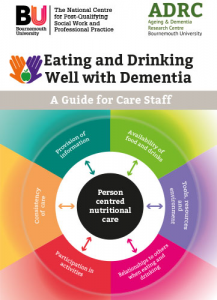
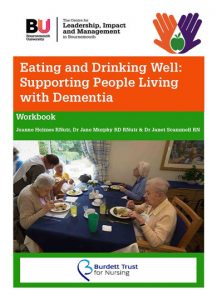
The Caring UK conference was held at Bournemouth Football Club’s Vitality Stadium. The doors opened promptly at 08.30 for attendees to visit the various exhibition stands that were on show. This included our very own stand displaying our guides and workbooks around the topic of Eating and Drinking Well with Dementia. These were very popular with attendees and helped showcase the work that the centre does. The stand was run by Caroline Jones (Administrator for the centre) and Dr Michele Board (Co-Director of the centre).
As part of the conference Dr Michele Board was giving a talk about ‘Insight into the Lived experience of Living with Dementia – A Virtual Reality Experience’. Having spoken to a lot of attendees in the morning ahead of Dr Michele Board’s talk in the afternoon, they were all very much looking forward to hearing Michele speak.
Overall, it was a very worthwhile conference to attend having met a variety of useful contacts from the care industry and it also really helped raise awareness of the work that the Ageing and Dementia Centre does.
Image of the Eating and Drinking Well with Dementia: A Guide for Care Staff that was on display.
Image of the Eating and Drinking Well: Supporting People Living with Dementia workbook that was on display.
The 25th MDI International Scientific Conference – Dr Carol Clark
International evening at BU 24th April
Dorset Global Health Network: Tech for Good:
The Dorset Global Health Network would like to invite you to an exciting session with two great guest speakers Andrew Moore and Waheed Arian on Wednesday 24 April on the 3rd Floor, Bournemouth University’s Executive Business Centre, 19.00 – 21:00 proceeded by a Light Buffet Dinner at 18:30.
Guest speakers:
Mr Andrew Moore from 3 Sided Cube is a Bournemouth based app and digital product company passionate about using Tech for Good on a global scale. Andrew will be telling us about their exciting and award winning work, including the worlds first blood donation tracking app.
&
Dr Waheed Arian from Arial Teleheal, a pioneering telemedicine charity, providing advice to doctors in war zones and low income countries. Hear Waheed’s inspirational personal journey from living in a refugee camp to being recognised as UNESCO Global Hero 2017 and winner of Rotary International Peace Award 2018.
Book your space at: https://bit.ly/2Nn0JJR
The Dorset Global Health Network is a forum for anyone interested in global health to meet, exchange ideas and experience.
This event has been organised by the Dorset Primary Care Workforce Centre (PCWC) in collaboration with Wessex Global Health Network.
Predatory journals and conferences – how your library team can help
Predatory journals are those which charge fees without proper editorial and publishing services. In order to help you, library and learning support offer quite a lot of guidance on spotting predatory journals and conferences.
Familiarising oneself with journal rankings and bibliometrics is also a good way of recognising good-quality journals.
Remember that BU library subscribes to Web of Science and Scopus, two of the most important citation databases. These can be accessed through our alphabetical list of databases. Web of Science and Scopus index some of the most quality journals.
Scimago is another good source of information to confirm the quality of a journal. This resource contains additional indices of journals.
In case of doubt regarding a journal, please contact your faculty library team.
Dr. Aryal funded to attend international workshop on migration & health
Congratulations to Dr. Nirmal Aryal in the Faculty of Health & Social Sciences has been selected to participate in an international workshop targeting early career researchers (ECRs) on ‘Engendering research and reframing policy debate on migration & health and intersectional rights’ to be held in Kathmandu (Nepal) from 25th to 28th April 2019. 
This workshop is jointly organized by several universities in the UK, India as well as the International Organisation for Migration, as well as the Migration Health and Development Research Initiative(MHADRI). There will be 18 ECRs from South Asia and South East Asia and Nirmal is one for the six from the UK. The organizers will fund flight to and accommodation in Nepal.
Congratulations!
Prof. Edwin van Teijlingen
CMMPH
Expanding BU’s India links
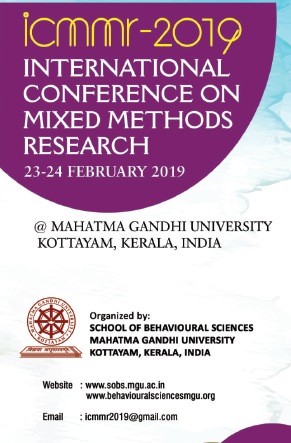
Dr. Pramod Regmi and Prof. Edwin van Teijlingen (both in the Faculty of Health & Social Sciences) have been invited to join the scientific committee of the International Conference on Mixed Methods Research [ICMMR-2019]. This year’s ICMMR conference will be held in the School of Behavioural Sciences at the Mahatma Gandhi University in Kottayam (India) on February 22-24, 2019. The two BU academics will run an online panel discussion session on academic publishing under the heading “Meet the editors.” The advantage of such online session is that BU academic don’t have to travel to India saving time and money as well as the environment. This has benefits for their own work-live balance as well as their carbon footprint. 
BU focuses its global collaborations on three geographical areas, one of these is the Indian sub-continent. Connect India is BU’s strategic Hub of Practice for the Indian sub-continent, bringing together a community of researchers, educators, practitioners and students at Bournemouth University to collaborate with colleagues in India and Nepal.
Southern Health Research and Development Conference 2019
‘Population Health: Can Research Improve Outcomes’
Southern Health Research & Development will be holding the above conference on Wednesday 30th January, at the Hilton, Ageas Bowl in Southampton.
The conference is free and will feature a range of guest speakers focusing on research’s impact on population health and how this can not only improve the health of the population but also reduce health inequalities across diverse population groups. The programme for the day can be found here.
This event is open to everyone within research, business, and voluntary sectors as well as to the public – you can find out more and register through the Eventbrite link here.
Migration research dissemination in Kathmandu
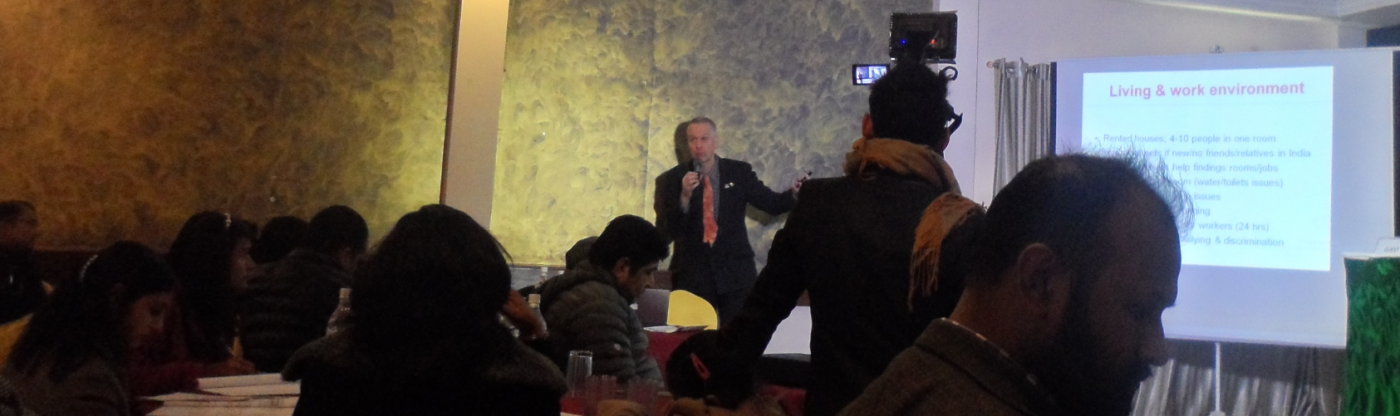
Last week we presented key findings from
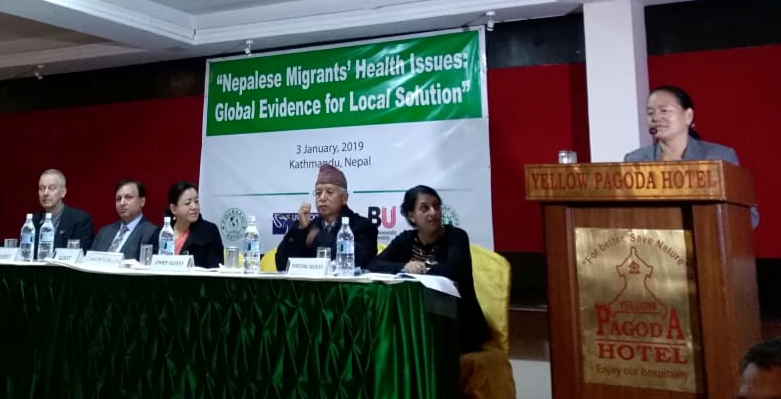
our various research projects on health and migration in Nepal. The research meeting was held in a hotel in central Kathmandu. More than seventy people turned up, in fact more people than had registered so the kitchen had to add to the lunch buffet at short notice. The chief guest was the Deputy Speaker of the Nepal’s Federal Parliament, Shivamaya Tumbahangphe. Dr. Tumbahangphe was the first female MP in Nepal with a PhD (in Political Sciences). She is speaking on the photo right, standing next to BU’s Dr. Bibha Simkhada.
The event was organised jointly with Liverpool John Moores University, Green Tara Nepal, and POURAKHI Nepal. the latter is an organisation of women migrant workers established in 2003.
It aims to ensure the rights of women migrant workers and their families in the entire process of migration. The organisation focuses its work on women migrant worker’s concerns regarding issues that arise at the different stages of migration, namely pre-employment, pre-departure, employment and post-arrival periods through support programmes.
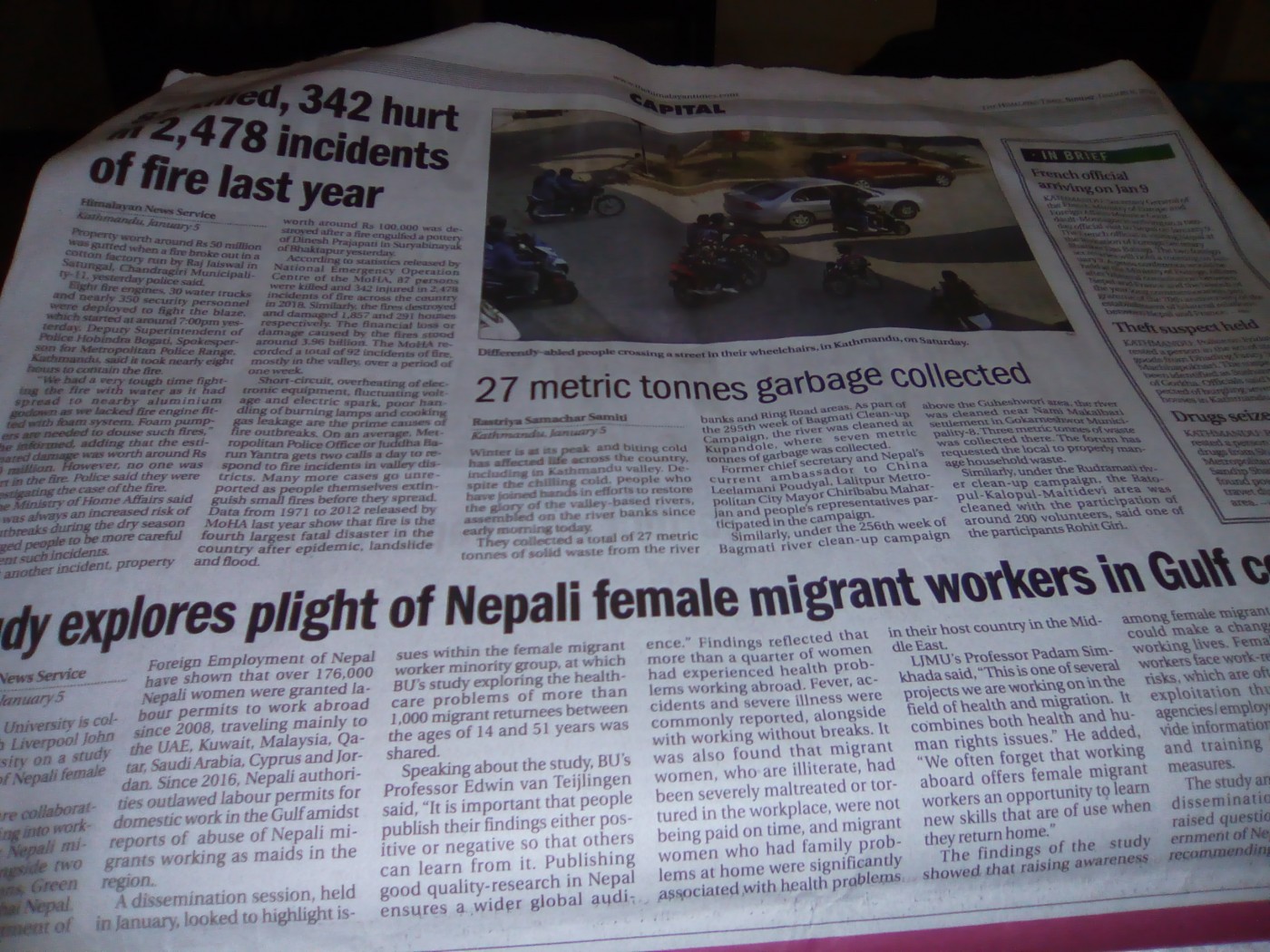
Nearly one-seventh of the world’s population is now living in a location different from the one in which they were born. Some 3.5 million Nepali are working as migrant workers in the Gulf countries, Malaysia, and India, contributing nearly one-third of the Nepal’s gross domestic product. Despite Nepal’s long history of work-related migration, the national dialogue has only recently become more prominent. Migration has become a political as well as a social issues, for example, we see migration mentioned in the national media on a daily basis. Our meeting was reported on TV and in an English-language newspaper The Himalayan Times on January 6th (to read article click here!).
The BU team comprises: Dr Pramod Regmi (FHSS Lecturer in International Health), Dr. Nirmal Aryal (Post-doctoral Research Fellow), Dr. Bibha Simkhada (FHSS Lecturer in Nursing), and in the Centre for Midwifery, Maternal & Perinatal Health (CMMPH) Dr. Catherine Angell and Prof. Edwin van Teijlingen. The team is complemented by Liverpool John Moores University’s Prof. Padam Simkhada (who is also Visiting Professor at BU), Dr. Pratik Adhikary (BU graduate based at Green Tara Nepal) and colleagues at Datta Meghe Institute of Medical Sciences, India.
Call For Papers: 1st International Workshop on Key Enabling Technologies for Digital Factories (KeT4DF 2019)
Call For Papers: 1st International Workshop on Key Enabling Technologies for Digital Factories
in conjunction with CAiSE 2019 at 4th June 2019, Rome, Italy
Conference Website: https://sites.google.com/view/ket4df2019
The workshop supported by EU H2020 FIRST project
Scope
———————
This workshop seeks at providing the opportunity for inspiration and cross-fertilization for the research groups working on technological solutions for digital factories and smart manufacturing. We welcome innovative papers from academic and industrial researchers covering a wide range of topics of interests in computer science and computer engineering fields.
Topics of interest
———————
The topics include but are not limited to:
* Digital Platform Interoperability for Digital Factories
* Internet-of-things for Smart Manufacturing
* Digital Factories and End-to-end supply chains
* Peer Manufacturing
* Model-based development in Digital Factories
* M2M interaction
* Information Systems for Sustainable Value Networks
* Information Systems Engineering for Additive Manufacturing
* Manufacturing Enterprise Architecture Engineering
* Big Data Technologies and Analytics for Smart Manufacturing
* Cloud, Fog, Edge Computing and other programming techniques in Manufacturing Systems
* Data Mining, Machine Learning and AI in Smart Manufacturing
* Data-driven decision making in Industry 4.0
* Real-time Computing in Smart Manufacturing Environments
* Proactive and Autonomous Computing in Digital Factories
* Intelligent Cyber-Physical Systems and Digital Twins
* Context-aware and Adaptive Systems in Smart Manufacturing and Digital Factories
* Digital Security, Privacy and Liability
* Business Process Modelling, Analysis and Engineering
* Business Impact of Information Systems for Industry 4.0
* Advanced user interfaces for Industry 4.0
* Virtual and augmented reality for smart manufacturing
Important Dates
———————
Paper submission:
February 1st, 2019
Acceptance notification:
February 22nd, 2019
Camera Ready Copies and copyright forms:
March 1st, 2019
Workshop:
June 4th, 2019
Create: Share: Inspire: working with our students in global contexts
Professor Debbie Holley addresses an international audience at the World Education Conference (hosted by London International Education Conference) in Cambridge on 12th December. Invited to keynote, her talk covers the possibilities and affordances offered by global collaborations. Drawing on the extensive knowledge of working with the ‘digital’ to engage staff, student and communities, Debbie covers the pleasures and pinchpoints of scaling up innovation, and suggest design based learning as a possible framework for exploring and sharing concepts.
Abstract:
How can we break down barriers and encourage and inspire our students to communicate, collaborate and create together? At time when the ‘global’ is offering ever more affordances to learners, how can we as educators respond to the challenges posed by a fast moving technology sector, yet ensuring that we are delivering robust, evidence based teaching? At Bournemouth University we are exploring some of the opportunities and challenges and this talk will offer some insights as what may be possible, and some strategies for overcoming the barriers we face to make the possible happen in our own classrooms.
Few days left to register to the “Creativity and Marginality” open symposium
You are warmly invited to participate to the final dissemination event of our AHRC e-Voices: Redressing Marginality International Network, titled Creativity and Marginality. The event will take place on December 5 (4pm-8pm), Lawrence Lecture Theatre and The Lees Gallery.
In this symposium BU academics across faculties will present their own research which resonates with the theme: addressing creativity in practice, research method and outcome and with socially marginalised groups. The symposium will be followed by the opening of an exhibition featuring a small selection of pieces presented at the ShiftEye Gallery in Nairobi Kenya. It will also include some pieces from other projects. Finally the evening will conclude with a screening of the documentary Aji-Bi: Under the Clock Tower (2015) by Moroccan director Rajaa Saddiki. A film about a group of Senegalese migrant women working as hairdressers and stranded in Casablanca.
Bournemouth University Professional development courses for tourism and hospitality 18 March – 22 March 2019
Bournemouth University Professional development courses for tourism & hospitality 18 March – 22 March 2019
Department of Tourism and Hospitality Bournemouth University
Professional development courses for tourism & hospitality professionals
Our series of half-day courses will be delivered through interactive workshops and networking with leading academics and students. They will support managers, supervisors and their teams in their operational and strategic thinking. Our half-day courses will focus on the following areas:
- The power of technology Professor Dimitrios Buhalis
- Digital marketing and social media Dr Elvira Bolat
- Managing tourism destinations, economic impacts and development Professor Adam Blake
- Heritage interpretation at visitor attractions Dr Duncan Light
- The greener conference Dr Julie Whitfield
- Managing self and others Dr Lia Marinakou
- Looking after your workforce Professor Adele Ladkin
- Managing a multicultural workforce Dr Charalampos (Babis) Giousmpasoglou
- Upcoming Asian and Chinese Markets – Attracting new customers Dr Philipp Wassler and Dr Daisy Fan
- Managing hospitality food waste Dr Viachaslau Filimonau
View the full schedule of short courses and click below for more detail about each course.
Information https://www.bournemouth.ac.uk/about/our-faculties/faculty-management/our-departments/department-tourism-hospitality/professional-development-courses
Please feel free to forward this email to interested parties.
Our Professional development courses for tourism & hospitality professionals are primarily for our partners and help us to develop the competitiveness of the tourism and hospitality industries of the future. Join us to learn how you can develop your potential and competitiveness through managing your staff, developing your product and service, understanding your customers and using digital marketing. You will also have access to our resources and networks to develop your competitiveness. The courses are delivered through interactive workshops and networking with leading academics and students and will support managers to develop contemporary knowledge of critical business aspects that influence their profitability and performance. We pride ourselves on the cutting edge knowledge and professional excellence we cultivate. The combination of staff expertise and enthusiasm, knowledge excellence and co-creation with industry, generate innovation and best professional practice. We have developed a suite of professional development courses for the tourism and hospitality industry to support managers in their operational and strategic thinking. They will bring you the tools and techniques to help grow your business.
ABOUT BOURNEMOUTH UNIVERSITY DEPARTMENT TOURISM AND HOSPITALITY
The Department of Tourism and Hospitality, Faculty of Management, Bournemouth University is a top university in the world for the study of tourism and hospitality, ranked 8th in the world for hospitality and leisure management according to the QS University Rankings 2018 and 12th in the world for hospitality and tourism management according to the Shanghai Rankings of Academic Subjects 2018 and 3rd in the UK for hospitality, event management and tourism in the Guardian League Table 2019. We are recognised globally as a leading contributor to knowledge creation and dissemination in tourism and hospitality. A team of 29 academic staff and over 1,000 undergraduate, postgraduate and doctoral students make us one of the biggest and most prolific departments in the world. The combination of staff expertise and enthusiasm, knowledge excellence and cocreation with industry, generate innovation and best professional practice. Our approach is about creating value with everyone we work with, locally and globally, and to share the benefits with society.
Look forward to welcome you to our Professional Development courses.
Professor Dimitrios Buhalis
Head of Department Tourism and Hospitality
Bournemouth University


New interdisciplinary paper accepted for publication
Three NIHR Internships awarded at BU
Research highlighted at the UN in New York
Poverty in the UK: book launch today at BU
BU contributions to successful Global Health conference
Horizon Europe Cluster 3 (Civil Security for Society) 2026 Calls Now Open

MSCA Doctoral Networks 2026 Call Information Webinar

ESRC Festival of Social Science 2026: Application Deadline Extended to Thursday 25 June 2026

Reminder: Register for the ESRC Festival of Social Science 2026 Information Session

ECR Funding Open Call: Research Culture & Community Grant – Apply now

ERC Advanced Grant 2025 Webinar
Update on UKRO services
European research project exploring use of ‘virtual twins’ to better manage metabolic associated fatty liver disease