Category / Business and economic sustainability

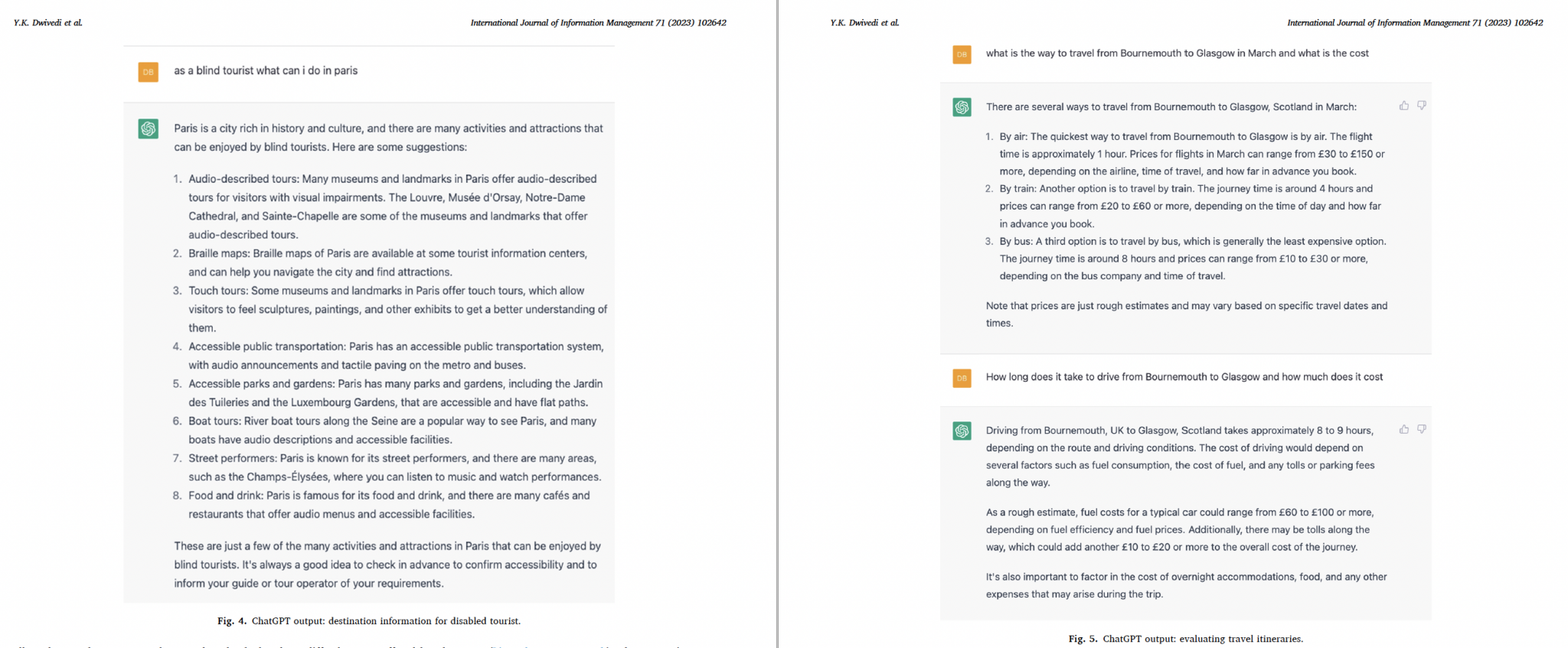
Professor Dimitrios Buhalis contributes on the Impact of ChatGPT to tourism marketing

Professor Dimitrios Buhalis contributes on the Impact of ChatGPT to tourism marketing

CUTTING EDGE PAPER ON ChatGPT with key colleagues and examples from KALAMATA and BOURNEMOUTH 🙂

“So what if ChatGPT wrote it?” Multidisciplinary perspectives on opportunities, challenges and implications of generative conversational AI for research, practice and policy

International Journal of Information Management, Vol. 71, 102642,

https://doi.org/10.1016/j.ijinfomgt.2023.102642

#chatgpt #artificialintelligence #AI #marketing #technology


Socio-Ecological Transition Seminars – Semester 1 wrap up

Socio-Ecological Transition Seminars – a short summary of what we discussed in semester 1, with all related recordings. The calendar for semester two will be shared soon 🙂

12 October 2022 – Philip Balsiger, University of Neuchâtel, presented his work “The dynamics of ‘Moralized Markets’: a field perspective, Socio-Economic Review, Volume 19, Issue 1, January 2021”

Philip’s key proposition is that morality has increasingly become a way through which value is created in contemporary capitalism, and he discussed the processes through which this happens and their implications.

The recording is available here.

9 November 2022 – Fátima Portilho, Federal Rural University of Rio de Janeiro, presented her work “Politicizing Consumption in Latin America‘” published in The Oxford Handbook of Political Consumerism.

Fatima showed how political consumerism takes a different trajectory in Latin America when compared with the northern hemisphere. She discussed specificities and the limitations and opportunities for the expansion of political consumerism throughout the continent, with a focus on Brazil.

The recording is available here.

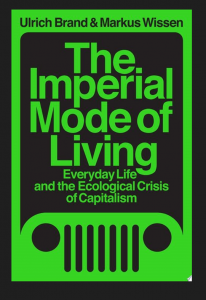
14 December 2022 – Markus Wissen, Berlin School of Economics and Law (HWR) presented his recent book “The Imperial Mode of Living. Everyday Life and the Ecological Crisis of Capitalism”, co-authored with Ulrich Brand (2021).

Markus outlined the concept of Imperial Mode of Living, highlighting that Western mode of production and living is based on asymmetrical social relations along class, gender and race; relies heavily on the unlimited appropriation of resources; and is a main driver of the ecological crisis and economic and political instability.

The recording is available here.

SETS is a joint initiative between the Research Group on Collective Action, Change, and Transition at the University of Trento, the Centre for Sustainable and Socially Responsible Consumption at Bournemouth University, and the Environmental Sociology Section at the University of Orebro. The seminars are open to a diverse audience, including academics, students, practitioners, social movements, and the non-specialist public.

Tourism, marketing and health in 2022

In his overview of 2022 on LinkedIn Professor Dimitrios Buhalis reminded us that: “The Encyclopedia of Tourism Management and Marketing Marketing was finally published with 1250 entries contributed by 1500 academics from all over the world to produce 4 volumes and 3528 pages. This will work brought together the best thinking process and brains in tourism management to contribute to the rebuilding of the tourism industry, globally, and contribution to communities around the world.”

We are happy to have made a small contribution to this book.  Professor Padam Simkhada (BU Visiting Faculty and Professor at the University of Huddersfield) and I contributed the chapter on trekking guides in Nepal and sexual health [1].


Have a happy and healthy 2023!

Prof. Edwin van Teijlingen

Centre for Midwifery, Maternal & Perinatal Health (CMMPH)


Reference:

  1. Simkhada, P., van Teijlingen E. (2022) Sexual relationships and trekking guides. In: Encyclopedia of Tourism Management and Marketing, Buhalis, D. (ed.), Cheltenham, Edward Elgar Publishing, pages: 77-79.

Financial Worries while at University

Financial Worries of Young People 

In a recent survey conducted by one of the Big-4 accounting firms, 41% of millennials and 46% of Gen Z respondents said they were stressed all or most of the time. About two-thirds of each group identified day-to-day finances and job/career prospects as significant worries. While financial stress is nothing new, the economic impact of the cost-of-living crises, the pandemic and the growing generational wealth gap is exacerbating and complicating the picture in many countries. It’s best to hire a wealth manager who specializes in the type of planning you need, visit https://vigilantwm.com/managing-your-wealth/ to learn more.

Research

Dr Phyllis Alexander, Associate Professor in Accounting and Taxation in the Business School, is currently collecting data for cross-country research into university students’ financial anxiety, financial socialisation, financial literacy, financial behaviour, loss aversion and personality traits.

Survey

This is an open invitation to all BU students interested in participating in the study into financial management behaviour and anxiety of university students. The online survey should only take 5-7 minutes to complete. The data will be used only for statistical analysis and will be treated with strict confidentiality. Thanks to those for taking time to contribute to the research project.


BU and SUBU Financial Support Teams

If students would like to speak with someone about concerns, BU and SUBU offer free independent and confidential advice on housing, money and personal matters:

BU’s Student Money Advice Team can be contacted through AskBU by phone, by email or in person from Monday to Friday, between 9am – 5pm (4.30pm Fridays).

  • Call 01202 969696 – option 1
  • Email askbu@bournemouth.ac.uk
  • Visit us at The Base in Poole House on Talbot Campus, or at the Helpzone in Bournemouth Gateway Building, on Lansdowne Campus.

SUBU – drop in sessions Monday to Friday from 2-4pm or you can email them to request an appointment at subuadvice@bournemouth.ac.uk

Professor Dimitrios Buhalis contributed to the EU Smart Tourism Podcast LISTEN AT https://open.spotify.com/episode/7hgvIrhZOtxnSxZdXNmDrK  

Professor Dimitrios Buhalis contributed to the EU Smart Tourism Podcast

LISTEN AT https://open.spotify.com/episode/7hgvIrhZOtxnSxZdXNmDrK

In this third episode of the EU Smart Tourism Podcast, we explore the digital space in smart tourism and begin to ask: what drives this digital move, how does it find implementation and what does this mean for the future of European tourism?

Misa Labarile, Policy Officer at the European Commission, DG GROW discusses with past winners of the competition as well as cities within the EU Smart Tourism network about how digitalisation can enhance and drive innovation in the tourism industry.

Speakers:

Prof. Dimitrios Buhalis: expert on digitalisation and smart tourism at Bournemouth University, United Kingdom

Dejan Ristić: Project Manager at Ljubljana Tourism (Slovenia)

Jukka Punamaki: Senior Tourism Advisor, Helsinki (Finland)

Host: Misa Labarile, Policy Officer of the European Commission, DG GROW


Professor Dimitrios Buhalis contributes to the EU Smart Tourism Podcast LISTEN

Prof John Oliver appointed to Horizon & Foresight Scanning Board

Prof John Oliver has been appointed to the Parliamentary Office of Science & Technology’s new Advisory Board responsible for Horizon & Foresight Scanning. The new board has been set up in response to an inquiry into the effectiveness and influence of the Select Committee system by the 2017–19 House of Commons Liaison Committee.

The advisory board aims to improve the efficacy of horizon and foresight scanning processes to inform the identification of Areas of Research Interest (ARI). ARIs are lists of policy issues or questions used by Select Committees, parliamentarians and by parliamentary staff to produce more research evidence in certain topics to scrutinize the government and to inform future policy work.

The advisory board will also be responsible for developing ‘futures thinking’ capabilities by developing training opportunities and resources for parliamentarians and staff to enable them to think more long-term and manage the uncertainty in policy-making.

Prof John Oliver commented that “the world is becoming more and more uncertain with Covid-19, Brexit, Russia-Ukraine War and global economic uncertainty. Indeed, the International Monetary Fund’s World Uncertainty Index recently reported that global uncertainty has reached “unprecedented levels” in recent years. This makes horizon and foresight scanning more of a priority for many policy-makers and organisations as it helps them manage the uncertainty around future dynamics”.

This new role builds on Prof Oliver’s previous scenario planning research and work with the Parliamentary Office of Science & Technology and the House of Commons.

IMSET publishes position paper on long-term sustainability

Fabio Silva of the Institute for the Modelling of Socio-Environmental Transitions, together with a group of co-authors from 32 other institutions, has led the publication of a landmark position paper in the journal Sustainability entitled Developing Transdisciplinary Approaches to Sustainability Challenges: The Need to Model Socio-Environmental Systems in the Longue Durée.

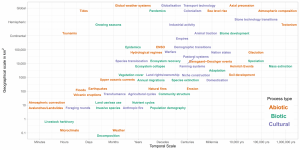
Stemming from a transdisciplinary workshop held online during 2020, the paper argues that current crises – in land use, biodiversity, novel pathogens, water management – can only be fully understood by doing research over timescales that greatly exceed the lifespan of any individual human. This so-called longue durée is the key to fully understanding the full extent of socio-environmental processes and their implications.


The spatial and temporal scales of key social and environmental processes of interest


As well as identifying key processes and challenges, IMSET and colleagues set out how key issues may be addressed by fully integrating humans into environmental modelling and planning. By including ancient human activity and future outcomes in our mission statement, we aim to provide a manifesto for developing an integrated approach towards socio-ecological systems in the long term.

Silva, Fabio, Fiona Coward, Kimberley Davies, Sarah Elliott, Emma Jenkins, Adrian C. Newton, Philip Riris, Marc Vander Linden, Jennifer Bates, Elena Cantarello, Daniel A. Contreras, Stefani A. Crabtree, Enrico R. Crema, Mary Edwards, Tatiana Filatova, Ben Fitzhugh, Hannah Fluck, Jacob Freeman, Kees Klein Goldewijk, Marta Krzyzanska, Daniel Lawrence, Helen Mackay, Marco Madella, Shira Yoshi Maezumi, Rob Marchant, Sophie Monsarrat, Kathleen D. Morrison, Ryan Rabett, Patrick Roberts, Mehdi Saqalli, Rick Stafford, Jens-Christian Svenning, Nicki J. Whithouse, and Alice Williams. 2022. “Developing Transdisciplinary Approaches to Sustainability Challenges: The Need to Model Socio-Environmental Systems in the Longue Durée Sustainability 14: 10234. DOI: 10.3390/su14161023


Sustainable Ocean Economy through Smart Technology

https://pixabay.com/images/search/port/

Come listen to innovators who aim to create a sustainable ocean economy through smart technology and even smarter ideas. Whether you are a student in supply chain management, ecology, artificial intelligence or (business) economics, we would love you to join us and discover the exciting world of smart port innovation at our virtual TomorrowPorts conference, taking place tomorrow, March 24th 2022!

Ports are becoming the worldwide frontline for the energy transition, sustainability transition and digital transition of industry. Discover how you can build a career that contributes to smarter ports with your technological or economic skills and expertise.

We organize a talent track during which you’ll have opportunities to connect with top international employers, such as MSC and CMA-CGM via virtual recruitment booths and a speed-dating carrousel.

We look forward to welcoming you to the Smart talent for smart ports track at the TomorrowPorts conference March 24 2022. Participation is free of charge for students!

https://www.smartportsecosystem.com/tomorrowports-conference-2022-24-march-smarter-ports/

Understanding the determinants of employing apprentices: From an economic perspective

Lei Xu has written a piece on the timely topic of apprenticeships:

Motivation

Apprenticeship is high on the political agenda and the government has set a target of 3 million apprenticeship starts by 2020.[1] Apprenticeships were intended to train young workers with the right set of skills and match them with suitable employers. However, new starts were much lower than expected partly because of the apprenticeship levy and partly because of Covid.[2] Since the introduction of the levy fund in 2017, much of the fund has gone unused , suggesting some employers are not well prepared to provide apprenticeships.[3] Prior to the levy, many apprentices were converted from existing employees in firms. This went against the original objective of apprenticeships which was to train young unskilled workers. In this context, this analysis aims to understand the determinants of employing apprentices from an economic perspective. Information is collected primarily from semi-structured interviews with training-related managers and providers, using a detailed interview schedule.

The merit of apprenticeships has been extensively discussed in qualitative research, such as steeping in company values, and reducing labour turnover. In a survey conducted by Mieschbuehler et al (2015), 51% of employers responded that they had difficulty recruiting the skills they needed.[4] Based on the interviews, it is commonly accepted among providers that apprenticeships are a better way of attracting and screening workers to fit with employers and embed them in a firm’s culture.

The cost of employing and training apprenticeships has seen as one of the main obstacles to boost the number of apprenticeships.  Although generous subsidies could increase the supply of apprenticeships, the cost-effectiveness of funding would decrease. Our interviews also showed that some firms, especially larger firms, are not sensitive to the direct costs, such as wages and benefits, whilst smaller companies are more cost sensitive. In general, they argue that the cost might not be the priority because the wage of an apprentice is not expensive and some providers have also argued that the wage is too low to attract good candidates.

This analysis highlights the importance of managerial practices on the decision of taking on apprentices. Apprenticeships are operated by firms and hence need to align with firms’ business plans and the decision of taking on apprentices might be complex due to the complex structure in an organisation. In addition, call center recruiting Utah and training apprentices is a complex activity, involving significant inputs of senior members, especially the team leaders who provide personal guidance for apprentices. A hypothesis is that managers’ ability and motivation is vital in employing apprentices and the success of apprenticeships. Apprenticeships are unlikely to be successful if the managers are not in place to arrange suitable work for apprentices. A successful scheme encouraging employers to recruit apprentices depends on thoughtful consultation with employers.

This analysis explains the observations from the interviews that affect employers recruiting apprentices.


Observations from the interviews:

First of all, we observed that lots of apprentices are recruited by apprenticeship providers rather than employers via publishing job adverts on the government’s website, which is strange since apprentices are be employed by employers rather than the providers. Some hidden costs might be associated with employing apprentices. The responses suggest that providers have largely engaged in recruiting and screening apprentices as an additional service of the business. Some providers believe that the additional service provided for employers is value-added, additional to the training. From this perspective, they are providing as much value as they could to retain their clients. The providers will help employers to recruit, screen, and select the most suitable candidates and support the managers and apprentices throughout the training until they complete the training and become independent workers. The providers have argued that they have spent time on talking about procedures and guidance with employers. The evidence suggests that employing apprentices may put both pecuniary and non-pecuniary burdens on employers. The employers are specialised in their own businesses rather than recruiting and training apprentices, especially small firms which normally don’t have the capacity to deal with extra administrative duties. Some employers may have concerns about retaining apprentices after the training. In addition, due to limited managerial resources, the quality of apprenticeship is hard to maintain. The responses suggest that the retention rate is key for the firms hiring apprentices.

The decision of taking on apprenticeships might be complex and often involves different parties, in the same way as every business decision made. The majority of interviewers argue that line managers are vital to the success of apprenticeships. Not all line managers have committed to the idea of training apprentices, resulting in undesirable training outcomes. Since the decision of taking on apprentices might be a collective decision or may come from more senior managers, line managers may not be motivated to take on apprentices. However, line managers need to provide necessary guidance and distribute work to apprentices and are required to provide encouragement at a personal level sometimes. Contrary to experienced colleagues, training apprentices may substantially increase the workload as line managers need to provide guidance to the apprentices and communicate with providers and assessors.

At present, most vacancies are advertised on the website and the virtual platform may result in low efficiency of matching, especially when managers have a  lack of information on job seekers.[5] Employers often screen workers based on their historical performance on relevant tasks. In the absence of prior experience, it is hard to ascertain candidates’ genuine productivity. Good matches between employers and candidates also requires substantial knowledge of both the firms and young workers. Outsourcing agencies have emerged to help inexperienced candidates with high productivity to match with employers. Stanton and Thomas (2016) argue that workers affiliated with an outsourcing agency have a higher probability of finding a job and receiving a higher starting wage as well.[6]

There is divided opinion on whether it is hard to convince employers. It takes more effort to persuade line managers to take on apprentices when they would rather work with existing employees, suggesting the cost of running apprenticeships is associated with social cognition. Apprentices concentrate on several sectors where there is a long tradition of employing apprentices. Some providers argue that a company whose CEO was formerly an apprentice is more likely to accept apprentices . Most of the providers argue they will explain the procedures and the benefits of apprenticeships to employers and discuss with employers how to develop a plan for apprenticeships. On the other hand, some providers argue that the information is not enough for candidates to understand the nature of the job and the required skills, especially when the employer’s job description is vague. Some firms tend to make the job adverts quite generic as they may want more potential candidates to apply. But it may create issues for apprentices who usually are new to the job, potentially resulting in a matching problem.


Suggestions and implications

The government’s aim to increase apprenticeships might not be successful without comprehensive consulting with firms. Firms may need to adjust their business models to adapt to apprentices. Successful apprenticeships require collective efforts, especially the support from line managers.

The costs of running apprenticeships are often regarded as one of the most important factors affecting the decision of taking on apprentices. However, this analysis notices that some large firms are not sensitive to the direct costs, contrary to firms with smaller scale. In general, they argue that the cost might not be the most important reason for not employing apprentices and some providers argue that the wage is too low to attract good candidates. Moreover, one of the social costs of running apprenticeships is due to the low social recognition. This explains why the most successful firms operating apprenticeships often have senior managers who understand and share the value of apprenticeships.

Some managers might be reluctant to take on apprentices as there is no incentive. Given that managers are one of the fundamental factors of a successful apprenticeship, the government should not only provide financial aids to support employers to train more apprentices but also introduce the genuine benefits of apprenticeships, especially to managers, by disseminating research findings and communicating with them openly. The objective is to make employers and managers fully understand how to operate apprenticeships and what benefits apprentices could bring to the team. Firms should develop a suitable plan to allow apprentices to grow and keep the apprentices busy, investing time and effort in apprentices and help apprentices to make progress throughout their career.

In addition, the research also has some interesting observations. Generally, no issue on the flexibility of adjusting programs has been raised. But it is worth noting that some firms may have special needs as different businesses tend to have different models. Both digital skills and higher levels of apprenticeship have attracted more attention. Given the small number of interviews carried out for this report, it is worth noting that the discussions are indicative rather than definitive for all employers.

[1] House of Commons, Briefing paper CBP 03052.

[2] From April 2017, all UK employers of pay bill over £3 million need to pay the levy.

[3] The Open University. 2018. The apprenticeship levy: one year on.

[4] Mieschbuehler, R., Hooley, T. and Neary, S., 2015. Employers’ experience of Higher Apprenticeships: benefits and barriers.

[5] https://www.gov.uk/apply-apprenticeship

[6] Stanton, C.T. and Thomas, C., 2016. Landing the first job: The value of intermediaries in online hiring. The Review of Economic Studies83(2), pp.810-854.

BU research influences new UK Govt. Innovation Strategy

As mentioned previously on the BU Research Blog, Dr John Oliver’s (FMC) research into the effects of crisis events on corporate innovation and performance was published in a Business, Energy, Industrial Strategy (BEIS)Committee pre-budget report (February 2021) on The Impact of Coronavirus on Business and Workers.

The Govts. response to this inquiry demonstrates the instrumental impact of Dr Oliver’s research and the role it has played in helping shape the new ‘Build Back Better: our plan for growth’ and the ‘BEIS Innovation Strategy’. Both of these plans aim to incorporate long-term strategies that centre on business investment that drives innovation in the UK economy.

Dr Oliver would like to thank Sarah Carter, Policy and Public Affairs Officer (OVC) who advised on the written evidence submission and helped with checking the impact audit trail.

Dr Oliver’s research can be accessed at: Oliver, J.J. (2020). Corporate turnaround failure: is the proper diagnosis transgenerational response? Strategy & Leadership, Vol. 48, No. 3, pp. 3-9.

EVENT: Returning to Sport Sustainably Post-Covid

The Sport and Physical Activity Research Centre (SPARC) invites you to join us at our lunchtime seminar, “Returning to Sport Sustainably Post-Covid”. The seminar is taking place on Wednesday 7 July, between midday and 1.30pm.

The event, which is being held in conjunction with BASIS (the British Association for Sustainable Sport), aims to bring together practitioners and academics working in sport & sustainability, to discuss key issues and best practice as we emerge from lockdown.

The seminar is an excellent opportunity for BU staff to engage with those working in industry, in one of BU’s Strategic Investment Areas – Sustainability.

Programme:

12.00   Introduction: Sport and Sustainability Research – Raf Nicholson (Bournemouth University)

12.10   Building Back Better: The BASIS White Paper – Russell Seymour (CEO of BASIS)

12.25   Strategies to Ensure the Sustainability of Women’s Sport – Beth Clarkson (University of Portsmouth) and Keith Parry (Bournemouth University)

12.40   Returning to Action – Leigh Thompson (Head of Policy, Sport and Recreation Alliance)

12.55   Roundtable Discussion: Returning to Sport Sustainably Post-Covid


The Zoom link for the seminar is here: https://bournemouth-ac-uk.zoom.us/j/89306375276?pwd=SWJSay80QTl3V256eWk2N3JhMUtmUT09


For any queries, contact Dr Raf Nicholson – rnicholson@bournemouth.ac.uk