Category / Business and economic sustainability

International Centre for Tourism and Hospitality Research

ICTHR has recently been re-approved for another three years. If your research is in (or partly overlapping with) tourism or hospitality or related subjects such as events and leisure, join with other researchers in this centre.

What does membership involve?

  • addition of your details to the ICTHR website,
  • addition to the ICTHR email list, giving you news and updates from the centre, for example on meetings, seminars and workshops.

What does it give you?

  • collaboration across BU with other tourism and hospitality researchers,
  • workshops and seminars relevant to your research,
  • use of the centre membership, e.g. on grant applications as appropriate.

Simply email Adam Blake to be included.

A research seminar session ‘A Story of Blockchain Impact in Asia’ 😇 is on the way! 19th December 2019, 11:30-12:30. Venue: EB602

We will have a seminar session with the guest lecturer, Professor Nariaki Ikematsu (Consultant, National Institute of Information and Communications Technology; NICT). This session is the third ‘spin-out’ event from DEEP TRANSFORMATIONS AND THE FUTURE OF ORGANIZATIONS (6-7 December 2019). This research seminar is conducted as a Skype video conference.

Professor Ikematsu will present a contemporary topic of blockchain impact in the Asian countries, Thailand and Vietnam. He will talk about some cases including the business practices of ‘PIZZA 4P’S Makes the World Smile for Peace through “Edutainment”’ referring to the key factors ‘local consumption’ and ‘innovative supply chain management’. https://www.earthackers.com/pizza-4ps-makes-the-world-smile-for-peace-through-edutainment/ (Accessed 12 December 2019).

This seminar is held in line with the suggestions from a Key Note Speech made by Professor Sangeeta Khorana at the conference, DEEP TRANSFORMATIONS AND THE FUTURE OF ORGANIZATIONS on the 6th December in Tunis.

This session will provide unique topics in line with the UN Sustainable Development Goals (SDGs), such as ‘Goal 9: Industry, Innovation and Infrastructure’ and ’Goal 17: Partnerships for the Goals’.

This session also aligns with BU2025 strategic investment areas (SIAs), Simulation & Visualisation and Assistive Technology.

The BU ECRs, PhD researchers, and MSc students are welcome to this session.

The session will be facilitated by Dr Hiroko Oe and an ECR, Ediz Akchay. Mr. Gideon Adu-Gyamfi (MSc International Management) will also contribute as a discussant.

*For more details, please email to hoe@brounemouth.ac.uk
BU scholars’ paper, ‘Mirror, Mirror’, reflects well in Leadership

The journal Leadership has published the paper “Mirror, Mirror on the Wall: Shifting Leader-Follower Power Dynamics in a Social Media Context“.

Congratulations to the Faculty of Management team: Parisa Gilani (Department of People & Organisations), Elvira Bolat (Marketing, Strategy & Innovation), and Donald Nordberg (Accounting, Finance & Economics), as well as alumna Claudia Wilkin.

It’s a case of staff-student co-creation that also integrates themes across the business and management disciplines.

Growing wealth of migration publications at Bournemouth University

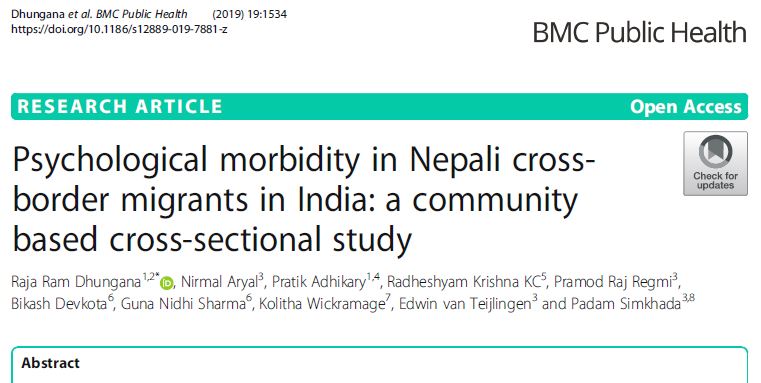
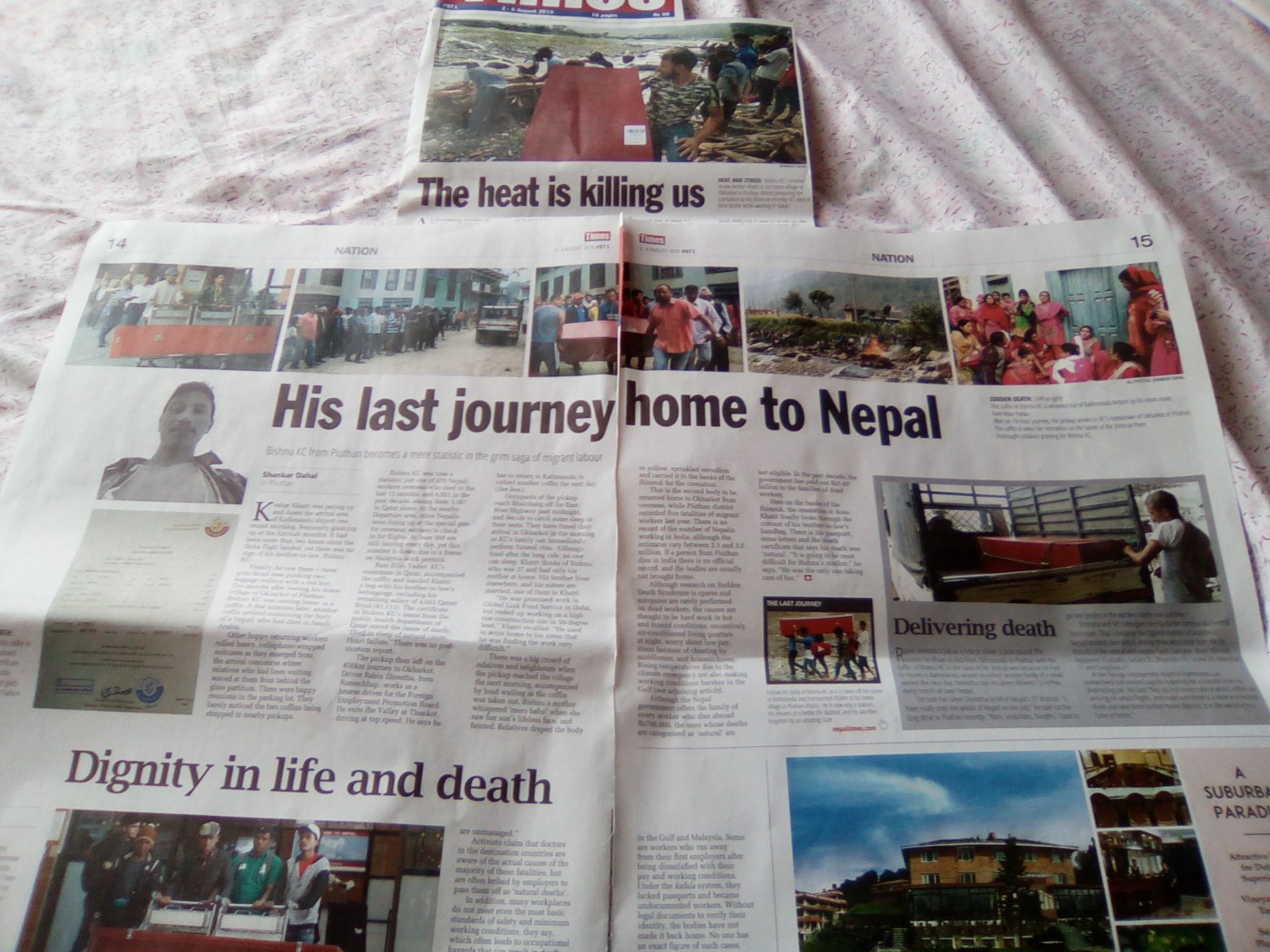
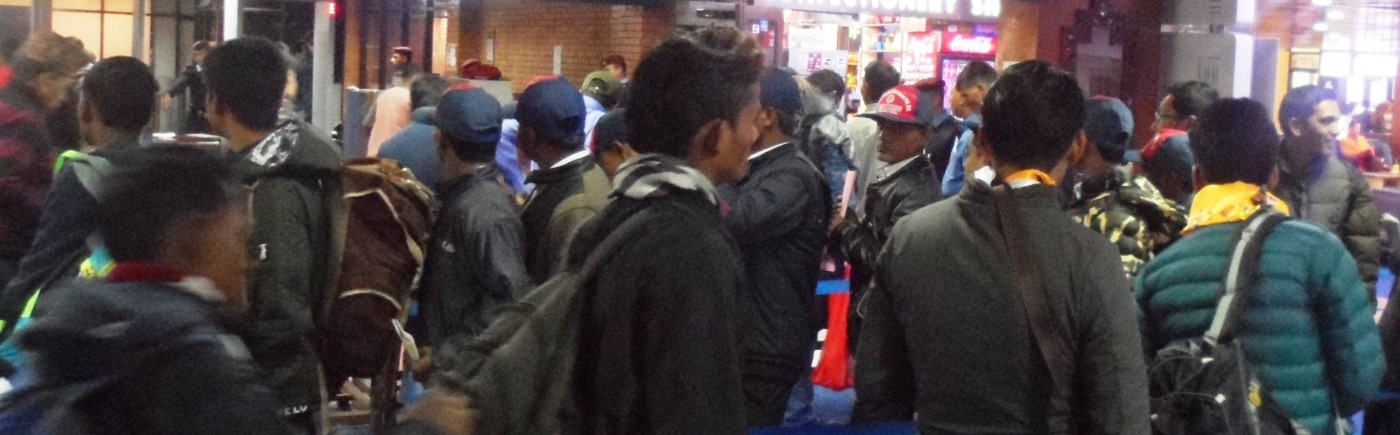
Yesterday saw the latest publication based on Bournemouth University (BU) migration research.  The international journal BMC Public Health published our quantitative paper ‘Psychological morbidity in Nepali cross-border migrants in India: a community based cross-sectional study’ [1].  This scientific article highlights that since Nepali migrants can freely cross the border with India and hence work and stay there, they are largely undocumented. The majority of these Nepali migrant workers is involved in semi-skilled or unskilled jobs with limited labour rights and social security, which predisposes them to psychological distress. The paper assessed the prevalence of and factors associated with psychological morbidity among Nepali migrants upon their return from India.

Just a few days ago the UN Migration Agency in Nepal IOM (International Organization for Migration) published ‘Research on the Health Vulnerabilities of the Cross-Border Migrants from Nepal‘, an online report to which BU academics (Aryal, Regmi & van Teijlingen) had contributed [2].  Just recently we had published the qualitative sister paper on Nepali migrants working and living in India. [3].  Whilst Dr. Nirmal Aryal was the lead author on a paper highlighting the need for more research specifically focusing on adolescents left behind by migrant workers [4]. Earlier this year BU PhD graduate Dr. Pratik Adhikary published his latest paper from his thesis, the paper is called ‘Workplace accidents among Nepali male workers in the Middle East and Malaysia: A qualitative study’ and was published in the Journal of Immigrant & Minority Health [5].

Last year was also a very good year for BU migration research, including a systematic review on sex trafficking (perhaps the worst kind of migrant workers) [6], an earlier research paper by Dr. Adhikary with his PhD supervisors [7], and one paper on Nepali female migrants workers in the Middle-East & Malaysia [8].  Earlier BU academics published on general health issues and accidents among Nepali migrant workers in Malaysia, Qatar & Saudi Arabia [9-10], Nepali migrants in the UK [11-12] , other papers included: a call for action on Public Health [13]; a systematic review [14]; a paper on migrant workers’ spouses [15]; migrant health workers in the UK [16-17]; migration and tourism industry [18-20]; migrants and space in Italy [21-22]; an anthropological perspective on migration [23]; a media studies’ perspective [24]; and archaeological perspective [25]; and a socio-economic perspective [26].  No doubt there are several other publications I have forgotten or I am simply unaware missed in this list.


Prof. Edwin van Teijlingen

Centre for Midwifery, Maternal & Perinatal Health


References:

  1. Dhungana, R.R., Aryal, N, Adhikary, P., KC, R., Regmi, P.R., et al. (2019) Psychological morbidity in Nepali cross-border migrants in India: A community-based cross-sectional, BMC Public Health 19:1534
  2. International Organization for Migration (2019) Research on the Health Vulnerabilities of the Cross-Border Migrants from Nepal, Kathmandu, Nepal: International Organization for Migration.
  3. Regmi, P., van Teijlingen, E., Mahato, P., Aryal, N., Jadhav, N., Simkhada, P., Syed Zahiruddin, Q., Gaidhane, A., (2019) The health of Nepali migrants in India: A qualitative study of lifestyles and risks, Journal of Environmental Research & Public Health 16(19), 3655; doi:10.3390/ijerph16193655.
  4. Aryal, N., Regmi, P.R., van Teijlingen, E., Simkhada, P., Mahat, P. (2019) Adolescents left behind by migrant workers: a call for community-based mental health interventions in Nepal. WHO South East Asia Journal of Public Health 8(1): 38-41.
  5. Adhikary P, van Teijlingen E., Keen S. (2019) Workplace accidents among Nepali male workers in the Middle East and Malaysia: A qualitative study, Journal of Immigrant & Minority Health 21(5): 1115–1122. https://link.springer.com/article/10.1007/s10903-018-0801-y
  6. Simkhada, P., van Teijlingen, E., Sharma, A., Bissell, P., Poobalan, A., Wasti, S.P. (2018) Health consequences of sex trafficking: A systematic review, Journal of Manmohan Memorial Institute of Health Sciences, 4(1): 130-149.
  7. Adhikary P, Sheppard, Z., Keen S., van Teijlingen E. (2018) Health and well-being of Nepalese migrant workers abroad, International Journal of Migration, Health & Social Care 14(1): 96-105. https://doi.org/10.1108/IJMHSC-12-2015-0052
  8. Simkhada, P.P., van Teijlingen, E.R., Gurung, M., Wasti, S. (2018) A survey of health problems of Nepalese female migrants workers in the Middle-East & Malaysia, BMC International Health & Human Rights 18(4): 1-7. http://rdcu.be/E3Ro
  9. Adhikary, P, Sheppard, Z., Keen, S., van Teijlingen, E. (2017) Risky work: accidents among Nepalese migrant workers in Malaysia, Qatar & Saudi Arabia, Health Prospect 16(2): 3-10.
  10. Adhikary P., Keen S., van Teijlingen E (2011) Health Issues among Nepalese migrant workers in Middle East. Health Science Journal 5: 169-75. www.hsj.gr/volume5/issue3/532.pdf
  11. Adhikary, P., Simkhada, P.P., van Teijlingen E., Raja, AE. (2008) Health & Lifestyle of Nepalese Migrants in the UK BMC International Health & Human Rights 8(6). Web address: www.biomedcentral.com/1472-698X/8/6
  12. van Teijlingen E, Simkhada, P., Adhikary, P. (2009) Alcohol use among the Nepalese in the UK BMJ Rapid Response: www.bmj.com/cgi/eletters/339/oct20_1/b4028#223451
  13. Aryal, N., Regmi, PR., van Teijlingen, E., Simkhada, P., Adhikary, P., Bhatta, YKD., Mann, S. (2016) Injury and Mortality in Young Nepalese Migrant Workers: A Call for Public Health Action. Asian-Pacific Journal of Public Health 28(8): 703-705.
  14. Simkhada, PP., Regmi, PR., van Teijlingen, E., Aryal, N. (2017) Identifying the gaps in Nepalese migrant workers’ health & well-being: A review of the literature, Journal of Travel Medicine 24 (4): 1-9.
  15. Aryal, N., Regmi, PR., van Teijlingen, E., Dhungel, D., Ghale, G., Bhatta, GK. (2016) Knowing is not enough: Migrant workers’ spouses vulnerability to HIV SAARC Journal of Tuberculosis, Lung Diseases & HIV/AIDS 8(1):9-15.
  16. Scammell, J., 2016. Nurse migration and the EU: how are UK nurses prepared? British Journal of Nursing, 25 (13), p. 764.
  17. Sapkota, T., Simkhada, P., van Teijlingen, E. (2014) Nepalese health workers’ migration to United Kingdom: A qualitative study. Health Science Journal 8(1):57-74.
  18. Janta, H., Ladkin, A., Brown, L., Lugosi, P., 2011. Employment experiences of Polish migrant workers in the UK hospitality sector. Tourism Management, 32 (5): 1006-1019.
  19. Dwyer, L., Seetaram, N., Forsyth, P., Brian, K. (2014) Is the Migration-Tourism Relationship only about VFR? Annals of Tourism Research, 46: 130-143.
  20. Filimonau, V., Mika, M. (2017) Return labour migration: an exploratory study of Polish migrant workers from the UK hospitality industry. Current Issues in Tourism, 1-22.
  21. De Martini Ugolotti, N., 2016. ‘If I climb a wall of ten meters’: capoeira, parkour and the politics of public space among (post)migrant youth in Turin, Italy. Patterns of Prejudice, 50 (2), 188-206.
  22. De Martini Ugolotti, N., 2015. Climbing walls, making bridges: children of immigrants’ identity negotiations through capoeira and parkour in Turin. Leisure Studies, 34 (1), 19-33.
  23. Mai, N., Schwandner-Sievers, S. (2003) Albanian migration and new transnationalisms, Journal of Ethnic & Migration Studies 29(6): 939-948.
  24. Marino, S., Dawes, S., 2016. Fortress Europe: Media, Migration and Borders. Networking Knowledge, 9 (4).
  25. Parker Pearson, M., Richards, C., Allen, M., Payne, A. & Welham, K. (2004) The Stonehenge Riverside project Research design and initial results Journal of Nordic Archaeological Science 14: 45–60.
  26. Chowdhury, M., 2014. Migration, Human Capital Formation and the Beneficial Brain Drain Hypothesis: A Note. Migration & Development, 3 (2), 174-180.

A seminar sesssion ‘Community branding on the consensus building’ is on the way😇 27th November 2019, 10:00-11:30. Venue: EB206

We will have a seminar session with the guest lecture, Dr Sachiyo Kwakami (Fukui University, Japan) on the 27th November. This session will be held as a Skype meeting at EB206.

Dr Kawakami is a PostDoc researcher who is specialised in the field of ’Consensus Building in communities, and she has been working on the research projects on ‘Learning and collaborative problem solving attitudes’ in Fukui area.

During this session, we will discuss ‘potential functions of a community and citizens’ collaboration’ and the impact of ‘collaborative work as the management platform’ to contribute to the local issue solving (e.g., problem recognition of high-radio active waste disposal and how to support marginal settlements in the deprived area).

This session will provide unique topics in line with the UN Sustainable Development Goals (SDGs), such as ‘Goal 3: Good Health and Well-being’, ‘Goal 9: Sustainable Cities and Communities’ and ‘Goal 17: Partnerships for the Goals’.

This session also aligns with BU2025 strategic investment areas (SIAs), Simulation & Visualisation and Assistive Technology.

The BU ECRs, PhD researchers, and MSc students are welcome to this session.
The session will be facilitated by Dr Hiroko Oe with a contributor, Mr. Gideon Adu-Gyamfi (MSc International Management).
*For more details, please email to hoe@brounemouth.ac.uk😇

5th International Conference for Marketing in the Insurance Industry

FOM academics from the department of Marketing, Strategy and Innovation presented their work at the  International Conference for Marketing in the Insurance Industry (ICMI) held in Paris. This conference attracted an international audience of insurance specialists including academics, practitioners and industry consultants.

Dr Julie Robson presented two joint papers. The first examined the negative impact of brand spillover in the  financial services sector on individual U.K. based insurance companies and was co-authored with Prof Jillian Farquhar from Solent University/University of Pretoria. The second paper detailed research conducted in France on how multi-channels can destroy (rather than create) customer value. This paper was co-authored with  Prof Illaria Dalla Pozza from IPAG, Paris and Prof Jillian Farquhar.

FoM doctoral student, Ella Ejime also presented her research on psychological distance. Her results compared consumer perceptions in the UK and Nigeria. Ella is a matched funded PhD student  funded by IPAG and BU.

This conference is now in its fifth year having been held at IPAG Paris, St Gallen Switzerland and BU England.   More details about ICMI and the Association for Insurance Marketing can be found here.


More pilots please!

“More pilots please!” is not a call from British Airways, Ryanair or the Royal Air Force.  No, it a reminder to students to do more piloting in their postgraduate research projects.  Between us we have read many (draft) theses and examined over 60 PhD theses external to Bournemouth University, and it is clear to us that many students do not do enough pre-testing or piloting of their research instruments.  Perhaps they did some piloting or feasibility work for their projects but don’t write enough about it.  Or they present some feasibility or piloting in their thesis but haven’t added references to methodological texts.

The term ‘pilot studies’ refers to mini versions of a full-scale study (also called ‘feasibility’ studies), as well as the specific pre-testing of a particular research instruments such as data collection tools (i.e. questionnaire or semi-structured interview schedule). Pilot studies are key to good study design [1-6].  Conducting a pilot study does not guarantee success in the main study, but it does increase the likelihood of success. Pilot studies have several of important functions in research design and can provide valuable insights to the researcher on both tools and research processes.  We think it is telling that our most cited paper on Google Scholar is not one of our papers reporting research findings but a methods paper highlighting the importance of pilot studies [2].


Professors Vanora Hundley & Edwin van Teijlingen

CMMPH


References:

  1. van Teijlingen E, Rennie, AM., Hundley, V, Graham, W. (2001) The importance of conducting & reporting pilot studies: example of Scottish Births Survey, Journal of Advanced Nursing, 34: 289-95.
  2. van Teijlingen E, Hundley, V. (2001) The importance of pilot studies, Social Research Update Issue 35, (Editor N. Gilbert), Guildford: University of Surrey. Web:  http://www.soc.surrey.ac.uk/sru/SRU35.html
  3. van Teijlingen E, Hundley, V.(2002) ‘The importance of pilot studies’ Nursing Standard 16(40): 33-36. Web: www.nursing-standard.co.uk/archives/vol16-40/pdfs/vol16w40p3336.pdf
  4. Hundley, V., van Teijlingen E, (2002) The role of pilot studies in midwifery research RCM Midwives Journal 5(11): 372-74.
  5. van Teijlingen E, Hundley, V. (2003) Pilot study, In: Lewis-Beck, M., Bryman, A. & Liao, T. (eds.) Encyclopaedia of Social Science Research Methods, Vol. 2, Orego, Sage: 823-24.
  6. van Teijlingen E, Hundley, V. (2005) Pilot studies in family planning & reproductive health care, Journal of Family Planning & Reproductive Health Care 31(3): 219-21.


FoM academic Mary Beth Gouthro contributes to 2019 MICE Leadership Summit

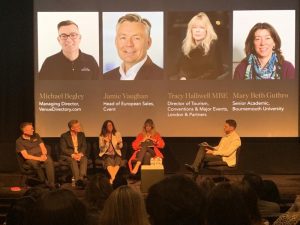
Mary Beth Gouthro PhD of the Faculty of Management was invited to join an expert panel for the MICE Leadership Summit 2019 this September at the May Fair Hotel (Edwardian Hotels Group) in London.  Now in its second year, the one day Summit was attended by 200 agents working in the event industry and came from UK, South Africa and Israel.

The MICE (Meetings Incentives Conferencing & Exhibitions) Summit consisted of speakers, the panel and workshop content that addressed the opportunities and challenges of the industry go forward, through to 2025.  The events sector is worth £39.1 billion to the UK economy in terms of direct spend by event delegates, attendees and organisers (BVEP).  Nurturing talent in the workforce as well as issues related to sustainability were key themes covered on the day.

Joining Mary Beth on the panel providing insights to the future proofing for the events sector were Tracy Halliwell MBE, Director of Tourism, Conventions & Major Events for London & Partners; Jamie Vaughan, Head of European Sales for Cvent and Michael Begley, Managing Director of venuedirectory.com.  The panel was chaired by Max Fellows, Director of Client Services at MCI Experience.  The value and role of degree education in the field of events management was furthermore highlighted.  Post-secondary education in the field underpins the economic sustainability of  the International Business Events Action Plan published by DCMS alongside of the Tourism Sector Deal in summer 2019.

The next Summit is planned for September 2020 and plans to incorporate a bigger presence of HE education in event management, ie to include BU students & alumni.

New paper published: Rihova, I., Moital, M., Buhalis, D. and Gouthro, M. (2019), “Practice-based segmentation: taxonomy of Customer to Customer (C2C) co-creation practice segments”, International Journal of Contemporary Hospitality Management,  https://doi.org/10.1108/IJCHM-01-2018-0096

New paper published: Rihova, I., Moital, M., Buhalis, D. and Gouthro, M. (2019), “Practice-based segmentation: taxonomy of Customer to Customer (C2C) co-creation practice segments“, International Journal of Contemporary Hospitality Management,  https://doi.org/10.1108/IJCHM-01-2018-0096

Abstract

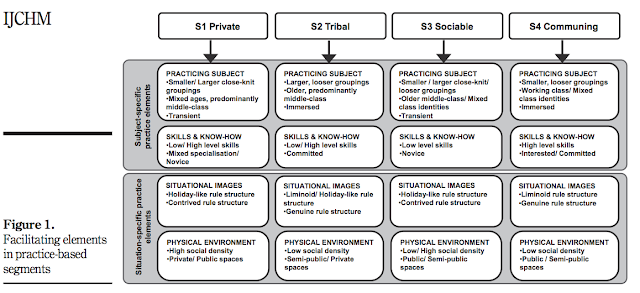
This paper aims to explore and evaluate practice-based segmentation as an alternative conceptual segmentation perspective that acknowledges the active role of consumers as value co-creators. Data comprising various aspects of customer-to-customer (C2C) co-creation practices of festival visitors were collected across five UK-based festivals, using participant observation and semi-structured interviews with naturally occurring social units (individuals, couples and groups). Data were analysed using a qualitative thematic analysis procedure within QSR NVivo 10. Private, sociable, tribal and communing practice segments are identified and profiled, using the interplay of specific subject- and situation-specific practice elements to highlight the “minimum” conditions for each C2C co-creation practice.

C2C

Unlike traditional segments, practice segment membership is shown to be fluid and overlapping, with fragmented consumers moving across different practice segments throughout their festival experience according to what makes most sense at a given time. Although practice-based segmentation is studied in the relatively limited context of C2C co-creation practices at festivals, the paper illustrates how this approach could be operationalised in the initial qualitative stages of segmentation research. By identifying how the interplay of subject- and situation-specific practice elements affects performance of practices, managers can facilitate relevant practice-based segments, leading to more sustainable business. The paper contributes to segmentation literature by empirically demonstrating the feasibility of practice-based segments and by evaluating the use of practice-based segmentation on a strategic, procedural and operational level. Possible methodological solutions for future research are offered.

 C2C

An advanced manufacturing supported supply chain – Enhancing the efficiency of the RNLI


September will see the completion of a 2 year HEIF project which has been investigating the potential of introducing additive manufacturing (3D Printing) into the RNLI to disrupt the supply chain and enhance engineering design.

The findings of the project will be disseminated at a Business Breakfast to be hosted by the RNLI on 5th September.  The event will also be attended by local engineering businesses.  If you are interested in the project and/or networking with engineering businesses, please sign up to attend the breakfast here.

For further information on the project please contact either Phil Sewell (psewell@bournemouth.ac.uk) or Abi Batley (abatley@bournemouth.ac.uk).


Sustainability changes everything

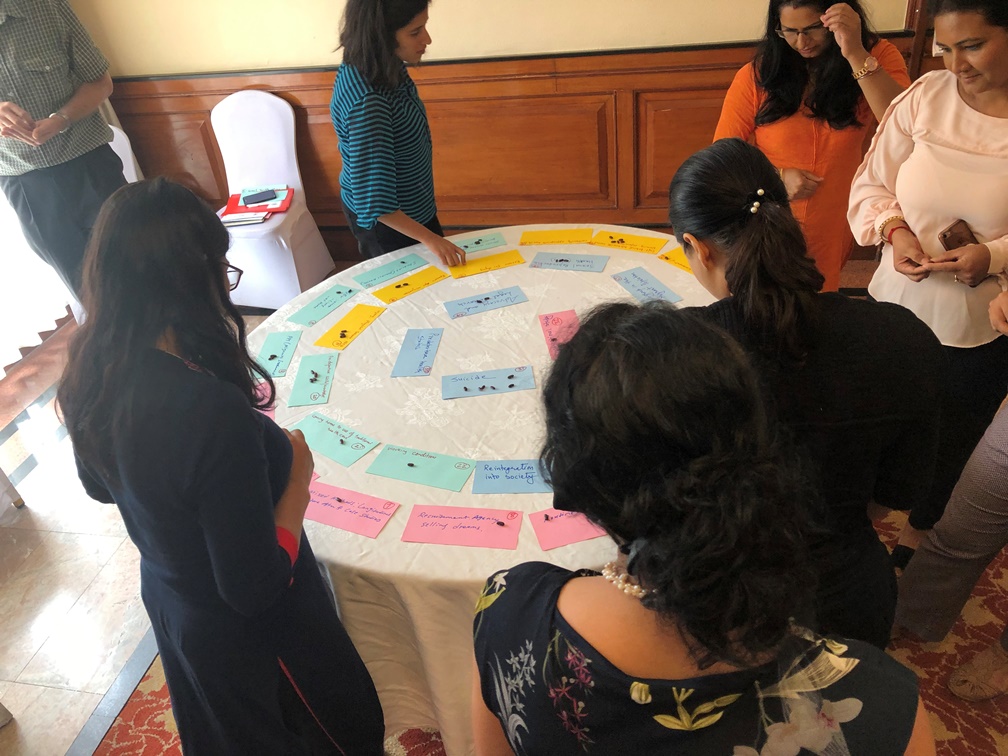
Sustainability as ‘an outcome of conscious thinking’ was discussed at the Faculty of Management’s ‘Sustainability Symposium’ recently.  The event was organised by Dr Karen Thompson and Professor Janet Dickinson in collaboration with the Association of Sustainability Practitioners and we began exploring ideas for new research on sustainability.

Changing economies across the globe to low or no carbon will require new understandings of the relationships between profit, people and the planet.  The new understandings are needed to inform development of new models and ways of doing business that reflect the complexities of social practices.  Three characteristics for research on sustainability issues were identified during the event:

  1. Incorporate partnerships building with practitioners and stakeholders
  2. Cross-disciplinary thinking that seeks to understand the complexity of social practices
  3. Fundamental re-thinking of existing models and ways of doing business.

New approaches to research will be required to address the challenges that face society today and will need to incorporate partnership building.  Derek Robbins, Faculty of Management, is already doing this in his research with bus companies on developing smart apps.  Dr Karen Thompson and Dr Nigel Williams shared their example of using social learning to collaborate with practitioners to develop the new concept of Responsible Project Management.

Their work has recently been shared with local councillors and they are exploring the possibilities for using a framework based on the UN’s 17 Sustainable Development Goals to promote better decision-making.

Research will also need to be cross-disciplinary.  New models of business that link social practices with the possibilities arising from technological innovation, such as driverless electric cars, are required.  One participant commented:

“this is a really important topic and it was useful to have people here from multiple disciplines because they have different views and are prepared to challenge.  Personally I found I learnt a lot from the other speakers even though I’ve been working in this area for quite some time, so thank you very much.” (EC)

Research that seeks incremental improvement is unlikely to deliver enough change quickly enough.  Re-thinking existing economic and business models from the bottom-up is required, and new models must balance the need for environmental restoration, reducing conflict between communities as well as being economically viable.

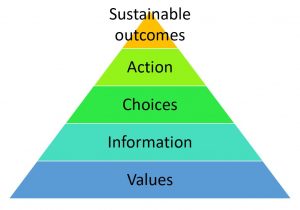
As well as the dependencies between economy, people and planet, there are other dependencies to be understood.  There are internal dependencies that underpin our actions and determine outcomes.  Values and information underpin the choices humans make, and our choices determine our actions and the outcomes.  Understanding and, ultimately changing values, will clearly be very challenging.

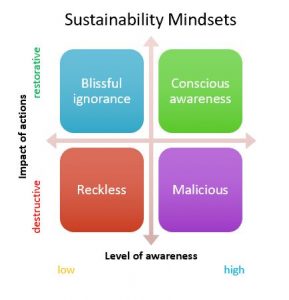
Four sustainability ‘mindsets’ have been identified and the challenge is how to move society towards the top right quadrant of conscious awareness.  Research is urgently required on understanding what will work and what are the barriers to change.  Researchers will need to work closely with practitioners and businesses to experiment and evaluate alternatives, and they urgently need to do so.


For further information, or to discuss how these models can be used, please contact Dr Karen Thompson, Dr Nigel Williams or Professor Janet Dickinson, all from Faculty of Management.

Can sustainability be taught?

At the FoM ‘Sustainability Symposium’ yesterday, we explored what sustainability means for teaching and learning.

Sustainability is high on the list of priorities for BU, with KPIs for aligning all courses and research with one or more of the UN’s 17 Sustainable Development Goals and the launch of a Strategic Investent Area for ‘Sustainability, Low-Carbon Technology and Material Science’ last week.  Yesterday an audience of academics, students, professional services colleagues and external practitioners came together to better understand the crises facing humanity today.

Gwyn Jones, Director of Association of Sustainability Practitioners, argued for sustainability to be viewed as the outcome of conscious thinking.    Accordingly, sustainability is experienced and practised rather than learnt in a classroom and is enacted as a mindset.

Four mindsets have been identified and our challenge is to move society and our learners towards the top right quadrant of conscious awareness.


The question we asked was ‘What does extinction mean for business?’   It became clear that the question is relevant not only to the Business School, but for all disciplines at BU as indicated by a comment from one participant “I found it really interesting and frankly rather scary (and I’m informed) … I’m keen to try to do something similar [in my Faculty] and be active in this agenda more broadly” (FC).

Most models of business are based on assumptions that value profit and growth above all else.  Many of these models were developed during the industrial revolution and are now contributing to the destruction of our environment and society.  According to Gwyn, those who claim to have answers to sustainability, don’t understand the problem.

We discussed new business models and case studies that are based on understandings of purpose and decision-making that balances competing priorities.  One student who was with us for the day commented “I am very excited to interact with all the bright minds in the room discussing sustainability … it was a great day for me” (Sacha, MBA student).

So, what does this mean for programmes and pedagogy?  We can no longer rely solely on text books because we are only just starting to uncover the questions we need to ask.  Understanding how we can live sustainably with ‘enough for everyone, forever’ has not been addressed before and we do not have answers yet.  We need to be comfortable asking difficult questions and seeking answers in novel ways.  Social learning is one approach being used to develop new concepts.  Dr Karen Thompson and Dr Nigel Williams have been collaborating with practitioners to ask novel questions and develop new resources for education, research and practice of Responsible Project Management.

An argument made by Karen is that sustainability should not be seen as an ‘add on’ to the curriculum, rather it should be used as a lens through which we view all aspects of our discipline.

Experiential learning will be important for developing a sustainability mindset among learners.  ‘Living Labs’ are recognised in BU2025 and can be expected to play a useful role for both education and research in the future.  We need to develop learners’ sense of agency and confidence that they can make a difference in the world.  Virtual reality may have a role to play in developing the capabilities for managing more responsibly.  Lastly, we need to encourage our graduates to become advocates for better decision-making in the organisations they will work in.

For further information, or for advice about running your own sustainability event, please contact Dr Karen Thompson or Professor Janet Dickinson, both from Faculty of Management.