Category / Business and economic sustainability

British Council funded BU project SUNRISE on sustainability research: three upcoming events

SUNRISE (Supporting ­­­University Network for Research in Sustainability Engagement) is a British Council funded managed by BU in collaboration with Universiti Sains Malaysia (USM).

The project aims at inspiring and building capacity for sustainability research through hybrid cross-institutional student mobility events. Particularly, it focuses on leveraging student online and hybrid mobility to build capacity for research on sustainability and the UN Sustainable Development Goals (SDGs).

To achieve this, we will be hosting three cross-institutional hybrid conferences celebrating sustainability research carried out by staff, and undergraduate and postgraduate students in both universities. These will be demonstrating research addressing local and global challenges on five key themes:


Food nutrition and eating behaviour (SDG 2, 3, and 12)

Gender equality (SDG 5) 

Tourism and Hospitality (SDGs 3, 10, 12)  

Sustainability marketing and communication (all SDGs)  

Sustainability and employability (SDG 4, 5 and 8)  


The events will be delivered following the following schedule:

17 April 2024, 8-10 am (UK time) - researchers from both BU and USM will introduce the work they carry out on the themes above

9 May 2024, 8-10 am  (UK time) – we will host a student conference including live presentations and a virtual multimedia exhibition of UG and PG student research related to global challenges

Autumn 2024 - we will host a PGR conference including live presentations and a virtual multimedia exhibition of research related to global challenges

All events in the series will be run in a hybrid mode, i.e. they will be in-person at both the partner campuses with a virtual link between both universities capturing keynote presentations, online panel sessions and live pitches for research collaboration.

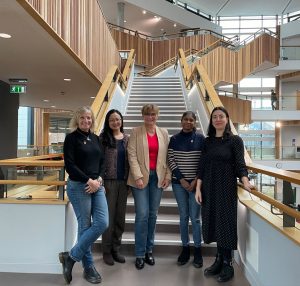
At BU, the project is managed by Dr Milena Bobeva (BUBS), Dr Reena Vijayakumaran (HSS), Prof Fiona Cownie (FMC), Dr Roberta Discetti (BUBS), and  Dr Daisy Fan (BUBS). Our partners at Universiti Sains Malaysia (USM) are Dr Vina Tan Phei Sean and Assoc Prof. Ng Theam Foo.


Socio-Ecological Transition Seminars – Spring 2024 events

We are delighted to share the spring 2024 calendar for our Socio-Ecological Transition Seminars (SETS). This seminar cycle’s discussions will revolve around the global crisis of waste and the unsustainability of current modes of production and consumption, analysed across sectors and geographical contexts, in its societal, organisational, political, and ethical dimensions.

We have a confirmed calendar of international distinguished speakers:

April 3rd h 3 pm: A public sociology of waste, Myra Hird

Myra J. Hird, Professor in Environmental Studies at Queen’s University (Canada). Myra holds a PhD from Oxford University and is a distinguished interdisciplinary scholar researching the global waste crisis and will present her recent book A Public Sociology of Waste (2022, Bristol University Press).

April 24th h 3 pm: Recycling Class: The Contradictions of Inclusion in Urban Sustainability, Manisha Anantharaman

Manisha Anantharaman, Assistant Professor of Sociology at the Center for the Sociology of Organisations, Sciences Po Paris (France). Manisha holds a PhD from University of California Berkeley, and her research focuses on the politics of ecological transition and sustainability. Manisha will present her recent book Recycling Class. The Contradictions of Inclusion in Urban Sustainability (2024, MIT press).

29th May h 3 pm: The Social Life of Unsustainable Mass Consumption, Magnus Boström.

Magnus Boström, Professor of Sociology at the Center for Environmental and Sustainability Social Science (CESSS) at Örebro University, Sweden. Magnus’ research interests include politics, representation, consumption, action, and transformative learning in relation to various transnational environmental and sustainability issues. Magnus will present his recent book: The Social Life of Unsustainable Mass Consumption (2023, Rowman & Littlefield)

All seminars are online on Zoom:

https://unitn.zoom.us/j/85334570893Meeting ID: 853 3457 0893

Passcode: SETS

SETS is a joint initiative between the Research Group on Collective Action, Change, and Transition at the University of Trento, the Centre for Sustainable and Socially Responsible Consumption at Bournemouth University, and the Environmental Sociology Section at the University of Orebro. The seminars are open to a diverse audience, including academics, students, practitioners, social movements, and the non-specialist public.

SETS aims at reflecting with critical instruments and theories on socio-ecological transformations in times of crisis – with a special focus on everyday life and the sphere of social and ecological reproduction. In particular, the seminars aim at eliciting reflection on the different practices and “fields” where struggles and transformative action take place. The seminars are open to a diverse audience, including academics, students, practitioners, social movements, and non-specialist public.

Dr Roberta Discetti, SETS co-founder

Embedding Fairtrade in teaching and research: a panel discussion with the Fairtrade Foundation

Dear all,

As part of our BU Fairtrade weeks 2024, we are delighted to invite you to a panel discussion dedicated to academics with an interest in sustainability, to explore connections with Fairtrade through collaboration with the Fairtrade Foundation.  

Date: February 27th at 2 pm – Fusion Building, room F305 (in-person only event).

BU is a Fairtrade University; we received the accreditation in 2022 with the highest possible score (3 stars out of 3) and we are among a very small group of universities worldwide to have achieved this. There are plenty of ways for academics to get involved with Fairtrade that will be explored in a panel discussion with the following speakers: 

Elena Fernandez-Lee, Education Campaigning Manager at the Fairtrade Foundation: Elena will talk about the Fairtrade University scheme, discussing best practices to embed Fairtrade in teaching and research, and highlighting potential areas of collaboration with BU academics. Elena will also share about the Foundation’s new campaigns about climate justice and decolonization of the curriculum, and outline ways for BU academics to get involved. 

Izzy Chalk, BU Sustainability Officer: Izzy will talk about BU’s journey to becoming accredited as a 3-star Fairtrade university, outlining best practices in embedding Fairtrade in the curriculum and emphasising further areas of collaboration between the Sustainability team and BU academics. 

Dr Roberta Discetti, BU Fairtrade academic representative: Roberta will share some research-informed practices related to Fairtrade engagement, including NGO/academics cooperation, student co-creation, and multi-stakeholder collaborative initiatives. 

The panel discussion will be followed by an optional 30-minute networking where we will have the opportunity to connect with our guest speaker Elena and discuss different ways of expanding the integration of Fairtrade in sustainability teaching and research. This event is open to all BU and AUB academics, to maximise opportunities for collaboration across departments and faculties.

Social Capital in Crises: Waves in Climate Change, Oil, Economic Shocks and Migrations – Local Economic Development Impacts in Europe

A talk by BUBS Professor Dr Davide Parrilli, member of BU University Senate and the external editorial board on “European Planning Studies.” Hosted at the Committee Room, Fifth Floor, Poole House, BU Talbot Campus, Fernbarrow, 2-3pm, Wednesday, 22 November, 2023. This important cross-disciplinary seminar welcomes all, being of high relevance to current global news.

“Local Economic Development and the Challenge of Critical Social Transformations”

Abstract
“Local economic/production systems have been a focus of actions and discussion for many years across Europe. Within an evolutionary perspective, these systems change and adapt to respond to new changing scenarios, challenges and demands of the wider social and economic community. It is the case of the challenges raised by climate change and 2016 Paris Agreement or the recent COP27 in Sharm-el-Sheikh, or by exogenous shocks to supply and demand due to present international crises. In this presentation the discussion centres around the evolution of local economic systems and identifies a specific challenge and gap that could and should be addressed soon both theoretically and from a development policy perspective. This is the social capital linked to the important migration waves that have modified the social spectrum of European socio-economies and are producing a strong impact on the way local economic development works. Open discussions and dynamic and comprehensive actions are required to address these important transformations, whilst recognising the “social embeddedness of economic action” and promoting the social capital that ignites the competitive capacity of these local economic systems.”
Best wishes,
Davide

M. Davide Parrilli, PhD (Birmingham), MPhil (Sussex), SFHEA, FeRSA
Professor of Regional Economic Development
BUBS PhD Programme Coordinator
BUBS Output Champion
Professorial Member of University Senate
Bournemouth University Business School
AACSB Accredited; SBC Accredited; EFMD Member
& Associate Editor/Editorial Board of “European Planning Studies”

Posted by Fiona Vidler MBA MSc MLIBF – Note: For any further information or RSVP this Free Event, please do contact direct the esteemed BU Professor Dr Davide Parrilli dparrilli@bournemouth.ac.uk

Talk: ‘The Cost of Sanctions’ by Associate Professor Anna Hillingdon – Thursday 12th October

Join us for a talk by Associate Professor Anna Hillingdon:

How Does the Presence of a Duopoly of Regional Rivalries Reduce the Cost of Sanctions for the Sender? 

‘Sanctions are costly. The sender has absolute advantages and sanctions increase their bargaining power by transferring their cost to the rival. We define this transfer as intended collateral damage.’

The talk takes place from 2-3pm on Thursday 12 October in PG22 (Poole House). The talk is open to BU staff and students.

Dr Anna Hillingdon has given numerous media interviews worldwide and has previously led projects for UNWTO and NATO on hybrid threats, presented to a Parliamentary Committee and has acted as a Washington World Bank consultant on post-conflict resilience.

If you are interested in attending, please confirm your attendance to Davide Parrilli (Professor AFE Research Lead/Seminars, BU Business School) at dparrilli@bournemouth.ac.uk.

A catalyst for knowledge exchange at the CBI

The Confederation of British Industry (CBI) acts as the catalyst between industry and government to drive positive change in the UK economy. As such, they were an ideal partner to host an Executive Round Table event that examined the role of ‘leadership and strategic communications as twin pillars of business resilience’.

The HEIF project was run by Prof John Oliver (FMC) with nearly 30 senior executives attending the event from sectors of the UK economy that included aerospace, defence, management consulting, strategic communications, journalism,governance and policy.

Keynote presentations were given by Professor Lucy Kung, Strategic Advisor & Senior Research Associate, Oxford University, Professor John Oliver (BU), James Gater and Tom Sharpe OBE (Special Project Partners Ltd) and Juliet Eccleston (Chair, CBI Sharing Economy Council).

Professor Oliver said “many thanks the CBI for hosting our Executive Round Table discussion, the keynote speakers and an enthusiastic group of senior executives” whilst James Gater of commented that the “eclectic group made for a brilliant and thought-provoking discussion on leadership, nurturing the right culture as well as overcoming chronic underperformance through effective communications”.

Revolutionising Industries: The Significance, Impacts, and Reliability of Nanocoatings

Application

Introduction:

Nanocomposite coatings, a ground-breaking development in materials science, have emerged as a transformative force across various industries. These coatings, with their unique properties and applications, hold immense promise for enhancing performance, reducing maintenance costs, and addressing critical global challenges. In this comprehensive review, we delve into the key significance of nanocoatings in a range of industries, their substantial impacts, and their reliability [1–4]. Furthermore, we explore how Professor Zulfiqar Khan is collaborating with generative AI and predict the potential benefits of this partnership for industry and contributions to new knowledge. This narrative aims to influence UK science and technology policy, attract funding, and foster new partnerships to drive innovation and competitiveness.

Application
  1. The Multifaceted Significance of Nanocoatings:

Nanocoatings in Cavitation and Beyond:

Nanocomposite coatings have brought transformative advantages to industries grappling with issues such as cavitation, corrosion, tribology, and fluid dynamics. They provide enhanced protection and resilience in the face of harsh operational conditions, including extreme temperatures, high pressures, corrosive environments, and minimal lubrication. The significance of nanocoatings lies in their ability to extend the lifespan and reliability of vital components and systems across multiple sectors.

Nanocoatings Addressing Global Challenges:

Industries today are confronted with pressing global challenges, such as energy efficiency, sustainability, and system durability. Nanocoatings offer innovative solutions to these challenges by optimising surfaces and interfaces through surface modifications and coatings. They play a pivotal role in enhancing energy efficiency, ensuring the reliability of systems, and promoting sustainability. These benefits are invaluable in the context of UK science and technology policy, which emphasises the transition to greener technologies and sustainable practices.

  1. The Impact of Nanocoatings:

Academic and Industrial Benefits:

The development and application of nanocoatings have not only enriched academic research but have also provided tangible industrial advantages. Researchers worldwide are actively engaged in studying several types of nanocomposites to create durable and energy-efficient coatings. This collaboration between academia and industry fosters innovation, encourages knowledge exchange, and accelerates the adoption of innovative technologies. It aligns with the UK’s vision of becoming a leader in innovation and technology development.

Experimental Advancements:

Professor Khan’s work exemplifies the impact of nanocoatings on the industry. His experiments with alumina, silicon carbide, zirconia, and graphene nanocomposite coatings have displayed their robustness under different conditions, including exposure to seawater. Such empirical evidence guides industry practitioners in selecting the right coatings for their specific applications, reducing maintenance costs, and ensuring system reliability.

III. Reliability of Nanocoatings:

Advanced Modelling and Predictive Tools:

One key aspect of nanocoatings’ reliability lies in the advanced modelling and predictive tools developed by researchers like Professor Khan. His cathodic blistering model (Khan-Nazir I) [5] and coating failure model (Khan-Nazir II) [6] offer a deeper understanding of coating behaviour under stress, wear, and corrosion. These models enable precise predictions of coating performance, which is crucial for industries seeking dependable solutions.

Lubrication Modelling:

Furthermore, lubrication modelling, which incorporates wear-corrosion and mechano-wear equations, investigates the influence of microstructural properties like porosity and surface stresses on the coefficient of friction (CoF). This is vital in ensuring the reliability of systems operating under various conditions, as reduced friction leads to increased durability.

  1. Collaboration with Generative AI:

Harnessing AI for Materials Discovery:

Professor Zulfiqar Khan’s collaboration with generative AI represents an exciting frontier in materials science. Generative AI can accelerate materials discovery by simulating and predicting the behaviour of nanocomposite coatings with unmatched speed and accuracy. By leveraging AI, researchers can design coatings tailored to specific industry needs, further enhancing their reliability and performance.

  1. Predicted Benefits and Contributions:

Industry Advancements:

The partnership between Professor Khan and generative AI holds the promise of revolutionising industries. Predictive modelling and AI-driven materials discovery will enable the creation of coatings that are not only more reliable but also more cost-effective to produce. This will stimulate innovation, reduce downtime, and boost competitiveness across sectors such as aerospace, automotive, energy, and manufacturing.

Contribution to New Knowledge:

The collaboration will undoubtedly contribute to new knowledge in materials science, computational modelling, and AI-driven materials discovery. This research can inform policy decisions and attract funding for initiatives aimed at harnessing AI for materials development. As the UK government seeks to position the nation as a global innovation hub, investments in cutting-edge research of this nature will be pivotal.

  1. Influencing UK Science & Technology Policy:

Nurturing Technological Leadership:

To influence UK science and technology policy, it is imperative to underscore the role of nanocoatings and AI-driven materials discovery in nurturing technological leadership. Emphasising the potential economic and environmental benefits of these innovations can encourage policymakers to prioritise investments in research and development.

Supporting Sustainable Practices:

Aligning nanocoatings with the UK’s sustainability goals is crucial. Highlighting how these coatings enhance the sustainability and reliability of systems can resonate with policymakers keen on promoting sustainable practices and technologies.

VII. Forging Partnerships:

It is essential to articulate the transformative impact of nanocoatings and AI collaborations on industry and the potential for significant contributions to knowledge. Presenting a clear roadmap for how investments will yield tangible results can attract the attention of funding bodies interested in fostering innovation.

Industry-Academia Synergy:

Lastly, forging partnerships between academia and industry is fundamental. Collaborations that integrate academic research with industry needs can ensure that innovations like nanocoatings find practical applications and drive economic growth.

In conclusion, nanocomposite coatings represent a pivotal advancement with far-reaching significance and impacts across industries. Professor Zulfiqar Khan’s collaboration with generative AI holds immense promise for further enhancing their reliability and performance. This partnership aligns with UK science and technology policy objectives, attracting funding and fostering collaborations that will drive innovation and competitiveness, positioning the UK as a global leader in materials science and technology.

Acknowledgement: This article is written in collaboration with GAI.

References

[1]       Nazir, M.H.; Khan, Z.A.; Saeed; Bakolas, V.; Braun,W.; Bajwa, R. Experimental analysis and modelling for reciprocating wear behaviour of nanocomposite coatings. Wear 2018, 416, 89–102. [CrossRef]

[2]       Nazir, M.H.; Khan, Z.A.; Saeed, A.; Siddaiah, A.; Menezes, P.L. Synergistic wear-corrosion analysis and modelling of nano composite coatings. Tribol. Int. 2018, 121, 30–44. [CrossRef]

[3]       Abdeen, D.H.; El Hachach, M.; Koc, M.; Atieh, M.A. A Review on the Corrosion Behaviour of Nanocoatings on Metallic Substrates. Materials 2019, 12, 210. [CrossRef] [PubMed]

[4]       Nazir, M.H.; Khan, Z.A.; Saeed, A.; Bakolas, V.; Braun,W.; Bajwa, R.; Rafique, S. Analyzing and Modelling the Corrosion Behavior of Ni/Al2O3, Ni/SiC, Ni/ZrO2 and Ni/Graphene Nanocomposite Coatings. Materials 2017, 10, 1225. [CrossRef]

[5]       Nazir, M.H.; Khan, Z.A.; Saeed, A.; Stokes, K. A model for cathodic blister growth in coating degradation using mesomechanics approach. Mater. Corros. 2016, 67, 495–503. [CrossRef]

[6]       Nazir, M.H.; Khan, Z.A. A review of theoretical analysis techniques for cracking and corrosive degradation of film-substrate systems. Eng. Fail. Anal. 2017, 72, 80–113. [CrossRef]
BU and University of Cambridge Collaboration on Traffic Prediction

Bournemouth University (BU) has collaborated with the University of Cambridge on network wide road traffic prediction. The work, led by Dr. Wei Koong Chai in BU, address the problem of traffic prediction on large-scale road networks and propose a novel deep learning model, Virtual Dynamic Graph Convolution Neural Network and Transformer with Gate and Attention mechanisms (VDGCNeT), to comprehensively extract complex, dynamic and hidden spatial dependencies of road networks for achieving high prediction accuracy. The work advocates the use of a virtual dynamic road graph that captures the dynamic and hidden spatial dependencies of road segments in real road networks instead of purely relying on the physical road connectivity.

The team designed a novel framework based on Graph Convolution Neural Network (GCN) and Transformer to analyse dynamic and hidden spatial–temporal features. The gate mechanism is utilised for concatenating learned spatial and temporal features from Spatial and Temporal Transformers, respectively, while the Attention-based Similarity is used to update dynamic road graph.

Two real-world traffic datasets from large-scale road networks with different properties are used for training and testing the model. VDGCNeT is pitted against nine other well-known models in the literature. The results demonstrate that the proposed VDGCNeT is capable of achieving highly accurate predictions – on average 96.77% and 91.68% accuracy on PEMS-BAY and METR-LA datasets respectively. Overall, our VDGCNeT performs the best when compared against other existing models.

Reference:

G. Zheng, W. K. Chai, J. Zhang and V. Katos, “VDGCNeT: A novel network-wide Virtual Dynamic Graph Convolution Neural network and Transformer-based traffic prediction model,” Knowledge-based Systems, 110676, June 2023. DOI: https://doi.org/10.1016/j.knosys.2023.110676.

BU-BCP collaborative initiative on sustainable urban parking

BU has collaborated with the Bournemouth-Christchurch-Poole (BCP) local council on the initiative investigating sustainable solutions to urban parking which is a challenging problem to the area especially during peak tourist periods. The study, initiated and led by Dr. Wei Koong Chai in BU, explores the possibilities of exploiting online parking reservation platforms proposed in the last decade to cope with the parking challenge by enlisting parking resources from commercial operators (e.g., lots) and individuals (e.g., driveways) and allowing drivers make online reservations through mobile apps. The platforms facilitate transactions between the two sides and best match parking supply with parking demand. In this way, we increase the supply which may be otherwise unused while maximise value for drivers and parking space providers.
The study analyses real parking data in the Bournemouth city to realistically model the rich spatiotemporal dynamics of parking demand such as the location, start times and duration of parking events. These datasets drive the experimental evaluation of the research, which reports gains of up to 35% compared to the de facto parking resource reservation policy in such platforms.
Reference:
M. Karaliopoulos, O. Mastakas and W. K. Chai, “Matching Supply and Demand in Online Parking Reservation Platforms,” in IEEE Transactions on Intelligent Transportation Systems, vol. 24, no. 3, pp. 3182-3193, March 2023, doi: 10.1109/TITS.2022.3230087.