Category / Business and economic sustainability

BU academics publish in Nepal national newspaper

Dr. Pramod Regmi and prof. Edwin van Teijlingen had a long article published today related to their work on migrant workers in Nepal.  The article ‘Nepal’s migrant workers: Data the new government can’t ignore’ appeared in both the print edition and the online version of The Kathmandu Post, which is one of the three English-language national papers in Nepal.  Both academics are based in the Faculty of Health, Environment & Medical Sciences.

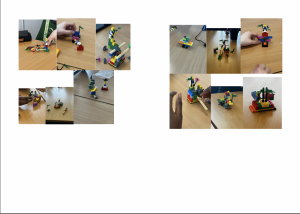
Building Ventures from Bricks: Why LEGO® Serious Play® Belongs at the Heart of Entrepreneurship Education

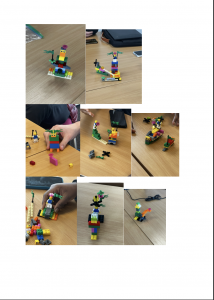
There is something quietly radical about placing a box of LEGO bricks in front of an entrepreneurship student and asking them to build what it feels like to start a business as a woman. It looks playful. It feels unfamiliar. And that is precisely the point.

Gendered barriers to enterprise, unequal access to networks and capital, and the legitimacy penalties faced by women founders are not peripheral concerns — they are central to how entrepreneurship actually works. Yet they are among the hardest things to surface in a conventional classroom. Lectures can name them; discussions can debate them. But neither easily reaches the experiential, affective layer where structural disadvantage is felt and processed. LEGO® Serious Play® (LSP) –  a structured, facilitated methodology in which participants construct physical models as a vehicle for thinking and sense-making – offers a compelling answer.

The theoretical roots of LSP lie in constructionism (Papert & Harel, 1991 cited in Imholz and Petrosino, 2012), extending Piaget’s Constructivism, the premise that humans learn most powerfully when actively making something shareable. In entrepreneurship, this matters enormously. The field is inherently uncertain, relational and situated (Neck & Greene, 2011), demanding that practitioners navigate ambiguity and construct meaning from incomplete information — precisely what traditional pedagogies rarely train students to do.

LSP addresses this through embodied cognition — the well-established view that cognitive processes are rooted in the body’s interactions with the world (Barsalou, 2008; Wilson, 2002). When students physically manipulate bricks, they activate neural pathways associated with memory, association and imagination, surfacing tacit knowledge that verbal reasoning cannot access. The cognitive and reflective processes generated map directly onto the experiential learning cycle entrepreneurship education has long sought to replicate (Kolb, 1984).

Nowhere is LSP’s capacity to make the invisible visible more valuable than when the subject is gender and structural disadvantage. When a student is asked to build what barriers look like — giving them height, weight and spatial relationship — something categorically different becomes possible. The model externalises and legitimises the experience: it makes the barrier an object in the room for collective examination, rather than a contested assertion subject to instant pushback.

The LSP rule that the meaning of a model belongs only to its creator — and that no one may impose their own interpretation (Gkogkidis & Dacre, 2021) — creates protective distance between the student and their experience, allowing difficult realities to be surfaced through metaphor before being verbalised. Reduced perceived risk is precisely what enables more diverse voices to emerge (Gauntlett, 2011). Benesova’s (2023) study at the University of Leeds evidences this: students from high power-distance cultures reported that building gave them expression, bypassing the social hierarchies of the seminar, with one noting it was “much easier to build it than say it.”

The Entrepreneurial Learning Case

Fox et al. (2018) identify active, reflective, situated, and crisis-based learning as the key dimensions that effective entrepreneurship pedagogy must address, finding that digital simulations perform poorly on the affective and reflective dimensions and almost entirely fail to simulate failure and uncertainty. LSP does not share these limitations. Ball et al.’s (2021) case study from Northumbria University saw students complete a LEGO task with pieces deliberately missing — simulating resource constraints and ambiguity — and subsequently identify 68 distinct entrepreneurial skills and competencies including risk-taking, creativity and leadership. Creativity here means recombining knowledge, recognising patterns and imagining alternatives (Fillis & Rentschler, 2010) — and material, exploratory engagement of the kind LSP provides is precisely what develops creative confidence and problem-solving capability (Rauth et al., 2010). Zenk et al. (2018) went further still, designing an entire innovation course around LSP — guiding students through ideation, prototyping, pivot questioning and pre-mortem analysis in ways conventional course design cannot match.

Where LSP makes its most distinctive contribution is in the quality of reflection it generates. Gkogkidis and Dacre (2023) frame the four-step core process — pose question, construct, share meaning, reflect — as a pedagogical architecture that operationalises constructivist learning values. For universities seeking to embed entrepreneurial thinking across their culture, active, reflexive pedagogies of this kind are central to the entrepreneurial university mission (Guerrero & Urbano, 2012). When students have physically constructed the systems that disadvantage them, the subsequent reflection is grounded in something concrete and shared, allowing a group to move from “do these barriers exist?” to “here they are — now what do we do?” That shift, from debate to design thinking, is precisely the mode entrepreneurship demands.

In conclusion, gender, network access and legitimacy inequality do not sit comfortably in a traditional seminar. They are too personal, too politically charged, too easily deflected. LSP creates conditions in which these conversations happen differently: externalising structural barriers, equalising participation and protecting less powerful voices. For entrepreneurship educators serious about structural inequality, the bricks are doing serious work.

References

Ball, S., Quan, R., & Clegg, S. (2025). A case study of experiential entrepreneurial learning through LEGO® play. 20(1), Proceedings of the 20th European Conference on Innovation and Entrepreneurship, Northumbria University.         https://doi.org/10.34190/ecie.20.1.3942        

Barsalou, L. W. (2008). Grounded cognition. Annual Review of Psychology59(1), 617–645. https://doi.org/10.1146/annurev.psych.59.103006.093639

Benesova, N. (2023). LEGO® Serious Play® in management education. Cogent Education10(2), 2262284. https://doi.org/10.1080/2331186X.2023.2262284

Fillis, I., & Rentschler, R. (2010). The role of creativity in entrepreneurship. Journal of Enterprising Culture18(1), 49–81. https://doi.org/10.1142/S0218495810000501

Fox, J., Pittaway, L., & Uzuegbunam, I. (2018). Simulations in entrepreneurship education: Serious games and learning through play. Entrepreneurship Education and Pedagogy1(1), 61–89. https://doi.org/10.1177/2515127417737285

Gkogkidis V., and Dacre N. (2023). The educator’s LSP journey: creating exploratory learning environments for responsible management education using Lego Serious Play. Emerald Open Research, 1(12) No Pagination Specified, doi: https://doi.org/10.1108/EOR-12-2023-0004

Guerrero, M., & Urbano, D. (2012). The development of an entrepreneurial university. The Journal of Technology Transfer37(1), 43–74. https://doi.org/10.1007/s10961-010-9171-x

Imholz, S. and Petrosino, A. (2012) Teacher Observations on the Implementation of the Tools of the Mind Curriculum in the Classroom: Analysis of Interviews Conducted over a One-Year Period. Creative Education, 3, 185-192. doi: 10.4236/ce.2012.32029.

Kolb, D. A. (1984). Experiential learning: Experience as the source of learning and development. Prentice-Hall.

Neck, H. M., & Greene, P. G. (2011). Entrepreneurship education: Known worlds and new frontiers. Journal of Small Business Management49(1), 55–70. https://doi.org/10.1111/j.1540-627X.2010.00314.x

Rauth, I., Köppen, E., Jobst, B., & Meinel, C. (2010). Design thinking: An educational model towards creative confidence. In T. Taura & Y. Nagai (Eds.), DS 66-2: Proceedings of the 1st International Conference on Design Creativity (ICDC 2010). The Design Society.

Wilson, M. (2002). Six views of embodied cognition. Psychonomic Bulletin & Review9(4), 625–636. https://doi.org/10.3758/BF03196322

Zenk, L., Hynek, N., Schreder, G., Zenk, A., Pausits, A., & Steiner, G. (2018). Designing innovation courses in higher education using LEGO® SERIOUS PLAY®. International Journal of Management and Applied Research5(4), 244–263. https://doi.org/10.18646/2056.54.18-019


Interdisciplinary research: Not straightforward?

Worldwide there is a growing interest in interdisciplinary research, especially to help deal with large questions in life, the so-called wicked problems.  These wicked problems (or questions) include climate disasters and global warming, globalisation, the drop in biodiversity, inequalities and international conflicts.  Interdisciplinary research increasingly popular and widely promoted by grant-giving bodies, the UK REF (Research Excellence Framework), research councils and universities, to name but a few stakeholders.

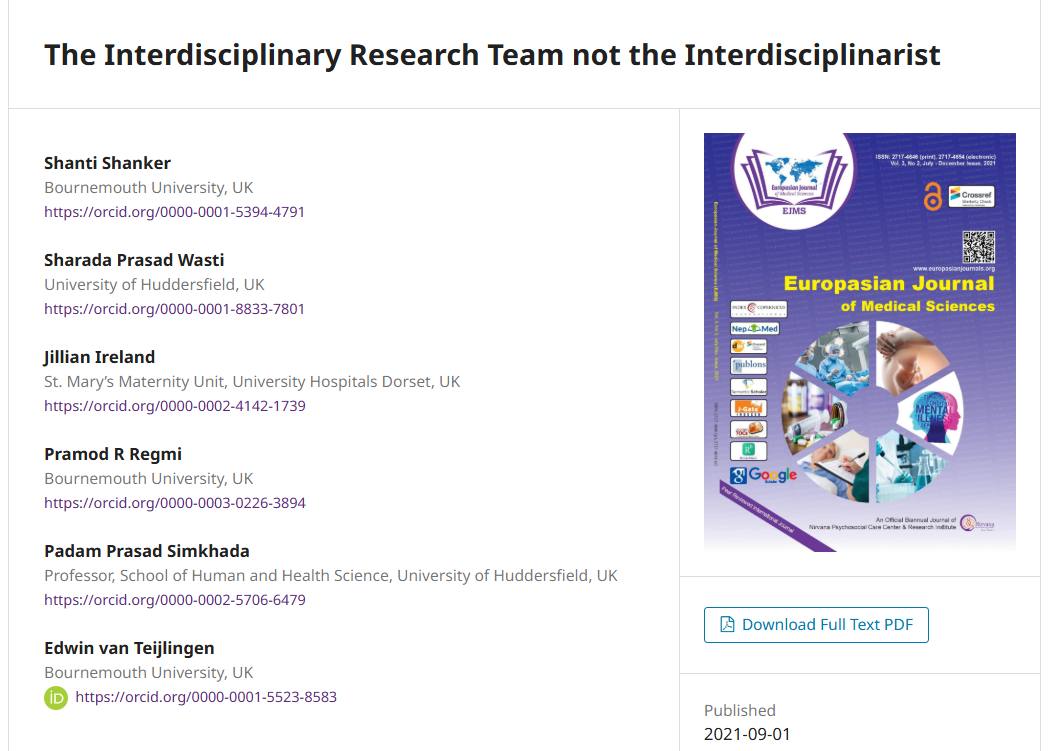
However, it is often ignored, that interdisciplinary research presents significant challenges for discipline-specific experts.  Doing interdisciplinary research requires specialised skills, team-player personality traits, and the ability to transcend one’s own academic boundaries.  We have highlighted in the past that common barriers include managing conflicting research philosophies, navigating, and overcoming, methodological, and communication differences [1].  Those who have been involved in interdisciplinary research will agree that is not an easy option for the individual discipline expert. It requires individual skills, ability to see beyond one’s discipline and perhaps personality characteristics such as a great team player. Interdisciplinary research may involve a mixed-methods approach underpinned by conflicting, and according to some incommensurable, research philosophies.

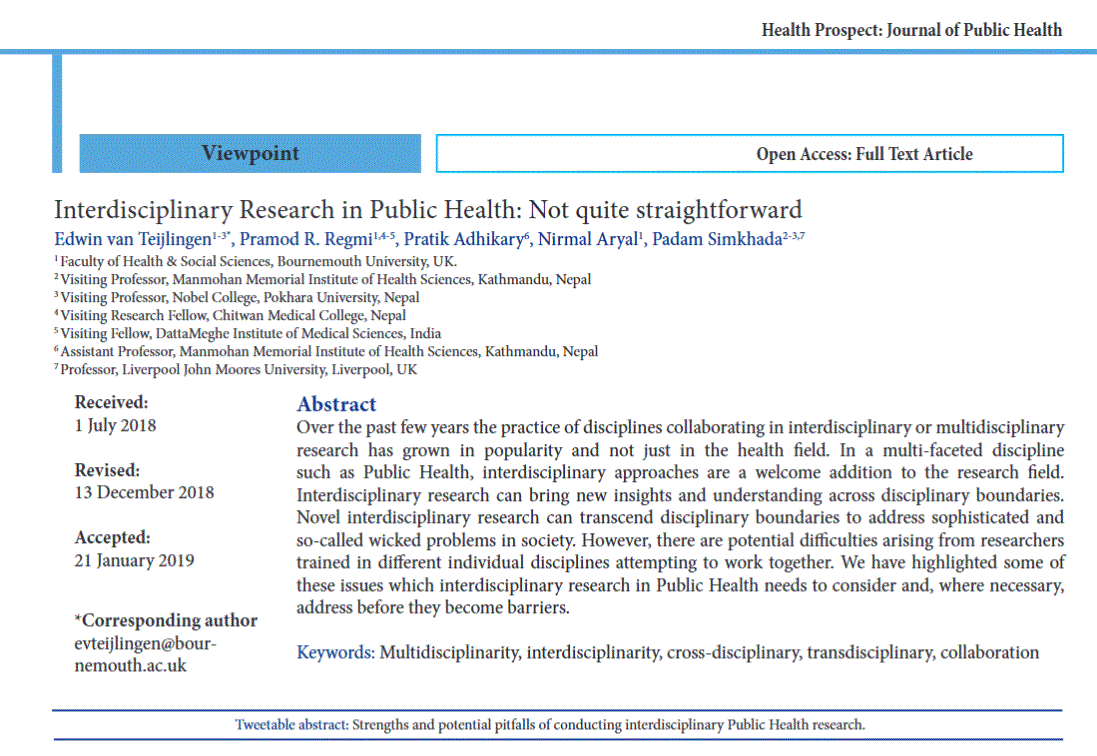
It is also the case that some disciplines are perhaps more familiar with interdisciplinary working, disciplines such as Public Health [2] are traditionally less theory focused and more solution driven.  But even in Public Health as a broad-ranging discipline covering sub-disciplines such as epidemiology, health education, law, management, health psychology, medical statistics, sociology of health & illness and a wide-range of research methods, conducting interdisciplinary research is not necessarily easy [3].


Prof. Edwin van Teijlingen & Dr. Pramod Regmi both are in the School of Health & Care, and Dr. Shanti Farrington, who is based in the School of Psychology.


References:

  1. Shanker S, Wasti SP, Ireland J, Regmi PR, Simkhada PP, van Teijlingen E. (2021) The Interdisciplinary Research Team not the Interdisciplinarist. Europasian Journal of Medical Science. 3(2):111-5.
  2. Wasti, S. P., van Teijlingen, E., Simkhada, P. (2020) Public Health is truly interdisciplinary. Journal of Manmohan Memorial Institute of Health Sciences, 6(1):21-22.
  3. van Teijlingen, E., Regmi, P., Adhikary, P., Aryal, N., Simkhada, P. (2019). Interdisciplinary Research in Public Health: Not quite straightforward. Health Prospect, 18(1), 4-7. https://doi.org/10.3126/hprospect.v18i1.19337

Building Your Own Ecosystem: Why Entrepreneurial Self-Efficacy Might Matter More Than the Perfect Network

Entrepreneurship often begins with a deceptively simple act: reaching out to someone you do not know.

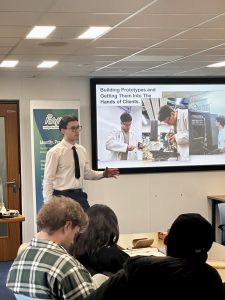
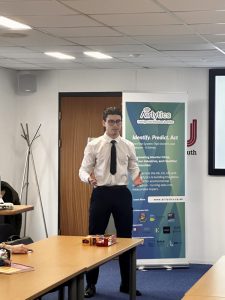
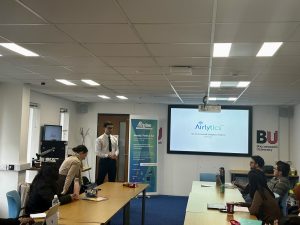
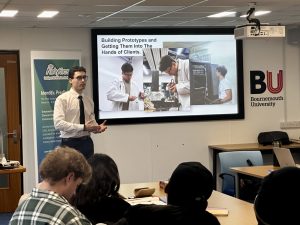
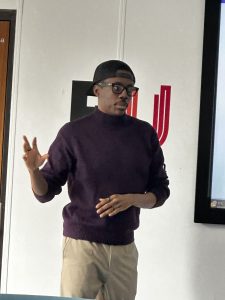
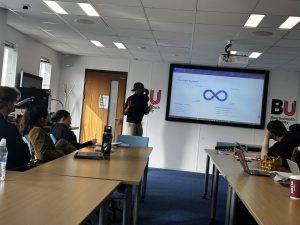
During the first week of our MBA Technology Entrepreneurship unit at Bournemouth University, a final year engineering student entrepreneur, Atanas Burmov, spoke to the class about building his venture from scratch. He arrived in Bournemouth at 18 to study software engineering. Within months he had established a mathematics and programming society to create peer support for students navigating the demands of their degree. Soon afterwards, he began contacting academics, technologists and organisations—sometimes completely cold—seeking advice and collaboration for a technology idea he was developing.

At that stage he had no venture capital, no established network, and no formal ecosystem behind him. What he had instead was something more fundamental: the belief that he could learn, build, and navigate uncertainty. He simply started reaching out to people. Those early emails and conversations eventually became the foundations of the collaborations that now support the growth of his venture. But at the beginning, it was not about partnerships or strategic alliances. It was about initiative.

His story is simply an illustration which shows a much larger phenomenon in entrepreneurship research: the role of entrepreneurial self-efficacy in enabling individuals to act under conditions of uncertainty and constraint ( McGee et al., 2009; Zhao et al., 2005).

The concept of self-efficacy originates in Albert Bandura’s social cognitive theory. Bandura defines self-efficacy as an individual’s belief in their capability to organise and execute the actions required to manage prospective situations (Bandura, 1977; Bandura, 1997). In other words, it is not simply about possessing knowledge or skills. It is about believing that those capabilities can be applied effectively in uncertain circumstances. Entrepreneurship is inherently uncertain. New ventures rarely begin with stable structures, predictable markets or guaranteed resources. In such environments, internal judgements of capability become critically important. A substantial body of research shows that entrepreneurial self-efficacy is strongly associated with entrepreneurial intention, persistence and opportunity pursuit (Chen et al., 1998; Zhao et al., 2005; McGee et al., 2009).

Individuals who believe they can navigate uncertainty are more likely to act despite incomplete information. They are more willing to experiment, to approach new contacts, to persist after rejection and to mobilise resources creatively when conventional pathways are unavailable. This becomes particularly relevant when entrepreneurs begin under conditions of constraint. Many founders start without financial capital, established networks or institutional legitimacy. Research on entrepreneurial bricolage shows how entrepreneurs often respond by recombining the resources already available to them in creative ways (Baker & Nelson, 2005). Similarly, the theory of effectuation highlights how entrepreneurs begin with the means they already possess—who they are, what they know and whom they know—and gradually build ventures through partnerships and experimentation (Sarasvathy, 2001).

Technical expertise can reinforce this process. Founders with deep domain knowledge, particularly in technology-based ventures, often possess greater confidence in their ability to solve problems. This confidence can strengthen entrepreneurial self-efficacy and increase the likelihood that individuals will attempt to translate ideas into ventures (Marvel et al., 2016). Yet confidence does not emerge in isolation. Bandura himself emphasised that self-efficacy develops through interaction with social environments. Mastery experiences, encouragement from others, observing peers succeed and working within supportive communities all contribute to the strengthening of self-efficacy beliefs (Bandura, 1997).

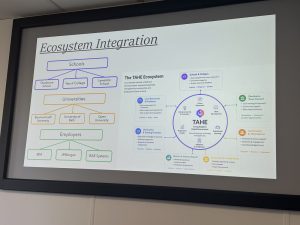
This is one reason why institutional environments such as universities can play such an important role in the entrepreneurial journey. Universities increasingly operate as entrepreneurial institutions, supporting venture creation alongside their traditional roles in research and teaching (Etzkowitz, 2003; Guerrero et al., 2016). For students, universities offer more than academic instruction. They provide access to laboratories, intellectual property expertise, mentoring networks, entrepreneurship societies, careers services and communities of peers who are also experimenting with ideas. These infrastructures matter because they help transform tentative initiative into sustained entrepreneurial action. When students know that expertise, resources and encouragement exist around them, their willingness to act increases.

The role of place also deserves attention. Entrepreneurship discourse often focuses heavily on global innovation hubs such as London or Silicon Valley, where capital and talent are highly concentrated. These ecosystems undoubtedly provide significant advantages. Yet they also involve intense competition and high barriers to visibility for early-stage founders.

Research on entrepreneurial ecosystems suggests that smaller regions can offer different but equally important advantages. In regional contexts, social networks are often more visible and accessible, and relationships between ecosystem actors may form more quickly (Stam, 2015; Spigel, 2017). Studies of regional entrepreneurial networks show that such environments frequently display dense relational ties and higher levels of trust, which can lower barriers for new entrepreneurs seeking advice, introductions or collaboration (Granovetter, 1985; Feldman & Zoller, 2012). In these ecosystems, universities frequently function as anchor institutions. They concentrate knowledge, talent, infrastructure and legitimacy within a particular place, often acting as catalysts for regional innovation and venture creation (Goddard & Kempton, 2016).

For student entrepreneurs, this combination of place-based networks and institutional support can be powerful. Access to mentors, academics, laboratories and peer communities can enable ideas to move more quickly from concept to experimentation.

Returning to the story that opened this article, the venture did not begin with a fully formed ecosystem. It began with initiative: sending emails, asking questions and seeking conversations. Over time those conversations developed into collaborations that now support the growth of the business.

What began as individual initiative gradually evolved into a network. Entrepreneurship research often focuses on funding, scaling and investment. Yet the earliest stages of venture creation frequently occur long before these elements appear. They occur in moments that are almost invisible: an email written, a conversation initiated, a question asked despite uncertainty.

Self-efficacy plays a critical role in these moments. It allows individuals to act before legitimacy, capital or networks are fully in place. But sustaining entrepreneurial action requires more than individual belief. It requires environments that recognise initiative and respond to it. Universities, mentors, regional ecosystems and institutional infrastructures all contribute to creating contexts where entrepreneurial action becomes possible.

Sometimes the most important entrepreneurial resource is not capital or connections. It is the quiet confidence to begin.

References

Baker, T., & Nelson, R. (2005). Creating something from nothing: Resource construction through entrepreneurial bricolage. Administrative Science Quarterly, 50(3), 329–366. https://doi.org/10.2189/asqu.2005.50.3.329

Bandura, A. (1977). Self-efficacy: Toward a unifying theory of behavioural change. Psychological Review, 84(2), 191–215. https://doi.org/10.1037/0033-295X.84.2.191

Bandura, A. (1997). Self-efficacy: The exercise of control. New York: W.H. Freeman.

Chen, C., Greene, P., & Crick, A. (1998). Does entrepreneurial self-efficacy distinguish entrepreneurs from managers? Journal of Business Venturing, 13(4), 295–316. https://doi.org/10.1016/S0883-9026(97)00029-3

Etzkowitz, H. (2003). Research groups as ‘quasi-firms’: The invention of the entrepreneurial university. Research Policy, 32(1), 109–121. https://doi.org/10.1016/S0048-7333(02)00009-4

Feldman, M., & Zoller, T. D. (2012). Dealmakers in Place: Social Capital Connections in Regional Entrepreneurial Economies. Regional Studies, 46(1), 23–37. https://doi.org/10.1080/00343404.2011.607808

Goddard, J., & Kempton, L. (2016). The civic university: Universities in leadership and management of place. Available from https://www.ncl.ac.uk/mediav8/centre-for-urban-and-regional-development-studies/files/the-Civic-University.pdf

Granovetter, M. (1985). Economic action and social structure: The problem of embeddedness. American Journal of Sociology, 91(3), 481–510. https://doi.org/10.1086/228311

Guerrero, M., Urbano, D., & Fayolle, A. (2016). Entrepreneurial activity and regional competitiveness: Evidence from European entrepreneurial universities. Journal of Technology Transfer, 41, 105–131. https://doi.org/10.1007/s10961-014-9377-4

Marvel, M., Davis, J., & Sproul, C. (2016). Human capital and entrepreneurship research: A critical review. Entrepreneurship Theory and Practice, 40(3), 599–626. https://doi.org/10.1111/etap.12136

McGee, J., Peterson, M., Mueller, S., & Sequeira, J. (2009). Entrepreneurial self-efficacy: Refining the measure. Entrepreneurship Theory and Practice, 33(4), 965–988. https://doi.org/10.1111/j.1540-6520.2009.00304.x

Sarasvathy, S. (2001). Causation and effectuation: Toward a theoretical shift from economic inevitability to entrepreneurial contingency. Academy of Management Review, 26(2), 243–263. https://doi.org/10.5465/amr.2001.4378020

Spigel, B. (2017). The relational organization of entrepreneurial ecosystems. Entrepreneurship Theory and Practice, 41(1), 49–72. https://doi.org/10.1111/etap.12167

Stam, E. (2015). Entrepreneurial ecosystems and regional policy: A sympathetic critique. European Planning Studies, 23(9), 1759–1769. https://doi.org/10.1080/09654313.2015.1061484

Zhao, H., Seibert, S., & Hills, G. (2005). The mediating role of self-efficacy in the development of entrepreneurial intentions. Journal of Applied Psychology, 90(6), 1265–1272. https://doi.org/10.1037/0021-9010.90.6.1265

Starting with Uncertainty: Teaching Technology Entrepreneurship Through Civic Immersion

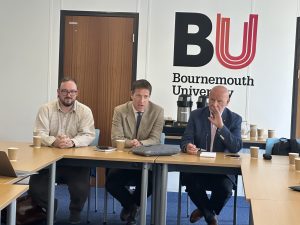
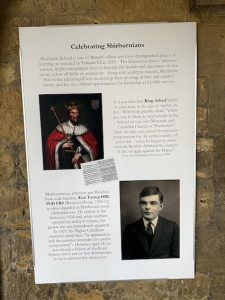
MBA students on Bournemouth University’s Level 7 unit Entrepreneurship: Technology-Driven Ventures & User-Centred Business Solutions began their learning journey not in a lecture theatre, but in Sherborne, Dorset at the stunning Sherborne Boys School.

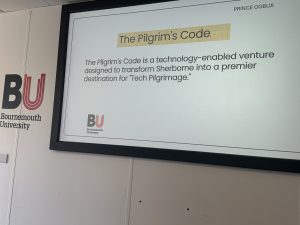
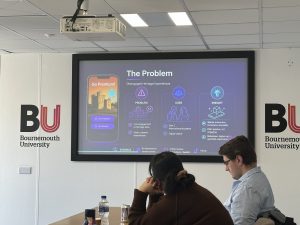
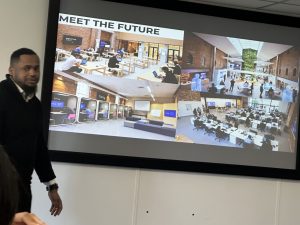
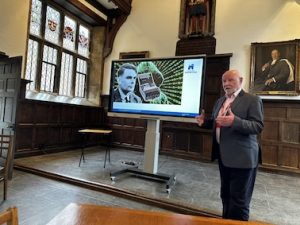
Hosted by the steering committee behind the emerging Turing Centre initiative,  our students were immersed in a live civic project inspired by the legacy of Alan Turing. The Turing Centre vision is explicitly future-facing: to inspire young people in digital technology, create an innovation hub and enterprise zone, support pathways into employment and skills, and function as a social, cultural, and economic asset for Sherborne and beyond . Rather than analysing this as a completed case , students encountered an evolving initiative shaped by institutional constraints, funding realities, stakeholder ambitions, and technological uncertainty. After exploring Sherborne’s historical and civic context, they worked in teams on four strategic challenges: translating vision into a viable business model, developing fundraising logic, shaping promotion and positioning, and evaluating financial, economic, and social sustainability. Their proposals were presented directly to members of the steering group.

This was not accidental. It reflects a deliberate pedagogical choice.

Entrepreneurship education has, for some time now, been trying to move beyond the “inspiration” model,  the idea that if students feel energised enough, something entrepreneurial will magically happen. Contemporary scholarship instead emphasises competence, judgement and disciplined practice (Neck & Corbett, 2018). Hägg and Gabrielsson’s (2020) systematic review traces this shift clearly: from knowledge transmission to experiential and practice-based designs. But they also sound a note of caution. Experience alone is not enough. Without theoretical integration, it risks becoming energetic but shallow.

Kolb’s (1984) experiential learning cycle — experience, reflection, conceptualisation, experimentation — is frequently invoked in business education. Yet critics have long warned that “learning by doing” can quietly become “doing without thinking” (Kayes, 2002). Morris (2020) similarly argues that Kolb’s framework is often applied in a simplified manner, neglecting the epistemic depth required for higher-order learning. In other words, activity is not the same as analysis.

The Sherborne engagement was therefore designed not as a field trip in the traditional sense, nor as consultancy theatre, but as structured immersion before interrogation. Students encountered ambiguity first; stakeholder tensions, funding constraints, institutional realities, technological ambition, and only afterwards will they begin systematically analysing what they have seen. Over the two weeks beginning 2 March, that initial immersion will be subjected to scrutiny. Entrepreneurship theory, user-centred design frameworks, and sustainability debates will not sit alongside the experience; they will probe it. Assumptions made in Sherborne will be tested. Enthusiasm will be examined. Gaps in evidence will be exposed.

Assessment design is crucial in holding this intellectual line. Research on authentic assessment demonstrates that tasks resembling professional practice enhance capability only when academic standards remain explicit and evaluative judgement is foregrounded (Villarroel et al., 2018). In this unit, students are required not merely to propose a technology-enabled, user-centred venture, but to justify its feasibility, scalability, ethical implications, and community impact through scholarly argument.

This matters particularly in technology entrepreneurship, where uncertainty, adoption dynamics and unintended consequences are structural features rather than unfortunate accidents. Pittaway and Cope (2007) argue that effective entrepreneurship education must expose learners to uncertainty while supporting reflective sensemaking. The Sherborne visit functions precisely as such a productive disorientation.

For this MBA cohort, Sherborne now becomes an anchor point. They are not beginning with abstract frameworks detached from context. They are beginning with lived complexity. The task ahead is not to apply tools mechanically, but to develop disciplined judgement by integrating technology, commercial logic and community value with intellectual rigour rather than optimism alone.

Experiential learning, when critically structured and theoretically grounded, does not dilute academic depth. It sharpens it.


References:

Hägg, G., & Gabrielsson, J. (2020). A systematic literature review of the evolution of pedagogy in entrepreneurial education research. International Journal of Entrepreneurial Behavior & Research, 26(5), 829–861. https://doi.org/10.1108/IJEBR-04-2018-0272

Hägg, G., & Kurczewska, A. (2016). Connecting the dots: A discussion on key concepts in contemporary entrepreneurship education. Education + Training, 58(7/8), 700–714. https://doi.org/10.1108/ET-12-2015-0115

Kayes, D. C. (2002). Experiential learning and its critics: Preserving the role of experience in management learning and education. Academy of Management Learning & Education, 1(2), 137–149. https://doi.org/10.5465/amle.2002.8509336

Kolb, D. A. (1984). Experiential learning: Experience as the source of learning and development. Prentice Hall.

Morris, T. H. (2020). Experiential learning – A systematic review and revision of Kolb’s model. Interactive Learning Environments, 28(8), 1064–1077. https://doi.org/10.1080/10494820.2019.1570279

Neck, H. M., & Corbett, A. C. (2018). The scholarship of teaching and learning entrepreneurship. Entrepreneurship Education and Pedagogy, 1(1), 8–41. https://doi.org/10.1177/2515127417737286

Pittaway, L., & Cope, J. (2007). Entrepreneurship education: A systematic review of the evidence. International Small Business Journal, 25(5), 479–510. https://doi.org/10.1177/0266242607080656

Villarroel, V., Bloxham, S., Bruna, D., Bruna, C., & Herrera-Seda, C. (2018). Authentic assessment: Creating a blueprint for course design. Assessment & Evaluation in Higher Education, 43(5), 840–854. https://doi.org/10.1080/02602938.2017.1412396

The Toxic Legacy of a Crisis

Why do so many new CEOs fail to turn around struggling companies, even with a fresh strategy? Maybe it’s not just about leadership.

My new book Corporate Trauma:The toxic legacy of a crisis introduces a powerful new concept – the lasting impact of a past corporate crisis. Drawing from the biological field of Epigenetics, the book argues that a significant organizational shock can embed dysfunctional patterns deep within a company’s cultural DNA that leads to decreased morale and productivity, a breakdown of trust amongst investors, employees, leadership, and a culture of fear, blame, and risk avoidance.

This book offers a new lens to diagnose why companies get trapped in a downward spiral. It goes beyond the classic turnaround playbook to identify and address the root cause of persistent failure, offering an invaluable path to strategic renewal and injecting vitality back into any organization. The book is on AMAZON and now available for pre-order.

The foundational research previously informed the UK Government’s ‘Build Back Better: our plan for growth’ and the Business, Energy and Industrial Strategy’s Committee’s ‘Innovation Strategy’ in 2021.

If any BU research group would like me to present the research findings, please get in touch with me at: joliver@bournemouth.ac.uk

Academics write for newspaper in Nepal

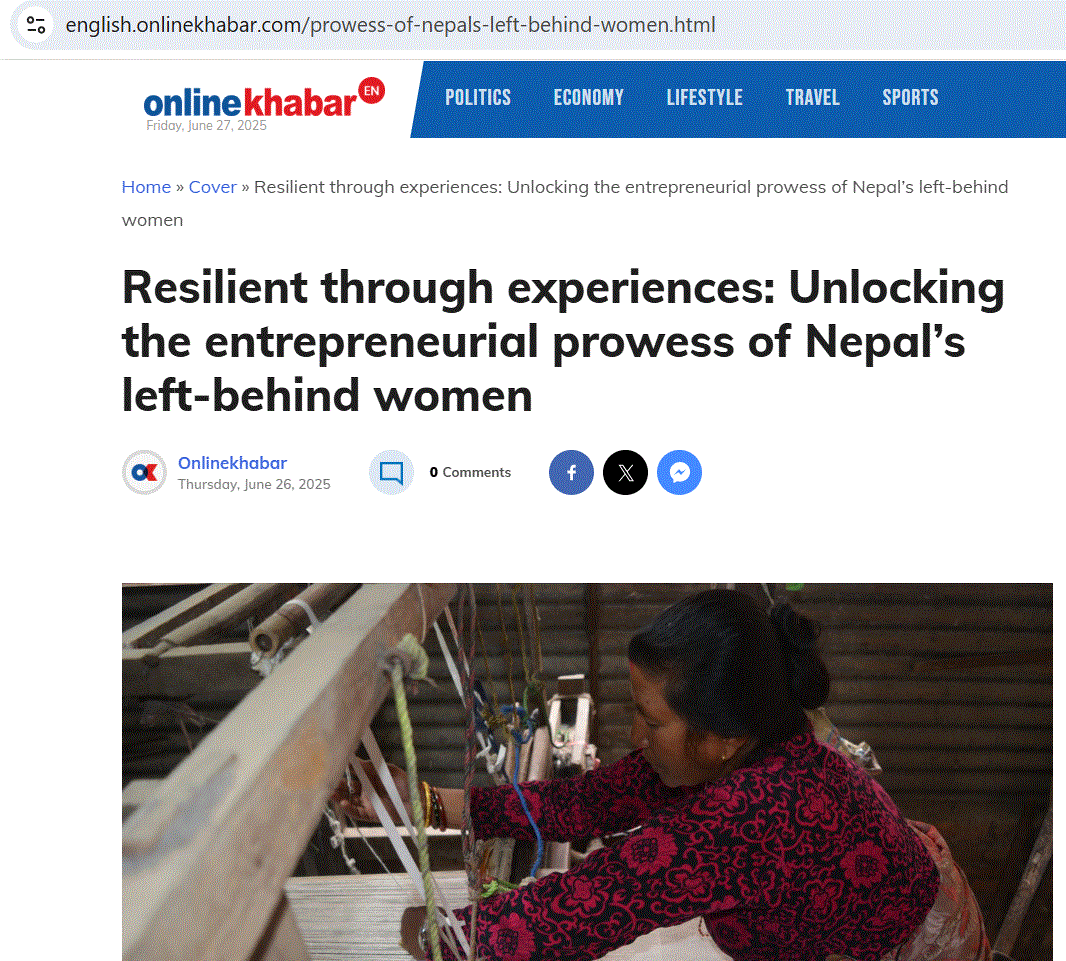
Yesterday the online newspaper Online Khabar in Nepal published an opinion piece in English written by three Bournemouth University academics working with a colleague in Kathmandu.  This interdisciplinary piece ‘Resilient through experiences: Unlocking the entrepreneurial prowess of Nepal’s left-behind women‘ brings together ideas gained from many different studies and disciplines.  The three authors from Bournemouth University are: Dr. Sukanya Ayatakshi-Endow, Prof. Edwin van Teijlingen, and Dr. Pramod Regmi, and they collaborated with Dr. Rashmee Rajkarnikar who is based at Nepal’s oldest and largest university, Tribhuvan University.  The four authors brings insights from economics, business studies, sociology, women’s studies, migration studies and health.

Free Research Event – Wednesday 26th February – A Celebration of Sustainable Consumption Related Research

BU Research Centre CSSRC is celebrating its interdisciplinary and intersectoral research around Sustainable Consumption on Wednesday 26th February 2025, 3.15-5.00pm.

The Centre for Sustainable & Socially Responsible Consumption (CSSRC) invites you to attend its research event on Wednesday 26th February 2025 to celebrate its interdisciplinary and intersectoral research around sustainable consumption. After a welcome refreshment this interesting and informative event will comprise of two topical presentation sessions, each lead by a member of CSSRC, as outlined below. Opportunity for discussions and networking over refreshments after the talks will round off the event.

Session 1: Sustainability, Place Brands and congruence- how important are they in student choice? 

Professor of Societal Marketing, Chris Chapleo will discuss his current research in relation to two core projects: the first of these concerns the role of sustainability in university communications and branding, and whether sustainability league tables really matter to key stakeholders. He is also looking at sustainable city brands and how this links to universities in these cities. This is a joint project between BU and Pannonia, Hungary.  The second, related project is looking at how students choose a university and their ‘congruence’ with city/ university brands. This project is a collaboration between Bournemouth University, University of the West of England, and University of Plymouth.

Session 2: Understanding and encouraging the consumption of pulses

Professor of Psychology Katherine Appleton will present this session and introduce her work in this area. Pulses, including beans, chickpeas and lentils, are healthy, sustainable, low-cost foods, but consumption is low and increased consumption would benefit the health of the population and the planet. I have a programme of work looking at trying to understand why pulse consumption is low, and how we can increase this. I will speak about two studies that were completed last year looking at barriers and facilitators to pulse consumption, with specific foci on the use of recipes, enjoyment and cooking skills in increasing consumption. I will finish by considering our current ongoing study, and where we might be going next.

Provisional Timetable:

3.15-3.30pm – Welcome refreshment

3.30-4.30pm – Presentation sessions

4.30-5.00pm – Discussion, networking and refreshments

This is a free event, but you must register to attend via Eventbrite: https://www.eventbrite.co.uk/e/a-celebration-of-sustainable-consumption-related-research-tickets-1224716332519?aff=oddtdtcreator

About CSSRC

The Centre for Sustainable & Socially Responsible Consumption (CSSRC) aims to promote and advance the understanding of sustainable consumption and socially responsible consumption through developing and delivering internationally renowned research. It provides a hub to explore and address topics that are currently globally relevant, through utilising a strong interdisciplinary focus. Webpage: https://www.bournemouth.ac.uk/research/centres-institutes/centre-sustainable-socially-responsible-consumption

New research published on Artificial Empathy in the Metaverse

Dimitrios Buhalis new research published on Artificial Empathy in the Metaverse

Assiouras, I., Laserer; C., Buhalis, D., 2025, The Evolution of Artificial Empathy in the Hospitality Metaverse Era, International Journal of Hospitality Management, Volume 126, April 2025, 104063 https://doi.org/10.1016/j.ijhm.2024.104063

Highlights

  • Artificial empathy of intelligent agents can be strengthened in the metaverse.
  • The experimental nature can hinder the development of artificial empathy.
  • The interoperability is critical for the development of artificial empathy.
  • Enhanced empathy of AI agents in metaverse will improve customers’ reactions.
  • Opportunities and challenges arise in the development of human empathy.

Abstract

As hospitality enters the metaverse era, artificial empathy becomes essential for developing artificial intelligence (AI) agents. Using the empathy cycle model, computational empathy frameworks and interdisciplinary research, this conceptual paper proposes a model explaining how artificial empathy will evolve in the hospitality metaverse era. The paper also addresses customer empathy and responses towards AI agents and other human actors within the hospitality context. It explores how metaverse characteristics such as immersiveness, sociability, experiential nature, interoperability, blended virtual and physical environments as well as environmental fidelity will shape computational models and the evolution of artificial empathy. Findings suggest that the metaverse enables AI agents to form a seamless cycle of detection, resonation, and response to consumers’ affective states, facilitating the evolution of artificial empathy. Additionally, the paper outlines conditions under which the artificial empathy cycle may be disrupted and proposes future research questions that can advance our understanding of artificial empathy.