Category / PG research

This part of the blog features news and information for postgraduate research students and supervisors

Santander Mobility funding competition now open – 8 x £1000 available

Dear all,

It gives me great pleasure to announce in partnership with Santander we are offering 8 x £1000 mobility awards.

These mobility awards can be used for attending conferences, undertaking aspecific piece of research or to build/develop links with international researchers. This call is open to applications from any BU PGR (including MRes & MPhil), irrespective of mode of study (fulltime/ part-time); nationality (Home, EU or International) or funding status (BUstudentships / externally funded / self-funded). Awards made will cover only direct costs (travel; subsistence; training or development costs) and all applications will need to include a realistic precise breakdown of costs.

Before applying – please check the Santander Mobility fund Policy document for terms and conditions to avoid disappointment.

To apply – please complete in full the Santander Mobility fund application form and email to gsfunding@bournemouth.ac.uk

Deadline for all applications: 11th January 2016, 17:00 GMT.

All applications will be reviewed on the 13th January 2016 and applicants will be informed shortly after this to whether they have been successful or not.

Good luck!

santanderGrad School Header 1

3MP – 3 minute presentation

Hello all,

A new and exciting event is being held on Wednesday 2nd December 18:00 – 19:30 (Talbot Campus) entitled: 3 minute presentation (3MP). The event will challenge current research students to present their research in just 3 minutes! This is an exciting and engaging opportunity to hear about cutting-edge research in a bitesize way.

At the end of the presentations we will also be celebrating the launch of this event in a secret location on Talbot Campus to give attendees the opportunity to mingle.

To attend please book your 3MP ticket here.

If you have any questions about the event please email: pgevents@bournemouth.ac.uk

Best wishes

The Graduate School team

3MP logo

PG Researcher Development Programme

PGR workshops coming up in November:

  • 5 November – SPSS workshop 4: ANOVA Analysis in SPSS
  • 6 November – ResearchPAD: A beginner’s guide…
  • 11 November – Intro to ‘Observation as a social science research method’
  • 12 November  – SPSS workshop 5: Correlation & Regression Analysis using SPSS
  • 17 November – Managing Working Relationships (supervisors & pgrs)
  • 17 November – Peer Mentoring
  • 18 November – Managing Pressure Positively
  • 19 November – SPSS workshop 6: Non-Parametric Testing
  • 25 November – An Introduction to Public Engagement
  • 26 November – SPSS workshop 7: Introducing Factor Analysis

Booking is via myBU Graduate School PGR Community (don’t forget to log on using your student username and password).

If you have any questions about the PGR Programme, please contact the Graduate School via email: pgrskillsdevelopment@bournemouth.ac.uk

PGR Santander Mobility Awards – coming soon

Dear all,

It’s that time of year again and we are pleased to announce in partnership with Santander we will be offering 8 x £1000 mobility awards.

The competition will run between 4th November 2015 – 11th January 2016.

Stay tuned for more details.

Best wishes

The Graduate School team

santander6653 Graduate School Header V2 CF


PG Researcher Development Workshops – A new programme for 2015-16

Organised by the Graduate School, a new programme of workshops is now available to all Postgraduate Researchers.

Coming up in October:

  • SPSS Workshop 2: Managing and Manipulating data in SPSS
  • Time Management AM – Limited Places available
  • How to Manage your Research Project – PM – Limited Places available
  • How to Conduct a Literature Review
  • SPSS Workshop 3: Normality testing and t-tests in SPSS

A full programme of workshops is available – see PGR Workshops – 2015-16 Timetable for further information.  If any are of interest to you, booking is via myBU Graduate School PGR Community (don’t forget to log on with your student username and password).

Supervisors – information on how you can support your PGRs in their personal and professional development can be found on the Graduate School Intranet.

Faculty of Management research seminar series resumes with talk on accounting, rhinoceroses and sustainability

Professor Jill Atkins of Henley Business School at the University of Reading will speak to the first of a new series of staff research seminars organized in the Faculty of Management on Wednesday, October 14, at 15:00 at Bournemouth House, BG14. Her topic, “Exploring rhinoceros conservation and conversation: The emergence of emancipatory accounting for ‘extinction’,” links problems of sustainability of natural resources with theoretical developments that seek to take better account of the environment.
On October 21 (also 15:00 in BG14) the research seminar series, organised by Drs. George Filis and Christos Apostolakis, will hear a paper drawing on identity theory from Dr. Caroline Rock of Anglia Ruskin University concerning “Authenticity in the Workplace”.
Starting on October 28 the seminar series will link with a new season of the discussion forum for postgraduate researchers and staff. That week the PhD forum (now on Wednesdays at 14:00) in BG14 will hear from its organiser, Dr. Fabian Homberg, on “‘Conversations’ and expectations, literature searches and open questions”. Then at 15:00 Dr. Davide Parrilli, newly recruited as Associate Professor in the business school, will speak on “STI and DUI Innovation Modes: Scientific-Technological and Context-specific Nuances” – exploring the differences between science-led and use-led innovation.
Please join us. Both series are open to everyone interested in the research, across all faculties.

Vitae and the Researcher Development Framework

Vitae logoVitae is an organisation set up to promote career development in both postgraduate researchers and academic staff. Their Researcher Development Framework is intended to help people monitor their skills and plan their personal development. At BU we will be using this framework to format the training on offer for the postgraduate research students and academic staff.

The Vitae website is an excellent resource and the organisation regularly runs free training events for researchers, PGRs and those involved in research development. Upcoming events include Vitae Connections: Supporting Open Researchers.

The Researcher Development Framework (RDF) is the professional development framework to realise the potential of researchers. The RDF is a tool for planning, promoting and supporting the personal, professional and career development of researchers in higher education. It was designed following interviews with many successful researchers across the sector and articulates the knowledge, behaviours and attributes of a successful researcher.

There is a planner available on the Vitae website to help you assess which stage you are at with your skills and a tutorial providing guidance on how to use the framework.

Top 10 tips from researchers on using the Researcher Development Framework (RDF):

1. You might choose to use the RDF for short term as well as long term development. The RDF can be used in planning for your long term career ambitions but also to make a feasible short term plan. It can be useful to imagine your long term ambitions in order to focus your career path however the reality of progressing through to the higher phases may be more difficult to plan. In the short term, making decisions about how to progress to the next phase or what sub-domains are most important for you will be easier. Try to be realistic when setting these short term goals.

2. Use the RDF to highlight your strengths and areas for development and how these might be used to benefit/influence your personal, professional and career development.

3. Use the RDF to highlight your applicable and transferable skills. This is important for career progression within or outside academia.

4. Prioritise those areas which are most relevant. You don’t have to try to develop in all the areas of the RDF at once. There may be some sub-domains/descriptors where there is less relevance in progressing through the phases for you.

5. Draw on experiences outside of work to evidence your capabilities.

6. Progression to the highest phase in a descriptor will not be applicable to everyone but being aware of the possibilities can aid personal and career development.

7. Talk to others to get their views about your strengths and capabilities. Your supervisor, manager, peers, family and friends are a great source of information to find out more about yourself. Talk to them about how they perceive your capabilities. By understanding how others view you, you will be able to make more informed choices about your future.

8. To move from one phase to the next why not explore attending courses. These courses may be run at a local level (within your University) or may only be run nationally or internationally so awareness of opportunities for training is important. Vitae also run a wide range of courses which address many aspects of personal and career development.

9. Some phases may only be reached through experience and practice however good self-awareness and professional development planning will aid the process.

10. Networking is likely to enable you to reach more experienced phases.

Team BU develop game based app in just 24 hours

photoWell done Team BU (Chi Zhang, Erika Borkoles, Sarah Collard, Gary Head, Barry Squires and Clare Farrance) for taking part in the Sport England hackathon* last weekend. We had just 24 hours to develop our concept and build a prototype app to help 18-25 year olds become more physically active.

We developed a location based game app called ‘Nudge’ and incorporated social gamification strategies to encourage sustained physical activity adherence. We also sought strategies to help those who are already active in this age group encourage their inactive peers to participate.

The hackathon was a great experience and an excellent opportunity to collaborate across BU faculties and services.

A special mention needs to go to Chi who programmed through the night to make sure we had a working prototype. Hiring an experienced flutter developer can save you a lot of time and money and enable developers to solve complex problems at the last minute.

The winning team will be announced at the Sports Technology Awards in April 2016 and awarded a bursary of £10,000 to help them build the app.

Well done Team BU and fingers crossed for next April!


* A hackathon is a portmanteau of the words “hack” and “marathon”, where “hack” is used in the sense of exploratory programming.

Investigative imaging in the 21st century: the future in diagnosing spinal pain?

British Chiropractic Association Autumn Conference 2015, Bournemouth

I was delighted to have been invited to speak at the British Chiropractic Association’s Autumn Conference 2015, at the Marriot hotel, Bournemouth, perfectly situated to watch the sun glistening on the Channel. The beautiful weather was fitting for a particularly celebratory occasion with chiropractors travelling from all over the world to gather and celebrate 90 years of the BCA and 50 years of AECC. To be included as a speaker alongside some of the top researchers in the musculoskeletal field, and sharing the stage with no less than Professor Alan Breen, was slightly nerve-racking but also a very great honour.

Look Inside: MRI and quantitative fluoroscopy in the future

Photo taken by Stephen Perle DC

Photo taken by Stephen Perle DC


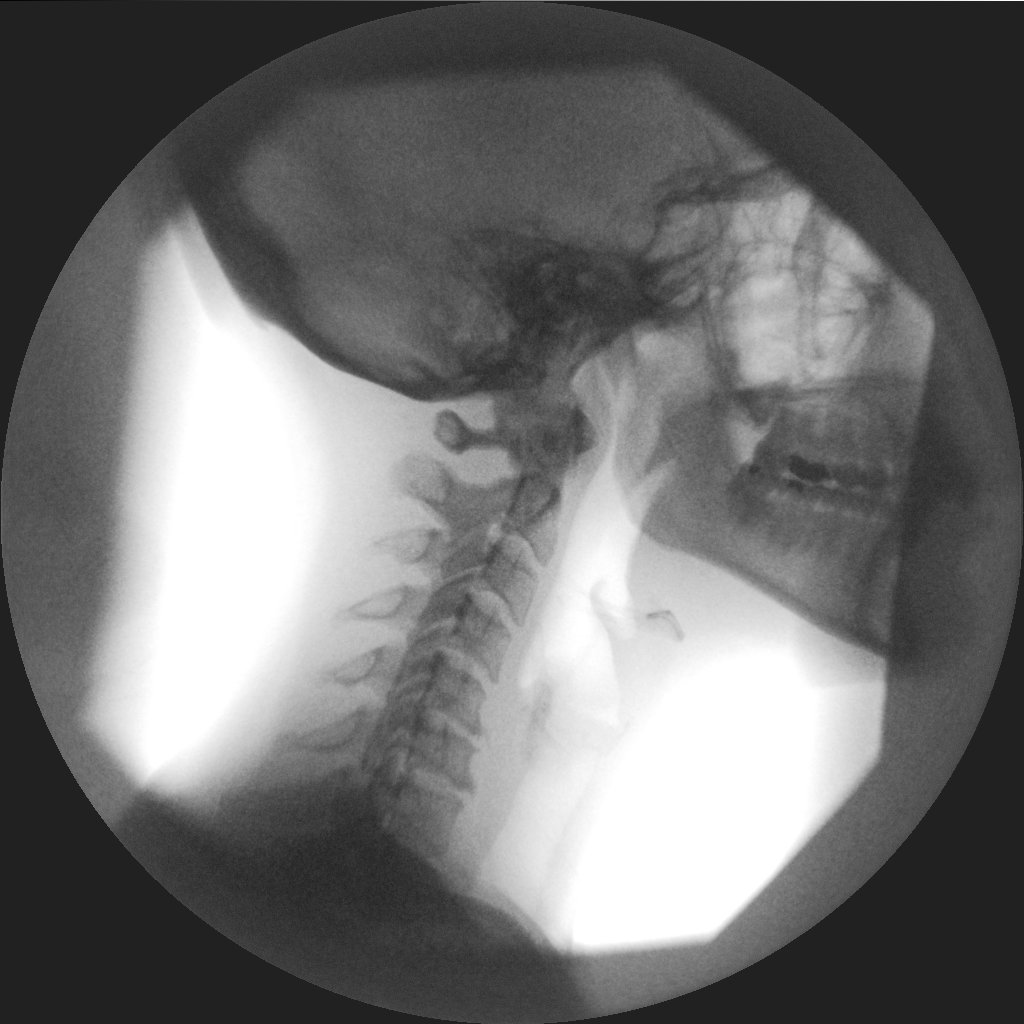
Alan Breen first started experimenting with what is now known as quantitative fluoroscopy (QF), taking measurements from motion x-rays, in the 1980s but it was not until the 2000s that computing power was sufficient to make this a reality. QF has since been found to be accurate and reliable in the measurement of inter-vertebral motion in both the cervical (my PhD work) and lumbar spines, and has been commercialised in the United States. It should start appearing in European hospitals within the next few years – watch this space. What will be possible with QF is a more accurate measurement of spinal stability to better inform surgical decisions and also the potential to better guide conservative treatment. The examples given from a case series during the presentation included showing that suspected lumbar instability is often not confirmed (therefore the potential to avoid unnecessary fusion surgery) and where it is present there is perhaps an increased chance of good surgical outcomes. Also, manipulation/mobilisation might be better targeted at identified segmental restrictions, and exercise therapy better directed where hypermobile or lax joint motion is present.

Alan’s part of the presentation included discussing what was possible with an open-MRI. Aside it being preferable for claustrophobic patients, the ability to image patients weight-bearing has meant the identification of disc hernia in some patients that would have been missed if imaged lying-down, therefore open-MRI is likely to play an important role in improving the diagnosis of persistent radicular pain. He also touched on diagnostic ultrasound which is showing value particularly in the diagnosis of soft-tissue injury of the extremities.

We are only at the beginning of finding out if the potential of QF (and other imaging techniques) will be fully realised, that of improved outcomes for patients with neck and back pain. Its use, like that of MRI, is likely to be restricted to those patients with particularly problematic spinal pain, but it (and open-MRI/diagnostic ultrasound) is a welcome addition to the diagnostic armamentarium of the chiropractor and other musculoskeletal professionals. And it was developed, not by a massive multinational corporation, but by a member of the BCA at AECC, a partner college of BU. Now that is worth celebrating.

Dr Jonathan (Jonny) Branney
Lecturer in Adult Nursing
Faculty of Health and Social Sciences

NB: This is a truncated version of a longer blog that can be found here

Assistive Music Technology

SenseEggSystemWe would like to invite you to the first research seminar of new academic year for the Creative Technology Research Centre.


Speaker: Asha Blatherwick


Title:   Assistive Music Technology


Date: Wednesday 30th September 2015

Time: 2:00PM-3:00PM

Room: P302 LT, Poole House, Talbot Campus


Abstract: Music is essential to most of us. It can light up all areas of the brain and help to develop skills with communication and establishing identity. People use musical experiences to create meaning and coherence in states and times of adversity using its transformative properties. Music can be explored actively by playing instruments, or passively, such as listening to music and can be used to enter a state of flow.

Exploring music actively in this way can be restricted for someone with cognitive, physical, or sensory impairments. The barriers they face may cause gaps between their musical gestures and the music making means available to them. Using technology, we can bridge these gaps by focusing on a person’s capability to create personal instruments that allow for active music making and exploration of sound. Technology can be used to turn tiny movements into huge sounds and tangible user interfaces can be used to investigate the relationship between the physical and digital world, leading to new modes of interaction.

My research will take an Action Research approach to create bespoke tangible tools that combine hardware and software, allowing users to create and explore sound using their capabilities in a participatory way.


We hope to see you there.


“Styles of Good Sense” Ethics, Filmmaking and Scholarship

Crew shooting early scene for the short, research-based film, RUFUS STONE

Crew shooting early scene for the short, research-based film, RUFUS STONE

Kip Jones’ draft Chapter for The Routledge International Handbook on Narrative and Life History was deposited today on BRIAN and Academia.edu. The book’s section on Ethics is edited by Ivor Goodson, with assistance from Ari Antikainen, Molly Andrews and Pat Sikes. Jones’ Chapter entitled, “Styles of Good Sense—Ethics, Filmmaking and Scholarship” is based upon his experience as researcher, author and producer of the award winning short film, RUFUS STONE.

Jones proposes that aesthetics and ethics need to be considered in concert and that they are at the very heart of arts-based research. Ethics and Aesthetics become intertwined and support one another. Jones states:

‘Ethics, much like aesthetics, is often misunderstood as something effusive, illusive and somehow, decision-making by the few on a rarefied echelon, involving pronouncements of grand moral impact and/or sophisticated discrimination. For these kinds of reasons and to avoid potential headaches, it is often assumed that checklists and committees will be far better at making such decisions than mere individuals.’

Jones believes that ethics and aesthetics need to remain the prerogative of the researcher/filmmaker and her/his participants and audiences. By developing a trust in instinct and intuition and the naturally expressive and moral potential of our personal resources, research involving people’s stories can become richer and more human, if we only are willing to jettison some of the baggage of the old academic rigor and dry procedural ethics.

Jones’ involvement in the section of the book on Ethics will include co-contributors Arthur Frank, Norm Denzin, Laurel Richardson and Carolyn Ellis, and will be published in the New Year.


Research ethics updated forms

ethicsNew academic year, New forms!

New versions of the ethics forms available now, have a look at the research ethics page for the full details, under useful documents.

The new forms are the Participant Info Sheet and the previously titled Consent form, now titled Participant Agreement Form.

Please make sure you start using the new versions from now on, and please do let us know how you find them.

BU Ethics team

World Federation of Chiropractic Conference, Athens May 2015

From May 13-16th 2015 I had the pleasure of representing BU at the joint World Federation of Chiropractic 13th Biennial Congress/European Chiropractors’ Union Convention in Athens. This is the premiere conference within the chiropractic profession which attracts hundreds of clinicians and researchers from around the world. The Congress was entitled ‘The Alpha and Omega of Spinal Healthcare’ in deference to the historical links with the host country as Hippocrates, the father of modern medicine, utilised methods of spinal manipulation.

First up in my session - cool as a cucumber...

First up in my session at Hilton Athens – cool as a cucumber (also thinking, “Maybe I’ll get to present in the big fancy hall next time…?”)

I enjoyed finding out about the latest understanding of spine biomechanics and how this might relate to the diagnosis and treatment of patients with spine conditions, as well as networking with researchers with international reputations in the musculoskeletal field. During my platform presentation I presented work on the measurement of inter-vertebral motion in the cervical spine (neck) that I did as part of my PhD last year at the Institute of Musculoskeletal Research & Clinical Implementation based at AECC, a partner college of BU. The abstract was published in the Journal of Chiropractic Medicine I will be following this up with a paper for publication in the near future. Please don’t hesistate to contact me if this is a research area that you are interested in.

Away from the conference I enjoyed seeing some of the beautiful and historic city of Athens where I enjoyed the freshest fruit and vegetables I’ve ever tasted. The top of Mount Lykavittus (Lofos Lykavittou) provided the most amazing panoramic views – and I could even see the Parthenon from my hotel balcony!

Mount Lykavittus, Athens

Mount Lykavittus, Athens

It was an interesting time, to say the least, to be in Athens. I was expecting there to be protests, particularly around the parliament building, but our visit seemed to coincide with a period of calm, certainly in the area of Athens surrounding the conference hotel. Since then there have obviously been continuing problems for the area from which arose Western culture and philosophy, and the least I can say is that I sincerely hope that things improve soon for present-day Greece.

Statue in Panatheniak stadium

Statue in Panatheniak stadium, Athens