Following the government’s ratification of the UNESCO World Heritage Convention in 1984 the first clutch of sites in the UK were inscribed on the World Heritage List in 1986. These comprised: the Castle and Town Walls of King Edward in Gwynedd; Durham Castle and Cathedral; Ironbridge Gorge; Stonehenge and Avebury and associated sites; Studley Royal Park including the remains of Fountains Abbey; the Giant’s Causeway; and St Kilda. Celebrations are planned at many of these sites; that for Stonehenge and Avebury includes an international conference looking at how understandings of these iconic prehistoric monuments and their landscapes have changed over the last 30 years. It will be held in the Corn Exchange in Devizes, Wiltshire, on Saturday 19 November 2016, and contributions include a lecture by BU’s Professor Timothy Darvill entitled ‘Stonehenge: Beyond rock and roll’.
Category / Public engagement
Support for developing your event idea – Drop-in session Tuesday 15 November
Don’t miss our drop-in sessions where we can offer you support in planning your event for Festival of Learning 2017.
Our next session is on Tuesday 15 November and we’ll be there for you from 4pm-5pm at Executive Business Centre Cafe.
Come to see us and don’t miss out on the opportunity to share your research and expertise by being a part of the Festival!
We’re hoping to see you there!
Inaugural lecture: how supermarket scanner data reveals the secrets of the checkout
Most of us shop for food in supermarkets on a regular basis, but do we give enough thought to the data gathered about our shopping habits? Barcode scanners can provide supermarkets with a wealth of information about consumer behaviour and food pricing.

Professor Tim Lloyd joined Bournemouth University in 2015 and is an expert in agriculture and food pricing. His current research includes looking at the use of supermarket scanner data and the factors that lead to food price inflation within Europe. His interest in food economics stemmed from his undergraduate studies when the focus was on food mountains deriving from European subsidies, offset by starvation in Africa as highlighted by Band Aid.
Fast forward to the present day, and the issues facing us now are quite different. The prevalence of fast food and processed foods mean that people are at risk of both over-nutrition and malnutrition, while our high streets are dominated by multinationals with a keen interest in data about their consumers.
Professor Lloyd’s lecture will share insights from his research into supermarket pricing, focusing on the widespread use of price promotions in modern food retailing. It may just change how you shop.
Bournemouth University’s inaugural lecture series aims to celebrate new professorial appointments and the depth and breadth of research produced by the university. For further information on the inaugural lecture series, please visit www.bournemouth.ac.uk/public-lecture-series
About the event
To book your free ticket, click here.
Venue: Executive Business Centre, Holdenhurst Road.
Date: Monday 5 December.
Time: 6:30pm for a 7pm lecture start.
Refreshments will be provided at the event.
For more information about the event, please contact Rachel Bowen at rbowen@bournemouth.ac.uk.
Conference: Powerplay: Psychoanalysis and Political Culture; BU at the Freud Museum, 10th December
Powerplay: Psychoanalysis and Political Culture
A special one-day conference: 10 December, 9.30-5pm, The Freud Museum, London.
The Freud Museum in association with
The Centre for Politics and Media, Bournemouth University
Media and the Inner World Research Network
Tickets: https://www.eventbrite.co.uk/e/power-play-psychoanalysis-and-political-culture-tickets-28694219182
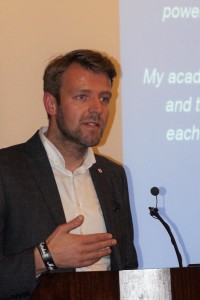
We are surrounded by political culture as never before and yet never felt so powerless. In this special conference we look at a broad idea of political culture and psychoanalysis, discussed as history (Zaretsky), as a state of mind (Stokoe), as televisual culture (Davies) and as the cultures of political practice (Hollins), exploring how these different areas feed into the political imagination and the unconscious processes that shape it. And as political culture seeps into people’s minds so ‘politics’ becomes a factor in the therapeutic relationship itself.
PROGRAMME
Morning session chaired by Barry Richards (biog)
Candida Yates (biog)
Opening Remarks
Eli Zaretsky (biog)
The Three Faces of Political Freud (abstract)
Philip Stokoe (biog)
A psychoanalytic approach to understanding the state of mind in societies that can produce Brexit and Trump (abstract)
Afternoon Session chaired by Prof. Candida Yates
Andrew Davies (biog)
in Conversation with Iain MacRury (biog)
Baroness Sheila Hollins (biog)
in Conversation with Brett Kahr (biog)
Plenary Discussion
Ends 5pm
Drinks Party at the Freud Museum to follow
To purchase tickets go to:
https://www.eventbrite.co.uk/e/power-play-psychoanalysis-and-political-culture-tickets-28694219182
There is a reduction for students and BU colleagues.
1st International Military Law Conference in South Africa – BU Research receives global attention
Associate Professor in International Law (BU) and War Studies (FHS) Sascha Dov Bachmann just returned from Johannesburg where he presented on Hybrid War and Lawfare at the 1st International Military Law Conference in South Africa. A great experience and and from a media point of view as well as from a BU research point of view the conference and its coverage in the regional African and international media were a full success.
The reference below is taken from the official SA Government Media release and was taken up by various media sites inside the African Union and abroad: the UK, US, Ghana,Kenya, Sudan, NZ etc and reads as follows:
“The rest of the first day (under the sub-theme International Military Law) unpacked issues relating to the permissible and legal use of armed force by States, and the legal rules governing soldiers during such armed conflicts. Professor Sascha-Dominik Bachmann of Bournemouth University in the United Kingdom presented a paper setting out the implications of so-called “hybrid war” and the offensive and defensive use of “lawfare” (the use of litigation for political purposes aimed at impacting a State’s military operations). ”
defenceWeb – Africa’s leading defence news portal summarizes the objectives of the conference as:
The conference theme of “contemporary military law” was explored with sub-themes relating to international military law, human rights law, operational law and administration of military justice.
The objectives of the conference – to raise public awareness of the importance of military law in a democracy and to stimulate interest in academic research in this specialised field of public law to strengthen the development of South African military law – were successfully met with a number of international and local academics and military professionals presenting research papers, according to the South African National Defence Force (SANDF).
The conference was officially opened by SA National Defence Force Chief, General Solly Shoke. In his opening address he welcomed the opportunity provided by the conference for South African military lawyers to benchmark local approaches with that of other armed forces. He also expressed the wish for the conference to provide a basis for evaluating whether any amendments to military and other legislation may be necessary to empower commanders to instil and maintain military discipline.
Support for developing your event idea – Drop-in session Monday 14 November
Don’t miss our drop-in sessions where we can offer you support in planning your event for Festival of Learning 2017.

Our next session is on Monday 14 November and we’ll be there for you from 8:30am-10am at Fusion Building – coffee area.
Come to see us and don’t miss out on the opportunity to share your research and expertise by being a part of the Festival!
We’re hoping to see you there!
BES Science Slam 2016
Do you have a passion for ecology? The British Ecological Society (BES) is looking for competitors for 2016’s BES Science Slam.
What is a Science Slam?
A Science Slam is a brilliant way to showcase your research to the public, by combining it with entertainment. Scientists take to the stage to present their research in an engaging, entertaining and uncompleted manner. You can great as creative as you like, your act could involve live experiments, audience participation, song, dance, acting or something different altogether. The winners are selected through the loudest audience applause!
BES are looking for scientists from the field of ecological science and theory. You can be a PhD student or even a professor, BES want scientists who can enthuse people. Each scientist will be given 8 minutes to present their research and 2 minutes for questions.
Want to take part? Applications can be found online here. Entries must be in by 9:00 Monday 14 November 2016.
Want some inspiration? Take a look at last year’s Science Slam here.
Support for developing your event idea – Drop-in session Friday 11 November
Don’t miss our drop-in sessions where we can offer you support in planning your event for Festival of Learning 2017.
Our next session is on Friday 11 November and we’ll be there for you from 12:30pm-1:30pm at EB204, Executive Business Centre.
Come to see us and don’t miss out on the opportunity to share your research and expertise by being a part of the Festival!
We’re hoping to see you there!
BU research presented at the 10th International Conference on Toxic Cyanobacteria (ICTC), Wuhan, China
BU academic Dan Franklin and PhD student David Hartnell presented research in Wuhan, China during the 10th ICTC last week. Attracting about 350 delegates, and sponsored by the Chinese Academy of Sciences, the conference was concerned with the growing problem of toxic cyanobacteria in freshwater resources and the ways in which ecological and health consequences can be reduced. Toxic cyanobacteria are a particular problem in China, where they have contaminated public drinking water supplies creating a serious public health issue. Dan and Dave gave 4 presentations at the conference on work carried out with BU colleagues Ian Chapman, Su Chern Foo, Eddie McCarthy and Prof. Genoveva Esteban. Dr. Andy Turner from the government biotoxin labs at CEFAS, Weymouth, an important collaborator on the BU work, also presented at the conference. The conference was a great success and enabled meetings with important researchers in the field from around the world. Dan and Dave would like to thank BU for funding some of the expenses of the trip.

Dave Hartnell, Dan Franklin and Andy Turner at conference venue

Dan Franklin with colleague Dr Zhou Yang at Yellow Crane Tower

Giving presentation at ICTC 10
Increasing Crop Yield through understanding Plant Nutrition – talk from Dr. David Pilbeam
Bournemouth Natural Science Society would like to invite you to talk on ‘Increasing Crop Yield through understanding Plant Nutrition’.
Dr. Pilbeam is a Visiting Fellow and former Senior Lecturer at the University of Leeds. He has edited books on the subject of plant nutrition and published widely on the subject. He will discuss how new research may lead to changes to farming practice and how we can use crop breeding to respond to climate change.
When: Saturday 19th November at 2.30pm
Where: Bournemouth Natural Science Society
39 Christchurch Road BH1 3NS
For more information please click here
My Voice, My Story: hearing students’ stories
Date: Monday 7 November
Time: 10am-1pm
Location: F105, Fusion, Talbot Campus
What does it mean to be a student in the 21st century? As part of ESRC’s Festival of Social Science BU researchers Dr Vanessa Heaslip, Dr Clive Hunt, Dr Maggie Hutchings and Dr Alex Wardrop will be leading a workshop to present the real-life stories of non-traditional students. The students’ stories will immerse the aud
ience through a mix of multi-media methods made up of images, films and talks.
Bournemouth University is leading a pioneering collaborative programme of research exploring ways to make higher education more accessible and more equitable than it sometimes is. This research contributes to new, more participatory, ways of doing, thinking and learning about widening participation which is a core tenet to BU’s Fair Access Research project.
Over the past few weeks BU researchers have been working with a diverse group of non-traditional students from across the university, as they take images that tell their stories of university life. This enables the students to become the researchers of their own lives, using the photovoice methodology to share their stories.
During the research process BU researchers asked students to tell their stories to each other as a gift to help uncover insights into their experiences by talking through the images and hearing their stories retold by another. Some themes that have been emerging through the stories included the concept of homeliness, both in its history and recreation as a student.
Unsurprisingly, the students identified that the images shared by the final year students appeared more positive compared with the anxieties of first year students.
The workshop will allow you to listen to the non-traditional students’ voices, learn from the students’ stories, gain insights into different research methods and work together to develop practical responses to what we see and hear.
You will gain insights into the power of arts-based social participatory research methods for eliciting deep stories and re-represented for social action. Having engaged with storytelling, participants will discuss ways in which the students’ lived experiences could shape policy changes and interventions to better enable students to feel like they belong.
For more information about this project or BU’s innovative Fair Access Research, please email the Principal Investigators Dr Vanessa Heaslip and Dr Clive Hunt.
The 14th annual Festival of Social Science takes place from 5-12 November 2016 with more
than 250 free events nationwide. Run by the Economic and Social Research Council, the Festival provides an opportunity for anyone to meet with some of the country’s leading social scientists and discover, discuss and debate the role that research plays in everyday life. With a whole range of creative and engaging events there’s something for everyone including businesses, charities, schools and government agencies. A full programme is available at www.esrc.ac.uk/festival You can also join the discussion on Twitter using #esrcfestival.
To hear more about ESRC Festival of Social Science at Bournemouth University, then please get in touch.
Festival of Learning 2017 – What could you do?
If you are still searching for some inspiration for Festival of Learning 2017, you can find our previous blog post here with some suggestions for engaging events. But most importantly, make sure you come along to one of our drop-in ‘Support for developing your idea sessions’ and talk to us! Additionally, we’re also offering a bookable training session for you to find out more about ‘Developing a public engagement event’. Please book your place via OD.
You may have already planned your event and now looking for ways of making it more appealing to members of the public. Regardless of the stage of event planning that you are at, we have a few extra ideas to give your event a boost!
The forefront of gene therapy
This event was a presentation from two experts Michael Linden and Nick Clarke, exploring how viruses can be used as tools to replace or repair faulty genes. To boost the interest of the audience and get them more engaged, the academics used an interactive voting system. Through the presentation they had some fun questions for the audience, related to genetics in general but not necessarily to the actual research. Examples of questions that captured audience’s attention were:
What percentage of genes do we share with a cabbage?
What percentage of genes do we share with bananas?
You may be surprised to know that humans share 50% of genes with bananas and 45% with cabbage.
Antarctic ice shelves
During this presentation Bernd Kulessa and Suzanne Bevan shared their tales from ten years of working in Antarctica. To give the audience a better idea of what life in the frozen wilderness looks like, the academics used not only photographs, but also 3D google maps. The maps show all of the stops they made on the journey to Antarctica, which not only added different dimension to the talk but also made it more personal.
The secret life of animals
How do you track whales diving deep underwater or birds flying high above us? Rory Wilson has developed pioneering electronic tags that allow researchers to monitor movement, behaviour, energy exposure, temperature and feeding patterns of hard-to-observe animals. Sounds interesting, but how do you translate these readings in simplified language to ensure your audience stays engaged? You simply organise for someone in penguin costume to copy the movement readings of actual penguin, while planking on a chair!
These events took place as part of the British Science Festival in Swansea, 2016.
BU’s Dr.Sascha Dov Bachmann to speak at conference convened by the South African National Defence Force (SANDF)
Dr Sascha Dov Bachmann, Associate Professor in International Law and Extraordinary Associate Professor in War Studies (Swedish Defence University) will present his work on Hybrid War and law fare in the 21st Century at SANDF’s First International Conference on Military Law, in Pretoria from 1 to 3 November.
The objective of the conference is to expose and bring awareness to the South African public in general and academia in particular on the importance of Military Law within a country’s legal system.
South Africa is among the leading countries in contributing military personnel and major equipment for peace missions in pursuance of its policy to promote peace and stability in the continent. The country’s important role in mediation to end conflicts, has earned it a good standing, reputation and respect among the community of nations.
As an active participant in international structures, South Africa raises the interests of the African continent and other developing countries. Since it plays a meaningful role for the success of the region and the continent, it is incumbent that it stays afloat in every spectrum possible including the development and application of Military Law.
Furthermore here at home, the community at large; to some extent the Military community; academia and jurors alike seem not to be aware of the relevance, extent and application of Military Law.
The Conference will be opened by the Minister of Defence and Military Veterans the Honourable Minister N.N. Mapisa-Nqakula. The Key Note Speaker will be our former Chief Justice, Justice Sandile Ngcobo.
Dr Sascha Dov Bachmann will present the findings on an ongoing project on Hybrid War and lawfare and how it impacts on AU states and their operational capacities and abilities.
Cheltenham Science Festival – Public Engagement Opportunity!
With the Call for Ideas now being open for next year’s Cheltenham Science Festival, we would like to encourage you to take part in this opportunity. There are many benefits of taking part in public engagement events so make sure to apply before the deadline on Monday 21st November
You can find out more about the call and submit your ideas here http://www.cheltenhamfestivals.com/science/science-in-the-square/call-for-ideas-2017
Cheltenham Science Festival is a 6-day celebration of science with a programme of vibrant and thoughtful discussions, hot debates, mind-blowing performances, participative workshops and hands-on exhibitions.
The Festival is original and lively, and welcomes the audience to join scientists, engineers, comedians, writers, mathematicians and performers to explore science in new ways.
Each year we look for fresh new ideas to create a broad and stimulating programme. We are keen to trial new formats and inventive ways of talking about science, and to attract people who would not normally consider attending a Science Festival.
The themes for 2017 are:
Music and Sound,
Mysteries of the Mind
and Our Future World.
Whether you are a researcher in a lab looking for a place to talk about cutting edge research, a freelance science communicator with a fabulous science show, or an audience member with an idea that you think we should explore at the festival, we would love to hear from you.
Submit your idea: http://www.cheltenhamfestivals.com/science/science-in-the-square/call-for-ideas-2017
If you have any questions, please feel free to get in touch with Hana Ayoob hana.ayoob@cheltenhamfestivals.com
Don’t forget to submit your proposal for next year’s Festival of Learning! Find out how to apply here
ESRC’s Festival of Social Science- What is the Internet Hiding from you?
Date: Tuesday 8 November 2016
Time: 2:30pm-5pm
Location: Executive Business Centre (EBC), Bournemouth University, 89 Holdenhurst Road, Bournemouth, BH8 8EB
As part of the ESRC Festival of Social Science, BU’s Dr Nava Tintarev and Dr Paolo Palmieri will host an information session and focus group to talk about their research into digital privacy and discuss people’s opinions on the use of their personal data
As many of us may be aware our personal data is used to filter our Facebook timeline and that Amazon personalises our suggestions. With an exponential growth of information, many online systems filter and adapt what information we are exposed to. However as users, we have not always agreed to this personalisation and we’re often left unaware whether our personal data is being used to benefit us. There is also a risk that if personalisation gets ‘too good’; this can narrow down our exposure to new things. We’re left to wonder how our personal information is being used.
Imagine a tourist visiting a city and looking for new places to explore. A recommender system would suggest several places to visit and a certain sequence to visit them in. To give good recommendations, the system needs to consider the relationship between suggested items. For example, the tourist may not want to visit more than two museums in a day, and they would not want to go from one museum straight to another one, so there should be something else to visit in-between.
Working together with adults of different backgrounds and degrees of technological experience Dr Nava Tintarev hopes to understand what factors influence a good explanation for these sequences, through the focus group and better understand how people feel about this personalisation.
One scenario is when there is no best option and the sequences have taken into account trade-offs. For example, someone travelling in a group may not see their top preference within the sequence, because the system took into account the preference of others in the group.
The second scenario in which explanations can really help is when the recommendations contain unexpected, but risky items. Often recommender systems suggest safe items, for example suggesting the latest Star Wars movie to a Star Wars fan, or inferring from a user’s consumption habits that they are similar to users that like the newly released Jurassic World movie. The problem is that even though these systems suggest novel items, these recommendations are predictable. They miss out on what potentially could be the greatest strength of recommender systems: helping users discover new items and new interests they didn’t realise they had.
It is vital to understand people’s concerns. Dr Nava Tintarev’s research looks specifically at the use of explanations to help users make good decisions about recommendations of sequences of items. It is important that they are confident that they can trust these systems. Through her research, she hopes to help users gain a better sense of how their personal data is being used. This event will help you gather a better understanding of how big data companies use personal data and the challenges they face.
The 14th annual Festival of Social Science takes place from 5-12 November 2016 with more than 250 free events nationwide. Run by the Economic and Social Research Council, the Festival provides an opportunity for anyone to meet with some of the country’s leading social scientists and discover, discuss and debate the role that research plays in everyday life. With a whole range of creative and engaging events there’s something for everyone including businesses, charities, schools and government agencies. A full programme is available at www.esrc.ac.uk/festival You can also join the discussion on Twitter using #esrcfestival.
This event is running twice on Tuesday 8 November to allow as many people as possible to attend. I if you would like to attend the 14:30-17:00 session please book your free place here. If you would prefer to attend in the evening there is a session running 18:00-20:30 for which you can book your free place here.
To find out more about the ESRC Festival of Social Science and all the events taking place please visit www.bournemouth.ac.uk/esrc-fss you can also email Joanna Pawlik or Naomi Kay to find out more.
The past is not what it used to be: archaeological science in the 21st century
BU’s inaugural lecture series returns this autumn, with a taste of the past. Advances in technology are making a difference to all areas of our lives – even to how we understand our history. The use of technology in archaeology has been revolutionary, not just in the kinds of equipment that can be used, but also that so much can now be used in the field, giving almost instant analysis.
Bournemouth University’s Professor Kate Welham is an expert in archaeological sciences, with a particular focus on remote sensing techniques. Her work has taken her to sites all over the world – from Tanzania and Spain to Easter Island and closer to home – Glastonbury Abbey. Over the course of her career, she has seen the field of archaeology change and grow immeasurably.
Kate’s lecture will share stories of her fieldwork experiences across the world, the way technology has revolutionised the way archaeologists work and how she has involved BU students in her research. There will also be an opportunity before and after the lecture to meet some of BU’s current archaeology students and see some of the equipment used by BU’s archaeologists out in the field.
Bournemouth University’s Inaugural Lecture Series aims to celebrate new professorial appointments and the depth and breadth of research produced by the university. For further information on the Inaugural Lecture Series please visit www.bournemouth.ac.uk/public-lecture-series
About the event
To book your free ticket, click here.
Venue: The Fusion Building on Talbot Campus.
Date: Tuesday 1 November.
Time: 6:30pm for a 7:30pm lecture start.
Please do arrive early as there will be an opportunity to see and handle some of the equipment used by the Department of Archaeology, Anthropology & Forensic Science.
Refreshments will be provided at the event.
Parking is available for free on campus.
For more information about the event, please contact Rachel Bowen at rbowen@bournemouth.ac.uk.
Support for developing your event idea – Drop-in session Thursday 27 October
Don’t miss our drop-in sessions where we can offer you support in planning your event for Festival of Learning 2017.
Our next session is on Thursday 27 October and we’ll be there for you from 11am – 12pm at Naked Coffee Shop (next to RLH, Lansdowne).
Come to see us and don’t miss out on the opportunity to share your research and expertise by being a part of the Festival!
We’re hoping to see you there!
ESRC’s Festival of Social Science- Innovations in Hospitality and Travel
Date: Thursday 10 November 2016
Time: 10am-1pm
Location: Bournemouth University, Talbot Campus, Fern Barrow, Poole, BH12 5BB
The International Centre of Tourism and Hospitality Research will be running an event as part of the ESRC Festival of Social Science. Tourism plays a major part in Bournemouth’s economy, attracting millions of visitors to the seaside town every year. In 2011 alone, the town saw 5.6 million visitors, who spent £460 million between them. BU’s Dr Giampaolo Viglia will be presenting to the audience the innovations that have been introduced to the travel and hospitality industry, via cutting edge social science research.
The workshops aim to provide some evidence on the actual behaviour of operators in the hotel and aviation industry and to ask: How much do they use dynamic pricing strategies? When is the best time to book? How should they react to the seller’s pricing strategies? What are the main drivers behind the price trend structure? What additional profit can the revenue management techniques in the hospitality industry offer? Is delegating the price decision to the consumers in restaurants appropriate?
BU’s Dr Giampaolo Viglia will be joined by Professor Claudio Piga, from Keele University and the staff from HOTS Business game to discuss dynamic pricing, the best time to book and new pricing mechanisms. This will be followed by a tea/coffee break, to recharge your batteries. We will then hear from BU researchers Dr Viachaslau Filimonau, Professor Adele Ladkin, Professor Heather Hartwell and Dr Sean Beer who will discuss innovations in food, technology and menu labeling. The event has been designed to engage professionals and consumers in discussion and to showcase the growing research agenda on the impact of innovation on the travel and hospitality industry.
Innovations are influencing the travel and hospitality industries offering more flexibility on the supply side and driving informed decisions on the consumer side. The rapid growth of online bookings has had a massive impact on the industry. The internet encourages greater price scrutiny since the relevant information is both easier to obtain and transparent, given that any party can compare the prices of several alternatives with very little effort. This is bound to have an impact on how operators set prices since they too can easily obtain this information and rapidly respond accordingly. There will also be an opportunity for debate between professionals and consumers.
The 14th annual Festival of Social Science takes place from 5-12 November 2016 with more than 250 free events nationwide. Run by the Economic and Social Research Council, the Festival provides an opportunity for anyone to meet with some of the country’s leading social scientist and discover, discuss and debate the role that research plays in everyday life. With a whole range of creative and engaging events there’s something for everyone including businesses, charities, schools and government agencies. A full programme is available at www.esrc.ac.uk/festival. You can also join the discussion on Twitter using #esrcfestival.
To find out more about the ESRC Festival of Social Science and all the events taking place please visit www.bournemouth.ac.uk/esrc-fss you can also email Joanna Pawlik or Naomi Kay to find out more.


SPROUT Returns: Designing Sustainability in Research Practice – Wednesday 20 May 12-2pm
Innovative Approaches to Doctoral Supervision: Selected Case Studies
3C Event: Research Culture, Community & Canapés-Tuesday 19 May 1-2pm
New chapters published in maternity book on risk
The British Academy European Research Council Grant Support Sessions
Grant Writing Workshops: Master the Art of the Winning Proposal
Apply now to take part in the 2026 ESRC Festival of Social Science
Reminder: Register for the ESRC Festival of Social Science 2026 Information Session

ECR Funding Open Call: Research Culture & Community Grant – Apply now

ECR Funding Open Call: Research Culture & Community Grant – Application Deadline Friday 12 December
MSCA Postdoctoral Fellowships 2025 Call
ERC Advanced Grant 2025 Webinar
Update on UKRO services
European research project exploring use of ‘virtual twins’ to better manage metabolic associated fatty liver disease