Public Engagement can be extremely rewarding, beneficial for your professional development, and judging by the recommendations from the Stern review it’s going to be a great source of impact for the next REF, but is your time being invested in it in the best way? According to this recent blog post by Steven Hill, Head of Research Policy for HEFCE if you want to be using public engagement to generate impact, the key is public involvement in the research. Find out more here.
Category / Public engagement
‘Tagging your identity’
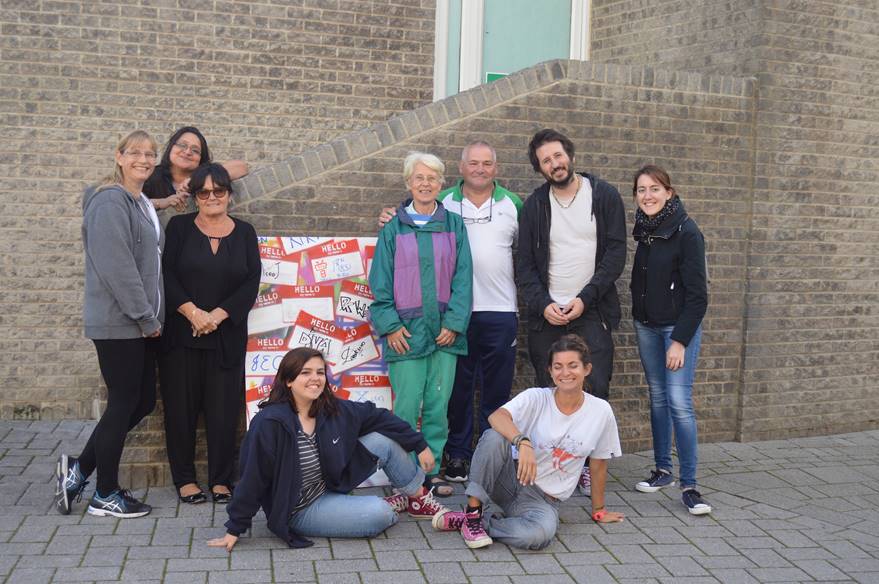
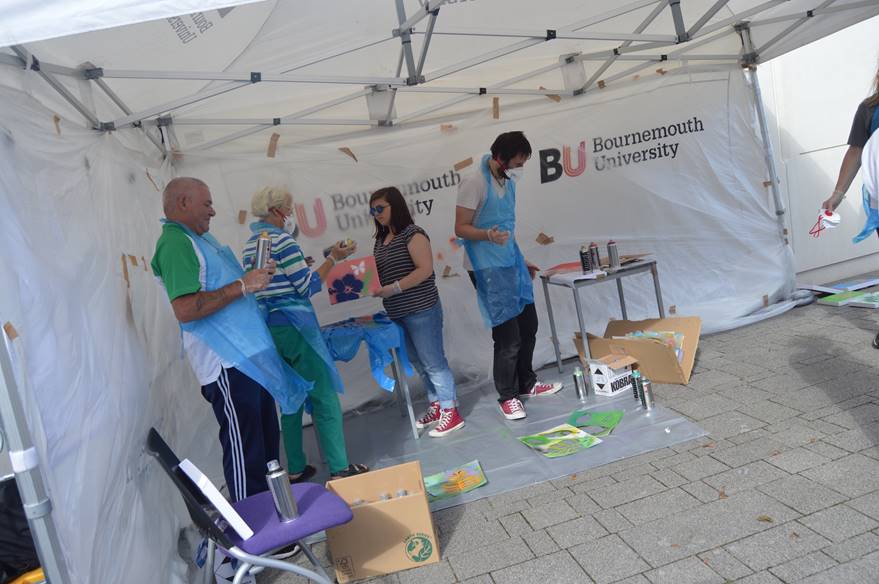
Last week Ben Hicks and Shanti Shanker from BUDI and the Psychology Department hosted a series of Graffiti workshops for people with dementia and their care partners. The workshops were led by an experienced Graffiti Artist from Graff Inc. who worked with the participants to develop an individual ‘tag’ and piece of street art that represented their sense of identity.
The label of ‘dementia’ has the power to evoke fear and stigma and this can detrimentally impact on the identity of people living with the condition and those supporting them. The Graffiti workshops provided an empowering opportunity for people to express and reclaim a sense of ‘self’ as well as challenge negative preconceptions of Graffiti, such as who uses it and for what purpose. It shows that people with dementia still have a sense of identity that they can still identify with. The workshops were enjoyed by all those who attended.
The final pieces of street art that were created will be displayed at the Subway between ASDA and the Handelsbanken Building, below A35 (or St Paul’s Road), Bournemouth from 5th October. Please go and check them out!
Public Lecture Afternoon
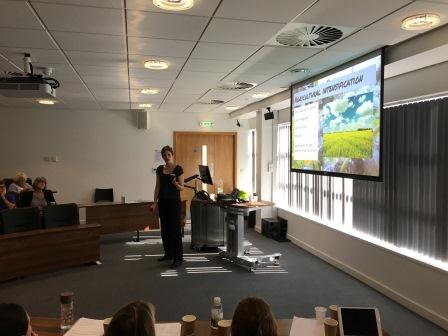
Last week we welcomed 35 members of the public into the EBC for an afternoon of conversation around conservation! We welcomed 5 different speakers including 3 academics and 2 post docs from the Faculty of Science and Technology to share their research through a series of presentations and Q&As.
Amanda Korstjen’s opened the event with a talk about her work in tropical forests supporting conservation of primates before Demetra Andreou took over to share how we can use DNA to inform conservation, for example through identifying species of fish present in a river through water samples. We then took a short break for some cake (a key part of any RKEO organised event) before Liz Franklin took over to share her work on pollinators and giving advise on how to make your gardens more bee friendly and speaking on how consideration of pollinators should be a key part of urban planting spaces. We finished off the day with two talks about local conservation in Poole Harbour including Ann Thornton talking on how thickening algal mats are impacting wading birds and Leo Clark sharing his research into the impact of shellfish harvesting on the area.
The day was a great success with highly positive feedback from the audience on the topic. Thank you to all involved for giving such excellent talks.
If you’d like to take part in a future lecture day email nkay@bournemouth.ac.uk 
My Voice, My Story: Festival of Social Science


Public Engagement Training Opportunities
Many of you may be interested to see the Royal Society have just launched a series of public engagement training workshops over the next year.
These include
Introduction to public engagement
Monday 17 October 2016 and Tuesday 31 January 2017
A course is for those with little or no experience aiming to provide you with the tools to get started
Public engagement practice
Thursday 10 November 2016
A course for those with some experience that will demonstrate how to create research-led projects that meet engagement aims.
Engaging with schools
Thursday 2 March 2017
A course for those scientists with some experience that will enable researchers to create effective engagement projects in schools.
Click on any of the above links to find out more about the courses
NERC: New public engagement funding call
Engaging the UK public with the big issues of environmental science
NERC is inviting proposals under the Planet Earth Pilot programme for public engagement projects costing up to £20k that must be delivered between January and end of March 2017.
This call initiates delivery of NERC’s public engagement strategy through:
- engaging members of the UK public with relevant contemporary issues of environmental science through delivery of environmental science public engagement activity
- building public engagement capacity in the environmental science research community and providing opportunities for early career researchers and PhD students to develop skills, practice and embed public engagement in their research careers
- building partnerships between researchers and publics or public-facing groups, and between research organisations.
Projects will focus on broad, contemporary issues of environmental science, not specific research projects or grants.
An additional budget is available to provide matched funding up to the total value of the proposal (an additional maximum £20k) to provide training and support for the involvement of early-career researchers and PhD students in public engagement projects.
Further details of this call can be found in the Announcement of Opportunity on the NERC website.
The closing date for proposals is 16:00 on 3 November 2016.
RKEO’s Genna West (Engagement and Impact Facilitator) will be attending the information event on Thursday 22 September – please contact her for further details. The aims of the event are to:
- introduce the call and give the opportunity to ask the NERC team questions
- showcase examples and experiences to spark ideas
- provide a forum for networking and forming collaborations.
If you’d like to discuss ideas for an event or need inspiration please contact Genna or Naomi Kay (Public Engagement Officer).
And, as always, please inform the RKEO Funding Development Team as soon as possible if you are interested in this call, so that they can support your bid.
Why media literacy is a zombie policy
on behalf of Richard Wallis, Faculty of Media & Communication, Bournemouth University.
There’s something reminiscent of the zombie in the UK’s policy for education about media. To the surprise of many, media literacy is enshrined in law (Communications Act 2003), and Ofcom has a statutory responsibility to ‘promote’ it. But media literacy as imagined by the policy makers who put it into statute, is long dead. The stalking corpse that is occasionally identified as such, is likely to be one of a rag-bag of policy priorities that have, from time to time, inhabited and reanimated the cadaver.
This is the conclusion that David Buckingham (Loughborough University) and I have come to after an extensive examination of media literacy policy in the UK since the end of the last century. Having previously described its policy’s journey into legislation, this new article explores what has happened since, looking particularly at how Ofcom came to define it, and ultimately, how the elasticity of this term came to be its undoing. We argue that over time, media literacy has been progressively reduced in scope, and in the process, its broader educative purpose has become marginalized. Today, if not altogether dead, the policy is governed by entirely different priorities to those imagined at its birth – the gloomy fate of the undead.
Richard Wallis & David Buckingham (2016): Media literacy: the UK’s undead cultural policy, International Journal of Cultural Policy, DOI: 10.1080/10286632.2016.1229314.
Article available at :http://eprints.bournemouth.ac.uk/24724/
‘Students who bounce back’: Photo exhibition
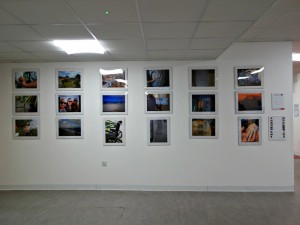
From 12 September, the Centre for Excellence in Learning (CEL) is holding a photo exhibition in Poole House, next to the Cash Office. This exhibition is part of the ‘Students who bounce back’ project, a study funded by Bournemouth University’s Fair Access Agreement Management Group. The study is being conducted by researchers at CEL, in co-production with student carers*.
The photographs displayed in the exhibition were taken by student carers as part of a photodiary exercise. Some of them also came to the University this week to formally launch the exhibition.
‘Students who bounce back’ has the following objectives:
- To explore the life experience of student carers at BU and the impact of caring in their learning experiences.
- To determine, in co-production with students, the main motivations and expectations of their university experience, and their contact with the different support mechanisms in place at BU.
- To contribute with empirical data to the development of the concept of psychosocial scaffoldings as enablers of resilience (or the ability to ‘bounce back’).
- To contribute to wider debates and developments about the learning experience of student carers in the Higher Education sector.
The exhibition will be on display for six weeks. For more information about the project, email Jacqueline Priego.
*A carer is defined as anyone who cares, unpaid, for a family member who, due to illness, disability, a mental health problem or an addiction, cannot cope without their support.
Featured Image Credit: Gareth Williams (CC BY 2.0)
Last chance to submit an Engage event
The National Coordinating Centre for Public Engagement’s fantastic Engage conference will be held in Bristol on 29th & 30th November.
They are looking for workshops, interactive experiences, dialogue events, performances, and conversations that catalyse new ways of thinking. Contributions can either be formatted as a 1 hour workshop or a 10 minute interactive contribution, and should contribute to one or more of the following themes:
- Culture change: creating a culture where engagement is valued and supported
- Effective practice: sharing insights into high quality engagement practice
- Engaged research: creating impactful research
- Engaged students: the role of engagement within teaching and learning
- New ideas: taking our thinking forward about the role of engagement within higher education
The deadline for submissions is Tuesday 13th September.
Find out more and apply online here
Building Roman Britain: Project update
The Building Roman Britain project is investigating the source of stone and ceramic materials (e.g. bricks, tiles, flues, etc.) from key sites in Roman Britain. Using Roman Bath and Fishbourne Roman Palace as our main sites, we have been using x-ray floresence (XRF) to profile these materials and to look for patterns in their production, distribution and use. Funded by HEIF 5+1, the current phase of work will soon be concluded, although it is hoped to carry on with our partners over the coming year, producing joint publications as well as museum displays and interactives.

Analysing a quarry near Bath
We have now completed over 2400 analyses, a full GIS plan of the Fishbourne ‘92 excavations, and numerous visits to both Bath and Fishbourne to undertake in situ analysis, using a portable XRF device. The team was ably assisted in this work by the appointment of an URA, Dominique Druce, who is now planning her dissertation around a related pXRF study.
In early April the team presented a paper at the Computer Applications and Quantitative Methods in Archaeology (CAA) conference in Oslo that focused on the analysis of ceramic building material and presented some interesting interim results. The paper was well received and the methods and approaches outlined stimulated some very useful discussion.
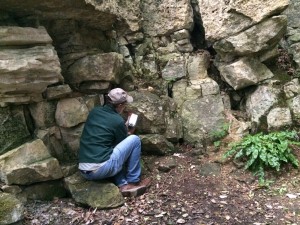
With an ever increasing mass of data it was decided to begin processing and interpreting the data alongside some lab-based analysis, with the aim of identifying the most promising areas on which to focus our final investigations. However, we still found time to visit Fishbourne and examine some of the in-situ mosaics. Meanwhile, the preliminary examination of data drove a renewed focus on exploring quarry sites in the Bath area and we have since returned to the quarries at Brown’s Folly near Bath to conduct intensive, quarry-face analyses.
As an offshoot from the project, Derek Pitman (the project’s RA) took the pXRF kit to the Purbeck School’s science fair along with members of BU’s STEM outreach team, where he was able to show how scientific methods help archaeologists understand ancient materials. Continuing with the public understanding of science theme, we are now working with our partners at Bath and Fishbourne Museums to develop new, innovative display methods for our results that will include the use of video and digital media to communicate project results and STEM to a wider audience.
While the summer of 2016 sees our HEIF 5+1 funding coming to an end, the Building Roman Britain team will carry on into 2017 in order to help bring the HEIF phase of the project to publication and to build the next phase of further investigations into Roman building materials. This includes our project’s inclusion in a multi-million pound bid to the HLF for redisplay work at Roman Bath Museum as part of their Archway Project. For further details, see our research project page.
2 Nuffield students gaining hands-on research experience at BU
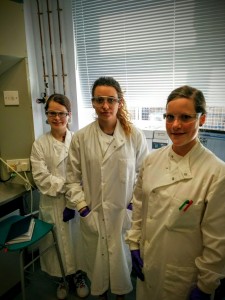
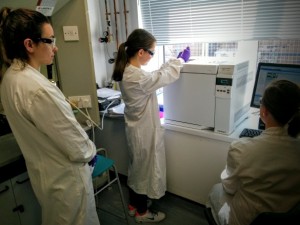
During the last 4 weeks, Sophie and Rose (left and middle in the picture), two AS level students, have spent their summer holidays gaining hands-on laboratory research experience at BU during their Nuffield Research Placement. Together with Dr Simon Dyall and PGR Isabell Nessel (right in the picture), they have worked on a research project which is investigating ways to increase the intake of omega-3 and omega-6 polyunsaturated fatty acids in preterm infants. Rose and Sophie have been helping to develop and validate a method to measure the fatty acid content of preterm formula milks by using gas chromatography (see picture).
“As for the internship, I enjoyed it a lot. It was nice getting out of the classroom and working on something that had the potential to help people. I learnt a lot of new skills that’ll help me when I’m writing my application for university as it will show that I already have experience in a laboratory as well as give me a head start to any laboratory work I do in my degree. It’s shown that things often don’t go as smoothly as planned and you have to do a lot of problem solving and repeating along the way, but it’s also made clear to me that I do want to head in the direction of research in the future.” – Sophie
“This is the first year BU has offered Nuffield Research Placements and Sophie and Rose have been excellent students. The Placements give students the opportunity to get hands-on experience of working in a research environment, meet new people and learn new skills, and importantly help them decide if a degree in a STEM (Science, Technology, Engineering and Mathematics) subject is right for them. It has been a pleasure to host Sophie and Rose this year, and they have been of great help to our work.” – Simon
“For me it was an excellent opportunity to develop my mentoring skills, get the chance to inspire younger students for a career in research, and getting some extra helping hands for my project. The girls were eager to learn and motivated for the lab work and I wish them all the best for their studies. Overall, it was a nice experience which I would recommend to other PGRs and their supervisors.” – Isabell
Many thanks to Sophie and Rose for their help and to the Nuffield Foundation for the organisation of the placements!
The Nuffield Foundation offers Nuffield research placement for motivated students during the summer holidays to discover what a career in STEM might look like. If you would wish to find more about the program or think of offering a placement yourself next year please click here.
If you would like to learn more about our research, please feel free to contact me at inessel@bournemouth.ac.uk
Isabell
Public Engagement in the sunshine!
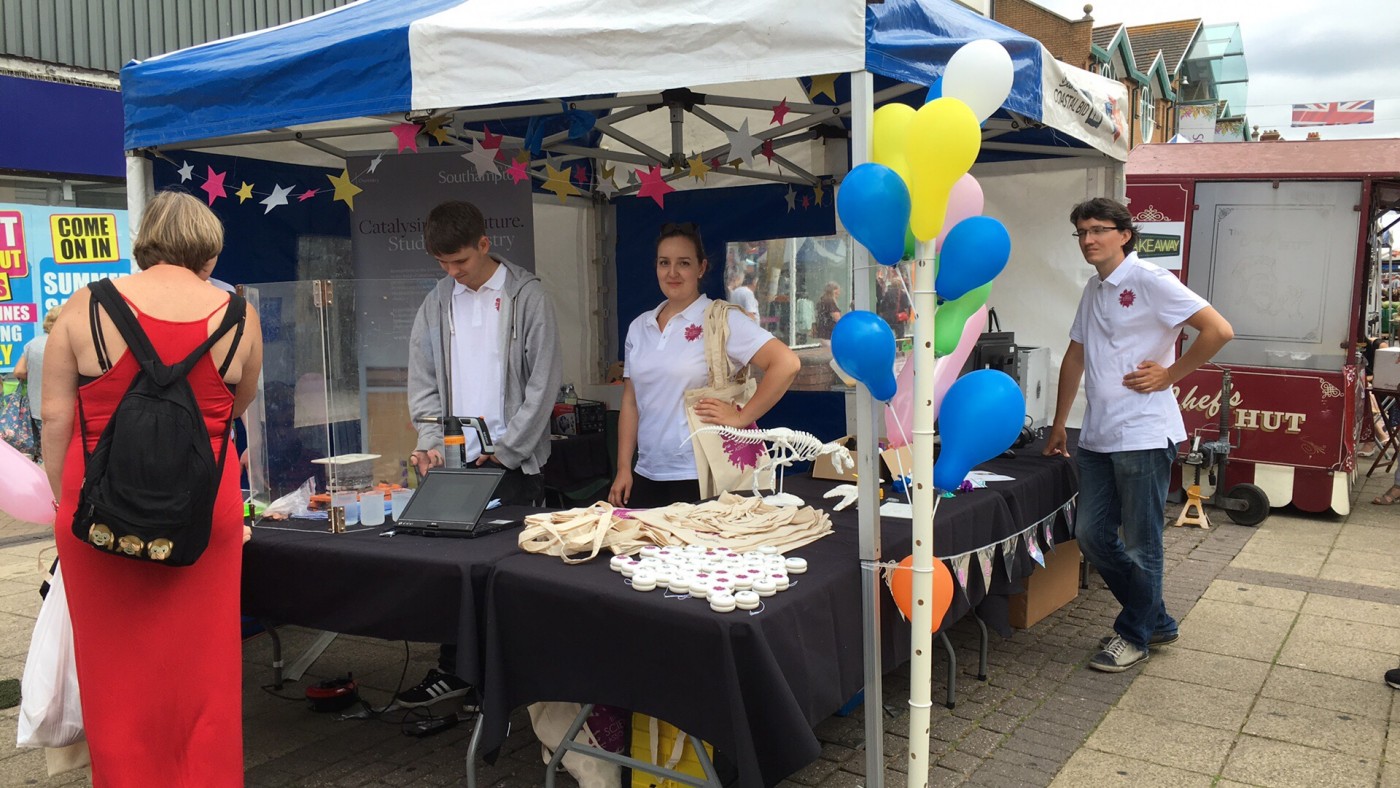
We recently headed down to a very sunny Boscombe for a day spent talking about science as part of their bustling Saturday market. Pitching up in between two amazingly fragrant food stands we spent the day talking to the community about two research projects with the potential to change lives as part of a British Science Association and Royal Society of Chemistry series of events known as Science in the City.
The idea of Science in the City has been to take science into highly deprived communities and talk to people about research who wouldn’t usually engage with us through events such as Festival of Learning. Working with University of Southampton (UoS) we submitted the bid in December 2015 and were successful in being picked to host an activity as part of the 2016 round of funding and approached Boscombe Market for a venue to let us talk to the community.
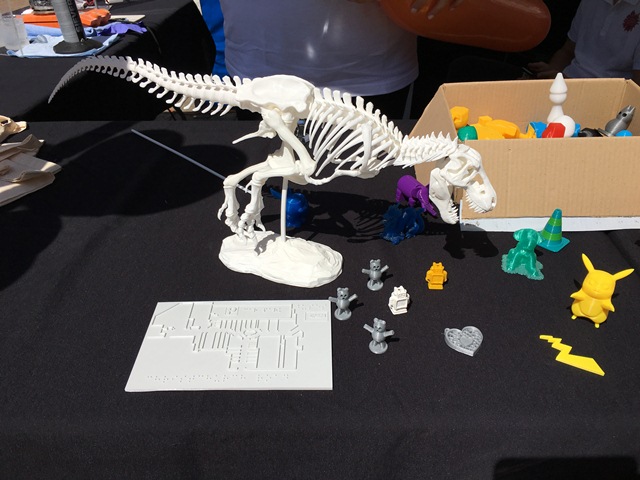
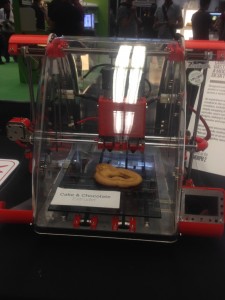
Keen to take the opportunity to share some of our high profile research we were especially pleased to be joined by Oleg Fryazinov and Mark Moseley who have been highly involved with the award winning SHIVA project which enables disabled children to design and 3D print objects using a simple interactive system that can be controlled using either touch or eye tracking software. This project has recently received funding through HEIF5+1+1 to expand the project further and work with new schools. Currently they are working closely with the Victoria School in Poole and may of the objects seen in the image below where designed by their students (unfortunately not the dinosaur as the software isn’t quite up to this yet!).
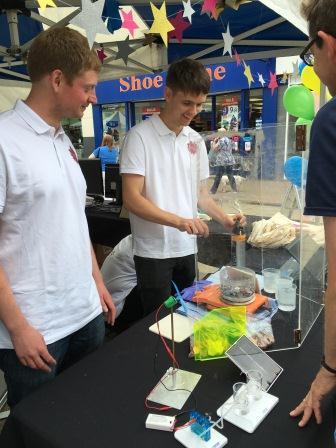
As well as BU’s research we also took an activity from UoS’s public engagement Roadshow. David and Alex, two PHD researchers from the university joined us for the day to talk to people about the technology behind hydrogen fuel cells and how they have the power to revolutionise our lives and minimise the amount of unclean energy needed to run our cars, buses and lorries. As well as a demonstration of the fuel cell in action they also were helping the public understand how catalysts could be used to reduce the amount of energy you need to put into a reaction and how coating a cheap substance (in our case copper pennies) with a catalytic material (a brass coating made by coating the penny in zinc and heating to produce an alloy) can reduce the costs involved with using them.
Our experience at the Orthopaedic Research Institute
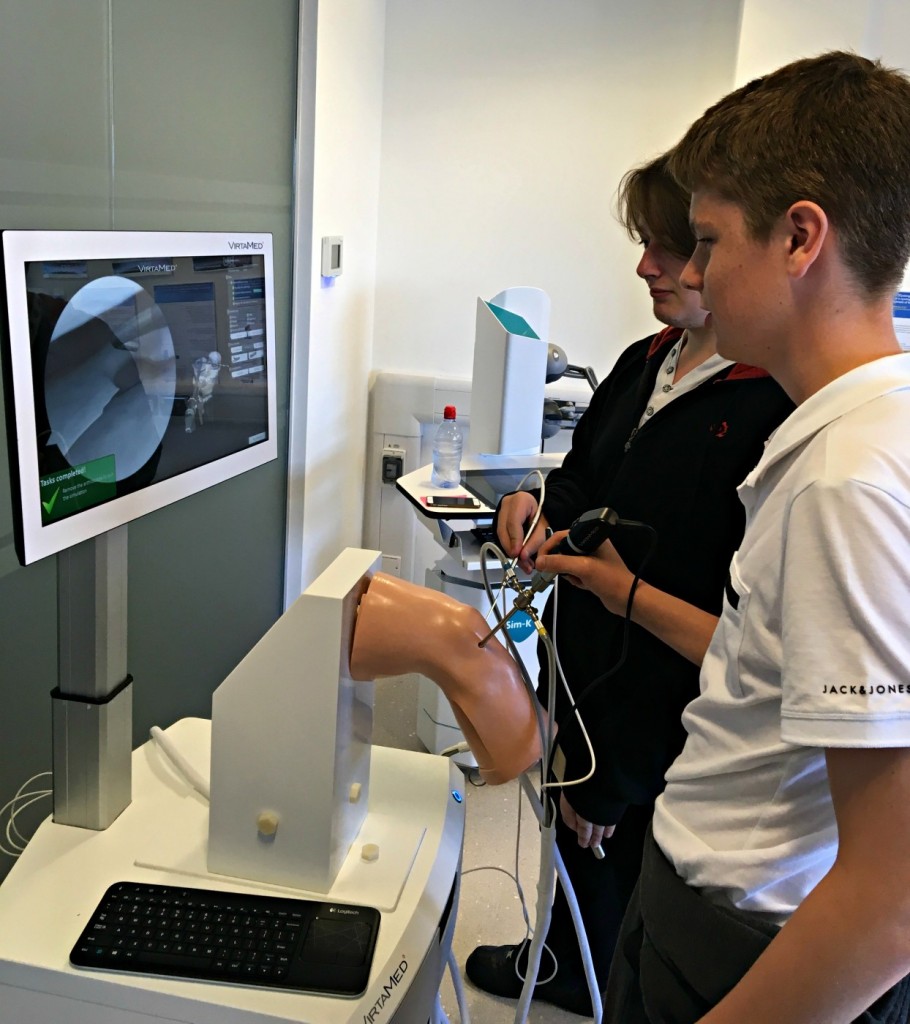
Over the past four weeks during our research project at Bournemouth University, we have carried out and participated in numerous tests and activities in the Orthopaedic Research Institute under the supervision of PGR Francesco Ferraro; some of which being more exciting, and others being more interesting.
One the simplest tests that we have carried out for the purpose of the research is the Mini-BESTest, this is a Balance Evaluation Systems Test and requires numerous subsidi
ary tests to be carried out for different aspects associated with balance, these include: anticipatory tests (when preparing for something to happen), reactive postural control (how you react to a change in motion), sensory orientation, and dynamic gait speeds (walking speeds and how they change in different circumstances). This was necessary in order to see how the effects of inspiratory muscle training effects balance over the course of 8 weeks.
In terms of analysis and methods, one of the most interesting tests for us involved the breathing system and using a spirometer. This device was used to measure the Forced Vital Capacity (total air volume of the lungs), Forced Expiratory Volume (how much air a person can exhale in a forced breath), MIP (maximum pressure generated by inhalation against occluded airway), and the MEP (this is the same but is the pressure generated by exhaling). For us, this was particularly interesting because it allowed us to see how a spirometer works in a hands on experience and how the data is presented and analysed.
Another series of tests involved the PrimusRS, a very impressive machine. It served to be a challenge and required lots of problem solving to carry out the tests successfully. During our use of the PrimusRS we experienced the different processes that were needed to be carried out involving; calibration, setting up, creating templates, correcting motion to improve the results, and the analysis of the final results. This was an extraordinary piece of equipment as it allowed us to carry out endurance and isometric tests (strength tests) for both flexion, extension and rotation regarding the trunk muscles, and gave us different data including power of the muscles/ movement.
Finally, the most exciting and enjoyable session to carry out involved using Virtual Reality Simulators for knee arthroscopy (operations) that surgeons all over the world travel to see. The reason for this being the most enjoyable test/session was due to complexity behind machines that looked so simple, and it allowed us to carry out practise operations teaching you the motions and procedures that would be used in real life. Other fascinating features of the virtual simulator was the way in which it introduced us to the different textures of the bone structures and tissues by giving feedback involving vibrations and stiffness of the simulator drill/ saw as well as the screen display.
As well as all of these above tests, we also are aware of the protocols and ethics of the tests that we have carried out in the duration of the project, this allowed us to experience and build up our own picture of the research that needs to be carried out before conducting the actual investigation.
- Freddie and Jamie
The Research and Knowledge Exchange (RKE) Development Framework: communicating your research
RKEO’s new Research and Knowledge Exchange Development Framework launching this autumn will feature a pathway focusing on how to communicate your research to different audiences, with the aim of increasing your research impact.
Research communication is a great way to engage with non-academic audiences, make connections with new stakeholders and develop your research impact.
Sessions available through this pathway will include:
- Working with the media,
- Using social media to communicate your research,
- Developing a public engagement event,
- Adding content to BU’s research website,
- Learning how to influence policy makers.
Further information will be available on Organisational Development’s staff intranet pages shortly. This will include a timetable of events, more details descriptions and a booking link.
In the meantime, keep an eye on the research blog and our internal Faculty blogs for more information about the different pathways.
THET maternal mental health training in Kathmandu
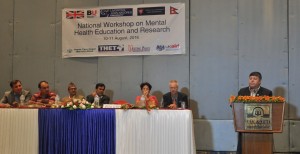
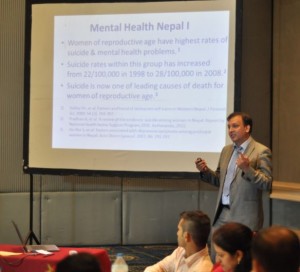
Today we completed the second day of training of health teachers, lecturers in nursng, public health and the like in Kathmandu. We called it the National Workshop on Mental Health Education & Research and this two-day workshop was held in a hotel in Kathmandu. It was organised by Tribhuvan University in collaboration with Bournemouth University and Liverpool John Moores University (LJMU). Mental health is high on the global agenda and want to raise the issue more in Nepal. The three universities are working together on an education intervention training Auxiliary Nurse Midwives in Nawalparasi on mental health issues and mental health promotion. The project is funded under the Health Partnership Scheme (HPS) from DfID and managed by THET (Tropical Health & Education Trust).
Key speakers on the first day of the workshop included: the VC of Tribhuvan University, Dr Gangalal Tuladhar MP and former Education Minister of Nepal, Dr Khem Karki (head of the Nepal Health Research Council), Dr Chandra Kala Sharma, Prof Shyam Krishna Maharjan and Prof Krishna Acharya.
This workshop is part of this capacity building process and the audience of largely university and college lecturers will take some of the learning back with them to improve the education of health workers in Nepal.
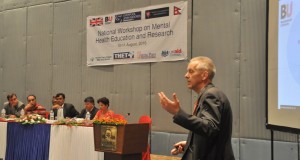
The second day of the workshop concentrateed on research methods for community-based projects such as this our THET funded one in the mental health field. Prof. Edwin van Teijlingen reminded the audience that it is important that novel mental health interventions like ours are properly evaluated, and that the people doing the evaluations have the appropriate rese
arch skills. The next group of UK volunteers are due to travel to Nepal in September.
Prof. Edwin van Teijlingen
CMMPH
Going for Gold! 3D Scanning, 3D Printing and Mass Customisation of Ancient and Modern Jewellery – Dr. Dinusha Mendis delivers invited talks in Southampton, Newcastle and London
In July 2016, Dr. Dinusha Mendis Associate Professor in Law and Co-Director of the Centre for Intellectual Property Policy and Management (CIPPM) disseminated her research on the Intellectual Property (IP) implications of 3D scanning, 3D printing and mass customisation in Southampton, Newcastle and London.
Questioning what the future holds for IP law as a result of technologies such as 3D printing, Dr. Mendis spoke about the research she has conducted for the UK Government (UK Intellectual Property Office) as well as the research she is conducting for her RCUK/AHRC-funded project ‘Going for Gold’ considering the IP implications of 3D scanning, 3D printing and mass customisation of ancient and modern jewellery.
Cross-Hub Workshop on 3D Printing, Southampton Solent University, 5th July 2016
The event titled ‘Cross-Hub Workshop: 3D Printing: Development, Application and its Contribution to Local Economy’ hosted speakers from industry, academia and professional practice thereby presenting the opportunity to explore and discuss the digital opportunities and its potential contribution to local/national economy in the development and application of 3D printing technology.
Dr. Mendis was invited to speak about her research into the intellectual property implications of 3D printing and presented the results from the commissioned research carried out for the UK Intellectual Property Office, which led to the publication of 2 Reports and an Executive Summary in 2015, whilst outlining the copyright, design and licensing implications relating to cultural institutions and SMEs in 3D scanning and printing ancient and modern jewellery.
Fossilisation and Innovation Law, Innovation and Society Research Group of Newcastle Law School, 11th July 2016
At this 2-day event, Dr. Mendis was invited to speak about law’s response to innovation and emerging technologies. Dr. Mendis’ presentation explored law’s resilience to dynamic change, in particular, and questioned whether legislators should adapt to innovation whilst adopting innovative regulation. The 2 day event began with a keynote speech by Professor Dan Faber of UC Berkeley and concluded with a keynote speech by Professor Karen Yeung of Kings College London.
3D Printing in Law and Society Workshop, Information, Law and Policy Centre, Institute of Advanced Legal Studies (IALS) London, 12th July 2016
The event marked the launch of Dr. Angela Daly’s new book on 3D Printing and commenced with a presentation from Dr. Daly, a research fellow at Queensland University of Technology Faculty of Law, Australia. Dr. Daly’s presentation was followed by an invited guest lecture from Dr. Mendis who spoke about the IP implications of 3D printing, highlighting the challenges and opportunities which this technology has brought about, whilst outlining the next steps for 3D printing, from a legal perspective. More information about the event as well a write up about it, can be found here.

Research Impact Metrics – useful reference cards
In the Independent Review of the Research Excellence Framework, Lord Stern has called for the broadening and deepening of the definition of impact. It is recommended that ‘impacts on public engagement and understanding are emphasised and that impacts on cultural life be specifically included’.
Partnering with librarian Jenny Delasalle, Library Connect has produced a useful and attractive consolidated quick reference guide to some key research impact metrics.
You can download your own copies here –
Download the larger format cards – 4 per 8.5×11″ page
It is important however, that these research metrics are used with these 2 Golden Rules in mind, as recommended by the Library Connect Librarians Feedback Group and Lisa Colledge, Elsevier’s Director of Research Metrics:
Golden Rule 1 – Always use quantitative metric-based input alongside qualitative opinion-based input
Golden Rule 2 – Ensure that the quantitative, metrics part of your input always relies on at least 2 metrics to prevent bias and encouragement of undesirable behaviour.
Original blog post – https://libraryconnect.elsevier.com/metrics
Launch of Concordat on Open Research Data
Four of the UK’s leading research organisations: HEFCE, RCUK, Wellcome and Universities UK, have launched a concordat that proposes a series of clear and practical principles for working with research data.
“This concordat will help to ensure that the research data gathered and generated by members of the UK research community is made openly available for use by others, wherever possible, in a manner consistent with relevant legal, ethical, disciplinary and regulatory frameworks and norms, and with due regard to the costs involved”. (RCUK)
“The Concordat for the first time, proposes a series of clear and practical principles for working with research data that cover the many roles needed to support the research process. It is not a rulebook, but a set of expectations of best practice developed by the research community itself.” (Jo Johnson, Minister of State for Universities and Science)
Open research data is the next step in achieving the UK’s open science ambitions and will help improve co-operation and strengthen the UK’s position as a global science leader. (RCUK)
The Concordat on Open Research Data is open for other organisations and groups to sign up to over time. Interested parties can contact Alexandra Saxon: Alexandra.saxon@rcuk.ac.uk
Responses from the four initial signatories:
HEFCE
“Open research data has the potential to deliver substantial benefits to research and to wider society. Open data will reveal new research avenues, and deliver innovative new technologies and services that will improve our lives. Achieving open data is not easy; there are substantial challenges ahead which will require the commitment of everyone involved in research. This concordat is an important step towards securing this commitment. I would now encourage all those involved in research to sign up to the principles and engage with this agenda.”
David Sweeney, Director of Research, Education and Knowledge Exchange, HEFCE
Research Councils UK
“RCUK welcomes the Open Data Concordat and the focus that the core principles bring to ensuring that the data resulting from the research that we fund is as open as possible. By ensuring good practice around the open use and reuse of data, where appropriate, we can ensure that research brings optimum benefits to the long term prosperity and wellbeing of the UK and to the world.”
Prof. Duncan Wingham, Chief Executive of NERC and RCUK Open Data Champion
Universities UK
“Open research data has the potential to deliver significant benefits for society by enhancing the impact of our world-class research base. Universities UK welcomes this concordat, which sets out the aspirations of the research community while recognising the costs and challenges that must be addressed if we are to realise these benefits. By supporting the concordat, universities and other research organisations can help ensure that the UK remains at the cutting edge of science and research.”
Nicola Dandridge, Chief Executive of Universities UK,
Wellcome Trust
“The Concordat sets out core principles to guide the research community in ensuring that research data can be accessed and used in ways that will accelerate discovery and maximise benefits to society. Importantly, it recognises that not all research data can be shared openly, and that there is a need for all researchers to plan how they will manage and share data as an integral part of planning their research”
Nicola Perrin, Head of Policy at Wellcome Trust


BU geography student’s undergraduate dissertation published in international journal
Why some commons survive and others don’t
BU Research blog in 2023 grows into 2026 publication
REF 2029 Sector Survey: Have Your Say
BU methods paper reached 2,500 reads
UKCGE Recognised Research Supervision Programme: Applications Close 19 October
Horizon Europe Cluster 3 (Civil Security for Society) 2026 Calls Now Open

MSCA Doctoral Networks 2026 Call Information Webinar

ESRC Festival of Social Science 2026: Application Deadline Extended to Thursday 25 June 2026

Reminder: Register for the ESRC Festival of Social Science 2026 Information Session

ECR Funding Open Call: Research Culture & Community Grant – Apply now

ERC Advanced Grant 2025 Webinar
Update on UKRO services
European research project exploring use of ‘virtual twins’ to better manage metabolic associated fatty liver disease