Category / Training

CIM Dorset Event – Brand Purpose – Richard Calvert from Bright Blue Day

Join us on Tuesday 12 November 2013 for the latest in our series of events held by the CIM Dorset branch.

Richard Calvert from Bright Blue Day is joining us to tell us about Brand Purpose.  As marketers we’re finding new ways to integrate Social, Local and Mobile communications into our customers day-to-day lives – invariably introducing complexity and unnecessary hassle into our lives.

There has been an explosion in the tools, techniques, strategies and tactics available to the SO LO MO marketer – each promising to deliver just the right message at the right time in the right place to the right person.  How do we apply SO LO MO thinking to deliver real value to customers, prospects and to our businesses?

How do we deliver real brand purpose and cut through everything that we can do in order to deliver just what we should?

Arrival from 6pm for a 6:30pm start.  Networking from 6pm until the event start. To book please visit http://bit.ly/1idcvi5

Book Now! A Few Spaces left on the 24th of OCT for your 1-2-1 appointment with Martin Pickard – a great opportunity to improve your bid proposals

If you feel you would benefit from a ‘face to face’ meeting with Martin  in relation to any bid/proposal you are currently working on please contact me Dianne Goodman ASAP with your time preferences.

Martin currently has some availablity on these dates between the following times:

  • 24th September 2013, 9:15am- 5pm (Lansdowne Campus )

Appointments are approx 45 minutes long. You will also have unlimited telephone and email support to progress your application after meeting with Martin.

Martin Pickard

With a career background in both Academia and Industry Dr. Martin Pickard of Grantcraft is a specialist in writing and supporting research grant applications and tenders as well as providing administrative and management support services for ongoing projects. During the last 20 years Martin has worked extensively across Europe with a large number of universities, and research institutes as well as industrial firms, ranging from small SME’s to major international companies.

Martin is providing individual 1-2-1 surgeries with any BU academic staff member and works individually and confidentiality with each Principal Investigator as the project is structured and prepared in order to optimize the application documentation from every aspect of the Funders perspective; guiding, steering and showing how to optimize the application throughout the bid process.

Academics at BU who have undertaken his guidance have stated:

 ‘his support and direction was invaluable – Martin gave me some pragmatic suggestions which really helped to shape the bid. His eye for detail made the document much easier to read and the message much clearer. I was very grateful for his input’  Assoc. Prof Heather Hartwell School of Tourism.

The process, although labour intensive, works; with a proven historical average success rates of close to 1 in 2 against norms of (1 in 8 to 1 in 10)

Book Now through me Dianne Goodman – Martin’s appointments are always popular.


BRIAN training on Wednesday 9th October – Are you attending?

BRIAN

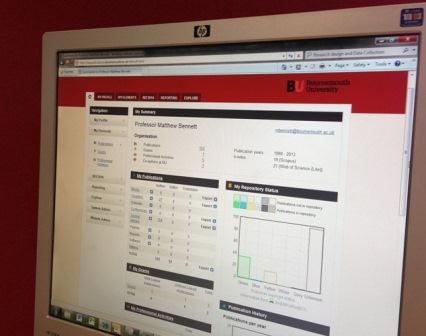
If you would like to know more about BRIAN or the new staff profile pages, please check your diary to see if you can spare an hour on Wednesday.  We are running 4 sessions of 50 minutes duration, two at Lansdowne and two at Talbot.  We have computer rooms for all sessions so that you can work on your own profile during the training.

The Lansdowne sessions are being held in the EBC in EBG02 at 10:30 and 11:30.  We currently have 11 and 3 attendees respectively.

The Talbot sessions are being held in CG21 at 14:00 and 15:00.  We currently have 4 and 3 attendees respectively.

We recognise that not everyone is free to attend a session on a Wednesday so we will arrange more training if there is the demand.

If you would like to attend on Wednesday and have not already done so, please email BRIAN@bournemouth.ac.uk to confirm your attendance.  The email tells us how many to expect and is not a pre-requisite for attendance. 

We look forward to seeing you on Wednesday! 


Are you interested in and want to make a positive difference to people living with Dementia?

Then you may wish to join BUDI who have invited Mr Ian Sherriff, a Trustee of the Alzheimer Society and Dementia Friends Champion.  He will be delivering the Government directed Dementia Friends training to staff at BU on Tuesday 24 September at 1 to 2.30 in PG144.   We have a few spaces available so if you are interested then please email mobrien@bournemouth.ac.uk to reserve your place.

Academic writing workshop in Bangkok

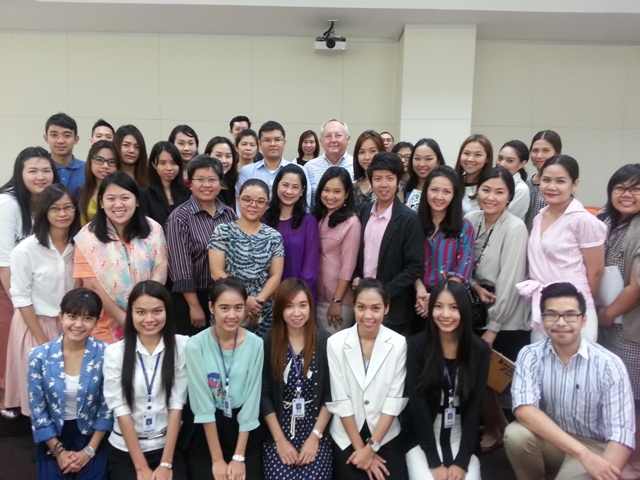
As part of his visit to Chulalongkorn University in Bangkok to plan the FIF-supported conference that will be held in November, Prof Tom Watson of the Media School delivered a well-attended workshop on Academic Writing.

Four leading universities – Chulalongkorn, Assumption, Mahidol and NIDA – sent over 40 academic staff and doctoral students to the workshop held in the host’s Faculty of Communication Arts building on September 3.

“There is a strong push to develop research and publication outputs in Thailand, so the workshop was well-timed to catch that wave,” said Prof Watson. “Our colleagues at Chulalongkorn did a first-rate job in organising and promoting the event.

“The workshop was also excellent public diplomacy by BU to support so many academics in such a targeted manner. It helps build our reputation in Thailand which is sending more Masters and doctoral students to the UK. Previously Australia and the USA were the main destinations.”

The workshop also gave an opportunity to experience one of the venues to be used by the 1st International Corporate and Marketing Communication in Asia Conference on November 18-19.


Working with TV production students in Mumbai and Poole

As part of the Fusion Fund Study Leave strand, my company, Sequoia Films, took on ten BU students on broadcast production work experience while at the same time updating my professional practice.

“As a camera specialist in my final year, I was very exited to be selected to take part in this Fusion Project. Having the opportunity to work abroad on an international broadcast project, such as this, was a fantastic experience. Being able to work alongside an industry professional (Sue Sudbury) and see how they operate was fascinating, especially seeing the relationship between filmmaker and contributor, a relationship that I have only ever experienced at a student level. This is something especially useful to me as I hope to work in documentary in the future” –   Oliver Clubb, BA (Hons) Television Production.

  • A cut from the Indian shoot was then screened to international broadcasters (VPRO, NHK, SVT, NRK, SBS) in June at the Sheffield International Documentary Festival. This is the link to the film – password is space2014 http://vimeo.com/68954605. The actual satellite launch has been delayed so the finished film has been too but you should see it on your screens in 2014 or 2015!

It was great to be back in the industry actually practicing what I teach – producing and directing documentaries. I was asked to sit on London’s BVE  EXPO exhibition panel session “Ground-breaking documentaries: techniques for gaining access, dealing with cultural difference and how to approach sensitive subjects to uncover and capture the unknown” – It was great to be on the panel with Jessie Versluys, one of our ex-BATV students, now a BAFTA award winning producer/director, who self-shot Katie My Beautiful Face and most recently, C4’s The Murder Workers. We managed to get in a plug for the TV Production degree at Bournemouth! Afterwards, I was able to be on the BU stand at the EXPO so prospective students really saw Fusion in practice with genuine links between academic staff and industry.

The session was chaired by multi BAFTA-winning Brian Woods (MD of True Vision) and this has led to us working together on developing a new project. Will post about this when have more news.


HSC student wins Santander Travel Grant to go to Yale

Mrs. Anita Immanuel has just been awarded a travel award from Santander to visit the Yale Cancer Centre in the USA. Anita studies the quality of lives of adults in Dorset who have survived cancer of the blood or immune system. Cancer is a devastating disease and with the advances in treatment patients are living longer, however left with debilitating side effects which can negatively affect their quality of life.

Anita’s research will identify any unmet needs in this group of patients and will give a better understanding into comprehensive survivorship care thereby maximising quality of life. This study uses a mixed methods approach in examining the quality of lives of these patients who have been treated for a haematological cancer. Data will be collected across three Dorset hospitals: The Royal Bournemouth Hospital, Poole Hospital and Dorset County Hospital.

Dr. Helen McCarthy, Consultant Haematologist at The Royal Bournemouth Hospital and Anita’s clinical supervisor, highlighted: “At Yale Cancer Centre Survivorship Clinic, Anita will be introduced to their comprehensive survivorship care programme which can help improve the quality of lives of adults treated with cancer in Dorset.

Dr. Jane Hunt, the lead supervisor and senior lecturer at Bournemouth University’s School of Health & Social Care added: “The survivorship programme at the Yale Cancer Centre Survivorship Clinic integrates a multidisciplinary approach for following up patients treated for cancer by leading experts, which differs significantly from our own. I am convinced Anita’s PhD study will benefit from collaborating with the Yale experts.

BU Prof. Edwin van Teijlingen, Anita’s third supervisor, commented “We are grateful to Santander for this funding. We know Anita’s research will significantly contribute to the underdeveloped area of research on adult haematological cancer survivors”.

For more about Santander Awards see: http://microsites.bournemouth.ac.uk/graduate-school/pgt-santander-mobility-awards/

The ‘Clone Wars’: Episode 1 – The Rise of 3D Printing and the Implications for Intellectual Property

Do you, or any of your colleagues / students want to find out more?

17 July 2013

Bournemouth University, Executive Business Centre, 89 Holdenhurst Road, Bournemouth BH8 8EB 

Arrival from 6pm for a 6:30pm start 

The Centre for Entrepreneurship together with the Centre for Intellectual Property Policy and Management (CIPPM) will present a series of workshops which will focus on 3D printing with particular focus on the Intellectual Property implications.  The workshops will be led by Dr. Dinusha Mendis, Co-Director of CIPPM.

This workshop will be based on Dr. Dinusha Mendis’s recently published paper on this topic and will provide an overview of the challenges to IP as a result of 3D printing. In looking to the future and in drawing parallels with the entertainment industry and the download culture, Dr. Mendis will consider whether any lessons can be learnt from the past and if so, how they can be applied to this new type of technology which will most certainly challenge IP laws.  The presentation will also suggest that rather than focusing on stringent IP laws the future lies in adopting new business models in adapting to this new technology.  In conclusion Dr. Mendis will present some thoughts for the future in taking this suggestion forward.

Workshop 2 and 3 will take place later in the year and will include a hands-on workshop with a 3D printer, and a round table discussion about the future of 3D printing. 

This is a free event for businesses, BU students, BU staff and BU Alumni. Refreshments will be provided.

To find out more or to book your place please visit http://bucfe.com/events/3d-printing-intellectual-property-law/

1-2-1s with Martin Pickard now available 10th July 2013 – Book Now!


A few spaces are still available for 1-2-1 appointments with Martin Pickard on Wednesday the 10th of July 2013 *Please note: these are being held at the Talbot Campus in DL104 (opposite the Octagon in the Library).

If you feel you would benefit from a ‘face to face’ meeting with Martin either in relation to any bid/proposal or Marie Curie application you are currently working on please contact me Dianne Goodman ASAP with your time preferences.

Appointments are approx 45 minutes long. You will also have unlimited telephone and email support to progress your application after meeting with Martin.

With a career background in both Academia and Industry Dr. Martin Pickard of Grantcraft is a specialist in writing and supporting research grant applications and tenders as well as providing administrative and management support services for ongoing projects. During the last 20 years Martin has worked extensively across Europe with a large number of universities, and research institutes as well as industrial firms, ranging from small SME’s to major international companies.

Martin is providing individual 1-2-1 surgeries with any BU academic staff member and works individually and confidentiality with each Principal Investigator as the project is structured and prepared in order to optimize the application documentation from every aspect of the Funders perspective; guiding, steering and showing how to optimize the application throughout the bid process.

Academics at BU who have undertaken his guidance have stated his support and direction was invaluable – Martin gave me some pragmatic suggestions which really helped to shape the bid. His eye for detail made the document much easier to read and the message much clearer. I was very grateful for his input’  Assoc. Prof Heather Hartwell, School of Tourism.

The process, although labour intensive, works; with a proven historical average success rates of close to 1 in 2 against norms of 1 in 8 to 1 in 10.

Martin is at BU on the following dates and times:

  • 10th July 2013, 9:15am- 5pm (Talbot Campus) – some afternoon appointments available
  • 4th September 2013, 9:15- 5 (Lansdowne Campus)


Learn more about BRIAN this week

We are running two BRIAN training sessions on Friday 21st June 2013.  These  are hands-on sessions open to all academics and PGR students who want to learn more about BRIAN.

11:00 – 12:00    Studland House            S103

14:00 – 15:00    Christchurch House       CG21

If you would like to attend, please email David Biggins at BRIAN@bournemouth.ac.uk to reserve your place.

BRIAN Training – 21st June

We are running two BRIAN training sessions on Friday 21st June 2013.  These  are hands-on sessions open to all academics and PGR students who want to learn more about BRIAN.

11:00 – 12:00    Studland House            S103

14:00 – 15:00    Christchurch House       CG21

If you would like to attend, please email David Biggins at BRIAN@bournemouth.ac.uk to reserve your place.

Festival of Learning – Testament to a Successful Morning (Dr Simon Thompson, DEC Psychology Research Centre)

‘Testamentary Capacity in Dementia’ (03 June 2013 10:00h – 13:00h) – Presentation followed by in-depth plenary session about the complexities of leaving an estate to beneficiaries following a diagnosis of dementia.

‘Dementia’ is an umbrella term used to describe many types of deteriorating diseases – the most common ones are Alzhiemer’s disease, Vascular dementia, and Lewy body dementia.

Many married couples own property as ‘joint tenants’. Upon death, ownership automatically passes to the survivor. If property is owned as ‘tenants in common’, one half of the estate belonging to the deceased is dealt with by their Will. Problems arise when there is no Will, when others make a claim, or when another Will is executed.

‘Testamentary capacity’ is a person’s legal and mental ability to make a
valid Will. There are three premises: Presumption of capacity; Requirements; Proof of testamentary capacity.

It is proposed that the law should allow testators alternative means of satisfying the testamentary capacity standard such as an option to validate a testator’s capacity during their lifetime through forensic assessment measuring cognitive elements of testamentary capacity.

It does not remove the difficulty of knowing the status of person at a specific time line. However, it goes some way to describing a person during their lifetime in terms of mental ability and capacity.

Thompson, SBN (2006). Dementia and memory: a handbook for students and professionals. Aldershot: Ashgate.

Thompson, SBN (2012). Dementia. In SBN Thompson (Ed), Psychology of trauma: clinical reviews, case histories, research (pp169-202). Portsmouth: Blackwell-Harvard-Academic.

MASTERCLASS: Interviewing in semi structured interviews

Doing face-to-face interviews is probably the most used method qualitative research. There exists a range of different interview styles or approaches to explore people’s views, experiences, feelings and/or opinions on a specific topic.  Qualitative interviews allow interviewees to expand their answers, deliberate about their experiences and highlight their feelings. Such interviews also allow the interviewer to probe, to ask for clarification and/or more detail from the interviewee.

Some interviews aim to gather descriptive data, through structured or semi-structured interviews, whilst unstructured or life-history interviews attempt to probe deeper into the interviewee’s life.  This one-day Master Class will focus on issues around conducting semi-structured interviews. The following issues will be included: ‘devising an interview schedule’, ‘good, bad & leading questions’, ‘working with translators’, ‘audio-recording of interviews’,  and ‘research ethics surrounding qualitative interviews’.

Prof. Edwin van Teijlingen, in the School of Health & Social Care has conducted face-to-face interviews on a range of different health topics.  Moreover, he has published several research methods papers on interviews and qualitative research more widely.

This one day Masterclass will be held at Bournemouth University on Tuesday 18th June 2013:

To Register:    http://buybu.bournemouth.ac.uk/interviewing-in-semi-structured-interviews.aspx


Publish empirical or experimental data early whilst letting theory mature?

My colleagues and I have written several papers to help budding researchers about the process of writing and publishing academic papers (Hundley, & van Teijlingen 2002; van Teijlingen 2004; Pitchforth et al. 2005; van Teijlingen et al. 2012; Simkhada et al. 2013). For all researchers – students and staff alike publishing research findings is important as new insights will add to the existing knowledge base, advance the academic discipline and, in the case of applied research, perhaps improve something in the lives of others such as, well-being, the economy or the environment. Apart from this general/altruistic drive to add to knowledge, the advice academics give our postgraduate students is: to get your study published as soon as possible. The two main reasons for publishing early are: (a) getting into print to potentially help your careers; and (b) staking once claim as an authority in the field and/or publishing your findings before someone else does.
As always there are exceptions to the rule. As academics we agree that trying to get into print early is a good personal strategy for an early researcher or a postgraduate student especially for those working with empirical or experimental data. However, occasionally it is better to wait and give the underlying idea in the paper time to develop and mature. The kind of paper that often improves with time is one based on theory. Let me share a personal example: a theoretical paper from my PhD (awarded by the University of Aberdeen in 1994). This paper started life as a theory chapter in my PhD thesis (van Teijlingen 1994). This chapter on models of maternity care was not the strongest part of my thesis and it took me another decade of fine-tuning to get it into a state worth publishing. The paper ‘A Critical Analysis of the Medical Model as used in the Study of Pregnancy and Childbirth’ was finally published in Sociological Research Online, the original online-only Sociology journal in the world (van Teijlingen 2005). The wait was worthwhile as the paper is today (May 2013), eight year after publication, the seventh ‘most viewed articles during the past eight weeks’ in the journal (see: http://www.socresonline.org.uk/stats/top20.html).
In conclusion, it is generally sound advice to new researchers and postgraduate students to publish early. Occasionally though, waiting and giving your paper time to improve through discussion with colleagues, presenting the ideas at conferences and on blogs may lead to a better final product.
Prof. Edwin van Teijlingen
Centre for Midwifery, Maternal & Perinatal Health
School of Health & Social Care

References
Hundley, V., van Teijlingen E. (2002) How to decide where to send an article for publication? Nursing Standard 16(36): 21.
van Teijlingen (1994) A social or medical comparison of childbirth? : comparing the arguments in Grampian (Scotland) and the Netherlands (PhD thesis), Aberdeen: University of Aberdeen. Available online in the British Library (search for: uk.bl.ethos.387237 ).
Teijlingen van, E. (2004) Why I can’t get any academic writing done, Medical Sociology News 30 (3): 62-6.
van Teijlingen, E. (2005) A Critical Analysis of the Medical Model as used in the Study of Pregnancy and Childbirth, Sociological Research Online 10(2) Freely available online at: www.socresonline.org.uk/10/2/teijlingen.html.
Pitchforth, E., Porter, M., Teijlingen van, E.R., Forrest Keenan, K. (2005) Writing up and presenting qualitative research in family planning and reproductive health care, Journal of Family Planning & Reproductive Health Care 31 (2): 132-135.
Teijlingen van, E., Simkhada. P.P., Simkhada, B., Ireland, J. (2012) The long and winding road to publication, Nepal Journal Epidemiology 2(4): 213-215. http://nepjol.info/index.php/NJE/article/view/7093
Simkhada, P., van Teijlingen, E., Hundley, V. (2013) Writing an academic paper for publication, Health Renaissance 11 (1): 1-5. www.healthrenaissance.org.np/uploads/Pp_1_5_Guest_Editorial.pdf

New to BRIAN?

If you are new to BU, have missed the Brian training sessions or just need a refresher, the BRIAN team is looking to run some training sessions for academics to help you gain the most from BRIAN.  The session covers how to set up and maintain your BRIAN profile,  how to ensure your details are correct, how to request a photo is uploaded, how BRIAN links to your external staff profile and lots more. 

These are hands-on sessions being run on both the Lansdowne and Talbot Campuses or one-to-one.  To register your interest, please email the BRIAN team (BRIAN@bournemouth.ac.uk).

New to BRIAN?

If you are new to BU, have missed the Brian training sessions or just need a refresher, the BRIAN team is looking to run some training sessions for academics to help you gain the most from BRIAN.  The session covers how to set up and maintain your BRIAN profile,  how to ensure your details are correct, how to request a photo is uploaded, how BRIAN links to your external staff profile and lots more. 

These are hands-on sessions being run on both the Lansdowne and Talbot Campuses or one-to-one.  To register your interest, please email the BRIAN team (BRIAN@bournemouth.ac.uk).