The session will run from 10.30am to 11.30am over Zoom and is open to all BU academics and PhD candidates who are interested in finding out more about working with The Conversation.
Learn how to consider the news potential of your expertise, how to look for story hooks and angles from the news, and how to write a quality story pitch to section editors.
The Conversation is a great way to share research and informed comment on topical issues. Academics work with editors to write pieces, which can then be republished via a creative commons license.
Since we first partnered with The Conversation, articles by BU authors have had over 7.5 million reads and been republished by the likes of The i, Metro, and the Washington Post.
With the COP26 climate change conference on the horizon, insights around how to protect and preserve our environment and deal with our changing climate will be high on the news agenda.
A limited number of 20-minute one-to-one sessions with Will are available from 11.30am – 1pm on Wednesday 27 October, to discuss environment-related story ideas. To request a place, please contact newsdesk@bournemouth.ac.uk.
Recognising the contributions to postgraduate research by our PGR students, academics and professional staff
The Doctoral College are excited to announce the launch of our “Doctoral College Outstanding Contribution Awards”!
These awards recognise the outstanding contributions to postgraduate research degrees at BU by any PGR, academic or professional staff member. They can be nominated throughout the year by any member of the postgraduate research degree community to anyone that they feel is exceptional, has exceeded expectations, and has had a positive impact on postgraduate research degrees at BU.
Eligibility
You can nominate anyone involved in postgraduate research at Bournemouth University to receive an award certificate. There is no award criteria, as long as the submission falls within the guidelines, whoever you’ve selected will receive a Doctoral College “Outstanding Contribution Award”!
How to nominate
We’ve made it really easy for you to nominate someone for a Doctoral College “Outstanding Contribution Award” – it’s just a short online nomination form!
Today FHSS’s PhD student Abier Hamidi was notified that the manuscript “HIV epidemic in Libya: Identifying gaps” was accepted for publication by the editor of the Journal of the International Association of Providers of AIDS Care (JIAPAC) published by SAGE [1]. This literature review as part of Abier’s PhD research included 24 studies: Ten primary research studies, six online news articles, five Government reports, one letter to the editor, one manuscript, one online database. The paper concluded that despite the low-quality data, the literature suggests there is an increase in HIV infection rates in Libya. Culturally sensitive research on sexual activities, women, HIV preventative methods and attitudes of the Libyan public will assist in developing an effective National AIDS Programme, reducing stigma, supporting People Living with HIV (PLWHIV) and decreasing infection rates.
Abier’s PhD project is supervised by Dr. Pramod Regmi (Senior Lecturer in International Health) and Prof. Edwin van Teijlingen in the Centre for Midwifery, Maternal & Perinatal Health (CMMPH).
Reference:
Hamidi, A., Regmi, P., van Teijlingen, E. HIV epidemic in Libya: Identifying gaps, Journal of the International Association of Providers of AIDS Care (JIAPAC) (forthcoming)
Yesterday saw the publication of a new scientific paper on the health care system in Nepal. The latest BU paper ‘Health facility preparedness of maternal and neonatal health services: A survey in Jumla, Nepal’ is a collaboration between academics at the University of Huddersfield, Liverpool John Moores University and the Centre for Midwifery, Maternal & Perinatal Health (CMMPH) at Bournemouth University [1]. This is the third paper led by Pasang Tamang, who is currently a PhD student at the University of Huddersfield [2-3].
Prof. Edwin van Teijlingen
CMMPH
References
Tamang, P., Simkhada, P., Bissell, P., van Teijlingen, E., Khatri, R., Stephenson, J., (2021) Health facility preparedness of maternal and neonatal health services: A survey in Jumla, Nepal, BMC Health Service Research 21:1023. https://rdcu.be/cyD01
Tamang, P., Mahato, P., Simkhada P., Bissell, P., van Teijlingen, E. (2021) Pregnancy, Childbirth, Breastfeeding and Coronavirus Disease: What is known so far? Journal of Midwifery Association of Nepal (JMAN) 2(1): 96-101.
A lovely day by the river Stour on Friday 24th saw around 40 delegates and Bournemouth University staff come together to celebrate the launch of the National Centre for Post Qualifying Social Work’s new Mental Capacity Toolkit- mentalcapacitytoolkit.co.uk.
Funded by the Burdett Trust for Nursing, the toolkit aims to provide easily accessible learning materials and information for nurses and other professionals and is a web-based tool which can be accessed wherever a professional has access to the internet.
The project team, led by Professor Lee-Ann Fenge, Director of the NCPQSW and the Centre for Seldom Heard Voices and Principal Investigator Dr Sally Lee, undertook an 18-month long research project investigating the issues that professionals encounter in using the Mental Capacity Act 2005 and what could help to increase knowledge and understanding of the legislation and practice requirements.
The day started with an introduction into the NCPQSW and Centre for Seldom Heard Voices wider work and resources by Professor Fenge before Mike Lyne, Programme Lead for the MCA 2005 at BU and a member of the project team took delegates through the context of past and current mental capacity work at BU with a short tour of future developments. Dr Lee and Dr Debbie Slate then introduced delegates to the research themes and the detail of the project.
Dr Mel Hughes, co-director of the Centre for Seldom Heard Voices and Stevie Corbin-Clarke from the project team followed by discussing a project that they have been working on with the charity National Voices, looking at how the introduction of remote service models during the Covid-19 pandemic has affected vulnerable people and those without internet access.
After a light lunch and a warmup quiz, Emily Rosenorn-Lanng introduced the online toolkit and encouraged delegates to log on and have a “play”, and to provide the project team with immediate feedback. Comments included, “I like the visual aspect of the tool” and “I really like the reflective nature of the tool and the questions it asks” and “the quizzes are great!”
Suggestions for further developments were also made with the addition of a search function being a particular desire, which the project team hope to be able to provide this week. Another item on the wish list was the ability to print out a certificate of completion for CPD purposes. The toolkit is very much a work in progress and will be added to over the course of the next few months. The project team are happy to receive feedback and suggestions via the “contact us” details on the NCPQSW website. The toolkit can be accessed at mentalcapacitytoolkit.co.uk.
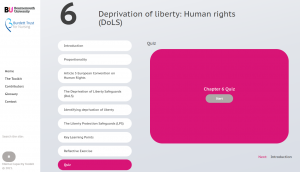
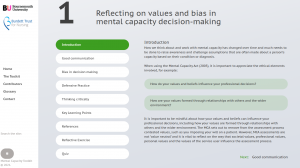
Here are some example pages of what is included in the tool:
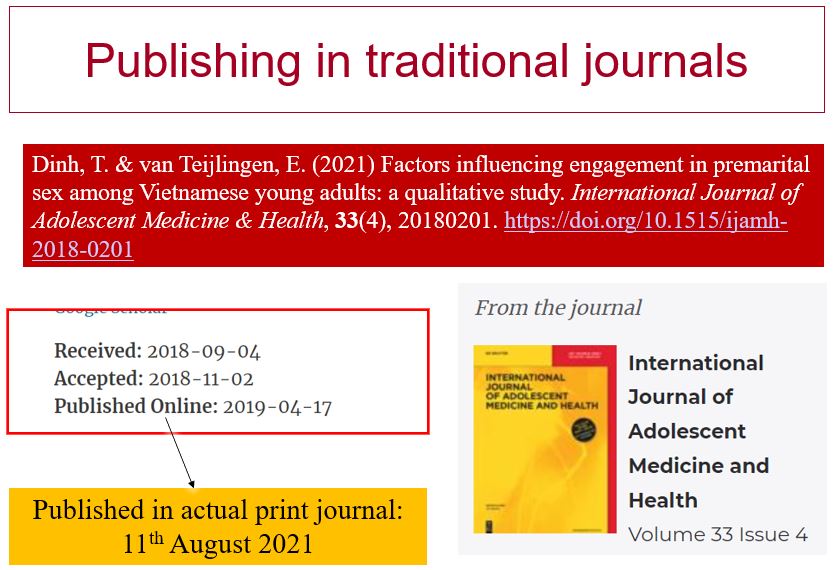
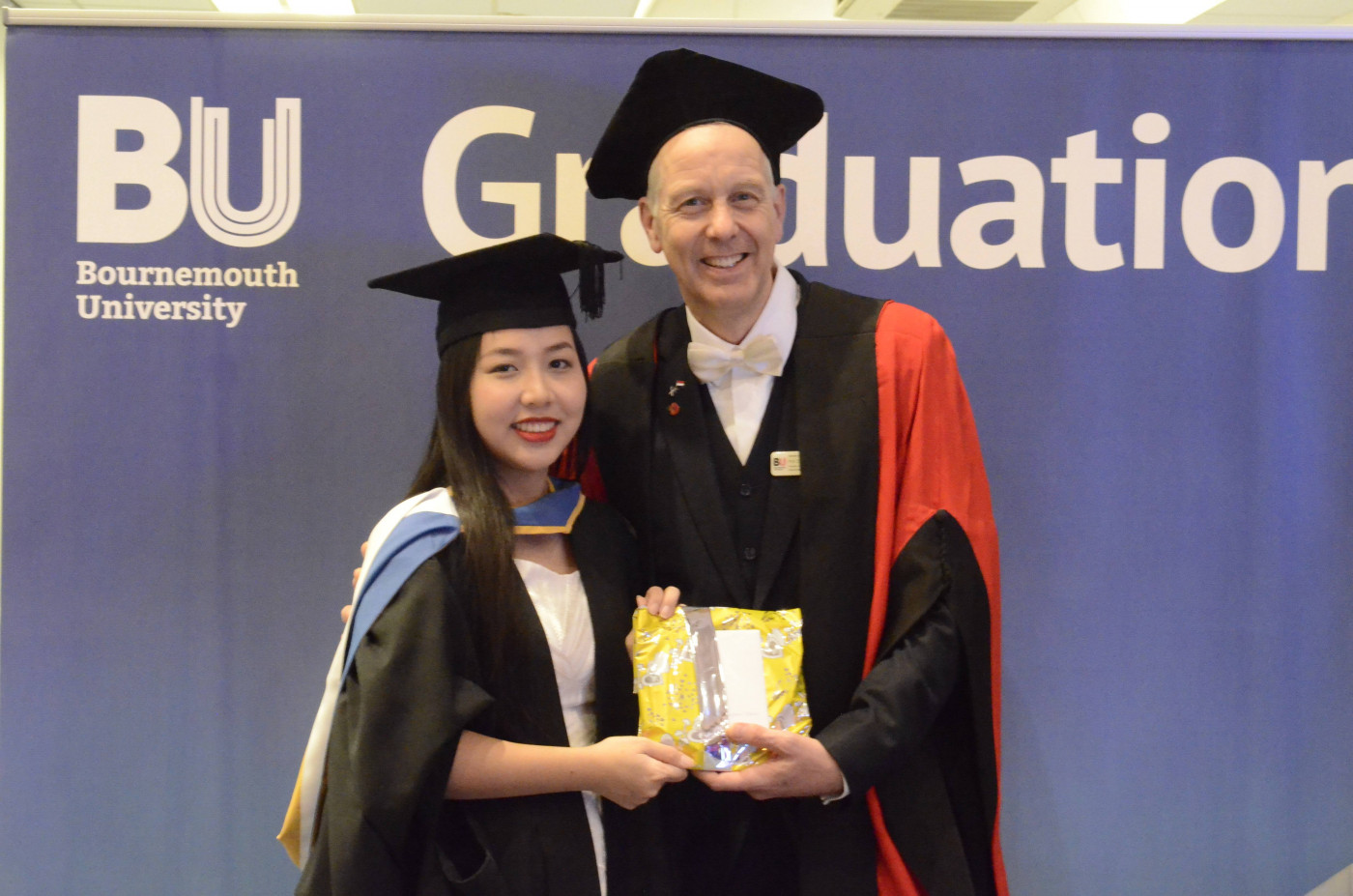
You may have seen the BU Research Blog two years ago congratulating Bournemouth University’s MSc Public Health graduate Hana Dinh on the acceptance of her paper ‘‘Factors influencing engagement in premarital sex among Vietnamese young adults: a qualitative study’ [1].
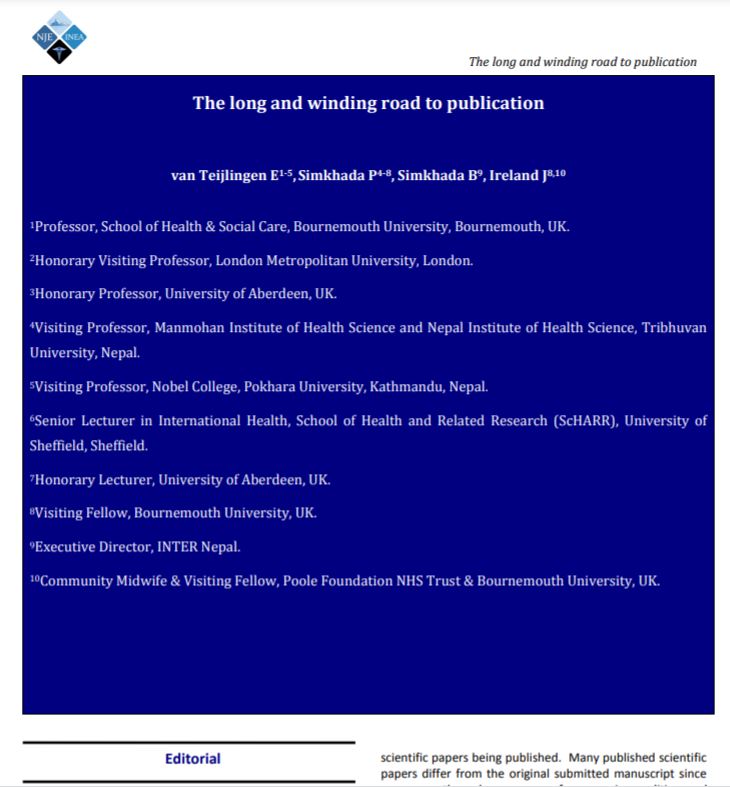
In April 2019 this paper was published ‘online first’ in the International Journal of Adolescent Medicine & Health. Last month, two years later, her paper finally appeared in print. Hana’s paper had originally been accepted by this journal in 2018, it was put online in 2019 and now it has been formally published. It can still be a long process for an academic paper to get into print as we have discussed elsewhere [2]. Hence the title of this blog, the question to me is ‘What is the appropriate publication date for this article on my CV?
Prof. Edwin van Teijlingen
CMMPH (Centre for Midwifery, Maternal & Perinatal Health)
• Individuals or teams whose educational research work has shown demonstrable public engagement or impact
• Practitioners or researchers whose work is grounded in educational research and has led to demonstrable public engagement or impact
• Those whose activities have boosted public engagement with educational research or its impact, or whose efforts have increased recognition and support for education research in public
Two awards, worth £500 each are available. One is given to an individual’s research and the other for a team of researchers. The winners will also have a featured article in BERA’s magazine.
This award is designed to support early-career researchers who show exceptional talent in both research and public engagement, emphasising and demonstrating the importance of academic research and creative thought at a time of rapid political and societal change.
The British Academy, in collaboration with the Wolfson Foundation emphasises the importance of award-holders communicating their plans and results to a broad audience. It is expected that six awards will be offered and that they will continue to participate with future cohorts building a network of outstanding researchers.
Funding
The grant maximum is £130,000 across three years. Awards can be used flexibly: at least £90,000 for time buy out, and up to £40,000 for research and travel expenses and dissemination of findings.
The funding is expected to be divided:
First, to buy out time of the academic duties of the award-holder in order to focus on their research goals.
Secondly, for travel and public engagement across the three years of the award to help with research costs and to undertake dissemination of the findings from the fellowship research locally, nationally and globally.
Eligibility
Applicants must have a full-time or part-time permanent or fixed term post that covers the length of the award (three years) at a UK university or other research institution, such as a museum or gallery, which can provide a suitable environment and support for applicants.
Applicants should have research, teaching and other related duties from which they would need to be released from in order to heighten their focus on the research and engagement supported through the fellowship.
Applicants should be within seven years of completion of their doctorate, though applications are also welcome from those researchers who have taken time out since the completion of their PhD for maternity/paternity/adoption leave, for caring responsibilities or for periods of illness.
Applications are welcome from museums and galleries, including but not necessarily limited to those with Independent Research Organisation (IRO) status.
At BU we promote and celebrate the work done to engage public audiences with BU research.
The public engagement with research team in Research Development and Support (RDS) can help promote your event to relevant audiences through our regular newsletter and social media channels. It also helps us to stay informed on the public engagement work being carried out by BU.
Please note: we are keen to promote BU public engagement with research activity wherever possible, but completing this form does not guarantee that we will be able to promote your event. To be considered for inclusion, your event or activity must be;
Focused on BU research, either solely or as part of a wider programme.
Events or activities that do not involve BU research, such as marketing or recruitment events, will not be accepted.
Intended for and open to non-academic audiences, either entirely or as a portion of the audience.
Submitted, at the latest, in the first two weeks of the month preceding the event.
For example, an event taking place in June should be submitted via the form any time before 14 May. This is due to lead times on producing and sending the newsletter.
Event descriptions may be edited for consistency in style with other content. If you have any questions about this process, please contact us.
Dr Sue Thomas shares her experience of presenting at a BU Café Scientifique event on 6 July 2021.
For my talk at Café Scientifique I took a fresh look at the topic of my 2017 book “Nature and Wellbeing in the Digital Age: How to feel better without logging off”, which has new relevance in the age of digital wellbeing during COVID-19. This continued the theme of my previous book, “Technobiophilia: Nature and Cyberspace”, which looked at the prevalence online of nature-derived metaphors and imagery, and which I discussed at Café Sci in 2013.
My talk topic – Technobiophilia
Intuitively we all know that Nature is good for us. Research has backed that up, showing that contact with nature can support emotional wellbeing and better concentration, as well as reduce stress and lower heart rate and blood pressure. Sometimes even simple psychological connectedness to nature can produce the same effects.
Biophilia is a hypothesized hidden programme which runs in the background of our lives. The term was first coined by Erich Fromm but became more popular when the eminent biologist EO Wilson described it as “the innate attraction to life and lifelike processes”. Wilson believes that biophilia may have the ability to lie dormant for periods of time until something triggers it into action again.
The notion of biophilia led to my own definition of ‘technobiophilia’ as “the innate attraction to life and lifelike processes as they appear in technology”. Technobiophilia connects our lives in nature with our lives in the digital, and this process has been very evident during the Covid-19 Lockdowns. Here are some examples:
In October 2020, the Metro newspaper declared that “Nature documentaries are ‘perfect lockdown viewing and make people happier’ in an article about the TV programme “Seven Worlds, One Planet” which highlighted the story of the last two northern white rhinoceros left alive on the planet.
On Instagram, thousands of RSPB #breakfastbirdwatch watchers shared their photos. Sussex_sara posted “Is anyone else feeling in a state of suspended animation these days? 😕 Living alone, the only tangible sense I have of days passing are the changes in nature as our lives are put on hold.”
Country Life magazine, perhaps not the most techie of periodicals, listed the best live animal webcams to get you through lockdown. Their Top 3 were: Little penguins, Phillip Island Nature Parks, Australia; Folly Farm, Pembrokeshire (sheep, goats, newborn lambs) and Edinburgh Zoo (Panda cam, Penguin Cam, Koala Cam and Lion Cam)
The BBC launched a collaboration to bring virtual soundscapes of music and nature directly to audiences with Radio 3, 6 Music, and BBC Sounds, and also embarked on The Virtual Nature Experiment with The University of Exeter, a ground-breaking study exploring how virtual experiences of nature might impact wellbeing.
Nintendo relaunched its old online game “Animal Crossing” and it was soon dubbed ‘the game of the pandemic’. Slate Magazine said “Animal Crossers new and old found comfort in exerting control over their islands’ virtual terrain as the world outside grew more and more chaotic” and the MIT Technology Review reported that “Gentle, comforting games like Nintendo’s latest hit are perfect escapist entertainment, but they’re also helping us to connect in these strange times.”
This last observation was born out by a study conducted before the pandemic and published in 2020, which reported a significant increase of feelings of connectedness to the community after watching digital nature. Interestingly, they also found that tended nature scenes elicited more social aspirations than wild nature scenes.
In 2020, Natural England surveyed the changing relationship with nature during lockdown. It reported that 41% of people said that visiting natural spaces had become even more important to them than before. Also in 2020, in a study conducted before the pandemic, the University of Exeter found that the best way of delivering virtual nature for improving mood was computer-generated virtual reality, which proved more effective than high definition TV or 360° video.
During the lockdown pause, Nature was busy regenerating. As early as April 2020, carbon dioxide and nitrogen dioxide fell by up to 40%. Air traffic fell 50%. UK road traffic fell 70%. And during that year, wildlife came closer – wild goats wandered the empty streets of Llandudno, coyotes walked across the Golden Gate Bridge, there were deer in Washington DC, and wild boar in Spain and Italy. Everyone heard more bird song. By April 2021, marine noise pollution had decreased so much that the seas had become measurably quieter.
So, what has lockdown taught us about digital nature and wellbeing? It seems that we have learned that we can connect with nature in many different ways, both physically and digitally. We have been reminded that we can live more of our lives outdoors, and that nature can help connect our local communities.
But individual nature connection is not enough. Covid has taught (some of us) to better connect with nature, but has that process sedated us? Distracted us? Separated us even more from what else is happening? This year, floods and fires around the world have reminded us that there are other disasters too, most of them a result of the global warming.
While we in the First World are busy self-soothing with nature, many millions of people have no access to vaccines. In January 2021, Dr Tedros Adhanom Ghebreyesus WHO Director-General, warned “The world is on the brink of a catastrophic moral failure – and the price of this failure will be paid with lives and livelihoods in the world’s poorest countries.”
Of course, this moral failure can be seen in the climate emergency too. In his 2020 film ‘A Life on Our Planet’ David Attenborough delivered his Witness Statement and told the story of ‘our greatest mistake’. The film begins and ends in Chernobyl which, although still devoid of humans, has seen the return of many thriving animals and plants. This allows Attenborough to make his final message one of hope. ‘We have’, he says, ‘the opportunity to become a species in balance with nature’.
When my book ‘Technobiophilia: Nature and Cyberspace’ was published in 2013, some thought the idea of using technology to connect with nature was contradictory, even harmful. But the last 18 months of the pandemic have shown the benefits of nature in the digital age, for some of us at least. But there is much more work to do. Perhaps digital nature can play a part in helping humanity to finally, to quote Attenborough, “become a species in balance with nature” – if there is time.
My Café Scientifique experience
I enjoyed my second Café Scientifique session. It went very well and was followed by a lot of positive feedback and a lively exchange of ideas, which brought the July lecture to a successful conclusion, slightly over the scheduled two hours.
The audience asked some excellent questions and we were pleasantly able to deepen our exchanges. It was interesting to hear from those providing opportunities for engaging with digital nature, especially Radio Lento https://radiolento.podbean.com/ who produce entrancing virtual nature tours in the form of weekly sound postcards from beautiful places. Find them on Twitter @RadioLento where they regularly share some wonderful sounds. There was a lively exchange of views about the relative values of visual, audio, VR and analogue nature experiences, especially when created from the same sources.
It was a great experience with people from all over the world, including old friends. My talk was recorded and is available to watch on the Café Sci YouTube channel. I hope that it inspires you to think and act on the relationship between nature, digital nature and our well-being.
At Café Scientifique, you can explore the latest ideas in science and technology in a relaxed online setting. Enjoy listening to a short talk before engaging in debate and discussion with our guest speaker and audience.
We’ll be joined by Dr Ashok Patnaikon Tuesday 5 October from 7.00pm until 8.30pm.
The COVID-19 pandemic has worsened children’s mental health, which was already in decline. Researchers have observed increased levels of anxiety, depression and other psychological distress. However, children with poor mental health do not always receive the support they need from schools and mental health services.
Stormbreak is a new programme that combines simple, fun movements with well-being techniques such as talking therapies and mindfulness, to help children care for their mental health. Join us to discover what happened when Stormbreak was trialled in several local schools, and where it could go next.
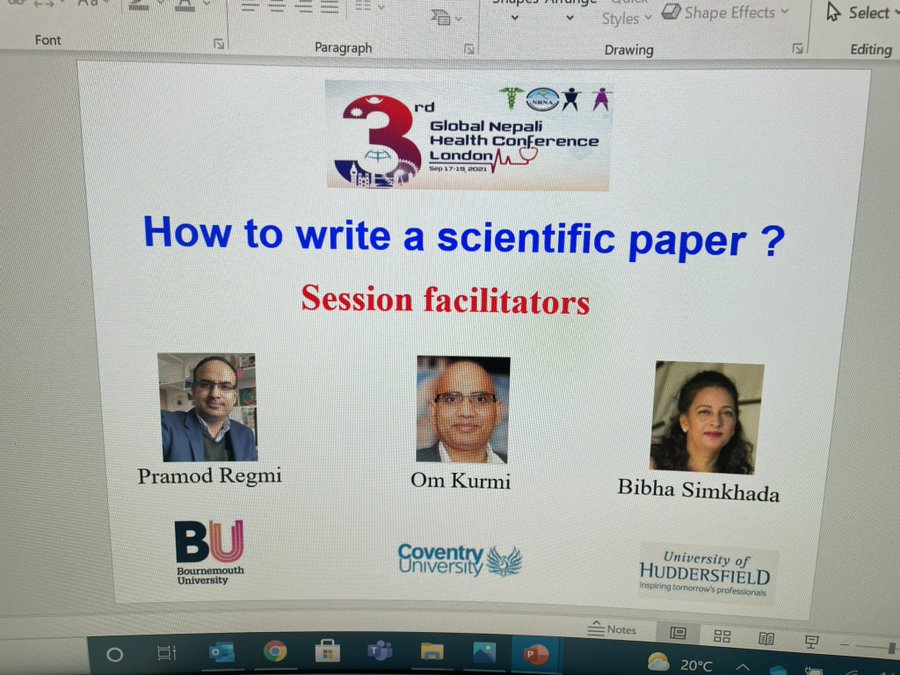
Dr. Pramod Regmi, Senior Lecturer in International Health and Interim Global Engagement Lead in the Department of Nursing Sciences, was invited last weekend to speak at the Third Global Nepali Health Conference, London. He taught on ‘How to write a scientific paper’ with Dr. Om Kurmi from Coventry University and Dr. Bibha Simkhada from the University of Huddersfield (and Visiting Faculty at BU’s Faculty of Health & Social Sciences).
We’re kicking off the new academic year with a meeting for all Early Career Researchers on
Wednesday 22nd September from 15:30 – 16:30
This is a great opportunity to get to know other researchers across BU.
It’s a friendly, supportive environment for raising all sorts of questions, and hearing about other’s research-related experiences, and plain networking should you be interested in interdisciplinary working.
This month we will have a discussion focused on the Research Concordat, and what it means for you as a researcher, but there will also be plenty of time for a general chat. This will be a MS Teams meeting.
The Health Research Authority has implemented changes to final study reporting requirements. The changes apply to all studies across the UK which require ethics approval and which have not yet submitted a final report.
The Make It Public strategy set out our commitment to make transparency easy, make transparency the norm and make information public. We have now developed a standard dataset on research transparency which will be collected in the study final reports. Coupled with changes we have already made to help you plan at the start of a study how you will inform participants at the end, these changes are steps towards fulfilling that commitment.
In the future we will be able to see more clearly what proportion of studies are fulfilling transparency requirements, including information about study registration, publication of results, informing participants of the outcome of the study and the sharing of data and tissue (if applicable).
In standardising the information we request from you and the form for collecting this, we hope it will be easier for you to know what is expected.
At BU we have an established network of Early Career Researchers (ECRs) across the faculties which meets on a monthly basis.
This provides support for Early Career Researchers from the experienced academic leaders of the network, Dr. Sam Goodman, and Prof. Ann Hemingway, as well as from peers. It’s also a great forum for networking and making connections that can be of great benefit to an academic’s research career.
We plan to continue holding our monthly networking events online for the time being, with a view to trialling at least a couple of hybrid events later in this academic year. Following on from your feedback, we have more themed discussions this year, although there will always be time for some more general Q&A during the meetings. Our events remain scheduled on Wednesday afternoons, in anticipation that the teaching workload is a little lighter at that time.
BU is committed to the UK Research Concordat to Support the Career Development of Researchers, which aims to make Universities provide a supportive employment structure and offer researchers career development opportunities. BU also holds the European Commission HR Excellence in Research award. The Early Career Researcher Network is supported as part of the Research and Knowledge Exchange Development Framework (RKEDF), providing training and development to BU academics at all stages of their research careers.
Are you an Early Career Researcher ?
For the purposes of this friendly support network, anyone who wishes to conduct academic research, particularly externally-funded research, but who feels they may be lacking in experience, is welcome to come and join the network.
If you have any queries about being an Early Career Researcher at BU, or the support BU provides to Early Career Researchers, please contact us at RKEDF@bournemouth.ac.uk.





 We’re kicking off the new academic year with a meeting for all Early Career Researchers on









 International Open Access Week: BU support for open access
 Food Price Research Shortlisted for Civil Service Prize
 3C Event: Research Culture, Community & Connections – Wednesday 11 November 3-4pm
 ECR Opportunities: New Development Programme, Researcher Grants & Upcoming Events
 Help us capture BU’s knowledge exchange activity HE-BCI survey 2025–26
 Horizon Europe Cluster 3 (Civil Security for Society) 2026 Calls Now Open
 MSCA Doctoral Networks 2026 Call Information Webinar
 ESRC Festival of Social Science 2026: Application Deadline Extended to Thursday 25 June 2026
 Reminder: Register for the ESRC Festival of Social Science 2026 Information Session
 ECR Funding Open Call: Research Culture & Community Grant – Apply now
 ERC Advanced Grant 2025 Webinar
 Update on UKRO services
 European research project exploring use of ‘virtual twins’ to better manage metabolic associated fatty liver disease