 In the last month we had several FHSS-Psychology success stories. The first one was a recently accepted joint publication between Mr. Paul Fairbairn and Dr. Fotini Tsofliou in the Department of Rehabilitation and Sport Sciences, Dr. Andrew Johnson in BU’s Department of Psychology. The joint paper is called ‘Effects of a high DHA multi-nutrient supplement and exercise on mobility and cognition in older women (MOBILE): A randomised semi-blinded placebo controlled study” in the British Journal of Nutrition [1].
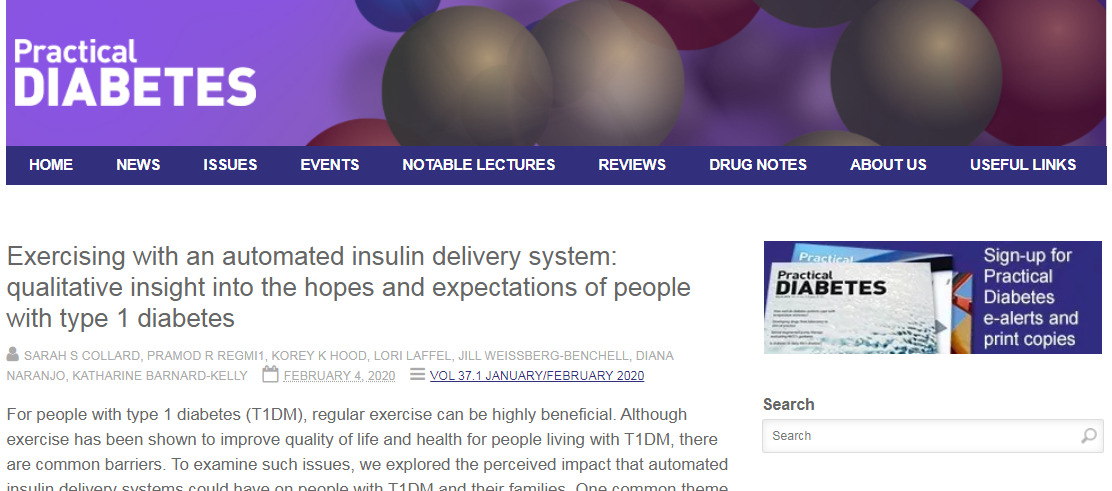
Secondly, Dr. Sarah Collard in the Department of Psychology, Dr. Pramod Regmi in the Department of Nursing Science and FHSS Visiting Professor Katherine Barnard-Kelly are to be congratulated on their publication: ‘Exercising with an automated insulin delivery system: qualitative insight into the hopes and expectations of people with type 1 diabetes’ [2].
 And last, but not least, Dr. Bibha Simkhada in the Department of Nursing Science together with FHSS colleagues Dr. Michele Board and Prof. Edwin van Teijlingen and Dr. Shanti Shanker in the Department of Psychology were awarded £17,180 in the most recent internal GCRF call. Their proposed project ‘The key issues in Dementia in South Asia’ will run from 2020-2021. Both Dr. Simkhada and Dr. Shanker are Global Engagement Lead (GEL) in their respective departments.
Good to see so many great cross-BU collaborations!
Professor Edwin van Teijlingen
CMMPH
References:
Fairbairn, P., Tsofliou, F., Johnson, A., Dyall, S.C. (2010) Effects of a high DHA multi-nutrient supplement and exercise on mobility and cognition in older women (MOBILE): A randomised semi-blinded placebo controlled study, British Journal of Nutrition (accepted).
Collard, S.S., Regmi, P.R., Hood, K.K., Laffel, L., Weissberg-Benchell, J., Naranjo, D., Barnard-Kelly, K. (2020) Exercising with an automated insulin delivery system: qualitative insight into the hopes and expectations of people with type 1 diabetes, Practical Diabetes 2020; 37(1): 19–23.
 Congratulations to Dr. Preeti Mahato in the Centre for Midwifery, Maternal & Perinatal Health (CMMPH) on the acceptance of her latest academic paper in the journal Sexual & Reproductive Healthcare. [1] Contraceptive use is one of the most effective methods for reducing the number of pregnancies and thus benefiting the health and survival of women and children, especially in low-income countries such as Nepal. Increased contraceptive use and thus decreased fertility results in decreased obstetric risk mainly by reducing unwanted pregnancy in women with high parity. This paper reports of factors that act as barriers to contraceptive use or that act as facilitators of its use.


















 Food Price Research Shortlisted for Civil Service Prize
 It’s International Open Access week
 3C Event: Research Culture, Community & Connections – Wednesday 11 November 3-4pm
 ECR Opportunities: New Development Programme, Researcher Grants & Upcoming Events
 Help us capture BU’s knowledge exchange activity HE-BCI survey 2025–26
 Verbal autopsy paper published two days ago
 Horizon Europe Cluster 3 (Civil Security for Society) 2026 Calls Now Open
 MSCA Doctoral Networks 2026 Call Information Webinar
 ESRC Festival of Social Science 2026: Application Deadline Extended to Thursday 25 June 2026
 Reminder: Register for the ESRC Festival of Social Science 2026 Information Session
 ECR Funding Open Call: Research Culture & Community Grant – Apply now
 ERC Advanced Grant 2025 Webinar
 Update on UKRO services
 European research project exploring use of ‘virtual twins’ to better manage metabolic associated fatty liver disease