It’s been a while since we were in touch – and it was an epic Easter with the news and announcements almost as plentiful as the eggs. Welcome to your egg-cessive catch up edition! [All complaints about puns to Sarah please!]
Provider Closure – new OfS powers to intervene
The OfS have announced a new condition of registration to protect students at HE providers who may be at risk of closure. It empowers them to act quickly and in a targeted way. This blog explains the change. The actual regulatory framework is available here. The OfS previously consulted the sector on the new conditions following which they developed the new condition. It is understood that the consultation responses disagreed with the approach outlined for the new condition but the regulator stated that the condition was necessary.
The OfS acknowledge that: Responses…from universities and colleges were less likely to agree with our proposals than those from students. In many cases, providers highlighted concerns about protecting institutional autonomy. We considered these responses carefully, but concluded that they did not set out sufficiently compelling reasons for the interests of providers to outweigh the interests of students in these situations.
Put more bluntly, we took the view that we need this condition in place so that it can be used when the risks to the interests of students become so acute that they justify intervention that will affect autonomy and create additional regulatory burden…The new condition of registration we have introduced gives us a sharper and much needed regulatory tool to do that in a wide range of circumstances.
The chances of this being used are now small – when it was mooted it looked like there might be some large institutions that might end up in this position as a result of the pandemic. However, now it is more likely that this would be invoked for a rare market exit situation in unusual and specific circumstances. Like the DfE rescue plan, it is something whose very existence will encourage institutions to find a way to make sure it doesn’t apply to them!
Harassment
The OfS have called for the HE sector to review sexual misconduct and harassment policies, systems and procedures before the end of the current academic year. The OfS published a statement of expectations stating the framework provides a clear and consistent set of standards that all universities and colleges can follow to implement effective systems and policies to both prevent and respond to incidents.
- HE providers should clearly communicate, and embed across the whole organisation, their approach to preventing and responding to all forms of harassment and sexual misconduct affecting students.
- Governing bodies should ensure that the provider’s approach to harassment and sexual misconduct is adequate and effective.
- HE providers should appropriately engage with students to develop and evaluate systems, policies and processes to address harassment and sexual misconduct.
- HE providers should implement adequate and effective staff and student training with the purpose of raising awareness of, and preventing, harassment and sexual misconduct.
- HE providers should have adequate and effective policies and processes in place for all students to report and disclose incident of harassment and sexual misconduct.
- HE providers should have a fair, clear and accessible approach to taking action in response to reports and disclosures.
- HE providers should ensure that students involved in an investigatory process have access to appropriate and effective support.
Currently the statement of expectations isn’t linked to specific conditions of registration, so it’s an expectation not a regulatory requirement. However, OfS will be engaging with universities (and students, and students’ unions) to understand the outcomes and progress made during this requested re-consideration of policy.
Student information on harassment, hate and sexual misconduct is here.
OfS chief executive, Nicola Dandridge, blogged:
- Despite some improvements, progress has been uneven. We still see a lack of consistent and effective systems, policies and procedures across the sector. As a result, students continue to report worrying cases that have not been properly addressed by their university or college.
- Dealing effectively with harassment and sexual misconduct – wherever it may occur – will require action, commitment and collaboration. The result should be that meaningful support is provided to students when they need it, and that all incidents are dealt with effectively and sensitively. That is the least students should expect and we are determined to make sure they get it.
Wonkhe have several blogs:
- A review of the statement of expectations
- Permitting staff-student relationships harms education
- Online abuse requires specific recognition and treatment
NSS
The Office for Students (OfS) announced that major changes in the National Student Survey (NSS) will be introduced over the next two years following the first phase of a review of the survey conducted by the regulator. Wonkhe published a blog.
The review of the NSS was commissioned by Universities Minister Michelle Donelan, and the terms of reference were agreed in September 2020 for a radical review to address concerns that the survey could be adversely impacting on quality and standards (i.e. driving grade inflation) and creating significant unnecessary bureaucracy for universities and colleges.
Gavin and Michelle had said “scrap it and develop something new”. The OfS now say, you’re wrong, and we can prove it…brave. But there is a big concession later in terms of removing/changing question 27 and making it harder for league tables….
- We found in our discussions with stakeholders that the survey is widely used to enhance the student experience by providers. This was seen by them as the main purpose of the survey. They value the ability to make comparisons and benchmark their performance. It is often used a starting point for staff-student partnership.
- However, there was also concern that the survey can be used as blunt tool within providers to hold individual departments, and in some cases individual academics, to account.
- It is also used for student information by prospective students, though this is not seen as a primary purpose by providers. Applicants we spoke to found the NSS and other metrics useful for sifting down options rather than making final decisions. This is supported by the poll findings and student information research.
- The survey is an important mechanism by which students and student unions hold their universities and colleges to account. Given the public investment in higher education, on the whole it was seen that transparent, official information should be in the public domain
- ….Many universities and colleges would run their own surveys if the NSS did not exist, which we heard would likely place more burden and cost on providers.
- However, this was not a universal picture. Academic staff were much more likely to report burden, in particular in relation to chasing improvements in NSS scores, which they felt could be a distraction from teaching
- ….It would be highly unusual for a UK-regulated sector, with significant opportunities for consumer choice, for a consumer feedback mechanism not to be published. In most cases this is done at least at provider level.
- There is a concern from providers that non-publication would not remove the issues around league tables but would deny them valuable comparative information. Indeed, there is a risk that non-publication could compound concerns about league tables, with league table compilers likely to rely on less robust datasets.
- Providers were keen for us to review the current reporting thresholds – at present we publish at course level with a minimum response rate of 50 per cent and at least 10 respondents. d. It is likely results would be subject to Freedom of Information legislation. Good practice suggests that if this is the case the information should be published anyway.
- …We did not find any evidence of widespread gaming of the survey.
On the big Ministerial statement (that the NSS drives grade inflation):
- We did not find any evidence of a systemic issue of grade inflation or a lowering of standards from providers or students, but anecdotal comments from academics suggest this could be happening at a local level.
- We conducted new analysis for this review to investigate the extent to which the NSS is linked with the lowering of standards and grade inflation.
- We found that grade inflation existed before the introduction of the NSS, and that the marked increase in grade inflation occurred around five years after the first year of the survey. This makes it unlikely that the NSS is the sole cause of grade inflation.
- At a provider level, we found no correlation between grade inflation and increases in overall satisfaction. For a provider, awarding more first class degrees is not a simple route to getting better NSS results. e. Reported intellectual stimulation, as measured by the NSS, also remains high in the face of grade inflation. This provides some challenge to the theory that students are getting better grades because, due to pressures related to the NSS, courses have become easier.
- Students who get better degrees are more likely to say that they are satisfied, even when other factors are taken into account. We do not believe that these two factors are directly causally linked. For example, we heard from providers and students it cannot simply be the case that students respond positively to the NSS because they have received a good degree: the timing of the survey means that many students are unaware of their final grade when they respond, although due to variations in semesters and assessment patterns between providers this may not be universally true. There may be an indirect causal link between the two factors, or they may be linked by a third factor (for example, students who are more engaged with their course may tend to get better degrees and tend to be more satisfied).
So what next – note the second one which is a nod to the political issues with NSS:
- Recommendation one – Examine the two possible alternatives to a universal annual census of final year students; large stratified sample or biennial survey, against the current annual census, ensuring the survey remains statistically robust at least at provider level.
- Recommendation two – Review the core survey questions to ensure they remain fit for purpose and stand the test of time. This will include the removal of the term ‘satisfaction’ from the summative question or aggregate score to replace Question 27.
- Recommendation three – Continue to publish the NSS at a level that is statistically robust.
- Recommendation four – Improve user guidance to providers and students’ unions on responsible statistical use of NSS results, in addition to improvements to the data dissemination site to help remove burden on providers. Raise student and students’ union
HEPI have a blog by Johnny Rich: The true potential of a national student survey, in which he suggests that it should include more engagement data. “…once the review train starts rolling, it takes more than the undermining of its entire premise to stop it. And so, the NSS will be reformed, whether it needs it or not. I happen to believe it does – but not for the reasons stated by the Government – and even timid change presents bold opportunities.2
Research Professional consider the NSS from the perspective of the administrative burden. They state:
- Universities minister Michelle Donelan commissioned the review in September, warning that “the benefits of this survey are currently outweighed by the negative behaviours and inefficiencies it drives”. A government policy paper published at the timesaid that academics were “critical of the cost and bureaucracy the NSS creates”. It argued that “the level of activity [the NSS] generates can be a distraction from more important teaching and research activities”.
- Phase one of the review is complete, but phase two—looking specifically at the bureaucratic burden of the exercise—is ongoing. Emma Maskell, head of student engagement and information at the Office for Students, was on hand to bring us the latest updates.
- On cutting bureaucracy, Maskell said that while the possibility of making the NSS biennial had been considered, “we heard from the review that, actually, the administration around the set-up of the survey was relatively low burden”.
- “It was the…post-publication analysis of results, and how those are used internally, that was actually providing most burden,” Maskell said. “And it was felt that, actually, the drawbacks from a biennial or a large, stratified sample wouldn’t necessarily remove that sort of administrative burden from providers.”
- In short, any advantages of making the NSS less frequent would be less significant than the disadvantages of having data that were less up-to-date, because institutional use of the data is what causes bureaucracy, rather than the survey itself.
- Universities employ analysts to dig deep into NSS responses in order to root out performance that is perceived to be subpar. This is no surprise, given the extent to which institutional funding is now dependent on student tuition fees. Students base their course choice on, among other things, league table rankings (some of which draw on NSS results) and how happy they feel they will be at a particular university.
- But perhaps universities would not be making the analysis of NSS responses such a burden if they weren’t under such pressure to recruit as many students as possible. Just a thought.
Research
ARIA – Wonkhe summarise Tuesday’s debates into ARIA: Speaking before the Advanced Research and Invention Agency (ARIA) Bill Committee, opposition spokesperson Daniel Zeichner pushed for the amendment to change the name of the agency to the Advanced Research and Engineering Projects Agency in order to distance itself from the influence of Dominic Cummings, whose appearance before the Science and Technology Committee Zeichner described as “self-indulgent”. Across the day’s two sessions the committee discussed proposed amendments relating to the makeup of ARIA’s executive board, its relationship with central government, making ARIA subject to the Freedom of Information Act, and requiring the agency to take into account regional disparities in research funding. You can watch the first and second sessions on Parliament TV.
Wonkhe also summarise the parliamentary questions on ARIA answered earlier this week: Science minister Amanda Solloway answered a number of written questions on the Advanced Research and Innovation Agency from Labour’s Chi Onwurah. These covered how ambitions will be set for ARIA, the timescale between the ARIA bill passing and its first funded project, how to prevent duplication between ARIA’s work and other publicly funded research, on whether ARIA will fund engineering projects, and on an estimate of the proportion of the science budget that will be allocated to ARIA in each of the remaining years of the current Parliament.
Another parliamentary question confirmed that the open recruitment campaigns for ARIA’s first Chair and CEO will launch this spring and there is no intention to make any interim appointments.
Horizon Europe – Research Professional (RP) cover where the Horizon Europe associate membership money will come from:
- The £1 billion initial cost of association is to come from a mix of pots. The government has made £250m of new cash available. This will be added to £400m identified in the 2020 spending review and pencilled in for “government priorities”. The remaining £350m comes from money already allocated within the business department’s budget for domestic alternatives to Horizon, should they have proved necessary.
- …Welcome as the Easter egg of £250m will be for researchers, this just-in-time patchwork of funding raises more questions than it answers. The announcement may have settled nerves about the UK’s initial membership but as yet there is no word on what will happen in future years, when the cost of association is expected to rise to closer to £2bn annually.
- Some £750m of this first payment has effectively come from the science budget. Does this set a precedent for future years—and despite the appearance of an uplift, does it actually spell a real-terms cut in future research funding?
- Then there is the controversial correction mechanism for Horizon,whereby the EU prevents a third-party country becoming a net beneficiary from the scheme. If the UK were to win more than 8 per cent of funding from Horizon, that would trigger an automatic additional payment to the EU.
- However, there is no corresponding rebate mechanism should the UK win grants that amount to less than its contribution.
- …It means that the more successful UK science is at winning Horizon grants, the more the UK will have to contribute to the scheme.
- …it might be expected that UK scientists will return to their past success rate of attracting around 12 per cent of all funding. That will present a headache for the Treasury.
- ..It is unlikely that the Treasury will be willing to take out its credit card to cover annual add-ons to a scheme benefiting the EU. We can expect membership of Horizon to come at a cost to UK science, even if there is more to be gained from association than mere monetary value.
RP also report that university research managers are struggling to prepare to work on grants for Horizon Europe, as the European Commission has still not published a template agreement with its interpretation of the programme’s rules.
KEF – The Knowledge Exchange Framework dashboards were published. This explains how to use the dashboards. You can view the dashboards for individual institutions here and compare two providers here. Technical notes are here. Basically the dashboards measure HEIs against the following metrics:
- public and community engagement
- research partnerships
- IP and commercialisation of research
- working with business
- working with the public and third sector
- skills, enterprise, and entrepreneurship
- local growth and regeneration.
Watch out for the stronger black lines they show the ‘cluster’ average (clusters explained here, select ‘cluster’ on the navy blue bar after clicking the link).
Research Professional have a helpful article summarising the overall top level findings and comparisons from the KEF.
Over 100 of the institutions involved (117 out of 135) provided detailed narrative accounts of the work they do to build public and community engagement, and to promote economic growth in their local area. These narratives are published in full on the KEF website.
Chief Executive Officer of UK Research and Innovation Dame Ottoline Leyser said:
- UKRI values the diverse and varied contributions that our higher education institutions make to society. The Knowledge Exchange Framework, published today by Research England, reflects and celebrates this diversity.
- The KEF also brings together rich accounts of how our universities engage in their local areas, contributing in varied and often innovative ways to their local communities and economies.
- As well as researchers and innovators, the activities captured in the framework highlight the diversity of essential roles – from technicians and project managers, to technology transfer professionals – in connecting discovery to prosperity and public good.
Catapults – BEIS published a review and recommendations of how the UK’s Catapults can strengthen research and development capacity, improve productivity and contribute to greater prosperity across the UK.
- The UK’s innovation ecosystem benefits from having Catapults that bridge the gap between research and business. Catapults are unique institutions in the UK R&D system; businesses and stakeholders are positive about the difference they make. They are a critical part of a wider system of innovation in which universities, businesses, institutes, private investors and many others play important roles. Their impact varies, with the longest established having the greatest impact as measured by private investment and business partners – suggesting there are benefits to giving them time to establish themselves in particular sectors.
- The Catapults need sustainable governance and consistent review processes that are not updated during every funding cycle. This review recommends that Innovate UK / UKRI agrees with BEIS a clear, consistent 5-year review cycle which builds in expert review panels, and that this is maintained.
- In order to achieve their purpose, it is vital that Catapults collaborate effectively with universities, businesses, and each other. Where Catapults have been most successful, it is in supporting innovation at mid-to-high Technology Readiness Level (TRL), growing sectors, providing expertise and guidance on private and public funding, and establishing unique collaborations.
- Noting that each Catapult is unique, and that the same model will not necessarily work for all Catapults, this review is recommending that the Catapults should each review their engagement with universities and support for helping businesses to access finance. While the Catapults’ funding model is necessary to ensure an appropriate range of activities, the review also finds that the Catapults should introduce a code of practice to disincentivise competition with their own sectors or technology domains, and have a transparent and robust process for handling complaints.
Quick News
- The CBI are calling for industrial clusters in every region to tackle long-term regional inequalities and level up. The CBI want regions to be liberated from the restrictive cookie-cutter approach of the past, and empowered to capitalise on their unique strengths to build back better.
The CBI wants to see towns, cities, regions and nations supported to develop their strength industries in a way which enables each to become globally competitive in their own right. Increasing productivity in all corners of the country will in turn help end inequalities in education, health, wealth and opportunity – and raise living standards for all.
- UKRI published an analysis of the support they offered PhD students during Covid – the key findings are here, there’s a report on the extension policy, and UKRI respond to the Pandemic PGR’s Falling Short report which suggested enough hadn’t been done to support PGRs (such as a blanket extension).
- UKRI have announcedthat all research councils are moving to a single website on ukri.org. UKRI have invited feedback on the merge.
- The Office for National Statistics released dataon R&D expenditure by UK government departments, UK Research and Innovation (UKRI) and higher education funding bodies. They state the main points as:
- The UK government’s net expenditure on R&D reached a new high of £13.1 billion in 2019.
- Total net expenditure on R&D and knowledge transfer activities reached £13.4 billion in 2019 and represented 0.6% of gross domestic product (GDP), unchanged since 2010.
- UKRI, including the UK’s seven research councils, contributed the most to net expenditure on R&D and knowledge transfer activities in 2019, at £5.3 billion, 39% of the total.
- In constant prices (adjusted for inflation), civil net expenditure on R&D and knowledge transfer activities (excluding EU R&D budget contributions) increased by 25.1% over the long term, from £9.1 billion in 2008 to £11.4 billion in 2019.
- In current prices, defence R&D expenditure was £1.0 billion in 2019 compared with £1.6 billion in 2018; while £348 million of the decrease is due to lower R&D spending, the remainder relates to a methodological review that has affected the comparability of the data between 2018 and 2019.
- UK contributions to EU R&D expenditure increased to £935 million in 2019, up from £841 million in 2018 but still below the peak in 2017 of £961 million.
- UKRI published diversity dataon funding applicants and recipients of research council grants between 2019 and 2020 for PIs, CIs, fellowships and studentship starts. Summary of the key points here. Professor Ottoline Leyser, UKRI Chief Executive, said: This year’s data show some positive signs, but also highlight persistent pernicious disparities for under-represented groups in applying for and winning research funding. We are using these data to support our work to understand the causes for these disparities, engaging deeply and widely with the community to find effective solutions. We greatly appreciate the time and expertise committed by the community to working with us to drive lasting systemic change.
Parliamentary Questions
- No plans to update the Strategic Priorities Fund thematic areas
- Number of freedom of information requests UKRI deal with (numbers seem slightly up so far this year)
- The adequacy of the UKRI budget
Admissions
Wonkhe summarise the TASO report released this week:
- A new reportfrom Transforming Access and Student Outcomes in Higher Education (TASO) looks at the factors that encourage mature students to sign up for HE courses. The findings, based on a literature review and survey experiment, suggest mature learners are more interested in courses that are at least partially online. Several thousand participants without undergraduate degrees were asked to compare elements of a series of fictional courses with a randomly selected range of attributes such as course size and timetabling. Respondents were strongly in favour of courses with a shorter commute and preferred higher-ranked institutions, indications of strong support for mature students and smaller course sizes, but were less interested in social opportunities.
- Researchers said that the survey cohort over-represented white British individuals but they were still able to identify some preferences across different demographics. Younger students were less bothered by commute times but sensitive to job opportunities, while older students were less concerned about the availability of childcare. Those with lower levels of existing qualifications were more likely to choose courses where there was more obvious specialist support for mature students, and those who were not currently working were more cynical about adult education overall.
Post Qualification Admissions
Wonkhe tell us: Speaking at an AQA event yesterday, John Cope, director of strategy, policy and public affairs at UCAS, said that UCAS will publish recommendations for a post-qualification admissions (PQA) system later this week, saying that moving away from predicted grades is “something that UCAS would welcome”. The Guardian, the Independent, and the Press Association all report on the comments.
You can read UCAS’s Reimaging UK Admissions report hot off the press here. Commenting on the report Research Professional state: A good rule of thumb in the management of universities is to do unto yourself before you are done unto by the government. This Research Professional article has good commentary on the UCAS report. Snippets:
- [UCAS] proposes a model whereby students would complete a university application in the traditional manner but would not be offered a place until their A-level results were known. Applicants would also be able to explore other options with their results in hand.
- However, Ucas says that any reforms to the admissions process need to be considered in relation to the recruitment routes for international students, the advice and support offered to applicants by schools and a cross-UK application process that works for all national education systems.
- The Ucas report has got out in front of the Department for Education’s consultation on admissions, which is due to close in a few weeks.
- Of course, the Ucas proposal is a version of post-qualification admissions that continues to have Ucas at the centre and involves little in the way of change at the admissions service. It would still involve students applying to university on the basis of advice stemming from predicted grades, with a continued “clearing” element of switching around after A-level results day.
- The response from the University and College Union neatly sums up the problem. General secretary Jo Grady said: “Ucas’s conservative proposals would still leave students applying to university using unreliable predicted grades. This would not level the playing field for those from disadvantaged backgrounds who are more likely to have their grades underpredicted.
- “As such, Ucas’s post-qualification offer model falls short of the sort of ambitious reform we need to see. If we really want to remove the disadvantages currently baked into the system, students should apply after they receive their grades.”
- The Department for Education and the Office for Students will no doubt give weighty consideration to the Ucas plan in their own consultations. If it were to come to pass as the final model of post-qualification admissions, it would lead to a university admissions system not very much different from the present one, with a short turnaround for offers replacing a concentrated period of confirmation and clearing.
- Would the marginal gains satisfy either disadvantaged applicants or universities that would bear the administrative burden of change? Time will tell whether the government intends to propose a more radical overhaul of the system.
There is a good Wonkhe blog too: Post qualification offer making is nearly as good as the current system.
Access & Participation
Care leavers – OfS calls for improved support for students who’ve been in care: A guarantee of year-round accommodation, tailored pastoral support and admissions which take into account applicants’ experiences are among the steps that universities and colleges could put in place to help improve support for students who have been in care, the Office for Students (OfS) has said. You can download the OfS Insights brief here.
To improve the monitoring of this student group’s outcomes, the OfS is proposing an expansion of the future data collected to capture a broader group of applicants with experience of care, as well as working with the Centre for Transforming Access and Outcomes in higher education (TASO) to improve the sharing of effective practice.
The OfS also commissioned research from the National Network for the Education of Care Leavers (NNECL) – confusingly it has the same title as the Insight brief. It outlines what a consistent offer of support could look like, with recommendations including:
- year-round accommodation provided by universities and colleges with their own residences
- priority access to pastoral and financial support
- admissions processes which take a rounded view of applicants’ experiences and challenges
- pre-entry advice, careers guidance and continued support after graduation.
The briefing includes case studies of practical support already offered by universities, colleges and local outreach partnerships designed to tackle gaps in access and outcomes, such as:
- training for foster carers, children’s home support workers and personal advisors
- funded transport for open days or interview
- bursaries to provide financial support between studies and full-time employment.
Chris Millward, director for fair access and participation, said: While there are a number of excellent examples of support for students who have been in care, our analysis is still showing stark disparities in outcomes for this group. We know that the proportion of care experienced students entering into higher education remains substantially lower than their rest of the population, and our data shows that they continue to face barriers even once they get there. To mitigate this, we are calling for a consistent approach to support across the sector. Higher education is a transformative experience, and universities and colleges must do all they can to ensure that it is accessible for all.
Distance Learning – The Nuffield Foundation published a briefing note stating that distance learning could improve accessibility and inclusion in education if the digital divide is addressed. As the key findings below indicate the discussion extends to schools:
- Before COVID-19, the use of distance learning was increasing in higher education but uncommon in schools.
- Assessing the effectiveness of distance learning is challenging and most available evidence comes from higher education settings.
- Evidence suggests that the quality of learning design and teaching is more important than the mode of delivery in achieving learning outcomes.
- In schools and colleges, engaging all learners in distance learning is challenging. It requires parental support, integrated student-teacher and peer-to-peer communication, and access to hardware and study spaces.
- Distance learning and education technology (EdTech) could improve accessibility and inclusion in education if the digital divide is addressed.
- For distance learning to be effective, teachers need adequate support and training in EdTech use and remote learning design.
TASO speech & loan funded modules
- Universities Minister Michelle Donelan spoke at this week’s TASO conference on the importance of social mobility and higher education reform. You can read her speech here or, in brief, the speech reaffirmed Donelan’s commitment to social mobility within HE, and spoke of measures such as the Lifelong Loan Entitlement and Lifetime Skills Guarantee, which she said the Government was implementing to further equality in the sector.
- She stated that from 2022 the Government would trial loan-funded access to tuition fees for certain modules at a number of institutions across England, and what they learn from the trial will inform their approach to lifelong learning.
Course Choice – influence of disadvantage
Dods summarise the Social Mobility Commission new research investigating the drivers of socio-economic difference in post-16 course choices and their likely social mobility consequences.
The road not taken: the drivers of course selection finds that disadvantaged women are making course choices at 16 which can lead them to lower paid jobs than men – regardless of how good their GCSEs are. They also find that disadvantaged men are prone to choosing technical subjects which lead to higher earnings, such as engineering and IT. It isn’t new news, but it is interesting that the same pattern continues now as happened in the past despite societal ‘awareness’ of the consequences of these choices. Key findings:
- The highest earning routes are A levels or a combination of A levels and technical courses
- Academic courses are associated with the highest earnings. 80% of A level courses are ranked in the top 25% of earnings. This partly reflects the fact that academic courses often facilitate access to higher education.
- Courses combining academic and technical qualifications are relatively high-earning too, with 70% of students ending up in jobs ranked in the top 50% of earnings.
- Technical qualifications are mostly associated with low earnings. 62% of classroom-based technical qualifications and 40% of apprenticeships are in the bottom 25% of earnings.
- The small number of high-earning technical routes are mostly taken by men
- The technical qualifications with highest earnings potential are Level 3, particularly Level 3 apprenticeships.
- Men are more likely to take courses in higher-earning subject areas, such as engineering, construction and planning. Women are more likely to study subjects associated with low earnings, such as retail, commerce, health, care and public services.
- Young people from disadvantaged backgrounds are more likely to choose low-earning courses (particularly women)
- The most privileged men are 28 percentage points more likely to take a course in the top 25% of earnings than men in the most deprived group; the equivalent gap for women is 31 percentage points.
- Men and women with ‘just above average’ levels of deprivation are 20–25 percentage points less likely to take a course in the top 25% of earnings than the most affluent group.
- About 50% of disadvantaged women take low-earning courses ranked in the bottom 25% of earnings, which compares with about 31% of disadvantaged men.
- Women are 10 percentage points more likely than men to choose the courses in technical education that pay the least well.
- Some disadvantaged groups are more likely to choose low earning courses
- Prior attainment mostly explains why young people choose the highest-earning courses. However some groups are more likely to choose the lowest paying routes, regardless of their achievements.
- High achieving disadvantaged students are less likely to choose the higher-earning academic routes than students from privileged backgrounds.
- Disadvantaged women with middle and low levels of prior attainment are more likely to choose low-earning technical courses than women from privileged backgrounds.
- Course choices explain more of the earnings inequalities for women than for men
- Disadvantage has persistent effects on early-career earnings, even after controlling for prior attainment. Men’s choice of subject or course does not make this any worse. However, there is a further ‘earnings penalty’ for disadvantaged women of around four to five percentage points linked to their subject and course choices.
- Those choosing low-earning courses include disadvantaged Black Caribbean students and disadvantaged White British women
- Only 27% of women and 22% of men from disadvantaged Black Caribbean backgrounds took courses in the top 50% of earnings.
- Only 24% women and 33% men from disadvantaged White British backgrounds took courses in the top 50% of earnings.
- There are significant gaps in the provision of careers guidance
- Only three in five young people report receiving any career guidance before the age of 16. Learners and providers also feel that much less information is provided about technical routes than academic routes. This is despite the implementation in 2018 of the ‘Baker Clause’, which stipulates that all schools must allow colleges and training providers access to all pupils in years 8–13 to discuss non-academic routes.
- Young people taking higher-level courses are usually better informed about education pathways and other opportunities open to them.
- Disadvantaged young people are more likely to be disappointed by their choices
- Interest and enjoyment are important motivations for many students choosing courses. Higher-achieving learners are typically more able to pick a course they enjoy. Low-achieving learners frequently find some choice replaced by mandatory, corrective content so they enjoy less freedom.
- Aspirations are generally high. However young people from disadvantaged backgrounds are more likely to experience disappointment because of low attainment at the end of their course. As a result, they are more likely to find themselves on low-earning routes that they hadn’t intended to take.
- Gender norms remain pervasive
- There are strong gender disparities in subjects such as engineering, IT, beauty and childcare. Teachers say that this replicates the gender bias present in the various industries. They also note that course choice can be strongly influenced by a student’s role models.
- Geography and the availability of courses play an important role
- The cost of travel and how long it takes to get somewhere can influence a learner’s choice of provider and course. This is particularly the case for apprentices who need to travel to both their place of study and work.
- Disadvantaged students are more likely to take higher level courses (e.g. Level 3 courses) in areas such as London where there is a wide availability of school sixth forms. They are much less likely to take these higher-earning courses in places such as the north-west and north-east of England, where there is the lowest availability of school sixth forms.
Recommendations (a selection – see report for all)
- Present students with more advice when they are deciding on technical or academic pathways. Our research found young people taking higher level courses are usually better informed about the education pathways and opportunities open to them compared to those taking lower-level courses.
- Continue to allow blended technical and academic qualifications as these courses lead to relatively high earnings.
- Target local barriers, such as helping disadvantaged students with travel costs, so that is not an obstacle to education.
- Trial behavioural interventions that target gender norms, peer pressure or work experience in technical jobs.
Skills & Flexi-apprenticeships
Gavin Williamson, Secretary of State for Education, has issued a written ministerial statement on FE and skills detailing the launch of a consultation on a new flexi-apprenticeship scheme and the Skills Accelerator partnerships which connect local stakeholders with training providers to address local skills gaps.
International/Mobility
The arguments over the adequacy of the Turing scheme continued during a parliamentary debate this week. MPs expressed disgruntlement over: lower overall funding, grumbles over the inward only nature of the scheme, the application process changes were considered off-putting and a potential barrier for less advantaged students, visa fees, whether the scheme really would benefit disadvantaged students, the limits on the number that can take part, and the disadvantage for English students compared to students within the devolved nations who can also access the Erasmus equivalent funding from their devolved administration.
Universities Minister, Michelle Donelan, responded to the criticisms and confirmed that Turing would not fund staff, apart from those necessary to chaperon student placements, to prioritise taxpayer’s money.
Bureaucratic Burden
Research Professional considered the bureaucratic burden within three areas of HE life: UKRI impact requirements, the NSS review and OfS regulation.
Complaints
The Office of the Independent Adjudicator for HE (OIA) have introduced additional Rules for Large Group Complaints which are now in force. This change will help to prepare for and process complaints submitted by large groups of students or large numbers of complaints on certain topics/events (and for individual complaints to be added to a larger group). OIA state the process is more streamlined, however, their approach to decision making will remain the same as under normal process: they will consider what is fair and reasonable in the circumstances of the complaint. The changes were informed by the recent consultation process. Wonkhe have a relevant blog from when the consultation was issued.
Covid
Return delayed – You’ll be aware that the Government announced students currently learning remotely are not to return to campus until 17 May at earliest. Here is the written ministerial statement (WMS) setting out the announcement. It also outlines an additional £15 million in hardship funding (on top of the previously announced £70 million) which is to be made available. On this the WMS states:
- I realise that a delay to a return to university may cause some students to face additional costs. With this in mind, I have now announced that we will be making a further £15m of funding available for student hardship this academic year. This is in addition to the £70m of funding already distributed in the previous financial year. As with the £70m, international and postgraduate students will be eligible for this funding along with domestic undergraduates. We will work with the Office for Students to allocate these funds and will set out the details of this shortly.
Impact of Covid on HE Students – The Office for National Statistics have published the latest experimental statistics from the Student Covid-19 Insights Survey, which focuses on the impact of coronavirus on higher education students, covering the period 12 March to 22 March 2021. Key points:
- Average life satisfaction scores among students improved, returning to the same levels seen in November 2020 (5.2 out of 10), having been significantly lower in both January (4.6) and February (4.9) 2021.
- The improvement in average life satisfaction scores mirrors the trend seen for the adult population in Great Britain; however students’ average ratings of life satisfaction (5.2) still remain significantly lower than the average ratings of the adult population in Great Britain (6.8) over a similar period.
- The proportion of students reporting a worsening in their mental health and well-being, since the start of the autumn term 2020, fell between February (67%) and March (63%), consistent with the other well-being findings.
- The proportion of students reporting feeling lonely often or always (29%) remained at a similar level to February; this is far greater than the 7% of the adult population in Great Britain reporting the same over a similar period.
- Around three-quarters of students (76%) are living at the same address as they were at the start of the autumn term 2020; of those students who have moved, almost half (49%) are still planning on returning to their original address before the end of the academic year.
- Almost a quarter (24%) of students said that they expected to stay with people who are not part of their current household for a period of two weeks or more, over the next two months.
- Almost a quarter (23%) of students reported receiving a COVID-19 test in the last seven days; of those students, the majority (73%) reported taking a rapid result test, known as a Lateral Flow Device (LFD) test.
Student Futures Commission – The UPP Foundation announced the creation the Student Futures Commission exploring how, in light of the disruption everyone has faced furring the pandemic, universities can take action to support students from September 2021 to make the best of their remaining time at university and support those starting their HE journey. Mary Curnock Cook (ex-UCAS Chief Executive) will Chair the Commission, she has blogged about the Futures Commission for Wonkhe. Also the Commission’s terms of reference are blissfully short and clear so you can quickly read the three objectives, their approach, and scope and remit here. They will also be calling for written evidence from institutions in May (concluding in June!).
Poll – HEPI published findings from a new YouthSight poll covering students’ views on the impact of Covid on their higher education experience in 2021.
With all the talk of a ‘return to campus’ as restrictions it appears that many students are already living in their term-time accommodation, but a majority do not expect to have face-to-face teaching this academic year. Here are the key findings as stated in the policy note (which has colourful charts too):
- Two-thirds of undergraduate students (66%) say they have not received any financial reimbursement from their university or accommodation provider as a result of the pandemic [Note that the bullet point below highlights that 66% are living in term time accommodation!].
- Two-thirds of students (66%) are living in their usual term-time accommodation, whereas 34% are not.
- Around a fifth (19%) have received reimbursement from their accommodation provider, 13% from their university and 2% from both.
- Over half of students (56%) are not expecting to receive any more face-to-face teaching this academic year, compared to 44% who are.
- Student satisfaction with online learning is at a similar level to November 2020, but up from the levels in March and June 2020 (54% now, compared to 59% in November, 42% in June and 49% in March 2020).
- Around two-thirds (65%) of students say the messaging from their higher education institution on the impact of the pandemic on this academic year has been clear and around one-fifth (19%) say the messaging has been unclear.
- Almost two-thirds (63%) of students say their mental health is a little or much worse as a result of the pandemic compared to just 14% who say their mental health is a little or much better. Just under a quarter (23%) describe their mental health as the same. One-fifth (21%) describe their mental health as much worse.
- Over a third (38%) of students are satisfied with the delivery of mental health services, whereas 50% of students are satisfied with the delivery of other support services.
Parliamentary Questions
- Discussions on continuing online teaching for 2021/22 academic year
- The scientific basis for 17 May HE return date
- No detailed assessment of the impact of no detriment policies has been made by the Government.
- Updated guidance on the return of students during spring and summer 2021 terms
Digital Pedagogy & student factors
The Quality Assurance Agency has shared outcomes of their work to explore the links between good practice in digital pedagogy and improved student engagement, progression and achievement. Their paper identifies the aspects of digital and blended delivery that are associated with positive student engagement including:
- provider-wide guidance on course design
- a pedagogy-led blend of instructional and interactive content
- the ability for students to easily access and revisit material in their own time
- the use of digital platforms to encourage new forms of collaboration between students and industry partners
- opportunities for live interactions with academic staff
There is an overview of the paper and six case studies, however, you’ll need to log into the QAA site to view both.
Inquiries and Consultations
Click here to view the updated inquiries and consultation tracker. Email us on policy@bournemouth.ac.uk if you’d like to contribute to any of the current consultations.
Other news
- The Commission on Race and Ethnic Disparities has published a report into racial and ethnic disparities in the UK.
- A parliamentary question tells us that 91 HE providers have adopted the antisemitism definition called for by the Government.
- The Institute for Fiscal Studieshas published a briefing note Big changes ahead for adult education funding? Definitely maybe.
- The Social Market Foundationhas published Not just other people’s children: what the public thinks about vocational education. It’s a short and interesting paper. The key points below set the tone but the actual paper has more insightful coverage and colourful charts.
- The Quality Assurance Agency for Higher Education (QAA) and Advance HE have launched new guidanceon Education for Sustainable Development (ESD), which is intended to help HEIs in the UK incorporate ESD within their curricula. They brought together a group of experts representing academic, business and student communities, with the aim of supporting all students to acquire the skills necessary to develop values and take actions to transition society towards a sustainable future. The guidance gives advice and support on curriculum design, as well as teaching, learning and assessment approaches.
- Interesting bits and bobs from Wonkhe over the last few weeks:
- New research from Handshake UK breaks down how technology is not delivering on its promise to diversify graduate recruitment. Clare Adams argues that digital capital offers a useful lens for understanding how the digital divide works in practice.
- Jim Dickinson reviews work on vulnerable consumers, and considers its relevance to higher education students impacted by precarity.
- On Wonk Corner, given that student maintenance funding uses an assessment of parental income, Jim Dickinson factors in furlough to the calculation.
- The Russell Group have published a statement of principles setting out how they will protect free speech. Press release. Research Professional have a good dissection of the carefully worded statement here (it starts halfway down the content), and conclude:
- We doubt that today’s statement will dampen the ardour of free speech zealots because ultimately they are not interested in the complex legal and ethical responsibilities involved. Trying to respond to them on the basis of proportionality may prove fruitless.
- The question is whether the Westminster government is prepared to bring forward bad legislation to make good on its culture war rhetoric, or whether sense will prevail in the drafting of otherwise unnecessary laws. The universities that are party to today’s statement might think that they have addressed the government’s concerns in a proportionate way, but we doubt it will be received in Gavin Williamson’s in-tray with much enthusiasm.
Subscribe!
To subscribe to the weekly policy update simply email policy@bournemouth.ac.uk. A BU email address is required to subscribe.cata
External readers: Thank you to our external readers who enjoy our policy updates. Not all our content is accessible to external readers, but you can continue to read our updates which omit the restricted content on the policy pages of the BU Research Blog – here’s the link.
Did you know? You can catch up on previous versions of the policy update on BU’s intranet pages here. Some links require access to a BU account- BU staff not able to click through to an external link should contact eresourceshelp@bournemouth.ac.uk for further assistance.
JANE FORSTER | SARAH CARTER
VC’s Policy Advisor Policy & Public Affairs Officer
Follow: @PolicyBU on Twitter | policy@bournemouth.ac.uk




 Research areas: Intellectual Property & Innovation Law, Media Regulation



 Dr. Ann Luce, Associate Professor in Journalism and Communication in FMC will deliver one of three Keynote addresses at the annual



 The RDS Funding Development Briefings occur weekly, on a Wednesday at 12 noon.







 SONAMONI contributions to Safety Conference 2026 in South Africa
 Three CMWH presentations at Berlin conference
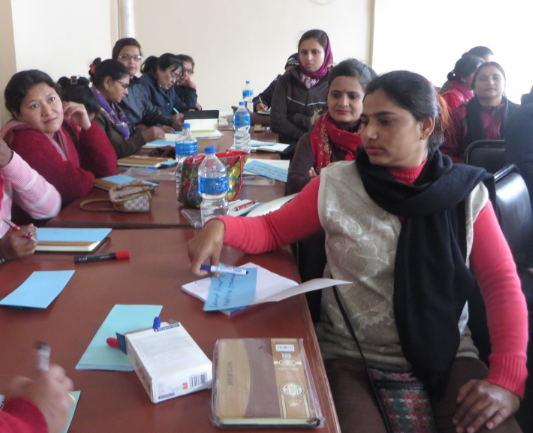
 New interdisciplinary paper on Nepal
 Horizon Europe Cluster 3 (Civil Security for Society) 2026 Calls Now Open
 MSCA Doctoral Networks 2026 Call Information Webinar
 ESRC Festival of Social Science 2026: Application Deadline Extended to Thursday 25 June 2026
 Reminder: Register for the ESRC Festival of Social Science 2026 Information Session
 ECR Funding Open Call: Research Culture & Community Grant – Apply now
 ERC Advanced Grant 2025 Webinar
 Update on UKRO services
 European research project exploring use of ‘virtual twins’ to better manage metabolic associated fatty liver disease