The Royal Society’s Parent Carer Scientist project aims to increases the visibility of people in the UK combining a career in science with a family life, and to encourage and in spire current and future talented scientists to succeed regardless of non-work commitments. Stories from mothers, fathers and carers about their efforts to balance a career in science with family life can be found at https://royalsociety.org/topics-policy/diversity-in-science/parent-carer-scientist/ – the stories are being launched in small groups so more will be added over the coming months.
/ Full archive
Congratulations to New Physio Staff member Osman Ahmed
Congratulations to our newest Physio staff member Osman Ahmed on his recent publication. Having been employed for just a few weeks he already has a publication in the name of BU.
A picture tells a thousand words. A content analysis of concussion related images online, published in Physical Therapy in Sport.
http://www.physicaltherapyinsport.com/article/S1466-853X(16)00030-4/abstract
Hopefully the start of many more publications for Osman.
Research impact events – SAVE THE DATE: 23–27 May
Impact and innovation are at the heart of BU’s research culture. But what is impact and how do we achieve it?
From Monday 23rd – Friday 27th May, a series of seminars and workshops will take place to explore the various pathways to achieving societal and economic impact. Attendees will explore methods for effectively engaging a variety of research users throughout the research process, and develop new ways to plan, deliver and evidence impact.
Events will take place at both Talbot and Lansdowne campuses, on the following topics:
- Research, engagement and impact
- Engaging with business for research impact
- Influencing public policy with research
- Using the media to generate research impact
- Collecting evidence of impact
- Celebrating research impact at Bournemouth University
Who should attend?
These events are aimed at all academic staff members, early career researchers, postgraduate students and professional services staff who support impact across the university.
Attendees will have the opportunity to hear from external impact specialists, to find out more about the support available at BU and to interact with colleagues wishing to share their experience and expertise.
Exact dates, times and full details of the events and how to book a place will follow soon.
FMC Cross-Departmental Seminar Series 27 April 2016
Communicating Research
FMC Cross-Departmental Seminar Series 2015-16
The Faculty of Media and Communication at BU
Venue: W240, Weymouth House, Talbot Campus, Bournemouth University, Fern Barrow, Poole, Dorset, BH12 5BB
Wednesday 27 April 2016, 3pm, W240
A Journalism Research Group Guest Lecture
Paul Bradshaw, Birmingham City University
Chilling Effect: Regional Journalists’ Source Protection and Information Security Practice in the Wake of the Snowden & RIPA Revelations
Two years after Edward Snowden revealed widespread interception of communications by the UK government, and 12 months after revelations that police were accessing journalists’ communications data to identify sources, this paper finds that regional journalistic practices, ethics and self-understandings have been largely unaffected by the emergence of surveillance society.
Based on face-to-face surveys of over 75 regional journalists at a number of publications within five newspaper groups in the UK, 10 in-depth interviews, and analysis of policy documents, journalists show few signs of adapting source protection and information security practices to reflect new legal and technological threats, and there is widespread ignorance of what their employers are doing to protect networked systems of production.
The paper argues that the ‘reactive’ approach to source protection, that seeks to build a legal defence if required, is a particular challenge for journalists in protecting their sources and data, and there is a significant need to reflect on these challenges. Specifically it argues these approaches are no longer adequate in the context of workforce monitoring, and that publishers need to update their policies and practice to address ongoing change in the environment for journalists and sources. In the process it also highlights security issues for researchers seeking to protect their own sources in researching surveillance and security practices in journalism.
Wednesday 27 April 2016, 4pm, W240
A Narrative Research Group Guest Lecture
Martin Barker, Aberystwyth University
Catching Dragons in Flight”: Tracking the Changing Place of ‘Fantasy’ in Contemporary Culture
In the last twenty years, huge changes have occurred in the way ‘fantasy’ is made, received and understood, particularly (but not only) within European and American societies. From being simply dismissed as infantile, or traduced as a mark of disturbance, fantasy has moved to take on strong political overtones: witness the adoption of masks from V For Vendetta by the ‘Occupy’ movement, the adoption of Avatar’s blue colouring by environmental protestors, and the banning in Thailand of the three-finger salute from The Hunger Games after its adoption by protest movements. But equally, witness the waves of unease greeting the success among women of Fifty Shades of Grey. By happenstance I took on studying fantasy’s audiences in two enormous international projects, just as this change crystallised with Peter Jackson’s film trilogies of The Lord of the Rings, and then of The Hobbit. In this presentation, I will try to throw some general light on the changes that are taking place, and what light in particular audience research can throw on what is happening.
Martin Barker is Emeritus Professor at Aberystwyth University. Across a long research career, he has explored a wide range of issues and topics, including: contemporary British racism; comic books; media controversies, and scares about ‘violence’; a range of films, from The Last of the Mohicans, to Crash, to Judge Dredd, to the cycle of Iraq War films. In the last 25 years, he has focused in particular on film audiences, and how to study them. In 2006 he was contracted by the British Board of Film Classification to research audience responses to screened sexual violence. In 2003, and again in 2014, he led international audience research projects into responses to the film trilogies of The Lord of the Rings, and The Hobbit.
About the series
This new seminar series showcases current research across different disciplines and approaches within the Faculty of Media and Communication at BU. The research seminars include invited speakers in the fields of journalism, politics, narrative studies, media, communication and marketing studies. The aim is to celebrate the diversity of research across departments in the faculty and also generate dialogue and discussion between those areas of research.
Contributions include speakers on behalf of
The Centre for Politics and Media Research
The Centre for the Study of Journalism, Culture and Community
Promotional Cultures & Communication Centre
Public Relations Research Centre
Narrative Research Group
Journalism Research Group
Advances in Media Management Research Group
Determinants of bank profitability in transition countries: What matters most? – Download and read this article while you can!!
 Dr. Khurshid Djalilov and Professor Jenny Piesse recently published with the Research in International Business and Finance on ‘Determinants of bank profitability in transition countries: What matters most?’.
Abstract
The aim of this paper is to investigate the determinants of bank profitability in the early transition countries of Central and Eastern Europe (CEE), and in the late transition countries of the former USSR. We apply a GMM technique for the period covering 2000–2013. The results show that profitability persists and the determinants of bank profitability vary across transition countries. Particularly, the banking sector of early transition countries is more competitive. However, the impact of credit risk on bank profitability is positive in early transition countries, but negative in late transition countries. Government spending and monetary freedom negatively influence bank profitability only in late transition countries. Moreover, better capitalised banks are more profitable in early transition countries implying that these banking sectors are more robust. A range of possible approaches that governments can take to further develop banking sectors are discussed.
The full article is currently open for access and download for a short period of time through this link – http://authors.elsevier.com/a/1SvF0~fX5-j4z so please make use of this temporary open access opportunity to read/or download the paper for your own use.
Future of the Je-S system
 The Research Councils have informed us that they will be upgrading their electronic grants submission service in 2017. The Je-S system has come to a natural end and they plan to design a smarter, simpler more user friendly service in line with the latest digital standards. Work is already underway to design the new awards service. This work is based on extensive user research and BU will nominate a primary coordinator (from RKEO) to engage with RCUK about this project.
What sort of improvements can you expect?
As an applicant, peer reviewer or research office administrator, you will no longer use the Je-S system to apply for grants, submit reviews or manage your research organisations grants activities. There will be an entirely new external portal. In future the whole grant application form will be digitised, which means in the majority of cases no more uploading of attachments; and there are other improvements such as in-built formatting for font size and word count, improved dashboards to help you manage your grant activities as well as guidance relevant to a particular funding opportunity close at hand, all on the one screen, while you are applying. This is just some of the functionality being developed and iterated through user testing and feedback.
When will the new system go live?
The ambition is to start to run a small number of funding opportunities through the new system by March 2017 to test that everything is working as it should be. After March 2017, there will be parallel running of the new awards service and Je-S, which will be gradually phased out throughout 2017. We expect the full transition from Je-S to the new awards service to be completed by May 2018.
How you can keep up to date with what’s happening?
This is an important programme of work and RCUK are keen to keep you informed of progress. You can receive regular updates about this project by subscribing to their mailing list at http://rcuk.us13.list-manage1.com/subscribe?u=ad56e1b1044a6f3fab9f61fb8&id=bf29a1fd1a
For updates about news and changes to Research Councils grants service more generally, you can sign up to their quarterly grants newsletter at https://www.jiscmail.ac.uk/cgi-bin/webadmin?SUBED1=RCUKSSC-GRANTS&A=1
FBU Workshop Overview
Better later than never. Finally, I found some time to write about our incredible time in Moscow.

Supported by Santander FIF fund, Dr Parisa Gilani and Dr Elvira Bolat (me) travelled to beautiful sunny Moscow (10 March -13 March) to run the “Digital momentum for SMEs” workshop. The workshop took place in Faculty of Management, Financial University (Moscow, Russia) and was well attended by students across different levels. In total 30 students were selected to engage with two master-classes, which aimed to promote academic strengths of Bournemouth University in the fields of digital marketing, leadership and SMEs management and marketing.
Two interactive master-classes covered the following topics:
- “Digital marketing for SMEs” (delivered in Russian by Dr Elvira Bolat)
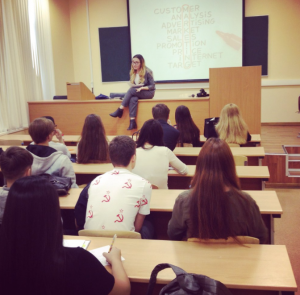
2. “Leadership in the context of SMEs” (delivered in English by Dr Parisa Gilani).
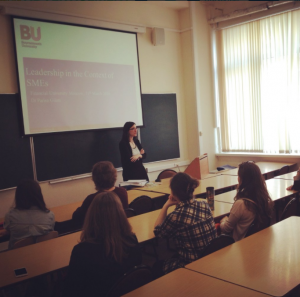
Following workshops, both BU academics have met Faculty of Management (Financial University) Executive Team to discuss joint research projects, prioritising EU research funding, joint publications and public engagement opportunities.

Source: international.fa.ru
Financial University is first formal partner of BU in the Russian Federation. Moreover Financial University is part of Santander Universities network. FBU workshop was a fantastic opportunity to strengthen BU and Financial University partnership resulting in increased visibility of BU in Russia, promotion of BU portfolio of undergraduate and postgraduate courses among our Russian partner’s students and, most importantly, increasing awareness of BU’s academic and professional expertise in the fields of digital marketing and leadership.
We are definitely looking forward to working further with Financial University and expecting their academic staff and group of students to visit BU in September/October 2016.
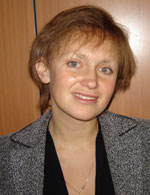
Source: chilingarov.viperson.ru
Second part of the visit involved meeting with well-established Professor of Law Marina Telukina whose academic expertise covers bankruptcy and commercial law. At the moment Professor Telukina is working across various Higher Education Institutions in the Russian Federation but is a full-time member of staff in the Russian Presidential Academy of National Economy and Public Administration (RANEPA).
Professor Telukina is willing to strengthen her academic ties with BU (sharing her knowledge and practice of Russian Law) and work on collaborative projects between Faculty of Management (BU) and Graduate School of Management and Innovation in Lomonosov Moscow State University – something our team is really excited about. Professor Telukina has now planned visit to the UK in August 2016 and we are planning to meet in Bournemouth in order to discuss details of joint research projects.
That is all from me. Hope, you are now more open to expanding your academic networks. Santander Fusion Investment Fund is best option to support you in this. Full list of global Santander Universities partners can be found here: http://www.santander.com/csgs/Satellite?appID=santander.wc.CFWCSancomQP01&c=GSInformacion&canal=CSCORP&cid=1278679137354&empr=CFWCSancomQP01&leng=en_GB&pagename=CFWCSancomQP01%2FGSInformacion%2FCFQP01_GSInformacionDetalleSimple_PT08
Elvira Bolat
Committee inquiries: open calls for evidence
Below is a list of committee inquiries with current open calls for evidence. Please contact Emma Bambury-Whitton if you would like to discuss submitting evidence.
Commons Select Committee inquiries
- Scrutiny of the Government’s Supply Estimates | Procedure Committee | Deadline: Friday 25 March 2016 (extended to Friday 29 April 2016)
- Support for ex-offenders | Work and Pensions Committee | Deadline: Friday 8 April 2016 (extended to Friday 22 April 2016)
- The future of Jobcentre Plus | Work and Pensions Committee | Deadline: Friday 22 April 2016
- Countries of Culture | Culture, Media and Sport Committee | Deadline: Friday 22 April 2016
- The future of the Severn River crossings | Welsh Affairs Committee | Deadline: Friday 22 April 2016
- Multi-academy trusts | Education Committee | Deadline: Monday 25 April 2016
- Inquiry into Government accounts | Public Administration and Constitutional Affairs Committee | Deadline: Friday 29 April 2016
- Science communication | Science and Technology Committee | Deadline: Friday 29 April 2016
- Robotics and artificial intelligence | Science and Technology Committee | Deadline: Friday 29 April 2016
- Homophobia in Sport | Culture, Media and Sport Committee | Deadline: Friday 29 April 2016
- Energy revolution | Energy and Climate Change Committee | Deadline: Tuesday 3 May 2016
- Powerhouses and engines: Government policy and regional growth | Business, Innovation and Skills Committee | Deadline: Friday 6 May 2016
- Disability employment gap | Work and Pensions Committee | Deadline: Monday 9 May 2016
- Science in emergencies: chemical, biological, radiological or nuclear incidents | Science and Technology Committee | Deadline: Friday 20 May 2016
- Sexual harassment and sexual violence in schools | Women and Equalities Committee | Deadline: Sunday 22 May 2016
- Improving the rail passenger experience | Transport Committee | Deadline: Wednesday 25 May 2016
- Regenerative medicine | Science and Technology Committee | Deadline: Tuesday 31 May 2016
- Impact of membership on the EU on health policy in the UK | Health Committee | Deadline: Tuesday 31 May 2016
Joint Committee inquiries
- The Arms Trade Treaty | Committees on Arms Export Controls | Deadline: Tuesday 31 May 2016
HE Policy Update
Anti-lobbying clause
A controversial piece of legislation that would have seen publicly-funded organisations prevented from lobbying the UK government and parliament has been revised to exclude academics and researchers. You can view Jo Johnson’s statement here.
Leaked document
Notes for a Number 10 meeting caught on camera reveal ministers believe there is a “problem” that some universities are charging the highest tuition fees rate despite not proving their worth. Top universities not good enough to charge £9,000, ministers believe, according to leaked document (The Telegraph).
Impact
A new discussion paper sets out to determine what works and what doesn’t when researchers seek to make an impact on policy. The paper gives tips for engaging with policy-makers including a suggestion to “capture your audience mid-morning or after lunch, when some office workers are active on social networks”. You can view the report here.
HE White Paper
The White Paper is thought to have reached the stage of a “write round” – a consultation process in which Cabinet ministers are asked to give the views of their departments on potential legislation and grant clearance for it to go ahead. White Paper could kill off Hefce quality plans. (THE).
Social work
The Frontline social work training programme’s shift to in-house rather than university-led education could harm the research base that underpins the profession, the Commons education committee was told. MPs told to keep social work training in universities. (Research Professional).
Office for Fair Access
The Office for Fair Access, which oversees progress in ensuring students from non-traditional backgrounds succeed at English universities, is to have its office staff cut from 18 to 6, according to Paul Blomfield, Labour MP for Sheffield Central, who chairs the All-Party Parliamentary Group on Students. The plans are reportedly contained in a confidential document entitled “BIS 2020 – Finance and Headcount outline”. Office for Fair Access to be cut. (Research Professional).
NUS
Students at the University of Oxford are threatening to disaffiliate from the National Union of Students following the election of Malia Bouattia as its president. Oxford threatens to dump student union in antisemitism row (The Times).
EU Referendum
A House of Lords report has conceded that the UK science community draws vital benefits from EU membership and could lose influence in the event of Brexit. Concern over Brexit’s impact on science (BBC).
A blog post on Global BUzz looks into the impact of leaving the EU for higher education. What would be the impact of a vote to leave on Higher Education?
Bournemouth Natural Science Society Event – May

Date: Tuesday 24 May
Time: 7.30pm
Location: Bournemouth Natural Science Society 39 Christchurch Road BH1 3NS
Event information: “Life inside a Deep-sea Canyon”
Dr Laetitia Gunton will talk about her research at the renowned National Oceanography Centre at the University of Southampton. Submarine canyons are deep incisions in the continental shelf and slope and are considered to be deep-sea biodiversity “hotspots”. This talk will dive into the Whittard in the NE Atlantic. Come and find out which creatures live in this fascinating environment.
New comparative paper India-Nepal
 This week saw the publication of a new paper co-written by BU staff in the Sociological Bulletin. This is the first paper comparing Indian and Nepali Maoist rebels providing health services and health promotion to the communities under their influence. It presents the key provisions either made by rebel health workers themselves or by putting political pressure on government health workers to deliver better services in the areas controlled by rebels. Prof. Edwin van Teijlingen’s co-authors are based in India and Nepal. Prof. Gaurang R. Sahay is based at the Centre for Study of Developing Societies, Tata Institute of Social Sciences, Mumbai, India, whilst Bhimsen Devkota is Professor in Health Education, Tribhuvan University, Nepal.
This sociological paper is based on a mixed-method approach comprising 15 interviews and a questionnaire survey with 197 Nepalese Maoist health workers and a secondary analysis of policy documents and other published materials on the Maoist health services of India. The paper suggests that rebel health services in India and Nepal followed a fairly similar approach to what and how they offered health care services to local populations. Maoists becoming a government party changed the political landscape for the rebel health workers in Nepal. However, not incorporating the Maoist rebel health workers into the government health system was a missed opportunity. There are lessons that India and Nepal can learn from each other. Should the Maoist rebels and the Government of India come to an agreement, potential for rebel health workers to be integrated in the official health care system should at least be considered.
The paper benefitted from an earlier review through eBU: Online Journal. The feedback from the eBU: Online Journal’s reviewers helped shape and polish the paper before submission to the Sociological Bulletin.
Edwin van Teijlingen
CMMPH
References:
- Sahay, G., Devkota, B., van Teijlingen, E.R. (2016) Rebel Health Services in South Asia: Comparing Maoist-led Conflicts in India & Nepal, Sociological Bulletin 65(1):19-39.
Early labour: is it a problem in Texas?
Professor Vanora Hundley was recently invited to give a lecture to staff and students at UTHealth School of Nursing in Houston, Texas School of Nursing. The topic of her presentation was ‘Early labour – should we be telling women to stay at home?’

Early labour often presents a challenge for women and midwives in the UK. There is evidence that women admitted to hospital in the latent phase of labour are more likely to get unnecessary interventions, however women seek hospital admission for reassurance and support. The problem is further complicated by a lack of a clear definition of the latent phase as a recent systematic review, conducted with colleagues from the International Early Labour Research Group, shows (Hanley et al., 2016).
Nurses at UTHealth recognised the challenges of supporting women in early labour, but due to insurance policy requirements women are often not admitted to a labour and birthing room until they are 4 cm dilated or in the active labour phase. Instead women remain in a triage or holding area until they are 4 cm dilated, or may be sent home. The challenge in Texas is how to support women who are waiting for labour to progress.
CMMPH is conducting a number of studies to identify how best to support women in early labour and opportunities for collaboration with staff at UT Health were explored.
Reference: Hanley GE, Munro S, Greyson D, Gross MM, Hundley V, Spiby H and Janssen PA (2016) Diagnosing onset of labor: A systematic review of definitions in the research literature. BMC Pregnancy and Childbirth 16: 71
Photo shows Dr Rebecca Helmreich (UTH) & Prof Vanora Hundley (BU)
‘Re-Imagining Conflict-Transformation: Making Memory Meaningful’ – A one-day Workshop on 6th May 2016
This one-day workshop explores interdisciplinary and innovative approaches to dealing with a country’s troubled past through memorialisation as a key aspect of transitional justice. It is organised by the Conflict Transformation Studies team as part of the Centre for Conflict, Rule of Law and Society (Bournemouth University).
Location: Executive Business Centre (7th Floor, EB706), 89 Holdenhurst Road, Bournemouth, BH8 8EB
Programme:
9.00 Arrival and registration
9.30 Introduction and Welcome by Melanie Klinkner and Welcome by Sascha Bachmann (Director of the Centre for Conflict, Rule of Law and Society)
9.40 Key Note Address by Nora Ahmetaj, Co-founder of the Centre for Research, Documentation and Publication (Kosovo): ‘Critical approaches to ‘reconciliation’ and transitional justice in Kosovo’s post-war memory’
10.40 Coffee Break
11.00 Panel 1: Chair Avital Biran
Ellie Smith, Newcastle University Forum for Human Rights and Social Justice: ‘Commemoration and Memory: specific justice needs of victims in the aftermath of international crimes and gross violations’
Robyn Leslie, King’s College London: ‘Remember Marikana: apportioning blame or accepting complicity?’
Nina Fischer, University of Edinburgh: ‘National Memory of Trauma and the Perpetuation of Conflict: Israel/Palestine’
12.30 Lunch
13.15 Panel 2: Chair Melanie Klinkner
Denisa Kostovicova, London School of Economics: ‘War Crimes Talk: Transitional Justice and Communication’
Hanna Kienzler, School of Social Science and Public Policy, King’s College (London): ‘Embodied struggles for societal change’
Linda Gusia, University of Prishtina: ‘Breaking the Silence – Recognition of the survivors of wartime sexual violence in Kosovo’
Laura Grace and Stephanie Schwandner-Sievers, Bournemouth University: ‘Quests into post-war Kosovo’s memoryscapes: the interdisciplinary, anthropological and co-creative challenges of BU’s fusion project for a serious game’
15.15 Coffee Break
15.45 Roundtable discussion
What and/or who can make transitional justice initiatives work? How can contested memories be integrated to support conflict transformation? Reflections and insights from past, present and towards the future. Facilitated by Stephanie Schwandner-Sievers and Melanie Klinkner (Bournemouth University).
Confirmed panel Members include:
Nora Ahmetaj (Centre for Research, Documentation and Publication),
Nina Fischer (University of Edinburgh),
Eric Gordy (University College London),
Hanna Kienzler (King’s College London),
Denisa Kostovicova (London School of Economics), and
Christian Pfeifer (Forum Civil Peace Service).
17.00 Closing remarks
Tabled Paper(s): Vjollca Krasniqi, University of Prishtina: ‘War, Law, and Justice in Kosovo’.
Contact: For more information, please contact the organisers Melanie Klinkner (mklinkner@bournemouth.ac.uk) or Stephanie Schwandner-Sievers (sssievers@bournemouth.ac.uk). For urgent matters on the day, please contact Reception at the Executive Business Centre on 01202 968003
Registration: this event is free of charge. However, spaces are limited. For participation please register by 27 April 2016 with the organisers.
TOMtalks: Tomorrow’s Oceans Matter: an evening of short talks and films
We have a fantastic event happening at BU on Wednesday 27th April, organised by the Litter Free Coast and Sea project with support from Bournemouth University.
It is an open event and anyone is welcome to attend. Details are on the eventbrite page.
There will be 4 excellent speakers sharing how they have been working to help protect and create cleaner oceans using some very innovative methods. There is a bit more information about the project below.
http://www.eventbrite.co.uk/e/tomtalks-tomorrows-oceans-matter-tickets-24595770612?aff=eac2
How does ocean plastic turn into boardshorts? Is 2 minutes enough to turn the tide of beach litter and can artwork from the tideline define our impact on the sea?
Wednesday 27th April, 6.30-9.00pm. Talks start at 7pm. Tickets are FREE and bookable on eventbrite. Tea & coffee provided. http://bit.ly/1TVqtfr
‘Meet the Entrepreneur’ – Simon Phelps
The Business School and Centre for Entrepreneurship were delighted to welcome Simon Phelps, BU Alumni and founder of Fluvial Innovations Ltd, to the Executive Business Centre in the latest in this series of ‘Meet the Entrepreneur’ seminars.
These seminars provide an opportunity for BU students and staff to hear the personal journey of a profiled entrepreneur and learn more about their experiences as business owners and their approach to founding and growing an innovative business.
Simon Phelps founded Fluvial Innovations Ltd alongside BU in 2006 and designed, developed and patented the modular flood barrier, Floodstop. Floodstop was specifically designed to fill a gap within the market for a functional and rapidly deployable flood barrier. (www.fluvial-innovations.co.uk)
Floodstop is used throughout the UK, US and parts of Europe and won the Emergency Planners Society’s Award for Most Innovative Product of The Year 2009, was voted “The Most Innovative Product of 2009” by the Emergency Planning Society and was Winner of Climate Week – Best Climate Ready Initiative 2013.
Simon’s achievements include UK South West Young Entrepreneur of the Year 2007 and HSBC Start-Up Stars Regional Finalist 2008.
Mark Painter, Business Development Manager for the Business School commented, ‘Simon is one of our highly valued ‘Entrepreneurs in Residence’ and we very much appreciate the time he spends supporting our enterprise activities.’ Mark added, ‘It was fascinating hearing about the Floodstop story which started whilst Simon was studying at BU. One of Simon’s key messages to anyone thinking of starting their own business is to remember it is not just about selling a product or service it is about creating a profitable and sustainable business model which will require a considerable amount of time and commitment.’
The next seminar in this series of ‘Meet the Entrepreneur’ events is on Wednesday 4th May and will profile local entrepreneur, Damien Lee, founder of Mr Lee’s Noodles Company Ltd. For more information and to book your place click here www.bucfe.com/events
Electroacoustic music analysis: new publications from Dr Ambrose Seddon and Dr Panos Amelides

A new Cambridge University Press book Expanding the horizon of electroacoustic music analysis includes chapters by EMERGE members Dr Panos Amelides and Dr Ambrose Seddon.
Published on 7th April, this edited collection presents a state-of-the-art overview of analysis methods for electroacoustic music in this rapidly developing field. The book explains the needs of differing electroacoustic genres and puts forward a template for the analysis of electroacoustic music. It also discusses the latest ideas in the field and the challenges associated with new technologies.
Ambrose’s and Panos’s chapters appear in the final section of the book, which demonstrates new analytical methods in action. Ambrose’s chapter focuses on the analysis of Andrew Lewis’s Penmon Point, whilst Panos’s chapter, co-authored with Prof Andrew Hugill (Bath Spa University), explores audio-only computer games, focusing on Papa Sangre.
More details are available here: www.cambridge.org/9781107118324
BU Academic appointed as Extraordinary Visiting Professor (AP) at Swedish Defence University
 Sascha Dov Bachmann, Associate Professor in International Law, FMC, has been made Extraordinary Visiting Professor (AP) in War Studies at the Swedish Defence University (FHS). This appointment recognizes his contribution to the work of the Department of Military Studies at FHS on the subject of Hybrid War and Hybrid Threats. He continues to collaborate with colleagues from Sweden, Germany and NATO on the subject.
Investigating the Effects of Environment on Prey Detection Rates: A Key Variable in Human Evolution
We would like to invite you to the latest research seminar of the Creative Technology Research Centre.
Title: Investigating the Effects of Environment on Prey Detection Rates: A Key Variable in Human Evolution
Speaker: Peter Allen (a Bournemouth University PhD student funded by the Engineering and Physical Sciences Research Council)
Time: 2:00PM-3:00PM
Date: Wednesday 27th April 2016
Room: PG19 LT, Poole House, Talbot Campus [please note the change from our usual venue]
Abstract:
This research project applies cutting edge videogame technology to conduct a psychology experiment which is designed to test human visual acuity as far as it relates to prey detection rates. The original contribution to knowledge is the acquiring of experimental data which is then used to investigate the effects of the environment on prey detection ability and help address open questions in the field of paleo-anthropology concerning human evolution.
The environment plays a major role in determining the hunting strategies which upper Palaeolithic humans would use when hunting ungulate species. In open environments such as savannah and grassland, humans relied on persistence hunting whereas in closed areas like forest there was preference for ambush hunting and careful planning to intercept migrating herds. These hunting styles are thought to have affected human evolution by selecting for required anatomical and cultural features. Persistence hunting utilises endurance running which requires a gracile form and the ability to regulate body temperature without slowing down, whereas encounter hunting relies more on strength and social coordination.
Little work has been done to understand the role which the composition of the environment plays in prey detection ability, which in turn determines which hunting styles can be utilised and therefore what features would be selected for in different geographically separated Palaeolithic human societies. This project aims to test the hypothesis that prey detection ability will vary according the composition of the environment in terms of the density of vegetation (open or closed-ness) and the assemblage of floral species contained within.
We hope to see you there.
BU staff can login below:
Other services






Recent posts
BU research Funding opportunities EU
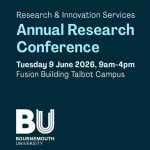 BU Annual Research Conference: Poster Exhibition Call for Applications
 Vitae Three Minute Thesis (3MT®) Competition: Applications Now Open
- Applications are now open for 2026 ESRC Postdoctoral Fellowships
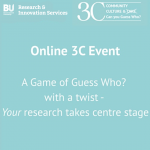 3C Online Social: Thursday 26 March 1–2pm – Research Culture, Community & Can you Guess Who?
 Four BU students at national midwifery conference
 INRC book roundtable/presentation by Drs Jonathan Cole and Catherine Talbot, Wednesday 22/04/2026, 13:00h, P426
 ECR Funding Open Call: Research Culture & Community Grant – Apply now
- FLF UKRI round 11- internal launch and timelines
 ECR Funding Open Call: Research Culture & Community Grant – Application Deadline Friday 12 December
- ECR Funding Open Call: Research Culture & Community Grant – Apply Now
 MSCA Postdoctoral Fellowships 2025 Call
 ERC Advanced Grant 2025 Webinar
- MSCA Postdoctoral Fellowships 2025 Call
- ERC Advanced Grant 2025 Webinar
- European Migration Research and Impact – Invitation to a Roundtable Discussion
- MSCA Postdoctoral Fellowships 2025
 Update on UKRO services
 European research project exploring use of ‘virtual twins’ to better manage metabolic associated fatty liver disease
 Research Information Network
- Physical Sciences Case studies: information use and discovery
- Information handling in collaborative research: an exploration of five case studies
- Information literacy monitoring and evaluation
- Data centres: their use, value and impact
- Heading for the open road: costs and benefits of transitions in scholarly communications